
Defining Gummy Bears and Their Modern Role
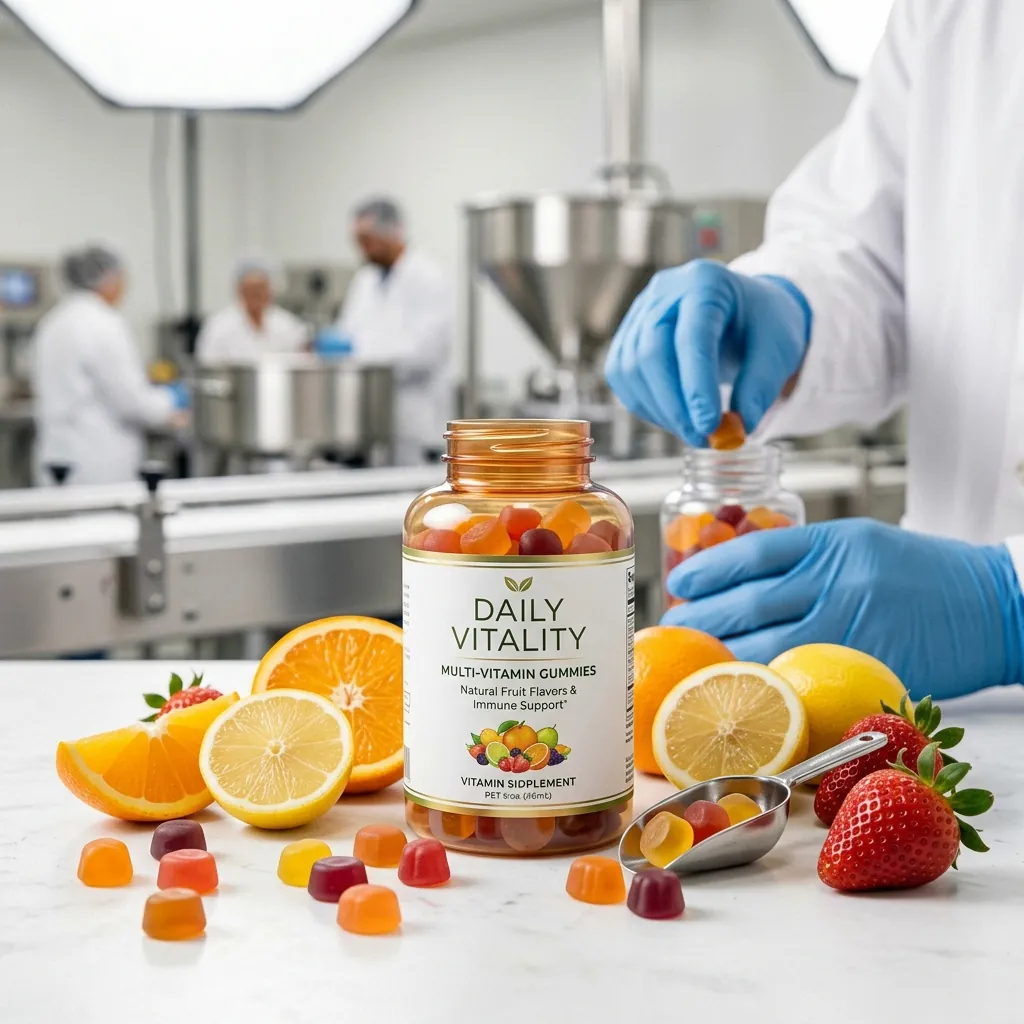
What began as a whimsical German candy has transformed into a multi-billion-dollar industry. The shift from pure confectionery to functional nutrition represents one of the most successful product category evolutions in consumer health history. Today, when people reference gummy bears in a commercial context, they often mean gummy supplements—nutrient-dense products designed to deliver health benefits in an enjoyable, palatable format.
The Origin of Gummy Bears: The Hans Riegel Story
The 1922 Invention in Bonn, Germany
Hans Riegel, a confectioner based in Bonn, Germany, is credited with inventing the modern gummy bear in 1922. Before this innovation, gelatin-based candies existed, but they were larger, less flavorful, and often lacked the appealing texture that would define the gummy bear. Riegel’s breakthrough was creating a smaller, fruit-flavored gummy confection that was both chewy and firm—a product that could be mass-produced and mass-marketed.
The original product was called “Tanzbär” (Dancing Bear), reflecting the cultural fascination with trained bears that were popular attractions in European towns. These early gummy bears were larger than modern versions, about twice the size of contemporary gummy candies, and were coated in sugar to enhance their appeal and shelf stability.
The Birth of the HARIBO Brand
Hans Riegel’s initials, combined with his hometown (Bonn), created the acronym HARIBO—a name that would become synonymous with gummy bears worldwide. HARIBO grew from a small workshop operation into an industrial manufacturing enterprise, perfecting the formulation and production process that set the standard for the global gummy industry.
The HARIBO Tanzbär became a cultural icon, and the company’s success demonstrated that consumers had an insatiable appetite for gummy confections. What made HARIBO’s approach unique was not just the product itself, but the recognition that gummy delivery systems could accommodate virtually any flavor, color, or shape that consumer preference demanded.
The Evolution of Gummy Bears: From Candy to Supplements
The Mid-20th Century: Expansion and Innovation
After World War II, gummy bears remained popular primarily as confectionery products. However, the post-war expansion of the global candy market and improved manufacturing technology allowed companies to experiment with shapes, flavors, and formulations. By the 1960s and 1970s, gummy bears had become a standard confectionery globally, with dozens of manufacturers producing their own versions.
The turning point came when nutritional supplement manufacturers recognized that the gummy format—already beloved by consumers—could serve as an ideal delivery vehicle for vitamins and minerals. Unlike traditional pills or capsules, gummies offered palatability, ease of consumption, and the potential for creative flavor and shape customization.
The Dietary Supplement Boom (1990s–Present)
The real transformation began in the 1990s when companies started developing gummy vitamin supplements. This category exploded because gummies solved several problems that had long plagued supplement manufacturers:
- Compliance: Gummies taste like candy, making it easier for consumers (especially children) to take supplements consistently.
- Absorption perception: Chewable formats gave consumers a sense of engagement and effectiveness compared to swallowing pills.
- Customization: Manufacturers could create branded, shape-differentiated products that stand out on retail shelves.
- Market segmentation: Specific gummy formulations could target demographics (children, women, men, seniors) with tailored flavors and shapes.
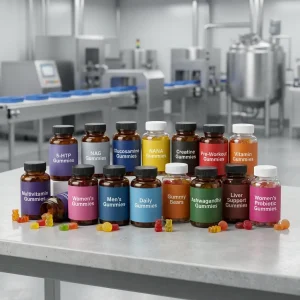
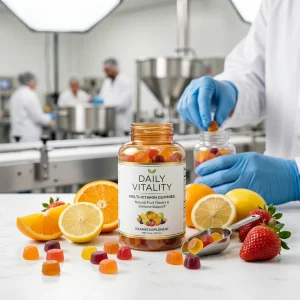
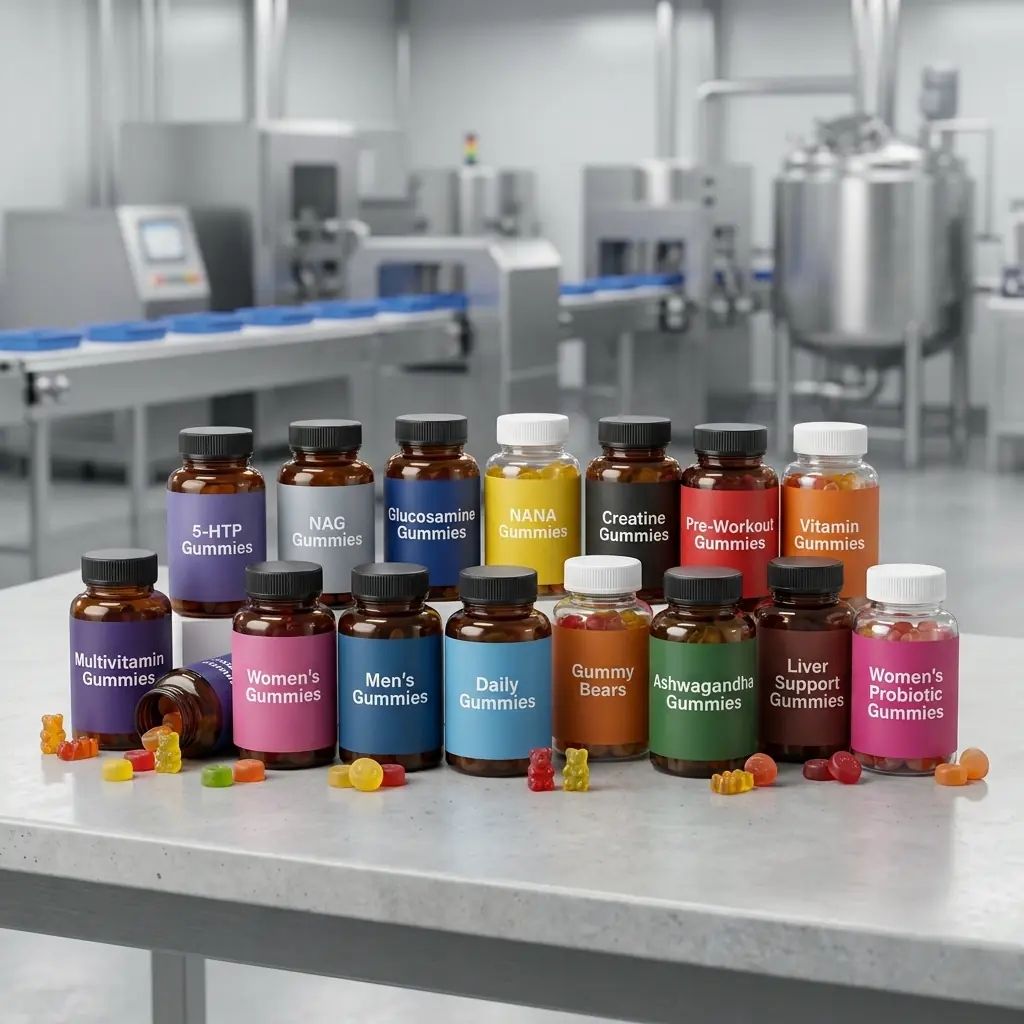
Today, the gummy supplement category encompasses multivitamins, single-nutrient products (calcium, vitamin D, iron), herbal supplements, functional gummies for sleep, energy, immunity, beauty, and digestive health. The diversity of gummy formulations available on the market would have been unimaginable to Hans Riegel in 1922.
Current Market Position of Gummy Supplements
Market Size and Growth Trajectory
Gummy supplements now represent one of the fastest-growing segments within the dietary supplement industry. Market data indicates that the global gummy vitamin and supplement market exceeds $8 billion annually and continues expanding at double-digit growth rates. This growth trajectory reflects a fundamental shift in consumer preference toward more palatable, convenient, and enjoyable supplement formats.
The market dominance of gummies is evident across all major supplement categories. Where multivitamins were once dominated by tablets, gummies now frequently capture the largest market share. Similar trends appear in specialized categories like omega-3 supplements, vitamin D products, and probiotics.
Why Gummies Have Become the Preferred Format
Several factors explain the explosive growth of gummy supplements:
Consumer Psychology: Gummies feel less like “medicine” and more like a treat, reducing the friction associated with daily health routines. This perception shift has been particularly powerful among younger consumers and parents buying supplements for children.
Accessibility: Unlike capsules or tablets, gummies require no water and can be taken anywhere, aligning with consumer preferences for convenience and portability.
Ingredient Visibility: Gummy formulations can visibly showcase multiple ingredients through color differentiation, creating a sense of comprehensive nutrition that resonates with health-conscious consumers.
Brand Differentiation: Custom shapes, colors, and flavors allow supplement brands to create distinctive products that build consumer loyalty and brand recognition.
Gummy Manufacturing: The Technical Foundation
Core Ingredients and Formulation
Modern gummy manufacturing involves a carefully balanced combination of ingredients that must work together to achieve the desired texture, taste, stability, and nutritional efficacy:
| Ingredient Category | Primary Function | Common Examples | Functional Notes |
|---|---|---|---|
| Gelling Agents | Creates gel structure and chewiness | Gelatin, Pectin, Carrageenan, Starch | Gelatin = traditional, animal-based; Pectin = vegan alternative |
| Humectants | Retains moisture and prevents hardening | Sorbitol, Glycerin, Glucose Syrup | Critical for shelf stability and texture maintenance |
| Sweeteners | Masks mineral/vitamin taste, improves palatability | Sugar, Isomalt, Maltitol, Stevia, Erythritol | Sugar-free options now dominate premium segments |
| Flavoring Agents | Provides taste differentiation | Natural extracts, synthetic flavors, fruit juice concentrates | Natural labels command premium positioning |
| Coloring Agents | Visual differentiation and brand recognition | FD&C dyes, Natural colorants (spirulina, beet juice) | Natural colorants increasingly preferred by consumers |
| Active Ingredients | Delivers nutritional or functional benefit | Vitamins, minerals, herbal extracts, probiotics, amino acids | Stability and bioavailability are critical concerns |
The Gummy Manufacturing Process
The production of high-quality gummies requires precision equipment and strict process control. The general sequence involves:
Step 1: Ingredient Preparation and Mixing
Raw materials are pre-processed and carefully weighed according to formulation specifications. Gelling agents, sweeteners, humectants, and liquid ingredients are combined in large industrial mixers. The mixture must achieve uniform consistency to ensure each gummy receives the proper ratio of ingredients.
Step 2: Cooking and Concentration
The mixture is heated to specific temperatures (typically 60-85°C) to dissolve gelatin fully, concentrate the syrup to target brix levels, and enable ingredient dispersion. Temperature control is critical—too high and active ingredients may degrade; too low and the gelatin won’t set properly.
Step 3: Flavoring, Coloring, and Active Ingredient Addition
After cooling to 50-60°C, flavor concentrates, colorants, and active ingredients are added. This timing is crucial because adding these components at lower temperatures prevents nutrient degradation while ensuring even distribution.
Step 4: Depositing and Setting
The cooled mixture is deposited into molds using precision equipment. Molds can create hundreds of shapes—traditional bears, vitality symbols, fruits, and custom branded shapes. The gummies then set, typically overnight at controlled temperature and humidity, to achieve optimal firmness and structure.
Step 5: Demolding and Finishing
Set gummies are removed from molds and may be coated with sugar, wax, or other surface treatments. Quality control samples are tested for weight consistency, hardness, moisture content, and active ingredient verification.
Step 6: Packaging and Final QC
Gummies are weighed, packaged in bottles or pouches with desiccant packets to control moisture, and labeled. Final testing verifies product stability, expiration dating, and regulatory compliance.
Quality Standards and Regulatory Compliance in Gummy Manufacturing
International Certification Standards
Premium gummy manufacturers operate under multiple international quality assurance frameworks. These include ISO 9001 (Quality Management), ISO 22000 (Food Safety Management), HACCP (Hazard Analysis), FDA compliance, and facility certifications such as GMP (Good Manufacturing Practice), HALAL, KOSHER, and Vegan certifications.
The manufacturing environment itself must meet rigorous cleanliness standards. Professional gummy manufacturers operate 100,000-class cleanrooms where particulate contamination is controlled to Parts Per Million (PPM) levels. This environmental control prevents cross-contamination and ensures product purity.
Active Ingredient Stability and Bioavailability
A critical concern in gummy supplement manufacturing is whether active ingredients remain stable and bioavailable through the production process and shelf life. This is particularly challenging for heat-sensitive nutrients like certain vitamins (B vitamins, vitamin C), probiotics, and herbal extracts.
Advanced manufacturers employ techniques including:
- Encapsulation: Coating active ingredients to protect them during gummy production and storage
- Chelation: Binding minerals to organic compounds to improve stability and absorption
- Microencapsulation: Using polymer matrices to deliver ingredients at specific pH levels in the digestive tract
- Temperature optimization: Adjusting process temperatures to minimize nutrient degradation
- Oxygen barrier packaging: Using specialized pouches and nitrogen flushing to prevent oxidation
Custom Gummy Manufacturing and Private Label Solutions
Understanding Gummy Contract Manufacturing
Gummy contract manufacturing (also called CMO—Contract Manufacturing Organization) refers to partnerships where supplement brands engage specialized manufacturers to produce gummies according to the brand’s specifications. This model allows brands to focus on marketing and distribution while outsourcing production to facilities with specialized expertise and equipment.
The contract manufacturing model offers several advantages:
Cost Efficiency: Brands avoid capital investment in equipment, facilities, and specialized personnel. Manufacturers achieve economies of scale by serving multiple clients.
Speed to Market: Manufacturers with established processes and supply chains can bring products to market faster than internal development.
Regulatory Navigation: Experienced manufacturers manage FDA notifications, foreign supplier verification, and compliance documentation.
Scalability: As brands grow, manufacturers can scale production without requiring the brand to invest in additional capacity.
Private Label Gummy Manufacturing Models
Private label gummy products represent a specific type of contract manufacturing where a manufacturer produces gummies according to a retailer’s or distributor’s specifications, applying that client’s branding. This model is particularly prevalent in the supplement retail channel, where retailers and online marketplaces offer their own branded supplement lines.
Private label gummy manufacturer relationships typically involve several service tiers:
Tier 1—Stock Formula Customization: The manufacturer offers established formulations, and the client simply applies their label. This is the most cost-effective model, ideal for retailers entering the supplement market.
Tier 2—Custom Formulation: The manufacturer works with the client to develop a unique formulation tailored to specific health claims, target demographics, or ingredient preferences.
Tier 3—Full ODM (Original Design Manufacturing): The manufacturer provides complete design services, including research, formulation optimization, stability testing, regulatory documentation, and packaging design.
Minimum Order Quantities and Batch Flexibility
A key factor in selecting a custom gummy manufacturer is the minimum order quantity (MOQ). Manufacturers with high-capacity facilities and optimized processes can offer MOQs as low as 10,000-30,000 units, making gummy manufacturing accessible to startups and small brands. Larger manufacturers can support MOQs starting at 100,000 units, and enterprise clients may order monthly batches of 500,000+ units.
Professional manufacturers maintain flexibility across the production spectrum—from trial runs and small brand launches to full-scale wholesale production supporting major retail chains. This scalability is essential in today’s dynamic supplement market where new products are constantly being tested and validated.
Technical Specifications and Production Capacity
| Production Metric | Specification | Business Implication |
|---|---|---|
| Daily Production Capacity | 16 tons per day (typical high-capacity facility) | Enables rapid fulfillment of large orders; supports multi-client scheduling |
| Annual Production Capacity | Up to 5,000 tons annually | Supports enterprise-scale brands with sustained demand |
| R&D Laboratory Class | 10,000-class pharmaceutical-grade | Supports precise formulation development and stability testing |
| Manufacturing Facility Class | 100,000-class cleanroom | Ensures product purity and regulatory compliance; supports GMP certification |
| Available Gummy Shapes | 30+ customizable shapes | Brand differentiation and market segmentation capabilities |
| Gelling Agent Options | Pectin, Carrageenan, Gelatin, and proprietary blends | Accommodates vegan, vegetarian, and allergen-free requirements |
| Formulation Research Capacity | 2,000+ new formulations annually | Access to cutting-edge innovation and validated ingredient combinations |
B2B Decision Framework: Selecting the Right Gummy Manufacturing Partner
Critical Evaluation Criteria for Brands and Retailers
1. Manufacturing Infrastructure and Capacity
Evaluate whether the manufacturer’s daily and annual capacity aligns with your current needs and growth projections. A facility capable of 16 tons daily output and 5,000 tons annually can support both rapid fulfillment and sustained long-term partnerships. Confirm facility certifications (ISO 9001, ISO 22000, HACCP, GMP) which directly impact product quality and regulatory compliance.
2. Formulation Development Expertise
Assess the manufacturer’s R&D capabilities. Facilities with pharmaceutical-grade laboratories and annual formulation research on thousands of products indicate sophisticated ingredient sourcing, stability testing, and efficacy validation. This capability translates to products with competitive advantages in the market.
3. Scientific Leadership and Technical Depth
Manufacturers led by researchers with advanced degrees, postdoctoral experience, and publication records in peer-reviewed journals demonstrate commitment to scientific rigor. This translates to better ingredient selection, formulation optimization, and ability to navigate complex regulatory requirements.
4. Ingredient Flexibility and Customization
Confirm the manufacturer can accommodate your specific ingredient requirements—whether you need vegan formulations (pectin-based), allergen-free options, or specialized actives like probiotics, herbal extracts, or amino acids. Availability of 30+ gummy shapes enables brand differentiation on retail shelves.
5. Quality Assurance and Regulatory Compliance
Verify certifications relevant to your target markets. For global distribution, FDA compliance and HALAL/KOSHER certifications enable access to diverse consumer segments. Detailed quality documentation and testing protocols provide confidence in product consistency and safety.
6. Supply Chain Transparency and Lead Times
Established manufacturers with direct relationships to raw material suppliers can offer shorter lead times and more predictable pricing. Ask about inventory levels of critical ingredients (gelling agents, stabilizers, colorants) and backup suppliers for supply chain resilience.
7. Packaging and Logistics Support
Beyond manufacturing, evaluate whether the partner provides packaging design consultation, label printing coordination, and logistics support. Full-service partners reduce the complexity of product commercialization and enable faster time to market.
Specialized Gummy Categories and Market Trends
Functional Gummy Categories Driving Market Growth
The gummy supplement market has segmented into numerous specialty categories, each addressing specific consumer health concerns and demographics:
Performance and Fitness Gummies: Products containing creatine, pre-workout compounds, and amino acids target fitness enthusiasts. These gummies must maintain ingredient stability through the production process while providing precise dosing.
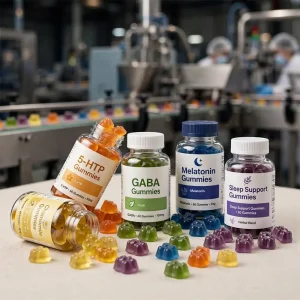
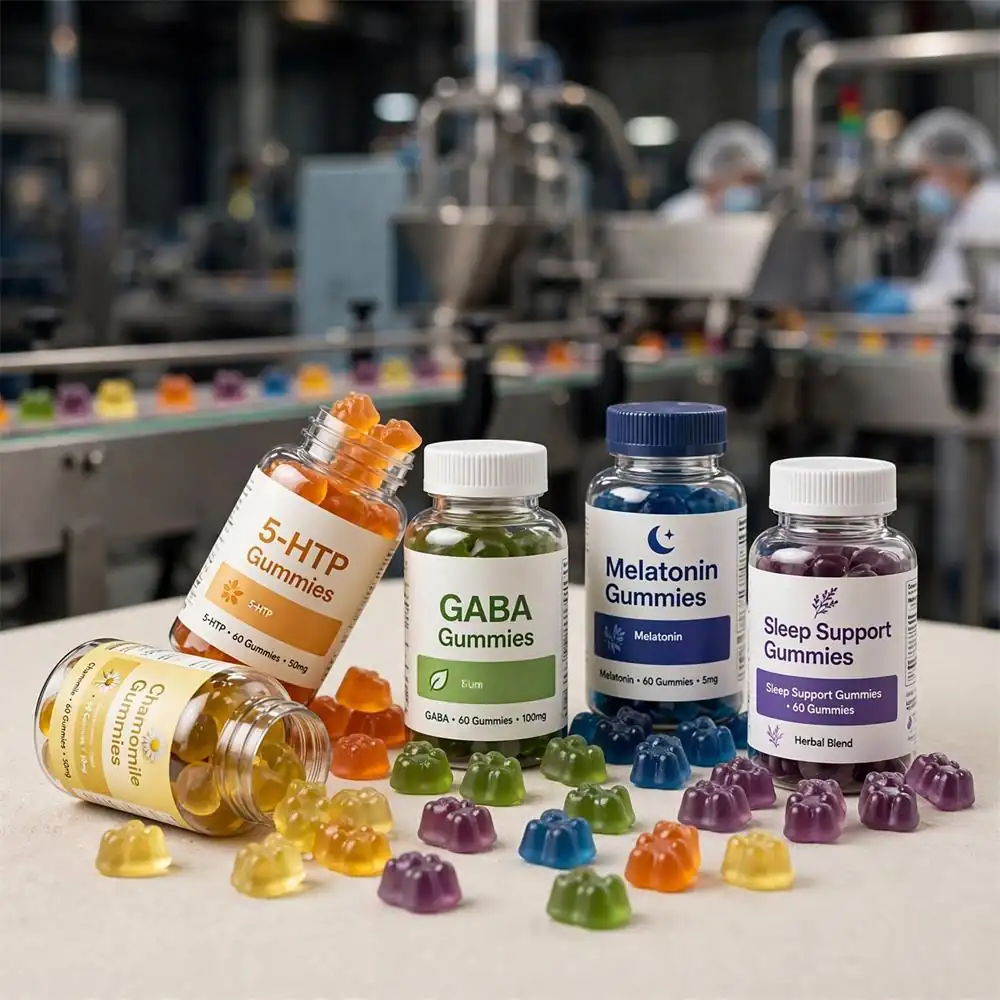
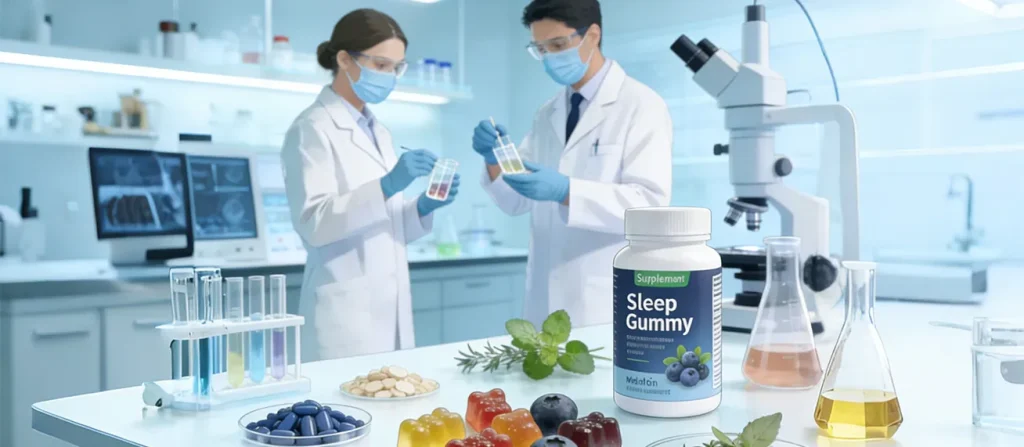
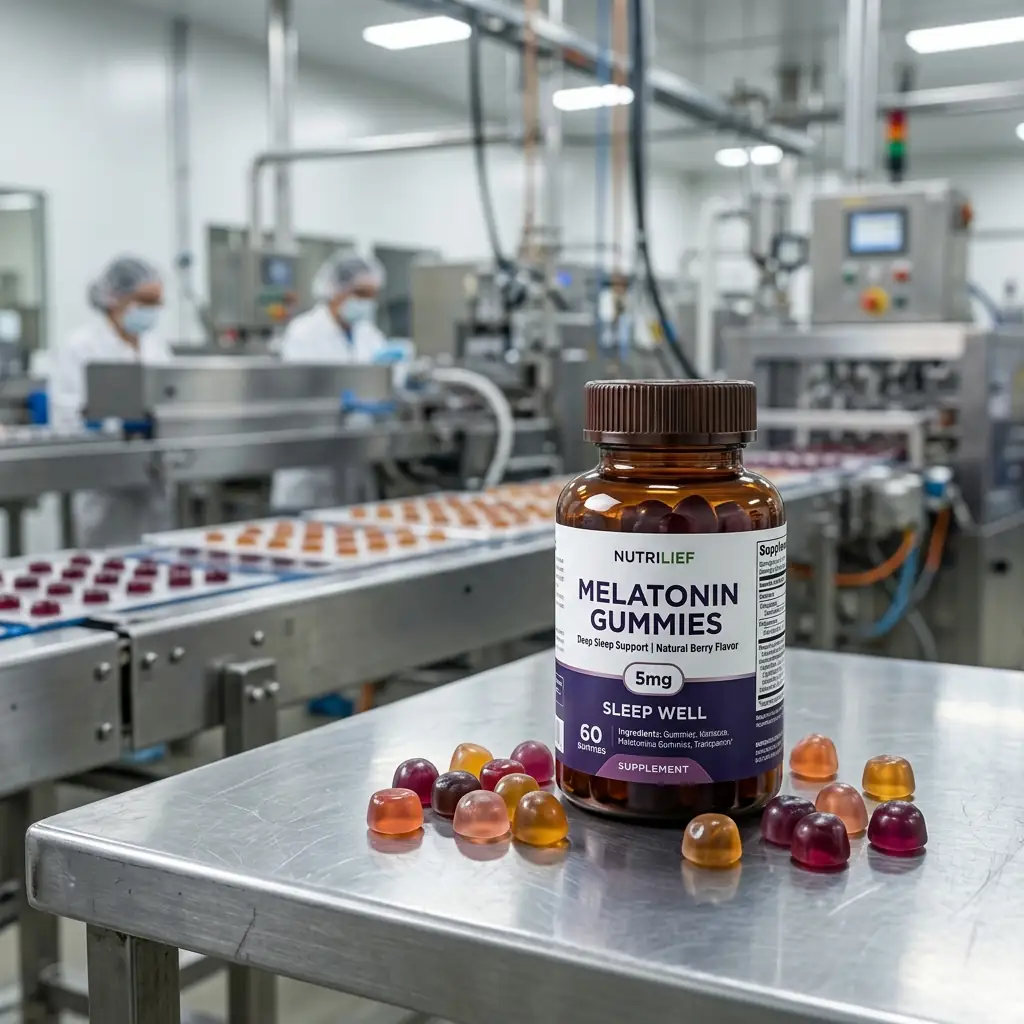
Sleep and Relaxation Gummies: Formulations featuring melatonin, ashwagandha, valerian, and L-theanine address the growing sleep wellness market. These products often emphasize natural ingredients and non-habit-forming benefits.
Probiotics and Digestive Health: Gummy formulations protect probiotic strains through manufacturing and storage, typically using microencapsulation or lyophilization techniques to ensure viability.
Women’s and Men’s Specific Formulations: Multivitamins and mineral blends tailored to gender-specific nutritional needs capture significant market share. Women’s formulations emphasize iron, biotin, and collagen; men’s versions highlight zinc, saw palmetto, and cardiovascular support.
Beauty and Collagen Gummies: A rapidly growing segment addressing skin, hair, and nail health. These often combine collagen hydrolysate, biotin, and antioxidant ingredients.
Adapatogenic Gummies: Products incorporating cannabidiol, ashwagandha, rhodiola, and reishi target stress management and daily wellness—representing some of the highest-margin categories in the market.
Market Longevity: Will Gummy Supplements Ever Fall Out of Favor?
A recurring question in the supplement industry concerns the durability of the gummy category. Will consumer preference eventually shift, rendering gummies obsolete? The evidence suggests this is unlikely in the foreseeable future.
Structural Market Advantages: Gummies address fundamental consumer psychology—they make supplement-taking enjoyable rather than burdensome. This psychological advantage, combined with the format’s versatility in accommodating new ingredients and consumer preferences, creates significant barriers to obsolescence.
Demographic Expansion: As younger cohorts age and gummy supplements become normalized as part of daily wellness routines, market penetration deepens. Rather than replacing gummies, the supplement industry increasingly uses gummies as a platform for innovation.
Ingredient Innovation: The gummy format proves remarkably adaptable to new ingredient categories—from probiotics to specialized amino acids. This flexibility ensures gummies remain relevant as nutritional science advances.
Competitive Dynamics: The gummy market’s profitability has attracted significant investment from major pharmaceutical and consumer health companies (Bayer, Nestlé, Nature’s Way, etc.), ensuring continued innovation and marketing support.
While no product category is permanently immune to disruption, the evidence indicates gummy supplements will remain a dominant format for the foreseeable future. The genuine question for brands and manufacturers isn’t whether to participate in the gummy market, but how to differentiate and capture share within an expanding category.
Conclusion: Preserving Market Opportunity in a Evolving Supplement Landscape
The story of gummy bears—from Hans Riegel’s 1922 creation in Bonn to today’s multi-billion-dollar supplement category—illustrates how consumer preferences, technological capability, and market dynamics create enduring opportunities.
For brands currently enjoying strong consumer reception for gummy products, the strategic imperative is clear: capitalize on current market conditions rather than assuming the category will remain perpetually dominant. Consumer preferences evolve, and new formats will inevitably emerge. However, the structural advantages of gummies (taste, convenience, customizability, versatility) suggest a long product lifecycle.
Success in today’s gummy market requires more than formulation—it demands partnership with manufacturers who understand both the science of supplement delivery and the business fundamentals of scalable production. Brands should prioritize manufacturers demonstrating deep R&D capability, rigorous quality standards, production flexibility, and proven expertise across the gummy product spectrum.
The gummy supplement market represents a mature yet growing opportunity. Those who invest in quality, innovation, and differentiation today are positioning themselves to maintain relevance as the market continues to evolve.
Frequently Asked Questions About Gummy Bears and Gummy Manufacturing
Q: What is the difference between a gummy supplement and a traditional vitamin tablet?A: Gummy supplements deliver nutrients in a chewable gel format using gelling agents like gelatin or pectin, while tablets compress powdered ingredients. Gummies taste better, are easier to consume, and are perceived as more palatable—particularly by children. However, tablets often accommodate higher dosages and have different shelf-life profiles. Both formats effectively deliver nutrients when properly formulated.
Q: How much does it cost to make gummies through a private label gummy manufacturer?A: Cost depends on formula complexity, ingredient sourcing, MOQ, and production batch size. Basic formulations using stock ingredients typically cost $0.15-$0.40 per gummy unit in volume production (100,000+ units). Custom formulations with specialty ingredients (probiotics, adaptogens, functional compounds) range $0.30-$1.00+ per unit. Brands selling at retail typically price gummies at 300-600% markup to cover packaging, marketing, and distribution.
Q: What are the main regulatory requirements for selling gummy supplements in the United States?A: Dietary supplement gummies must comply with FDA regulations (DSHEA), including proper ingredient listing, structure-function claims accuracy, and GMP compliance. Manufacturers must establish Foreign Supplier Verification Programs (FSVP) and maintain documentation for all raw materials. Products cannot claim to diagnose, treat, cure, or prevent disease. Manufacturers must register facilities and report adverse events. Many manufacturers also pursue third-party certifications (NSF, USP, ConsumerLab) to build consumer trust.
Q: Can gummies accommodate heat-sensitive ingredients like probiotics and vitamin C?A: Yes, through specialized techniques. Probiotics are protected using microencapsulation or lyophilization, allowing them to survive gummy manufacturing and storage. Vitamin C can be stabilized through pH adjustment and chelation. Advanced manufacturers employ encapsulation technologies that protect sensitive ingredients while enabling their release in the digestive tract. However, these techniques require sophisticated R&D capability and increase per-unit costs.
Q: What is the typical lead time for a custom gummy formulation from initial consultation to finished product?A: Standard timelines are typically 6-12 weeks from formulation approval to finished product delivery. This includes formulation development (2-4 weeks), stability testing (2-4 weeks), packaging coordination, and regulatory documentation. Expedited timelines (4-6 weeks) are possible for simpler formulations or modifications of existing products. Lead times expand when custom shapes, ingredients with extended sourcing timelines, or international regulatory approvals are required.
Q: How do manufacturers ensure consistent gummy texture and quality across production batches?A: Quality consistency relies on process control, precision equipment, and rigorous testing. Manufacturers monitor cooking temperatures, mixture consistency, depositing speeds, and setting conditions. Each batch undergoes weight uniformity testing, hardness measurement, moisture analysis, and active ingredient verification. Statistical process control systems flag deviations, and master batches are retained for reference comparisons. Modern gummy manufacturers conduct in-process testing and final QC to ensure every unit meets specifications.
About Gothink Biology: Your Gummy Manufacturing Partner
Shenzhen Gothink Biotech Co., Ltd. is one of China’s leading dietary supplement manufacturers, specializing in comprehensive gummy and supplement manufacturing services. With over a decade of experience in gummy contract manufacturing and private label gummy production, Gothink Biology combines world-class scientific leadership with production capability to support brands at every stage of growth.
Scientific Excellence and Research Depth
Gothink Biology’s competitive advantage begins with its leadership team. Our Chief Scientist holds a doctoral degree and serves as a Professor and doctoral advisor at the University of Science and Technology of China. He brings postdoctoral research experience from leading institutions including Cold Spring Harbor Laboratory, Emory University School of Medicine, and The Ohio State University, with a research focus on structural biology, biochemistry, and synthetic biology.
This scientific foundation translates directly into product development capability. Gothink Biology’s R&D team conducts formulation research on 2,000+ new products annually, working with clients to develop innovative, scientifically-validated supplement formulations. Our 10,000-class pharmaceutical-grade R&D laboratory enables precise formulation development, stability testing, and quality validation.
Production Scale and Manufacturing Excellence
Our manufacturing facility operates as a world-class production center with:
- 100,000-class cleanroom manufacturing environment ensuring pharmaceutical-grade product purity
- 16-ton daily production capacity with 5,000-ton annual capability, supporting everything from startup trials to enterprise-scale wholesale production
- 30+ customizable gummy shapes enabling brand differentiation and market segmentation
- Multiple gelling agent options (pectin, carrageenan, gelatin) accommodating vegan, vegetarian, and allergen-specific requirements
Comprehensive Service Model: OEM, ODM, CMO, and CDMO
Gothink Biology offers flexibility across the full manufacturing spectrum:
OEM (Original Equipment Manufacturing): Produce according to client specifications and designs, enabling private label solutions where your branding applies to our production.
ODM (Original Design Manufacturing): Full design and development services where we collaborate to create your unique formulation, providing complete technical support from conception through production.
CMO (Contract Manufacturing Organization): Focus-area manufacturing partnerships where we produce at scale while you manage branding, marketing, and distribution.
CDMO (Contract Development and Manufacturing Organization): End-to-end solutions combining development, manufacturing, and regulatory support—ideal for brands entering the supplement market without internal infrastructure.
Quality Assurance and Global Certification
Quality is non-negotiable in the supplement industry. Gothink Biology maintains certifications including:
- ISO 9001 (Quality Management Systems)
- ISO 22000 (Food Safety Management)
- HACCP (Hazard Analysis and Critical Control Points)
- GMP (Good Manufacturing Practice)
- FDA compliance and foreign supplier verification
- HALAL, KOSHER, and Vegan certifications
These certifications enable Gothink Biology to support brands pursuing global distribution across diverse regulatory jurisdictions and consumer segments.
Turnkey Solutions: From Concept to Market-Ready Products
Gothink Biology provides complete turnkey solutions including:
- Product Consultation: Strategic guidance on market positioning, ingredient selection, and competitive differentiation
- Formulation Development: Custom research and optimization of ingredient combinations for efficacy and stability
- Custom Design: Shape, color, flavor, and package design coordination
- Manufacturing at Scale: Production from trial batches through full commercial quantities
- Packaging and Logistics: Label design, packaging coordination, and fulfillment support
- Marketing Support: Regulatory documentation, compliance guidance, and claims substantiation
Specialized Gummy Categories
Gothink Biology manufactures across the complete gummy product spectrum, including:
- Gummy Vitamins and Minerals: Multivitamins, single-nutrient products (calcium, vitamin D, iron), and customized micronutrient blends
- Herbal and Botanical Supplements: Ashwagandha, turmeric, echinacea, and traditional herbal formulations
- Functional Health Gummies: Sleep support (melatonin gummies), immune support, digestive health, and beauty collagen formulations
- Performance and Fitness Gummies: Creatine gummies, pre-workout formulations, and amino acid supplements
- Women’s and Men’s Specialty Formulations: Gender-specific multivitamins and targeted health support products
- Probiotics and Microbiome Support: Encapsulated probiotic strains with enhanced stability
Partner with Gothink Biology
Whether you’re a startup developing your first gummy supplement, an established brand seeking manufacturing partners for scaling production, or a retailer developing a private label supplement line, Gothink Biology provides the scientific expertise, production capability, and regulatory knowledge to bring your vision to market efficiently.
Our partnership approach emphasizes transparency, quality, and mutual success. We invest in your success because your success drives our growth. From initial consultation through ongoing supply partnership, Gothink Biology serves as your dedicated extension of R&D and manufacturing capabilities.
Contact Gothink Biology today to explore how our manufacturing expertise, scientific leadership, and production scale can support your supplement brand’s growth.