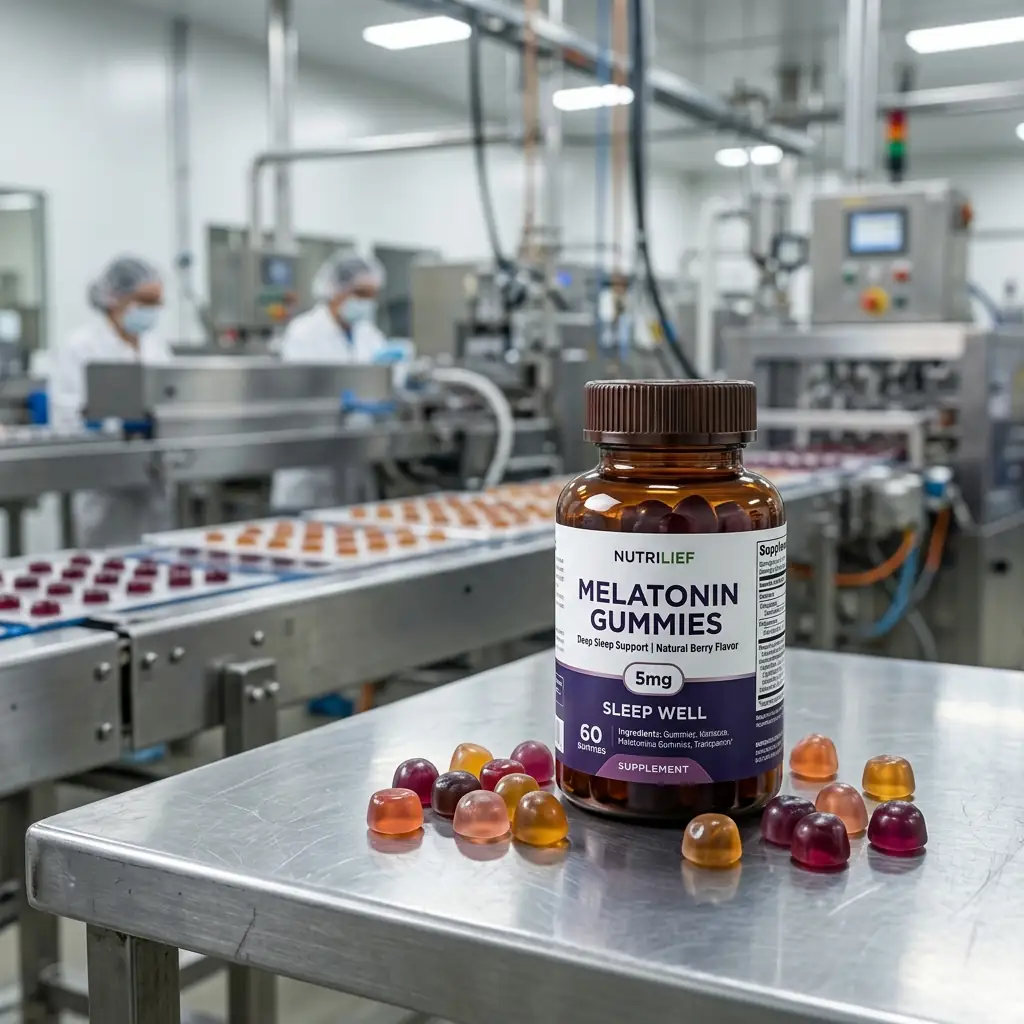

The global dietary supplement market is currently shifting toward more enjoyable delivery formats, making gummy bears a preferred choice for health-conscious consumers. For business owners, wholesalers, and private label brands, understanding the technical journey from a raw formulation to a shelf-ready product is essential for ensuring safety, stability, and market success. This guide provides a detailed look into the professional manufacturing process of gummy bears, emphasizing the scientific rigor and pharmaceutical-grade standards required to produce high-quality supplement gummies.
1. Scientific R&D: The Blueprint of a Successful Gummy
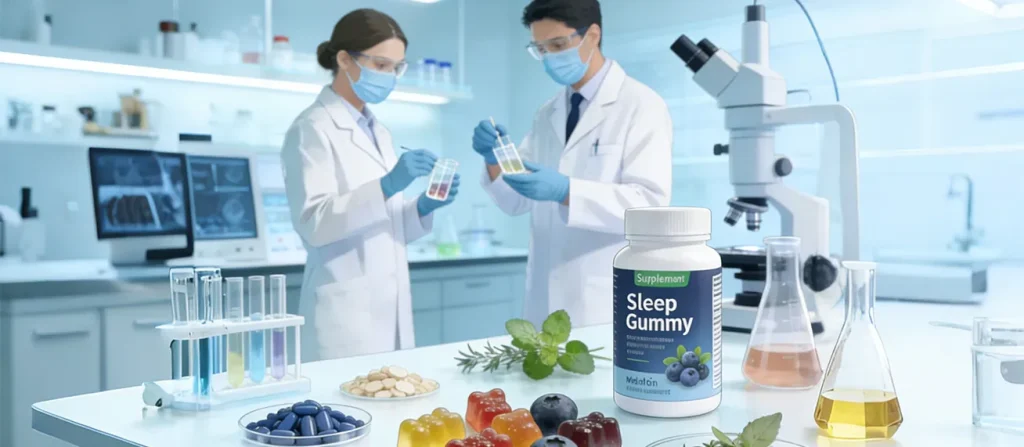
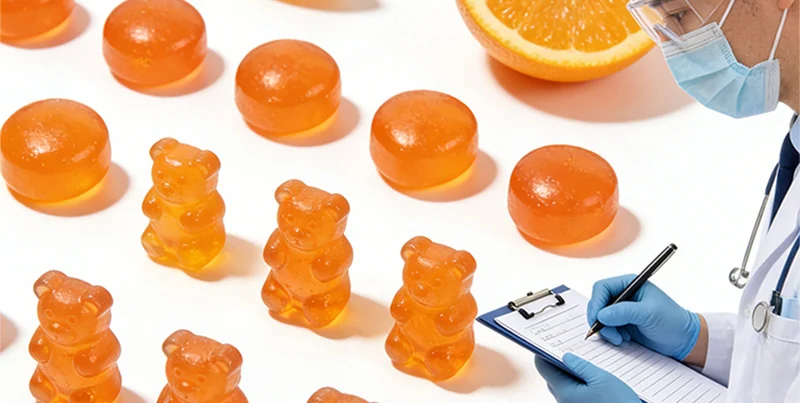
Before the first batch is mixed, the process begins in a high-tech laboratory. Professional manufacturing requires deep expertise in structural biology and biochemistry to ensure that active ingredients—such as vitamins, minerals, or herbal extracts—remain stable during production.
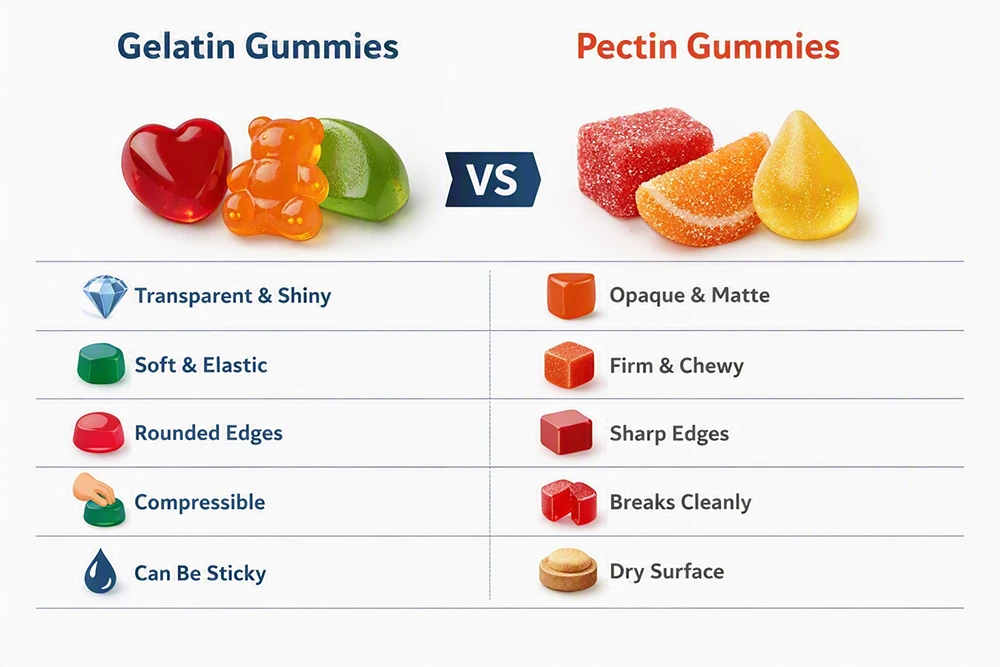
As a specialized manufacturer, our R&D team, led by postdoctoral researchers from elite U.S. institutions, conducts research on over 2,000 new product formulations annually. This stage involves selecting the right gelling agent, which defines the product’s identity. While traditional gelatin is common, many brands now opt for pectin or carrageenan to create vegan-friendly and heat-stable options. The goal is to balance active ingredient potency with a texture and flavor profile that consumers will love.
2. The Step-by-Step Manufacturing Process
Producing gummy bears at scale is a precise industrial operation that combines temperature control with exact timing.
-
Mixing and Solubilization: Raw ingredients are blended in a 10,000-class pharmaceutical-grade laboratory. This ensures the base slurry is uniform and the active supplements are evenly distributed.
-
Cooking and Flavoring: The mixture is heated to a specific “Brix” level to achieve the correct sugar or sweetener concentration. At this stage, natural colors, flavors, and sensitive health ingredients are added under strict temperature monitoring to prevent degradation.
-
Molding and Deposition: The liquid slurry is deposited into precise molds. For a private label brand, this is where custom shapes—including the iconic bear—are formed.
-
Curing and Drying: Unlike standard confectionery, supplement gummies require a controlled curing period in specialized drying rooms to reach the ideal chewiness and water activity level, which prevents mold growth.
-
Finishing and Coating: To ensure the gummies do not stick together and maintain a professional appearance, they are finished with a light coating of carnauba wax or oil.
3. Quality Assurance and Regulatory Compliance
For any brand entering the supplement space, the manufacturing environment is the most critical factor for building consumer trust. Professional gummy bears manufacturers must operate within high-standard cleanrooms—ideally 100,000-class—to mitigate the risk of contamination.
Adherence to international standards such as FDA and GMP is non-negotiable. Furthermore, third-party certifications like ISO22000, HACCP, Halal, and Kosher provide an additional layer of authority, ensuring the product meets the dietary and safety requirements of global markets. This transparency in the manufacturing process is what separates a professional-grade health tool from a simple candy.
4. Scaling Production for Growth
Success in the gummy market requires a partner who can scale alongside your brand. A high-capacity facility can produce up to 16 tons of product daily, offering flexibility from small-batch trial runs to mass-market distribution.
A “turnkey solution” is often the most efficient path for new brands, covering everything from raw material sourcing and custom formulation to final packaging in jars or pouches. This end-to-end support allows business owners to focus on marketing while the manufacturer handles the complexities of compliance and export logistics.
Conclusion
Manufacturing high-quality gummy bears is a sophisticated blend of food science and pharmaceutical precision. By prioritizing scientific R&D, rigorous quality control, and scalable production, brands can deliver effective and reliable health products. Choosing a manufacturer that emphasizes experience and transparency ensures that your private label gummies are not only delicious but also meet the highest standards of safety and efficacy required by today’s educated consumer.
FAQ: Professional Gummy Manufacturing
Q: Can gummy bears be made without animal-derived ingredients? A: Yes. Modern manufacturing techniques allow for the use of pectin (derived from citrus) or carrageenan (derived from seaweed) to create high-quality vegan and vegetarian supplement gummies that are also more resistant to melting in warm climates.
Q: How do you ensure the vitamins don’t lose their potency during the heating process? A: This is managed through “overages” and precise temperature control. Formulations are designed to account for the heat used during cooking, and sensitive ingredients are often added at the latest possible stage of the process to maintain their bioactivity.
: What is the benefit of a “turnkey” manufacturing service? A: A turnkey service handles the entire lifecycle of the product—from initial recipe development and ingredient sourcing to manufacturing, third-party testing, and final bottle labeling. This reduces the logistical burden on the brand owner.
Q: Are there low-sugar or sugar-free options for supplement gummies? A: Absolutely. Manufacturers can use sugar alcohols like maltitol or natural sweeteners like stevia and monk fruit to create functional gummy bears that cater to keto or diabetic-friendly diets without sacrificing texture.