
Summary
What gummy bears are made of directly dictates a product’s texture, shelf stability, dietary classification, and manufacturing feasibility. For B2B buyers, understanding these core components—gelling agents, sweeteners, and active ingredients—is essential for sourcing, formulation development, and market positioning.
Definition
What gummy bears are made of refers to the specific combination of structural bases (gelling agents), bulk sweeteners, flavorings, colorings, and functional active ingredients used to produce chewable gelatinous confections. In a B2B context, this composition determines the product’s dietary claims, such as vegan, halal, or sugar-free, and dictates the required production technology.
Main Content
What Gummy Bears Are Made Of
The formulation of a gummy bear relies on a precise matrix of ingredients. The primary structural component is the gelling agent, traditionally gelatin (derived from bovine or porcine collagen), though plant-based alternatives like pectin, carrageenan, or starch are increasingly prevalent. Bulk is provided by sweeteners, typically corn syrup and sucrose, or sugar alcohols like maltitol and erythritol for sugar-free variants. Finally, the matrix includes water, natural or artificial flavorings, fruit extracts, and targeted nutraceuticals like vitamins.
Industry Background and Origin
Gummy candies originated in Germany in the early 20th century, utilizing traditional gelatin. However, the modern nutraceutical gummy sector has evolved significantly. As consumer demand shifted toward clean-label and plant-based diets, the industry expanded to incorporate pectin and starch bases. Today, the transition from simple confectionery to functional dietary supplements represents a major shift in the industry’s background.
Business Relevance
Ingredient selection fundamentally impacts market demand and supply chain logistics. Formulations dictate the target demographic; for instance, using pectin allows a brand to market to vegans, while avoiding specific allergens broadens retail distribution. Sourcing high-quality, standardized gelling agents and active ingredients is critical to maintaining margin consistency and ensuring smooth gummy bears production cycles.
Differences vs. Alternative Formats
Compared to traditional capsules or tablets, gummies mask the often unpleasant taste of raw nutraceuticals through flavor matrices. Unlike powders, they require no preparation by the end-user. However, unlike encapsulated oils or highly unstable compounds, gummies are aqueous environments, making them less suitable for moisture-sensitive or highly volatile active ingredients without specialized microencapsulation.
Key Advantages and Limitations
The primary advantage is high consumer compliance due to pleasant taste and chewable format. Formulation flexibility allows brands to easily adjust dosages. Limitations include a lower tolerance for high concentrations of active ingredients compared to tablets, sensitivity to heat and humidity during storage, and generally higher manufacturing costs per unit of active compound delivered.
Who Should Consider This
Health and wellness brands, nutraceutical distributors, and retailers looking to expand into the highly compliant edible supplement space should consider this format. It is particularly relevant for OEM/ODM buyers targeting pediatric markets, senior nutrition, or consumers averse to swallowing pills.
Compliance and Regulatory Considerations
Regulatory bodies like the FDA and EFSA strictly govern what gummy bears are made of, particularly regarding permissible food additives, colorants, and maximum dosage limits for vitamins and minerals. Furthermore, labeling requirements demand accurate representation of the gelling agent (e.g., distinguishing bovine from porcine gelatin for religious compliance, or verifying pectin sources for vegan claims).
What to Evaluate Before Sourcing
Before engaging a manufacturer to make gummy bears, businesses must evaluate the stability of their chosen active ingredients within a gummy matrix. Additionally, assessing the supplier’s ability to control moisture content, prevent cross-contamination, and achieve uniform dosing (weight variation) is critical to preventing batch failures and regulatory rejections.
Technical Parameter Table
| Parameter Category | Technical Details |
|---|---|
| Product Form | Chewable, gelatinous bear-shaped confection |
| Key Materials / Ingredients | Gelling agents (gelatin, pectin, starch), sweeteners (sucrose, corn syrup, maltitol), water, flavors, colors, active nutraceuticals |
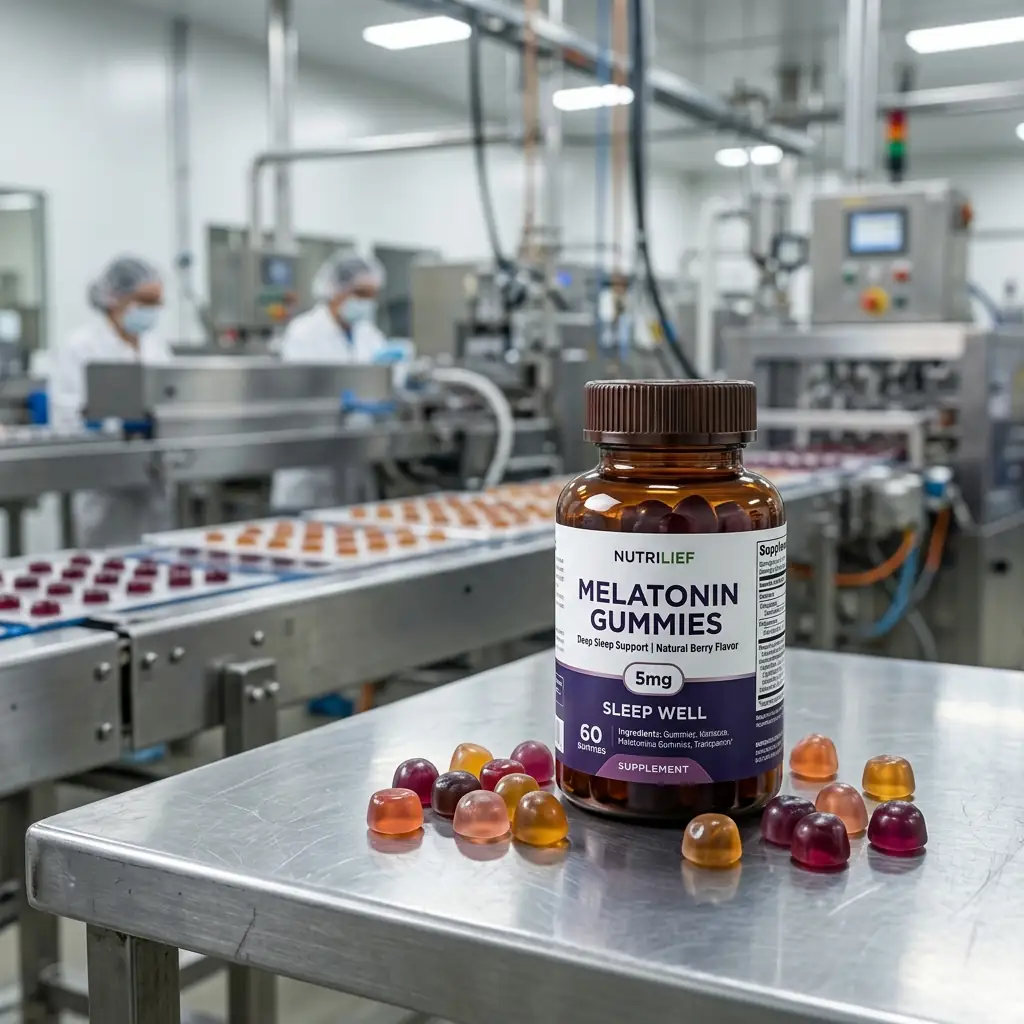
| Manufacturing Process Highlights | Dry mixing, thermal dissolution (80-90°C), vacuum degassing, starch molding or silicone molding, controlled cooling, demolding, oiling/polishing |
| Quality Standards | cGMP, ISO 22000, HACCP, FDA, third-party testing for heavy metals, microbes, and active ingredient potency |
| Packaging Options | PET bottles with desiccants, stand-up pouches, blister packs (for high-moisture environments) |
| Scalability & Production Capacity | Highly scalable from small pilot runs (5,000 units) to bulk commercial batches (millions of units) depending on molding line configuration |
| Storage & Logistics Considerations | Store below 25°C and below 50% relative humidity; avoid direct sunlight to prevent melting, sticking, and degradation of heat-sensitive actives |
Practical Insights
Manufacturing Quality and Process Control
Precise temperature control during the cooking and depositing phases is vital. If the slurry is too hot, it can degrade heat-sensitive vitamins (like Vitamin C); if too cool, it will clog the depositors. Consistent weight and dosing rely on highly calibrated depositing pumps.
Raw Material Sourcing Transparency
The origin of gelling agents carries significant commercial implications. Bovine or porcine gelatin requires strict religious certifications (Halal/Kosher). Pectin quality varies by fruit source and degree of esterification, which directly impacts the final chew and set time of the product.
Production Scalability and Lead Time
Starch molding requires significant lead time for starch tray preparation and drying rooms, whereas silicone molding offers faster cycle times but higher initial tooling costs. Buyers must align their launch timelines with the specific molding technology utilized by their gummy bears manufacturer.
Compliance and Documentation Readiness
Suppliers must provide comprehensive documentation including Certificates of Analysis (CoA) for raw materials, Allergen Free statements, and stability testing data. Engaging in Gummy Contract Manufacturing requires strict adherence to regional dietary supplement regulations to prevent customs detentions.
Cost Structure Considerations
Pectin and starch bases are generally more expensive than standard gelatin. Sugar-free formulations using high-purity erythritol or allulose also carry a premium. The cost is heavily influenced by the concentration and quality grade of the active ingredients infused into the matrix.
How to Evaluate a Reliable Supplier
A reliable supplier should demonstrate transparent batch records, in-house analytical testing capabilities (HPLC for potency, GC for residual solvents), and a proven track record of handling the specific gelling agent your product requires.
B2B Decision Guide
How Brands Choose the Right Manufacturer
Brands must match their formulation requirements with the manufacturer’s core capabilities. A facility specializing in high-gelatin pectin blends may not be the best fit for a highly complex, multi-layered functional gummy requiring specialized drying techniques.
What Matters in OEM/ODM Projects
In OEM/ODM projects, intellectual property protection, flavor profile differentiation, and the ability to produce clean-label formulations are paramount. Buyers should assess whether the manufacturer uses artificial flavors/colors or if they can source natural alternatives to align with modern market trends.
How to Assess Production Capability
Facility audits are essential. Buyers should evaluate the depositor technology (e.g., Servo-driven depositors for high accuracy), the capacity of the climate-controlled drying tunnels, and the cleanliness of the demolding and polishing areas.
Key Criteria for Long-Term Partnerships
Long-term success relies on the supplier’s ability to scale production without compromising batch-to-batch consistency. Financial stability, raw material procurement power, and proactive communication regarding supply chain disruptions are critical criteria.
Risk Control and Quality Assurance Checkpoints
Key checkpoints include incoming raw material quarantine testing, in-process viscosity and Brix monitoring, final product weight variation analysis, and accelerated stability testing. For brands launching private label gummy bears, establishing a rigid quality assurance protocol prevents costly product recalls and protects brand reputation.
Conclusion
Understanding what gummy bears are made of is a foundational requirement for B2B success in the nutraceutical confectionery space. The strategic selection of gelling agents, sweeteners, and active ingredients directly influences product stability, consumer appeal, and regulatory compliance. By aligning formulation goals with a manufacturer’s technical capabilities, businesses can mitigate production risks and deliver high-quality, differentiated products to market.
FAQ
What is the primary ingredient in traditional gummy bears?
Traditional gummy bears are primarily made of gelatin, which provides their signature chewy texture and elastic structure.
Why does the choice of gelling agent matter for manufacturers?
The gelling agent dictates the processing temperature, setting time, and final texture, while also determining the product’s dietary classification (e.g., vegan, halal, or kosher).
How do gummy bears compare to hard capsules as a supplement format?
Gummies offer superior taste masking and higher consumer compliance but generally have lower active ingredient capacity and are more sensitive to heat and moisture than hard capsules.
What should businesses consider before sourcing gummy formulations?
Businesses must evaluate the thermal stability of their active ingredients, the target market’s dietary restrictions, required shelf-life, and the manufacturer’s precision dosing capabilities.
What quality standards apply to commercial gummy production?
Commercial production must adhere to cGMP, HACCP, and ISO 22000 standards, alongside third-party testing for heavy metals, microbial limits, and active ingredient potency verification.
Company Introduction
Shenzhen Gothink Biotech Co., Ltd. is a dietary supplement manufacturer providing OEM, ODM, CMO, and CDMO services. The company features a 100,000-class cleanroom GMP facility with a daily output of 16 tons and an annual capacity of 5,000 tons. Supported by a 10,000-class pharmaceutical-grade R&D laboratory led by scientists with U.S. postdoctoral backgrounds, Gothink develops approximately 2,000 new product formulations annually. The company produces various formats, including gummies, capsules, tablets, powders, and drops, holding certifications such as ISO9001, ISO22000, HACCP, FDA, HALAL, GMP, KOSHER, BRC, FSSC 22000, PJPH, and Vegan. Gothink offers flexible MOQs, custom formulation development, and comprehensive turnkey solutions from raw material sourcing to final export packaging for global B2B partnerships.