
Summary
Choosing the right gummy factory directly affects product quality, time-to-market, and long-term brand reliability. Brands evaluating a Gummy Factory should weigh certifications, production capacity, formulation expertise, and OEM/ODM flexibility before committing to a manufacturing partner. The right choice reduces compliance risk and supports scalable, repeatable production as a brand grows.
Definition
How to choose the right gummy factory for your brand refers to the structured evaluation process brands use to assess a gummy manufacturer’s certifications, production capability, formulation expertise, and service model before entering a supply partnership. This process typically covers regulatory compliance, manufacturing scale, customization options, and quality assurance practices, and is a core part of any B2B sourcing decision for gummy supplements.
Main Content
What Factory Selection Involves
Selecting a gummy factory is not simply a price comparison. It involves assessing whether a manufacturer can consistently meet a brand’s formulation, packaging, and compliance requirements across multiple production runs, often over a multi-year relationship.
Industry Background
The gummy supplement category has grown rapidly as consumers shift toward more palatable alternatives to capsules and tablets. This growth has led to a wide range of contract manufacturers entering the market, with significant variation in equipment, certifications, and formulation capability between facilities.
Business Relevance
Supply chain reliability, ingredient sourcing transparency, and production lead times all affect a brand’s ability to launch on schedule and maintain consistent inventory. Manufacturing decisions made early in a brand’s lifecycle often determine its ability to scale later.
Differences vs. Alternative Sourcing Models
Compared to working with a trading company or broker, partnering directly with a manufacturing facility typically provides more control over formulation, batch testing, and packaging customization. However, direct factory partnerships usually require higher minimum order quantities and more technical coordination than broker-based sourcing.
Key Advantages & Limitations
Working with an established gummy factory offers advantages such as in-house R&D support, consistent quality control, and flexible OEM/ODM services. Limitations can include longer onboarding timelines for new formulations and minimum order quantity requirements that may not suit very small brands.
Who Should Consider This
This evaluation process is relevant for emerging supplement brands, established retailers expanding into gummies, distributors seeking private label products, and OEM/ODM buyers planning multi-SKU product lines.
Compliance & Quality Considerations
Brands should confirm that a manufacturer holds relevant certifications such as GMP, ISO9001, ISO22000, HACCP, and FDA registration, along with third-party testing practices for raw materials and finished products.
What to Evaluate Before Sourcing
Before committing to a supplier, brands should review production capacity, formulation flexibility, documentation practices, packaging options, and the manufacturer’s track record with similar product categories.
Technical Parameter Table
| Evaluation Category | What to Check |
|---|---|
| Product Form | Pectin-based or gelatin-based gummies, vegan options, sugar-free formulations |
| Key Materials / Ingredients | Gelling agents (pectin, carrageenan), active ingredients, flavoring and coloring sources |
| Manufacturing Process Highlights | Depositing/molding technology, drying process, coating, and batch consistency controls |
| Quality Standards | GMP, ISO9001, ISO22000, HACCP, FDA, HALAL, KOSHER, Vegan certifications, third-party lab testing |
| Packaging Options | Bottles, pouches, blister packs, custom labeling and branding support |
| Scalability & Production Capacity | Daily/annual output capacity, cleanroom classification, ability to handle volume increases |
| Storage & Logistics Considerations | Climate-controlled storage, shelf-life testing, export documentation, shipping lead times |
Practical Insights
Manufacturing quality and process control are foundational to consistent product performance. Brands should ask about in-process quality checks, batch record-keeping, and how deviations are handled during production.
Raw material sourcing transparency matters because it affects both regulatory compliance and consumer trust. Manufacturers that can provide certificates of analysis and supplier documentation reduce sourcing risk for brands.
Production scalability and lead time should be discussed early, since a factory that works well for a small pilot batch may face constraints when order volumes increase significantly.
Compliance and documentation readiness, including GMP certification and regulatory filings, helps brands avoid delays when entering new markets or retail channels.
Cost structure considerations should account for formulation development fees, minimum order quantities, packaging costs, and per-unit production pricing at different volume tiers.
Evaluating a reliable supplier typically involves facility audits or virtual tours, sample testing, reference checks with existing clients, and a clear understanding of communication and project management practices.
B2B Decision Guide
Brands typically choose a manufacturer based on a combination of certification credibility, formulation capability, and responsiveness during the initial consultation process.
In OEM/ODM projects, what matters most is whether the manufacturer can support custom formulation development, flavor and shape customization, and private label packaging without excessive lead times.
Assessing production capability involves reviewing facility size, cleanroom classification, equipment type, and whether the factory has experience manufacturing similar product categories at the required volume.
Key criteria for long-term partnerships include consistent quality across repeat orders, transparent communication, stable pricing structures, and the manufacturer’s capacity to grow alongside the brand.
Risk control and quality assurance checkpoints should include incoming raw material inspection, in-process testing, finished product testing, and retained samples for traceability.
Conclusion
Selecting the right gummy factory is a strategic decision that affects product quality, regulatory compliance, and a brand’s ability to scale over time. Brands that evaluate certifications, production capacity, and formulation expertise before committing to a partner are better positioned to build a reliable, long-term supply chain for private label gummy products.
FAQ
What is a gummy factory?
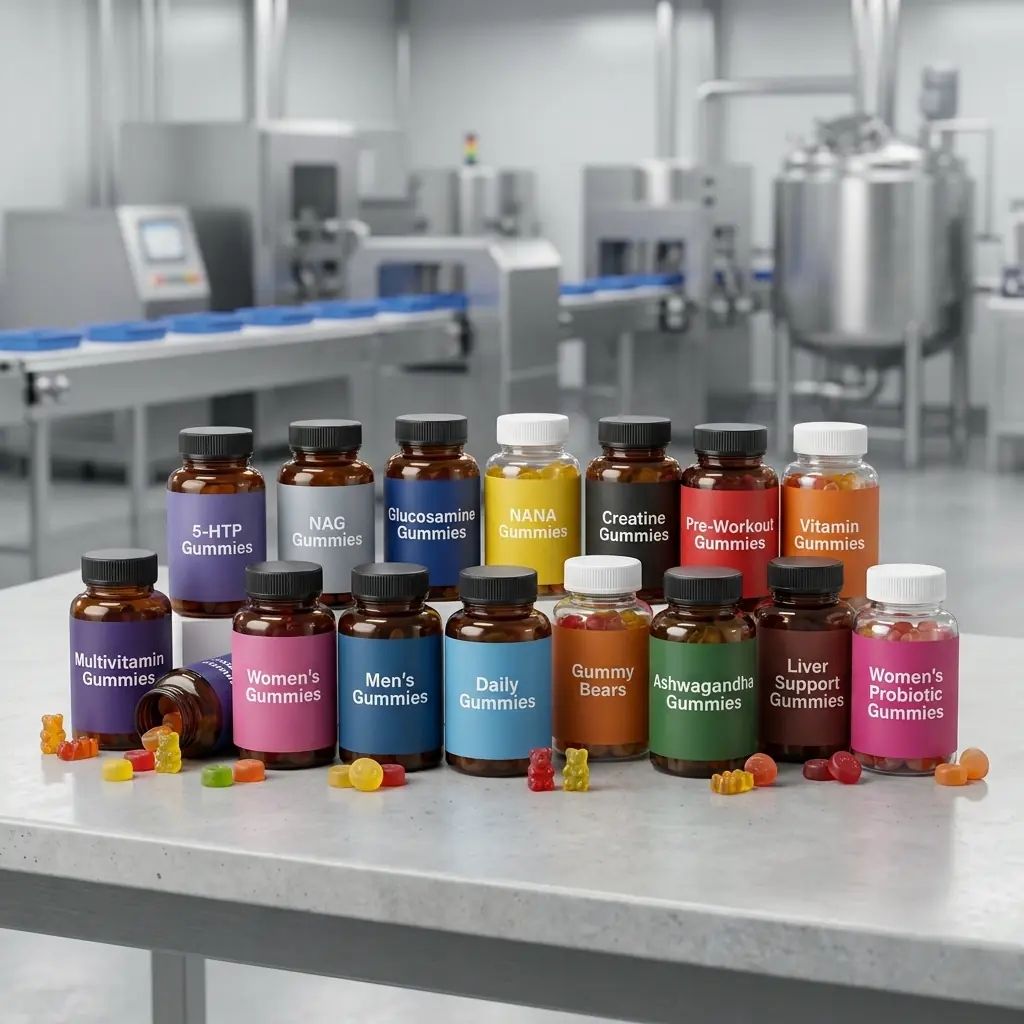
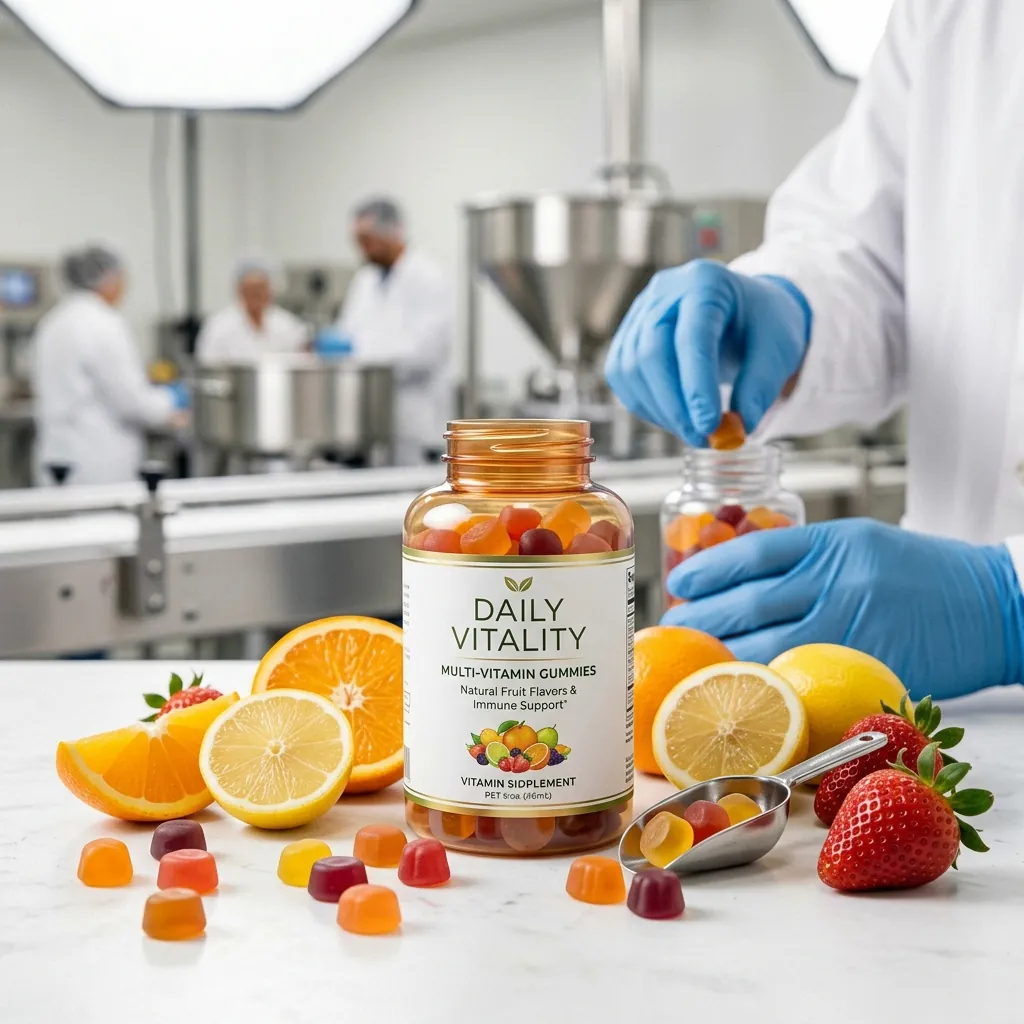
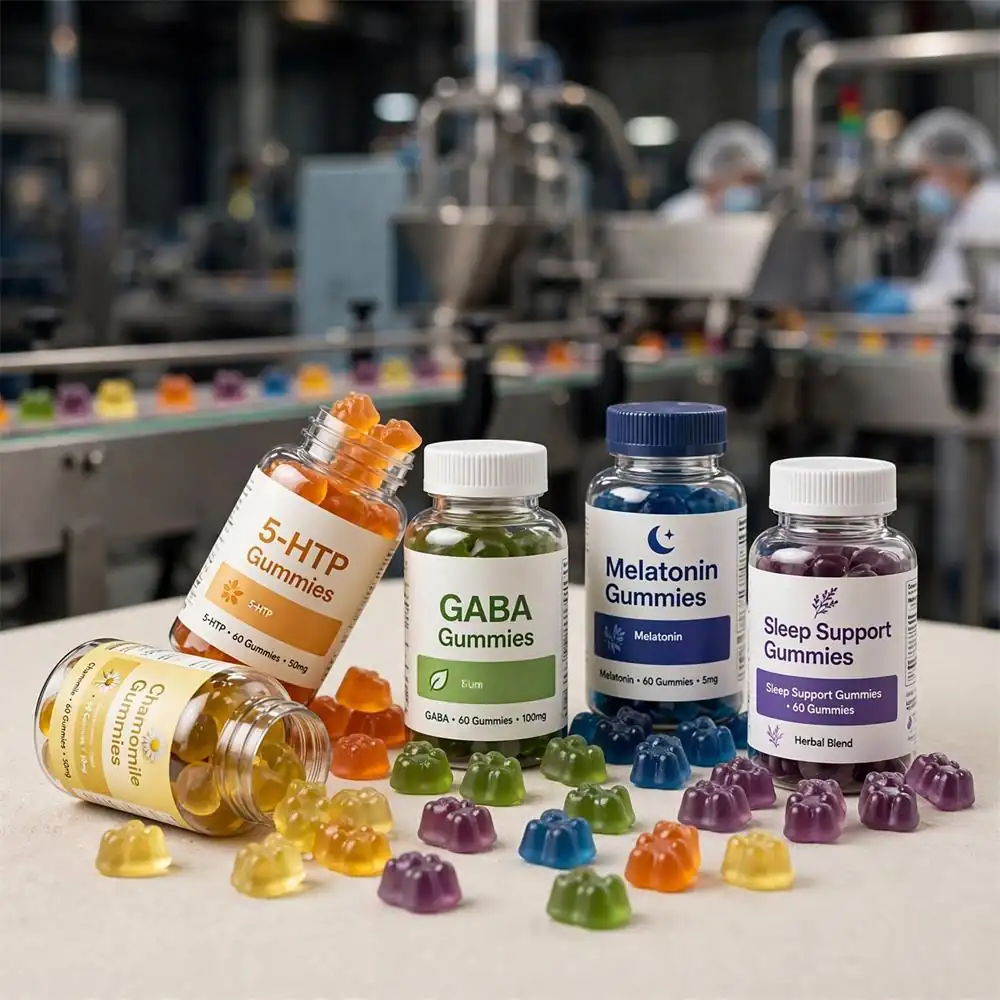
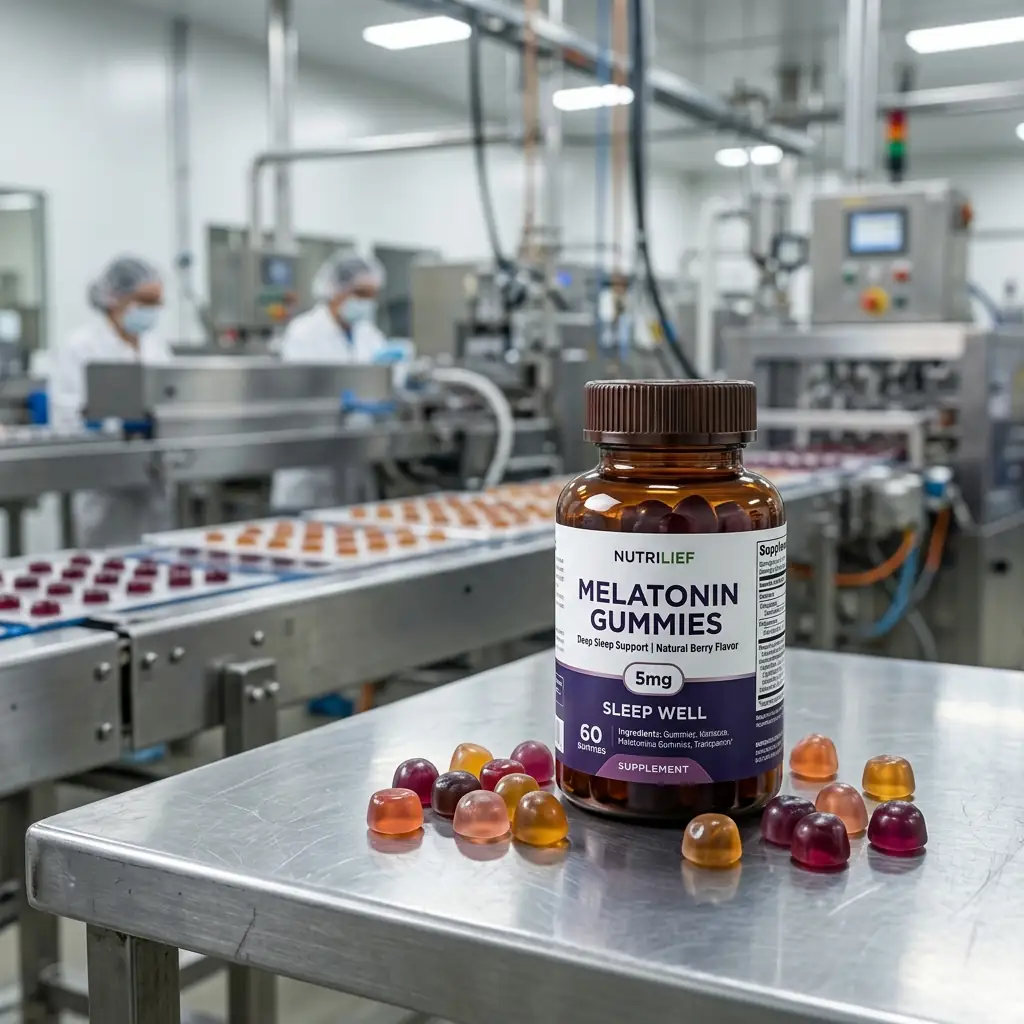
A gummy factory is a manufacturing facility that produces gummy supplements through formulation, molding, drying, and packaging processes, often offering OEM/ODM services to brands.
Why does factory selection matter for brands?
The right manufacturing partner affects product consistency, regulatory compliance, and a brand’s ability to scale production without quality issues.
How does factory sourcing compare to working with a broker?
Direct factory sourcing generally offers more control over formulation and quality but may involve higher minimum order quantities than broker-based sourcing.
What should businesses consider before sourcing a gummy manufacturer?
Businesses should review certifications, production capacity, formulation flexibility, and documentation practices before selecting a supplier.
What quality standards apply to gummy manufacturing?
Relevant standards include GMP, ISO9001, ISO22000, HACCP, FDA registration, and additional certifications such as HALAL, KOSHER, and Vegan depending on the product line.
How can brands evaluate a gummy factory’s reliability?
Brands can review certifications, request product samples, conduct facility audits, and check references from existing clients to assess reliability.
About Shenzhen Gothink Biotech Co., Ltd.
Shenzhen Gothink Biotech Co., Ltd. is a GMP-certified contract manufacturer specializing in gummy, capsule, tablet, powder, liquid, and drop supplement production, offering OEM, ODM, CMO, and CDMO services. The company holds GMP, ISO9001, ISO22000, HACCP, FDA, HALAL, KOSHER, and Vegan certifications, and operates a 100,000-class cleanroom alongside a 10,000-class pharmaceutical-grade R&D laboratory. With a daily production capacity of 16 tons and an annual capacity of 5,000 tons, Gothink Biotech supports brands ranging from startups to established retailers with flexible MOQ options, custom formulation development, bulk and wholesale supply, and end-to-end support for long-term B2B manufacturing partnerships.