
Summary: Gummy manufacturing is a sophisticated process that combines food science, precision equipment, and quality control measures. From formulation and ingredient preparation through molding, cooling, and packaging, each stage requires careful management. Whether for private label production or custom formulations, understanding the gummy production process is essential for brands seeking reliable contract manufacturing partners.
Definition: What Are Gummies and How Do They Fit Into Manufacturing?
Gummies refer to chewable nutritional supplements or confectionery products with a gel-based matrix structure, typically made from gelatin or pectin, combined with active ingredients, flavorings, colorants, and sweeteners. In the context of dietary supplements, gummies have become the fastest-growing delivery format for vitamins, minerals, and herbal extracts due to their palatability, ease of consumption, and consumer appeal. The gummy contract manufacturing industry specializes in producing these products at scale while adhering to pharmaceutical-grade standards, regulatory compliance, and custom specifications for brands worldwide.
The Complete Gummy Manufacturing Process
1. Formulation & Product Development
The foundation of any gummy product begins with precise formulation. This stage involves:
- Ingredient Selection: Determining the gelling agent (gelatin, pectin, or carrageenan for plant-based options), sweeteners, and active ingredients such as vitamins, minerals, or herbal extracts
- Dosage Calculation: Ensuring accurate dosing per gummy unit to meet label claims and regulatory requirements
- Stability Testing: Evaluating how ingredients interact, their shelf-life potential, and compatibility with packaging materials
- Flavor & Color Design: Selecting natural or synthetic colorants and flavorings that complement the active ingredients and appeal to target consumers
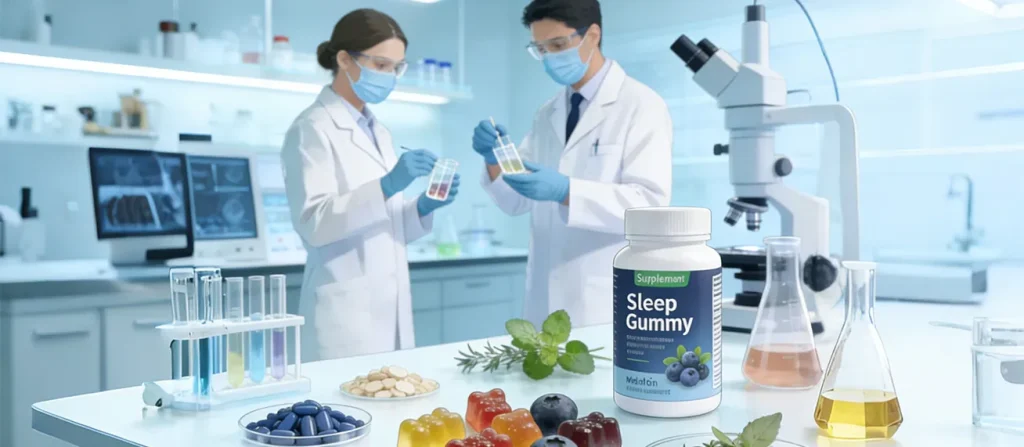
Professional custom gummy manufacturers maintain dedicated R&D laboratories—often pharmaceutical-grade facilities—where formulation scientists conduct extensive testing before production begins. This stage typically involves multiple iterations to achieve the optimal balance of efficacy, taste, and stability.
2. Raw Material Sourcing & Quality Verification
Once the formula is finalized, all raw materials undergo rigorous procurement and testing:
- Suppliers are vetted for compliance with quality standards (ISO, GMP, HACCP)
- Certificates of Analysis (CoA) verify purity, potency, and absence of contaminants
- Active ingredient batches are tested for content uniformity and microbiological safety
- Storage conditions are controlled to maintain ingredient integrity
This verification process is critical in private label gummy production, where brand owners depend on manufacturers to guarantee ingredient quality and regulatory compliance.
3. Mixing & Ingredient Preparation
Raw materials are prepared and combined in a controlled sequence:
- Pre-mixing: Dry ingredients (vitamins, minerals, sweeteners) are blended to ensure uniform distribution
- Gelling Agent Hydration: Gelatin or pectin is dissolved in hot water or specific solvents to create a homogeneous gel base
- Ingredient Integration: Active ingredients and flavorings are added at precise temperatures to prevent degradation
- Quality Check: Viscosity, color, and consistency are verified before moving to the next stage
Temperature control during this phase is essential—too high and heat-sensitive ingredients lose potency; too low and the mixture may not achieve proper gel formation.
4. Filling & Molding
The gummy mass is loaded into production equipment for shaping:
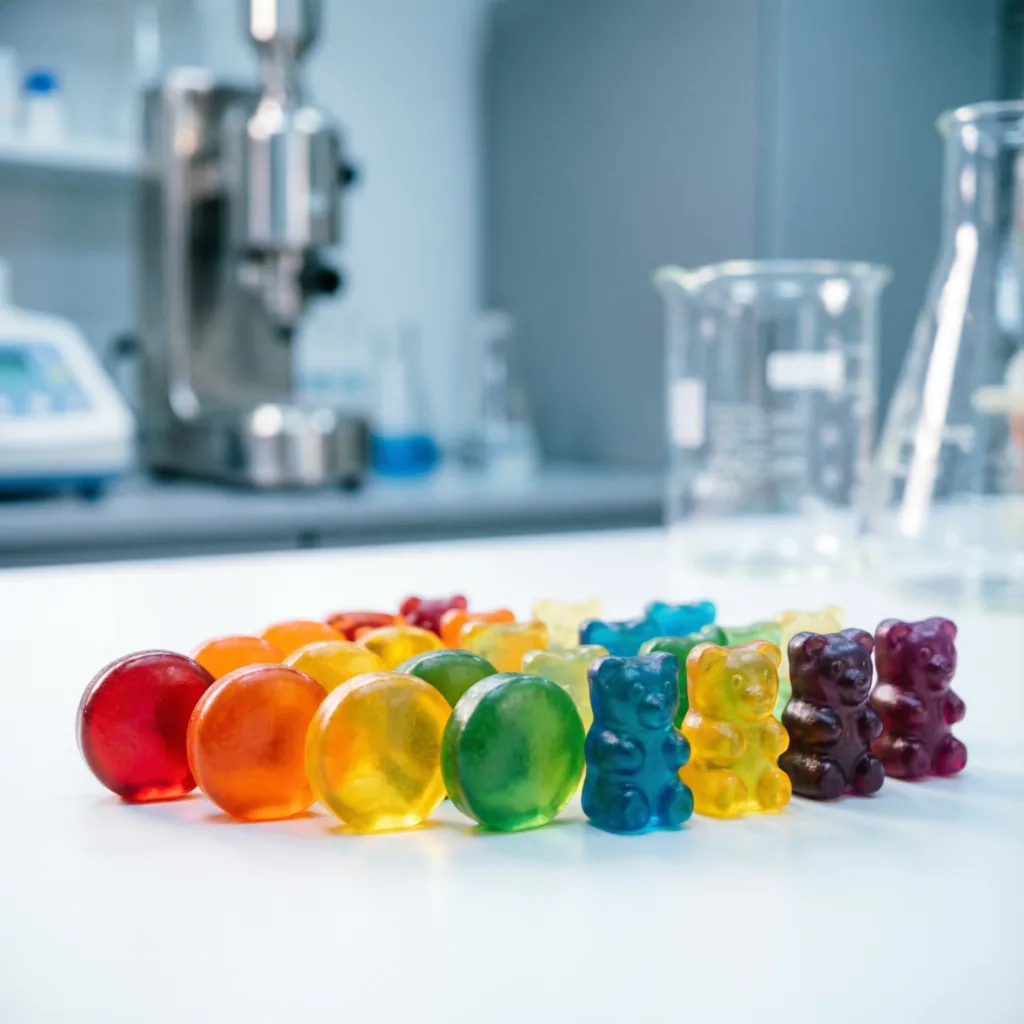
- Depositing Machine: Automated equipment deposits precise volumes of gummy mixture into molds (available in 30+ shapes and sizes)
- Mold Specifications: Custom molds define gummy size, shape, and thickness; replaceable molds allow flexibility for private label gummy manufacturer operations
- Fill Accuracy: Weight and volume are continuously monitored to ensure each gummy meets specifications (typically ±5% tolerance)
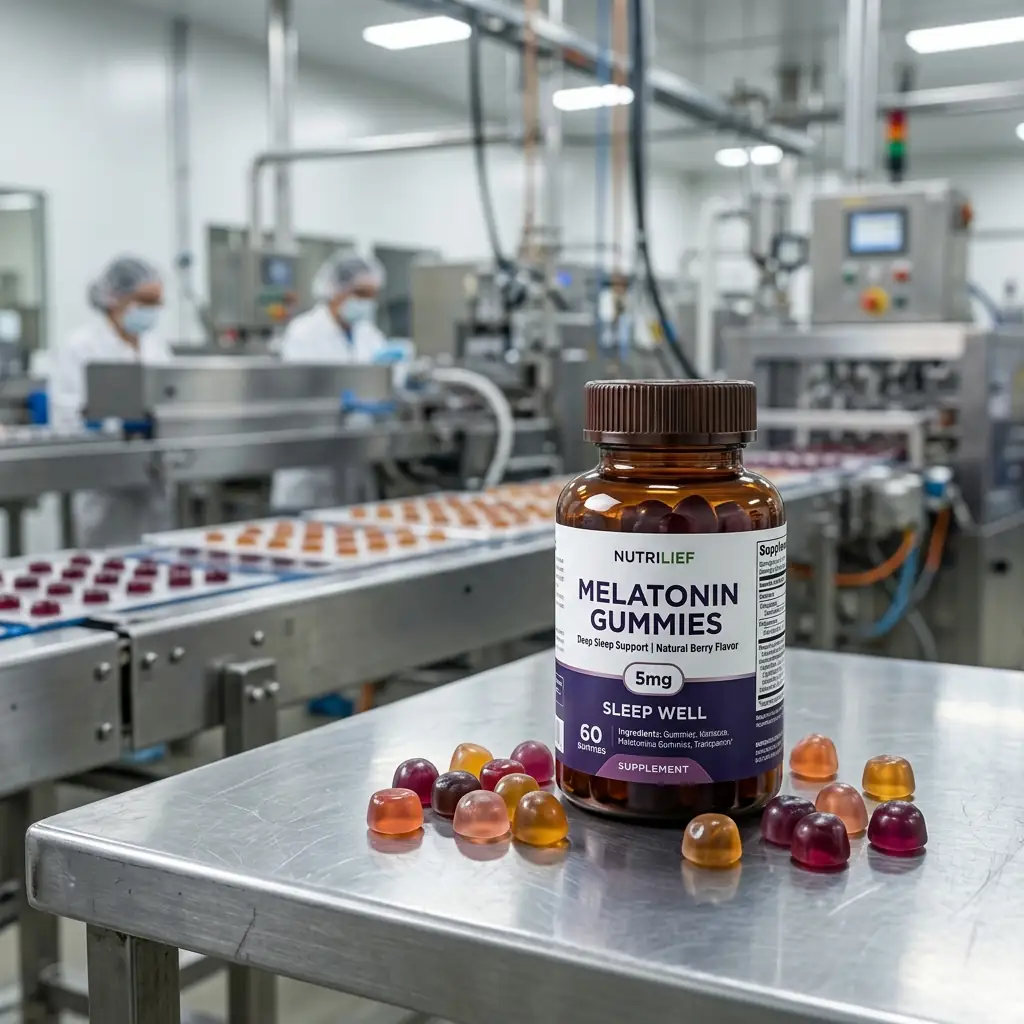
Modern facilities use servo-driven depositing systems that can produce thousands of gummies per hour with minimal variation.
5. Cooling & Stabilization
After molding, gummies undergo controlled cooling:
- Ambient Cooling: Gummies are conveyed through temperature-controlled tunnels or on cooling belts, gradually reducing temperature over 4-8 hours
- Gel Setting: Gelatin or pectin firms into the final texture during this phase
- Humidity Control: Controlled humidity prevents sticking and ensures proper film formation on the gummy surface
- Texture Optimization: The cooling profile directly affects the final product’s chewiness and shelf-stability
Inadequate cooling can result in gummies remaining sticky or misshapen; over-cooling may create a texture that’s too hard.
6. Demold, Drying & Surface Treatment
Once cooled, gummies are removed from molds and prepared for further processing:
- Automated Demolding: Molds vibrate or flex to release gummies without damage
- Dust Coating (Optional): A light dusting of powdered sugar, citric acid, or other approved agents prevents sticking and enhances sensory appeal
- Tray Drying: Gummies may be placed on trays for 24-48 hours in climate-controlled rooms to reach final moisture content
- Quality Inspection: Visual and weight-based checks identify defective units (off-color, undersized, or misshapen)
7. Packaging & Labeling
Finished gummies are packaged according to brand specifications:
- Counting & Filling: Automated counters dispense exact quantities into bottles, pouches, or blister packs
- Sealing: Caps, closures, and foil seals are applied to ensure product integrity and tamper evidence
- Label Application: Compliance labels with supplement facts, ingredients, warnings, and branding are attached
- Case Packing: Individual units are grouped into cases for shipping and distribution
- Traceability: Batch codes and lot numbers enable full traceability for recalls or quality issues
Key Manufacturing Parameters & Quality Specifications
| Parameter | Typical Range/Specification | Purpose & Impact |
|---|---|---|
| Gel Temperature (Mixing) | 45–65°C (113–149°F) | Prevents ingredient degradation while ensuring proper gel formation |
| Cooling Duration | 4–8 hours | Allows gel matrix to stabilize; affects final texture and stability |
| Gummy Weight/Unit | 2–5 grams (varies by formulation) | Controls dosage accuracy and consumer portion size |
| Moisture Content | 10–20% | Affects shelf-life, texture, and resistance to microbial growth |
| Storage Humidity | 30–50% RH | Prevents moisture absorption and texture degradation |
| Cleanroom Class | ISO 100,000 (Class 5 in ISO classification) | Minimizes particulate contamination and ensures pharmaceutical compliance |
| Microbial Testing | Total Plate Count <10³ CFU/g | Verifies safety and regulatory compliance for dietary supplements |
| Shelf-Life Target | 24–36 months | Determines packaging material selection and storage recommendations |
Quality Control Throughout the Manufacturing Process
World-class gummy manufacturing relies on continuous monitoring at every stage:
In-Process Quality Checks
- Formula Verification: Incoming ingredients are tested against specifications (identity, purity, potency)
- Batch Testing: During production, samples are drawn and analyzed for color consistency, viscosity, and dosage accuracy
- Weight Uniformity: Each gummy is weighed to ensure dosage consistency; statistical process control (SPC) charts track trends
- Visual Inspection: Automated vision systems and manual inspection identify defects before packaging
Finished Product Testing
- Content Uniformity: HPLC (High-Performance Liquid Chromatography) verifies active ingredient levels
- Dissolution Testing: Confirms that gummies release ingredients at appropriate rates
- Microbial Limits: Tests ensure absence of pathogens and adherence to CFU limits
- Stability Studies: Accelerated stability testing predicts product shelf-life under real storage conditions
Regulatory Compliance Certifications
Leading gummy contract manufacturing facilities maintain certifications including:
- ISO 9001 (Quality Management Systems)
- ISO 22000 (Food Safety Management)
- HACCP (Hazard Analysis and Critical Control Points)
- FDA Compliance (for U.S. market distribution)
- GMP (Good Manufacturing Practice for dietary supplements)
- HALAL, KOSHER, and Vegan certifications (for diverse market access)
Production Scalability & Capacity
Professional gummy manufacturers offer flexibility to support brands from pilot production to mass market scale:
- Daily Output: Modern facilities can produce 16+ tons per day
- Annual Capacity: Established manufacturers support 5,000+ tons annually
- MOQ Flexibility: From small trial batches (500–5,000 units) to full production runs, manufacturers accommodate brands at any growth stage
- Production Timelines: Typical lead times range from 6–12 weeks from formula approval to finished product shipment
Cost Factors in Gummy Manufacturing
Understanding cost drivers helps brands evaluate manufacturing partnerships:
- Ingredient Costs: Premium actives (CoQ10, probiotics, adaptogens) significantly impact formula cost
- Minimum Order Quantities (MOQ): Smaller MOQs carry higher per-unit costs; bulk production improves unit economics
- Formulation Complexity: Simple vitamin blends cost less than complex herbal or multi-phase formulations
- Mold & Equipment Amortization: Custom molds (for proprietary shapes) require upfront investment spread across units
- Packaging Materials: Premium bottles, labels, and insert packaging increase costs but enhance brand perception
- Testing & Compliance: Stability testing, microbial validation, and regulatory documentation add to total project cost
Private Label Gummy Manufacturing: Key Considerations
For Brand Owners Considering Private Label Solutions
When evaluating a private label gummy manufacturer, consider these critical factors:
- Intellectual Property Protection: Ensure confidentiality agreements protect your formula and branding
- Manufacturing Lead Times: Understand timeline from concept to market launch, including formulation, testing, and production
- Regulatory Support: Verify that the manufacturer handles compliance documentation, label design, and regulatory submissions
- Quality Consistency: Request samples from multiple production runs to verify consistency across batches
- Traceability & Transparency: Confirm that sourcing of ingredients, manufacturing records, and test results are fully documented
- Scalability Options: Assess the manufacturer’s capacity to grow with your brand from launch through market expansion
- Post-Launch Support: Clarify ongoing support for formula adjustments, packaging updates, and troubleshooting
OEM vs. ODM Models in Gummy Manufacturing
OEM (Original Equipment Manufacturer)
OEM gummy manufacturing means the brand owner provides their own formula, and the manufacturer produces it according to specifications. This model suits established brands with proprietary formulations or unique requirements.
Key Advantages:
- Complete control over formula and specifications
- Protects proprietary ingredients or blends
- Customizable in every aspect (shape, color, flavor)
ODM (Original Design Manufacturer)
ODM gummy manufacturing involves the manufacturer designing and developing the formula, handling all formulation decisions. The brand owner focuses on branding, packaging, and marketing. This model accelerates time-to-market for emerging brands.
Key Advantages:
- Faster development and time-to-market
- Lower development costs (shared R&D investment)
- Access to proven formulations and ingredients
- Flexibility to modify designs across batches
Practical Insights: Making the Most of Custom Manufacturing
Production Planning
Effective planning ensures smooth manufacturing execution:
- Forecast demand 3–6 months ahead to allow adequate lead time
- Communicate seasonal promotions or market surges early
- Plan for inventory rotation to maintain freshness for end consumers
Quality Management During Production
- Request in-process inspections and batch release testing before final shipment
- Maintain regular communication with the manufacturing team regarding batch status
- Establish acceptance criteria for color, taste, and performance metrics
Regulatory & Compliance Strategy
- Ensure labels comply with FDA regulations, including Supplement Facts panels and allergen declarations
- Coordinate with the manufacturer on Good Manufacturing Practice (GMP) audits and certifications
- Maintain complete documentation for finished product testing and stability data
Scaling from Pilot to Full Production
- Conduct pilot batches (500–5,000 units) to verify formulation, packaging, and market response
- Use pilot feedback to refine formula, packaging, or positioning before larger commitments
- Transition to full production runs once market demand and profitability are validated
Choosing the Right Gummy Manufacturing Partner
Not all manufacturers are equal. Key differentiators include:
- R&D Expertise: Look for manufacturers with scientific backgrounds, published research, or collaborations with academic institutions
- Production Infrastructure: Verify cleanroom certifications, capacity, and equipment specifications
- Regulatory Compliance Track Record: Request audits, certifications, and references from existing clients
- Transparency in Communication: Establish clear channels for status updates, quality results, and troubleshooting
- Customization Capabilities: Assess flexibility in mold design, ingredient substitutions, and packaging options
- Batch Consistency: Review stability data and batch-to-batch testing results to confirm consistency
Frequently Asked Questions (FAQ)
Q: How long does it take to develop and manufacture a custom gummy product?A: Typical timelines range from 8–16 weeks. This includes 2–4 weeks for formulation and testing, 1–2 weeks for mold creation, and 4–8 weeks for production and shipping. Rush services may be available but typically incur additional fees. First-time products usually require longer lead times due to stability testing requirements.
Q: What is the minimum order quantity (MOQ) for gummy manufacturing?A: MOQs vary by manufacturer and formulation complexity. Many flexible manufacturers accept trial batches of 500–5,000 units, while larger facilities may require 10,000–50,000 units per batch. Smaller MOQs typically result in higher per-unit costs due to setup and equipment amortization.
Q: Are vegan gummies available as a manufacturing option?A: Yes, modern gummy manufacturers offer plant-based gelling agents such as pectin and carrageenan as alternatives to gelatin. Vegan formulations have the same manufacturing process and quality standards as gelatin-based gummies, making them fully compatible with dietary restrictions and market preferences.
Q: How do manufacturers ensure dosage accuracy in gummies?A: Dosage accuracy is achieved through precise ingredient weighing during mixing, automated depositing systems with weight verification, and finished product testing via HPLC analysis. Statistical process control monitors batch consistency, and quality assurance protocols ensure that each gummy meets ±5% weight tolerance and active ingredient content specifications.
Q: Can I make the same gummy formula at different manufacturers?A: Yes, as an OEM client, you retain your formula and can theoretically produce it with multiple manufacturers. However, minor variations may occur due to different equipment, ingredients, or processes. Thorough documentation and quality specifications help minimize batch-to-batch differences and ensure consistency across manufacturing partners.
Q: What certifications should I look for in a gummy manufacturer?A: Essential certifications include ISO 9001 (quality management), ISO 22000 (food safety), HACCP, GMP (Good Manufacturing Practice), and FDA compliance. Additional certifications like HALAL, KOSHER, or Vegan status expand market access. Always verify certifications with current audit documentation rather than relying on past claims.
Conclusion: Gummy Manufacturing as a Strategic Business Decision
Understanding how gummies are made is essential for any brand entering the supplement market. From formulation and ingredient sourcing through production, quality control, and packaging, each stage requires expertise and precision. Whether you’re launching a private label gummy product or scaling existing production, partnering with a qualified custom gummy manufacturer accelerates time-to-market while ensuring compliance and quality.
The best manufacturers combine scientific rigor, production scale, and customer-centric flexibility—enabling brands to compete effectively in the fast-growing gummy supplement category. By selecting a partner with proven experience, transparent processes, and comprehensive support, you position your brand for sustained growth and consumer trust.
About Shenzhen Gothink Biotech: Your Trusted Gummy Manufacturing Partner
Shenzhen Gothink Biotech Co., Ltd. stands as one of China’s leading supplement manufacturers, specializing in gummy contract manufacturing and comprehensive OEM/ODM services. With over two decades of expertise in nutritional supplement production, we deliver end-to-end solutions that transform your brand vision into market-ready products.
Our Manufacturing Capabilities
- Advanced Production Infrastructure: Our GMP-certified facility features a 100,000-class ISO cleanroom with a daily output of 16+ tons and annual capacity exceeding 5,000 tons—ensuring reliable, scalable production for brands at any stage.
- Comprehensive R&D Strength: Led by postdoctoral researchers from prestigious U.S. institutions (Caltech, Emory University, Ohio State University), our 10,000-class pharmaceutical-grade laboratory conducts formulation development on 2,000+ new products annually.
- Full Customization & Flexibility: We support gummies in 30+ shapes, custom flavors, and diverse formulations—from simple vitamin blends to complex herbal and multi-phase products. Our flexible MOQ approach accommodates trial batches through full-scale production.
- Complete Compliance & Certification: Certified in ISO 9001, ISO 22000, HACCP, FDA, GMP, HALAL, KOSHER, and Vegan standards, ensuring your products meet global regulatory requirements.
OEM/ODM Services: Tailored to Your Business Model
OEM Manufacturing: Bring your proprietary formula, and we produce it with precision and consistency. You retain complete control over formulation while leveraging our production expertise and quality infrastructure.
ODM Services: Our scientific team designs custom formulations tailored to your target market, handling all technical decisions while you focus on branding and distribution. Faster time-to-market, lower development costs, and proven ingredient combinations accelerate your growth.
Batch Production & Wholesale Distribution Support
From pilot batches (500 units minimum) to large-scale production runs, we scale production to match your market demand. Our wholesale business model supports direct-to-consumer brands, e-commerce retailers, and distribution partners with competitive bulk pricing and reliable delivery timelines.
Why Partner With Gothink Biotech?
- Scientific Excellence: Postdoctoral-led R&D ensures innovative formulations backed by rigorous science
- Production Scale & Reliability: 5,000+ ton annual capacity with consistent quality across batches
- Regulatory Expertise: Full support for FDA compliance, labeling, and global export requirements
- Customization Without Compromise: Flexible molds, ingredient options, and packaging designs tailored to your brand identity
- Transparent Partnership: Clear communication, detailed batch documentation, and ongoing post-launch support
- Competitive Pricing: Efficient production processes and economies of scale translate to competitive per-unit costs
Whether you’re a startup launching your first supplement line, an established brand expanding your product portfolio, or a retailer seeking private label solutions, Gothink Biotech provides the expertise, infrastructure, and customer focus to bring your vision to life. Contact us today to discuss your gummy manufacturing requirements and discover how we can become your trusted long-term partner.