
Short answer: The gummy bear was invented in 1922 by Hans Riegel Sr., a confectioner in Bonn, Germany, whose company HARIBO produced the original “Tanzbär” (Dancing Bear). What began as a German candy evolved into a global confectionery category and, from the 1990s onward, into one of the fastest-growing dietary-supplement formats.
Gummy Bears and Their Modern Role
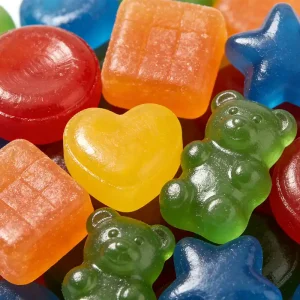
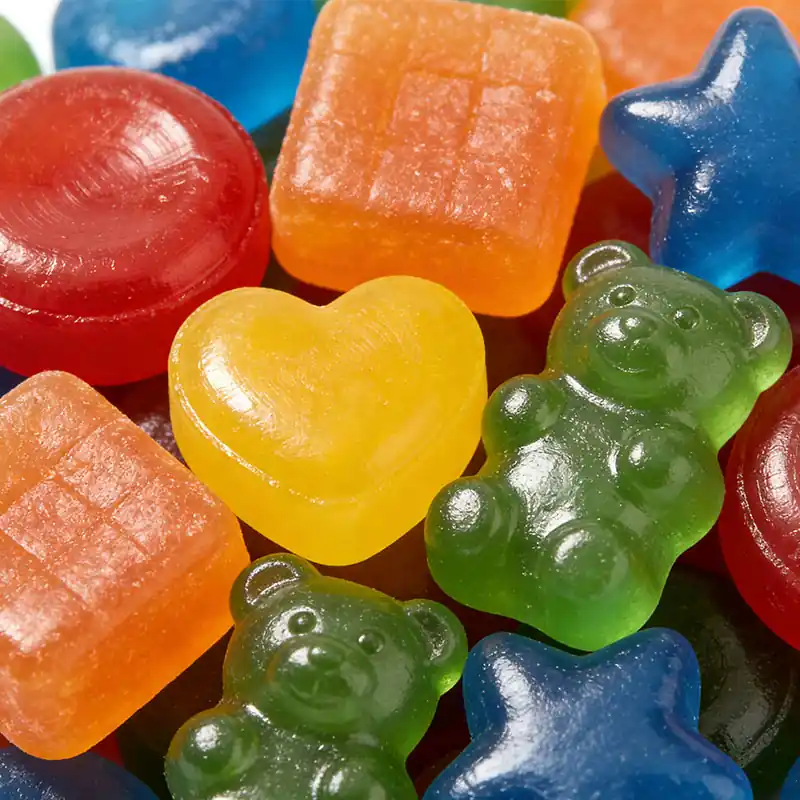
A gummy bear is a small, bear-shaped, chewy confection made from a gelling agent, sweeteners, flavors and colors. In a modern commercial context the term increasingly refers to gummy supplements — nutrient-dense products that deliver vitamins, minerals, botanicals and other functional ingredients in the same palatable format. That shift from pure candy to functional nutrition is one of the most successful category evolutions in consumer health.

The Origin: Hans Riegel and the 1922 Invention
Hans Riegel, a confectioner based in Bonn, Germany, is credited with inventing the modern gummy bear in 1922. Gelatin-based candies already existed, but they were larger, less flavorful and lacked the appealing texture that would define the gummy bear. Riegel’s breakthrough was a smaller, fruit-flavored confection that was both chewy and firm.
The original product was called “Tanzbär” — German for “Dancing Bear” — reflecting the fascination with trained bears that were popular attractions in European towns. These early gummies were roughly twice the size of modern versions and were sugar-coated for appeal and shelf stability. Inspired by the dancing bears at festivals, Riegel shaped the candy into a bear that would become an icon.
The Birth of HARIBO
Riegel combined his initials with his hometown to create the name HARIBO — HAns RIegel BOnn — founded in 1920. What began as a small workshop operation grew into an industrial enterprise that perfected the formulation and production process and set the standard for the global gummy industry.
Initially made with gum arabic, the bears evolved into the smaller, chewier Goldbears, trademarked by HARIBO in the 1960s. HARIBO remains the original gummy bear company and the world’s leading producer, manufacturing on the order of 100 million gummies per day. In the decades that followed, other manufacturers such as Trolli and Albanese entered the market, expanding the range of textures, flavors and shapes. For the manufacturers operating today, see who makes gummy bears.
Evolution from Candy to Supplement
After World War II, gummy bears remained primarily confectionery. Post-war expansion of the global candy market and improved manufacturing technology allowed producers to experiment with shapes, flavors and formulations. By the 1960s and 1970s, gummy bears had become a standard confectionery product worldwide, with dozens of manufacturers producing their own versions.
The turning point came when nutritional-supplement makers recognized that the gummy format — already beloved by consumers — could serve as an ideal delivery vehicle for vitamins and minerals. Unlike tablets and capsules, gummies offered palatability, ease of consumption and extensive flavor and shape customization.
The Supplement Boom (1990s–Present)
The real transformation began in the 1990s with the development of gummy vitamin supplements. The format solved several long-standing problems: it masked unpleasant tastes, needed no water, was easy for children and adults who struggle to swallow pills, and could be differentiated visually through color and shape.
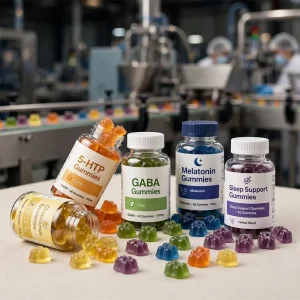
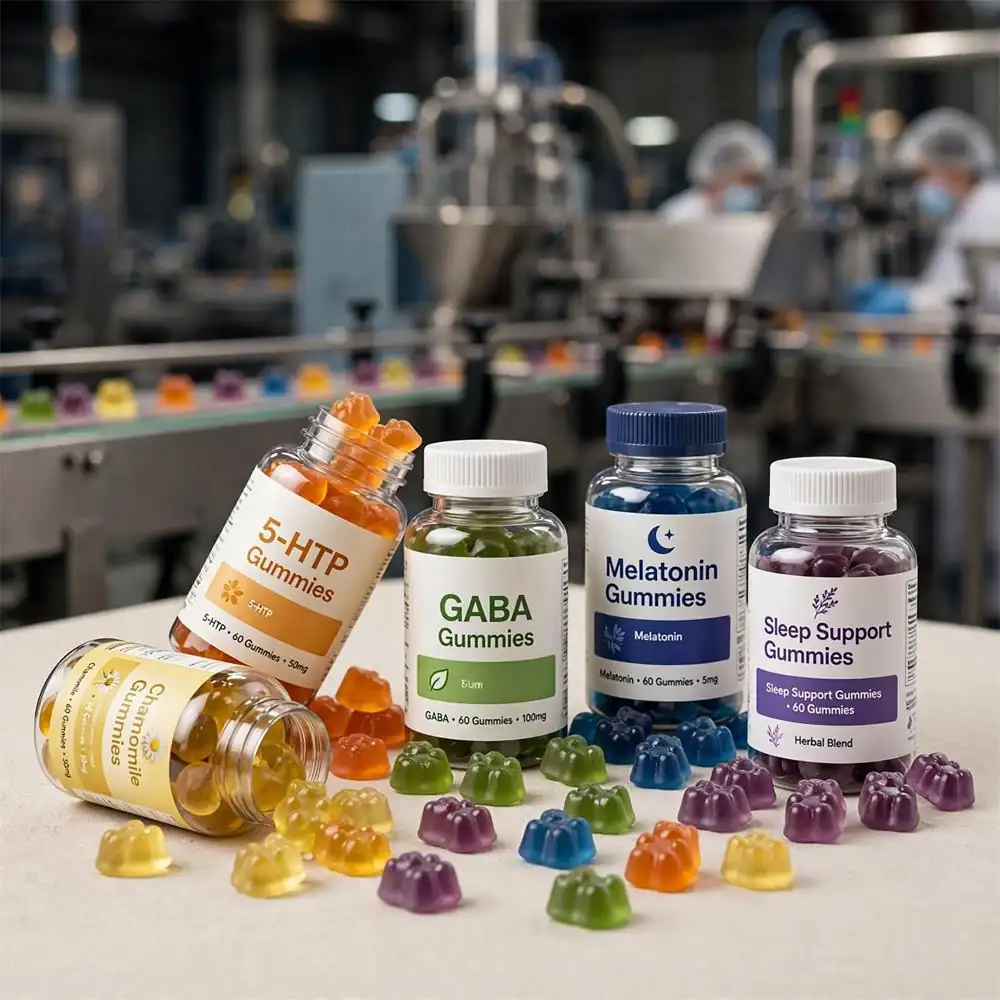
Today the gummy supplement category includes multivitamins, single-nutrient products (vitamin D, calcium, iron), herbal supplements, and functional gummies for sleep, energy, immunity, beauty and digestive health — a diversity that would have been unimaginable in 1922.
Market Position, Size and Growth
Gummy supplements are among the fastest-growing segments of the dietary-supplement industry, with gummies frequently capturing the largest share in categories once dominated by tablets, including multivitamins, vitamin D, omega-3 and probiotics.
Published estimates differ by scope and should be read as directional: the gummy vitamin segment is often cited at roughly US$8 billion annually, while broader gummy supplement forecasts estimate a market of about US$24–27 billion in 2025 rising above US$40 billion by 2030, with reported CAGRs in the 9–14% range. Growth is attributed to convenience, flavor innovation, plant-based pectin formulations, low-sugar options and multifunctional products addressing stress, energy and gut health.
Why Gummies Became the Preferred Format
- Consumer psychology. Gummies feel like a treat rather than medicine, reducing friction in daily health routines — especially for children and younger consumers.
- Accessibility. They require no water and can be taken anywhere.
- Ingredient visibility. Multiple ingredients can be showcased through color differentiation, signaling comprehensive nutrition.
- Brand differentiation. Custom shapes, colors and flavors help brands build recognition and loyalty.
- Adherence. Palatable formats are associated with better consumer compliance than hard-to-swallow alternatives.
The Manufacturing Foundation
Modern gummy manufacturing combines gelling agents, sweeteners, humectants, flavors, colors and active ingredients, then forms them through a controlled sequence: ingredient preparation and mixing; cooking and concentration (typically 60–85 °C); addition of flavors, colors and actives after cooling to around 50–60 °C; depositing into molds; setting overnight under controlled temperature and humidity; demolding and finishing; and final packaging with desiccant and quality checks.
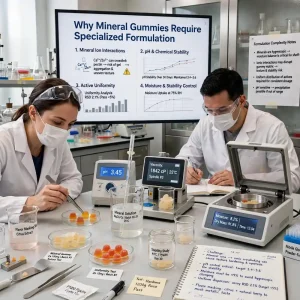
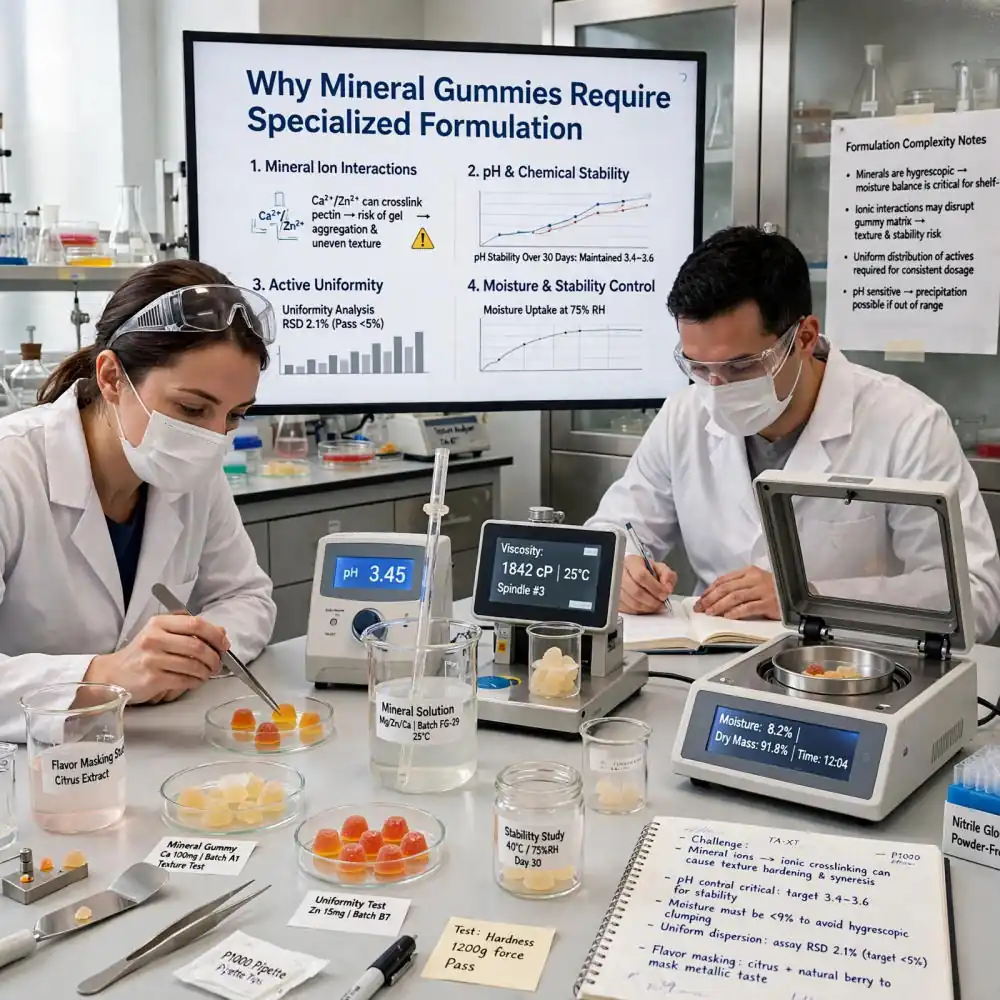
Premium manufacturers operate under ISO 9001, ISO 22000, HACCP, GMP and market certifications such as HALAL, KOSHER and Vegan, often in controlled cleanroom facilities. A central technical challenge is keeping active ingredients stable and bioavailable — particularly heat-sensitive nutrients like vitamin C, B vitamins, probiotics and herbal extracts — through production and shelf life. For the full process, see how gummy bears are made, and for composition see what gummy bears are made of.
Frequently Asked Questions
Who invented gummy bears?
Hans Riegel Sr. invented the gummy bear in 1922 in Bonn, Germany, under the HARIBO brand.
When was HARIBO founded?
HARIBO was founded in 1920. The name comes from HA(NS) RI(EGEL) BO(NN).
What was the first gummy bear called?
The original product was the “Tanzbär” (Dancing Bear), larger and sugar-coated compared with today’s bears.
Are gummy bears originally a candy or a supplement?
They began as confectionery in 1922. Gummy vitamin and supplement products emerged in the 1990s and have since become a major category.
Which company makes the original gummy bears?
HARIBO is the original gummy bear company and remains the world’s largest producer.
How big is the gummy supplement market?
Estimates vary by scope — from roughly US$8 billion for gummy vitamins to US$24–27 billion for the broader gummy supplement market in 2025 — with strong double-digit growth projections.
How did manufacturing evolve?
Production moved from small-batch, gum-arabic confectionery to industrial gelatin and pectin lines with precision depositing, controlled drying, cleanroom environments and supplement-grade quality systems.
Key Takeaways
- Hans Riegel invented the gummy bear in Bonn, Germany in 1922; HARIBO, founded in 1920, is the original maker.
- The original “Tanzbär” evolved into the trademarked Goldbears and inspired a worldwide confectionery category.
- From the 1990s, the gummy format became a leading supplement delivery system for vitamins, minerals and functional ingredients.
- Growth is driven by adherence, convenience, customizable formats and innovation in vegan, low-sugar and functional products.
- Modern production relies on controlled cooking, depositing, drying and quality systems that protect active-ingredient stability.
Related guides: How gummy bears are made · Who makes gummy bears · What gummy bears are made of · Knowledge Hub
Explore more: Who makes gummy bears · How gummy bears are made · Gummy bears manufacturer