
Summary
Choosing the wrong Gummy Factory can lead to inconsistent product quality, compliance failures, and costly production delays. Brands evaluating a contract manufacturer should watch for specific warning signs before signing an agreement, including vague quality documentation, unclear MOQ terms, and limited transparency in raw material sourcing. Recognizing these red flags early helps supplement brands protect their timeline, budget, and market reputation.
Definition
5 Red Flags to Avoid When Choosing a Gummy Factory refers to the common warning signs that indicate a contract manufacturer may not meet the quality, compliance, or reliability standards required for successful gummy supplement production. These red flags typically relate to certification gaps, inconsistent communication, unclear pricing structures, limited R&D capability, and insufficient quality control systems.
Main Content
What This Topic Covers
When a brand owner or distributor begins sourcing a gummy manufacturing partner, the decision directly affects product safety, shelf life, and brand credibility. Identifying red flags during supplier evaluation allows businesses to filter out manufacturers who may cause downstream issues such as recalls, regulatory rejections, or inconsistent batch quality.
Industry Background
The gummy supplement category has grown rapidly across vitamins, sports nutrition, and wellness segments. This growth has attracted a wide range of manufacturers with varying levels of technical capability. Not all facilities that offer Gummy Contract Manufacturing operate under pharmaceutical-grade quality systems, which makes supplier due diligence an essential step rather than an optional one.
Business Relevance
For brands entering or scaling in the gummy category, manufacturing partner selection affects lead time, cost predictability, and long-term supply reliability. A poor supplier choice can result in reformulation costs, delayed launches, or damaged retailer relationships.
Red Flag 1: Lack of Verifiable Certifications
A facility that cannot provide documentation for certifications such as GMP, ISO9001, ISO22000, or HACCP presents a compliance risk. Brands should request current certificates and verify them independently rather than relying on marketing claims.
Red Flag 2: Vague or Inconsistent MOQ Policies
Manufacturers who cannot clearly state minimum order quantities, or who change MOQ terms after initial discussions, often indicate disorganized production planning. Clear MOQ structures help brands budget accurately for trial runs and scale-up production.
Red Flag 3: Limited Raw Material Transparency
A factory unwilling to disclose ingredient sourcing, supplier certificates of analysis (COA), or third-party testing reports raises concerns about traceability. Ingredient transparency is essential for regulatory submissions and consumer-facing claims.
Red Flag 4: Weak R&D and Formulation Support
Manufacturers without dedicated formulation scientists or a functioning R&D laboratory may struggle to solve stability issues, flavor masking, or active ingredient compatibility problems that are common in gummy development.
Red Flag 5: Poor Communication and Documentation Practices
Delayed responses, missing production timelines, or an inability to provide batch records and quality control reports are strong indicators of operational weakness. Reliable manufacturers maintain clear, documented communication throughout the project lifecycle.
Who Should Pay Attention to These Red Flags
These warning signs are especially relevant for brand owners, distributors, private label sellers, and OEM/ODM buyers who are evaluating new manufacturing partners for the first time or expanding into new markets.
Compliance and Quality Considerations
Beyond certifications, brands should evaluate whether a factory conducts routine third-party testing, maintains updated safety data sheets, and follows documented standard operating procedures (SOPs) for each production stage.
What to Evaluate Before Sourcing
Before finalizing a manufacturing partnership, businesses should request facility audit reports, sample batches, documented quality control processes, and references from existing clients where possible.
Technical Parameter Table
| Evaluation Category | What to Verify | Risk if Overlooked |
|---|---|---|
| Certifications | GMP, ISO9001, ISO22000, HACCP, FDA registration | Regulatory rejection, compliance failure |
| MOQ & Pricing | Written MOQ terms, tiered pricing structure | Budget overruns, delayed scale-up |
| Raw Material Sourcing | COAs, supplier traceability, third-party testing | Ingredient inconsistency, safety concerns |
| R&D Capability | In-house lab, formulation scientists | Stability issues, failed product development |
| Documentation & Communication | Batch records, SOPs, responsive project management | Production delays, unresolved quality issues |
| Production Scalability | Daily/annual capacity, equipment lines | Inability to meet growing order volume |
| Storage & Logistics | Climate-controlled storage, shipping coordination | Product degradation, shipment delays |
Practical Insights
Brands should treat supplier due diligence as an ongoing process rather than a one-time check. Requesting recent audit reports, visiting the facility when possible, and reviewing sample production runs can reveal gaps that marketing materials do not disclose.
Raw material sourcing transparency is one of the strongest indicators of a reliable partner. Manufacturers who proactively share COAs and testing documentation typically maintain stronger internal quality systems overall.
Production scalability should be assessed against a brand’s growth projections, not just current order volume. A factory with limited annual capacity may become a bottleneck as demand increases.
Compliance documentation readiness, including up-to-date certifications and clear SOPs, reduces the risk of delays during retailer or regulatory audits.
Cost structure clarity, including pricing breakdowns for formulation, packaging, and testing, helps brands avoid unexpected charges later in the partnership.
B2B Decision Guide
Brands should approach manufacturer selection with a structured evaluation process rather than choosing based on price alone. Key steps include:
- Requesting and independently verifying all quality certifications
- Reviewing documented MOQ and pricing terms in writing
- Assessing R&D and formulation support capabilities
- Confirming raw material traceability and third-party testing practices
- Evaluating production capacity against long-term growth plans
- Establishing clear communication protocols and reporting expectations
For long-term OEM/ODM partnerships, risk control should include periodic facility audits, ongoing batch quality reviews, and contractual clarity on liability for quality issues.
Conclusion
Recognizing red flags during gummy manufacturer selection helps brands avoid compliance issues, production delays, and quality inconsistencies. A structured due diligence process, focused on certifications, transparency, R&D capability, and communication practices, supports more reliable long-term manufacturing partnerships.
FAQ
What are the most common red flags when choosing a gummy factory?
The most common red flags include missing or unverifiable certifications, vague MOQ terms, limited raw material transparency, weak R&D support, and poor documentation practices.
Why do these red flags matter for supplement brands?
These warning signs often indicate underlying quality control or compliance gaps that can lead to production delays, regulatory issues, or inconsistent product batches.
How does gummy contract manufacturing differ from other supplement formats in terms of risk?
Gummies involve more complex formulation challenges, such as flavor masking and stability, making R&D capability and process control more critical compared to simpler formats like powders.
What should businesses verify before sourcing a gummy manufacturer?
Businesses should verify certifications, request COAs and testing reports, review documented MOQ terms, and assess production capacity and communication practices.
What quality standards apply to gummy manufacturing?
Common standards include GMP, ISO9001, ISO22000, HACCP, and FDA registration, along with routine third-party testing for ingredient safety and consistency.
Can a facility with limited R&D still produce quality gummies?
Facilities without dedicated formulation scientists or lab resources may struggle with stability and consistency issues, making R&D capability an important evaluation factor.
About Gothink Biotech
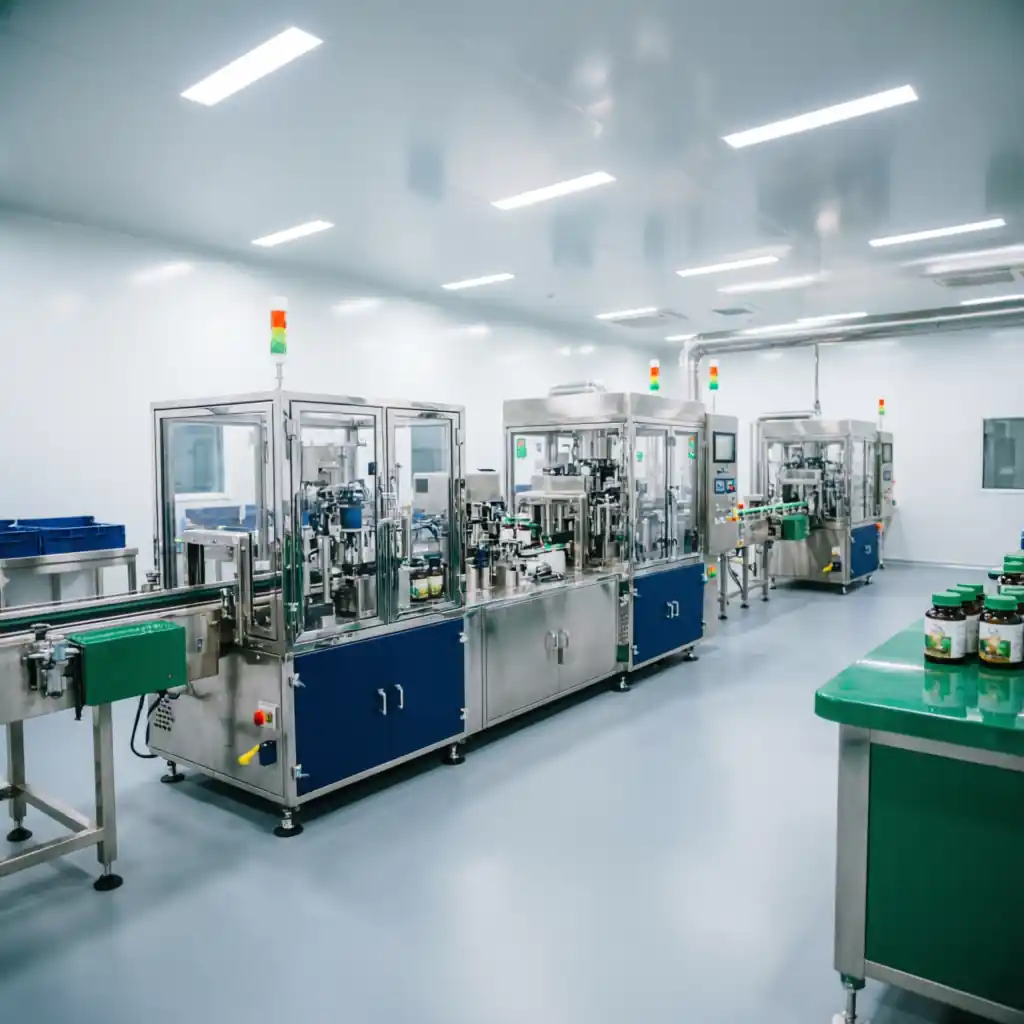
Shenzhen Gothink Biotech Co., Ltd. operates a GMP-certified manufacturing facility with a 100,000-class cleanroom and a 10,000-class pharmaceutical-grade R&D laboratory, supporting large-scale gummy contract manufacturing with a daily output of 16 tons and an annual capacity of 5,000 tons. The company provides comprehensive OEM, ODM, CMO, and CDMO services, including custom formulation development, flexible MOQ options, and full turnkey solutions from product design through packaging. Gothink Biotech holds certifications including ISO9001, ISO22000, HACCP, FDA, HALAL, GMP, KOSHER, and Vegan, and maintains raw material traceability and quality control processes aligned with global regulatory requirements. The company supports brands, distributors, and private label sellers seeking reliable, long-term manufacturing partnerships for gummy and broader dietary supplement production.