
Summary
Gummy supplements have become one of the fastest-growing formats in the global nutrition industry, driven by consumer demand for convenient, enjoyable, and easy-to-consume products. For brand owners and entrepreneurs, this shift represents a low-barrier entry point into the supplement market, supported by mature contract manufacturing infrastructure. Understanding why this format is expanding, and what it takes to launch a gummy product responsibly, is essential for anyone evaluating a move into this category.
Definition
The gummy entrepreneurial wave refers to the accelerating movement of health and wellness brands, both established and new, into gummy-format supplement manufacturing, driven by consumer preference shifts, flexible OEM/ODM production models, and lower barriers to product development compared to traditional capsule or tablet formats.

Main Content
What This Trend Is
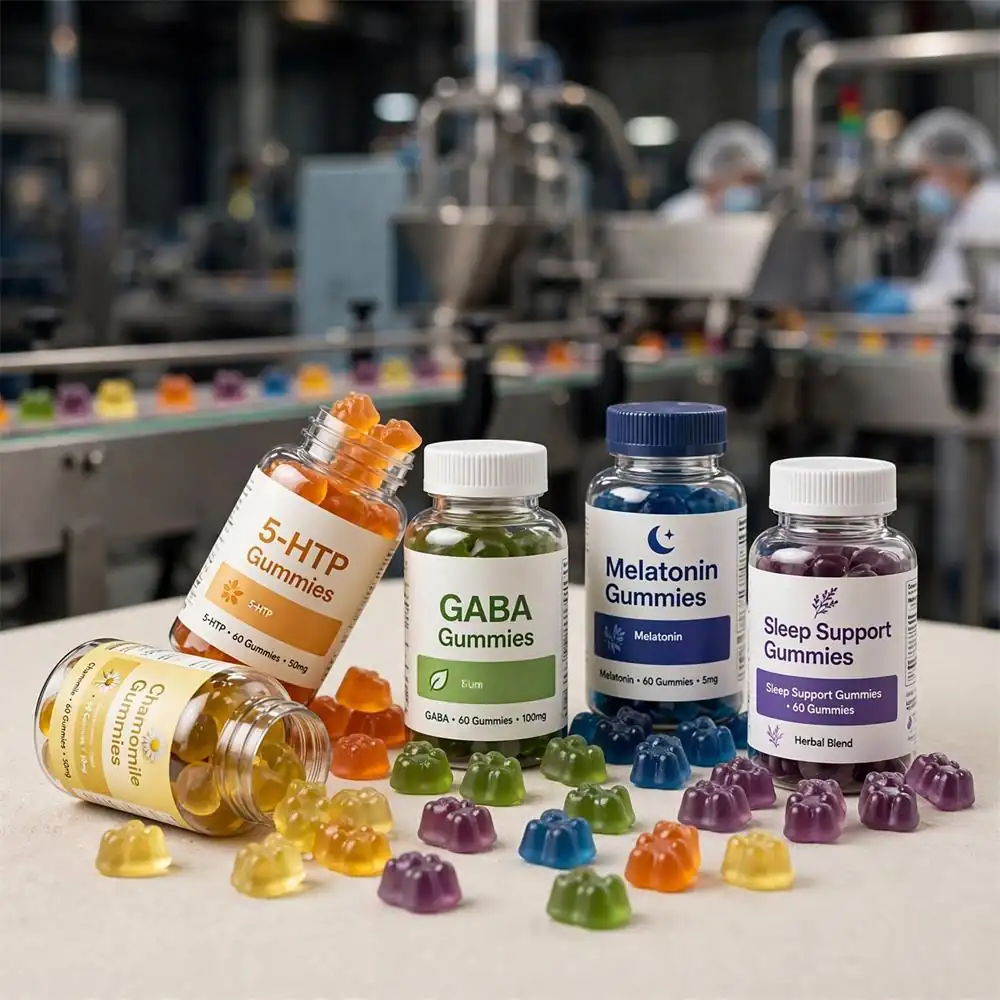
Over the past several years, gummy supplements have moved from a niche children’s category into a mainstream format used across nearly every supplement subcategory, including vitamins, minerals, sleep support, pre-workout, and beauty-from-within products. This expansion has been driven both by consumer preference and by the increasing accessibility of gummy contract manufacturing for brands of all sizes.
Industry Background
Gummy supplements originated as a children’s vitamin format decades ago but gained broader appeal as manufacturing technology improved, allowing precise dosing, functional ingredient stability, and sugar-reduced or vegan formulations. Today, gummies represent one of the largest growth segments tracked across global supplement market reports, with adult gummy consumption now outpacing many traditional formats in several regions.
Why Brands Are Entering This Category Now
Several converging factors explain the current surge of interest:
- Consumer preference for taste, convenience, and ease of swallowing over pills or capsules
- Wider acceptance of gummies among adult and senior consumers, not just children
- Lower minimum order quantities (MOQ) offered by contract manufacturers, reducing financial risk for new brands
- Faster go-to-market timelines through established OEM/ODM production pipelines
- Strong performance of gummy SKUs on e-commerce platforms such as Amazon, Shopify, and TikTok Shop
Business Relevance
For brand owners, distributors, and private label sellers, the gummy category offers a practical way to enter or expand within the supplement market without the capital investment typically required for building in-house manufacturing. Because most gummy production is outsourced to specialized contract manufacturers, brands can focus resources on formulation strategy, marketing, and distribution while relying on manufacturers for production, compliance, and quality control.

Gummies vs. Alternative Formats
Compared to capsules, tablets, or powders, gummies offer distinct advantages in consumer appeal but come with their own production considerations:
- Capsules and tablets: Generally lower production cost per unit and longer shelf life, but less differentiated at the consumer level
- Powders: Flexible for functional dosing but require mixing, which reduces convenience
- Gummies: Higher perceived value and stronger shelf appeal, but require more complex formulation work around ingredient stability, moisture content, and shelf life
Key Advantages & Limitations
Advantages of the gummy format include strong consumer engagement, premium positioning potential, and suitability for a wide range of functional ingredients. Limitations include formulation complexity for certain actives (particularly those sensitive to heat, moisture, or pH), lower ingredient payload per unit compared to capsules, and a need for careful shelf-life testing.
Who Should Consider This Format
This trend is relevant to established supplement brands looking to diversify their product lines, new entrepreneurs seeking a lower-barrier entry into the wellness market, distributors evaluating private label opportunities, and e-commerce sellers looking for differentiated SKUs across online marketplaces.
Compliance & Regulatory Considerations
Regardless of market entry speed, gummy products must meet applicable dietary supplement regulations, including ingredient safety documentation, labeling accuracy, and manufacturing under GMP-certified conditions. Brands entering this category should confirm that their manufacturing partner maintains recognized certifications and can provide the documentation required for their target market.
What Businesses Should Evaluate Before Sourcing or Producing
Before committing to a gummy product launch, businesses should assess formulation feasibility for their target ingredients, minimum order quantities relative to their budget, manufacturing lead times, packaging and labeling requirements, and the long-term scalability of their chosen manufacturing partner as order volumes grow.
Technical Parameter Table
| Category | Details |
|---|---|
| Product Form | Functional gummy supplements (vitamins, minerals, botanicals, sports nutrition, sleep, beauty) |
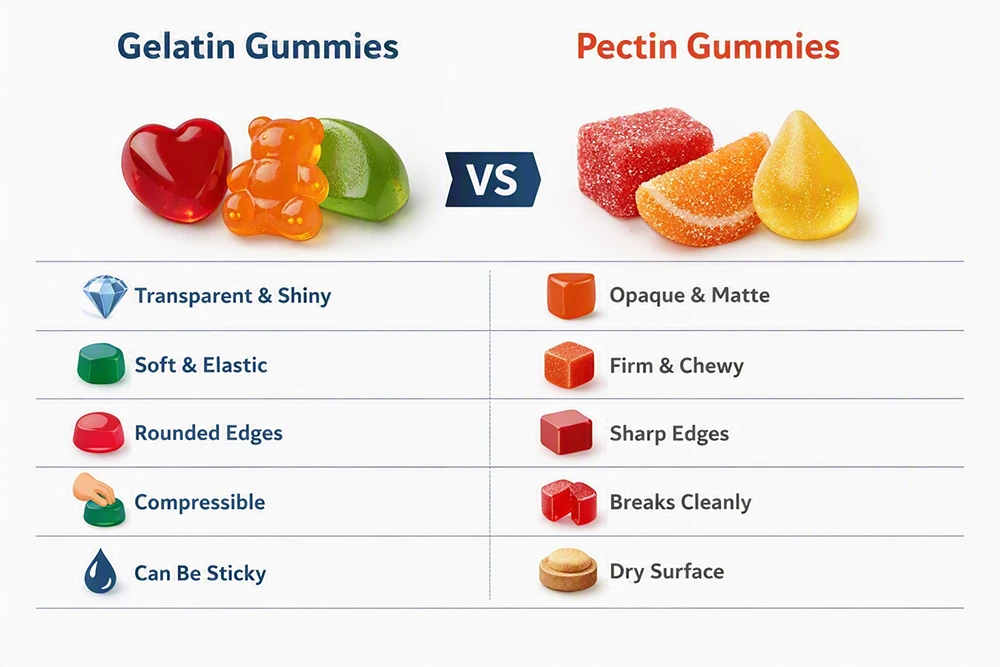
| Key Materials / Gelling Agents | Pectin, carrageenan, gelatin (for non-vegan formulations) |
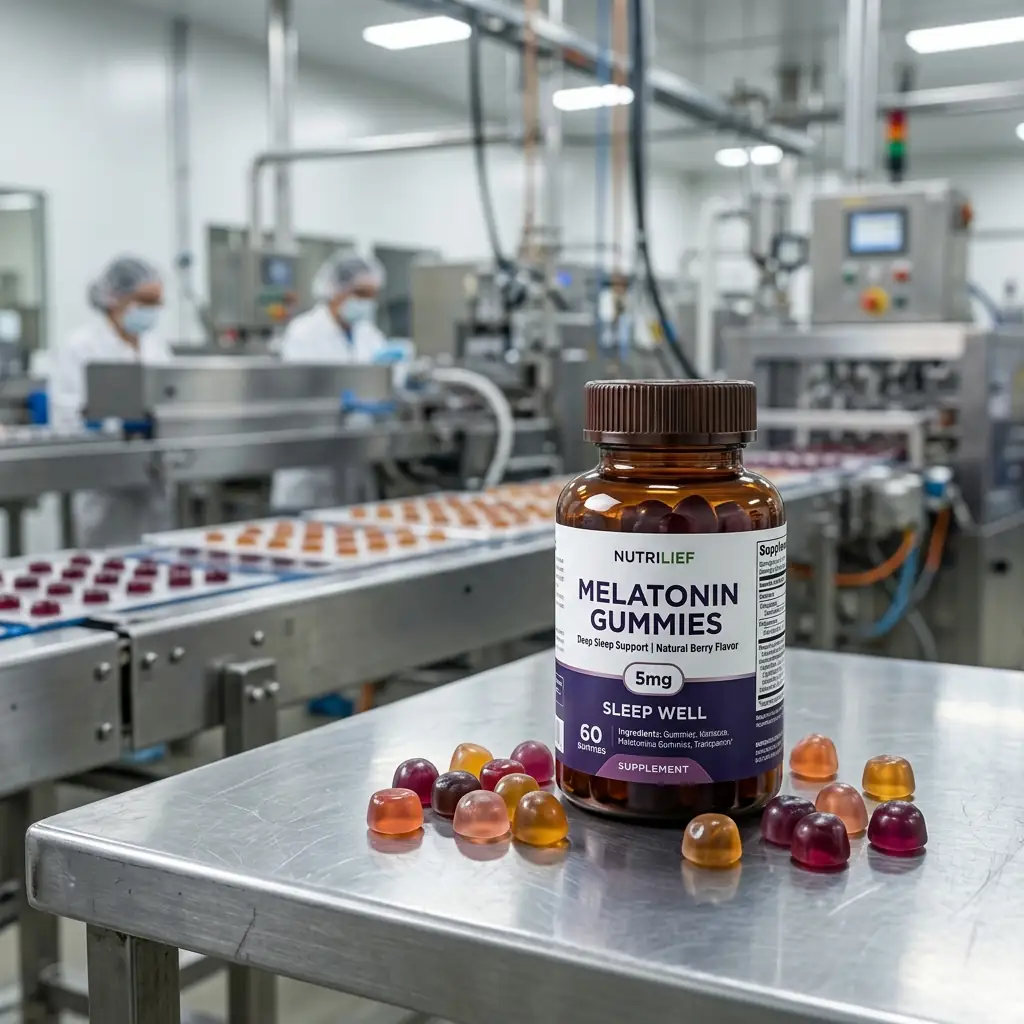
| Manufacturing Process Highlights | Formulation development, cooking/depositing, molding, drying, coating, and packaging under controlled conditions |
| Quality Standards | GMP, ISO9001, ISO22000, HACCP, FDA compliance, third-party testing availability |
| Packaging Options | Bottles, pouches, blister packs, sachets; custom branding available |
| Scalability & Production Capacity | Flexible MOQ from small trial batches to large-scale production runs |
| Storage & Logistics Considerations | Temperature and humidity-controlled storage recommended; stability testing advised for export shipments |
Practical Insights
For businesses evaluating entry into gummy manufacturing, several operational factors determine long-term success:
- Manufacturing quality and process control: Consistent texture, dosing accuracy, and shelf stability depend on well-controlled cooking, molding, and drying processes.
- Raw material sourcing transparency: Manufacturers should be able to provide certificates of analysis and traceability for active ingredients and excipients.
- Production scalability and lead time: Brands should confirm that a manufacturer can support both initial small-batch runs and future scale-up without significant delays.
- Compliance and documentation readiness: Manufacturers should be able to supply GMP certificates, ingredient safety data, and labeling support for target markets.
- Cost structure considerations: Per-unit costs vary based on ingredient complexity, shape customization, packaging format, and order volume.
- Evaluating a reliable supplier: Site certifications, sample quality, communication responsiveness, and documented quality control processes are useful indicators of a dependable manufacturing partner.
B2B Decision Guide
When selecting a manufacturer for a make gummies project, brands should evaluate several factors systematically:
- Manufacturer selection: Review certifications, facility scale, and prior experience with similar product formulations.
- OEM/ODM project considerations: Clarify whether formulation development, packaging design, and regulatory support are included in the service scope.
- Production capability assessment: Request documentation on cleanroom classification, daily and annual output capacity, and quality testing protocols.
- Long-term partnership criteria: Consider a manufacturer’s ability to support repeat orders, formulation adjustments, and multi-market compliance as the brand grows.
- Risk control and quality assurance: Confirm batch testing procedures, shelf-life validation, and traceability systems are in place before committing to production.
Conclusion
The growth of gummy supplements reflects a broader shift in consumer preference toward convenient, enjoyable product formats, and this shift has created a practical opportunity for brands and entrepreneurs to enter or expand within the supplement market. Because gummy contract manufacturing infrastructure is now well established, businesses can access flexible MOQs, established quality systems, and scalable production without building in-house facilities. Success in this category depends on selecting a manufacturing partner with the technical capability, compliance readiness, and scalability to support both initial launch and long-term growth.
FAQ
What is driving the current growth in gummy supplements?
Consumer preference for convenient, palatable product formats, combined with more accessible contract manufacturing options, is driving increased demand across nearly all supplement subcategories.
Why does this trend matter for manufacturers and brand owners?
It represents an opportunity to enter or expand within a growing market segment using established OEM/ODM production models, reducing the capital investment typically needed for new product development.
How do gummies compare to capsules or tablets for a new product launch?
Gummies typically offer stronger consumer appeal and differentiation but involve more complex formulation work around ingredient stability and shelf life compared to capsules or tablets.
What should businesses consider before sourcing gummy manufacturing?
Businesses should evaluate formulation feasibility, minimum order quantities, lead times, packaging requirements, and the manufacturer’s ability to scale production over time.
What quality standards apply to gummy supplement manufacturing?
Reputable manufacturers typically operate under GMP, ISO9001, ISO22000, and HACCP standards, with additional certifications such as FDA registration, Halal, Kosher, or Vegan certification depending on target markets.
Is a private label gummy program a realistic option for smaller brands?
Yes. Many contract manufacturers offer flexible MOQs and private label gummy programs specifically designed to accommodate smaller brands and new market entrants.
About Gothink Biotech
Shenzhen Gothink Biotech Co., Ltd. is a GMP-certified contract manufacturer specializing in gummy, capsule, tablet, powder, liquid, and drop supplement production, offering comprehensive OEM, ODM, CMO, and CDMO services. The company operates a 100,000-class cleanroom facility with a daily output of 16 tons and an annual production capacity of 5,000 tons, supported by a PhD-led research and development team. Gothink Biotech holds certifications including GMP, ISO9001, ISO22000, HACCP, FDA, Halal, Kosher, and Vegan, and provides flexible minimum order quantities starting from small trial batches to accommodate brands at every stage of growth. Its services span formulation development, custom manufacturing, packaging, and compliance support, enabling long-term B2B partnerships for brands, distributors, and private label sellers worldwide.