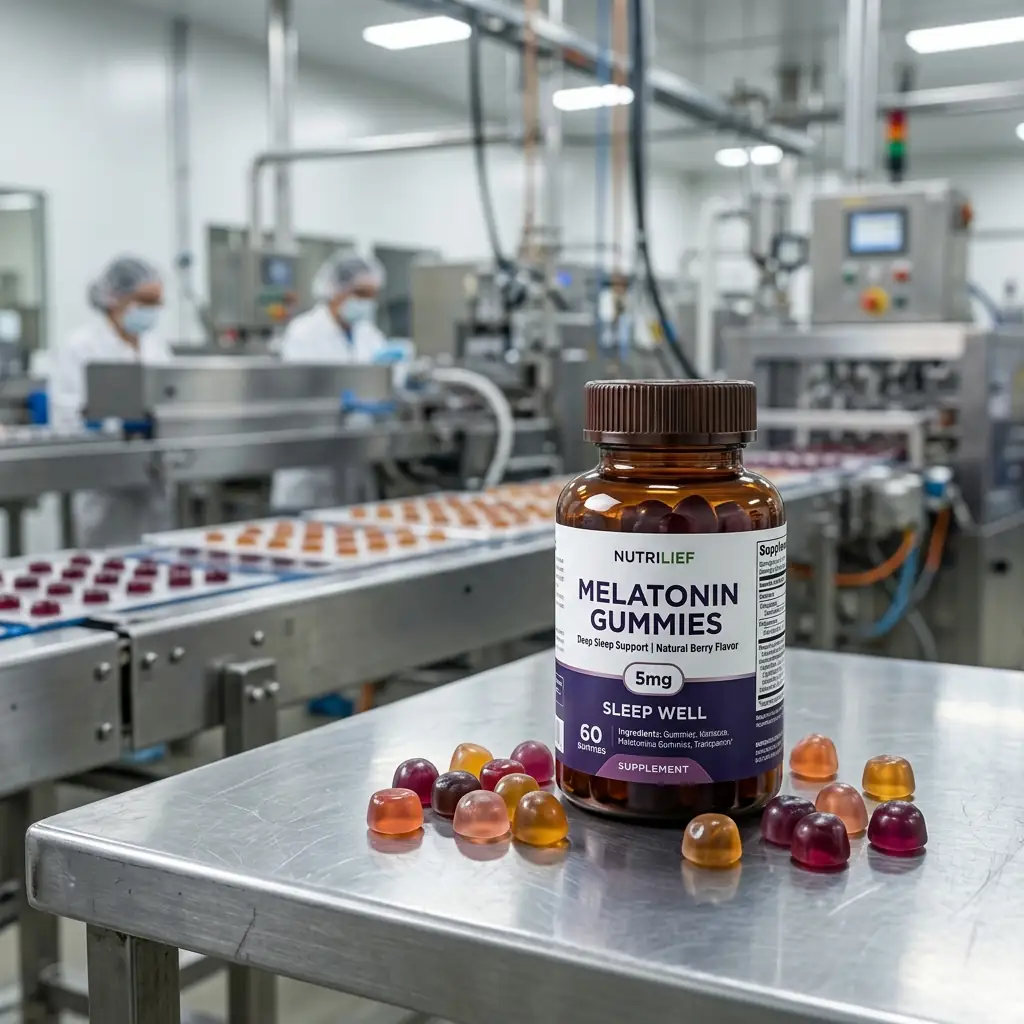

Definition: What Are Gummies?
Core Components of Gummy Manufacturing
To understand what makes gummies functional and marketable, it’s important to examine their fundamental components. Make gummy products requires precise formulation of multiple ingredient categories, each serving a distinct purpose in the final product.
1. Gelling Agents: The Foundation
Gelling agents are the primary structural components that determine texture, clarity, and stability of gummies. The most commonly used gelling agents include:
- Pectin: A natural polysaccharide derived from fruit, pectin provides gel formation without requiring animal products. Commonly used in plant-based and vegan formulations, pectin delivers a firm, smooth texture and is particularly suitable for gummies targeting health-conscious consumers.
- Carrageenan: Extracted from red seaweed, carrageenan offers excellent gel stability and water retention properties. It is frequently selected for products requiring extended shelf-life and resistance to temperature fluctuations during storage and distribution.
- Gelatin: Derived from animal collagen, gelatin remains the most widely used gelling agent in traditional gummy manufacturing due to its cost-effectiveness, superior texture, and proven stability. However, gelatin-based products cannot meet vegan or kosher certification requirements.
- Modified Starches: Corn, potato, or tapioca starches offer texture variation and can be combined with other gelling agents to achieve specific mouthfeel characteristics.
2. Sweetening Systems
Sweeteners serve dual purposes: palatability enhancement and shelf-life extension. Modern dietary supplement manufacturer operations employ multiple sweetening strategies:
- Sugar (Sucrose): Traditional choice providing superior taste and crystalline texture. Used in standard and premium gummy lines.
- Glucose Syrup: Offers reduced grittiness and improved moisture control, extending product shelf-life.
- Sugar Alcohols (Sorbitol, Maltitol, Xylitol): Low-calorie alternatives for health-focused formulations, particularly popular in diabetic-friendly and weight-management gummies.
- Artificial Sweeteners (Sucralose, Aspartame): Zero-calorie options for premium diet-specific products requiring regulatory compliance verification.
- Stevia and Monk Fruit: Natural sweetening options aligned with clean-label market trends, though requiring precise dosing to avoid off-tastes.
3. Active Ingredients and Nutraceuticals
The therapeutic or nutritional value of gummies derives from active ingredients incorporated during the manufacturing process. Common active ingredients include:
- Vitamins (A, B-complex, C, D, E)
- Minerals (calcium, magnesium, zinc, selenium, iron)
- Botanical extracts (ashwagandha, turmeric, echinacea)
- Amino acids and protein derivatives
- Probiotics and prebiotic compounds
- Collagen peptides for skin and joint health
- Sports nutrition ingredients (creatine, beta-alanine)
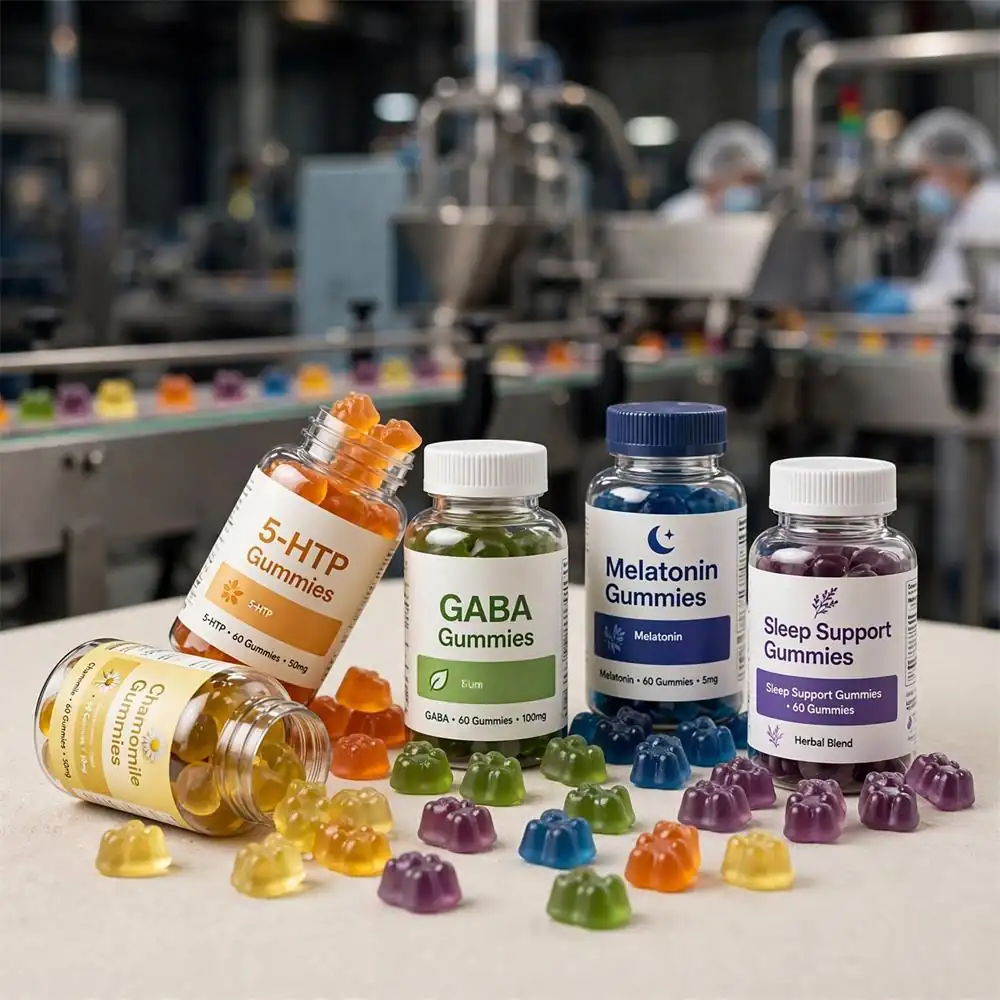
- Specialized compounds (melatonin for sleep, CoQ10 for cardiovascular support)
4. Binding and Structural Agents
These additives enhance texture consistency and prevent ingredient separation:
- Gum Arabic: Natural polysaccharide providing emulsification and texture stability
- Citric Acid: Acts as pH buffer and preservative, preventing microbial growth
- Lecithin: Prevents ingredient separation and enhances active ingredient dispersion
- Waxes and Oils: Reduce sticking and improve handling during production
5. Flavor and Color Systems
Consumer acceptance depends significantly on sensory properties:
- Natural Flavors: Derived from plant or animal sources, commanding premium pricing and clean-label credentials
- Synthetic Flavors: Cost-effective, stable, and consistent across production batches
- Natural Colors: Anthocyanins, carotenoids, and chlorophyll derived from fruits, vegetables, and plants
- FD&C Colors: FDA-approved synthetic colorants ensuring batch-to-batch consistency
Gummy Manufacturing Process Overview
Creating high-quality gummies requires sophisticated gummy manufacturing processes with precise control over temperature, humidity, and ingredient incorporation sequences. A professional gummy contract manufacturing facility operates through distinct phases:
| Manufacturing Phase | Key Activities | Quality Control Points | Output Specification |
|---|---|---|---|
| Raw Material Sourcing | Supplier qualification, specification verification, stability testing, contamination screening | CoA review, microbial testing, heavy metal analysis | FDA/GMP-compliant materials with traceability |
| Formulation Development | Ingredient selection, stability studies, shelf-life testing, bioavailability optimization | pH testing, viscosity measurement, accelerated stability | Validated formulation with technical data package |
| Mixing & Batch Preparation | Gelling agent hydration, syrup preparation, active ingredient dispersion, temperature management | Temperature monitoring, dissolution verification, homogeneity checks | Uniform batch composition ±5% target specification |
| Molding & Setting | Gel extrusion into molds, controlled cooling, gel setting (24-48 hours) | Mold cavity verification, gel firmness testing, dimensional consistency | Perfect-formed gummies meeting size/weight specifications |
| Demolding & Drying | Gummy extraction, surface moisture removal, ambient settling (3-5 days) | Humidity control (40-60%), moisture content measurement, adhesion checks | Water activity <0.65, no surface stickiness |
| Coating & Polish | Optional wax or sugar coating application, tumble polishing for appearance | Coating uniformity, surface appearance grading, weight increase verification | Premium appearance, consistent visual quality |
| Inspection & Sorting | Visual inspection, weight verification, metal detection, fragmentation testing | 100% visual inspection, ±10% weight tolerance, zero foreign materials | Market-ready gummies meeting all specs |
| Packaging | Container selection, batch coding, desiccant inclusion, final sealing | Seal integrity testing, batch traceability verification, label accuracy | Consumer-ready products with regulatory compliance documentation |
Key Manufacturing Parameters for Quality Assurance
Advanced custom gummy manufacturer operations maintain strict control over critical parameters that determine product quality, consistency, and regulatory compliance:
Temperature Management
Temperature control represents one of the most critical variables in gummy production. Gelling agents require precise heating to activate gel-forming properties, yet excessive heat degrades active ingredients and destroys heat-sensitive vitamins. Professional facilities maintain:
- Mixing temperature: 60-75°C for gelatin-based formulations
- Molding temperature: 40-50°C to prevent crystallization during setting
- Drying environment: 18-22°C with controlled humidity to prevent moisture loss or absorption
Humidity Control
Environmental humidity directly influences moisture content, which affects texture, shelf-life, and microbial stability. Manufacturing facilities require 100,000-class cleanrooms with climate control maintaining 40-60% relative humidity. Deviations beyond this range result in:
- Excessive dryness: Product becomes brittle and prone to fracturing
- Excessive moisture: Promotes mold growth and ingredient degradation
Active Ingredient Stability
Many nutraceutical actives degrade under heat, light, or oxygen exposure. Professional manufacturers employ:
- Encapsulation technologies for sensitive vitamins (B12, D3, C)
- Antioxidant systems to prevent oxidative degradation
- Inert atmosphere packaging to minimize oxygen contact
Certification Standards in Gummy Manufacturing
Quality assurance in dietary supplement manufacturing requires adherence to multiple international standards and certifications. Professional gummy contract manufacturing facilities maintain comprehensive certification portfolios:
- GMP (Good Manufacturing Practice): FDA-enforced standards ensuring consistent quality, proper documentation, and equipment validation
- ISO 9001: Quality management system certification demonstrating organizational excellence and continuous improvement
- ISO 22000: Food safety management certification covering hazard analysis, critical control points, and traceability
- HACCP: Hazard Analysis and Critical Control Points protocol identifying and mitigating food safety risks
- KOSHER & HALAL: Religious certification requirements expanding market access to diverse consumer populations
- Vegan Certification: Ensuring no animal-derived ingredients, critical for plant-based formulations using pectin or carrageenan
B2B Decision Framework: Selecting Your Gummy Manufacturing Partner
For brand owners, retailers, and startups evaluating private label gummy manufacturing partnerships, critical evaluation criteria include:
- Production Capacity: Facility daily output should exceed your volume requirements by 50-100% to accommodate growth and accommodate batch variations. Leading manufacturers operate 100,000-class cleanrooms with 16+ ton daily capacity and 5,000+ ton annual production capability.
- R&D Strength: Partner selection should prioritize firms with pharmaceutical-grade laboratory facilities (10,000-class standard minimum), in-house chemists, and documented formulation development expertise. Research intensity directly correlates with product innovation and competitive differentiation.
- MOQ Flexibility: Scalable partners offer trial batch production (500-1,000 units) enabling market testing before full-scale commitment. This reduces capital risk and allows formula optimization based on consumer feedback.
- Speed-to-Market: Evaluate lead times for formulation development (typically 4-8 weeks), first production batch (2-3 weeks post-approval), and ongoing batch turnaround (5-7 business days). Experienced manufacturers maintain ingredient inventories reducing delays.
- Regulatory Support: Premium partners provide complete documentation packages including Certificate of Analysis, batch records, stability data, and regulatory guidance for FDA compliance, Amazon compliance, and international market access requirements.
- Cost Structure Transparency: Evaluate pricing models including formulation fees, tooling costs (mold development), per-unit manufacturing costs, and packaging options. Volume discounts should be clearly tiered with breakpoints at 5K, 10K, 25K, and 50K units.
- Quality Consistency: Request batch samples from existing client brands for sensory evaluation. Texture, color consistency, flavor profile stability, and absence of defects demonstrate manufacturing control and quality commitment.
Practical Insights: Production Scalability and Quality Control
Scaling Production from Trial to Commercial
The transition from laboratory formulation to commercial-scale production presents distinct challenges. Professional manufacturers manage scaling through:
- Small-batch trials: 500-1,000 unit batches validate formulation stability and consumer acceptance before scaling investments
- Design of Experiments (DOE): Systematic variation of critical parameters identifies optimal conditions across different batch scales
- Process validation: Pilot batches (5,000-10,000 units) at 80-90% of commercial scale confirm consistency before full production
- Continuous monitoring: In-process sampling and testing during production ensure batch-to-batch consistency within ±5% specification limits
Shelf-Stability and Storage Requirements
Gummy products require careful environmental management post-manufacture to maintain quality claims:
- Temperature stability: Store at 15-25°C (59-77°F); higher temperatures accelerate ingredient degradation and reduce potency
- Light protection: Amber or opaque packaging reduces photodegradation of sensitive ingredients
- Moisture barriers: Desiccant packets within bottles maintain optimal water activity preventing mold and ingredient degradation
- Accelerated stability testing: Professional manufacturers conduct 6-month accelerated studies (40°C, 75% RH) predicting 3-year shelf-life stability
Batch Records and Traceability
Regulatory compliance and market confidence require complete supply chain visibility:
- Each batch receives unique identification enabling raw material source tracking
- Complete documentation includes ingredient suppliers, manufacturing dates, testing results, and quality approvals
- Lot traceability enables rapid response to safety concerns or market issues
- Digital systems maintain 7+ year record retention meeting FDA documentation requirements
Regulatory Compliance and Market Access
Gummy supplement products must navigate complex regulatory frameworks varying by geography:
United States Regulations
- FDA Dietary Supplement Health and Education Act (DSHEA) compliance requiring accurate labeling and substantiated claims
- GMP regulations (21 CFR Part 111) mandating quality control, equipment maintenance, and personnel training
- Accurate label declarations: ingredient names, quantities per serving, manufacturer identification
- Allergen declaration for common allergens (tree nuts, sesame, etc.)
International Markets
- European Union: Novel Food Authorization for new ingredient forms; stricter additive regulations
- Canada: Natural and Non-prescription Health Products Directorate (NNHPD) licensing requirements
- Australia: Therapeutic Goods Administration (TGA) registration for therapeutic claims
- China: Health food product registration with ingredient restrictions
ODM/OEM vs. Private Label Strategy
Different market entry strategies serve distinct business objectives:
- Original Equipment Manufacturer (OEM): Partner provides formulation and manufacturing under your brand. Recommended for established brands with marketing capability and regulatory expertise.
- Original Design Manufacturer (ODM): Partner handles complete product development from concept through commercialization. Ideal for entrepreneurs entering the market without prior formulation experience. Partner absorbs R&D risk.
- Private Label Solutions: Branded gummies produced under existing validated formulations. Fastest market entry with pre-tested stability profiles and regulatory documentation.
Professional manufacturers offering all three options provide maximum flexibility enabling strategic brand development from startup through enterprise scale.
Conclusion
Gummies represent a sophisticated formulation combining gelling agents (pectin, carrageenan, gelatin), sweetening systems, active nutraceutical ingredients, and structural additives into a stable, palatable delivery format. Modern gummy manufacturing requires precise process control, pharmaceutical-grade facilities, and comprehensive quality assurance across sourcing, formulation development, production, and packaging. Understanding gummy composition—from basic ingredient categories through advanced manufacturing parameters—enables informed partnerships with experienced manufacturers and successful brand development in the rapidly expanding dietary supplement market. Professional gummy contract manufacturers combining GMP-certified facilities, advanced R&D capabilities, and flexible scaling options provide the foundation for consistent product quality and regulatory compliance essential for long-term brand success.
Frequently Asked Questions
Q: Are gummies made with gelatin always non-vegan?Yes, gelatin derived from animal collagen makes products non-vegan. Plant-based alternatives include pectin (fruit-derived) and carrageenan (seaweed-derived), enabling vegan certification. Professional custom gummy manufacturers offer both options within the same facility, allowing market segmentation by dietary preference.
Q: How long does gummy formulation development typically take?Standard formulation development requires 4-8 weeks including stability testing, active ingredient compatibility verification, and regulatory documentation. Expedited development (2-4 weeks) is available for reformulations using existing validated formulas. Timeline depends on formulation complexity and active ingredient interaction requirements.
Q: What is the typical shelf-life of gummy supplements?Well-manufactured gummies maintain potency for 24-36 months under appropriate storage conditions (15-25°C, <60% humidity, desiccant protection). Stability varies by active ingredient type. Professional manufacturers conduct accelerated stability testing predicting real-time shelf-life before production commitment.
Q: What is the minimum order quantity for custom gummy manufacturing?Experienced manufacturers accommodate trial batches as low as 500-1,000 units for market testing and consumer feedback collection. Commercial-scale production typically begins at 5,000-10,000 units per batch, with volume discounts increasing at 25K, 50K, and 100K+ unit thresholds. Flexible MOQ enables risk-managed market entry.
Q: Which ingredients affect gummy texture and how are they controlled?Gelling agent type (gelatin vs. pectin), gelling agent concentration (8-12%), and syrup composition (sugar/glucose ratio) fundamentally determine texture. Texture control also requires precise temperature management during mixing and molding phases. Professional manufacturers use rheological testing to measure gel firmness consistency across batches.
Q: Can gummies be produced without artificial colors or flavors?Yes. Custom gummy manufacturer partners offer natural flavor and color options using fruit extracts, vegetable-derived colorants, and botanical flavorings. Natural options command 15-25% price premiums due to sourcing costs and stability challenges but enable premium clean-label positioning. All-natural formulations require longer development timelines due to flavor stability requirements.
About Gothink Biology: Your Complete Gummy Manufacturing Partner
Shenzhen Gothink Biotech Co., Ltd. — Advanced Contract Supplement Manufacturing
As one of China’s leading dietary supplement manufacturer operations, Gothink Biology specializes in comprehensive OEM, ODM, CMO, and CDMO services transforming supplement concepts into market-ready products. Our technical foundation combines world-class science with industrial-scale manufacturing capability.
World-Class Scientific Foundation
Our co-founder and chief scientific advisor bring postdoctoral research experience from California Institute of Technology, Emory University, and Ohio State University, with deep expertise in plant extraction and biomanufacturing. This research-driven approach elevates our R&D and manufacturing capabilities to industry-leading standards in formulation development, process optimization, and quality assurance.
Manufacturing Excellence
- GMP-Certified Facility: 100,000-class cleanroom with pharmaceutical-grade environmental controls
- Production Capacity: 16 tons daily output, 5,000 tons annual capacity accommodating enterprise-scale brands
- Advanced Laboratory: 10,000-class pharmaceutical-grade R&D facility enabling precise formulation development and stability testing
- Comprehensive Certification: ISO9001, ISO22000, HACCP, FDA, HALAL, GMP, KOSHER, and Vegan certifications ensuring global market access
Services: End-to-End Gummy Manufacturing Solutions
Gothink Biology provides complete gummy contract manufacturing services including:
- Formulation Development: 2,000+ new product formulations researched annually through dedicated R&D teams
- Gummy Manufacturing: Complete production from raw material sourcing through final packaging using natural gelling agents (pectin, carrageenan) and premium ingredients
- Custom Solutions: 30+ gummy shapes, multiple flavor profiles, and diverse functional categories (vitamins, minerals, botanicals, sports nutrition)
- Flexible Scaling: From trial production to full commercial manufacturing, accommodating startup brands and enterprise clients
- Private Label & OEM Services: Complete control over brand identity with your formulation or partnership-developed solutions
- Regulatory Support: Full documentation packages enabling FDA compliance, international market access, and third-party verification
Specialized Gummy Product Categories
Our manufacturing expertise spans diverse supplement categories including:
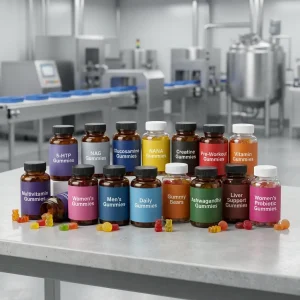
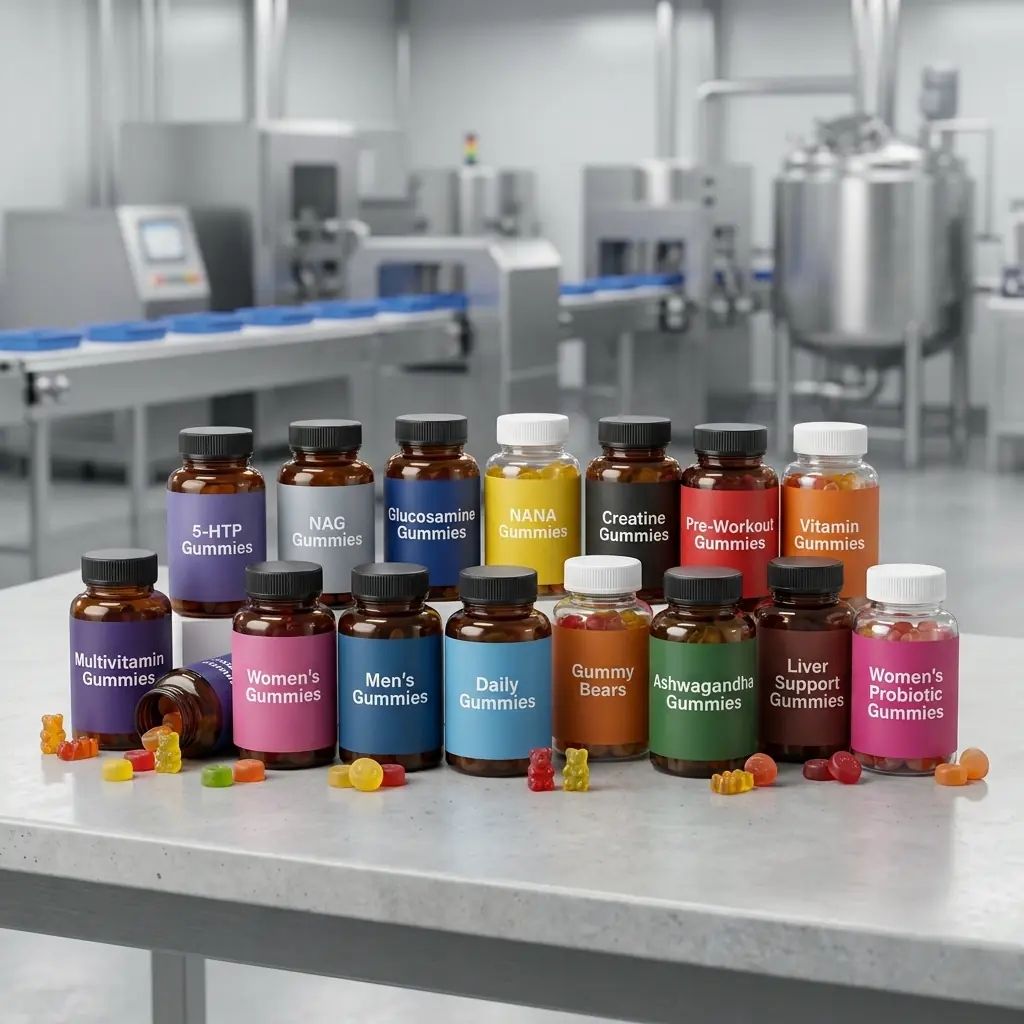
- Creatine Gummies for athletic performance enhancement
- Pre-Workout Gummies delivering energy and endurance support
- Multivitamin Gummies for general wellness (women’s and men’s formulations)
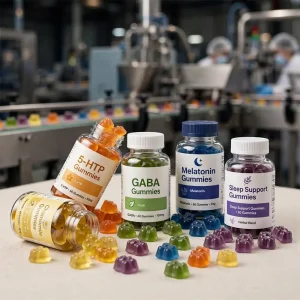
- Specialized categories: Calcium, Melatonin Sleep Support, Probiotics, Ashwagandha Stress Relief, Liver Support, Selenium antioxidant protection, and botanical gummies
Why Partner with Gothink Biology?
- High-Capacity Production: Enterprise-scale manufacturing meeting rapid order fulfillment and supply chain reliability
- Advanced R&D: Postdoctoral-led research team with pharmaceutical laboratory standards enabling innovative formulations
- Flexible Customization: From small trial batches to 5,000+ ton annual commitments supporting business growth at every stage
- Complete Service Integration: Raw material sourcing, formulation design, compliance documentation, and market-ready packaging within single partnership
- Cost Efficiency: Volume-based pricing structures and streamlined processes reducing time-to-market and development costs
Whether developing your first supplement product or scaling enterprise manufacturing, Gothink Biology delivers custom gummy manufacturer solutions combining scientific rigor, manufacturing excellence, and business partnership approach enabling sustainable brand growth.