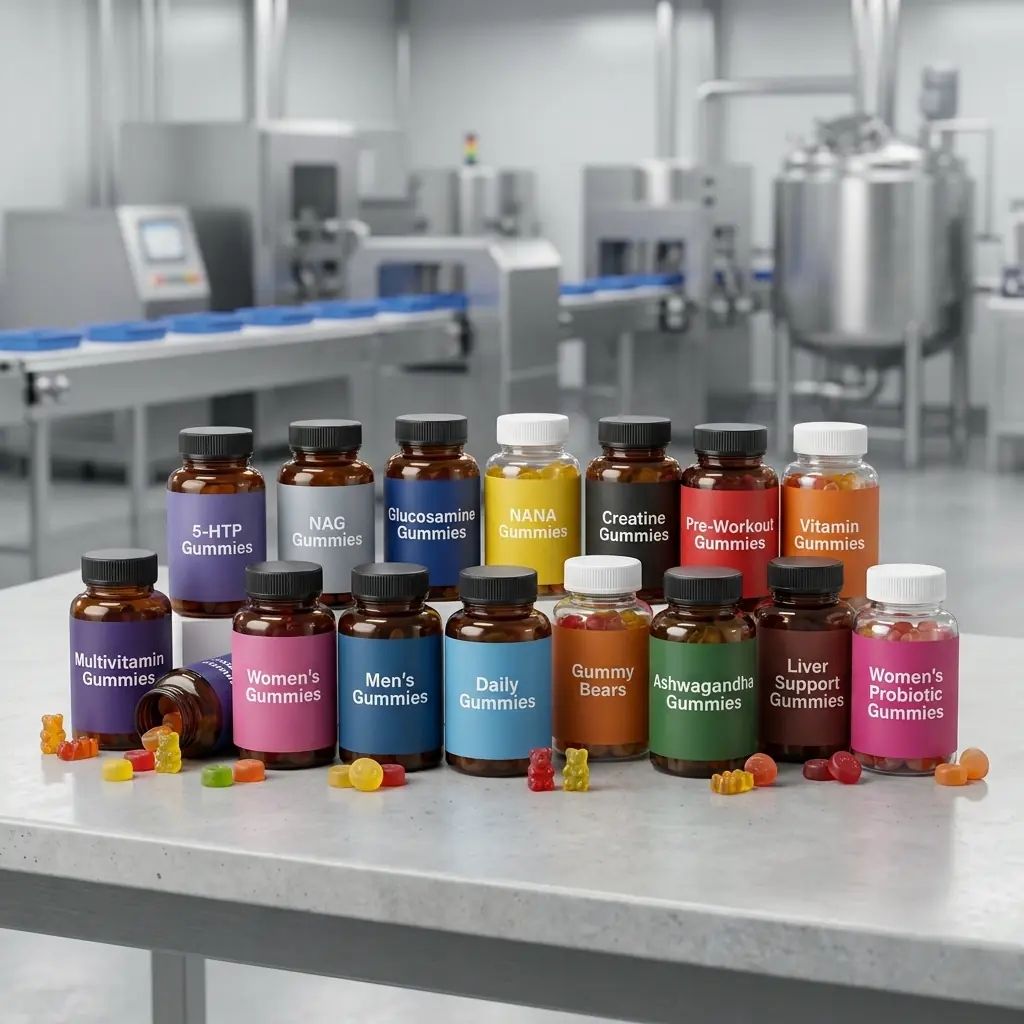

Most supplement categories depend on aspiration. Sleep does not. The consumer buying a sleep product is not optimising — they are trying to get through tomorrow. That distinction explains why sleep support has remained one of the most resilient segments in dietary supplements while adjacent wellness categories have cycled.
This article covers the demand data, the category economics, how the channel mix has shifted, and where the differentiation opportunities actually are in 2026.
1. The Demand Data
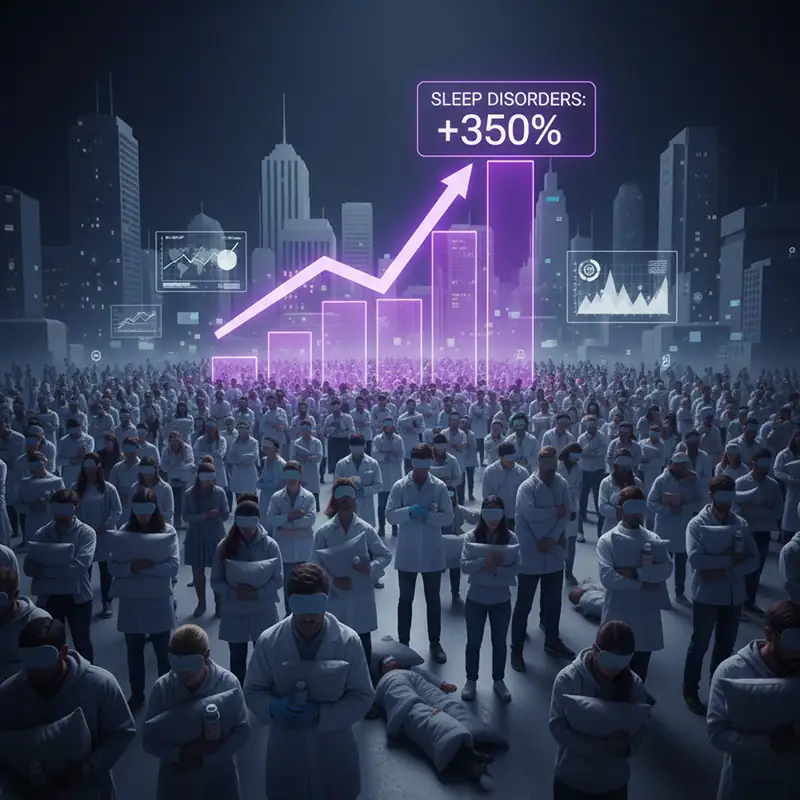
The scale of the problem is well documented across multiple public health bodies:
- Global prevalence: The World Health Organization estimates sleep deprivation and sleep disorders affect approximately 45% of the global population.
- United States: The CDC has characterised insufficient sleep as a public health epidemic. More than 70 million adults suffer from chronic sleep problems, and over 35% of American adults regularly sleep fewer than the recommended seven hours.
- Adolescents: CDC data indicates up to 77% of teenagers fail to meet rest requirements — the most severely affected demographic.
- The longevity link: Epidemiological evidence increasingly suggests habitual sleep of fewer than seven hours per night may be more detrimental to long-term health than poor diet or physical inactivity. Stanford Medicine’s SleepFM model, trained on roughly 600,000 hours of data, identified sleep patterns as significant predictors of more than 100 health conditions.
Two commercial conclusions follow. First, demand is need-driven rather than trend-driven, which means it does not collapse when a wellness fashion passes. Second, the addressable market is genuinely global — sleep disorders affect populations from Southeast Asia to Latin America, not only wealthy markets.
2. Category Size and Growth
| Segment | Recent valuation | Projection | Growth |
|---|---|---|---|
| Global sleep supplement market | Over USD 11 billion (2023) | Continued expansion through 2030 | CAGR approximately 7–9% |
| Global gummy supplement market | Approximately USD 24–26 billion (2023) | USD 47 billion by 2030 to USD 75 billion by 2032, depending on source | CAGR in the region of 10% |
| Gummy vitamins (subset, 2022) | Over USD 7 billion | — | Growing |
The important number for a brand is not the headline market size. It is that gummy formats are outpacing capsules and tablets within the sleep category specifically — which means format choice is now a competitive requirement rather than a preference.
3. The Structural Shift: Confectionery to Functional
Gummies originated as confectionery, then as a children’s vitamin delivery format. Over the past decade they have moved into adult functional nutrition, and the driver was technological rather than marketing: improvements in gelling agents, active ingredient stabilisation and taste masking made it possible to deliver actives — creatine, melatonin, botanicals — that previously required capsules or powders.
The consequence is a bifurcation in the category. Basic multivitamin gummies are commoditised and compete on price. Functional, condition-specific formulas command premium pricing because they target a specific physiological outcome — but they also require more formulation work, more compliance documentation, and more careful taste masking.
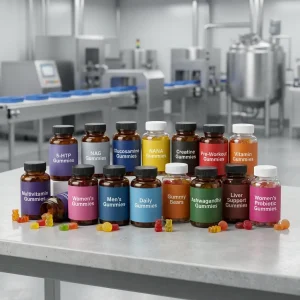
Sleep sits squarely in the second group, and demand reflects it. In B2B sourcing enquiries, sleep support is consistently named among the fastest-growing functional gummy categories alongside creatine, pre-workout, women’s health and liver support.
4. Consumer Segments Worth Targeting
Generic “sleep” positioning is crowded. Segment-specific positioning is not. The segments with the clearest product-market fit:
- Shift workers and frequent travellers — circadian disruption, a well-defined problem with a well-understood solution.
- Older adults — natural melatonin production declines with age, and swallowing difficulty makes gummies the preferred format.
- Stressed professionals — the stress-sleep adjacency, where adaptogens and magnesium outperform melatonin. See our non-melatonin actives guide.
- Students and academic-pressure segments — irregular schedules and screen exposure.
- Menopausal women — sleep disruption with a hormonal dimension, underserved by generic products.
Each of these supports a distinct formulation and a distinct message, which is the cheapest available route to differentiation.
5. Channel Economics
| Channel | Role | Requirements | Economics |
|---|---|---|---|
| Amazon FBA | Dominant in US and UK; highest search intent | Photography, A+ content, verified reviews, subscribe-and-save | High volume, competitive, review-driven |
| DTC website | Brand equity and margin | Content infrastructure, email, retention mechanics | Higher margin, lower CAC over time if content compounds |
| Social commerce (TikTok Shop, Instagram) | Discovery for millennial and Gen Z | Short-form video, creator partnerships, UGC | Low barriers, volatile, format-dependent |
| Retail and pharmacy | Scale for established brands | Longer lead times, higher MOQs, packaging and compliance investment | Lower margin, high volume, high switching cost |
Three structural advantages make gummies perform better than capsules across every one of these channels: higher average selling price per equivalent serving, more compelling product photography, and better review sentiment driven by the format itself.
The most common sequencing for new brands is DTC or marketplace first to build velocity and gather review data, then retail distribution once there is evidence of demand.
6. The Daily Ritual and Lifetime Value
Sleep is a nightly event, which is the single most attractive property of the category from a retention standpoint. Unlike episodic products, a sleep supplement that works becomes part of a daily routine — and consumers who find an effective product repurchase consistently.
This is what makes subscription models work unusually well here. Subscribe-and-save on marketplaces and DTC subscription programmes both convert well in sleep, and the resulting lifetime value justifies acquisition spend that would be uneconomic in a lower-frequency category.
For brands modelling unit economics, the relevant question is not first-order margin but repeat rate at months three and six.
7. Where Differentiation Actually Comes From
Formulation differentiation is real but has a shelf life — competitors can source similar actives. Branding differentiation compounds.
- Segment specificity beats generic positioning. “For shift workers” outsells “for better sleep”.
- Formulation transparency is a trust signal. A full supplement facts panel with disclosed quantities outperforms proprietary blends.
- Brand experience — unboxing, taste, packaging — determines the review sentiment that drives marketplace ranking.
- Content infrastructure lowers acquisition cost and builds authority in a category where consumers search before they buy.
- Documented quality — third-party testing, certifications, stability data — increasingly separates credible brands in a category that has attracted regulatory scrutiny.
8. Risks to Plan For
- Commoditisation. Melatonin-only SKUs compete on price. Plan a differentiated second generation before the first one peaks.
- Regulatory exposure. Melatonin’s status varies by market; claims are scrutinised. See our compliance guide.
- Review sensitivity. Sleep is subjective and placebo-responsive. Inconsistent product quality translates directly into review volatility.
- Supply quality. Heavy metal findings in the wider gummy category have made testing protocol a competitive issue, not just a compliance one. See our process and QC guide.
9. A Sensible Entry Sequence
- Select a target segment rather than “everyone who sleeps badly”.
- Choose the formulation family against that segment and against your target market’s regulatory reality — melatonin-led, botanical, mineral, or a stack. Start with the formulation guide if you have not yet defined this.
- Launch with a validated standard formula to establish velocity and gather review data.
- Invest in a custom formulation for the second generation, funded by first-generation revenue.
- Build content infrastructure in parallel — it is the only acquisition channel that compounds.
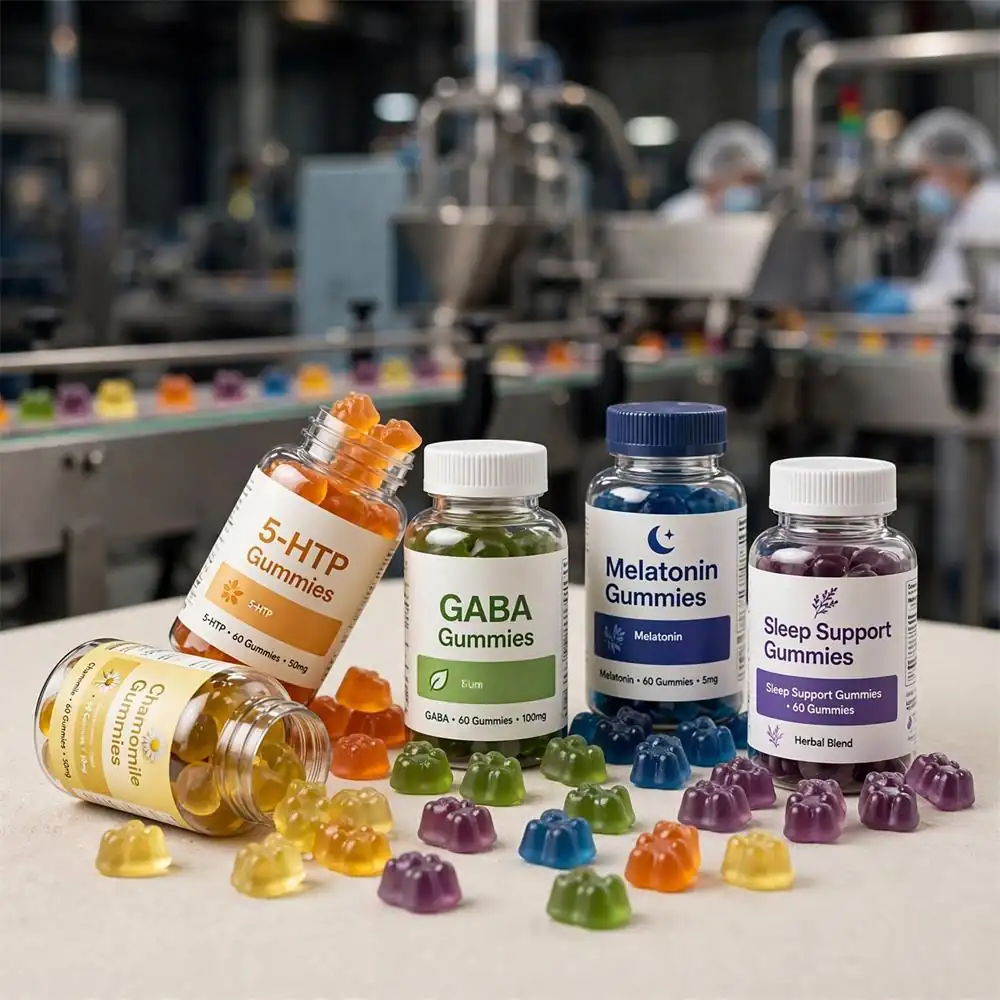
You can review the formulations currently in production on our sleep support gummies collection. For the end-to-end view of the category, start with our complete sleep gummies manufacturing guide.
Frequently Asked Questions
How big is the sleep supplement market?
The global sleep supplement market was valued at over USD 11 billion in 2023 and is projected to grow at a CAGR of roughly 7–9% through 2030. The broader gummy supplement market is larger and growing faster, at around 10% CAGR.
Why do gummies outperform capsules in sleep?
Adherence. A nightly product only works if it is taken nightly, and gummies materially improve consistent use. Secondary factors include higher average selling price, better photography and better review sentiment.
Which consumer segment is most underserved?
Menopausal women and shift workers are both poorly served by generic sleep products. Adolescents are the most affected demographic but raise additional regulatory considerations for supplementation.
Is the sleep category seasonal?
Far less than most supplement categories, because the underlying need is chronic rather than occasion-driven. There is some seasonal lift around holiday periods and New Year wellness behaviour, but nothing comparable to immune or weight management categories.
What is the biggest risk for a new sleep gummy brand?
Commoditisation. Launching an undifferentiated melatonin SKU into a crowded marketplace leads to price competition that erodes margin before the brand has equity. Segment specificity and formulation rationale are the defences.
Should I launch on Amazon or DTC first?
Most brands benefit from a marketplace-first or DTC-first approach to build velocity and reviews, then approach retail once demand is evidenced. Amazon offers the highest existing search intent for sleep products in the US and UK.
How important is subscription?
Unusually important. Sleep is a nightly need, so an effective product generates strong repeat purchase, and subscription mechanics convert the category’s natural retention into predictable lifetime value.
About Gothink Biotech
Shenzhen Gothink Biotech Co., Ltd. is a dietary supplement and gummy manufacturer providing OEM, ODM, CMO and CDMO services to supplement brands, online sellers, wholesalers, retailers and startups worldwide. Our 100,000-class GMP-certified cleanroom supports daily output of 16 tons and annual capacity of 5,000 tons, with a 10,000-class pharmaceutical-grade R&D laboratory. We hold ISO 9001, ISO 22000, HACCP, FDA, GMP, HALAL, KOSHER and Vegan certifications and support flexible MOQs from trial runs to full-scale production. Visit gttbio.com to discuss your market entry.