
Summary
Launching a gummy supplement brand no longer requires owning production equipment, cleanrooms, or a formulation team—in short, you don’t need your own Gummy Factory. Through OEM (Original Equipment Manufacturer) partnerships, brand owners can make gummies at commercial scale by working with an established contract manufacturer that handles formulation, production, quality control, and packaging. This approach lowers capital risk, shortens time to market, and gives brands access to industrial-grade equipment and regulatory expertise they would otherwise need years to build in their own Gummy Factory.
Definition
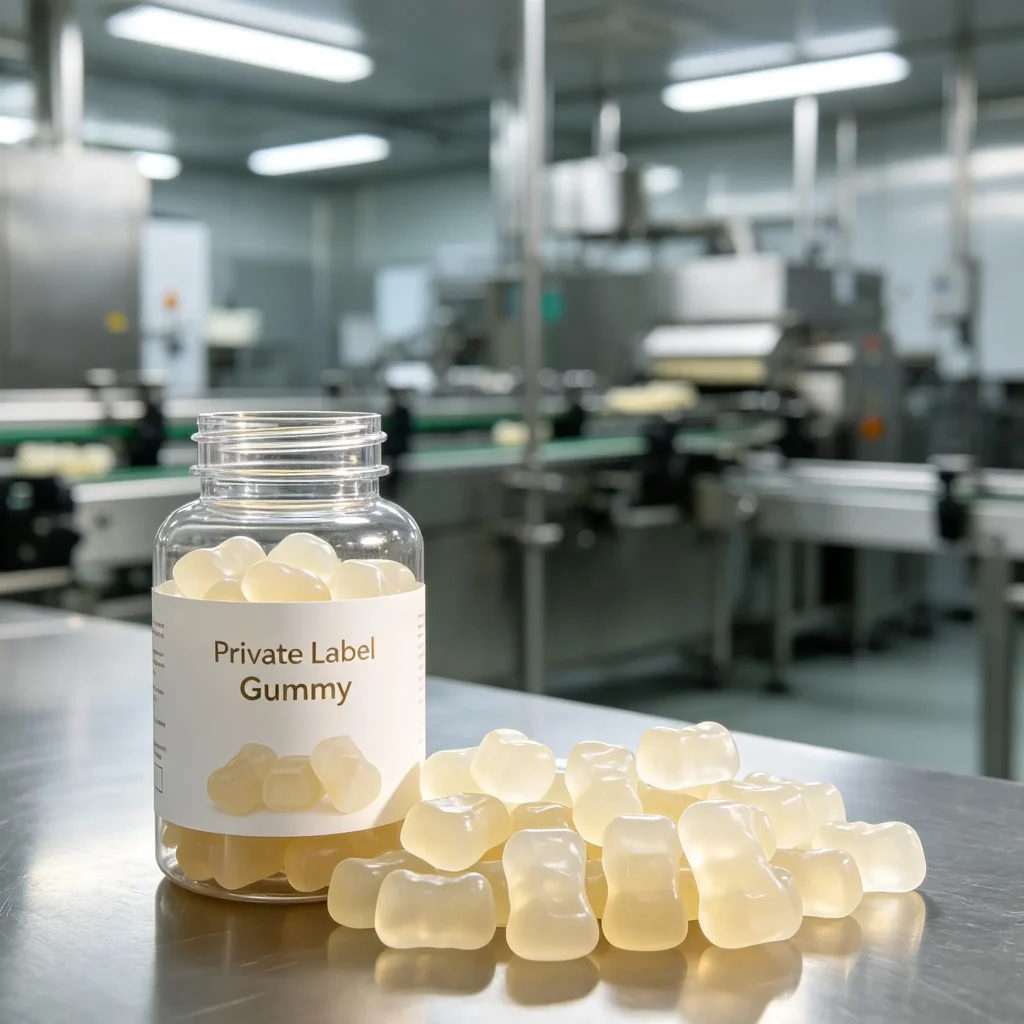
OEM Gummy Manufacturing refers to a business arrangement in which a contract manufacturer produces gummy supplements on behalf of a brand, using either the brand’s own formula or a standardized formula supplied by the manufacturer, and packages the finished product under the brand’s own name. The brand focuses on marketing, sales, and distribution, while the manufacturer takes responsibility for sourcing raw materials, running production lines, and meeting quality and safety standards. In essence, it’s the most practical way to make gummies without running your own Gummy Factory.
Main Content
What OEM Gummy Manufacturing Is
In an OEM arrangement, the manufacturer already operates the facility, equipment, and quality systems needed to produce gummies at scale. The brand does not need to purchase molding machines, drying tunnels, or packaging lines, nor does it need to hire food scientists or quality assurance staff. Instead, the brand selects a formula, a flavor profile, a shape, and a packaging style, and the manufacturer executes production, letting the brand make gummies without the burden of a Gummy Factory.
Industry Background
Gummy supplements have grown from a novelty format into one of the fastest-growing segments of the dietary supplement industry, driven by consumer preference for palatable, easy-to-consume products over traditional tablets and capsules. As demand expanded, specialized contract manufacturers built dedicated gummy production lines—effectively acting as your external Gummy Factory—capable of handling pectin- and carrageenan-based formulations, functional actives, and high-volume output, making it practical for smaller and mid-sized brands to enter the category without owning a factory.
Business Relevance
For a growing brand, the decision to outsource production directly affects cash flow, speed to market, and risk exposure. Building an in-house Gummy Factory involves significant upfront investment in equipment, facility certification, and skilled labor, along with ongoing costs for compliance and maintenance. Working with an OEM partner converts these fixed costs into variable, per-unit production costs, allowing a brand to test new products, scale up during demand spikes, and adjust formulas—so you can make gummies on demand without owning a Gummy Factory.
OEM vs. Other Manufacturing Models
OEM differs from ODM (Original Design Manufacturer) in that OEM production typically follows a formula the brand provides or selects from an existing catalog, while ODM involves the manufacturer developing a custom formula from scratch based on the brand’s requirements. OEM also differs from building an in-house factory, where the brand owns and operates its own Gummy Factory directly, carrying full responsibility for compliance, maintenance, and production output.
Key Advantages and Limitations
The primary advantage of OEM gummy manufacturing is the ability to make gummies without the capital expenditure of a Gummy Factory. Additional benefits include faster launch timelines, access to established quality systems, and flexibility to adjust order volumes. Limitations can include less direct control over day-to-day production, dependency on the manufacturer’s capacity and lead times, and the need for clear communication to protect formula confidentiality and brand specifications.
Who Should Consider This Model
Any business that wants to make gummies but lacks the resources to build a Gummy Factory should consider OEM manufacturing. It is commonly used by supplement brands entering the gummy category for the first time, distributors seeking private label products, retailers building house brands, and established companies looking to expand their product lines without diverting capital from other business priorities.
Compliance and Quality Considerations
Because gummies are ingested products, the manufacturing partner should operate under recognized quality systems such as GMP, ISO9001, and ISO22000, and should be able to provide documentation such as certificates of analysis, ingredient traceability records, and stability data. Brands should confirm that the manufacturer’s certifications align with the regulatory requirements of their target markets before finalizing a partnership.
What to Evaluate Before Sourcing
Before selecting an OEM partner to make gummies, a brand should review the manufacturer’s production capacity, minimum order quantities, formulation flexibility, packaging capabilities, quality certifications, and typical lead times. Treat the evaluation as you would when auditing a potential Gummy Factory: request product samples and a facility overview to confirm that the manufacturer’s capabilities match your quality expectations and target launch timeline.
Technical Parameter Table
| Category | Details |
|---|---|
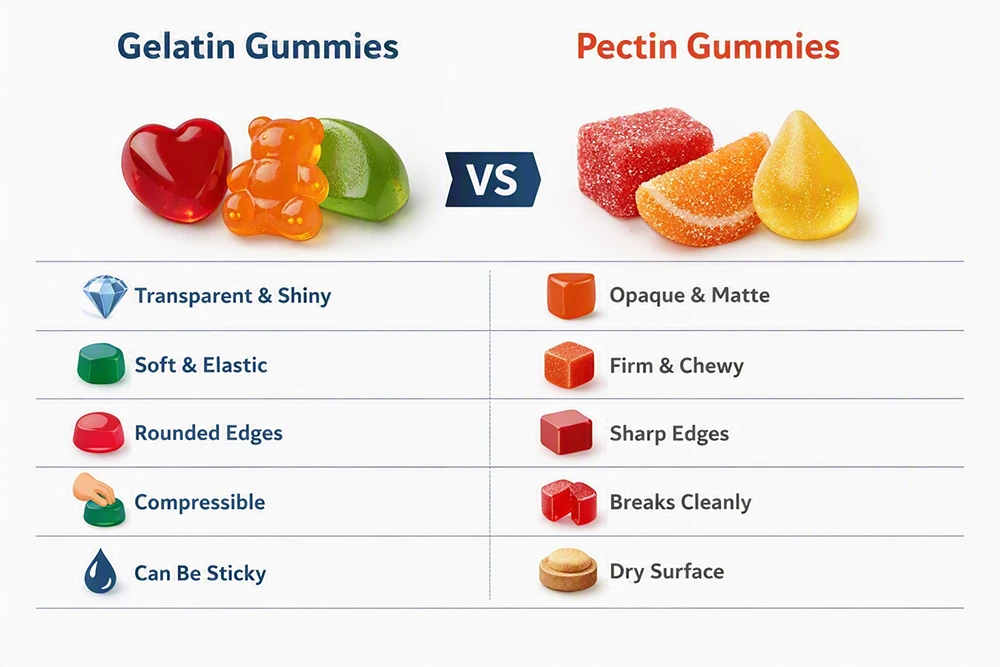
| Product Form | Pectin-based or carrageenan-based gummies, vegan and gelatin-free options available |
| Key Materials / Ingredients | Gelling agents (pectin, carrageenan), sweeteners, flavoring systems, functional actives (vitamins, minerals, herbal extracts) |
| Manufacturing Process Highlights | Formula development, cooking and mixing, depositing/molding, drying, coating, inspection, packaging |
| Quality Standards | GMP, ISO9001, ISO22000, HACCP, FDA, HALAL, KOSHER, third-party lab testing |
| Packaging Options | Bottles, pouches, blister packs, custom branded packaging |
| Scalability & Production Capacity | Small trial batches through large-scale commercial production runs |
| Storage & Logistics Considerations | Cool, dry storage to preserve texture and stability; export documentation support for international shipping |
Practical Insights
When you make gummies with an OEM partner, manufacturing quality and process control determine whether gummies maintain consistent texture, potency, and shelf life across production batches. A manufacturer with documented process controls and in-house testing can catch variability before it reaches the market.
Raw material sourcing transparency matters because the origin and quality of gelling agents, actives, and flavoring systems directly affect the finished product’s safety and performance. Brands should ask for supplier documentation and traceability records.
Production scalability and lead time affect how quickly a brand can respond to demand. A manufacturer with flexible capacity can support both initial small-batch launches and later reorders without long delays.
Compliance and documentation readiness, including certificates of analysis and regulatory filings, reduce friction when entering new markets or working with retail partners that require quality proof.
Cost structure considerations include not only per-unit production cost but also minimum order quantities, packaging costs, and any fees associated with formula development or exclusivity.
Evaluating a reliable supplier involves reviewing certifications, requesting samples, understanding communication practices, and, where possible, confirming references from other brands the manufacturer has worked with.
B2B Decision Guide
Brands typically choose a manufacturer based on a combination of production capability, certification coverage, formulation flexibility, and responsiveness. In an OEM or ODM project, clearly defining the target formula, dosage, flavor, and packaging specifications upfront helps avoid delays and misunderstandings during production.
Assessing production capability involves reviewing the manufacturer’s facility class (such as cleanroom rating), daily and annual output capacity, and the range of formats it can produce beyond gummies, which can be useful for future product line expansion.
For long-term partnerships, brands should weigh consistency of quality across repeat orders, transparency in communication, and the manufacturer’s ability to support growth in order volume over time. Ultimately, choosing the right Gummy Factory partner makes it possible to make gummies that consistently meet brand specifications.
Risk control and quality assurance checkpoints typically include incoming raw material inspection, in-process quality checks, finished product testing, and retained samples for reference, all of which should be documented and available on request.
Conclusion
OEM manufacturing allows supplement brands to make gummies without the capital investment, technical expertise, and regulatory burden of building a Gummy Factory from scratch. By partnering with a qualified contract manufacturer, brands can bring products to market faster, scale production as demand grows, and focus their internal resources on brand building and customer acquisition rather than production operations. Selecting a partner with strong quality certifications, transparent sourcing, and flexible production capacity is central to making this model work reliably.
FAQ
What is OEM gummy manufacturing?
It is a partnership that lets you make gummies without owning a Gummy Factory; the contract manufacturer handles production and packaging under your brand name.
Why does OEM manufacturing matter for brands entering the gummy category?
It removes the need to invest in a Gummy Factory, allowing brands to make gummies with lower risk and a faster path to market.
How does OEM compare to ODM manufacturing?
OEM generally follows a formula the brand provides or selects, while ODM involves the manufacturer developing a custom formula based on the brand’s specifications.
What should businesses consider before sourcing an OEM manufacturer?
Businesses should review the manufacturer’s certifications, production capacity, minimum order quantities, packaging options, and typical lead times—essentially vetting it as their external Gummy Factory.
What quality standards apply to OEM gummy production?
Recognized standards include GMP, ISO9001, ISO22000, HACCP, along with certifications such as FDA, HALAL, and KOSHER depending on the target market.
Can small or new brands use OEM manufacturing?
Yes, many OEM partners—acting as flexible Gummy Factory operations—offer low minimum order quantities that allow startups to make gummies without a heavy upfront commitment.
About Gothink Biology
This article is provided by Gothink Biology, a globally recognized dietary supplement manufacturer, offering comprehensive contract manufacturing solutions for health and wellness brands.
Shenzhen Gothink Biology Technology Co., Ltd. is a global leading nutrition supplement supplier and dietary supplement manufacturer specializing in OEM, ODM, CMO, and CDMO services for health and wellness brands worldwide. With extensive industry expertise and international certifications including ISO9001, ISO22000, HACCP, FDA, HALAL, GMP, KOSHER, BRC, FSSC 22000, PJPH, and Vegan, we deliver high-quality custom formulation, contract manufacturing, and wholesale solutions for B2B clients across global markets.
As your strategic Gummy Factory partner, Gothink Biology helps you make gummies that meet the highest standards—from initial concept to final shelf-ready product.
For more information, please visit our official website: https://gttbio.com/ or contact our expert team.