
Executive Summary
The online supplement market has experienced exponential growth over the past five years, with global dietary supplements e-commerce projected to exceed $200 billion by 2028. For entrepreneurs and merchants looking to establish or expand their presence in this lucrative sector, understanding the multifaceted approach to digital marketing is essential. This guide provides actionable strategies across multiple platforms—from Amazon and independent e-commerce sites to TikTok, Google Ads, and social media—while addressing the critical decision of whether to start with wholesale distribution or build a proprietary brand from the outset. Whether you’re launching with dietary supplements manufacturer partnerships or planning to develop your own product line, this comprehensive resource will help you navigate the complex landscape of online supplement marketing with data-driven insights and proven methodologies.
Understanding the Current Supplement E-Commerce Landscape
Market Dynamics and Consumer Behavior
The dietary supplement industry operates in a unique regulatory and competitive environment. Consumer research indicates that online shoppers prioritize transparency, third-party certifications, and detailed ingredient information when making supplement purchases. According to industry reports, 73% of supplement buyers conduct extensive research before purchasing, and 61% rely on online reviews as a key decision factor.
This behavior underscores a fundamental principle for any merchant: credibility and education drive conversions far more effectively than aggressive sales tactics. Your content strategy, product information architecture, and educational resources become competitive differentiators in an increasingly crowded market.
Starting Point Considerations: Wholesale vs. Brand Building
Many successful supplement merchants begin their journey through wholesale partnerships with established dietary supplements manufacturers. This approach offers several advantages:
- Lower initial capital investment: No need for manufacturing infrastructure or inventory risk management
- Rapid market entry: Launch products within weeks rather than months
- Scalability testing: Validate market demand before committing to proprietary formulations
- Reduced regulatory burden: Manufacturers handle compliance documentation and quality assurance
However, wholesale distribution typically yields lower margins (20-40%) compared to branded products (50-70%+). Successful merchants often follow a staged approach: begin with wholesale distribution to establish market presence and customer base, then transition to custom formulations and private label offerings as you gain market insights and capital accumulation.
Platform-Specific Marketing Strategies
1. Amazon: The Foundational E-Commerce Channel
Amazon remains the dominant platform for supplement sales, with over 40% of online supplement purchases occurring through Amazon or Walmart. Success on Amazon requires mastery of several core competencies:
Product Listing Optimization (A+ Content)
Your Amazon product listing is essentially your sales funnel. Optimize for the platform’s A9 search algorithm by:
- Keyword research: Use tools like Helium 10 or Jungle Scout to identify high-volume, low-competition keywords in your supplement category
- Enhanced content: Invest in A+ brand content (available to registered brands) that includes lifestyle imagery, ingredient benefits, and usage scenarios
- Backend keywords: Utilize all 250 characters in the backend search terms field with relevant keywords separated by spaces (avoid commas, which limit indexing)
For example, if you’re selling gummy supplements, your backend keywords might include: “gummy vitamins, chewable supplements, fruit flavored vitamins, daily gummies, natural gummies, vegan gummies, sugar free gummies”
Review Acceleration and Management
Amazon’s algorithm heavily weighs review velocity and rating. Legitimate strategies include:
- Early reviewer program: For new products, leverage Amazon’s Early Reviewer program to accumulate initial reviews
- Post-purchase email campaigns: (Within Amazon’s guidelines) Encourage verified purchases to leave reviews through your branded channels
- Product inserts: Include QR codes linking to feedback surveys and review requests
- Continuous product improvement: Monitor reviews for common complaints and work with your gummy contract manufacturing partner to address formulation issues
Sponsored Ads Strategy
Amazon Sponsored Products (SP), Sponsored Brands (SB), and Sponsored Display (SD) ads form a comprehensive paid strategy:
- New product launch: Allocate 30-40% of projected monthly revenue to Ads during the first 60-90 days
- Keyword bidding strategy: Start with broad keywords, then narrow to high-converting long-tail keywords as data accumulates
- ACOS monitoring: Maintain an Advertising Cost of Sales (ACOS) of 15-25% depending on your product category and profit margins
2. Independent E-Commerce Sites (Shopify, WooCommerce)
While Amazon provides traffic, building an independent store creates brand equity and eliminates platform dependency.
SEO Fundamentals for Supplement Retailers
Search engine optimization for supplement sites requires adherence to Google’s EEAT framework (Expertise, Authoritativeness, Trustworthiness, and Experience):
Expertise: Demonstrate deep knowledge through:
- Educational blog content addressing customer questions
- Author bios highlighting industry credentials
- Detailed ingredient guides and scientific summaries
- Video tutorials on proper supplement usage
Authoritativeness: Build domain authority through:
- High-quality backlinks from reputable health and wellness publications
- Guest contributions to established supplement industry blogs
- Press releases and media coverage
- Participation in industry associations
Trustworthiness: Establish credibility with:
- Transparent manufacturing information and facility certifications (ISO9001, GMP, FDA compliance)
- Clear return policies and money-back guarantees
- Third-party test results and certificates of analysis
- Customer testimonials with verified purchase indicators
Experience: Provide user-centric design:
- Fast-loading pages (under 3 seconds)
- Mobile-responsive design
- Clear navigation and product categorization
- Multiple customer support channels
Content Marketing Strategy
Create a sustainable content operation addressing informational queries that precede transactional searches:
- Pillar content: Comprehensive guides on supplement categories (e.g., “The Complete Guide to Probiotic Selection for Women” or “How to Choose Quality Multivitamins”)
- Cluster content: Related articles targeting long-tail keywords (e.g., “Best Probiotics for IBS,” “Probiotic Dosage Guide”)
- FAQ optimization: Structure common customer questions in schema markup to capture featured snippet opportunities
- Blog publishing cadence: Maintain 2-4 high-quality posts monthly to signal freshness and engagement to search algorithms
Email Marketing Integration
Email represents the highest ROI channel for established e-commerce sites (typically 36:1 return):
- Welcome series: 5-7 automated emails introducing your brand, providing supplement education, and offering a first-purchase discount
- Abandoned cart sequences: Recover 10-15% of lost sales through strategic reminder campaigns
- Post-purchase nurturing: Provide usage guidance, complementary product recommendations, and loyalty incentives
- Segment by purchase history: Tailor messaging to supplement category, price point, and purchase frequency
3. TikTok and Short-Form Video Marketing
TikTok’s algorithm-driven platform has become a critical discovery channel for supplement brands, particularly those targeting Gen Z and millennial consumers (ages 18-40).
Content Pillars for Supplement TikTok
Successful supplement accounts typically organize content into distinct pillars:
- Educational content (35% of posts): “5 signs you need a multivitamin,” “What does collagen actually do,” supplement myths debunked
- User-generated content (25% of posts): Customer transformations, before-and-after scenarios, customer reviews
- Behind-the-scenes (20% of posts): Manufacturing processes, team introductions, product development stories
- Trending audio integration (15% of posts): Leverage viral sounds with supplement-relevant overlays and hooks
- Direct product promotion (5% of posts): Limited promotional content to maintain authenticity and algorithm favorability
TikTok Commerce and Affiliate Strategy
- TikTok Shop integration: For eligible regions, enable direct product sales through TikTok’s native commerce feature
- Influencer affiliate partnerships: Partner with micro-influencers (50k-500k followers) offering 10-20% commission on affiliate links
- Hashtag strategy: Combine branded hashtags (#YourBrandName) with category hashtags (#SupplementsThatWork, #GummyVitamins) and trending hashtags
- Posting cadence: Maintain 3-5 posts weekly to maximize algorithmic reach; TikTok rewards consistency more heavily than other platforms
4. Temu and Emerging Marketplace Platforms
While Temu’s supplement category is still developing, early entrants with optimized listings and competitive pricing can capture emerging market share.
Temu-Specific Considerations
- Pricing strategy: Temu users prioritize value; competitive pricing (often 20-30% below Amazon) is essential
- Product bundling: Offer multi-packs or supplement stacks at reduced per-unit pricing
- Logistics: Ensure reliable shipping; Temu’s reputation depends heavily on fulfillment speed
- Product compliance: Verify that formulations meet Temu’s sourcing and quality requirements
Note: Temu’s regulatory environment and business model are evolving; treat this channel as an experimental testing ground rather than core business infrastructure.
5. SEM (Search Engine Marketing) and Google Ads Strategy
Paid search marketing through Google Ads provides immediate visibility to high-intent customers actively searching for supplement solutions.
Campaign Structure for Supplement Brands
Organize Google Ads accounts by product category and customer intent:
- Brand campaigns: Protect your brand from competitor bidding and capture users searching your brand name directly
- Competitor campaigns: Bid on competitor brand names (where legal) to capture switcher traffic
- Category campaigns: Bid on broad supplement categories (“multivitamins,” “probiotic supplements,” “gummy vitamins”)
- Informational campaigns: Target educational keywords (“how to choose supplements,” “best supplements for energy”) with lead magnet offers
SEO vs. SEM Integration
The most effective strategy combines both channels:
- SEM dominance initially: When launching new products or entering new markets, SEM provides immediate traffic while organic rankings build
- SEM efficiency: As organic rankings improve for key terms, reduce SEM spend on those high-ranking keywords and reallocate budget to emerging opportunities
- Quality Score optimization: Higher Quality Scores (8+) reduce your cost-per-click by 30-50%; achieve this through landing page relevance, ad copy alignment, and historical CTR
Landing Page Optimization
Google Ads effectiveness depends directly on landing page performance:
- Message matching: Ensure landing page copy mirrors ad copy to maintain relevance signals
- Page speed: Supplement shoppers expect fast load times; pages slower than 3 seconds suffer 40% higher bounce rates
- Clear value proposition: Lead with unique selling propositions (third-party tested, money-back guarantee, ingredient sourcing)
- Conversion optimization: Single, above-the-fold CTA button increases conversions by 8-12% compared to multiple CTAs
6. Facebook and Instagram Social Media Marketing
Meta platforms (Facebook and Instagram) remain effective for demographic targeting and retargeting existing site visitors.
Facebook Ads Strategy for Supplements
- Audience segmentation: Create detailed custom audiences based on demographics, interests (health, fitness, wellness), and behaviors
- Lookalike audiences: Build audiences similar to your best customers; these typically convert at 1.5-3x rates compared to cold audiences
- Dynamic product ads: Automatically serve previously viewed products to interested users across Facebook and Instagram
- Retargeting sequences: Implement pixel-based retargeting to serve sequential messaging to site visitors
Content Strategy for Organic Reach
While paid reach dominates on Meta platforms, organic content remains valuable for community building:
- Educational infographics: Share supplement benefit guides, ingredient explanations, and product comparisons
- Customer testimonials: Video testimonials drive higher engagement and trust signals
- Live sessions: Host Q&A sessions, expert interviews, and product launch announcements
- Community engagement: Respond to comments within 2-4 hours to maximize algorithmic visibility
7. SEO Strategy and Content Authority Building
Sustainable organic growth requires long-term SEO investment. For supplement retailers, this translates into becoming a trusted resource hub.
Technical SEO Foundations
- Site structure: Implement logical category hierarchies and internal linking strategies
- Schema markup: Implement product schema, review schema, and FAQ schema to enhance SERP appearance
- Core Web Vitals: Ensure pages meet Google’s page experience signals (LCP < 2.5s, FID < 100ms, CLS < 0.1)
- Mobile-first indexing: Design all pages with mobile users as the primary consideration
Content Gap Analysis
Identify high-value keyword opportunities where competitors rank but your site doesn’t:
- Competitor analysis: Use SEMrush or Ahrefs to identify competitor top-ranking pages
- Keyword gap analysis: Find keywords competitors rank for that you don’t
- Search intent analysis: Understand whether intent is informational, navigational, or transactional
- Priority matrix: Focus on high-search-volume, low-competition keywords with commercial intent
Link Building for Supplement Authorities
- Industry relationships: Develop partnerships with complementary brands and health publications
- Broken link building: Identify broken links on health blogs and offer superior content replacements
- Resource page features: Get listed on authoritative supplement review and resource pages
- Original research: Publish studies and surveys within your niche; these naturally attract links and media coverage
8. Influencer Marketing and Partnerships
Supplement marketing increasingly relies on influencer advocacy, both macro and micro-level.
Influencer Selection Criteria
Not all influencers drive supplement sales effectively. Prioritize:
- Niche alignment: Health coaches, fitness professionals, and wellness educators convert better than lifestyle generalists
- Audience quality: Examine follower demographics and engagement rates; 5% engagement with 100k followers outperforms 2% engagement with 500k followers
- Authenticity signals: Influencers who have historically used and reviewed supplements drive higher conversion
- Regulatory compliance: Ensure influencer disclosures comply with FTC guidelines (#ad, #sponsored)
Influencer Engagement Models
- Affiliate partnerships: 10-25% commission structure aligns incentives and minimizes upfront costs
- Sponsored content: One-time fees for dedicated posts; negotiate usage rights for repurposing on your owned channels
- Ambassador programs: 6-12 month partnerships with tiered commission structures and exclusive discount codes
- Co-created products: Develop exclusive formulations with influencers; this generates buzz and loyalty
Strategic Decision Framework: Wholesale vs. Private Label vs. Custom Formulation
Stage 1: Wholesale Distribution (Months 1-6)
Use case: Testing market viability with minimal risk
- Partner with established dietary supplements manufacturers offering pre-formulated products
- Source bulk quantities at wholesale rates (often 40-50% of retail)
- List on multiple platforms simultaneously (Amazon, independent site, marketplace platforms)
- Monitor sales velocity, customer feedback, and profit margins
Advantages: Low capital requirement, rapid market entry, proven formulations
Limitations: Commoditized competition, margin compression, limited differentiation
Stage 2: Private Label and Gummy Contract Manufacturing (Months 6-18)
Use case: Scaling successful SKUs with increased margins and brand differentiation
As your wholesale products gain traction, identify your top 3-5 performers and develop private label alternatives. This is where partnerships with experienced custom gummy manufacturers become valuable. A quality gummy contract manufacturing partner provides:
- Custom flavor development and testing
- Packaging design and private label options
- Quality assurance and regulatory compliance
- Formulation optimization based on cost and performance
For gummy supplement merchants specifically, working with a private label gummy manufacturer allows you to:
- Develop proprietary flavors your competitors don’t offer
- Create distinctive packaging that builds brand recognition
- Control production batches and quality standards
- Scale from 5,000 to 50,000+ units monthly based on demand
Advantages: 50-70% margins, strong brand differentiation, customer loyalty
Investment: $5,000-$25,000 in molds, minimum order quantities (typically 5,000-10,000 units), 4-8 week lead times
Stage 3: ODM/OEM and Custom Formulation (Year 2+)
Use case: Building a proprietary brand with complete market control
ODM (Original Design Manufacturing) and OEM (Original Equipment Manufacturing) partnerships enable you to:
- Develop completely custom formulations addressing specific health gaps
- Control manufacturing processes and quality standards
- Build authentic brand stories and intellectual property
- Create formulation patents and competitive moats
A mature dietary supplements manufacturer partner should provide end-to-end support including:
- Formulation research and development
- Raw material sourcing and quality verification
- Regulatory documentation and compliance
- Batch production and quality testing
- Packaging and logistics support
Integrated Campaign Example: Launching a New Gummy Supplement Product
Pre-Launch Phase (Weeks 1-4)
- Content preparation: Create 15 educational blog posts addressing common customer questions about your supplement category
- SEO foundation: Optimize site structure and implement schema markup
- Influencer outreach: Identify and approach 10-15 micro-influencers for product seeding
- Email list building: Create lead magnet (free supplement guide) and begin building subscriber list
Launch Phase (Weeks 5-8)
- Amazon listing optimization: Write keyword-rich title, bullet points, and product description; launch with $500/month advertising budget
- Google Ads campaign: Start with 5 high-converting keywords; allocate $300/month budget initially
- TikTok content push: Launch 15 original TikTok videos (before and after, educational, UGC-style)
- Influencer campaign: Distribute products to selected influencers; track affiliate link performance
- Email launch sequence: Send 3-email sequence to existing customer base and email list
Growth Phase (Weeks 9-16)
- Performance analysis: Identify highest-converting channels and keywords
- Budget reallocation: Increase spend on 20% of channels driving 80% of revenue
- Content expansion: Publish 4 blog posts weekly targeting emerging long-tail keywords
- Retargeting implementation: Establish Facebook/Instagram pixel retargeting for site visitors
- Customer review acceleration: Implement review request system and monitoring
Scaling Phase (Weeks 17+)
- Channel expansion: Introduce products to Temu, additional marketplaces based on performance data
- Customer retention: Implement email automation for repeat purchases and loyalty program
- Organic SEO maturity: Begin achieving rankings for main keywords; reduce SEM dependency
- Brand building: Increase brand awareness campaigns targeting informational keywords
- Product line expansion: Introduce complementary products based on customer data analysis
Common Mistakes and How to Avoid Them
Mistake 1: Underestimating Regulatory Complexity
Problem: Supplement marketing operates under strict FDA guidelines; unauthorized health claims face penalties.
Solution:
- Work with compliance specialists who understand DSHEA (Dietary Supplement Health and Education Act)
- Use only structure/function claims (“supports digestive health”) rather than disease claims (“treats IBS”)
- Maintain detailed documentation of all health claims and scientific substantiation
- Partner with manufacturers providing regulatory support
Mistake 2: Neglecting Customer Education
Problem: Customers need guidance on supplement selection, dosage, and usage; absence of education reduces conversion and increases returns.
Solution:
- Create comprehensive category guides and comparison content
- Develop FAQ sections addressing common customer concerns
- Implement chatbots and live support to address real-time questions
- Build email sequences educating customers pre and post-purchase
Mistake 3: Ignoring Reviews and Social Proof
Problem: Supplement purchases are inherently trust-dependent; lack of social proof dramatically reduces conversion rates.
Solution:
- Implement comprehensive review solicitation system (email, SMS, product inserts)
- Respond to all reviews, addressing negative feedback professionally
- Prominently feature testimonials, certifications, and third-party testing results
- Use user-generated content across all marketing channels
Mistake 4: Platform Dependency
Problem: Relying entirely on Amazon or other marketplaces leaves you vulnerable to algorithm changes, policy shifts, and margin compression.
Solution:
- Build independent e-commerce site from day one, even at modest scale
- Allocate marketing budget across multiple channels
- Develop email list actively; this is the only audience you truly own
- Maintain diverse product sourcing and manufacturing partnerships
Mistake 5: Weak Differentiation
Problem: Supplement categories are crowded; products without clear differentiation compete solely on price.
Solution:
- Identify specific customer segments (women’s health, athletic performance, digestive health)
- Develop formulations addressing unmet needs within those segments
- Build brand story and authentic voice
- Emphasize unique attributes (sourcing, manufacturing, certifications, ingredients)
Measuring Success: Key Performance Indicators
Channel-Specific Metrics
Amazon:
- Conversion rate (target: 8-15%)
- Return rate (target: <5%)
- Advertising ACOS (target: 15-25%)
- Review count and rating trajectory
E-commerce site:
- Customer acquisition cost (CAC)
- Customer lifetime value (LTV)
- Repeat purchase rate
- Email list growth rate
Paid search (Google Ads):
- Cost per acquisition (CPA)
- Return on ad spend (ROAS)
- Quality score (target: 7+)
- Conversion rate by keyword and ad group
TikTok and social media:
- Engagement rate
- Click-through rate to website
- Affiliate link redemption rate
- Follower growth trajectory
Business-Level Metrics
- Gross margin by channel: Calculate after platform fees, shipping, and returns
- Customer acquisition cost blended: Total marketing spend ÷ new customers
- Customer lifetime value: Average repeat purchase rate × average order value × average customer lifespan
- LTV:CAC ratio: Minimum healthy ratio is 3:1; aspire for 5:1 or higher
- Inventory turnover: Days inventory outstanding; optimize inventory to match demand forecast
Future Trends and Strategic Positioning
Emerging Opportunities (2024-2026)
- Personalization and testing: DNA-based supplement recommendations and AI-driven product matching will differentiate premium brands
- Sustainability emphasis: Eco-conscious supplement consumers will reward brands emphasizing sustainable sourcing and packaging
- Direct-to-consumer loyalty: Building owned customer relationships through subscription models and community will reduce platform dependency
- Vertical integration: Successful brands will increasingly control manufacturing and distribution
- International expansion: Supplement regulations are harmonizing; success in one market enables rapid expansion to similar regulatory environments
Platform Evolution
- Amazon: Continued marketplace consolidation; brand registry and advertising will remain essential
- TikTok: Short-form video will remain dominant discovery channel for younger demographics
- Independent sites: SEO and email marketing provide long-term competitive advantage; investment in owned channels remains critical
- Emerging platforms: Platforms like Temu and others will continue fragmenting merchant attention; focus on ROI-positive channels
Conclusion and Action Plan
The online supplement market presents significant opportunities for merchants willing to invest in education, quality, and strategic marketing. Success requires moving beyond single-channel thinking toward an integrated approach spanning Amazon, independent e-commerce, paid search, social media, and influencer partnerships.
The most successful supplement merchants follow a strategic progression: begin with wholesale distribution to test market viability, transition to private label and gummy contract manufacturing as successful products emerge, and ultimately develop proprietary formulations and brands. This staged approach balances capital efficiency with market validation.
Your competitive advantage derives not from individual channel mastery but from:
- Educational authority: Becoming a trusted resource within your niche
- Customer-centric approach: Building loyalty through transparency and value
- Operational excellence: Partnering with quality manufacturers and service providers
- Data-driven decision making: Measuring, analyzing, and optimizing relentlessly
Begin immediately with channel analysis: identify where your target customers congregate and validate channel economics before scaling. Build your independent e-commerce foundation alongside marketplace presence. Develop email marketing competency as your most defensible competitive asset. And as revenue grows, invest in private label and custom formulation to build lasting brand equity.
The supplement industry will continue consolidating around established brands with authentic stories and customer loyalty. By executing this integrated strategy, you position yourself to compete effectively regardless of platform changes or market dynamics.
Frequently Asked Questions
Q1: What’s the minimum investment required to launch a supplement e-commerce business?
A: The answer depends on your channel strategy. A basic launch focusing on Amazon wholesale requires $3,000-$5,000 (inventory + initial advertising). Building a comprehensive presence across Amazon, an independent site, and paid advertising requires $10,000-$20,000 initial investment. Developing private label gummy supplements increases initial investment to $25,000-$50,000 (molds, minimum orders, advertising).
Q2: How long does it take to see revenue and profitability?
A: Most merchants see initial sales within 2-4 weeks of launch across multiple channels. However, profitability (after accounting for all costs) typically requires 3-6 months as you optimize marketing spend and refine product offerings. Patience with the process and willingness to invest in testing are essential.
Q3: Should I start with Amazon or build an independent site first?
A: Start with both simultaneously. Amazon provides immediate traffic and validation; your independent site builds long-term brand equity and customer ownership. Allocate 60% of initial marketing budget to the channel generating highest initial ROI (typically Amazon), and 40% to building independent site SEO and email list.
Q4: What’s the typical margin structure in the supplement business?
A: Wholesale products typically provide 40-50% gross margin (wholesale cost ~50% of retail). Private label products improve margins to 55-65%. Custom formulations and proprietary brands can achieve 65-75% gross margins. However, all calculations must account for platform fees (15% Amazon, 2-3% Shopify), payment processing (2.9%), and shipping costs.
Q5: How important are certifications like GMP, ISO, and third-party testing?
A: Extremely important. Certifications serve as trust signals that directly impact conversion rates. Customers shopping supplements prioritize quality assurance and safety; legitimate manufacturers will have ISO9001, GMP, and HACCP certifications. Third-party testing (NSF, USP certification) further differentiates your products and justifies premium positioning.
Q6: What’s the best approach for developing a custom gummy supplement?
A: Partner with an experienced custom gummy manufacturer offering both ODM and OEM services. Your manufacturer should provide formulation consultation, raw material sourcing, quality assurance, and regulatory support. The process typically involves: initial consultation (1-2 weeks), formulation development (2-4 weeks), test batch production (2-4 weeks), and full production setup (2-4 weeks). Budget $15,000-$40,000 for custom molds and initial minimum order quantities of 5,000-10,000 units.
Q7: How do I ensure my supplement marketing complies with FDA regulations?
A: Work with a compliance specialist familiar with DSHEA regulations. Critical compliance elements include: using only structure/function claims (not disease claims), maintaining scientific substantiation for all claims, including required disclaimer statements (“These statements have not been evaluated by the FDA…”), and documenting all claims with supporting research. Your manufacturer should provide compliance support and documentation.
Q8: What’s the optimal email frequency for supplement customer engagement?
A: Start with 1-2 emails weekly to active subscribers, monitoring unsubscribe rates (aim to keep below 0.5% per send). Segment your list by purchase history and engagement level; send fewer emails to cold segments. Include educational content (60%), product promotions (25%), and customer stories (15%). Monitor email metrics closely, as supplement customers are particularly sensitive to overly aggressive promotion.
Q9: How do I evaluate a potential manufacturing partner?
A: Assess potential partners using these criteria:
- Certifications: Verify ISO9001, GMP, FDA compliance, HACCP, and relevant regulatory certifications
- Capacity and experience: Request references from similar projects; confirm they’ve successfully produced supplements in your category
- Quality systems: Review their quality control processes and request certificates of analysis for raw materials
- Communication and responsiveness: Evaluate their responsiveness to inquiries; manufacturing partnerships require ongoing communication
- Compliance support: Confirm they provide regulatory documentation and support for target markets
- Financial stability: Work with established manufacturers with multi-year track records
Q10: What’s the realistic timeline for achieving organic SEO rankings?
A: SEO is a long-term investment. Expect 3-6 months to rank for long-tail keywords (low-volume, high-intent), 6-12 months for mid-tier keywords (moderate volume and competition), and 12+ months for competitive, high-volume keywords. However, the investment compounds: at month 12, organic traffic often generates 30-40% of total website traffic with zero marginal cost per visitor. Plan your marketing budget with this timeline in mind.
About Gothink Biotech: Your Trusted Dietary Supplements Manufacturing Partner
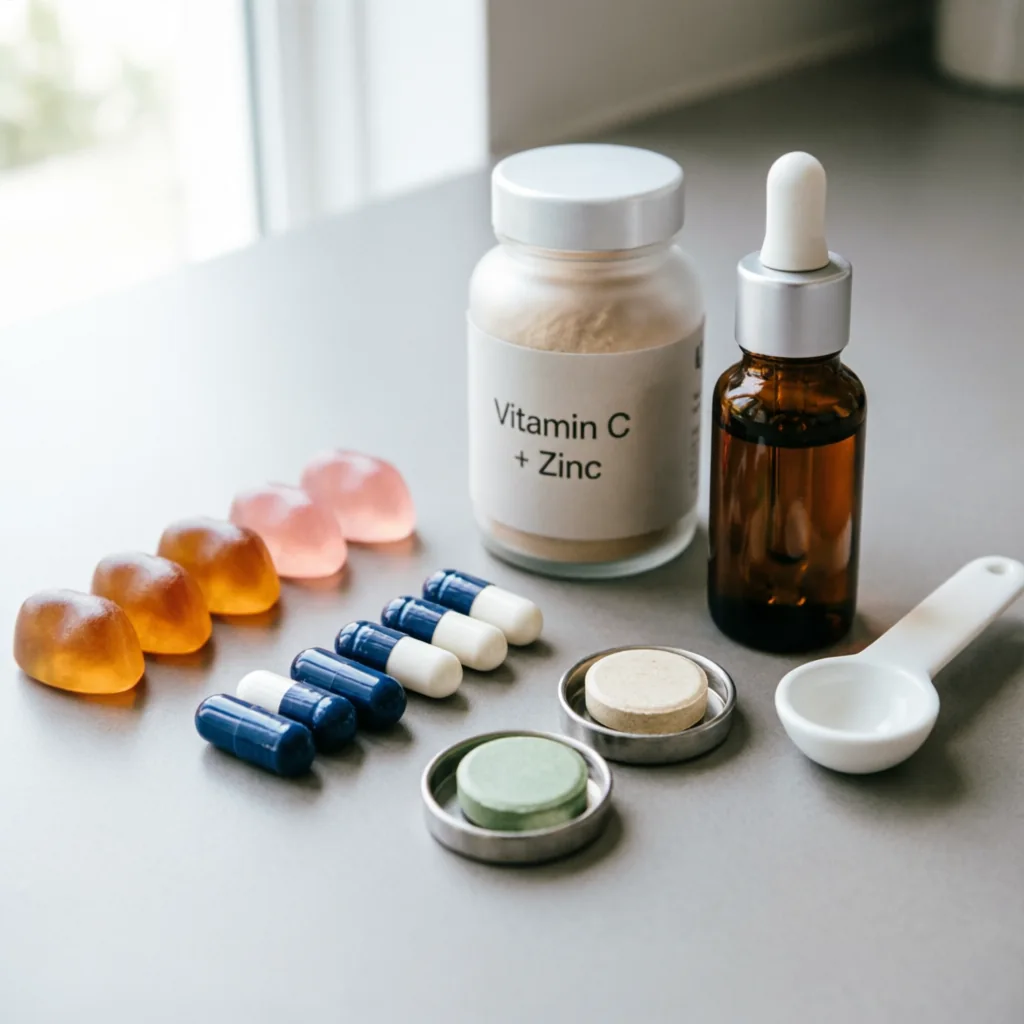
Shenzhen Gothink Biotech Co., Ltd. stands as one of China’s leading supplement manufacturers, providing comprehensive manufacturing solutions for the global supplement industry. Our expertise spans the complete spectrum of supplement production, including gummy supplements, capsules, tablets, powders, liquids, and drops.
Our Manufacturing Capabilities
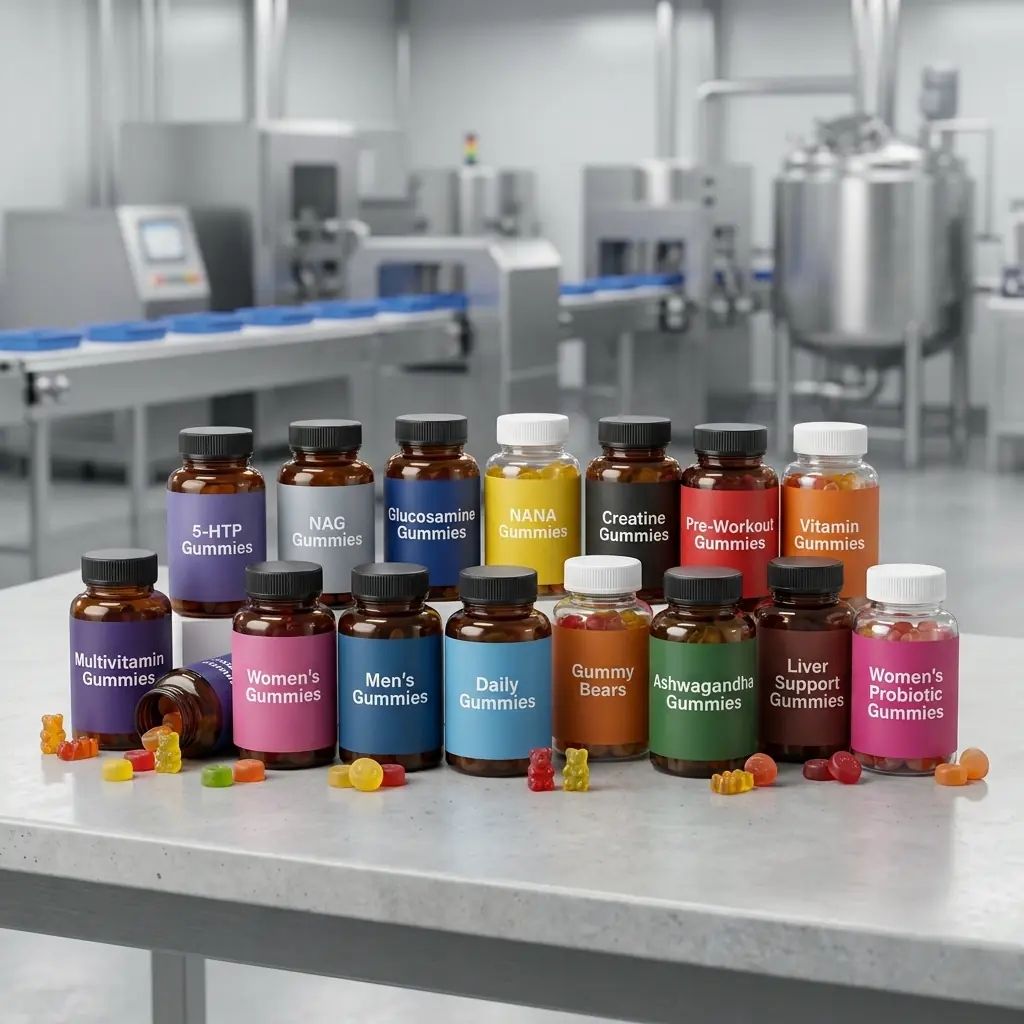
- Diverse product formats: Specializing in gummy contract manufacturing, we produce an extensive range of gummy supplements in 30+ shapes and custom flavors. Our gummy manufacturing process adheres to pharmaceutical-grade standards, ensuring consistency and quality across all batches.
- Flexible service models: Whether you require wholesale distribution, private label gummy solutions, or fully custom ODM/OEM formulations, we provide scalable manufacturing services. Our offerings include bulk production for merchant scaling, custom formulation development, and white label solutions enabling brand autonomy.
- Quality certifications: Our facilities maintain ISO9001, ISO22000, HACCP, FDA, HALAL, GMP, KOSHER, and Vegan certifications. Our 100,000-class cleanroom facilities meet pharmaceutical-grade standards, while our 10,000-class pharmaceutical-grade R&D laboratory enables precise formulation development and innovation.
Research and Development Excellence
Our team includes postdoctoral researchers and scholars from leading U.S. institutions including the California Institute of Technology, Emory University, and Ohio State University. This scientific foundation enables us to develop sophisticated formulations addressing emerging supplement trends and customer needs.
Capacity and Reliability
With daily production capacity of 16 tons and annual capacity exceeding 5,000 tons, Gothink Biotech accommodates everything from initial test batches through full-scale commercial production. Our facilities conduct formulation research on 2,000+ new products annually, ensuring access to innovative formulation approaches and market-responsive product development.
Partnership Approach
We understand that successful supplement businesses require more than manufacturing capability. Gothink Biotech provides comprehensive support including regulatory documentation, quality assurance, packaging design consultation, and market-responsive formulation optimization. Whether you’re launching your first custom gummy manufacturer partnership or scaling an established brand, we provide the expertise and infrastructure supporting your growth.
For merchants seeking reliable, quality-focused manufacturing partnerships enabling your supplement brand growth, Gothink Biotech delivers the combination of scientific expertise, manufacturing excellence, and customer-centric service driving success in today’s competitive supplement market.