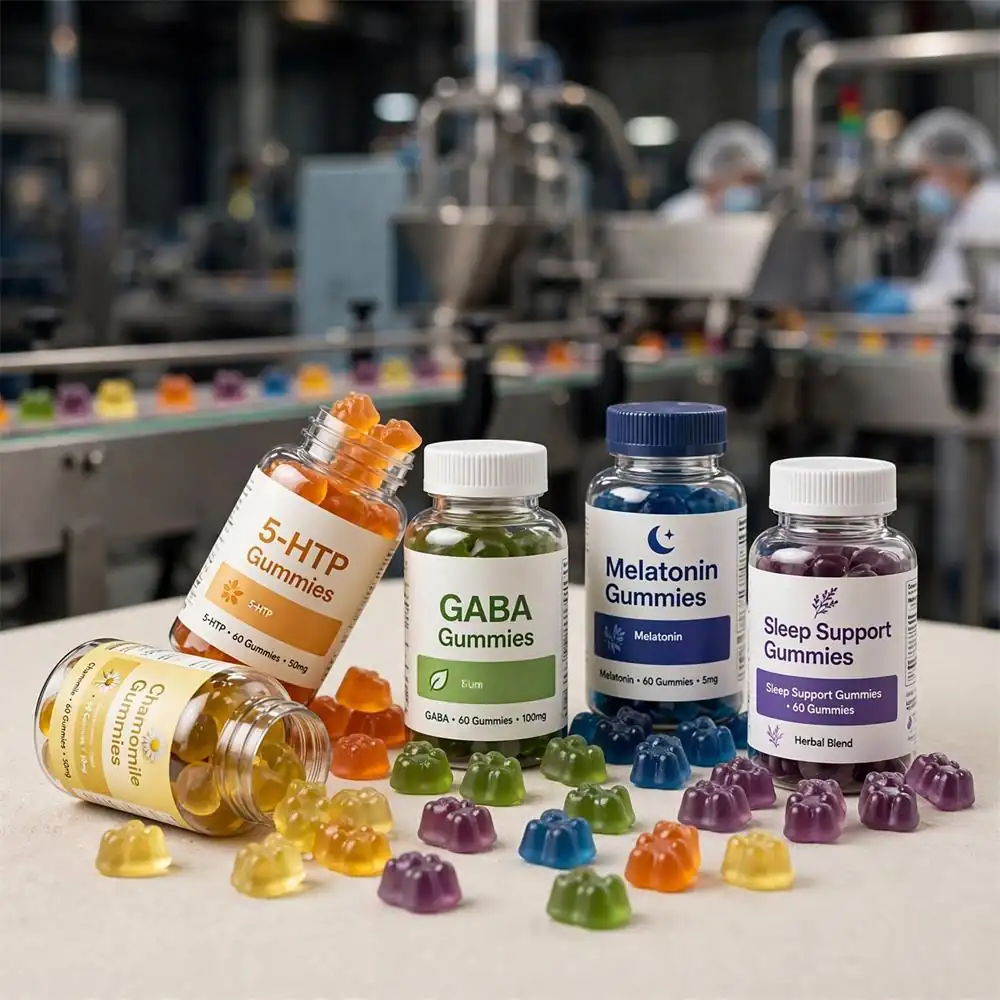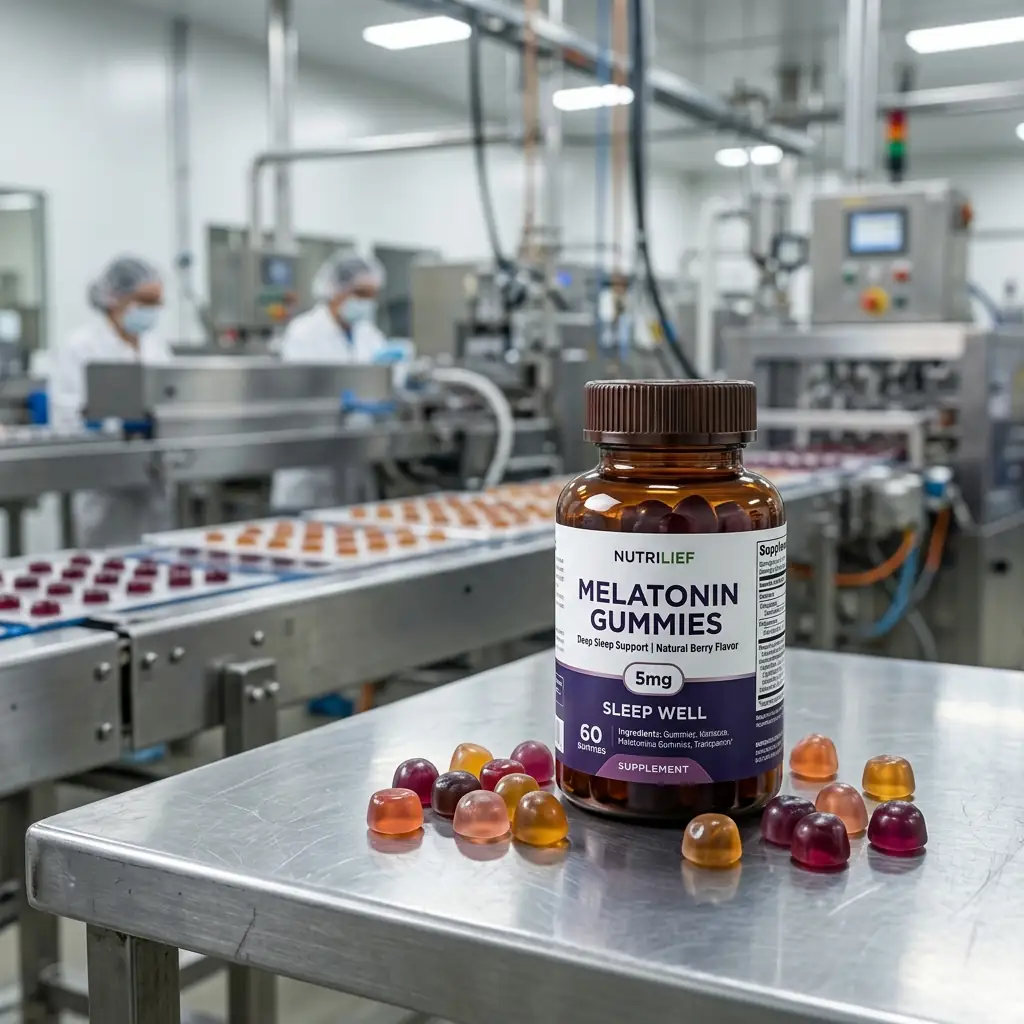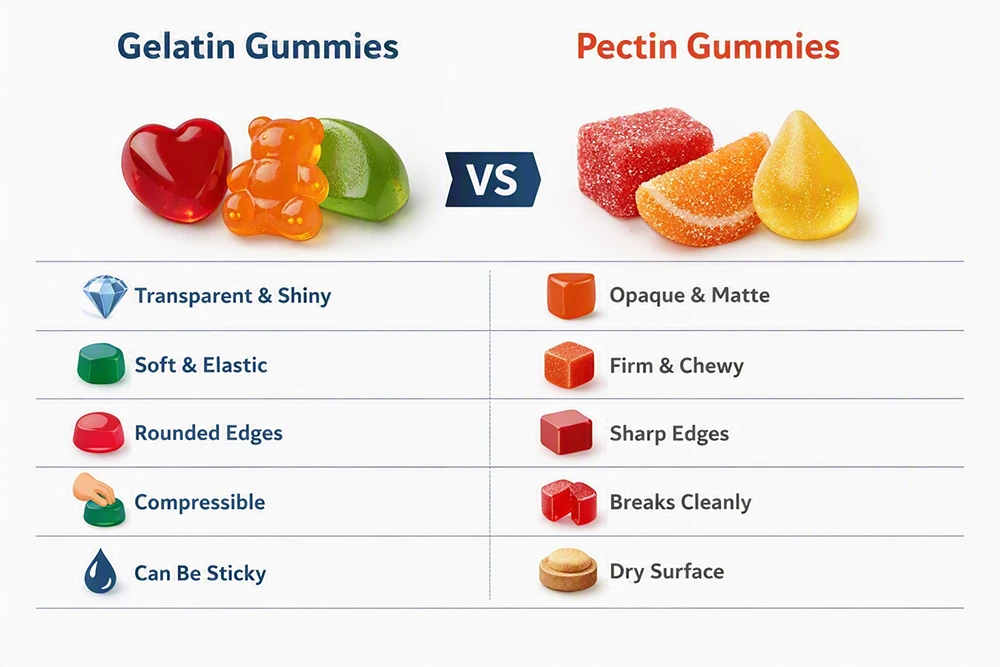

Gummy Supplement Manufacturing is the process of formulating, producing, and packaging chewable, gelatin- or pectin-based dosage forms that deliver vitamins, minerals, botanicals, and functional ingredients to consumers. For new brands, understanding this process is critical to making informed decisions about formulation, minimum order quantities, compliance, and supplier selection. This overview explains how the manufacturing pipeline works, what technical parameters matter, and what B2B buyers should evaluate before committing to a production partner.
What Is Gummy Supplement Manufacturing?
Gummy Supplement Manufacturing refers to the end-to-end industrial process of converting active nutritional or functional ingredients into chewable, gelled confection-style dosage forms, encompassing formulation development, ingredient blending, cooking, molding, curing, coating, and packaging under controlled quality conditions. Unlike tablet or capsule production, gummy manufacturing requires specialized cooking and depositing equipment, precise temperature control, and strict moisture management, making it a technically demanding segment of the dietary supplement contract manufacturing industry.
Industry Background and Market Context
The global gummy supplement market has grown consistently over the past decade, driven by consumer preference for palatable delivery formats over traditional tablets and capsules. Vitamins, probiotics, sleep aids, beauty supplements, and sports nutrition products have all migrated toward gummy formats to improve compliance and broaden demographic appeal, particularly among children, older adults, and consumers who dislike swallowing pills.
From a supply chain perspective, this growth has created strong demand for contract manufacturers capable of handling complex formulations, meeting clean-label requirements, and supporting brands at multiple production scales — from startup trial runs to high-volume retail and e-commerce orders.
How the Manufacturing Process Works
Gummy production follows a sequential workflow that begins with formulation and ends with finished, packaged product ready for distribution. Each stage affects the final product’s stability, potency, texture, and regulatory standing.
Step 1 — Formulation Development
A qualified R&D team works with the brand to define the active ingredient stack, gelling agent system (gelatin, pectin, carrageenan, or agar), sweetener profile (sugar, glucose syrup, or sugar-free alternatives), flavor system, colorants, and any functional coatings. Stability of heat-sensitive ingredients such as probiotics, certain vitamins, and botanical extracts must be addressed at this stage, as the cooking process involves elevated temperatures.
Step 2 — Ingredient Sourcing and Incoming Quality Control
Raw materials are procured from qualified suppliers and tested upon receipt against specifications including identity, purity, potency, heavy metals, microbial counts, and, where applicable, allergen status. Ingredient traceability documentation is maintained to support future audits and regulatory submissions.
Step 3 — Cooking and Mixing
The gelling agent is hydrated and cooked at controlled temperatures alongside the sweetener base. Active ingredients, flavors, and colorants are incorporated at defined stages to minimize degradation. Homogeneity of the active ingredient blend is a critical quality parameter at this step.
Step 4 — Depositing and Molding
The liquid mass is deposited into molds — typically starch trays (mogul process) or silicone molds — using automated depositing equipment calibrated for fill weight accuracy. Mold shapes range from standard bear and ring forms to custom brand-specific geometries.
Step 5 — Curing and Drying
Molded gummies are transferred to controlled-environment curing rooms where temperature and humidity are precisely managed. Curing time affects texture, water activity, and microbial stability. This stage is one of the longer steps in the process, typically ranging from 24 to 72 hours depending on formulation.
Step 6 — Finishing Treatments
After demolding, gummies may receive surface treatments such as sugar coating, oil polishing (to prevent sticking), or carnauba wax for enhanced shelf stability and appearance. For certain functional products, a confectionary coating may also serve as a moisture barrier.
Step 7 — Quality Testing and Release
Finished product batches are tested for weight uniformity, active ingredient potency, water activity, microbial limits, and any applicable heavy metal or contaminant thresholds. Documentation packages — Certificates of Analysis (COAs), batch records, and, where applicable, third-party lab reports — are generated prior to shipment.
Step 8 — Packaging and Labeling
Gummies are counted and filled into bottles, pouches, or blister packs using automated lines. Labels are applied according to the destination market’s regulatory requirements (FDA 21 CFR Part 111 for U.S. products, EU Food Supplements Directive for European markets, and so on). Export documentation, including customs classification and shipping marks, is coordinated at this stage.
Gummy Format vs. Other Supplement Formats
Compared to capsules and tablets, gummy supplements offer meaningfully higher consumer palatability and brand differentiation potential, but they also present distinct manufacturing and stability challenges. Gummies are more sensitive to temperature and humidity during storage and distribution. Certain nutrients — particularly water-soluble vitamins and high-dose minerals — can be difficult to incorporate at therapeutic doses within the physical constraints of a single gummy unit. Hygroscopic ingredients require careful handling to prevent texture degradation over shelf life.
For brands targeting mass-market or DTC channels where repeat purchase behavior and flavor experience drive loyalty, gummies often justify the additional formulation complexity and unit cost relative to capsule or tablet alternatives.
Who Should Consider Gummy Contract Manufacturing
Gummy contract manufacturing is appropriate for a range of B2B buyers, including established supplement brands expanding into new delivery formats, DTC e-commerce brands seeking differentiated product lines, private label distributors targeting retail buyers, and startups entering the health and wellness market with a consumer-first product concept. It is also suitable for brands in international markets seeking GMP-certified production with export documentation capability.
Compliance and Regulatory Considerations
In the United States, dietary supplement gummies are regulated under 21 CFR Part 111 (Current Good Manufacturing Practice), which requires manufacturers to maintain stringent batch records, testing protocols, and quality systems. Products making structure/function claims must comply with FDA notification requirements. For export markets, additional requirements may apply, including EU Novel Food Regulation assessments, Health Canada NHP licensing, or TGA registration in Australia.
Brands should verify that their contract manufacturer holds relevant certifications (GMP, ISO 22000, HACCP) and can provide documentation sufficient to support any market-specific regulatory filings the brand intends to make.
Technical Parameter Reference: Gummy Supplement Manufacturing
| Parameter | Typical Range / Standard | Notes for B2B Buyers |
|---|---|---|
| Product Form | Bear, ring, cube, drop, custom shape | Custom molds available with tooling cost; standard shapes have no tooling fee |
| Gelling Agent Options | Gelatin (bovine/porcine), pectin (vegan), carrageenan, agar | Pectin required for vegan/halal/kosher positioning; affects texture and process parameters |
| Unit Weight | 1.5 g – 5.0 g per gummy | Heavier units allow higher active ingredient loads per piece |
| Active Ingredient Load | Varies by ingredient; typically 5 mg – 500 mg per gummy | High-dose minerals and fat-soluble vitamins require formulation engineering to avoid texture/stability issues |
| Sweetener System | Cane sugar + glucose syrup; erythritol + stevia (sugar-free); isomaltulose | Sugar-free formulas increase complexity and cost; erythritol-based gummies may require cooling management |
| Flavoring | Natural flavors, artificial flavors, or natural + artificial blends | “Natural flavor” claims require compliant sourcing documentation |
| Colorant Options | FD&C certified colors; natural colorants (beet, turmeric, spirulina, elderberry) | EU market generally requires natural colorants or E-number declared colors |
| Manufacturing Standards | GMP (21 CFR Part 111), ISO 9001, ISO 22000, HACCP | Third-party GMP audit certificates should be requested; NSF or Informed Sport certification adds retailer credibility |
| Third-Party Testing | Potency, heavy metals, microbials, pesticides, allergens | U.S. retailers often require COA from accredited third-party labs; ISO/IEC 17025-accredited labs preferred |
| MOQ (Minimum Order Quantity) | 5,000 – 50,000 units (varies by manufacturer) | Lower MOQ appropriate for market testing; higher volume required for unit cost optimization |
| Production Lead Time | 30 – 90 days from formula approval to shipment | Custom formulations and label artwork approvals extend timelines; allow buffer for new product launches |
| Packaging Options | HDPE bottles, stand-up pouches, blister packs, kraft bags | Child-resistant closures required for U.S. if product may be mistaken as food by children |
| Shelf Life | 18 – 24 months (typical) | Water activity control and packaging barrier properties are key determinants; validated by accelerated stability testing |
| Storage Conditions | Cool, dry; typically ≤25°C / ≤60% RH | High humidity in transit can cause clumping; desiccant packets and appropriate packaging barrier ratings are recommended |
| Annual Production Capacity (large-scale) | Hundreds to thousands of tons per year | Verify that the manufacturer’s stated capacity can accommodate both current and projected order volumes |
Practical Insights for B2B Buyers
Manufacturing Quality and Process Control
The reliability of a gummy manufacturer’s quality system directly affects batch-to-batch consistency. Key indicators include the manufacturer’s deviation and corrective action processes, in-process quality checkpoints (weight checks, temperature logs, depositing accuracy), and the rigor of finished product release testing. Ask for sample COAs from recent commercial batches and review the testing scope — not just what is tested, but the analytical methods used and the accreditation status of the testing laboratory.
Raw Material Sourcing Transparency
For brands seeking to make clean-label, non-GMO, organic, or allergen-free claims, the manufacturer’s supply chain documentation is critical. Request supplier qualification records, incoming inspection reports, and, for botanicals, certificate of identity and geographical origin. Manufacturers with in-house raw material testing capabilities offer a meaningful advantage in lead time and traceability.
Production Scalability and Lead Time Management
New brands frequently underestimate the production timeline from formula sign-off to first shipment. A realistic gummy manufacturing project timeline includes formulation finalization (2–4 weeks), stability and regulatory review (2–6 weeks), artwork approval (1–2 weeks), production scheduling (1–3 weeks), production and curing (1–2 weeks), and QC release and export logistics (1–2 weeks). Building a 60–90 day buffer into the supply chain plan from the outset reduces the risk of launch delays.
Compliance and Documentation Readiness
A well-prepared contract manufacturer should be able to provide: current GMP certification, facility audit reports, ingredient COAs with third-party testing, finished product COAs, batch records (available upon request for FDA inspections), and product safety dossiers or documentation relevant to the target market. The ability to respond quickly to documentation requests is a practical indicator of how well the manufacturer manages its quality system day to day.
Cost Structure Considerations
Custom gummy manufacturer pricing is influenced by formulation complexity, ingredient cost, unit weight, order volume, packaging specification, and any tooling fees for custom molds or packaging components. Brands comparing quotes across manufacturers should ensure they are comparing equivalent specifications. A lower unit price from a manufacturer with limited testing documentation may ultimately cost more when factoring in product recalls, compliance remediation, or retailer rejection.
Evaluating a Reliable Supplier
Beyond certifications and price, evaluate a manufacturer’s responsiveness during the RFQ process, their willingness to share facility audit reports, the experience and qualifications of their R&D team, their track record with similar product categories, and the clarity of their contractual terms around IP ownership, minimum order changes, and quality dispute resolution.
B2B Decision Guide: Choosing the Right Gummy Supplement Manufacturer
Define Your Product Requirements Before Engaging Suppliers
Before requesting quotes, brands should have a clear brief covering: the target active ingredient profile, intended market (which drives regulatory and labeling requirements), desired gelling agent (gelatin vs. vegan), packaging format, target retail price, and projected first-order and annual volume. Suppliers will provide more accurate proposals and timelines when given a complete brief, and the selection process itself becomes more efficient.
Assess GMP Certification and Quality Infrastructure
Confirm that the manufacturer holds current GMP certification relevant to dietary supplements, not just food-grade certification. For U.S.-destined products, 21 CFR Part 111 compliance is the baseline. For European or other regulated markets, verify equivalence or additional certification requirements. Request a copy of the most recent third-party audit report, not just a certificate.
Evaluate R&D and Formulation Capability
A manufacturer’s in-house R&D capability determines whether it can support new product development, reformulation, and stability testing internally. Manufacturers with qualified food scientists or pharmacists on staff, and access to a pharmaceutical-grade laboratory, are better positioned to develop technically complex or novel formulations compared to those who rely entirely on tolling arrangements.
Understand MOQ and Scalability Terms
Match the manufacturer’s minimum order quantity to your launch strategy. A manufacturer offering flexible MOQ for initial orders while maintaining the capacity to scale is preferable for brands that anticipate growth. Confirm how pricing tiers change with volume and whether the manufacturer can commit capacity for forecast-based planning.
Clarify OEM/ODM Scope and IP Protection
For private label gummy and custom formulation projects, the contractual framework around intellectual property is significant. Ensure that formulations developed collaboratively are clearly assigned to the brand, that the manufacturer will not supply identical formulations to direct competitors, and that the confidentiality agreement covers both formulation specifics and business terms.
Risk Control and Quality Assurance Checkpoints
Establish agreed-upon quality checkpoints prior to production commencement, including pre-production formula sign-off, in-process inspection options (if relevant for high-value orders), and clear acceptance criteria for finished product COAs. Define the dispute resolution process and the manufacturer’s liability policy for batches that fall outside specification.
Conclusion
Understanding how Gummy Contract Manufacturing works — from formulation and ingredient sourcing through molding, curing, testing, and packaging — equips new brands to make more informed decisions about supplier selection, project timelines, and investment requirements. The gummy format offers real commercial advantages in consumer appeal and brand differentiation, but it demands a manufacturing partner with the technical capabilities, quality infrastructure, and regulatory documentation readiness to support a compliant, scalable product launch. Brands that invest time in supplier evaluation before placing initial orders are better positioned to build reliable supply chains and avoid costly quality or compliance issues downstream.
Frequently Asked Questions
What is gummy supplement manufacturing?
Gummy supplement manufacturing is the process of formulating and producing chewable, gelatin- or pectin-based dosage forms containing vitamins, minerals, botanicals, or functional ingredients. It encompasses formulation development, cooking, molding, curing, quality testing, and packaging, carried out under GMP-compliant conditions.
How long does it take to make gummies from concept to finished product?
A typical timeline from initial formulation brief to first commercial shipment is 60–90 days for standard formulations and up to 120 days or more for novel or complex products requiring extended stability testing. Label artwork approval and regulatory review for specific markets can add additional time.
What is the difference between OEM and ODM gummy manufacturing?
In OEM (Original Equipment Manufacturing) arrangements, the brand provides the formulation and the manufacturer produces to specification. In ODM (Original Design Manufacturing), the manufacturer develops the formulation — often from an existing catalog — and the brand customizes the label and packaging. ODM is faster and lower in upfront development cost; OEM gives the brand greater formulation ownership and differentiation.
What quality certifications should a gummy supplement manufacturer hold?
At minimum, a reputable manufacturer should hold current GMP certification (21 CFR Part 111 for U.S. supply, or equivalent), ISO 22000 or HACCP food safety certification, and ideally third-party audit endorsement. Additional certifications — Halal, Kosher, Vegan, Non-GMO — are relevant depending on the target market and product positioning.
What is a typical minimum order quantity for custom gummies?
MOQs vary widely by manufacturer and formulation type, typically ranging from 5,000 to 50,000 units per SKU. Some manufacturers offer low-MOQ programs for market testing, while large-scale facilities are optimized for higher-volume runs. Brands should confirm whether the stated MOQ applies per flavor, per shape, or per finished SKU.
What makes gummy supplements harder to manufacture than capsules or tablets?
Gummy production requires specialized cooking, depositing, and curing equipment, along with precise humidity and temperature management throughout production and storage. Heat-sensitive ingredients degrade during the cooking step, and high-dose active ingredients can disrupt texture and water activity. These factors make gummy manufacturing more technically demanding and capital-intensive than standard capsule or tablet production.
About Shenzhen Gothink Biotech Co., Ltd.
Shenzhen Gothink Biotech Co., Ltd. is a GMP-certified dietary supplement manufacturer based in Shenzhen, China, operating a production facility with a 100,000-class cleanroom, a daily output capacity of 16 tons, and an annual production capacity of 5,000 tons. The company provides OEM, ODM, CMO, and CDMO services across gummy, capsule, tablet, powder, liquid, and drop supplement formats, supporting product development from initial formulation through final packaged export-ready product.
Gothink Biotech’s R&D team includes researchers with postdoctoral backgrounds from leading U.S. institutions, supported by a 10,000-class pharmaceutical-grade laboratory for formulation development and quality validation. The facility holds certifications including ISO 9001, ISO 22000, HACCP, FDA registration, GMP, Halal, Kosher, and Vegan, providing the compliance documentation infrastructure required for supply to regulated markets in North America, Europe, Australia, and beyond.
The company supports private label and custom formulation projects at flexible order scales, accommodating both early-stage brands conducting initial market trials and established brands managing high-volume ongoing production. Bulk and wholesale ingredient supply services are also available. Long-term B2B supply relationships are supported through dedicated account management, transparent batch documentation, and consistent quality assurance practices across production runs.