
Overview of Gummy Vitamin Manufacturing
The gummy supplement manufacturing industry has experienced exponential growth over the past decade, driven by consumer preference for convenient, pleasant-tasting alternatives to traditional tablets and capsules. Understanding how gummy vitamins are made requires knowledge of food science, pharmaceutical engineering, and quality management systems. Modern gummy supplements production integrates precision equipment, rigorous ingredient sourcing, and multi-layered quality control protocols.
The manufacturing process involves coordinated steps spanning ingredient preparation, matrix formulation, thermal processing, unit operations (mixing, cooking, molding), stabilization, and final packaging. Leading custom gummy manufacturers employ GMP-certified facilities and ISO-compliant processes to ensure product safety, potency retention, and regulatory compliance across global markets including the United States, European Union, and APAC regions.
Market Context and Industry Standards
The global gummy vitamins market exceeded $8.2 billion in 2023 and continues expanding at a CAGR of 9.4%, with particular strength in immune support, wellness, and pediatric formulations. Gummy Contract Manufacturing has become a specialized sector, with dedicated facilities investing in proprietary technology stacks to differentiate product quality and production capacity. Manufacturers must navigate FDA regulations (DSHEA compliance), cGMP requirements, allergen protocols, and emerging certifications (organic, vegan, clean-label).
The Complete Gummy Vitamin Manufacturing Process
Creating high-quality gummy vitamins requires precise execution across multiple production stages. The following breakdown provides a comprehensive view of each critical step:
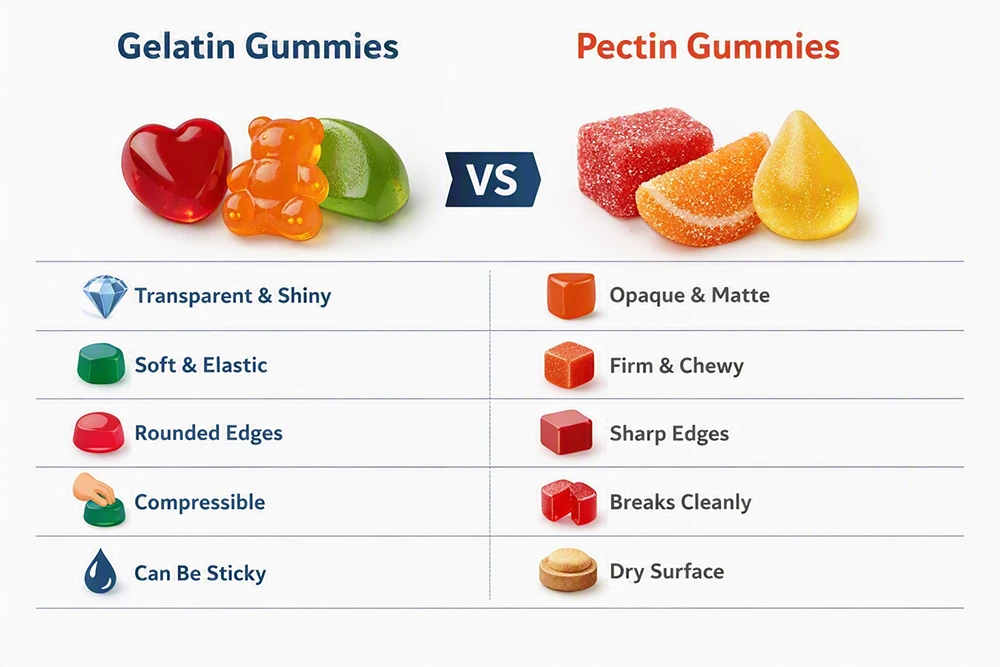
1. Raw Material Sourcing & Ingredient SelectionThe foundation of quality gummy vitamins manufacturing begins with rigorous ingredient procurement. Manufacturers source gelatin (bovine or plant-based alternatives like pectin, tapioca starch, or agar), vitamin and mineral compounds (ascorbic acid, vitamin D3, zinc gluconate, etc.), sweetening agents (sorbitol, maltitol, stevia), flavoring compounds (natural and synthetic), colorants (FD&C certified dyes or natural colorants), and excipients (gum arabic, carnauba wax). Each ingredient undergoes third-party testing for purity, potency, microbial contamination, and heavy metal content before acceptance into the manufacturing queue.
2.Formulation & Premix PreparationFormulation scientists develop precise recipes balancing nutritional efficacy, sensory appeal, and manufacturing feasibility. Dry ingredients (vitamins, minerals, stabilizers) are weighed according to batch specifications and combined in large-capacity ribbon mixers, ensuring homogeneous distribution. This premix stage is critical for achieving consistent potency across all finished gummies. Quality control samples from each batch are retained for laboratory verification of ingredient accuracy.
3.Gel Matrix Preparation (Cooking Stage)The gel matrix serves as the delivery vehicle for active ingredients. In large jacketed kettles or cooking vessels (ranging from 50 liters to 500+ liters), gelatin or pectin is dissolved in purified water at controlled temperatures (typically 65-75°C). Sweeteners, flavorings, and colorants are added sequentially while maintaining precise temperature profiles to prevent ingredient degradation. This cooking stage usually requires 30-60 minutes of continuous stirring to achieve uniform dispersion. Gummy Contract Manufacturers use real-time monitoring systems (thermocouples, viscosity sensors) to ensure batch consistency and ingredient stability.
4.Active Ingredient IntegrationOnce the gel matrix reaches the target viscosity and temperature, the premixed vitamin and mineral compounds are carefully blended into the molten gel using high-shear mixing equipment. This step must balance thorough incorporation with minimizing air entrapment and heat damage to sensitive nutrients (particularly water-soluble vitamins). Most manufacturers employ vacuum-assisted mixing to reduce oxygen exposure and preserve ingredient potency. Temperature is maintained within a narrow range (typically 60-70°C) to prevent premature gelation while ensuring ingredient stability.
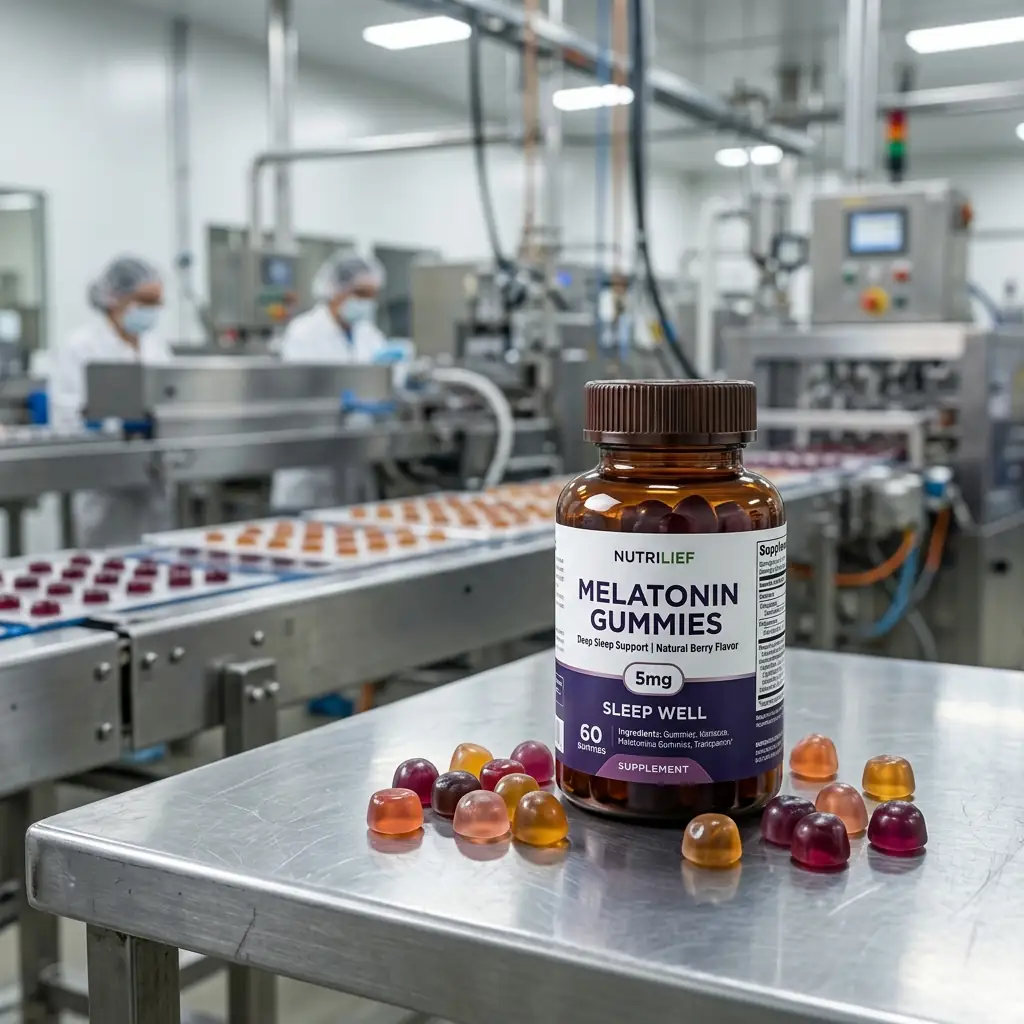
5.Molding & Shape FormationThe prepared gummy mass is transferred to dosing or depositing equipment that fills individual molds. Traditional methods use starch molds (carved or formed in starch beds), while modern facilities employ automated stainless-steel mold lines equipped with depositing pumps, enrobing systems, and conveyor belt cooling sections. High-speed lines can produce 2,000-6,000 gummies per hour, with precision dosing systems ensuring ±5% weight variation per specification. Mold designs allow rapid cooling (typically 4-8 hours) to achieve proper gel set and dimensional stability.
6.Cooling & Gel SettingNewly molded gummies move through temperature-controlled cooling chambers (often set at 15-20°C) where the gel matrix solidifies and achieves final texture. This stage typically requires 6-24 hours depending on gummy size and gel composition. Improper cooling can result in tackiness, shape distortion, or inconsistent texture. Advanced facilities use programmable logic controllers (PLCs) to optimize cooling curves, reducing defect rates and improving throughput.
7.Demold & DryingOnce fully set, gummies are removed from molds and transferred to drying environments. In traditional starch-mold systems, gummies are tumbled to remove starch residue and then dried in climate-controlled rooms (typically 18-25°C, 40-55% relative humidity) for 24-72 hours. This drying stage removes surface moisture while preserving internal texture. Private label gummy manufacturers often employ dedicated drying rooms with automated humidity control to achieve exact moisture content targets (2-5% moisture by weight) for optimal shelf life.
8.Polishing & Coating (Optional)To enhance appearance and reduce stickiness, finished gummies may be tumbled in polishing drums to achieve a glossy surface finish. Some formulations receive additional coating layers such as carnauba wax, beeswax, or modified cellulose to improve texture, reduce clumping, and extend shelf life. Coating application requires precision to avoid excessive buildup that could affect dissolution or taste profiles.
9.Quality Control & TestingBefore packaging, finished gummies undergo comprehensive quality testing including: visual inspection (color uniformity, shape consistency, surface defects), weight verification (individual and batch averages), hardness testing (texture consistency), dissolution analysis (bioavailability validation), microbial testing (pathogenic organisms, total aerobic count), and heavy metal screening (lead, cadmium, mercury). Potency verification through HPLC (high-performance liquid chromatography) or other analytical methods confirms that vitamin and mineral content meets label claims within ±10% tolerance.
10.Packaging & DistributionQuality-approved gummies are counted into bottles, jars, or pouches (utilizing automated counting and filling equipment), then sealed, labeled, and case-packed for distribution. Final product is often held in climate-controlled warehouses to maintain stability until shipment. Private label gummy vitamins require coordinated labeling, artwork approval, and regulatory documentation (ingredient statements, supplement facts panels, allergen declarations) before market release.
Technical Specifications & Parameters
The following table outlines critical manufacturing parameters that private label gummy manufacturers must control to ensure consistent product quality:
|
|---|
Quality Management & Compliance Framework
Good Manufacturing Practice (GMP) Requirements
All legitimate gummy vitamin manufacturers must comply with FDA cGMP (current Good Manufacturing Practices) regulations under 21 CFR 117 (for dietary supplements). Key compliance elements include:
- Facility Design & Maintenance: Climate-controlled production areas, separate raw material and finished product storage, dedicated cleaning protocols for allergen isolation
- Personnel Training: Documented standard operating procedures (SOPs) for every manufacturing step, annual competency assessments, hygiene protocols
- Equipment Calibration: Regular calibration of scales, thermometers, viscosity meters, and analytical instruments with documented traceability
- Documentation Systems: Batch records capturing all production data, temperature logs, quality control results, and deviation investigations
- Supplier Audits: Verification of raw material supplier certifications, testing data, and regulatory compliance
Quality Assurance Testing Protocols
Comprehensive testing occurs at multiple production checkpoints:
- In-Process Testing: Real-time monitoring of cooking temperature, gel viscosity, weight during molding, and moisture levels during drying
- Finished Product Testing: Identity testing (confirming vitamin types), potency assays (quantifying active ingredient levels), dissolution testing (bioavailability validation), microbial analysis, stability testing under accelerated conditions (40°C/75% RH for 3-6 months)
- Third-Party Verification: Independent laboratory analysis of retained samples validates in-house testing accuracy
Regulatory Compliance Across Markets
Leading custom gummy manufacturers maintain compliance infrastructure for multiple regulatory environments:
- United States (FDA): Dietary Supplement Health and Education Act (DSHEA) compliance, structure-function claims substantiation, allergen labeling
- European Union: Nutrient function claims regulation, quality specifications per European Pharmacopoeia, Novel Food assessment for some ingredients
- Canada (Health Canada): Natural and Non-prescription Health Products Directorate (NNHPD) licensing, ingredient restrictions
- Australia (TGA): Listed medicines or complementary goods registration, Australian Pharmacopoeia compliance
Operational Considerations for Large-Scale Production
Scalability & Capacity Planning
Modern gummy production facilities range from small-batch operations (100-500 kg/month) to mega-facilities producing 50+ metric tons monthly. Make gummies at commercial scale requires:
- Robust ingredient supply chains with 3-6 month lead times for specialty vitamins and minerals
- Equipment flexibility to accommodate varied formulations (different strengths, flavors, shapes, sizes)
- Scheduling optimization to maximize throughput while maintaining quality consistency
- Contingency planning for equipment downtime or supply disruptions
Cost Structure & Economics
Manufacturing costs typically break down as:
- Raw Materials: 35-50% (gelatin, vitamins, sweeteners, flavorings)
- Direct Labor: 8-15% (production staff, QA technicians)
- Overhead & Utilities: 15-25% (facility rent, electricity, water, waste management)
- Equipment & Depreciation: 5-10%
- Quality Control & Testing: 5-10%
- Packaging & Logistics: 10-15%
Economies of scale become significant at volumes exceeding 5 metric tons monthly, where per-unit costs can reduce by 25-40% compared to smaller batches due to optimized production runs, improved equipment utilization, and negotiated ingredient pricing.
Waste Management & Sustainability
Professional manufacturers implement waste reduction strategies:
- Closed-loop cooling water systems to reduce water consumption
- Starch-mold recycling (starch is reconditioned and reused)
- Off-spec gummy recycling where feasible (remelt and reformulate)
- Energy-efficient equipment (LED lighting, variable-frequency drives on motors)
- Composting or donation programs for food-grade trim waste
B2B Decision Guide: Selecting a Gummy Manufacturing Partner
For brand developers, retailers, and distribution partners evaluating gummy contract manufacturing or private label gummy manufacturer options, the following framework provides critical evaluation criteria:
📋 Regulatory & Certification Credentials
- FDA cGMP facility registration with no warning letters
- ISO 22000 (food safety) or FSSC 22000 certification
- Third-party audit results (NSF, SQF, BRC)
- Allergen control documentation (facility segregation, cleaning validation)
- Kosher/Halal certification (if applicable)
🔧 Technical Capabilities
- Minimum batch size vs. production line capacity
- Formulation expertise (gels, active ingredients, sensory optimization)
- Equipment flexibility (starch molds vs. automated stainless steel lines)
- Analytical testing infrastructure (HPLC, microbiology, stability testing)
- Lead time from formulation approval to first commercial batch
💼 Supply Chain & Logistics
- Ingredient sourcing relationships and alternative supply routes
- Inventory management systems (JIT vs. safety stock)
- Packaging options (bottles, jars, pouches, quantities)
- Geographic location relative to distribution centers
- Shipping & cold chain capabilities for temperature-sensitive shipments
🎯 Pricing & Commercial Terms
- Transparent cost breakdown (ingredients, manufacturing, packaging)
- Volume-based pricing structure and minimum order quantities
- Payment terms and price adjustment mechanisms
- Lead time for price quotes and contract negotiation flexibility
- Capacity reservation agreements for demand planning
👥 Partnership & Support Services
- Dedicated account management and technical support
- Formulation consultation and innovation support
- Regulatory assistance (label compliance, documentation)
- Response time for quality issues or production problems
- Long-term capacity commitments and scalability roadmap
📊 Quality & Risk Management
- Track record of on-time delivery and consistency
- Defect rates and handling of out-of-spec batches
- Product liability insurance and recall procedures
- References from similar manufacturers or competitors
- Business continuity plans (backup facilities, equipment redundancy)
Our Manufacturing Excellence: Comprehensive Gummy Production Services
We specialize in end-to-end gummy vitamins manufacturing solutions, combining GMP-certified facilities, advanced production technology, and deep industry expertise. Our capabilities span:
🏭 Full-Scale Manufacturing
- 50-500+ ton monthly capacity
- Small batch to mega-volume production
- Multiple production lines for concurrent formulations
- Automated and semi-automated equipment
🎨 OEM/ODM Custom Development
- Proprietary formulation design & optimization
- Custom shapes, sizes, colors, and flavors
- Novel ingredient integration (adaptogens, probiotics, botanicals)
- Regulatory pathway guidance for ingredient combinations
🏷️ Private Label & White Label Solutions
- Complete brand development support
- Artwork approval and label compliance verification
- Full packaging integration (bottles, inserts, shipping cartons)
- Flexible MOQs to accommodate emerging brands
📦 Bulk & Wholesale Distribution
- Large-volume wholesale pricing tiers
- Distribution center compatibility (pallet-ready packaging)
- Just-in-time inventory coordination
- Dedicated account management for major partners
🔬 Quality Assurance & Testing
- In-house analytical laboratory (HPLC, ICP-MS, microbiology)
- Accelerated stability testing under ICH conditions
- Third-party audit coordination
- Comprehensive batch documentation and traceability
🌐 Global Compliance & Certifications
- FDA cGMP certified facility
- ISO 22000 & SQF Level 2 certifications
- Multi-market regulatory support (US, EU, Canada, Australia)
- Kosher, Halal, vegan, organic certifications available
Partner with us to transform your gummy supplement vision into market-ready products at scale. From formulation through distribution, we deliver customized solutions for every business model.
Frequently Asked Questions
Q1: What is the difference between starch molds and stainless steel mold lines for gummy production?
Q2: How long does the entiremake gummiesmanufacturing process take from raw materials to finished product?
Q3: What is the minimum batch size forprivate label gummy vitaminsproduction?
Q4: How do manufacturers ensure vitamin potency is maintained throughout thegummy supplementsproduction process, especially with heat-sensitive ingredients?
Q5: What regulatory documentation is required before launching acustom gummy manufacturer-produced supplement to market?
Q6: How dogummy contract manufacturersprevent cross-contamination and maintain allergen control in multi-product facilities?
Conclusion: The Future of Gummy Vitamin Manufacturing
Understanding how gummy vitamins are manufactured reveals a sophisticated integration of food science, pharmaceutical engineering, and quality management. The evolution from simple starch-mold production to automated high-tech facilities reflects growing consumer demand, regulatory rigor, and competitive pressure for differentiation through taste, efficacy, and safety.
Key takeaways for supply chain partners, brand developers, and retailers:
- Modern gummy production requires GMP certification, sophisticated testing infrastructure, and documented compliance across multiple regulatory jurisdictions
- Manufacturing costs scale significantly; volumes exceeding 5-10 metric tons monthly unlock economies of scale and per-unit pricing optimization
- Successful partnerships with gummy contract manufacturing providers depend on clear technical specifications, transparent pricing, and alignment on quality standards
- Emerging consumer preferences (vegan, clean-label, functional ingredients) drive innovation; manufacturers must balance novelty with proven stability and regulatory compliance
- Private label gummy manufacturer options range from white-label commodity production to highly customized formulations; partner selection should reflect brand positioning and market strategy
As the gummy supplement category continues expansion, manufacturers investing in automation, analytical capability, sustainability, and supply chain resilience will capture premium market segments and build durable partnerships with leading brands.