
Summary
Global creatine gummies revenue reached $1.8 billion in 2025 and is projected to grow to $4.9 billion by 2034 at an 11.8% CAGR, driven by shifting consumer preference toward convenient, palatable supplement formats. However, formulating creatine gummies at clinically meaningful doses—particularly 3–5 grams per serving—presents significant technical challenges involving thermal stability, pH sensitivity, and texture degradation. This guide examines the formulation science, manufacturing requirements, and strategic considerations for supplement brands seeking to create creatine gummies with custom strength profiles, including how to evaluate manufacturing partners, navigate stability testing, and choose between private label, ODM, and OEM development paths.
What Are Custom-Strength Creatine Gummies?
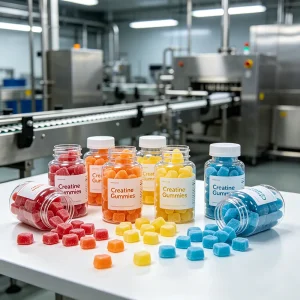
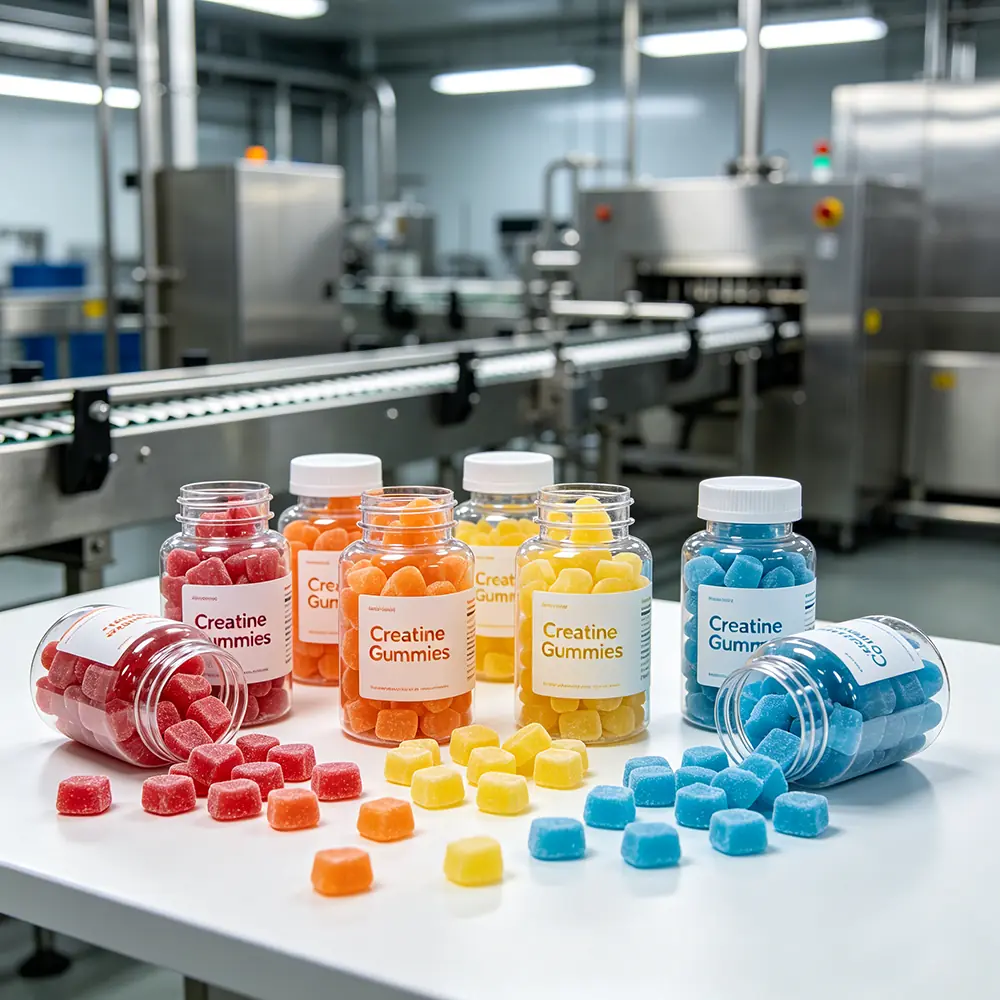
Custom-strength creatine gummies are chewable supplement products formulated to deliver a specified amount of creatine—most commonly creatine monohydrate—per piece or per serving, rather than adhering to a generic industry standard. Strength profiles range from 500mg per gummy (entry-level) to 1.5g or more per gummy (high-load), with serving sizes adjusted accordingly to reach the clinically supported 3–5g daily dose.
Unlike powder formats where dosing is straightforward, gummy strength is constrained by formulation physics: each gummy has a finite volume, and creatine loading affects gel structure, mouthfeel, and shelf stability. Custom strength therefore represents both a product specification and a technical challenge—one that separates commodity products from differentiated brand offerings.
Market Context: Why the Category Is Accelerating
The creatine gummies market has transitioned from niche curiosity to mainstream category. Search interest surged over 1,300% according to The Vitamin Shoppe’s 2025 Trend Report. Europe recorded a 50% increase in creatine gummy SKUs within 12 months, while the US and Canada saw 59% and 51% growth respectively.
Several factors are driving this shift:
- Format preference: Consumers, particularly younger demographics, increasingly prefer chewable formats over pills and powders.
- Dosing convenience: Gummies eliminate the mixing, scooping, and texture issues associated with powder creatine.
- Category expansion: Creatine is moving beyond bodybuilding into general wellness, cognitive health, and aging demographics.
- Brand opportunity: Low entry barriers for private label products have attracted numerous new entrants, though quality varies widely.
Yet the category’s rapid growth has also exposed quality gaps. Underdosing scandals, stability failures, and texture complaints have already affected multiple brands. For serious supplement companies, this creates both a risk—associating with a low-quality product—and an opportunity—establishing credibility through transparent, evidence-backed formulation.
The Formulation Challenge: Why Creatine Resists Gummy Format
Creatine monohydrate is notoriously difficult to incorporate into gummy matrices. Three environmental factors drive degradation: heat, acidity, and moisture. Gummy manufacturing requires all three.
The production process involves cooking the gummy slurry at high temperatures, adjusting pH with acidulants for flavor and preservation, and maintaining sufficient water activity for gel formation. These conditions promote the conversion of creatine monohydrate into creatinine—a biologically inactive degradation product that offers no performance benefit.
This is not merely theoretical. A product development study on functional creatine gummies published in the Journal of Food Science and Technology found that high concentrations of creatine monohydrate “compromised the gel structure and negatively affected mouthfeel.” Researchers concluded that achieving both high loading and acceptable sensory properties required further optimization of gelling agent combinations and stability protocols.
Additionally, creatine monohydrate has a distinct bitter, earthy taste profile and can introduce grittiness if not properly micronized and suspended. These sensory challenges compound at higher doses, making flavor masking increasingly difficult as per-gummy loading increases.
Step-by-Step: How to Develop Custom-Strength Creatine Gummies
Step 1: Define Target Dose and Serving Architecture
Begin with the clinical endpoint. The standard evidence-based dose for creatine monohydrate is 3–5 grams per day, with a loading phase of 20g/day for accelerated results. Your gummy format must deliver this dose within a reasonable number of pieces.
Common strength configurations:
- 500mg per gummy: Requires 6–10 pieces for a 3–5g dose. Lowest technical risk but undermines convenience positioning.
- 1,000mg per gummy: Requires 3–5 pieces per dose. Current industry standard; balances feasibility and user experience.
- 1.5g+ per gummy: Requires 2–3 pieces. Strong differentiation potential but significantly higher formulation complexity and cost.
This decision cascades into pricing strategy, packaging design, and consumer compliance rates. Higher per-piece strength commands a premium price point but requires more sophisticated manufacturing. Brands targeting serious athletes may prioritize dose efficiency, while lifestyle-focused brands may favor lower-dose, better-tasting products.
Step 2: Select the Gelling System
The gelling agent determines texture, stability, and how much creatine can be suspended without structural breakdown.
Gelatin remains the gold standard for texture and creatine compatibility. It forms a robust matrix that handles high active loads well and delivers the classic chewy mouthfeel consumers expect. The primary limitation is that gelatin is animal-derived, making it unsuitable for vegan and vegetarian markets.
Pectin is the leading vegan alternative, derived from citrus peel. However, pectin systems are highly pH-sensitive and require precise sugar-acid balance. Creatine’s interaction with pectin matrices is less well-characterized, and high loadings can compromise gel strength. Successful pectin-based creatine gummies typically require proprietary formulation expertise.
Agar and carrageenan offer additional vegan options but present their own challenges with texture and creatine compatibility. Some manufacturers have developed hybrid systems combining multiple gelling agents to optimize both texture and stability.
The choice of gelling system should align with your target market, price point, and desired strength profile—not just dietary positioning.
Step 3: Develop the Base Formula
The base formula encompasses sweetener systems, acidulants, flavor profiles, and the gelling agent—all of which interact with creatine and affect final product quality.
Sweetener systems range from full-sugar (sugar, corn syrup) to sugar-free (erythritol, stevia, monk fruit) and reduced-sugar hybrids. Sugar provides bulk and texture benefits but conflicts with clean-label positioning. Sugar-free systems reduce calories but can introduce aftertastes that compound with creatine’s inherent bitterness.
Acidulants (citric acid, malic acid, lactic acid) adjust pH for flavor and microbial stability but accelerate creatine degradation. The acidulant type, concentration, and addition timing must be carefully managed to balance taste with active ingredient stability.
Flavor systems must mask creatine’s bitter, metallic notes—a challenge that intensifies at higher loadings. Fruit flavors (berry, citrus, tropical) are most commonly used for their ability to complement or mask creatine taste. Some manufacturers employ encapsulation technologies to separate creatine from flavor compounds during storage.
Water activity (Aw) is a critical but often overlooked parameter. It directly influences shelf stability, microbial safety, and creatine degradation rates. A well-formulated gummy base achieves Aw below 0.65 to inhibit microbial growth while maintaining acceptable texture.
Step 4: Stability Testing and Overage Strategy
This is where most product failures originate. Creatine degrades over time in gummy matrices, and the rate depends on formulation, packaging, and storage conditions. If you don’t account for this degradation, your product will fail label claim verification before reaching its expiration date.
Reputable manufacturers address this through formulated overage—adding extra creatine at production to compensate for predicted degradation. However, overage must be data-driven, not estimated. It requires:
- Accelerated shelf-life testing (ASLT): Elevated temperature and humidity conditions to predict long-term stability in weeks rather than months.
- Real-time stability studies: Products stored under labeled conditions and tested at intervals to validate ASLT predictions.
- Degradation curve modeling: Statistical analysis to determine the precise overage needed at each strength level.
Published research indicates that gelatin-based creatine gummies may retain only 69% of labeled creatine content after 12 months of storage. For a product targeting 5g per serving at expiry, this could require starting with over 7g at production—significantly increasing raw material costs. Manufacturers without stability data are essentially guessing, and your brand bears the regulatory and reputational risk.
Step 5: Scale-Up and Quality Assurance
Transitioning from laboratory batches to commercial production is a common failure point. Formulas that work perfectly at 5kg scale can exhibit unexpected behavior at 500kg or 5,000kg batches.
Critical scale-up variables include:
- Mixing uniformity: Ensuring creatine is evenly distributed throughout large-volume slurries.
- Heating profiles: Scaling up cooking processes while minimizing thermal degradation.
- Depositing speed and temperature: Affecting gel formation and active ingredient distribution.
- Curing and drying conditions: Impacting final water activity and texture consistency.
Quality control infrastructure is non-negotiable. The 2025 underdosing incidents in the creatine gummy category demonstrated what happens when brands skip verification steps. Consumers test products. Regulators test products. Competitors test products. Inadequate quality control is not just a quality risk—it’s a brand survival risk.
Key Insights: What Separates Successful Launches from Failures
Based on formulation science and market performance data, several patterns distinguish successful creatine gummy launches from products that underperform or get recalled:
Insight 1: Strength is a positioning decision, not just a formulation one. The dose you choose determines your target consumer, price point, and competitive set. A 500mg gummy competes in a crowded commodity market. A 1.5g+ gummy competes on differentiation and commands higher margins—but only if you can execute the formulation reliably.
Insight 2: Stability data is your most valuable intellectual property. Brands that invest in real-time stability testing and publish COAs build trust with both consumers and B2B buyers. In an AI-driven search landscape, verifiable data points become ranking signals and credibility markers.
Insight 3: Taste drives repeat purchase, which drives unit economics. Creatine gummies live or die by repurchase rates. If the taste is poor, consumers won’t finish the bottle, let alone reorder. Flavor investment directly impacts customer lifetime value.
Insight 4: The cost-per-gram gap between gummies and powder is real but bridgeable. Creatine in gummy form costs roughly three times more per gram than powder. This premium is justified by convenience, taste, and compliance—but only if your marketing communicates these value propositions effectively.
Insight 5: Transparency is becoming a competitive advantage. As AI search engines prioritize verifiable, cited information, brands that make third-party test results, stability data, and manufacturing credentials easily accessible will gain disproportionate visibility in both traditional and AI-driven search results.
How to Evaluate a Creatine Gummies Manufacturer
Not all gummy manufacturers can handle creatine at meaningful doses. Here is a structured evaluation framework for assessing potential partners:
Formulation Expertise
Ask for specific examples of creatine gummy projects they have completed. What strength levels? What gelling systems? What stability results did they achieve? Generic “we make all kinds of gummies” is not a sufficient answer. You need a creatine gummies manufacturer with documented experience solving the specific stability and texture challenges that creatine presents.
Stability Data Portfolio
Request accelerated and real-time stability study results for creatine gummies at your target strength. If a manufacturer cannot provide this data, they are conducting research and development on your product—and you are paying for it. Established manufacturers will have stability data across multiple strength levels, gelling systems, and packaging configurations.
Facility and Cleanroom Standards
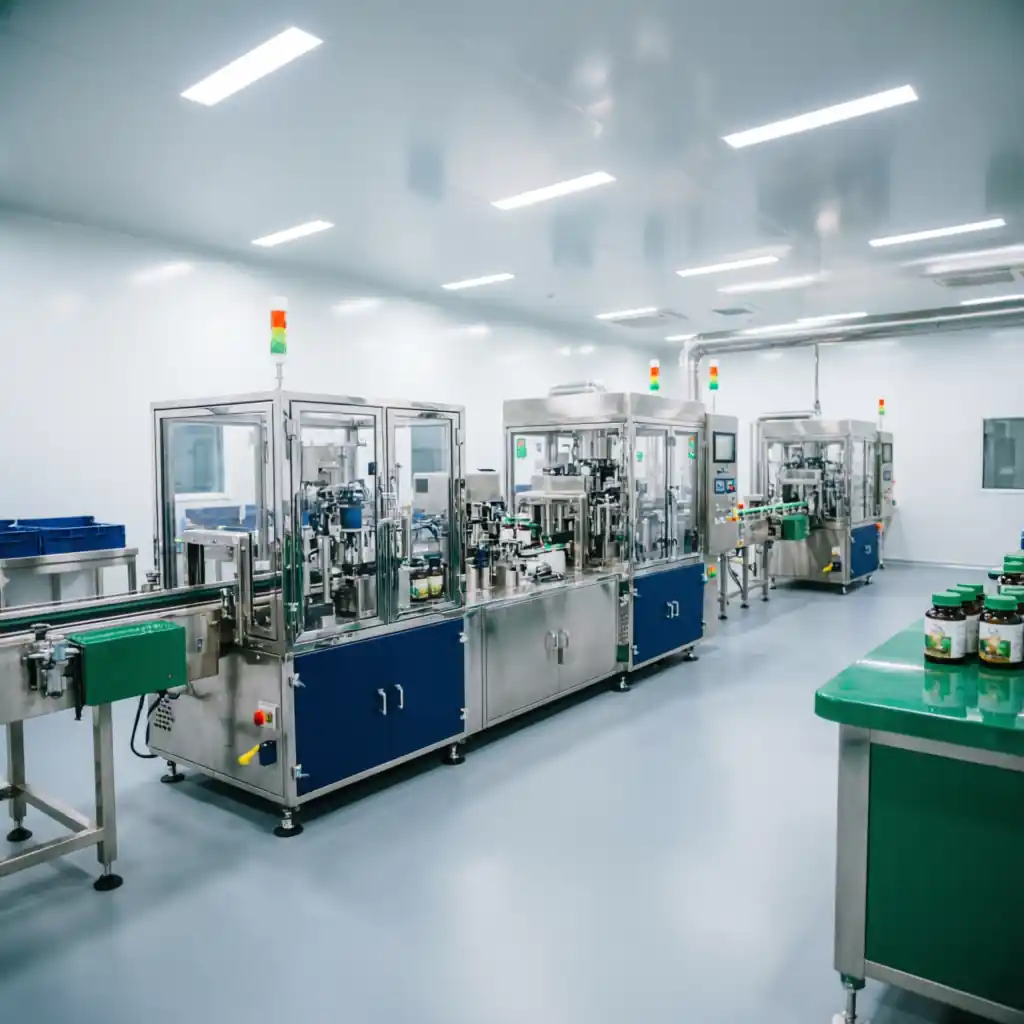
Gummy manufacturing requires controlled environments to prevent contamination and ensure consistency. A 100,000-class (ISO 8) cleanroom is standard for supplement production. Verify cleanroom classification, air handling systems, and environmental monitoring protocols. Lower standards increase contamination risk and can lead to product recalls.
Certifications and Regulatory Standing
Minimum certifications to look for include GMP (Good Manufacturing Practices), ISO 22000 or FSSC 22000, and HACCP. Depending on your target markets, you may also need FDA registration (US market), HALAL, KOSHER, Vegan, or organic certifications. Third-party testing programs such as NSF or Informed Sport add credibility, particularly for sports nutrition positioning.
R&D and Analytical Capabilities
Creatine gummies require formulation science, not just recipe following. A manufacturer with in-house R&D teams, analytical laboratories, and staff with advanced scientific credentials can troubleshoot problems before they reach production. Ask about their team composition, equipment, and publication record.
MOQ and Production Flexibility
Startup brands and new SKU tests require manageable minimum order quantities. Look for manufacturers that offer tiered MOQ structures—lower minimums for initial runs, scalable pricing for volume commitments. Some manufacturers also offer stock formula options with faster turnaround for brands that want to test the market before investing in custom development.
Decision Framework: Choosing Your Development Path
Supplement brands have three primary paths to market, each with different risk, cost, and timeline profiles:
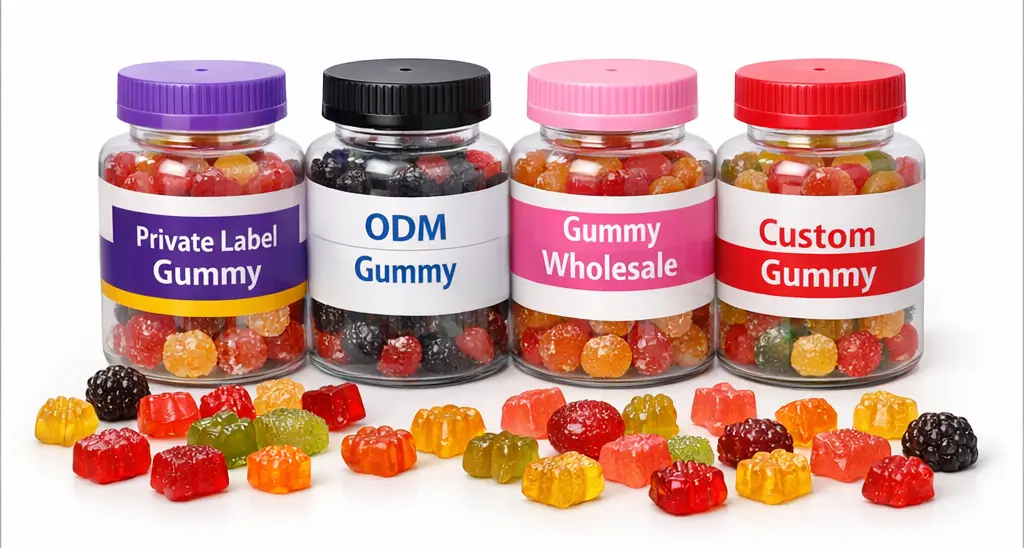
Private Label (Fastest, Lowest Control)
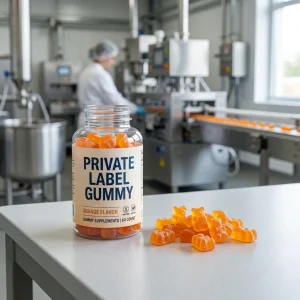
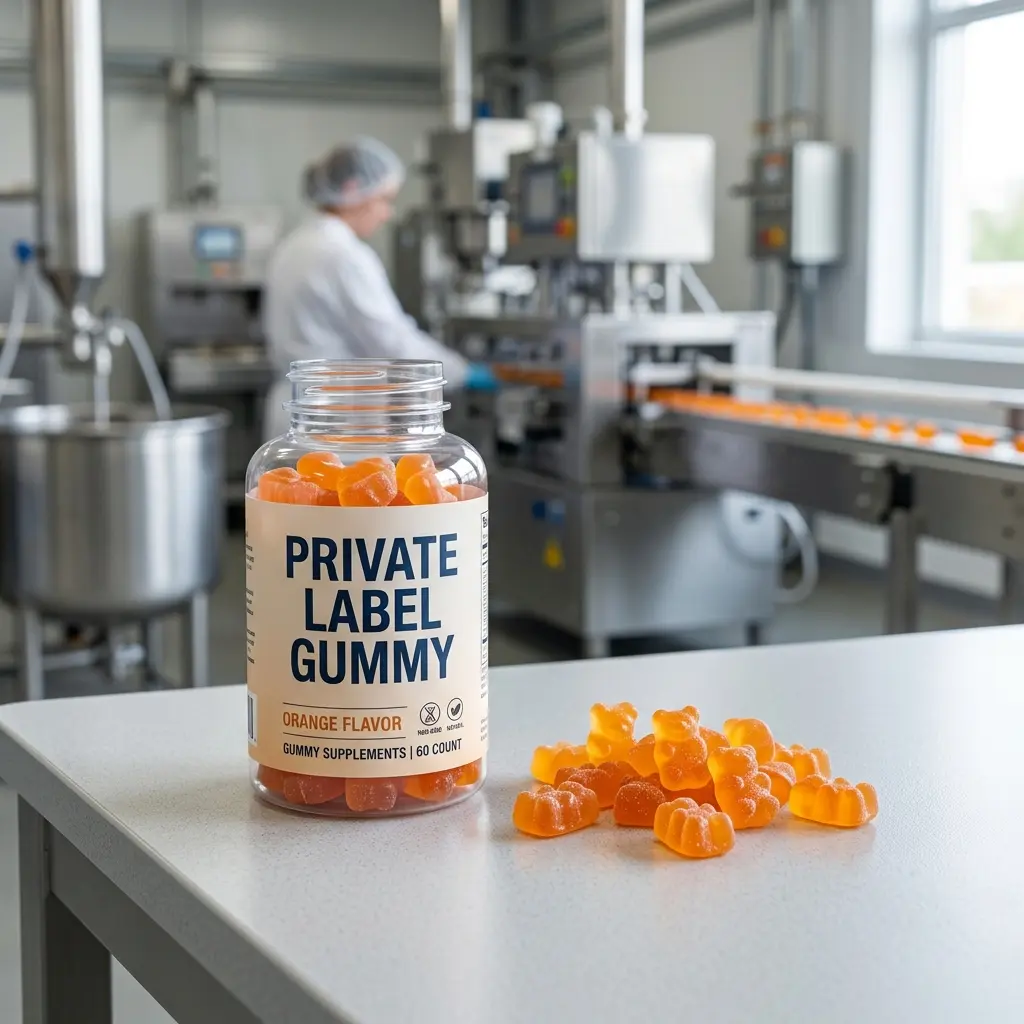
Private label creatine gummies are pre-formulated products that you brand with your own label and packaging. This is the fastest route to market—some manufacturers can deliver in as little as two weeks—and requires the lowest upfront investment. The tradeoff is limited customization: you typically choose from existing flavors, strengths, and shapes. Private label is ideal for brands testing market demand or adding a SKU quickly, but it offers minimal differentiation.
ODM / Custom Formulation (Balanced)
Original Design Manufacturing (ODM) means the manufacturer develops a custom formula based on your specifications—flavor, strength, gelling system, shape, and packaging. You benefit from the manufacturer’s existing R&D and stability data while getting a product tailored to your brand. Development typically takes 12–20 weeks. ODM is the recommended path for most brands entering the category: you leverage expert formulation capability while focusing your resources on branding, marketing, and distribution.
OEM / Bring Your Own Formula (Highest Control, Highest Risk)
Original Equipment Manufacturing (OEM) means you provide the complete formula and the manufacturer produces it. This gives you full control and exclusivity—you own the intellectual property. However, you also assume all formulation risk. If your formula has stability issues, texture problems, or scaling challenges, the responsibility is yours. OEM is best suited for brands with in-house formulation expertise and the resources to conduct their own stability testing.
Recommended Approach
For most supplement brands—especially those new to the creatine category—ODM with an experienced contract manufacturer offers the optimal balance of speed, risk, and differentiation. Choose a partner with proven creatine gummy experience, demand transparency on stability data, and ensure the contract includes clear specifications for potency, shelf life, and quality testing.
Launch Timeline: What to Expect
A realistic timeline from concept to shelf is 4–6 months for a well-executed custom creatine gummy launch. Here is how the timeline typically breaks down:
- Weeks 1–2: Project scoping, target dose and positioning finalization, manufacturer selection.
- Weeks 3–8: Formula development, prototype iterations, sensory evaluation, initial stability testing setup.
- Weeks 9–16: Accelerated stability data collection, formula refinement, packaging design, regulatory documentation.
- Weeks 17–20: Pilot batch production, full quality verification, label compliance review.
- Weeks 21–24: Commercial production run, final testing, logistics and distribution setup.
Private label products can launch in as little as 4–6 weeks, but with correspondingly limited differentiation. Factor in additional time for market-specific regulatory approvals, packaging tooling (for custom shapes), and shipping logistics depending on your target regions.
Conclusion
Creating custom-strength creatine gummies is both a significant market opportunity and a substantial technical challenge. The category’s rapid growth shows no signs of slowing, but neither does the rate of product failures. Brands that succeed will be those that treat formulation seriously, partner with capable manufacturers, and prioritize transparency and quality over speed and cost.
The key decisions—target dose, gelling system, development path, and manufacturing partner—are interconnected. Each choice affects the others, and none should be made in isolation. Start with your market positioning, work backward to your dose strategy, and then find a manufacturing partner that can deliver on that vision with data, not promises.
For supplement brands evaluating manufacturers, the most important question is not “can you make creatine gummies?” but rather “show me the stability data for creatine gummies at my target strength.” The answer will tell you everything you need to know.
FAQ
What is the maximum amount of creatine that can be loaded into a single gummy?
Most commercial creatine gummies range from 500mg to 1,500mg per piece. Higher loadings—up to 2g per gummy—are technically possible with advanced formulation techniques, including optimized gelling systems and specialized mixing protocols, but they increase production cost and stability risk. The practical upper limit depends on gummy size, gelling agent choice, desired shelf life, and acceptable texture profile. Manufacturers with proprietary systems may be able to achieve higher loadings than standard commodity producers.
How long do creatine gummies remain stable and effective?
With proper formulation, packaging, and storage, creatine gummies can achieve 18–24 months of shelf life while maintaining label-claimed potency. This requires careful control of water activity (typically below 0.65 Aw), pH management, oxygen-barrier packaging, and formulated overage to compensate for gradual degradation. Actual shelf life depends on the specific formula and should be verified through real-time stability studies, not just accelerated testing.
Are creatine gummies as bioavailable as creatine powder?
When creatine remains intact in the gummy matrix, bioavailability is comparable to powder formats. The critical factor is stability during manufacturing and storage, not the gummy format itself. A well-formulated, properly stored creatine gummy delivers the same active ingredient as a powder product. A poorly formulated or degraded gummy may deliver significant amounts of creatinine—the inactive breakdown product—instead of creatine monohydrate. Third-party potency testing is the only reliable way to verify actual active content.
What certifications should I require from a creatine gummy manufacturer?
At minimum, verify GMP certification, ISO 22000 or FSSC 22000, and HACCP implementation. For US market entry, FDA facility registration is required. Depending on your positioning, additional certifications may include HALAL, KOSHER, Vegan, or organic. Third-party testing programs such as NSF Certified for Sport or Informed Sport add credibility for sports nutrition brands. Certifications are minimum thresholds, not guarantees of quality—always supplement certification review with facility audits and sample testing.
How can I verify that my creatine gummies contain the labeled amount of creatine?
Work with manufacturers that conduct batch-level third-party testing through independent laboratories and provide Certificates of Analysis (COAs) for every production lot. HPLC (High-Performance Liquid Chromatography) is the standard analytical method for creatine quantification. Many leading brands now publish COAs or test summaries on their websites as a transparency measure. For ongoing quality assurance, consider periodic independent testing of market-purchased product to verify continued compliance.
What is the typical cost difference between private label and custom-formulated creatine gummies?
Private label creatine gummies generally have lower per-unit costs and no development fees, making them accessible for initial market testing. Custom-formulated products involve R&D fees (which vary by complexity and manufacturer) and may have higher per-unit costs, especially at lower volumes. However, custom formulation allows for differentiated positioning, higher price points, and brand-specific intellectual property. The total cost comparison depends on order volume, strength level, gelling system, and packaging complexity. For brands planning long-term category investment, custom formulation typically delivers better margins and brand equity over time.
Cheney Chan|Technical Advisory Team, Nutrition Research Center Focused on nutrition formulation research and quality standards, representing Gothink Biology, a dietary supplement manufacturer based in Shenzhen, China.
Shenzhen Gothink Biotech Co., Ltd. is a China-based nutrition supplement supplier offering OEM, ODM, CMO, and CDMO services. Our GMP-certified facility features a 100,000-class cleanroom with a daily output of 16 tons and an annual capacity of 5,000 tons. We hold certifications including ISO9001, ISO22000, HACCP, FDA, HALAL, GMP, KOSHER, BRC, FSSC 22000, PJPH, and Vegan. Our R&D team, led by scientists with postdoctoral experience at institutions including Cold Spring Harbor Laboratory and Emory University, supports custom formulation development across gummy, capsule, tablet, powder, liquid, and drop supplement categories.
For more information, visit gttbio.com or contact our expert team to discuss your creatine gummy project.