
Summary
Gummy bears are confectionery products manufactured by specialized food producers using gelatin, pectin, or starch-based formulations combined with sugar, glucose syrup, and natural or artificial flavorings. The global gummy bear industry encompasses large multinational manufacturers (such as Haribo), regional contract manufacturers, and custom gummy manufacturers offering private label gummy solutions for brands and retailers. For B2B buyers seeking reliable supply, understanding manufacturing capabilities, quality standards, and sourcing partnerships is critical to building sustainable product lines and maintaining consistent market performance.
Definition
Gummy bears refer to small, gel-based confectionery candies shaped as bears, produced by combining gelling agents (gelatin, pectin, or starch), sweeteners, flavorings, and colorants, then molding and coating with sugar or sour compounds. In a business context, gummy bear manufacturing encompasses both branded retail products and Gummy Contract Manufacturing services where manufacturers produce gummies according to client specifications for private label distribution or OEM/ODM arrangements.
Industry Background & Market Context
The gummy bear category originated in Germany in the 1920s and evolved into a global confectionery segment worth billions of dollars annually. Today, gummy production spans:
- Multinational Brands: Haribo, Albanese, and similar market leaders controlling substantial market share through retail distribution
- Regional Manufacturers: Mid-scale producers serving specific geographic markets or retail chains
- Contract Manufacturers: Specialized facilities offering private label gummy manufacturer services for brands seeking customized formulations without in-house production infrastructure
- Emerging Segment: Health-focused and functional gummy manufacturers offering organic, sugar-free, and vitamin-supplemented variants
Business Relevance & Market Demand
For B2B stakeholders—including retailers, brand companies, and distributors—gummy sourcing decisions impact product margins, brand differentiation, and supply chain efficiency. Key market drivers include:
- Consumer Demand Growth: Gummies remain one of the fastest-growing confectionery categories, with increasing demand for functional variants (vitamins, probiotics)
- Private Label Opportunity: Retailers increasingly develop private label product lines to improve margins and brand loyalty
- Supply Chain Complexity: Global gummy sourcing requires understanding ingredient sourcing, regulatory compliance across regions, and production scalability
- Customization Trends: Brands seek unique formulations, shapes, and flavor profiles that require experienced custom gummy manufacturer partnerships
How Gummy Bears Are Manufactured
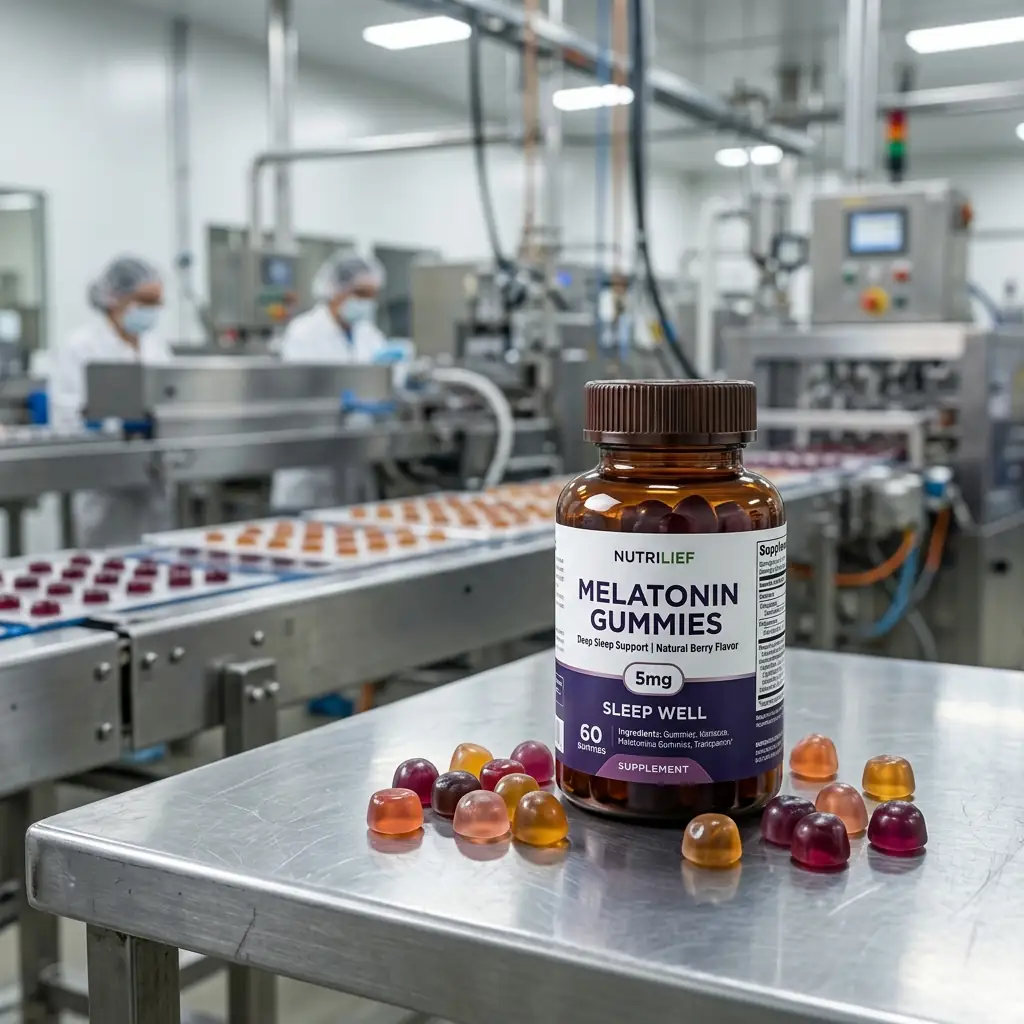
Modern gummy bear production follows a standardized process with key stages:
Raw Material Preparation
Manufacturers begin by selecting and processing base ingredients: gelatin (animal-derived) or pectin/starch (plant-based alternatives for vegetarian/vegan formulations). Sweetening agents include glucose syrup, sugar, and sugar alcohols (sorbitol, maltitol) for reduced-sugar variants. Flavorings—whether natural extracts or synthetic compounds—and colorants (synthetic dyes or natural sources) are carefully measured to meet formulation specifications.
Mixing & Cooking
Ingredients are combined in large mixing vessels and heated to specific temperatures to dissolve gelatin and activate the gelling process. This stage requires precise temperature control to maintain ingredient integrity and achieve consistent texture in the final product.
Molding
The warm, semi-liquid mixture is poured into starch molds or silicone cavities in industrial molding machines. The gummy mixture solidifies as it cools, typically over several hours in climate-controlled drying rooms. This stage directly determines product shape consistency and final dimensions.
Demolding & Coating
Solidified gummies are removed from molds using industrial demolding equipment. They are then tumbled in coating drums where sugar, sour coatings (citric acid/malic acid mixtures), or other toppings adhere to the surface, creating the final flavor profile and mouthfeel.
Quality Inspection & Packaging
Products undergo visual inspection (automated and manual) to detect defects, color variations, or shape inconsistencies. Approved gummies are weighed, packaged in bulk containers or consumer-ready formats, and prepared for storage or shipment.
Key Differences: Gummy Types & Formulations
Different gummy formulations serve distinct market segments and consumer preferences:
Gelatin-Based Gummies
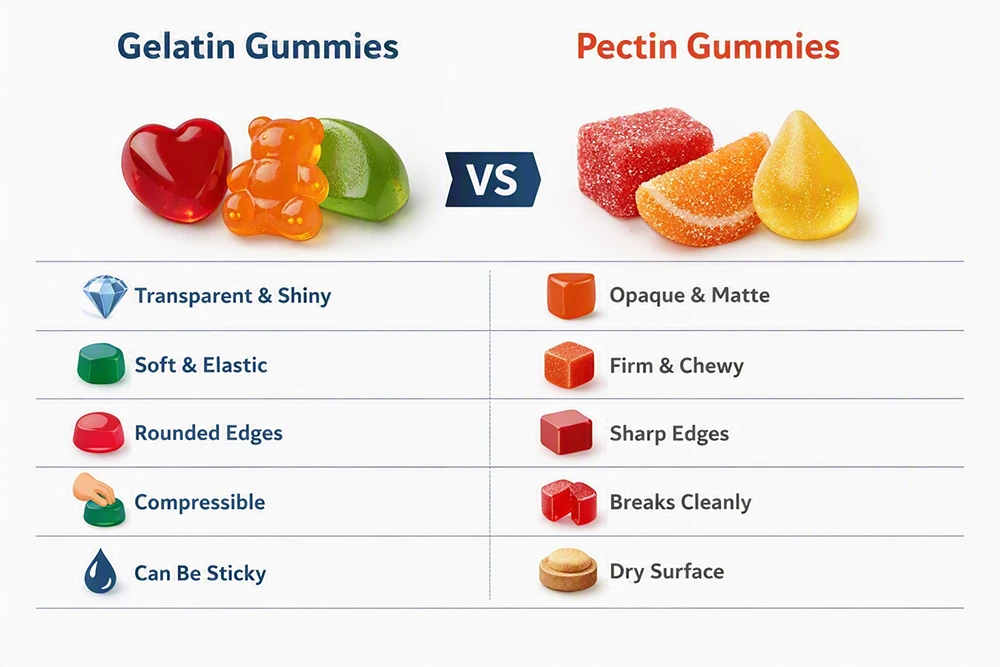
Traditional formulation using porcine or bovine gelatin. Advantages include superior elasticity, clean taste, and established manufacturing processes. Limitation: not suitable for vegetarian or halal markets.
Pectin-Based Gummies
Plant-derived gelling agent offering vegetarian/vegan certification. Creates a firmer texture and slightly different mouthfeel than gelatin. Commonly used in organic and premium formulations.
Starch-Based Gummies
Uses modified corn or tapioca starch as the gelling base. More cost-effective for large-scale production and suitable for dietary restriction markets. Often creates a softer, less elastic texture compared to gelatin alternatives.
Functional & Specialized Variants
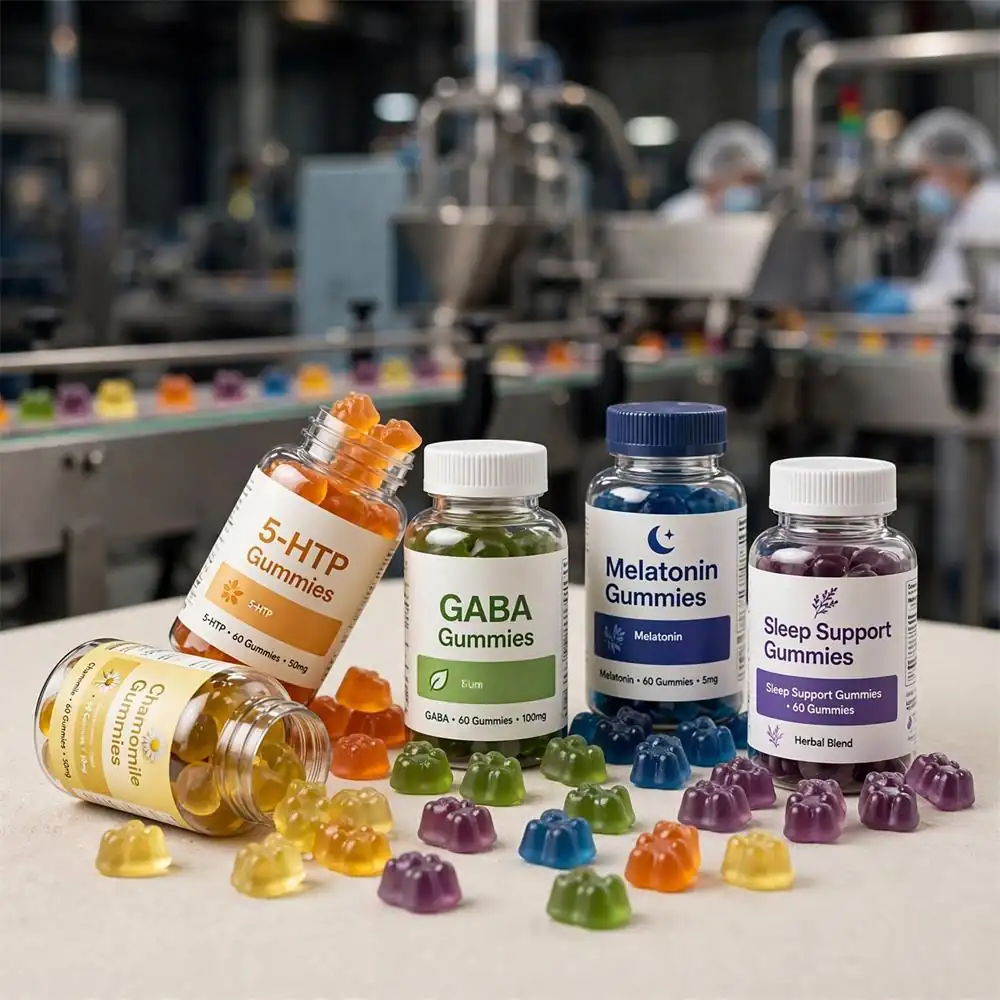
Manufacturers produce sugar-free gummies (using sugar alcohols or stevia), vitamin-enriched formulations (containing B vitamins, vitamin C, or other micronutrients), and botanical ingredient variants. These segments command premium pricing and require additional regulatory documentation.
Advantages & Limitations of Gummy Manufacturing
Advantages
- Market Appeal: Strong consumer preference for gummy format across age groups and demographics
- Customization Potential: Shapes, flavors, and ingredient combinations can be extensively customized without major equipment modifications
- Margin Opportunity: Finished gummy products command higher per-unit margins than many alternative candy formats
- Scalability: Modern manufacturing allows rapid scaling from pilot production to full-scale output
- Extended Shelf Life: Properly packaged gummies maintain quality for 12–24 months under standard storage conditions
Limitations
- Equipment Investment: Specialized gummy molding, drying, and packaging equipment requires significant capital outlay
- Ingredient Cost Volatility: Gelatin, pectin, and natural flavorings experience price fluctuations affecting production costs
- Temperature & Humidity Sensitivity: Gummies require climate-controlled production and storage to prevent stickiness or texture degradation
- Regulatory Complexity: Different regions impose varying requirements for colorants, flavorings, and functional ingredient claims
- Quality Consistency Challenges: Achieving uniform size, shape, and texture across large production runs requires rigorous process control
Who Should Source Gummy Products
Retail & Distribution Companies
Large retailers and distributors can partner with contract manufacturing providers to develop private label gummy lines, improve product margins, and differentiate shelf space with branded packaging.
Health & Wellness Brands
Companies in the supplement and functional food space can leverage gummy expertise from specialized manufacturers to deliver vitamin, mineral, or herbal products in a consumer-preferred format.
Food Service & Convenience Store Operators
Quick-service restaurants, gas stations, and convenience chains source gummies as impulse-buy confectionery items, often through private label gummy partnerships to maintain product exclusivity.
International Brands Entering New Markets
Established brands seeking to enter regions without local manufacturing infrastructure can engage custom gummy manufacturers for localized production, reducing import tariffs and lead times.
E-commerce & Direct-to-Consumer Companies
DTC brands benefit from small-batch or drop-ship arrangements with contract manufacturers, enabling inventory flexibility and faster time-to-market for new flavor or formulation launches.
Compliance, Regulatory & Quality Considerations
Food Safety Standards
Gummy manufacturers must comply with GMP (Good Manufacturing Practice) standards, including facility hygiene, equipment sanitation, and employee training protocols. Many facilities pursue FSSC 22000 certification, providing third-party assurance of food safety management systems.
Regional Regulatory Requirements
- European Union: Strict regulations on approved colorants and additives; organic claims require EU certification
- United States (FDA): Compliance with food additive regulations; functional claims require substantiation and may trigger DSHEA requirements if marketed as dietary supplements
- China & Asia: Varying standards for additives; some regions restrict synthetic colorants in favor of natural alternatives
Allergen Management
Gummy manufacturers must maintain clear allergen labeling and segregated production lines for products containing common allergens (shellfish gelatin, tree nuts, gluten-derived ingredients). Documentation and traceability systems are essential.
Third-Party Testing & Certification
Professional manufacturers conduct regular testing for:
- Microbiological safety (pathogenic bacteria, mold, yeast counts)
- Nutritional profile verification (if functional claims are made)
- Heavy metal screening (lead, cadmium, arsenic)
- Pesticide residue testing (for organic-certified products)
- Allergen testing (cross-contamination verification)
Technical Parameter Reference Table
| Parameter | Specifications & Considerations |
|---|---|
| Product Form | Bear-shaped gummies; alternative shapes (cubes, rings, circles) available upon custom order; typical weight 1–3g per piece |
| Gelling Agent | Gelatin (porcine, bovine), pectin (plant-based), or starch (corn/tapioca); selection impacts texture, allergen profile, and certification eligibility |
| Sweetening Agents | Sugar, glucose syrup, high-fructose corn syrup, sugar alcohols (sorbitol, maltitol, xylitol), stevia, or monk fruit extract for sugar-free variants |
| Flavorings | Natural extracts (fruit concentrates, essential oils) or synthetic compounds; regulatory compliance varies by region and flavor type |
| Colorants | FD&C approved synthetic dyes (tartrazine, sunset yellow) or natural colorants (carmine, spirulina, fruit/vegetable concentrates); regional restrictions apply |
| Manufacturing Process | Mixing → cooking → molding in starch/silicone → drying (humidity/temperature controlled, 6–24 hours) → demolding → coating → inspection → packaging |
| Quality Standards | GMP (FDA or European equivalent), FSSC 22000, ISO 22000, organic certification (USDA, EU), kosher/halal certifications as applicable |
| Packaging Options | Bulk containers (10–25 kg), retail boxes (50–500g), standup pouches, flow-pack, custom-branded packaging; all food-contact materials meet FDA/EU compliance |
| Shelf Life | Typically 12–24 months in sealed, moisture-proof packaging at ambient temperature; depends on formulation and storage conditions |
| Scalability & Capacity | Modern facilities produce 5–50+ tons per day depending on equipment configuration; lead times 4–12 weeks for custom formulations; MOQ (minimum order quantity) typically 5–20 tons |
| Storage & Logistics | Requires cool, dry storage (15–25°C, <65% humidity); compatible with standard refrigerated or ambient shipping containers; avoid exposure to heat and direct sunlight |
| Cost Structure | Raw material costs typically 30–50% of COGS; formulation complexity, functional ingredients, and certifications affect final pricing; volume discounts apply at higher production tiers |
Practical B2B Insights for Sourcing & Production
Manufacturing Quality & Process Control
Professional gummy manufacturers employ real-time monitoring of temperature, humidity, and ingredient ratios during production. Quality control checkpoints include:
- Incoming ingredient inspection and certification review
- Regular calibration of mixing, cooking, and molding equipment
- Statistical process control (SPC) to track dimensional consistency across production batches
- Final product testing for texture (durometer hardness), moisture content, and appearance
Raw Material Sourcing Transparency
Reliable manufacturers maintain transparent sourcing practices, including:
- Supplier qualification and audits for ingredient purity and compliance
- Traceability documentation linking finished products to raw material batches
- Supplier certifications (organic, non-GMO, kosher, halal) aligned with customer requirements
- Open communication regarding ingredient availability and price changes affecting production costs
Production Scalability & Lead Time Management
When evaluating Gummy Contract Manufacturing partners, assess:
- Equipment Capacity: Verify current utilization rates and ability to accommodate demand growth without extended lead times
- Formulation Development: Request timeline for custom formulation development and testing before full-scale production
- Lead Times: Standard timeframes typically range 8–12 weeks from order placement to shipment; express options may carry premium costs
- Flexibility: Assess willingness to adjust batch sizes, packaging formats, or flavor profiles as market conditions evolve
Compliance & Documentation Readiness
Before committing to a supplier, verify:
- Certificate of Analysis (CoA) availability for each production batch
- Third-party test reports (microbiological, allergen, heavy metal screening)
- Supplier’s ability to provide documentation supporting functional claims (if applicable)
- Current GMP and food safety certifications; request recent audit reports from accredited bodies
- Allergen management protocols and segregation procedures
Cost Structure & Margin Optimization
Understand how gummy manufacturers price their products:
- Raw Material Costs: 30–50% of COGS; specialty ingredients (organic, natural colorants) command premium pricing
- Manufacturing & Labor: 20–35% of COGS; labor costs vary significantly by geographic location
- Packaging: 10–20% of COGS; custom-branded packaging carries higher costs than standard options
- Quality & Compliance: 5–10% for testing, certifications, and regulatory documentation
- Margin & Profit: Typical manufacturer markup 15–30% before selling to distributors or retailers
To optimize costs, buyers should consider:
- Longer-term supply agreements in exchange for volume-based discounts
- Standard formulations (vs. proprietary) that leverage existing production schedules and ingredient inventory
- Bulk packaging options reducing per-unit packaging costs
- Strategic ingredient selection balancing cost, quality, and regulatory compliance
Evaluating Supplier Reliability & Partnership Fit
Key indicators of a reliable gummy manufacturer:
- Industry Experience: Minimum 5+ years in gummy production; established relationships with raw material suppliers
- Reference Accounts: Request customer references; speak directly with existing clients about responsiveness, quality consistency, and flexibility
- Financial Stability: Verify company solvency and credit rating to ensure long-term partnership sustainability
- Communication & Responsiveness: Assess responsiveness to inquiries, transparency regarding production timelines, and willingness to accommodate customer needs
- Innovation Capability: Ask about recent product developments, new formulations, or process improvements; demonstrates commitment to competitive advantage
- Regulatory Knowledge: Ensure manufacturer stays current with evolving food safety and labeling regulations in target markets
B2B Decision Guide: Sourcing & Partnership Strategy
Step 1: Define Product Requirements & Market Strategy
Before approaching custom gummy manufacturer partners, internally decide:
- Target market segment (children, adults, functional/health-conscious consumers)
- Desired formulation (traditional, organic, vegan, sugar-free, functional ingredients)
- Brand positioning (premium, value, health-focused)
- Regulatory requirements for target sales regions (EU, US, Canada, Asia)
- Volume forecast and growth trajectory (helps manufacturers assess commitment level)
Step 2: Identify & Qualify Potential Manufacturers
Research and vet manufacturers using:
- Industry directories and trade associations (Confectionery manufacturers associations, food industry databases)
- Referrals from existing supply chain partners or industry consultants
- Request for Information (RFI) to screen for capacity, certifications, and geographic fit
- Facility audits (in-person or virtual) to assess equipment, quality systems, and operational maturity
Step 3: Conduct Formulation Trials & Sampling
Reputable manufacturers offer:
- Sample batch production (typically 50–500 kg) to validate taste, texture, and appearance
- Iterative formulation refinement based on feedback
- Stability testing under various storage conditions to project shelf life accuracy
- Shelf-life studies and accelerated aging tests confirming product viability for target markets
Step 4: Negotiate Supply Agreement Terms
Key contract elements for B2B partnerships:
- Volume Commitments: Define minimum order quantities (MOQ) and forecast projections; clarify penalty terms for order cancellations
- Pricing & Payment: Lock in pricing for initial terms (typically 12–24 months); specify escalation clauses tied to ingredient cost indices
- Quality Standards: Define acceptable specifications for taste, texture, shape, and test parameters; include CoA requirements for each batch
- Lead Times & Delivery: Confirm production lead time, delivery schedule, and logistics responsibility
- Intellectual Property: Clarify ownership of custom formulations; ensure confidentiality and non-compete clauses protect proprietary recipes
- Warranty & Liability: Define product liability insurance requirements and indemnification provisions
- Regulatory Changes: Include provisions for managing regulatory compliance updates that may affect pricing or formulation
Step 5: Assess Long-Term Capability & Risk Management
Before finalizing partnership, evaluate:
- Business Continuity: Does manufacturer have backup suppliers for critical ingredients? Backup production facilities in case of primary facility disruption?
- Scalability: Can the manufacturer accommodate 50% volume growth within 12 months? What capital investments would be required?
- Supply Chain Transparency: Understand geographic sourcing of key ingredients (gelatin, flavorings) and exposure to supply disruptions
- Financial Health: Request audited financial statements or credit reports; assess ability to weather raw material price volatility or customer defaults
- Key Person Risk: Identify critical personnel (quality manager, technical lead); assess succession planning and knowledge retention
Quality Assurance Checkpoints
Establish ongoing quality control protocols:
- Incoming Batch Audits: Review CoA and test results before acceptance; implement hold-and-release procedures pending verification
- Statistical Monitoring: Track key parameters (texture, appearance, weight variance) across production runs; flag any trends indicating process drift
- Regular Facility Audits: Conduct semi-annual or annual audits of manufacturer facilities, verifying GMP compliance and equipment maintenance
- Customer Complaint Tracking: Maintain systematic logging of any quality issues; partner with manufacturer on root-cause analysis and corrective actions
- Regulatory Compliance Updates: Stay informed of evolving requirements in target markets; work with manufacturer to ensure continued compliance
Conclusion
The global gummy bear market remains dynamic, driven by persistent consumer preference for the format and expanding opportunities in functional and specialized segments. For B2B buyers—whether retailers seeking private label gummy solutions, brands developing new product lines, or distributors building competitive advantages—sourcing from experienced custom gummy manufacturers offers cost efficiency, formulation flexibility, and access to specialized expertise that in-house production cannot easily replicate.
Successful gummy sourcing depends on selecting manufacturers with proven track records in quality consistency, regulatory compliance, and scalability. By systematically evaluating suppliers, establishing clear product specifications, and maintaining rigorous quality controls, B2B buyers can build reliable, long-term partnerships that support sustainable business growth. The key is understanding your market requirements, aligning with manufacturers capable of delivering those specifications at scale, and maintaining transparent, collaborative relationships as market conditions and regulatory environments evolve.
Frequently Asked Questions (FAQ)
What are gummy bears, and how are they different from other candy formats?
Gummy bears are gel-based confectionery candies made from gelling agents (gelatin, pectin, or starch), sweeteners, flavorings, and colorants. Unlike hard candies or chocolate, gummies offer a chewy texture that appeals to broad consumer demographics. Their moldable form allows for distinctive shapes (bears, cubes, rings), making them versatile for branding and customization, particularly valuable for private label gummy programs.
Why should manufacturers consider contract manufacturing for gummy products?
Contract manufacturing eliminates capital investment in specialized equipment, reduces operational complexity, and allows brands to focus on marketing and distribution. Gummy Contract Manufacturing partners provide access to established supply chains, quality systems, and regulatory expertise. This model is especially valuable for brands entering new markets or launching limited-edition products without long-term capacity commitments.
How do gelatin-based gummies compare to pectin or starch alternatives?
Gelatin-based gummies offer superior elasticity and clean taste but exclude vegetarian and halal markets. Pectin-based formulations support plant-based positioning and organic certification but produce a firmer texture. Starch-based gummies are the most cost-effective for high-volume production and suit dietary restriction markets. Selection depends on target consumer segment and market positioning.
What quality standards and certifications should B2B buyers require from gummy manufacturers?
Essential certifications include GMP (Good Manufacturing Practice), FSSC 22000, or ISO 22000 for food safety. Additional certifications—organic (USDA/EU), kosher, halal, vegan—depend on target markets and brand positioning. Buyers should verify third-party testing for microbiological safety, allergens, and heavy metals. Certificate of Analysis (CoA) should accompany each production batch.
What factors affect gummy production costs, and how can buyers optimize expenses?
Raw materials (30–50% of COGS), manufacturing and labor (20–35%), packaging (10–20%), and quality/compliance (5–10%) comprise typical cost structure. Cost optimization strategies include volume-based pricing agreements, selection of standard vs. proprietary formulations, bulk packaging options, and strategic ingredient sourcing. Long-term partnerships often unlock volume discounts and preferential pricing.
How should buyers evaluate the reliability and capability of potential gummy suppliers?
Assess industry experience (5+ years preferred), request customer references and conduct direct conversations with existing clients, verify financial stability, evaluate communication responsiveness, and review recent facility certifications. Request sample batches and stability testing data. Inquire about business continuity planning, ingredient supplier relationships, and scalability to accommodate growth. These factors collectively indicate partnership reliability and long-term viability.
Manufacturing Partner Overview
Professional gummy bear manufacturers operating at scale combine advanced production infrastructure with deep regulatory expertise and supply chain sophistication. Leading manufacturers offer comprehensive capabilities spanning large-scale production capacity (5–50+ tons daily), OEM/ODM and private label gummy services, and custom formulation development for specialized applications including functional variants, dietary restriction products, and region-specific formulations.
Quality assurance is embedded throughout operations—from incoming ingredient verification and supplier audits to real-time process monitoring, statistical quality control, and comprehensive third-party testing for microbiological safety, allergens, nutritional verification, and heavy metals. Facilities maintain GMP, FSSC 22000, ISO 22000, and sector-specific certifications (organic, kosher, halal) as required by customer markets.
Experienced manufacturers provide end-to-end support for B2B partners: collaborative formulation development with iterative sampling and stability testing, transparent traceability from raw materials through finished products, scalable production accommodating growth from pilot volumes through large-scale deployment, and responsive logistics management. Supply partnerships are structured for durability, with flexible volume arrangements, clear pricing frameworks, and proactive communication regarding regulatory changes, ingredient availability, and process innovations.
These manufacturers function as strategic extension of brand teams, enabling retailers and consumer brands to access world-class gummy production without in-house infrastructure investment, supporting sustainable competitive advantage through consistent quality, reliable supply, and innovation capability across evolving market segments including health-functional products, dietary-restriction variants, and premium formulations.