
Summary
Why gummy supplements became a mainstream format
A decade ago, gummies were largely associated with children’s vitamins. Today, they occupy premium shelf space in pharmacies, e-commerce bestseller lists, and direct-to-consumer health brands targeting adults. The shift is driven by a convergence of factors: rising consumer demand for products that are easy to take, taste-forward, and integrate naturally into daily wellness routines.
Unlike tablets or capsules, gummies lower the psychological barrier to supplement compliance. Studies on supplement adherence consistently show that format preference is a significant predictor of whether consumers continue taking a product. For brands, this is not a trivial consideration — a well-formulated, pleasant-tasting gummy can meaningfully reduce churn and increase repeat purchase rates.
Simultaneously, improvements in gummy manufacturing technology — particularly the development of pectin- and carrageenan-based gelling systems as alternatives to traditional gelatin — have expanded the addressable market to include vegan and halal consumers, two growing segments with significant purchasing power.
Key market segments driving growth
Beauty and skin health
Collagen gummies, biotin supplements, and hyaluronic acid formulations have become category leaders in beauty-from-within positioning. The visual and tactile nature of gummies aligns naturally with beauty marketing aesthetics, making them a logical fit for brands operating across both health and lifestyle channels.
Sleep and stress management
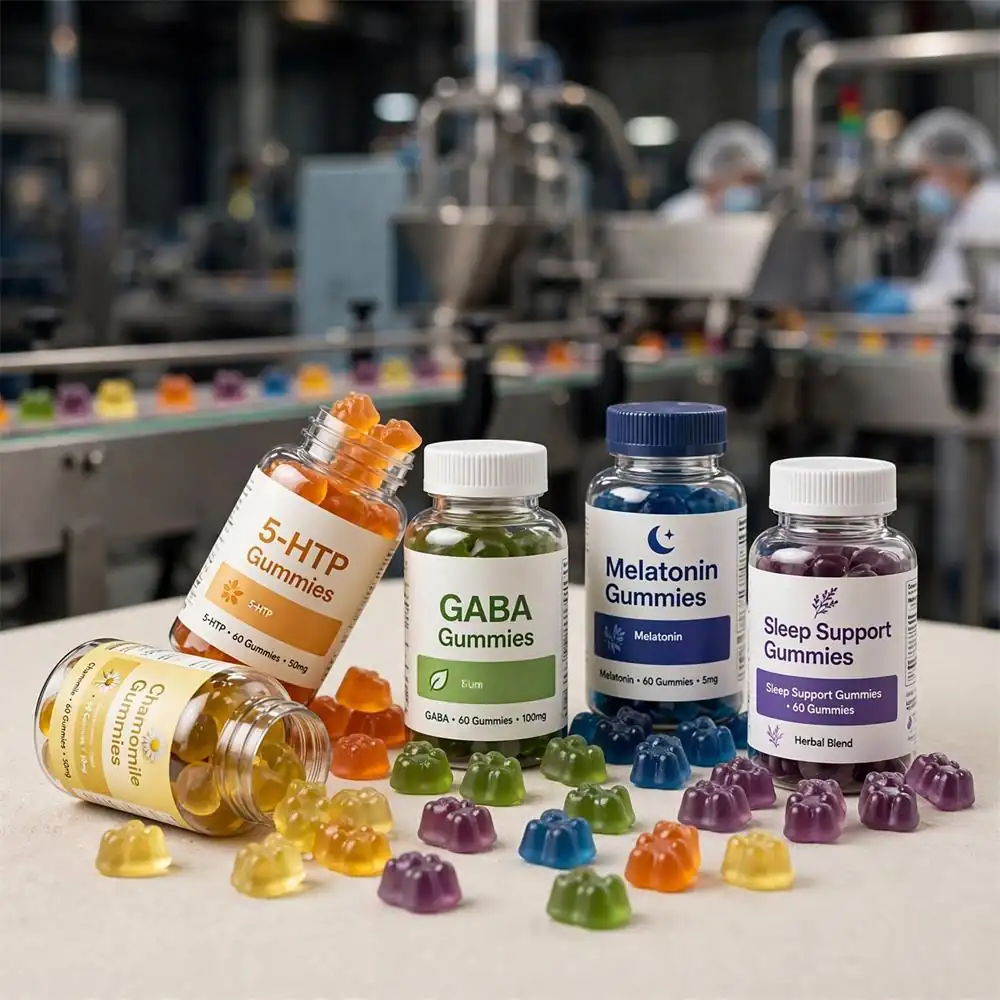
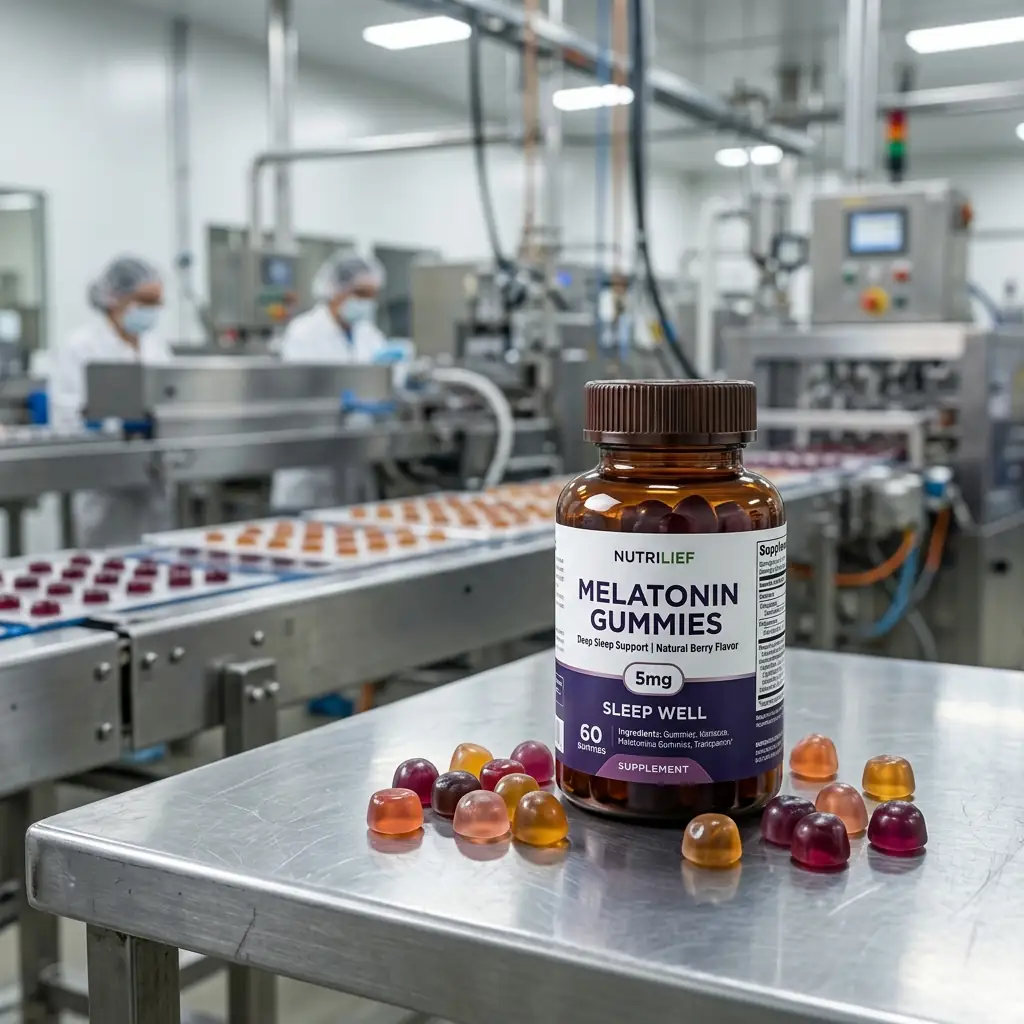
Melatonin gummies remain one of the highest-volume SKUs in the gummy category globally. The combination of precise melatonin dosing in a palatable, chewable form has driven broad consumer adoption. Adjacent to this, adaptogen-based gummies — featuring ingredients like ashwagandha, L-theanine, and magnesium glycinate — are seeing strong momentum as consumers increasingly seek non-pharmaceutical approaches to stress and sleep quality.
Sports nutrition and performance
Perhaps the most significant recent expansion is into the sports supplement category. Creatine gummies and pre-workout gummies are disrupting a market segment historically dominated by powders. Convenience, portability, and the ability to avoid the taste of unflavored creatine monohydrate have made gummy formats genuinely competitive with their powder counterparts — not merely a novelty alternative.
Women’s and men’s targeted health
Gender-targeted multivitamin formulations have driven significant SKU proliferation. Products tailored to hormonal health, fertility support, hair and nail strength, and prostate health represent a category where gummy formats command premium price positioning and strong brand loyalty.
Gut health and immunity
Probiotic gummies present unique formulation challenges — live cultures must survive the manufacturing process and shelf life — but brands that have solved this technically have found a highly engaged consumer base. Similarly, vitamin C, zinc, and elderberry immunity gummies experienced sustained demand growth following the COVID-19 pandemic, much of which has been retained.
Formulation considerations: what differentiates a quality product
For brands evaluating how to approach product development, understanding the key formulation variables is essential. Not all gummies are created equal, and the technical decisions made during development directly affect shelf life, taste, bioavailability, and regulatory compliance.
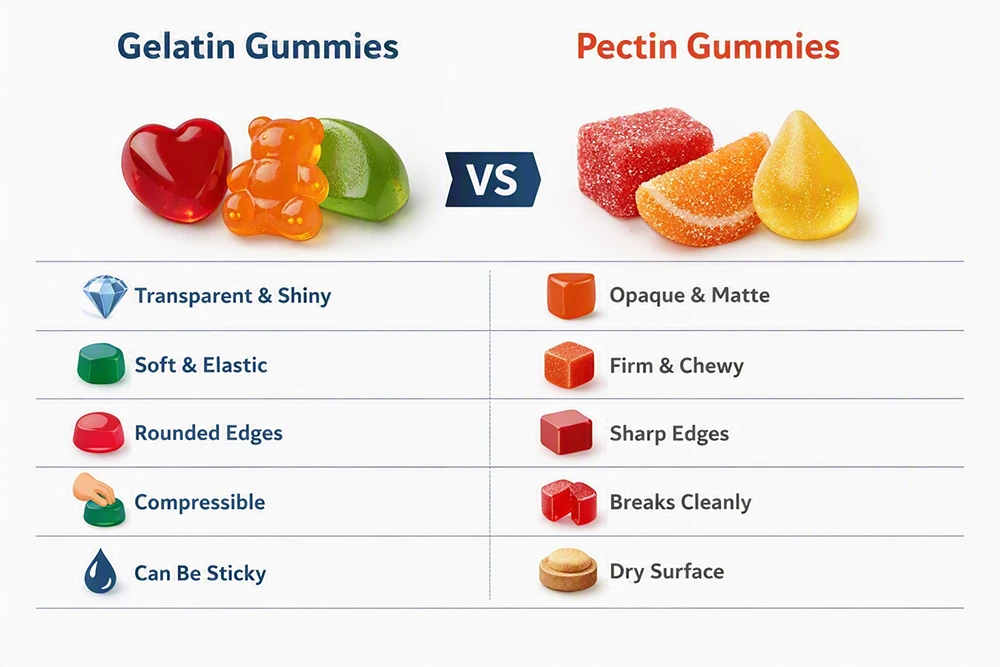
Gelling agent selection is foundational. Gelatin produces a traditional chewy texture but limits the product to non-vegan markets. Pectin-based gummies offer a cleaner label and are suitable for vegan and halal certifications, though they behave differently under heat and humidity. Carrageenan blends offer a middle ground with distinctive texture profiles preferred in some markets.
Active ingredient compatibility matters significantly. Oil-soluble vitamins (A, D, E, K) and certain botanical extracts interact differently with gummy matrices than water-soluble compounds. A reliable contract manufacturer should be able to demonstrate stability data across the intended shelf life — typically 18 to 24 months for most supplement categories.
Sugar and sugar-free formulations continue to evolve. Consumer pressure for reduced-sugar options has driven development of maltitol, erythritol, and isomalt-based systems. Low-sugar formulations require technical adjustments to texture and moisture activity (Aw) to maintain acceptable mouthfeel and prevent crystallization.
Regulatory and compliance landscape
Brands entering the gummy supplements market — whether through private label, ODM, or proprietary formulation — must navigate a complex regulatory environment that varies significantly by geography.
In the United States, dietary supplements are regulated under the Dietary Supplement Health and Education Act (DSHEA) of 1994, with the FDA overseeing manufacturing standards through 21 CFR Part 111 (Current Good Manufacturing Practice, or cGMP). For gummy products, particular attention must be paid to label claims — structure/function claims are permissible, but disease claims are prohibited without FDA drug approval.
In the European Union, supplements are subject to food law under Regulation (EC) No 1925/2006, with member states maintaining varying national lists of permitted vitamins and minerals. Brands entering the EU market should anticipate additional scrutiny on novel ingredients and health claim substantiation under Regulation (EC) No 1924/2006.
For brands sourcing from international manufacturers, relevant certifications to verify include GMP, ISO 22000, HACCP, and — depending on target market — Halal and Kosher certifications. Requesting third-party Certificates of Analysis (CoA) for raw materials and finished goods is a baseline quality assurance practice that should be non-negotiable in any supplier relationship.
Entering the market: private label, ODM, and custom formulation
For brand owners, retailers, and entrepreneurs, the route to market typically falls into one of three models, each with distinct trade-offs in cost, speed, and differentiation:
Private label gummies allow brands to launch with minimal formulation investment by selecting from a manufacturer’s existing product catalogue, applying custom branding and packaging. This approach offers the fastest time to market and lowest minimum order quantities, making it accessible for startups and e-commerce sellers testing new SKUs. The trade-off is limited product differentiation — competitors may source identical or near-identical formulations.
ODM (Original Design Manufacturer) arrangements sit between private label gummies and fully custom development. Brands work with the manufacturer to modify existing base formulations — adjusting dosages, swapping ingredients, or developing unique flavor profiles — while the manufacturer retains design ownership. This provides meaningful differentiation at lower development cost than fully custom work.
Custom formulation through a CDMO (Contract Development and Manufacturing Organization) offers the highest degree of product uniqueness. Brands own the formulation IP, enabling stronger defensibility and more precise alignment with clinical positioning or proprietary ingredient claims. Development timelines are longer — typically three to six months from brief to production-ready formula — and minimum order quantities are generally higher.
Sourcing strategy: bulk, wholesale, and scaling production
For established brands and distributors, gummies bulk and gummies wholesale procurement strategies significantly affect unit economics. Key variables to evaluate when selecting a manufacturing partner include:
Production capacity and lead times. A manufacturer’s stated annual capacity is a useful proxy for stability and reliability. Facilities producing several thousand tons annually are better positioned to absorb demand spikes without delivery delays — particularly relevant for brands running promotional campaigns or entering retail channels.
Minimum order quantities (MOQs). These vary widely between manufacturers and product types. Brands should verify whether stated MOQs apply per SKU or per production run, as this affects inventory planning significantly, especially for multi-SKU product lines.
Vertical integration and raw material sourcing. Manufacturers with in-house raw material capabilities or established supplier relationships offer greater traceability and price stability. For premium positioning, the ability to verify the origin and quality of key botanical ingredients — ashwagandha root extract, elderberry concentrate, etc. — adds meaningful brand credibility.
Packaging capabilities. End-to-end manufacturing that includes custom pouch, bottle, and label production reduces logistics complexity, shortens lead times, and simplifies quality accountability. Brands sourcing finished goods should confirm whether packaging is produced in-house or subcontracted.
Trends shaping the next phase of gummy supplement development
Several emerging trends are likely to influence product development and market positioning over the next three to five years:
Precision dosing and personalization. Consumer interest in personalized nutrition — driven partly by at-home testing kits and wellness apps — is creating demand for more targeted formulations. Subscription-based models where consumers receive customized gummy regimens based on health data represent an early but growing market segment.
Functional ingredient innovation. Ingredients such as lion’s mane mushroom, NMN (nicotinamide mononucleotide), and postbiotics are moving from specialist channels into mainstream supplement offerings. Gummy formats are particularly well-suited to communicating the wellness narratives associated with these ingredients through flavor, color, and form design.
Clean label and sustainability. Consumer scrutiny of ingredient lists continues to intensify. Brands formulating with natural colorings, non-GMO gelling agents, and sustainably sourced botanicals are better positioned to meet the expectations of health-conscious demographics — particularly in North American and Northern European markets.
Clinical substantiation. As the supplement category matures, brands investing in clinical evidence for their formulations will gain competitive advantage, particularly in the face of increasing regulatory scrutiny and rising consumer sophistication. This raises the bar for the scientific capabilities required of manufacturing partners.
Article summary
- The gummy supplements market is growing rapidly, driven by consumer preference for convenient, palatable supplement formats.
- Key growth categories include beauty, sleep, sports nutrition, gut health, and gender-targeted wellness.
- Formulation quality — gelling agent, ingredient stability, and sugar system — is a primary differentiator between commodity and premium products.
- Regulatory compliance requirements vary by market; brands must verify GMP, certifications, and label claim validity before launch.
- Private label, ODM, and custom CDMO routes offer different balances of speed, cost, and product differentiation.
- Sourcing at bulk and wholesale scale requires careful evaluation of capacity, MOQs, traceability, and packaging capabilities.
- Emerging trends in personalization, functional ingredients, clean label, and clinical substantiation will shape the next generation of competitive products.
Frequently asked questions
What is the typical minimum order quantity (MOQ) for private label gummy supplements?
MOQs vary considerably by manufacturer and product type. For standard private label programs using existing formulations, MOQs can range from as low as 1,000 to 5,000 units. Custom formulation or novel ingredient systems typically require higher minimums — often 10,000 units or more — to amortize development costs. It is advisable to clarify whether MOQs apply per SKU or per production run, as this affects planning for multi-product launches.
How long does it take to develop and produce a custom gummy supplement from scratch?
End-to-end development timelines for a fully custom gummy formulation — from initial brief through stability testing, regulatory review, and first production run — typically range from three to six months. Established ODM programs or private label selections from existing catalogues can often be fulfilled within four to eight weeks, depending on packaging customization complexity and current production schedules.
What certifications should I look for when selecting a gummy supplement manufacturer?
At a minimum, look for GMP certification (aligned with FDA 21 CFR Part 111 for US market products), ISO 22000, and HACCP. For specific market requirements: Halal certification is essential for Middle Eastern and Southeast Asian distribution; Kosher certification is required for certain North American retail channels; Vegan certification supports clean label positioning across most Western markets. Third-party audit reports and Certificates of Analysis for finished goods are a standard expectation from credible manufacturers.
Can probiotic strains survive the gummy manufacturing process?
This is a technically complex challenge. Standard gummy production involves temperatures and moisture levels that are hostile to most live probiotic cultures. Effective solutions include encapsulation of probiotic strains prior to incorporation, formulation of a separate probiotic layer in multi-layer gummy systems, or selection of heat-stable strain variants. Stability data demonstrating live CFU counts through the product’s intended shelf life should be requested from any manufacturer claiming probiotic gummy capabilities.
What is the difference between white label and private label for gummy supplements?
The terms are often used interchangeably, but a useful distinction is as follows: white label refers to a completely unbranded, finished product that any buyer can rebrand without modification; private label implies a degree of customization — packaging, label design, flavor selection — applied to an existing base formula. In practice, most reputable manufacturers offer private label programs that include at minimum custom branding and packaging, with tiered levels of formulation customization available at higher investment levels.
How should I evaluate a gummy manufacturer’s quality assurance capabilities before placing an order?
Request documentation of their cleanroom classification (100,000-class or better is standard for supplement production), quality management system certifications (ISO 9001, ISO 22000), and in-house laboratory testing capabilities. Ask specifically about their procedures for incoming raw material testing, in-process quality checks, and finished goods release testing. Visiting the facility in person or requesting a virtual facility tour is a reasonable and common practice for significant order volumes. References from existing customers in similar product categories are also a valuable validation step.
Gothink Biotech — Gummy Supplement Manufacturer & Dietary Supplement Contract Manufacturer
Shenzhen Gothink Biotech Co., Ltd. is a GMP-certified dietary supplement and gummy supplement manufacturer specializing in end-to-end OEM, ODM, CMO, and CDMO services. Our production facility operates a 100,000-class cleanroom with an annual output capacity of 5,000 tons, supported by a 10,000-class pharmaceutical-grade R&D laboratory led by postdoctoral researchers from leading U.S. research institutions.
We support brands at every stage: from formulation development and raw material sourcing through to gummy manufacturing, bulk production, wholesale fulfilment, private label branding, white label programs, and export-ready packaging. Whether you are launching a startup SKU with flexible low-MOQ private label gummies, scaling an established line with bulk and wholesale supply, or developing a proprietary formulation through our CDMO pathway, our team provides the technical depth and production capacity to deliver reliably. Certifications include ISO 9001, ISO 22000, HACCP, FDA registration, GMP, Halal, Kosher, and Vegan.