
Abstract
Gummy supplements have become one of the fastest-growing formats in the global dietary supplement industry. Behind every successful gummy product is a series of deliberate design decisions — from ingredient selection and texture engineering to regulatory compliance and packaging. This guide walks supplement brand owners, private label buyers, and bulk or wholesale buyers through the foundational principles of gummy design, helping you make informed choices whether you are launching a new SKU or scaling an existing line. Topics covered include formulation fundamentals, gelling agent selection, functional ingredient compatibility, taste masking, shelf stability, and manufacturing considerations.
Why Gummy Design Matters More Than Most Brands Realize
The gummy supplement market is projected to reach multi-billion dollar valuations globally in the coming years, driven by consumer preference for formats that are easy to take, enjoyable, and dosage-compliant. Yet many brands underestimate the complexity involved in bringing a well-designed gummy to market.
A gummy is not simply a vitamin dissolved in candy. It is a carefully engineered delivery system in which texture, pH, water activity, active ingredient stability, and flavor must be balanced simultaneously. A poorly designed formulation may lead to active ingredient degradation, unacceptable texture after shelf storage, uneven dosing, or regulatory non-compliance — all of which have direct business consequences.
For brands sourcing through gummy manufacturing partners, or evaluating private label gummies, understanding the core principles of gummy design enables more productive conversations with manufacturers and better product outcomes.

Gelling Agents: The Foundation of Gummy Structure
The gelling agent used in a gummy determines its fundamental texture, clarity, melt point, suitability for different consumer groups, and — importantly — its compatibility with certain active ingredients.
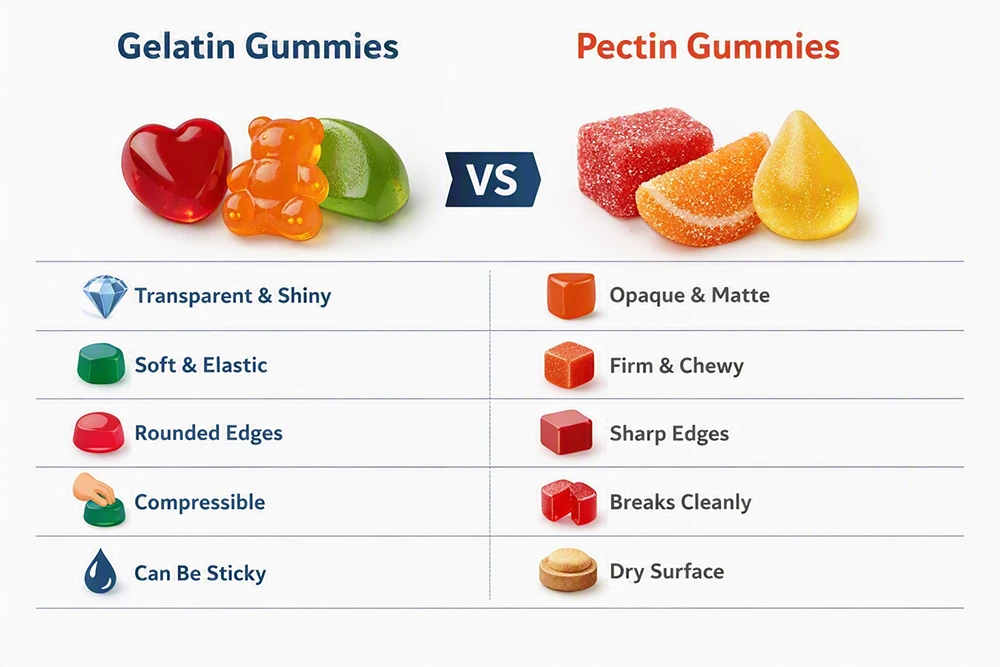
Gelatin remains the most widely used gelling agent in gummy manufacturing. It produces a smooth, elastic chew with excellent clarity and a desirable melt-in-mouth quality. Gelatin-based gummies are generally more forgiving in processing and tend to have better shelf stability in varying humidity. The principal limitation is that gelatin is animal-derived (typically bovine or porcine), making it unsuitable for vegan, vegetarian, halal, or kosher consumers unless the appropriate animal-sourced gelatin with corresponding certification is used.
Pectin is the leading plant-based alternative and is derived from citrus peel or apple pomace. Pectin gummies are suitable for vegan and vegetarian formulations, but they behave quite differently in processing. Pectin requires precise pH and sugar concentration control to set properly, and the resulting texture is typically firmer and less elastic than gelatin. For brands targeting health-conscious or plant-based consumers, pectin is the preferred option — though it demands more precision during gummy manufacturing.
Carrageenan, derived from red seaweed, is another plant-based option used primarily in gummy formulations targeting vegan compliance. It produces a firm, slightly brittle texture and is particularly useful in certain liquid-set applications. However, carrageenan is subject to ongoing regulatory scrutiny in some markets, and brand owners should verify its acceptability in their target regions before specifying it in a formulation.
Starch-based gummies use modified corn or tapioca starch as the structural agent. They tend to produce a softer, more opaque product and are often used in confectionery applications. In supplement contexts, starch-based systems are less common but are gaining traction in certain texture-specific applications.
When selecting a gelling agent, it is important to consider not just consumer demographics but also the chemical properties of the active ingredients being incorporated. Some actives are incompatible with certain gel systems due to pH sensitivity or ionic interference.
Active Ingredient Integration: Compatibility and Stability
One of the most technically demanding aspects of gummy design is incorporating functional ingredients in a way that preserves their efficacy throughout manufacturing and shelf life.
Heat sensitivity is a primary concern. Gummy manufacturing involves high-temperature cooking steps — typically between 85°C and 110°C depending on the formulation. Thermolabile ingredients such as certain probiotics, enzymes, and some vitamins (particularly vitamin C and B vitamins) may degrade significantly at these temperatures. Strategies to address this include post-cooling addition of heat-sensitive actives, microencapsulation, and selecting more heat-stable ingredient forms.
Hygroscopicity refers to the tendency of certain ingredients to absorb moisture, which can soften gummy texture over time or promote microbial growth. Highly hygroscopic actives — including some forms of vitamin C, magnesium, and plant extracts — require careful formulation balancing and appropriate packaging (moisture-barrier materials, desiccants) to maintain product quality throughout shelf life.
pH compatibility is another critical variable. The gummy matrix, particularly in pectin-based systems, operates within a narrow pH window. Active ingredients that significantly alter the pH of the matrix — such as acidic botanical extracts or buffered mineral forms — can destabilize the gel structure or interact with colorants and flavorings. Formulators must account for these interactions early in the development process.
Dosage accuracy and uniformity is a key quality consideration. Unlike tablets or capsules, gummies are produced through a molding process, and slight variations in fill volume can lead to non-uniform dosage per unit. For ingredients with narrow therapeutic windows or strict label claim requirements, ensuring equipment precision and in-process quality control is essential. This is one reason why working with a gummy manufacturer that maintains pharmaceutical-grade manufacturing standards is advisable for supplement brands making specific health claims.
Sweeteners, Sugar Systems, and Formulation Trends
The sweetener system in a gummy affects not only taste but also texture, water activity, shelf life, and suitability for specific consumer segments.
Traditional sucrose-and-glucose syrup systems remain standard in conventional gummy manufacturing. They provide excellent texture and stability, and support a wide range of flavoring profiles. However, they contribute significant caloric content and are not appropriate for low-sugar, diabetic-friendly, or ketogenic product positioning.
Sugar-free and reduced-sugar gummies rely on polyols (sugar alcohols) such as maltitol, xylitol, sorbitol, and erythritol, sometimes in combination with high-intensity sweeteners like stevia or monk fruit. Sugar-free formulation presents specific challenges: polyols can affect texture and moisture retention differently than sucrose, and some polyols carry laxative warnings at higher intake levels, which may require label disclosures.
Organic and clean-label gummies are a growing segment. Brands targeting natural health consumers increasingly specify organic sugars, natural colorants (such as fruit and vegetable juice concentrates), and natural flavorings. These constraints add formulation complexity but represent a strong market positioning opportunity.
For brands sourcing gummies bulk or wholesale, it is worth clarifying with your manufacturing partner which sweetener systems are available on their existing production lines, as switching systems may require formulation validation and line cleaning protocols.
Colorants and Flavoring: Consumer Experience and Regulatory Compliance
Color and flavor are the primary sensory drivers of gummy consumer satisfaction. They also carry regulatory implications that vary significantly by market.
Synthetic colorants such as FD&C dyes produce vivid, stable colors at low usage levels and are cost-effective. In the United States and many Asian markets, they are broadly permitted in dietary supplements. However, in the European Union and the United Kingdom, certain synthetic colorants (particularly the “Southampton Six”) require warning labels indicating potential adverse effects on children’s activity and attention, which effectively limits their commercial viability for brands targeting those markets.
Natural colorants derived from plant sources — such as anthocyanins (from purple sweet potato or hibiscus), beta-carotene, spirulina extract, and carmine — are preferred in clean-label formulations. Natural colorants are generally less heat-stable and more pH-sensitive than synthetic alternatives, which must be considered in gummy processing conditions.
Flavor design in gummies involves both the selection of flavoring compounds and the management of off-notes from active ingredients. Many functional ingredients — including fish oil, certain herbal extracts, B vitamins, and zinc — contribute bitter, fishy, or otherwise objectionable tastes that must be effectively masked. Flavor houses offer customized flavor systems for supplement applications, and experienced gummy manufacturing partners will have established relationships and protocols for off-note management.
Coating, Finishing, and Packaging Considerations
The physical finish of a gummy affects its appearance, tactile experience, and shelf stability.
Wax coating (typically carnauba wax) gives gummies a polished, non-sticky surface and provides a degree of moisture protection. It is standard in most commercial gummy production.
Sugar sanding — coating gummies with fine crystalline sugar — creates a distinctive sparkly appearance and adds texture contrast. It is popular in confectionery-adjacent supplement products targeting adult consumers.
Oiling (applying a thin layer of food-grade oil such as fractionated coconut oil) is a simpler and more cost-effective finish, though it provides less visual differentiation than wax or sanding.
Packaging plays a critical role in preserving gummy quality. Gummies are sensitive to heat, moisture, and light. Standard packaging formats include PET or HDPE bottles with induction seals and desiccants, stand-up pouches with barrier laminates, and blister packs for premium or single-serve applications. For brands managing gummies wholesale distribution or bulk supply chains, ensuring adequate packaging integrity for transit and storage conditions — particularly in humid climates — is essential.
Regulatory and Label Compliance in Gummy Supplement Design
Whether you are launching under a private label gummies program or managing your own brand, regulatory compliance begins at the formulation stage.
In the United States, dietary supplement gummies are regulated under the Dietary Supplement Health and Education Act (DSHEA) and must comply with FDA current Good Manufacturing Practice (cGMP) requirements. This includes identity, purity, strength, and composition standards, and specific record-keeping and testing requirements.
In the European Union, gummies sold as food supplements are regulated under Directive 2002/46/EC, with additional national regulations applying in individual member states. Permitted ingredient lists, maximum dosage levels, and labeling requirements differ substantially from US standards.
For brands entering multiple markets, it is important to design the formulation with the most restrictive regulatory environment in mind, or to plan for market-specific SKU variations. Your manufacturing partner should be able to provide documentation supporting compliance, including Certificates of Analysis, third-party test reports, and ingredient safety dossiers.
Working with a Gummy Manufacturer: Key Questions to Ask
When evaluating gummy manufacturing partners — whether for private label gummies, OEM/ODM production, or bulk and wholesale supply — the following questions help assess capability and compatibility:
What gelling agent systems do you support, and do you have experience with both gelatin and plant-based pectin/carrageenan formulations? What is your minimum order quantity (MOQ), and how does it scale for trial versus commercial runs? What in-house testing capabilities do you maintain, and which third-party certifications does your facility hold? What is your typical lead time from formula finalization to first production run? Can you provide documentation and regulatory support for target markets? Do you offer full OEM/ODM turnkey services including design, compliance, and export support?
The answers to these questions reveal whether a manufacturer is equipped to support your product at every stage — from formulation development through to market launch and ongoing supply.
Summary
Gummy design is a multidisciplinary discipline that intersects food science, pharmaceutical manufacturing, regulatory affairs, and consumer experience. For supplement brands, the decisions made at the formulation and manufacturing stage have lasting implications for product quality, consumer satisfaction, regulatory standing, and commercial viability.
Key takeaways from this guide include: the choice of gelling agent should reflect both consumer demographics and active ingredient chemistry; heat-sensitive and hygroscopic actives require specific engineering strategies; sweetener and colorant selection carries regulatory implications that vary by market; and partnering with a capable, certified gummy manufacturer significantly reduces risk and time-to-market.
Whether you are a startup exploring private label gummies for the first time, an established brand scaling through gummies bulk or wholesale channels, or a brand seeking full OEM/ODM services, a solid understanding of gummy design fundamentals will enable more effective collaboration with your manufacturing partner and better outcomes for your end consumers.
Frequently Asked Questions (FAQ)
Q1: What is the difference between OEM and ODM in gummy supplement manufacturing? OEM (Original Equipment Manufacturing) refers to producing a product to the buyer’s existing formula and specifications. ODM (Original Design Manufacturing) means the manufacturer develops the formula and product design, which the brand then markets under its own label. Many gummy manufacturers offer both models, allowing brands to choose the level of involvement that suits their internal capabilities.
Q2: What is the typical minimum order quantity (MOQ) for private label gummies? MOQ varies significantly between manufacturers and product types. Some contract manufacturers accommodate trial runs of a few thousand units, while standard commercial MOQs are often in the range of 10,000 to 50,000 units per SKU. Brands sourcing gummies bulk or wholesale typically benefit from lower per-unit costs at higher volumes. It is always worth discussing your volume needs directly with potential manufacturing partners to understand their flexibility.
Q3: How long does it take to develop and launch a new gummy supplement product? A new formulation from concept to first production run typically takes between 8 and 20 weeks, depending on the complexity of the formulation, the availability of raw materials, regulatory requirements, and packaging lead times. Existing white label or standard formulations can move faster. Planning adequate development timelines is critical to avoid product launch delays.
Q4: Are vegan gummies as stable as gelatin-based gummies? Vegan gummies made with pectin or carrageenan can achieve comparable stability to gelatin-based products, but they require more precise formulation and processing control. Pectin gummies can be more sensitive to humidity and temperature fluctuations during storage. With appropriate formulation, packaging, and quality control, plant-based gummies can meet the shelf-life requirements of most commercial supplement applications.
Q5: What certifications should I look for when choosing a gummy supplement manufacturer? For most markets, GMP certification is the baseline requirement. Additional certifications to look for include ISO 9001 (quality management), ISO 22000 (food safety management), HACCP, FDA facility registration, and where relevant, Halal, Kosher, and Vegan certifications. Third-party audit certifications provide an objective basis for assessing manufacturing quality.
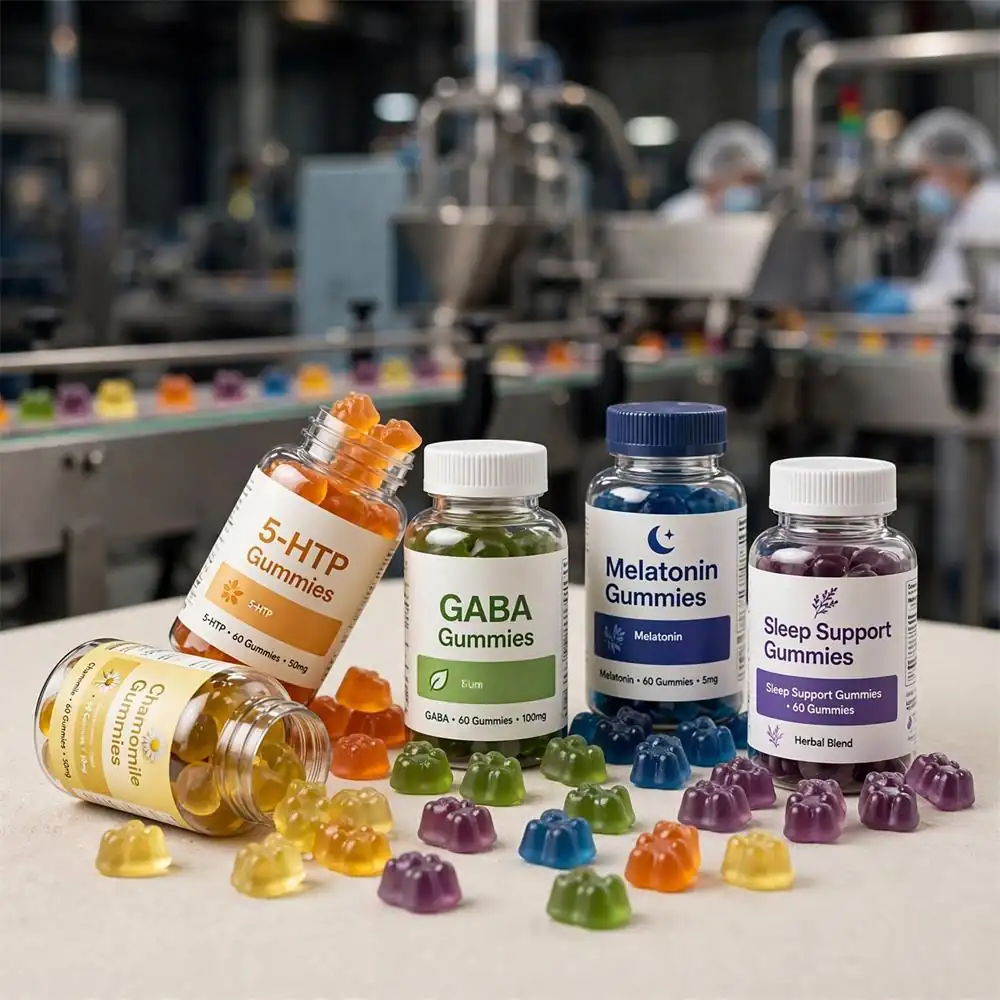
Q6: Can I include multiple active ingredients in a single gummy product? Yes, and this is common in the supplement market (for example, multivitamin gummies or sleep-support blends). However, multi-ingredient formulations require careful compatibility assessment to ensure that the actives do not interact adversely with each other or with the gummy matrix. A technically capable formulation team is essential for complex multi-ingredient gummy products.
About Gothink Biotech
Shenzhen Gothink Biotech Co., Ltd. is a professional gummy manufacturer and dietary supplement manufacturer based in China, offering comprehensive OEM, ODM, white label, and private label gummies services to supplement brands worldwide. With a GMP-certified facility featuring a 100,000-class cleanroom, a daily production output of 16 tons, and an annual capacity of 5,000 tons, Gothink Biotech supports brands at every scale — from small trial runs to large-volume bulk and wholesale supply.
Our R&D team, led by postdoctoral researchers with experience at leading U.S. and international institutions, operates within a 10,000-class pharmaceutical-grade laboratory. We support a full range of gummy formats including pectin gummies, gelatin gummies, vegan gummies, sugar-free gummies, and functional supplement gummies across categories including sleep, immunity, energy, women’s health, sports nutrition, and more.
Gothink Biotech holds certifications including ISO 9001, ISO 22000, HACCP, FDA, GMP, Halal, Kosher, and Vegan, and provides end-to-end turnkey solutions covering formulation development, custom design, compliance documentation, manufacturing, packaging, and export support.
For brands seeking a reliable, science-backed manufacturing partner for gummies bulk production, private label programs, or full OEM/ODM development, Gothink Biotech offers the technical capability and production infrastructure to bring your product vision to market efficiently and compliantly.