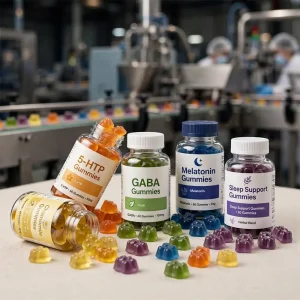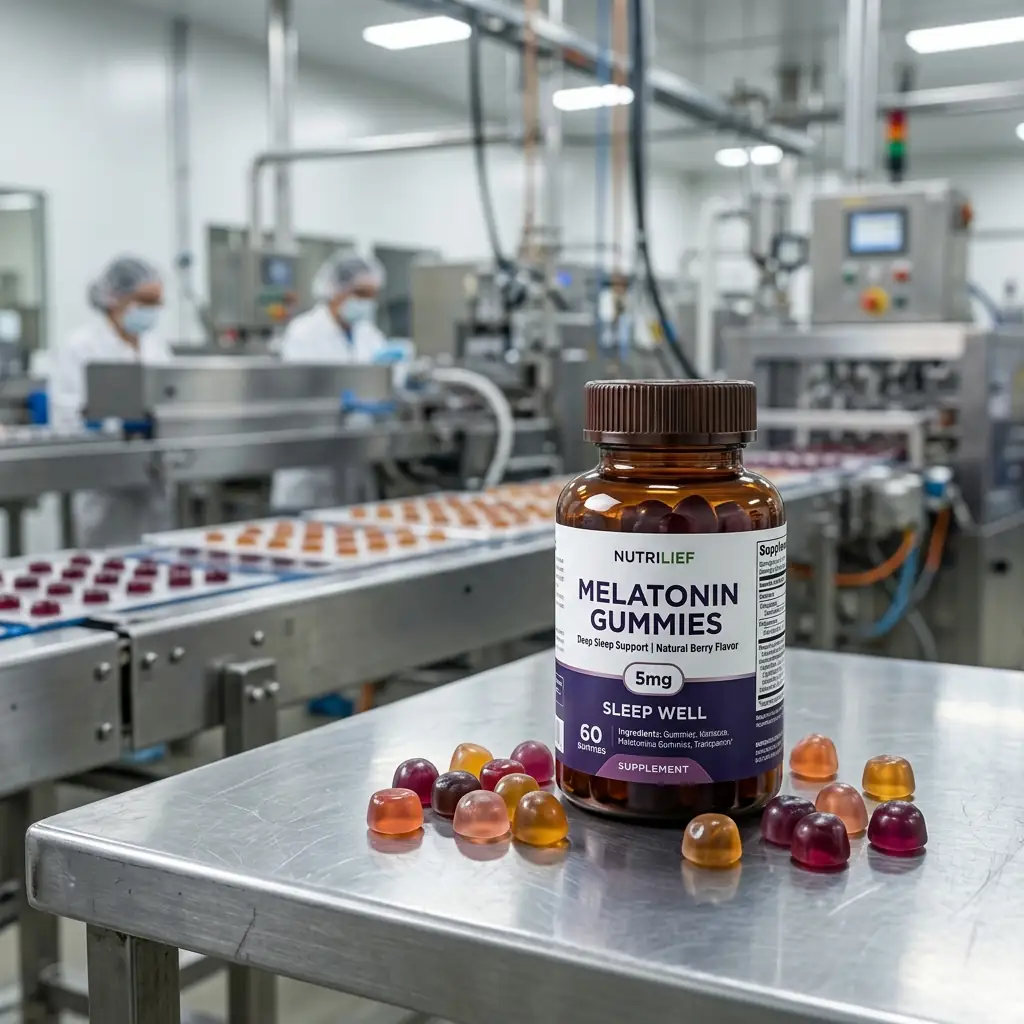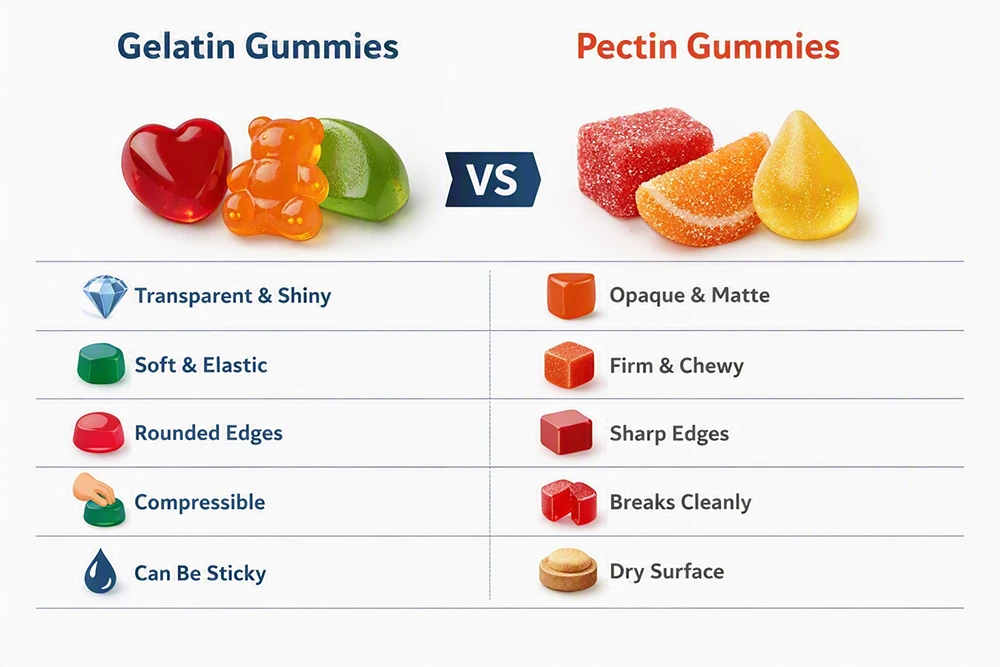

Sleep is the largest under-served category in dietary supplements. Roughly one in three adults worldwide reports persistent difficulty falling or staying asleep, and the consumers affected are not passive — they are actively searching for solutions every night. For supplement brands, private label buyers and OEM partners, that combination of scale and urgency is rare.
This guide consolidates what brands actually need in order to make a commercial decision about sleep gummies: the demand picture, the format economics, the four formulation families, the regulatory map, the manufacturing path, and the channel realities. Each section links to a dedicated deep-dive where the technical detail lives.
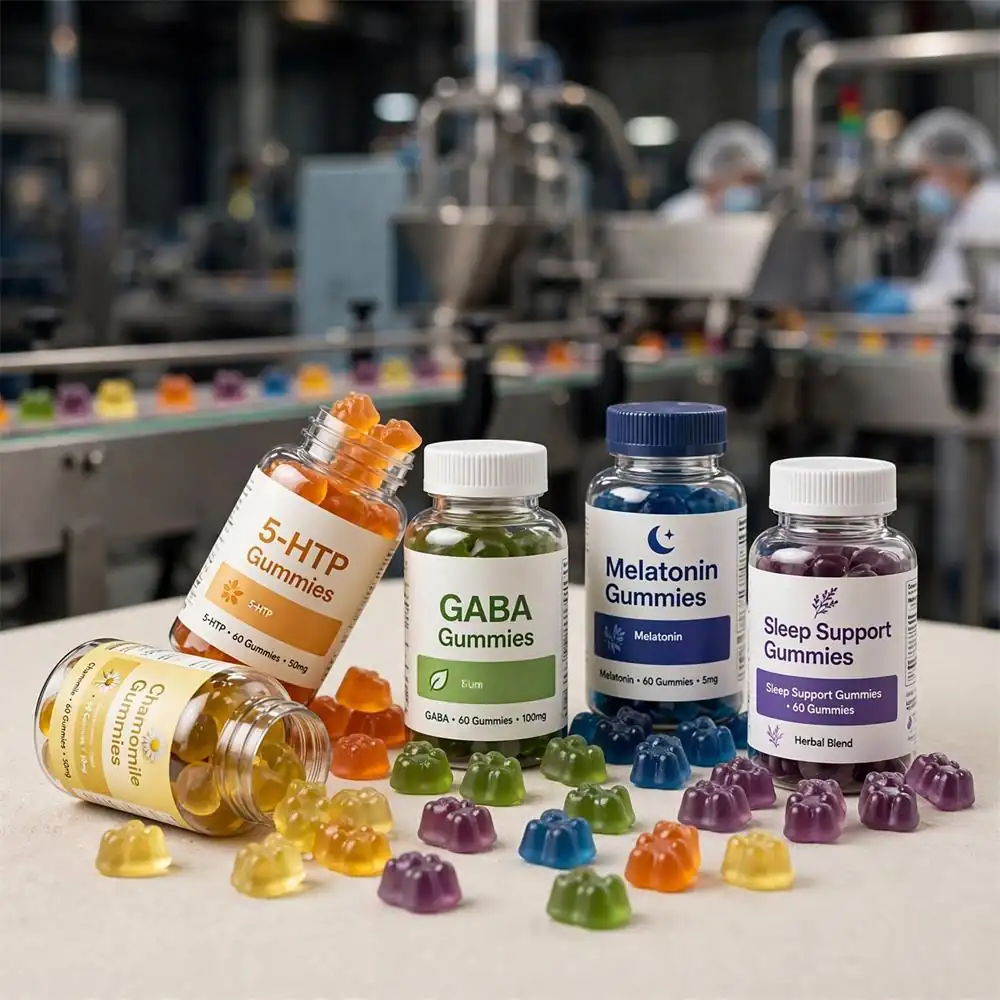
1. The Demand Floor: Why Sleep Is Not a Trend
Most supplement categories rise and fall with consumer fashion. Sleep does not, because the underlying driver is a chronic, nightly problem rather than an aspiration.
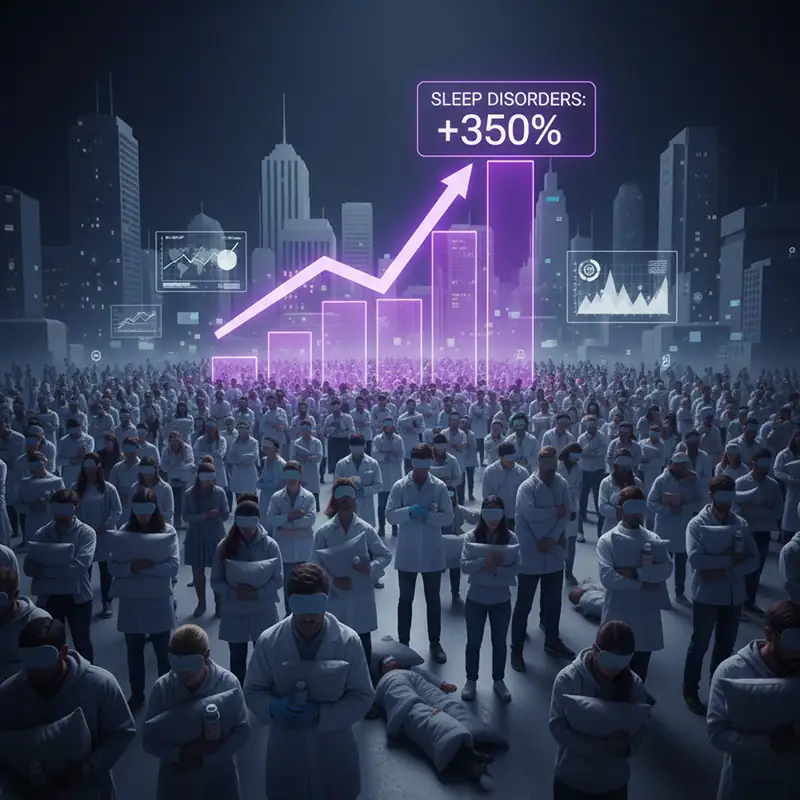
- Global prevalence: The World Health Organization estimates that sleep deprivation and sleep disorders affect approximately 45% of the global population. In the United States, the CDC has described insufficient sleep as a public health epidemic, with more than 70 million adults affected and over 35% of American adults regularly sleeping fewer than the recommended seven hours.
- Adolescents are the worst affected: Recent CDC data indicates up to 77% of teenagers fail to meet rest requirements.
- The longevity link: Epidemiological research increasingly suggests that habitually sleeping fewer than seven hours per night may be more detrimental to long-term health than poor diet or physical inactivity. Stanford Medicine’s SleepFM model, trained on roughly 600,000 hours of sleep data, found sleep patterns to be significant predictors of more than 100 health conditions, including dementia, stroke and cardiovascular disease.
The commercial implication is straightforward: sleep support has a demand floor. Brands building in this category are not betting on a trend cycle. We cover the full demand data and channel economics in our sleep supplement market analysis for 2026.
2. Why Gummies Won the Sleep Category
Sleep supplements existed long before gummies — as capsules, tablets and powders. The format shift happened because gummies removed the friction that kept those products from being used consistently.
- Palatability: Fruit flavours and a chewy texture make a nightly ritual feel like a treat rather than a dose.
- Ease of use: No water, no swallowing difficulty, portable enough to keep at a bedside.
- Adherence: A supplement only works if it is taken consistently. Adherence is the single strongest commercial argument for the format.
- Social and visual appeal: Sleep products photograph well, which matters on marketplaces and in social commerce.
Market data reflects this. The global gummy supplement market was valued at approximately USD 24–26 billion in 2023 and is projected to reach between USD 47 billion and USD 75 billion by 2030–2032, depending on the source — a compound annual growth rate in the region of 10%. On major marketplaces, sleep gummies routinely occupy multiple positions in the top ten results for sleep-related searches. For a detailed breakdown of category sizing, consumer segments and channel unit economics, see our 2026 sleep market report.
3. The Four Formulation Families
Sleep gummies are not one product. They are four distinct formulation strategies with different mechanisms, different regulatory exposure and different manufacturing risk profiles.
| Family | Primary actives | Best suited for | Main technical risk |
|---|---|---|---|
| Melatonin-led | Melatonin 0.5–10 mg | Sleep onset, jet lag, shift work, older adults | Thermal degradation during cooking; micro-dose uniformity |
| Botanical / herbal | Chamomile, valerian, passionflower, lemon balm, ashwagandha | Hormone-averse and clean-label consumers; EU markets where melatonin is restricted | Extract standardisation, bitterness, novel food status |
| Mineral-led | Magnesium glycinate / citrate / L-threonate | Stress-related sleep disturbance, deficiency populations | Dose volume versus gummy size; mineral taste; syneresis |
| Multi-ingredient stacks | Melatonin + L-theanine + magnesium + botanicals | Premium positioning and differentiation | Interaction complexity, taste masking, stability of each active |
Two companion articles cover this in depth: sleep gummy formulation from brief to pilot explains how a formula is engineered, and our guide to non-melatonin sleep actives details the mechanisms, evidence levels and standardisation requirements for GABA, L-theanine, chamomile, magnesium and ashwagandha.
4. The Development Path, Compressed
A sleep gummy moves through five gates. Brands that skip the middle three are the ones that end up with dead stock.
- Brief: target consumer, ingredient hierarchy, dosage targets, dietary constraints (vegan, halal, kosher, sugar-free), target markets and their regulatory maximums.
- Formulation: gelling system selection, active compatibility, staged addition strategy, taste system.
- Sample and feasibility validation: bench samples, sensory panel, accelerated stability, packaging interaction.
- Pilot run: proving the formula survives the jump from a 10-litre beaker to a 500-litre kettle.
- Commercial production: validated process, in-process controls, batch CoA, export documentation.
Realistic timelines are 6–10 weeks from concept to pilot batch, and 4–8 weeks from order to shipment for a validated standard formula. Custom OEM development with full stability work runs 3–6 months. The manufacturing detail is covered in our stage-by-stage process and QC guide.
5. The Regulatory Map
Melatonin is the single most common reason a sleep gummy project stalls at customs or gets delisted. Its status is not globally harmonised.
| Market | Melatonin status | Framework | Practical note |
|---|---|---|---|
| United States | Dietary supplement, OTC | DSHEA 1994; cGMP under 21 CFR Part 111 | No pre-market approval; structure/function claims permitted with disclaimer; no disease claims |
| European Union | Varies by member state; medicine in several | Directive 2002/46/EC; EFSA claims under Reg. 1924/2006; Novel Food Reg. 2015/2283 | An approved EU health claim exists for shortening sleep onset at ≥0.5 mg; country-level notification in DE, IT, ES |
| United Kingdom | Above 1 mg generally prescription-only | Food Standards Agency, post-Brexit | Verify FSA and EU requirements separately if selling in both |
| Australia | Requires listing | TGA; ARTG | Most sleep ingredients require ARTG listing before sale |
| Canada | Natural Health Product | Health Canada; NPN required | NPN must be obtained before sale |
A product that is fully compliant in the United States is not automatically sellable in Germany or the UK. Market-specific regulatory review is not optional. Our melatonin stability and compliance guide covers each market in detail, including stability data requirements and the documentation package you should demand from your manufacturer.
6. Choosing a Manufacturing Partner
Six criteria separate a genuine partner from a transactional supplier.
- Certifications: GMP as the non-negotiable baseline, plus FDA registration for the US, ISO 9001, ISO 22000, HACCP, and HALAL / KOSHER / Vegan where relevant to your positioning.
- Environment: A 100,000-class cleanroom is the appropriate standard for supplement gummies. A 10,000-class pharmaceutical-grade R&D laboratory indicates real formulation capability rather than catalogue reheating.
- Formulation capability: In-house R&D that develops proprietary formulas, not just a library of stock recipes. Ask how many new formulations the team develops annually and request stability data from previous work.
- Analytical depth: HPLC potency testing, content uniformity, heavy metals, microbials, and accelerated stability protocols — with ISO 17025-accredited third-party confirmation.
- MOQ and scalability: Flexible trial quantities for validation, plus confirmed annual capacity and lead-time commitments for scale-up.
- Documentation readiness: Batch CoAs, MSDS, Certificate of Free Sale, HACCP records and customs-compliant labelling. Missing documentation is one of the most common causes of import holds.
7. Channel Economics
Sleep performs unusually well in digital channels because the purchase is driven by an active, high-intent search.
- Amazon FBA: Dominant in the US and UK. Requires strong photography, A+ content, review velocity and subscription-and-save pricing to build lifetime value.
- Direct-to-consumer: Works where the brand invests in sleep education content. Content infrastructure lowers acquisition cost over time and supports organic search.
- Social commerce: TikTok Shop and Instagram Shopping favour sleep products because the format films well and the positioning is lifestyle-led.
- Retail: Longer lead times and higher MOQs. Most brands validate DTC first, then approach retail with sales velocity evidence.
Gummies hold a structural advantage across all of these: higher average selling price per equivalent serving, better review sentiment, and stronger visual merchandising than capsules.
8. Where to Start
The fastest path for most brands is to launch with a validated standard sleep formula to establish sales velocity, then invest in a custom formulation for the second generation. That sequencing de-risks the category entry while preserving the differentiation that protects margin later.
You can review the formulation options we currently manufacture at scale on our sleep support gummies collection, which covers melatonin, botanical, magnesium and multi-ingredient formats.
From there, the three decisions that matter most are the formulation family, the target market’s regulatory reality, and the manufacturing partner. Get those right and the rest of the launch becomes an execution exercise.
Frequently Asked Questions
What is the difference between melatonin, botanical and magnesium sleep gummies?
Melatonin supplements a hormone that regulates the sleep-wake cycle, making it effective for sleep onset and circadian disruption such as jet lag. Botanical gummies use plant extracts associated with calming effects and suit consumers avoiding hormones. Magnesium supports nervous system regulation and GABA activity, and is particularly relevant where deficiency or stress is a factor. Many premium products combine two or more approaches.
Can I develop a custom sleep gummy, or must I choose from a catalogue?
Experienced manufacturers with in-house R&D can develop fully custom formulations against a brief covering actives, dosages, flavour, dietary constraints and target markets. Custom formulation is what protects you from competing on price alone. See how the formulation process actually works.
What dosage of melatonin should a sleep gummy contain?
Commercial products typically range from 0.5 mg to 10 mg, with 1–5 mg most common and a research-led shift toward the lower end of that band. Dosage architecture, overage practice and label claim are covered in our melatonin stability and dosage guide.
Are sleep gummies legal to sell in every market?
No. Melatonin’s status differs substantially between the US, EU member states, the UK, Australia and Canada. Market-specific review is required before launch, and your manufacturer should be able to support that with documentation.
How long does it take to bring a private label sleep gummy to market?
Roughly 4–8 weeks for a standard formula using existing tooling and packaging templates. Custom formulation including stability testing and new packaging typically requires 8–16 weeks or longer.
What is a realistic minimum order quantity?
It varies with formula complexity. Standard formulations using existing tooling can sometimes start at a few thousand units for market validation; custom OEM work requiring new tooling or ingredient sourcing carries higher minimums. Always ask about trial run options and tiered pricing.
Do gummies really perform better than capsules for sleep?
Market data and review sentiment consistently favour gummies in this category. The mechanism is adherence: a nightly sleep product only delivers value if the consumer takes it nightly, and the format materially improves the odds of that.
About Gothink Biotech
Shenzhen Gothink Biotech Co., Ltd. is a dietary supplement and gummy manufacturer providing OEM, ODM, CMO and CDMO services to supplement brands, online sellers, wholesalers, retailers and startups worldwide. Our facility operates a 100,000-class GMP-certified cleanroom with a daily output of 16 tons and annual capacity of 5,000 tons, supported by a 10,000-class pharmaceutical-grade R&D laboratory. We hold ISO 9001, ISO 22000, HACCP, FDA, GMP, HALAL, KOSHER and Vegan certifications, and support flexible MOQs from trial runs through full-scale production. Visit gttbio.com to discuss your project.