
Abstract
The global dietary supplement industry has undergone a dramatic shift in delivery formats. Among these, gummy supplements have emerged as one of the fastest-growing segments, capturing consumer attention through their taste, convenience, and ease of consumption. For brands, online sellers, wholesalers, and startups exploring the supplement space, partnering with a private label gummy manufacturer represents one of the most effective go-to-market strategies available today. This guide examines the market landscape, the practical steps for launching a private label gummy supplement line, what to look for in a gummy manufacturer, and how to build a sustainable business around this format.
1. The Rise of Gummy Supplements: From Vitamins to a Full-Format Revolution
The dietary supplement market has historically been dominated by capsules and tablets. These formats are effective and familiar, but they come with a notable limitation: a significant portion of consumers find them difficult or unpleasant to swallow, a challenge that is especially pronounced among children, older adults, and individuals with pill fatigue.
Gummies changed that equation. What began as a delivery mechanism for children’s vitamins has evolved into a mainstream supplement format embraced by consumers of all ages. The numbers tell a compelling story:
- The global gummy supplement market was valued at approximately USD 7.7 billion in 2023 and is projected to reach over USD 19 billion by 2032, reflecting a compound annual growth rate (CAGR) of around 10.6%.
- Consumer surveys consistently show that gummy format users are more likely to maintain daily supplement routines compared to those taking traditional capsules or tablets.
- In the United States alone, gummies account for a growing double-digit share of total supplement unit sales, particularly in the vitamins, sleep, immunity, and weight management categories.
- E-commerce platforms including Amazon, Walmart Marketplace, and Shopify-based direct-to-consumer stores report that gummy supplements routinely outperform their capsule equivalents in click-through and conversion rates.
The shift is not merely aesthetic. Gummy supplements offer brands a powerful combination of sensory appeal, product differentiation, and formulation flexibility that capsules simply cannot match. For private label brands entering the supplement space, this makes gummy manufacturing an especially attractive focus.
2. Understanding Private Label Gummy Manufacturing
What Is a Private Label Gummy?
A private label gummy supplement is a product manufactured by a third-party gummy manufacturer but sold under a brand’s own name and packaging. The brand owner selects the formulation, chooses the packaging design, and determines the positioning and pricing, while the manufacturer handles the physical production.
This model is distinct from branded manufacturing (where the brand owns the production facility) and from white label (where a standard off-the-shelf product is simply relabeled). Private label typically implies a degree of customization — whether in flavor, ingredient blend, dosage, shape, or packaging — that creates a product specific to the brand.
How Private Label Gummy Manufacturing Works
The process varies by manufacturer, but a typical private label gummy manufacturing workflow includes the following stages:
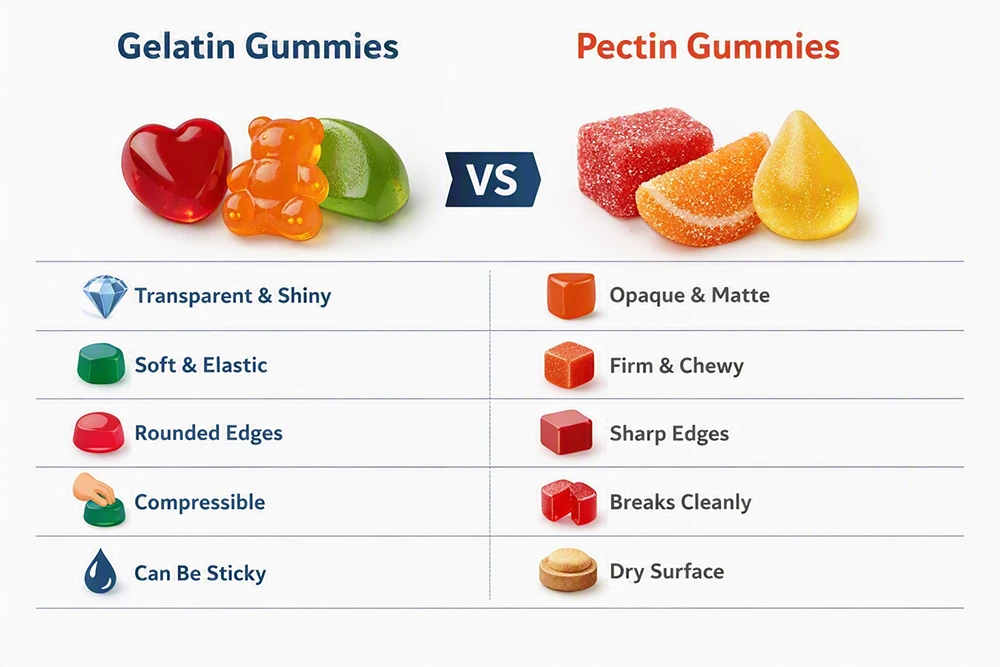
Consultation and formulation development: The brand works with the manufacturer’s R&D team to define the target formulation. This includes selecting active ingredients, gelling agents (pectin for vegan gummies, gelatin for conventional formats), sweeteners, flavors, and colorants.
Regulatory and compliance review: The manufacturer or a designated regulatory specialist reviews the formulation against applicable standards — FDA dietary supplement regulations (21 CFR Part 111) in the U.S., EFSA guidelines in Europe, or other relevant regional requirements.
Sample production and testing: Initial samples are produced for sensory evaluation (taste, texture, appearance) and analytical testing (potency, microbial safety, stability).
Packaging and label design: The brand provides artwork, or the manufacturer’s design team creates it. Labels must comply with applicable supplement labeling requirements, including supplement facts panels, allergen declarations, and net quantity statements.
Full-scale production: Once samples are approved, production runs are scheduled. Lead times vary based on volume, complexity, and the manufacturer’s capacity.
Quality control and final inspection: Finished goods are tested against specification sheets before shipment. Reputable manufacturers provide certificates of analysis (COA) for each production lot.
3. Key Considerations When Choosing a Gummy Manufacturer
Not all gummy manufacturers offer the same capabilities, quality standards, or service levels. For brands building long-term supplement businesses, evaluating manufacturers carefully is essential. The following factors warrant close attention:
3.1 GMP Certification and Quality Infrastructure
Good Manufacturing Practice (GMP) certification is a baseline requirement, not an optional feature. In the United States, dietary supplement manufacturers are required to operate under 21 CFR Part 111 GMP standards. Internationally, ISO 22000 and HACCP certifications signal commitment to food safety management systems.
Beyond certification, a manufacturer’s physical production environment matters. Cleanroom classifications — commonly expressed as 100,000-class or 10,000-class in pharmaceutical terminology — indicate the level of environmental control in place. Higher-grade facilities reduce contamination risk, particularly important for gummy supplements containing sensitive probiotic strains, omega-3 oils, or botanical extracts with known stability challenges.
3.2 Formulation Expertise and R&D Capability
Gummy manufacturing is technically more demanding than capsule or tablet production. The gel matrix must be precisely formulated to ensure consistent texture, accurate ingredient dispersion, and stability throughout the product’s shelf life. Manufacturers with dedicated R&D laboratories and qualified formulation scientists are better positioned to develop products that perform reliably at scale.
When evaluating a gummy manufacturer’s R&D capability, it is reasonable to ask about their experience with specific ingredient categories (fat-soluble vitamins, herbal extracts, probiotics, minerals), the analytical equipment available in their laboratory, and how they approach stability testing.
3.3 Ingredient Transparency and Sourcing
Ingredient quality directly determines product quality in gummy supplement manufacturing. Brands should ask manufacturers about their raw material sourcing policies, whether they conduct incoming material testing, and whether they can provide documentation for ingredient provenance. Increasingly, end consumers and retailers expect traceability, and brands that can substantiate their supply chain have a meaningful competitive advantage.
3.4 Minimum Order Quantities and Scalability
MOQ (minimum order quantity) policies vary considerably across the manufacturing landscape. Some manufacturers require large initial orders that may not be feasible for emerging brands or online sellers testing new products. Others offer flexible trial production runs at smaller volumes, with pricing that scales as volumes grow. For brands in the early stages of building their gummy supplement line, working with a manufacturer that accommodates smaller initial runs without prohibitive unit cost premiums is important.
3.5 Certifications Beyond GMP
Depending on target markets and consumer segments, additional certifications may be commercially significant:
- Vegan/vegetarian certification: Required for products using pectin or carrageenan-based gummies positioned for plant-based consumers.
- HALAL and KOSHER certification: Important for brands targeting Muslim and Jewish consumer communities, as well as certain export markets.
- Non-GMO and organic certifications: Increasingly valued in North American and European natural health markets.
- Third-party testing verification: Certifications from organizations such as NSF International or Informed Sport carry weight in the sports nutrition segment.
3.6 Packaging Capabilities and Customization
The ability to customize packaging — bottle shape, label finish, child-resistant closures, sustainable packaging materials — affects brand positioning and shelf appeal. A full-service private label gummy manufacturer should be able to support the brand’s packaging vision within regulatory constraints, not just offer a standard bottle with a sticker applied.
4. Selling Gummy Supplements Online: A Practical Overview
For brands selling through e-commerce channels, gummy supplements present both significant opportunities and specific operational requirements. Understanding this landscape helps brands develop realistic launch plans.
4.1 Platform-Specific Considerations
Amazon: Amazon is the dominant channel for supplement sales in North America. Gummy listings benefit from strong visual assets (product photography, lifestyle images), well-structured A+ Content, and competitive review profiles. Amazon’s supplement category has specific requirements around label compliance, and some ingredients require prior approval or documentation. Sellers should ensure their manufacturer provides compliant documentation including COAs, GMP certificates, and in some cases third-party testing results.
Direct-to-consumer (DTC) via Shopify or WooCommerce: DTC channels offer higher margins and direct consumer relationships. Gummy supplements perform well in subscription models due to their daily-use nature. Brands should invest in high-quality photography that showcases the gummy’s color, texture, and packaging, as visual appeal is a primary purchase driver in this format.
Retail and wholesale: For brands seeking retail placement — in health food stores, pharmacies, or specialty retailers — gummy supplements with established consumer reviews and clean label credentials tend to command favorable shelf positioning. MOQ requirements from retailers vary, and brands should factor minimum stocking requirements into their production planning.
4.2 Building a Credible Product in a Competitive Category
The gummy supplement category has grown rapidly, and competition is intense. Brands that differentiate on ingredient quality, transparent sourcing, and verifiable third-party testing stand out in a market where low-quality products are not uncommon. Marketing claims must be substantiated and should not cross the line into disease claim territory, which is prohibited for dietary supplements under FDA regulations.
Effective online positioning for gummy supplements typically emphasizes the formulation’s functional benefits, the quality of the manufacturing process, and consumer-relevant attributes such as sugar content, gelatin-free status, or natural flavors — factors that drive purchase decisions in online product search.
4.3 Logistics and Shelf Life
Gummy supplements have shelf life and storage characteristics that affect logistics planning. Most gummy products have a shelf life of 18 to 24 months under recommended storage conditions, though this varies with formulation. Certain ingredients — particularly probiotics and some oxidation-sensitive compounds — may require modified atmosphere packaging or temperature-controlled storage to maintain potency. Brands selling internationally should confirm that their products’ shelf life allows adequate time in transit and in the distribution channel before reaching the consumer.
5. Common Gummy Supplement Categories and Their Market Positioning
The range of functional applications available in gummy supplement format has expanded significantly. The following categories represent some of the most commercially active segments:
Multivitamin Gummies
Multivitamin gummies — for adults, women, men, and children — remain the foundation of the gummy supplement market. Products targeting specific demographics (women’s health, prenatal, men’s vitality) command premium pricing and strong repeat purchase rates.
Sleep and Relaxation Gummies
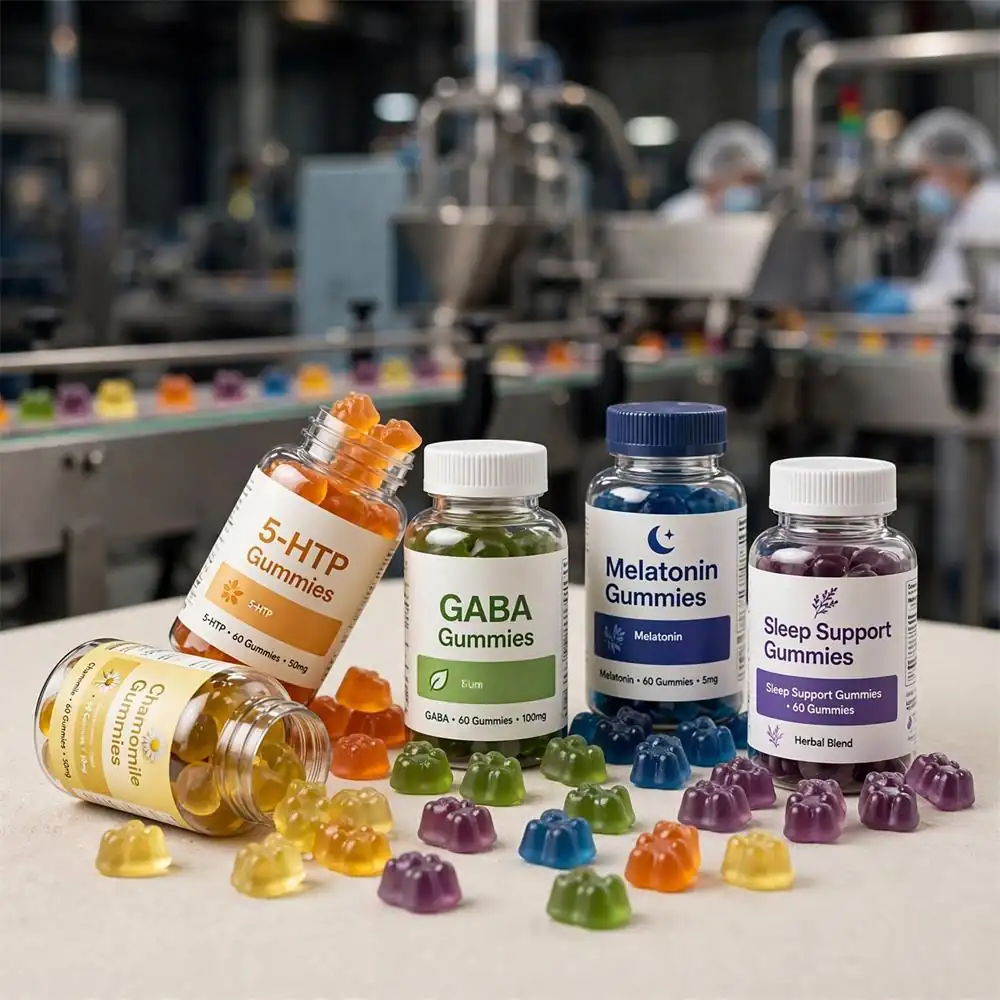
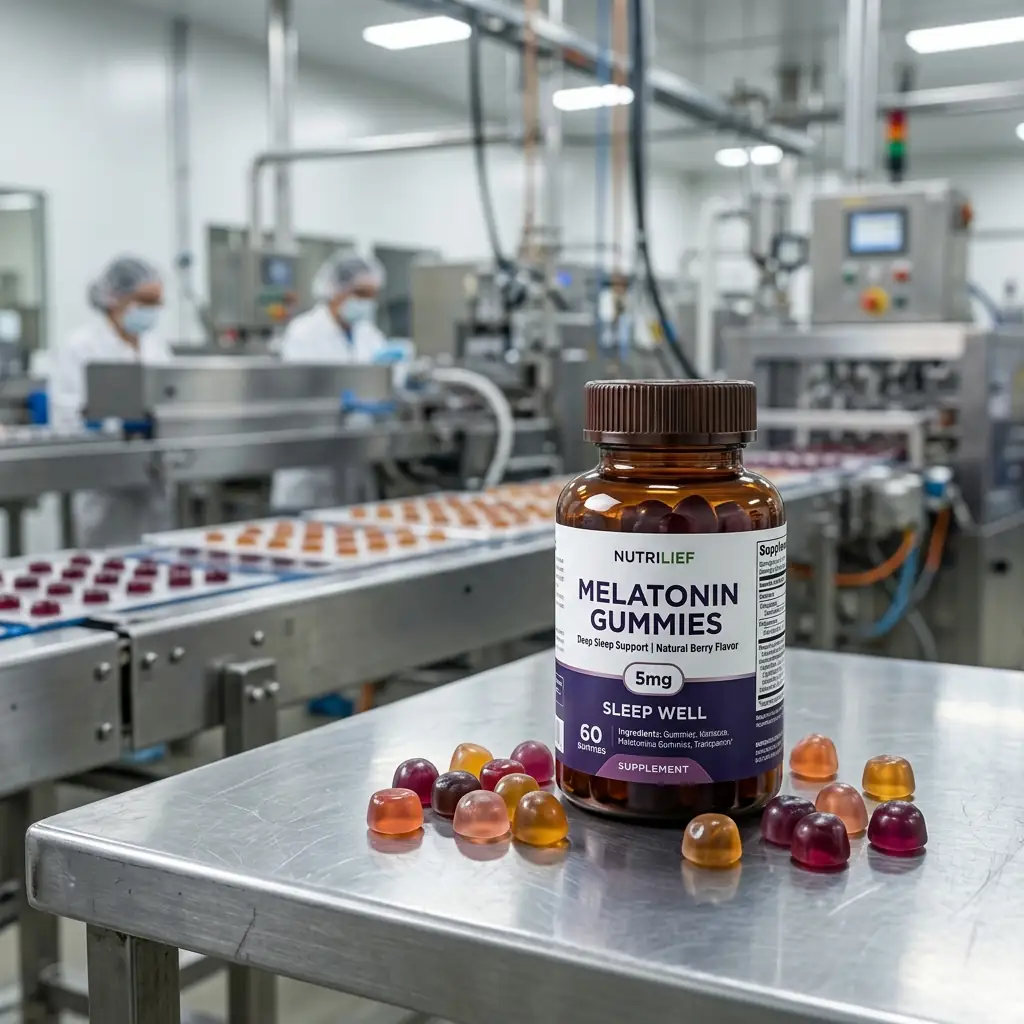
Melatonin gummies are among the top-selling individual supplement SKUs on Amazon. The sleep category has expanded beyond melatonin to include blends featuring L-theanine, ashwagandha, magnesium, and botanical extracts such as valerian root and passionflower.
Immune Support Gummies
Elderberry, vitamin C, zinc, and vitamin D3 gummies have seen sustained demand growth since 2020, with consumers maintaining immune support supplementation habits established during the pandemic period.
Sports Nutrition and Performance Gummies
Creatine gummies and pre-workout gummies represent a newer but fast-growing segment. The convenience and palatability of gummy format is driving trial among fitness consumers who were previously indifferent to creatine supplementation due to the texture and mixability challenges of powder formats.
Probiotic and Digestive Health Gummies
Probiotic gummies present formulation challenges due to the heat and moisture sensitivity of live bacterial cultures. Manufacturers with expertise in probiotic encapsulation and gummy manufacturing can produce stable products that command a significant premium over standard dietary fiber or digestive enzyme gummies.
Botanical and Adaptogen Gummies
Ashwagandha, lion’s mane mushroom, turmeric, and similar adaptogens have found strong consumer acceptance in gummy format. The bitter or earthy taste profiles of many botanical extracts require skilled flavor masking, making formulation expertise a differentiating factor for manufacturers in this segment.
Targeted Health Gummies
Gummies for liver support, skin and beauty (collagen, biotin, hyaluronic acid), bone health (calcium, vitamin K2), and metabolic health (chromium, berberine) represent a growing segment of condition-specific products where the format’s approachability helps overcome consumer resistance to daily supplementation.
6. ODM vs. OEM vs. Private Label: Understanding the Difference
These terms are sometimes used interchangeably but have distinct meanings in the contract manufacturing context:
OEM (Original Equipment Manufacturer): The brand provides a complete specification — including formulation, ingredients, and packaging design — and the manufacturer produces the product to those specifications. The brand owns the formulation.
ODM (Original Design Manufacturer): The manufacturer develops the product design and formulation, which the brand then licenses or purchases. The manufacturer retains the original design IP.
Private Label: The manufacturer produces a product (which may be a standard or customized formulation) and the brand sells it under their own name. Private label may involve varying degrees of customization depending on the agreement.
CMO (Contract Manufacturing Organization): The brand provides the formulation and specifications; the CMO provides manufacturing capacity, expertise, and quality systems. Common in pharmaceutical and nutraceutical contexts.
CDMO (Contract Development and Manufacturing Organization): Provides both development (formulation, process development, scale-up) and manufacturing services. Appropriate for brands that need end-to-end support from concept through commercial production.
For most emerging supplement brands and online sellers, a private label or ODM approach offers the fastest path to market, while brands with proprietary formulations and the technical resources to support them may prefer a pure OEM or CMO model.
7. Summary
Gummy supplements represent one of the most dynamic growth areas in the dietary supplement industry. For brands, online sellers, wholesalers, and startups, the private label gummy model offers an accessible, flexible, and commercially attractive way to enter or expand within this market.
Selecting the right gummy manufacturer is the most consequential decision in building a successful gummy supplement business. The ideal partner combines rigorous quality systems (GMP certification, cleanroom production, third-party testing), genuine formulation expertise (experienced R&D team, laboratory capability, stability testing), and operational flexibility (reasonable MOQs, scalable production, comprehensive packaging support).
The online supplement market rewards brands that invest in product quality, ingredient transparency, and authentic consumer communication. In a category where product differentiation is increasingly difficult, the manufacturing partner’s capabilities often determine whether a product succeeds or struggles.
Whether launching a first SKU or expanding an established supplement line with a gummy product, the frameworks and considerations outlined in this guide provide a practical basis for informed decision-making.
Frequently Asked Questions (FAQ)
Q1: What is the typical minimum order quantity (MOQ) for private label gummy manufacturing?
MOQs vary significantly by manufacturer and product type. Entry-level MOQs typically range from 1,000 to 5,000 units per SKU, though some manufacturers accommodate smaller trial runs. High-complexity formulations (probiotics, multi-layer gummies, specialized coatings) may require higher minimums due to setup and testing costs. Brands should ask manufacturers for a tiered pricing schedule to understand how unit costs change at different volume levels.
Q2: How long does it take to bring a private label gummy supplement to market?
Lead times depend on whether the brand is working from an existing manufacturer formulation or developing a custom product. Standard private label programs using established formulations can be completed in 8 to 12 weeks from order confirmation. Custom formulation development, stability testing, and regulatory review typically add 4 to 12 weeks depending on complexity. Brands should build realistic timelines into their launch plans and confirm lead times in writing before committing to external marketing or retail schedules.
Q3: Are vegan gummies more expensive to manufacture than gelatin-based gummies?
Generally, yes. Pectin, the primary vegan gelling agent, is more expensive than gelatin and can be more technically demanding to work with, as it requires precise pH and temperature control during processing. The cost differential varies by formulation and volume, but brands should expect vegan gummies to carry a modest price premium over equivalent gelatin products. For many target markets — particularly natural health and plant-based consumer segments — this premium is commercially justified.
Q4: What certifications should I look for in a gummy supplement manufacturer?
At minimum, look for GMP certification (FDA cGMP for U.S.-market products, or equivalent international standards). For products targeting specific consumer segments, additional certifications may be commercially important: HALAL and KOSHER for certain export markets and religious dietary requirements; Vegan certification for plant-based products; Non-GMO Project Verification for clean-label positioning. Third-party testing certifications (NSF, Informed Sport) are increasingly required by major retailers and add credibility in the sports nutrition category.
Q5: Can I launch a gummy supplement brand and sell it on Amazon without prior supplement industry experience?
Yes, though it requires careful preparation. Amazon’s supplement category has specific compliance requirements, including documentation of GMP compliance, accurate labeling, and in some cases pre-approval for certain ingredients or claims. Working with a manufacturer that provides comprehensive documentation (COAs, GMP certificates, ingredient specifications) simplifies Amazon’s onboarding process. Brands should also familiarize themselves with FTC guidelines on supplement marketing claims and FDA dietary supplement labeling requirements before listing products for sale.
Q6: What is the difference between private label and white label gummy supplements?
White label products are standard, off-the-shelf formulations that the manufacturer produces in bulk and multiple brands can sell with their own labels — typically with minimal customization. Private label implies a more tailored approach, where the brand has input on formulation, flavors, shapes, or packaging design, resulting in a product more distinctively associated with that brand. The degree of customization available under a private label program varies by manufacturer.
Q7: How do I evaluate the quality of a gummy supplement manufacturer before placing an order?
Request and review the manufacturer’s GMP certificate, ISO certifications, and any third-party audit reports. Ask for sample products from their existing catalog to evaluate texture, flavor, and appearance. Request COAs for raw materials and finished goods from recent production runs. Ask about their quality control procedures, testing laboratory capabilities, and how they handle non-conforming products. If feasible, a facility audit — either in person or via video — is the most reliable way to assess a manufacturer’s actual capabilities and culture.
About Gothink Biotech — Professional Gummy & Supplement Manufacturer
Shenzhen Gothink Biotech Co., Ltd. is a China-based dietary supplement manufacturer and nutrition supplement supplier specializing in comprehensive OEM, ODM, CMO, and CDMO services. Our manufacturing capabilities span gummy production, capsule manufacturing, tablet production, powder blending, liquid formulation, and drop supplement manufacturing, supporting brands at every stage from concept development through full-scale commercial production.
Our GMP-certified facility operates a 100,000-class cleanroom with a daily output of 16 tons and an annual production capacity of 5,000 tons. Our R&D laboratory operates at a 10,000-class pharmaceutical grade, supporting precise formulation development, stability testing, and innovation across more than 2,000 new product formulations annually.
Our chief scientific team brings postdoctoral research experience from leading U.S. institutions, including Cold Spring Harbor Laboratory, Emory University School of Medicine, and The Ohio State University, with deep expertise in structural biology, biomanufacturing, and plant extraction. This scientific foundation underpins our formulation development quality and distinguishes our R&D capability within the contract supplement manufacturing sector.
We hold certifications including ISO 9001, ISO 22000, HACCP, FDA, HALAL, KOSHER, GMP, and Vegan, enabling us to support brands serving diverse global markets and consumer segments.
Our services support online sellers, private label brands, wholesale distributors, and startups. We offer flexible MOQ policies for trial production runs and scalable manufacturing solutions for established brands. From bulk gummy production and private label gummy manufacturing to full-service ODM development and white label supplement supply, we provide end-to-end solutions that allow brand owners to focus on growing their business.
We produce a full range of functional gummies — including multivitamin gummies, sleep gummies, immune support gummies, probiotic gummies, sports performance gummies, beauty gummies, and condition-specific formulations — in 30+ custom shapes, a broad range of natural flavors, and multiple gelling agent options (gelatin, pectin, carrageenan) to meet the needs of any market segment.
For inquiries about private label gummy manufacturing, bulk supplement production, OEM/ODM services, or wholesale supplement supply, contact our team to discuss your requirements.