
Abstract
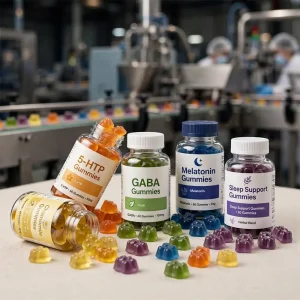
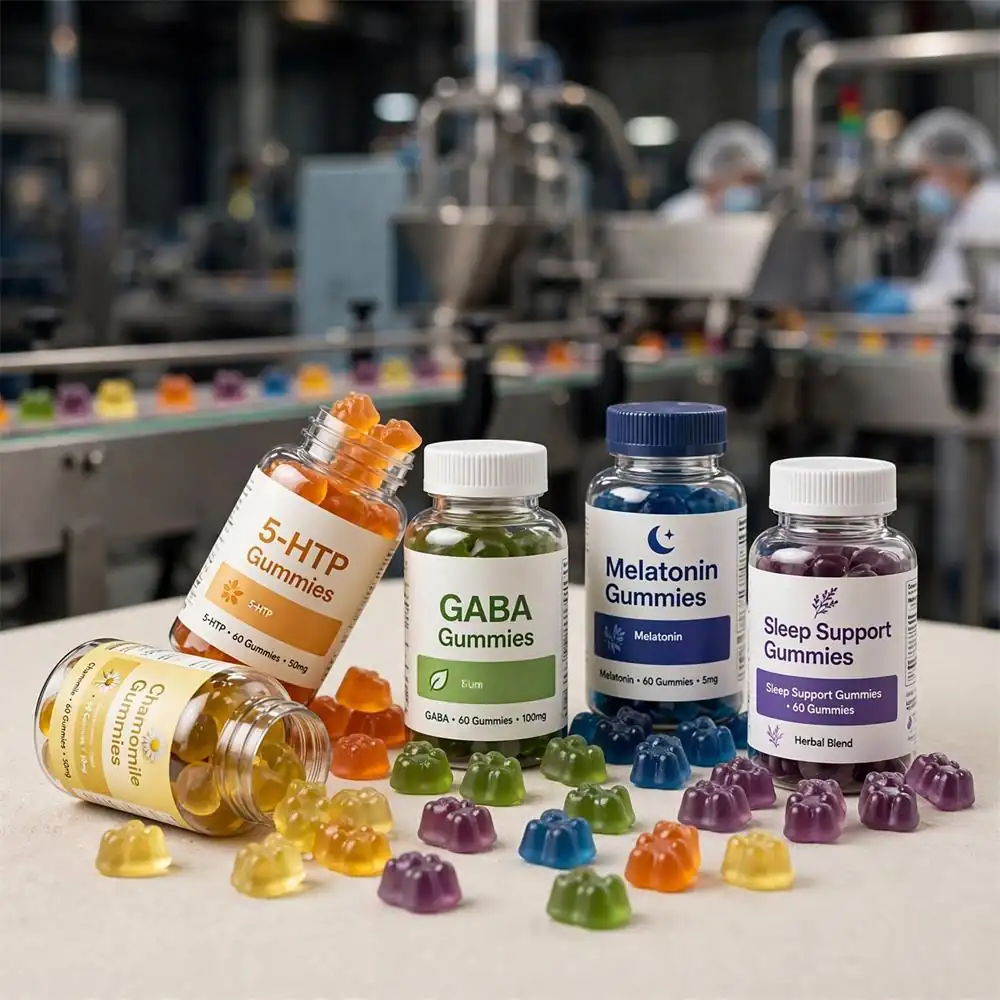
Gummy bears have evolved far beyond childhood candy. Today, they represent one of the fastest-growing delivery formats in the dietary supplement and functional nutrition industry. This guide covers the full picture of making gummy bears — from raw material selection and manufacturing processes to quality certifications, regulatory considerations, and business models including gummy bears bulk production, gummy bears wholesale sourcing, and private label gummies. Whether you are a brand owner, retailer, or startup looking to enter the supplement space, this resource is designed to give you grounded, practical knowledge of gummy manufacturing.

1. Why Gummy Bears Have Become a Dominant Supplement Format
Consumer preference data consistently shows that gummies outperform traditional capsules and tablets in product adherence, particularly among adults aged 25–45. The reasons are straightforward: gummy bears are palatable, easy to consume without water, and can be formulated with a wide range of functional ingredients.
From a commercial standpoint, the global gummy supplements market was valued at several billion dollars and is projected to continue growing at a compound annual growth rate (CAGR) exceeding 12% through the next decade. For supplement brands, this creates compelling incentive to enter or expand within the gummy category.
Key market drivers include:
- Rising demand for sugar-free and vegan gummy formulations
- Growing popularity of targeted wellness categories such as sleep, immunity, beauty, and cognitive health
- Expansion of e-commerce and DTC (direct-to-consumer) supplement brands
- Increased openness to private label gummies as a faster route to market
2. The Core Ingredients in Gummy Bear Manufacturing
Understanding the ingredient composition is foundational before engaging any gummy bears manufacturer. Professional gummy manufacturing relies on a carefully balanced matrix of ingredients:
2.1 Gelling Agents
The gelling agent determines the texture, chewability, and temperature stability of the final product. The three most commonly used agents in professional gummy manufacturing are:
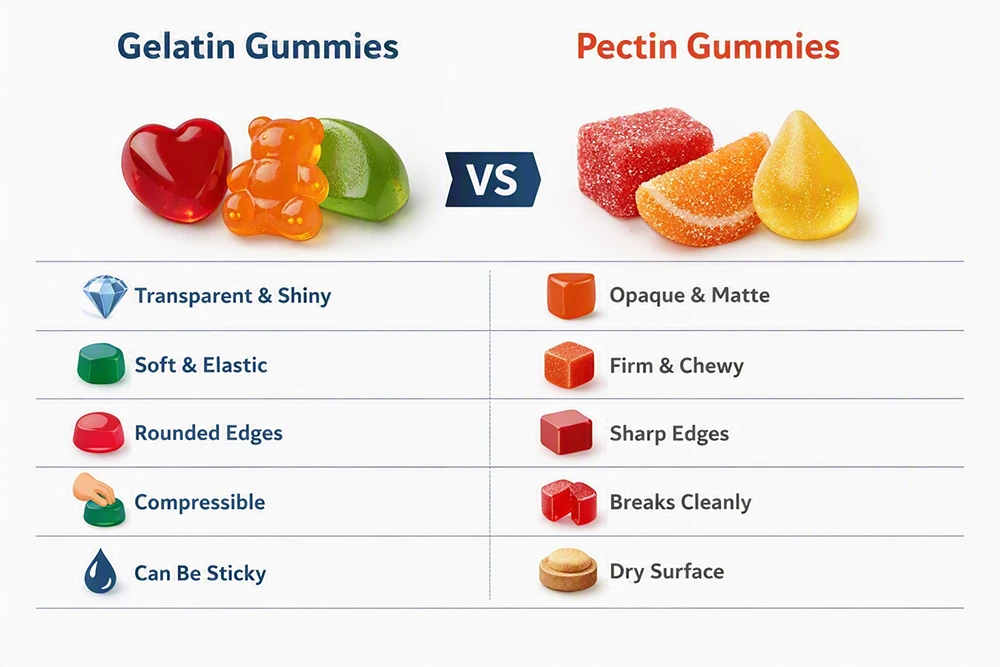
- Gelatin (animal-derived): Produces a classic, elastic texture and is cost-effective. Not suitable for vegan or halal-certified products.
- Pectin (plant-derived): Used in vegan and vegetarian gummies. Slightly firmer texture than gelatin. Often combined with other hydrocolloids to improve performance.
- Carrageenan: A seaweed-derived alternative often used alongside pectin to adjust texture and mouthfeel.
2.2 Sweeteners and Sugar Alternatives
Standard gummy bears use sucrose or glucose syrup. Sugar-free variants substitute these with polyols such as maltitol, sorbitol, erythritol, or isomalt. The selection impacts not only sweetness but also crystallization behavior, hygroscopicity, and shelf stability.
2.3 Active Ingredients
In supplement gummy production, active ingredients must be selected and dosed with precision. These can include vitamins (A, B-complex, C, D3, E, K2), minerals (calcium, magnesium, zinc, selenium), botanical extracts (ashwagandha, elderberry, echinacea), and amino acids or functional compounds (melatonin, collagen, creatine, probiotics).
Not all actives are suitable for gummy delivery. Heat-sensitive compounds, probiotics, and certain enzymes require special processing protocols to maintain bioavailability through the cooking and molding stages.
2.4 Colorants and Flavorings
Natural colorants (annatto, beet juice, spirulina, turmeric) are preferred in premium and clean-label formulations. Artificial FD&C dyes remain common in cost-driven manufacturing. Flavor selection must account for ingredient interaction — some vitamins, particularly B-vitamins and zinc, impart off-notes that require masking.

3. The Gummy Manufacturing Process Step by Step
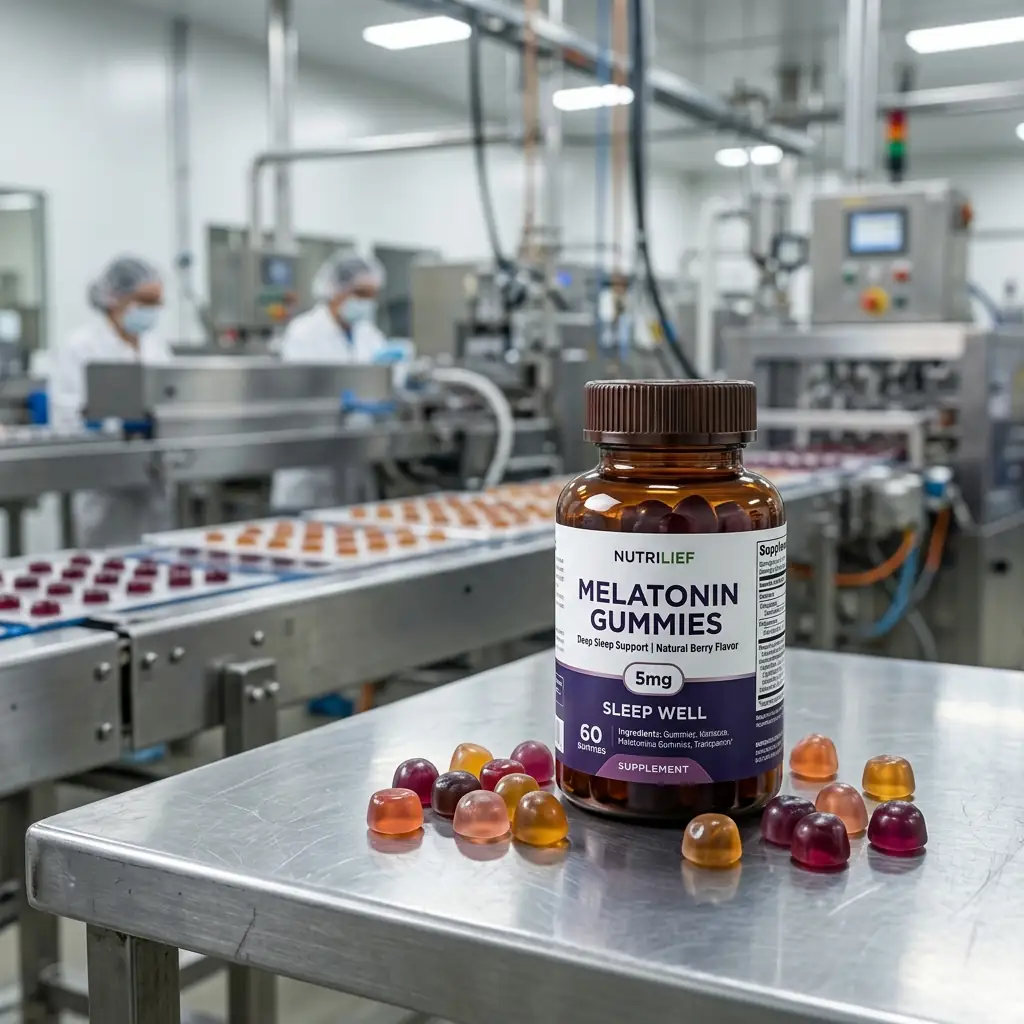
Professional gummy manufacturing follows a structured, validated process. Here is how it typically unfolds in a GMP-certified facility:
Step 1: Formulation Development
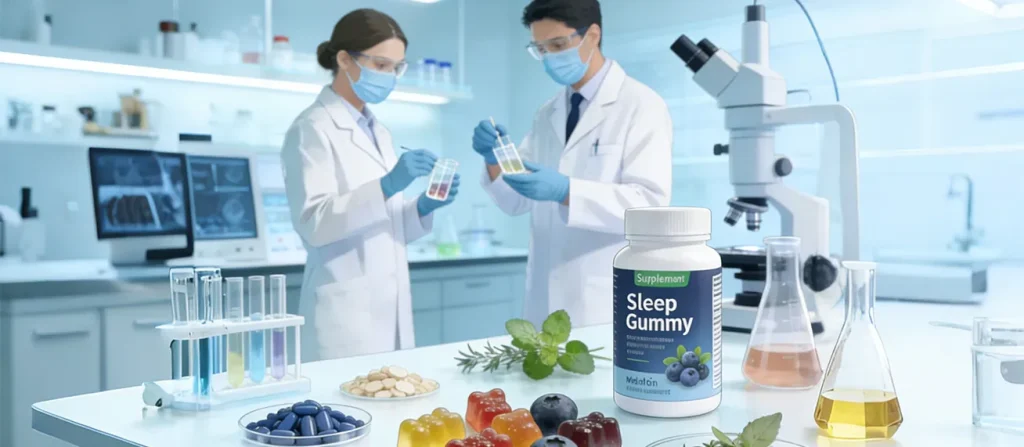
Before any production begins, a formulation must be developed and validated. This involves selecting ingredient ratios, determining processing parameters (pH, brix, temperature), and running pilot batches to verify texture, taste, and active ingredient stability. Experienced manufacturers maintain R&D laboratories for precisely this purpose.
Step 2: Raw Material Procurement and Quality Control
Ingredients are sourced and tested against specification sheets (CoA — Certificate of Analysis). Reputable manufacturers require third-party testing for heavy metals, microbial contamination, and active content verification before materials enter the production area.
Step 3: Cooking and Blending
The gelling agent is hydrated, combined with sweeteners and water, then cooked to a precise temperature (typically 100–115°C). Active ingredients and heat-sensitive compounds are added at controlled stages, often after the base has cooled to a safe temperature. pH adjustment and flavor addition occur in this phase.
Step 4: Depositing and Molding
The liquid gummy mass is deposited into molds — either silicone trays or starch-cast systems. Gummy bears use a classic bear-shaped mold, though manufacturers typically offer 20–30+ shape options. Automated depositing systems ensure consistent fill weight and shape definition.
Step 5: Setting and Drying
Filled molds pass through a climate-controlled setting tunnel or drying room where temperature and humidity are carefully managed. The setting time varies depending on the gelling system — gelatin-based gummies typically set faster than pectin-based formulations.
Step 6: De-molding and Oiling/Polishing
Set gummies are removed from molds and may receive a light coating of carnauba wax or food-grade oil to prevent sticking and improve visual appeal. For sugar-coated variants, a separate coating step follows.
Step 7: Quality Inspection
In-process checks include weight variation, moisture content, hardness testing, and visual inspection. Final batch testing covers active ingredient potency, microbial limits, and shelf-life projections.
Step 8: Packaging
Gummies are packaged in bottles, pouches, jars, or blister packs depending on the target market. For private label gummies and white-label products, custom packaging design and printing are integrated into this stage.
4. Quality Standards and Certifications in Gummy Manufacturing
For buyers sourcing gummy bears wholesale or contracting gummy manufacturing, certifications are a non-negotiable indicator of quality and regulatory compliance. Key certifications to look for include:
- GMP (Good Manufacturing Practice): The global baseline standard for supplement manufacturing. Ensures consistent production and quality control.
- ISO 9001 / ISO 22000: International quality management and food safety management standards.
- HACCP (Hazard Analysis and Critical Control Points): A preventive food safety approach required in many markets.
- FDA Registration: For products intended for the U.S. market, the manufacturing facility should be registered with the FDA.
- HALAL and KOSHER: Required for specific consumer market segments. Gelatin-free or dedicated production lines are necessary for these certifications.
- Vegan Certification: Confirms the formulation uses no animal-derived ingredients and that cross-contamination risk is controlled.
Cleanroom classifications also matter. Pharmaceutical-grade facilities operate 10,000-class (ISO 7) R&D laboratories and 100,000-class (ISO 8) production environments. These designations refer to the maximum allowable particulate count per cubic meter and are indicative of the facility’s investment in environmental controls.
5. Business Models: From Bulk Orders to Private Label Gummies
Understanding the available business models helps brand owners and buyers choose the right engagement format with a gummy manufacturer:
5.1 Gummy Bears Bulk Purchasing
For retailers, distributors, or industrial food businesses, purchasing gummy bears bulk — unflavored, standard-flavored, or supplement-infused — offers cost efficiency at scale. Bulk orders typically involve standard formulations with minimal customization. Minimum order quantities (MOQs) are usually lower in this model.
5.2 Gummy Bears Wholesale
Wholesale buyers purchase finished, packaged gummy products at volume pricing for resale. This model suits established retailers and e-commerce operators who want to move quickly without investing in custom formulation or branding. Gummy bears wholesale programs usually include standard SKUs with faster lead times.
5.3 Private Label Gummies (OEM)
In an OEM (Original Equipment Manufacturer) model, a manufacturer produces gummies to your brand specifications — including formulation, flavor, packaging, and label design. Private label gummies give brands full control over product identity while leveraging an established manufacturer’s production infrastructure. This is the most common model for supplement brands launching new products.
5.4 ODM (Original Design Manufacturer)
In an ODM arrangement, the manufacturer provides pre-developed formulations that the client can brand and sell under their own name. This model accelerates time-to-market and reduces R&D investment, making it attractive for startups and brands testing new categories.
5.5 CMO / CDMO (Contract Manufacturing / Development)
Contract manufacturing organizations (CMOs) handle full production on behalf of a brand. CDMOs (Contract Development and Manufacturing Organizations) go further, offering development, scale-up, and manufacturing as an integrated service. This model suits brands with established formulations who need reliable, scalable production capacity.
6. Regulatory Considerations for Supplement Gummies
Making gummy bears for the supplement market requires navigating regulatory frameworks that vary by destination market:
United States (FDA / FTC)
Dietary supplement gummies sold in the U.S. are regulated under DSHEA (Dietary Supplement Health and Education Act). Manufacturers must comply with 21 CFR Part 111 (cGMP for dietary supplements), and products must carry appropriate Supplement Facts panels. Health claims are tightly regulated — structure/function claims are permissible, but disease claims are not.
European Union
The EU regulates food supplements under Directive 2002/46/EC, with maximum levels for vitamins and minerals established by individual member states. Novel ingredient status (under EU Novel Food Regulation 2015/2283) may apply to certain functional compounds.
Other Markets
Canada (Natural Health Products Directorate), Australia (TGA), and other markets each have their own registration, labeling, and claims requirements. Experienced manufacturers typically have export compliance knowledge for major markets.
7. How to Evaluate and Choose a Gummy Bears Manufacturer
Selecting the right manufacturing partner is one of the most consequential decisions in bringing a gummy supplement product to market. Key evaluation criteria include:
- Certifications: Verify GMP, FDA registration, ISO, HALAL, KOSHER, or Vegan certifications depending on your market requirements.
- R&D Capability: Does the manufacturer have an in-house laboratory and qualified scientists capable of custom formulation development?
- Production Capacity: Understand daily output, annual capacity, and typical lead times. A facility with 16+ tons/day output offers far more reliability than a smaller operation for scaling.
- MOQ Flexibility: For startups and emerging brands, a manufacturer that accommodates small trial runs alongside large-volume orders is strategically valuable.
- Transparency and Documentation: Request production records, third-party COAs, stability data, and auditable quality systems.
- Export Experience: If you are outside the manufacturer’s home country, confirm they have experience with customs documentation, shipping compliance, and labeling requirements for your market.
- Communication and Project Management: A responsive, organized manufacturing partner reduces delays, errors, and costly reformulations.
8. Common Challenges in Gummy Manufacturing and How to Address Them
Active Ingredient Degradation
The high-temperature cooking process can degrade heat-sensitive compounds. Reputable manufacturers use post-cook addition protocols, microencapsulation, or cold-process alternatives for vulnerable actives. Always request stability data for your specific formulation.
Texture Inconsistency
Variations in moisture content, ingredient ratios, or processing temperature cause batch-to-batch texture differences. GMP facilities with validated processes and in-process testing minimize this risk.
Bloom and Sticking
Sugar bloom (surface crystallization) and product sticking in packaging are common quality defects. Proper oiling protocols, humidity-controlled packaging environments, and appropriate headspace management in containers address these issues.
Regulatory Compliance of Actives
Certain ingredients have restricted use levels or novel ingredient status in specific markets. Working with a manufacturer experienced in your target market helps avoid costly reformulations post-launch.
9. Packaging and Branding for Private Label Gummies
Packaging is a critical commercial and regulatory element for gummy products:
- Bottle types: HDPE, PET, or glass — each with different consumer perception and cost profiles
- Closure systems: Child-resistant closures are mandatory in many markets for supplement products
- Label compliance: Must include Supplement Facts or Nutrition Facts panel, ingredient list, net quantity, manufacturer information, lot number, and best-by date
- Sustainable packaging: An increasingly important differentiator — PCR plastics, biodegradable pouches, and minimal packaging designs are trending
For private label gummies programs, manufacturers typically offer graphic design support, printing coordination, and label compliance review as part of their service package.
Summary
Making gummy bears at a commercial supplement scale is a multi-disciplinary undertaking that spans food science, regulatory compliance, quality systems, and brand strategy. The growth of the gummy supplement format presents substantial opportunity for brands, retailers, and distributors who approach manufacturing partnerships with diligence.
Key takeaways from this guide:
- Gummy manufacturing requires specialized expertise in formulation, processing, and quality assurance
- Ingredient selection — particularly gelling agents and active compounds — determines product quality and target market suitability
- Multiple business models exist: gummy bears bulk, gummy bears wholesale, private label gummies (OEM/ODM), and full CDMO services
- Certifications (GMP, FDA, ISO, HALAL, KOSHER, Vegan) are essential indicators of a manufacturer’s credibility
- Regulatory requirements vary by market — partner with manufacturers who have documented export compliance experience
- Evaluating a gummy bears manufacturer requires scrutiny of R&D capabilities, production capacity, documentation practices, and communication quality
Frequently Asked Questions (FAQ)
Q1: What is the typical minimum order quantity (MOQ) for gummy bears wholesale or private label production?
MOQs vary significantly by manufacturer and product complexity. For standard private label gummies using existing formulations, MOQs can start as low as a few thousand units per SKU. Custom formulations generally require higher minimums to justify the R&D and tooling investment. Some manufacturers offer trial production runs specifically to support brand validation before committing to full-scale orders.
Q2: How long does it take to go from formulation to finished gummy product?
For custom formulations, the typical timeline from initial brief to first production batch ranges from 8 to 16 weeks, depending on the complexity of the formula, required stability testing, and packaging lead times. ODM products using pre-developed formulations can move significantly faster — sometimes 4 to 6 weeks — since formulation development is bypassed.
Q3: Can gummy bears be manufactured without gelatin for vegan markets?
Yes. Pectin-based and carrageenan-based formulations are widely used in vegan gummy manufacturing. These require different processing parameters than gelatin-based systems but are well-established in professional gummy manufacturing. Look for manufacturers with explicit vegan certification to confirm the full supply chain and production environment meet the required standards.
Q4: What certifications should I require from a gummy bears manufacturer for U.S. market distribution?
For the U.S. market, the minimum expectation is GMP certification under 21 CFR Part 111 and FDA facility registration. Additionally, HACCP and ISO 22000 indicate robust food safety management. If your product contains ingredients with allergen concerns or targets specific consumer groups (e.g., halal or kosher consumers), ensure the manufacturer holds relevant third-party certifications.
Q5: What is the difference between OEM and ODM in gummy manufacturing?
OEM (Original Equipment Manufacturer) means the manufacturer produces gummies according to your proprietary formulation and specifications. You own the formulation, and the manufacturer executes production. ODM (Original Design Manufacturer) means the manufacturer provides a pre-existing formulation that you license and brand as your own. OEM offers more differentiation; ODM offers faster time-to-market.
Q6: How do I verify the potency of active ingredients in finished gummy products?
Request a Certificate of Analysis (COA) from an independent, accredited third-party laboratory for each production batch. COAs should confirm active ingredient potency, heavy metal limits, microbial counts, and other relevant parameters. Reputable manufacturers will include third-party testing as standard practice and provide documentation proactively.
Q7: Is it possible to source gummy bears in bulk without custom branding?
Yes. Gummy bears bulk orders — typically without custom labeling or branding — are available from most contract manufacturers. This model suits distributors, food service operators, or brands that manage their own packaging and labeling in-house. Bulk pricing is generally more favorable at higher volumes, and standard formulations (vitamin C, multivitamin, melatonin, etc.) are often available from existing production schedules.
About the Author / Company Profile
Shenzhen Gothink Biotech Co., Ltd. (Gothink Biology) is a professional gummy bears manufacturer and dietary supplement manufacturer based in China, offering comprehensive OEM, ODM, CMO, and CDMO services to supplement brands, retailers, and distributors worldwide.
Our manufacturing capabilities span gummy bears, capsules, tablets, powders, liquids, and drops — covering the full spectrum of supplement delivery formats. We support gummy manufacturing at every stage of the commercial journey, from small-batch trial production and custom formulation development to gummy bears bulk production and gummy bears wholesale supply at scale.
For brands seeking private label gummies, we provide end-to-end turnkey solutions: formulation development, raw material sourcing, GMP production, quality control, packaging design, and export documentation — all under one roof.
Certifications: ISO 9001, ISO 22000, HACCP, FDA Registration, HALAL, GMP, KOSHER, and Vegan — ensuring compliance across major global markets.
Production Capacity: Daily output of 16 tons, annual capacity of 5,000 tons, with a 100,000-class cleanroom production environment.
R&D Infrastructure: 10,000-class pharmaceutical-grade laboratory, led by scientists with postdoctoral experience at leading U.S. research institutions including Cold Spring Harbor Laboratory, Emory University, and The Ohio State University.
Annual Innovation: 2,000+ new product formulations developed annually across gummy, capsule, tablet, powder, and liquid formats.
Whether you are launching a new supplement brand, scaling an existing product line, or sourcing gummy bears wholesale for retail distribution, we offer flexible MOQ structures and adaptable solutions designed to grow with your business.