
Abstract
Gummy bears have evolved from a candy novelty into one of the fastest-growing delivery formats in the dietary supplement industry. Whether you are a startup exploring private label gummies, an established brand scaling through OEM gummy manufacturing, or a wholesale buyer sourcing bulk gummies for retail, understanding the fundamentals of making gummy bears is essential to making confident sourcing, formulation, and quality decisions. This guide covers the science behind gummy production, the key variables that determine product quality, regulatory and certification considerations, and how to evaluate a gummy bears manufacturer — without the marketing fluff.
1. What Are Gummy Bears, Really? (And Why They Matter for Supplements)
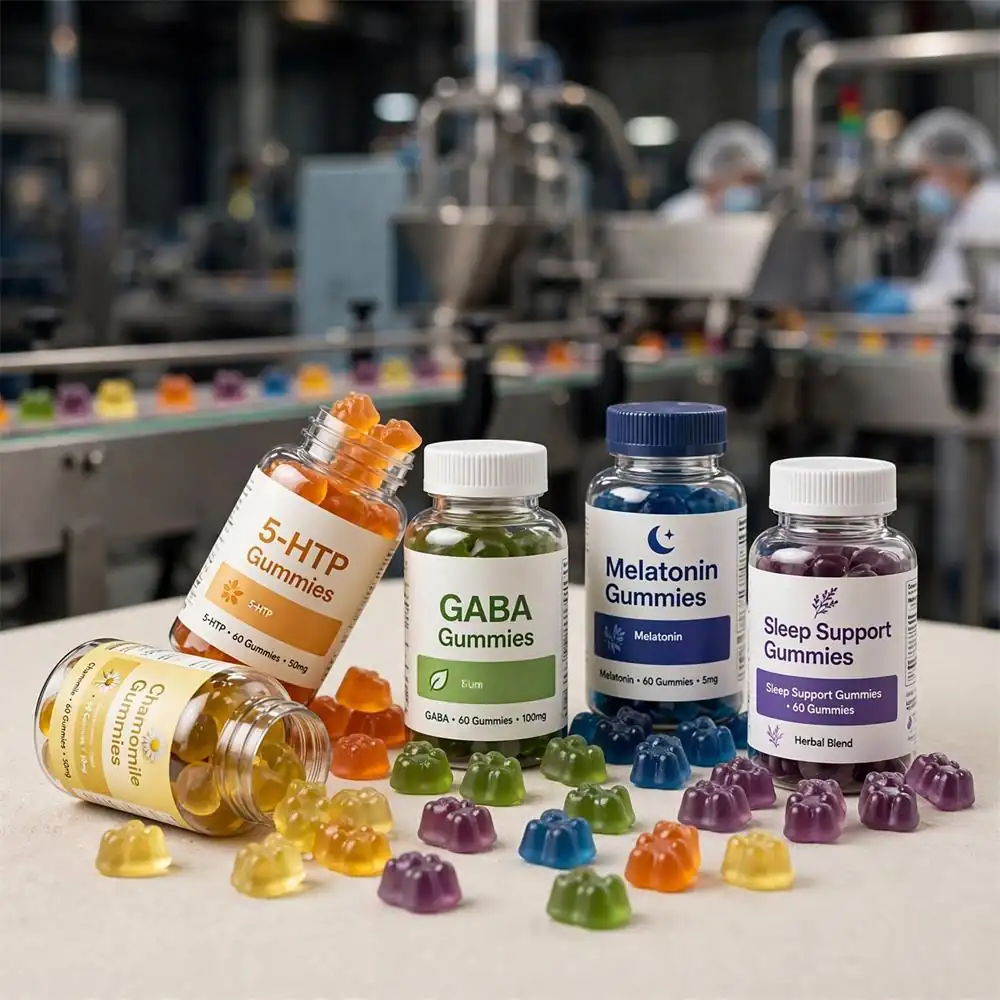
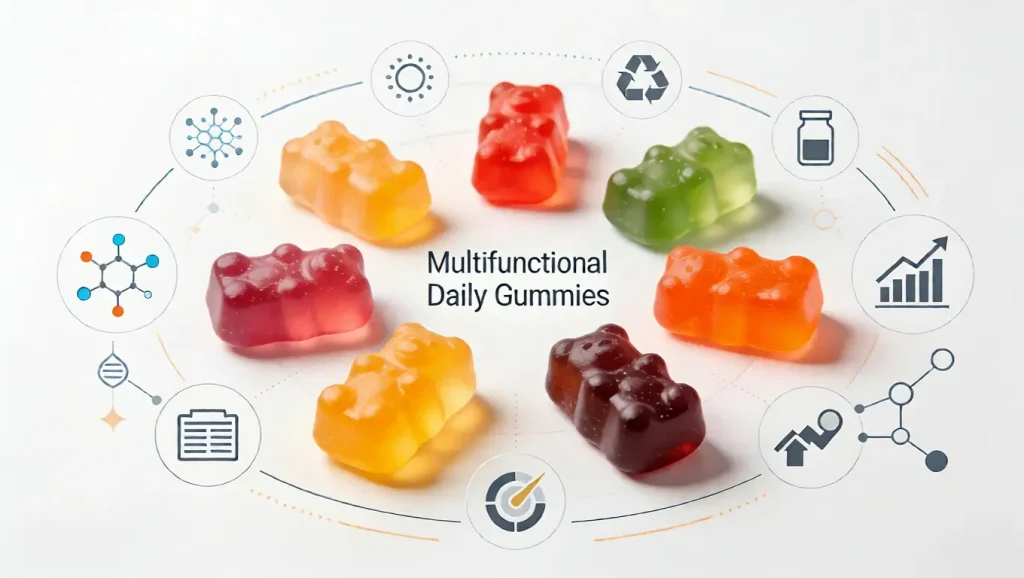
A gummy bear is a chewable, gelatin- or pectin-based confection shaped through a molding process. In the supplement world, the gummy matrix serves as a carrier for active ingredients — vitamins, minerals, botanicals, amino acids, and more. The format’s popularity is driven by consumer preference: gummies are easier to swallow than capsules, taste better than tablets, and carry a lower compliance barrier, especially for children, elderly users, and those with pill fatigue.
For supplement brands, gummy manufacturing is more technically complex than it appears. Unlike a capsule that simply encases a powder, a gummy must maintain ingredient stability in an aqueous, acidic, sugar-rich environment — which degrades certain actives. Getting it right requires formulation expertise, precise process control, and robust quality assurance.
2. The Science of Making Gummy Bears: Core Ingredients & Their Roles
Understanding what goes into a gummy helps buyers evaluate quality and ask the right questions when vetting a manufacturer.
2.1 Gelling Agents
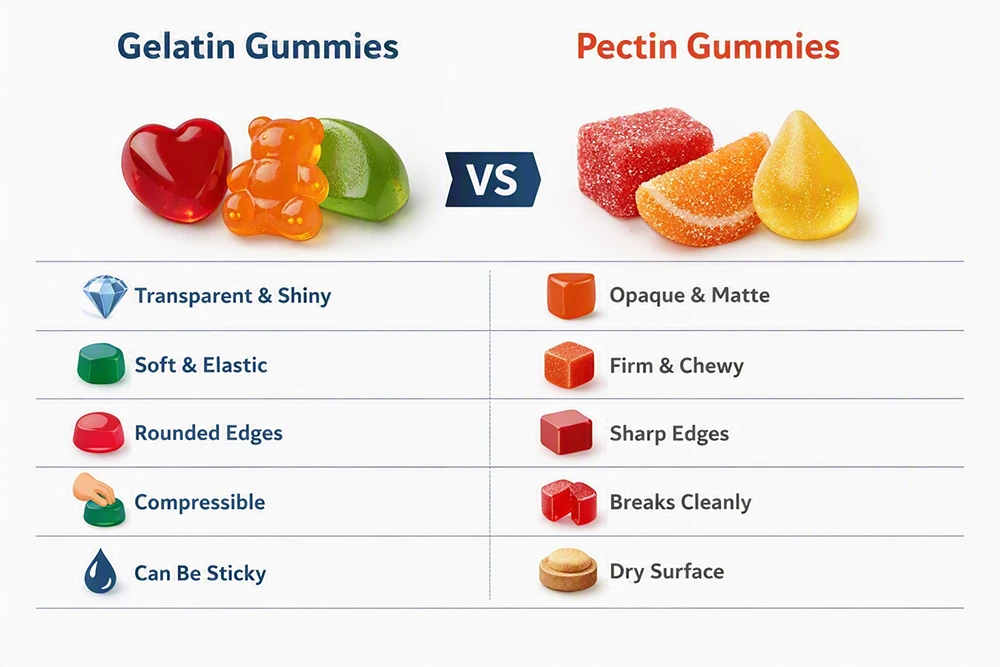
Gelatin (animal-derived, typically porcine or bovine) is the traditional gelling agent. It provides elasticity, a clean melt-in-the-mouth texture, and strong structural integrity. For vegan, kosher, or halal products, alternatives include pectin (derived from citrus or apple), carrageenan (seaweed-based), and agar. Each gelling agent behaves differently at different temperatures, pH levels, and with different active ingredients — which is why formulation science matters. A pectin gummy, for example, requires different cooking temperatures and acid levels than a gelatin gummy, affecting which actives can be included without degradation.
2.2 Sweeteners & Humectants
Sucrose, glucose syrup, and invert sugar are the standard sweeteners, providing structure and brownie texture. Sugar-free formulations substitute sorbitol, maltitol, erythritol, or isomalt. Humectants like glycerin retain moisture and prevent gummies from becoming too dry or too sticky during shelf life. The ratio of these components directly affects texture, moisture activity (water activity, or Aw), and microbial stability.
2.3 Acids, Flavors & Colors
Citric acid and malic acid are commonly used to provide tartness and to lower pH, which inhibits microbial growth. Flavors are added at the mixing stage and must be heat-stable. Colors — whether synthetic FD&C dyes or natural fruit/vegetable concentrates — are added to achieve the desired visual appearance. Natural colors are increasingly preferred for clean-label products but can be less stable and more expensive.
2.4 Active Ingredients
This is where gummy manufacturing diverges sharply from candy production. Vitamins (particularly C and B vitamins), minerals (like zinc and magnesium), botanicals (such as ashwagandha and elderberry), probiotics, melatonin, omega-3s, and functional ingredients each present unique formulation challenges. Heat-sensitive actives require low-temperature processing. Hygroscopic (moisture-absorbing) actives affect texture stability. Incompatible ingredients can react with the gelling system or reduce bioavailability. A competent gummy bears manufacturer will conduct stability testing and have documented protocols for active ingredient compatibility.
3. The Gummy Manufacturing Process: Step by Step
The following is a generalized overview of industrial gummy manufacturing. Specific parameters vary by formulation and facility.
Step 1: Ingredient Weighing & Preparation
Raw materials are weighed to precise specifications. Gelling agents may be pre-hydrated (bloomed) to ensure even distribution. Actives are pre-mixed to ensure homogeneity before entering the cooker.
Step 2: Cooking & Dissolution
Sweeteners and water are combined and heated to dissolve sugars and reduce moisture content to target Aw levels. Cooking temperature and duration are tightly controlled — too high damages actives; too low results in a poorly set gel.
Step 3: Mixing & Incorporation of Actives
Once the base is cooked and slightly cooled, the gelling agent (gelatin or pectin) and active ingredients are incorporated. This step requires careful temperature management, especially for heat-sensitive ingredients like probiotics or certain vitamins.
Step 4: Depositing & Molding
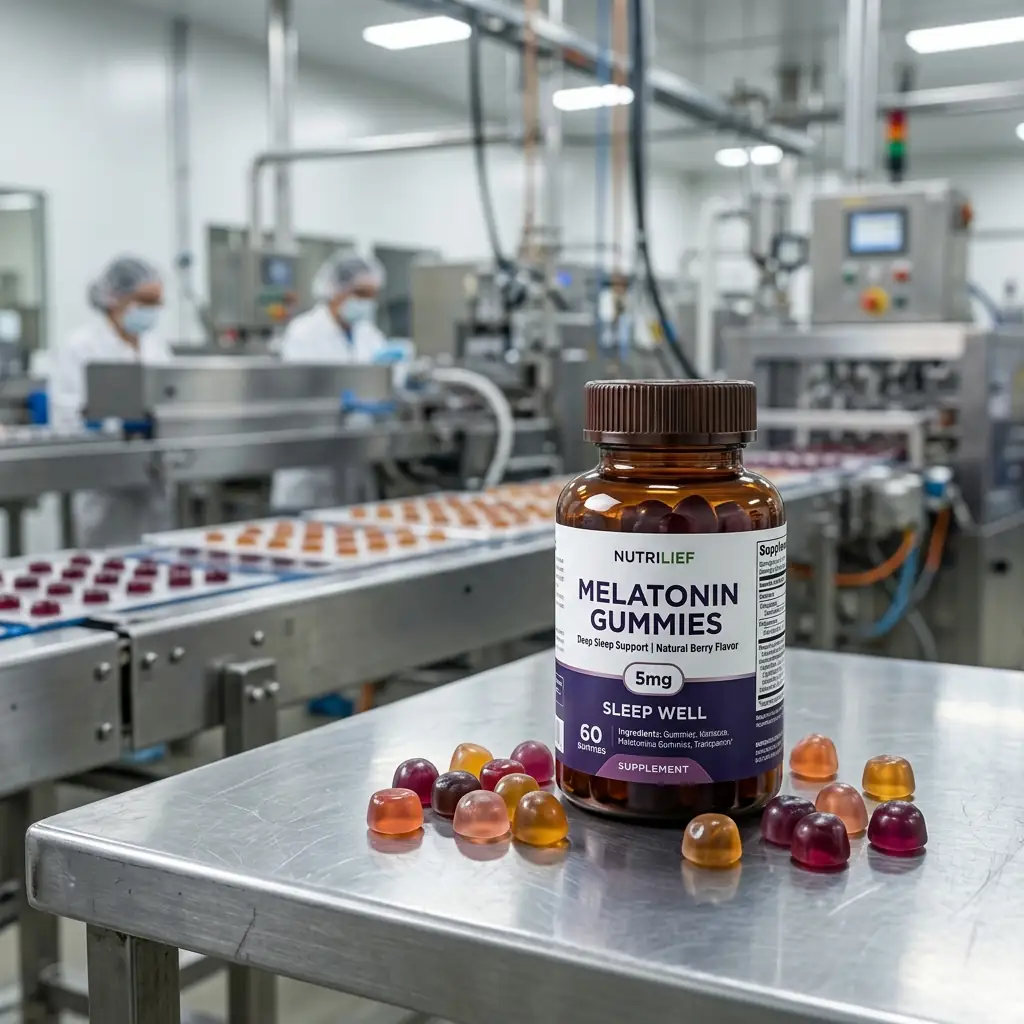
The liquid gummy mass is deposited into molds — typically starch trays (mogul system) or silicone molds — using precision depositing machines. Bear-shaped molds are the most classic, but shapes vary widely. Consistent depositing ensures uniform weight and active content per gummy.
Step 5: Setting & Drying
Molds are transported through a conditioning room where temperature and humidity are controlled to allow the gummies to set and release excess moisture. Drying time and conditions affect final texture, water activity, and shelf life.
Step 6: Demolding & Oiling/Coating
Set gummies are removed from molds. A light coating of wax (carnauba or beeswax) or vegetable oil is applied to prevent sticking and improve appearance. Sugar coating is an alternative for certain products.
Step 7: Quality Inspection & Testing
Finished gummies undergo visual inspection, weight checks, and laboratory testing for active ingredient content, water activity, microbial counts, and other parameters per specification. Reputable manufacturers follow cGMP documentation requirements throughout.
Step 8: Packaging
Gummies are counted and filled into bottles, pouches, or bulk containers. Packaging lines include desiccant insertion, capping, labeling, and sealing, depending on customer specifications.
4. Quality Factors That Separate Good Gummies from Great Ones
When evaluating gummy manufacturing quality — whether for private label gummies, OEM production, or wholesale bulk orders — the following factors are the most meaningful indicators:
- Active Ingredient Accuracy: Potency at the time of manufacture must meet label claims, and stability data should demonstrate potency retention through shelf life (typically 18–24 months). Ask for certificates of analysis (COAs) with third-party testing.
- Texture Consistency: Hardness, chewiness, and mouthfeel should be uniform across a batch. Inconsistent texture often indicates poorly controlled cooking or drying parameters.
- Water Activity (Aw): Aw values above 0.75 risk microbial growth; below 0.55 gummies become too hard. Properly controlled Aw is a non-negotiable quality parameter.
- Uniformity of Weight & Appearance: Each gummy should fall within tight weight tolerances, ensuring consistent dosing. Shape defects, color inconsistency, or surface blooming are signs of process control issues.
- Clean-Label Compliance: For brands targeting natural or clean-label positioning, natural colors, flavors, and gelling agents require additional formulation expertise and process adaptation.
- Shelf Life Stability: Real-time and accelerated stability studies confirm that the product maintains appearance, texture, and potency through its intended shelf life.
5. Regulatory & Certification Considerations for Gummy Supplements
Regulatory requirements vary by target market, but some standards are broadly recognized as benchmarks for quality in gummy manufacturing:
cGMP (Current Good Manufacturing Practice)
In the U.S., the FDA requires dietary supplement manufacturers to follow cGMP regulations (21 CFR Part 111). Similar requirements apply in the EU and other markets. cGMP compliance covers facility design, personnel training, process validation, testing, and record-keeping.
ISO 9001 / ISO 22000
ISO 9001 covers quality management systems; ISO 22000 addresses food safety management. These certifications demonstrate systematic process control and auditability.
HACCP
Hazard Analysis and Critical Control Points is a systematic approach to identifying and controlling food safety hazards. It is required in many markets and is a foundation of food-grade manufacturing.
HALAL & KOSHER
For products targeting Muslim or Jewish consumers, HALAL and KOSHER certifications ensure that ingredients (particularly gelling agents) and production processes meet the relevant religious standards.
Vegan Certification
Products using pectin or carrageenan as gelling agents and meeting other vegan ingredient requirements can obtain vegan certification, expanding market access.
When sourcing from a gummy bears manufacturer, always request documentation for certifications relevant to your target market and verify they are current.
6. OEM, ODM, Private Label Gummies: Understanding Your Options
Brands and buyers typically engage with gummy manufacturers through one of several service models. Understanding the distinctions helps set the right expectations:
OEM (Original Equipment Manufacturer)
You provide the formulation and specifications; the manufacturer produces the product. Best suited for brands with in-house R&D that need manufacturing capacity.
ODM (Original Design Manufacturer)
The manufacturer develops the formulation, which you can then brand and sell. This is the fastest path to market for brands without formulation expertise.
Private Label Gummies
The manufacturer offers pre-developed formulations under a standard product catalog. You select a product, customize the label and packaging, and sell under your brand. This model offers the lowest MOQ and fastest lead time, though differentiation is limited to branding.
CMO / CDMO (Contract Manufacturing / Development and Manufacturing Organization)
A full-service model where the manufacturer handles formulation development, regulatory support, manufacturing, and sometimes post-market activities. Suitable for complex projects or brands that prefer to outsource end-to-end.
Bulk / Wholesale Gummies
Purchasing finished gummies in bulk without branded packaging, typically for repackaging or private label operations. Useful for distributors, wholesalers, or large-format retail buyers.
7. How to Evaluate a Gummy Bears Manufacturer
Choosing the right manufacturing partner is one of the most consequential decisions for a supplement brand. The following checklist covers the key evaluation criteria:
- Certifications: Does the manufacturer hold GMP, ISO, HACCP, and any certifications relevant to your market (HALAL, KOSHER, Vegan, FDA registration)?
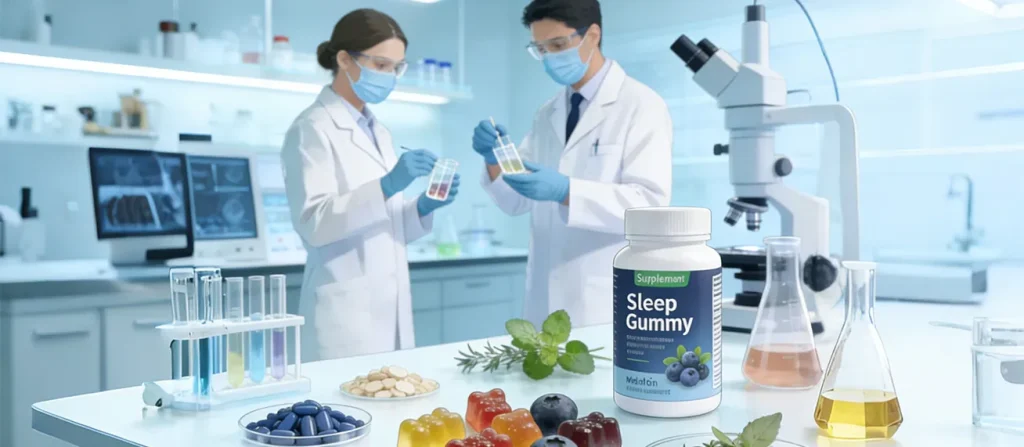
- R&D Capability: Does the facility have an in-house laboratory? Can they develop custom formulations, conduct stability testing, and solve ingredient compatibility challenges?
- Production Capacity & Lead Times: What is their daily and annual output? What are realistic lead times for standard versus custom orders? Can they scale with your business?
- MOQ Flexibility: Can they accommodate small trial runs as well as large-scale production? This is especially important for startups and brands launching new SKUs.
- Transparency & Documentation: Will they provide COAs, batch records, ingredient sourcing documentation, and facility audit access?
- Quality Control Systems: What in-process and finished-product testing is standard? Do they conduct third-party testing? What is their non-conformance procedure?
- Experience with Your Specific Active Ingredients: Not all manufacturers have experience with every ingredient category. Ask specifically about experience with actives in your formulation.
- Communication & Project Management: Responsiveness, language capability, and a dedicated project contact significantly affect the smoothness of production.
8. Summary
Making gummy bears for the supplement market is a technically demanding process that goes well beyond candy production. From gelling agent selection and active ingredient compatibility to process control, regulatory compliance, and packaging, every step affects product quality, stability, and ultimately the consumer experience.
For brands, buyers, and startups entering this space, the most important takeaway is this: gummy manufacturing quality is largely invisible to the naked eye. A visually attractive gummy can still fail on potency, stability, or microbial safety if produced in a facility without robust processes. Evaluating manufacturers rigorously — through certifications, documentation, R&D capability, and open communication — is not a bureaucratic exercise; it is how you protect your brand and your customers.
Whether you are pursuing private label gummies for a fast market entry, a custom OEM formulation for brand differentiation, or bulk wholesale gummies for distribution, partnering with a transparent, certified, experienced gummy bears manufacturer is the foundation of a successful product launch.
Frequently Asked Questions (FAQ)
What is the minimum order quantity (MOQ) for private label gummies?
MOQ varies significantly by manufacturer and product type. For private label gummies based on existing formulations, some manufacturers accept orders as low as a few hundred units to a few thousand bottles. Custom OEM formulations typically require higher MOQs due to setup costs, raw material procurement, and validation runs. Always clarify MOQ for both trial and production orders before engaging a supplier.
How long does gummy manufacturing take from formulation to delivery?
For private label or standard ODM products, lead time from order confirmation to delivery can range from 4 to 10 weeks, depending on raw material availability and production scheduling. Custom OEM formulations requiring new development, stability testing, and regulatory review can take 3 to 6 months or longer. Factor in shipping time when planning launch timelines.
Are pectin gummies as effective as gelatin gummies for supplements?
Both gelatin and pectin can serve as effective carriers for most supplement actives. Pectin gummies are suitable for vegan, halal, and kosher markets. The main differences are in texture (pectin gummies tend to be slightly firmer and less elastic) and formulation requirements (pectin needs a lower pH environment to set properly, which can affect certain actives). A qualified gummy manufacturer can advise on the optimal gelling system for your specific formulation.
What certifications should I look for in a gummy bears manufacturer?
At a minimum, look for GMP certification (cGMP in the U.S. or equivalent), ISO 22000 or ISO 9001, and HACCP compliance. Depending on your target market and product positioning, HALAL, KOSHER, Vegan, and FDA registration may also be relevant. Always request current certification documents, not just logos on a website.
How is active ingredient potency verified in gummy supplements?
Reputable manufacturers test finished gummies for active ingredient content using validated analytical methods (typically HPLC, ICP-MS, or microbiological assay depending on the ingredient). A Certificate of Analysis (COA) from a third-party accredited laboratory provides independent verification of potency, which should be requested for every production batch.
What is the typical shelf life of gummy bears supplements?
Most gummy supplements are formulated for an 18- to 24-month shelf life. Shelf life is determined by stability testing under real-time and accelerated conditions. Key parameters monitored include active ingredient potency, water activity, microbial counts, and organoleptic properties (appearance, texture, flavor). Packaging (nitrogen flushing, desiccant inclusion, and seal integrity) significantly affects shelf life.
Can gummy bears be produced for international markets?
Yes. A manufacturer with FDA registration, EU food safety compliance, and relevant international certifications can produce gummies for export to most major markets. However, regulatory requirements vary — including labeling, permitted ingredients, and certifications required for import — so it is important to specify your target markets early in the development process.
What is the difference between OEM and private label gummies?
Private label typically refers to purchasing a manufacturer’s existing, pre-developed formula and packaging it under your brand. OEM (Original Equipment Manufacturer) refers to a manufacturer producing a product to your specifications and formula. ODM (Original Design Manufacturer) sits in between — the manufacturer designs or co-develops the formulation, which the brand then owns. Each model has different cost structures, timelines, and levels of product differentiation.
About Gothink Biotech — Gummy Bears Manufacturer & Dietary Supplement Manufacturer
Shenzhen Gothink Biotech Co., Ltd. is a professional gummy bears manufacturer and dietary supplement manufacturer based in China, offering comprehensive OEM, ODM, CMO, and CDMO services to supplement brands, wholesalers, distributors, and private label buyers worldwide.
Our production capabilities cover a full range of gummy formats — including vitamin gummies, functional gummies, vegan pectin gummies, sugar-free gummies, and specialty formulations — alongside capsules, tablets, powders, liquids, and drops. Whether you need bulk gummy production, wholesale gummy bears, private label gummies, or a fully custom OEM formulation developed from the ground up, we provide end-to-end solutions from formulation and raw material sourcing through manufacturing, packaging, and export compliance support.
Our GMP-certified facility features a 100,000-class cleanroom with a daily output of 16 tons and an annual production capacity of 5,000 tons. R&D is led by researchers with postdoctoral experience at leading U.S. institutions, supported by a 10,000-class pharmaceutical-grade laboratory. We hold ISO9001, ISO22000, HACCP, HALAL, KOSHER, Vegan, and GMP certifications, ensuring that every product we manufacture meets the quality and regulatory standards your brand requires.
We work with flexible MOQs to accommodate startups, growing brands, and large-scale distribution programs alike. Our team provides full project support — from initial concept and formulation consultation to stability testing, label compliance, and delivery — so you can focus on building your brand while we handle the manufacturing complexity.