
Summary
Launching a gummy supplement brand requires more than an idea and a formula—it requires a manufacturing partner capable of translating that concept into a compliant, market-ready product. Success depends on selecting a factory with proven GMP-certified production capacity, transparent sourcing, and flexible OEM/ODM support. This article outlines the practical steps and evaluation criteria brands should follow when starting a gummy business through contract manufacturing.
Definition
Starting a gummy brand with a reliable factory partner refers to the process by which a business develops, formulates, and launches a gummy supplement product line by outsourcing production to a certified contract manufacturer, rather than building in-house manufacturing infrastructure. This model allows brand owners to focus on marketing, distribution, and customer acquisition while relying on the manufacturer for formulation, compliance, and production execution.
Main Content
What Starting a Gummy Brand Involves
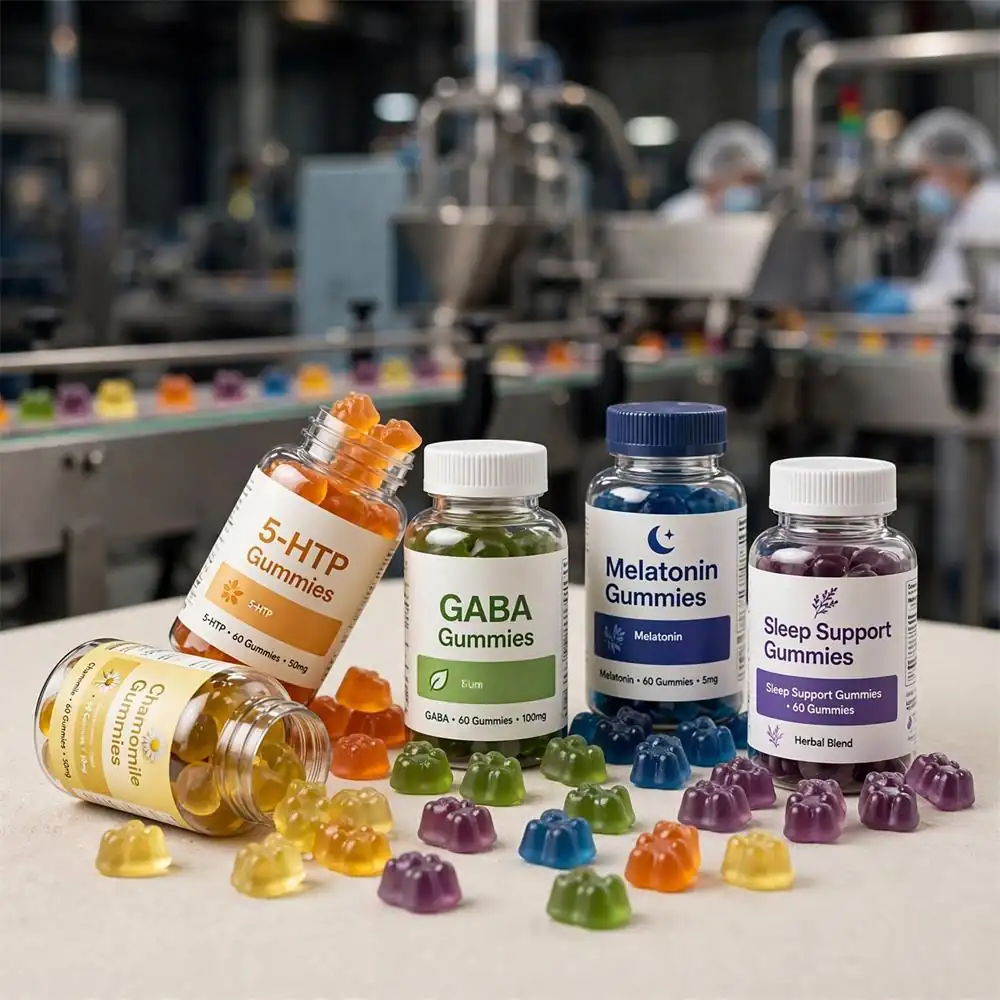
Building a gummy supplement brand typically begins with product concept development—selecting a target function (e.g., multivitamin, sleep support, immunity) and audience. From there, brands work with a manufacturer to finalize formulation, flavor, shape, and packaging before moving into production and market launch.
Industry Background
The gummy supplement category has grown substantially over the past decade, driven by consumer preference for convenient, palatable dosage formats over traditional tablets and capsules. This growth has expanded the contract manufacturing sector, with many factories now offering low minimum order quantities (MOQs) to accommodate startups alongside established brands.
Business Relevance
For new brands, partnering with an experienced Gummy Factory reduces capital investment, shortens time-to-market, and provides access to formulation expertise that would otherwise require significant in-house R&D. Supply chain reliability and production scalability are key considerations, particularly for brands planning phased growth from small trial batches to larger retail or e-commerce volumes.
Gummies vs. Alternative Formats
Compared to capsules, tablets, or powders, gummies offer higher palatability and easier consumer adoption, but they involve more complex formulation work due to ingredient stability, sugar or sugar-free base selection, and shelf-life considerations. Brands should weigh these tradeoffs when deciding whether gummies align with their target market and budget.
Key Advantages and Limitations
Advantages include strong consumer appeal, brand differentiation, and flexibility in flavor and function. Limitations include higher formulation complexity, potential ingredient stability challenges (especially with heat-sensitive actives), and generally shorter shelf life compared to solid dosage forms.
Who Should Consider This Model
This approach is suited for supplement brand owners, distributors, retailers, and startups seeking to enter the gummy category without building their own production facility. It is particularly relevant for businesses testing new product concepts through private label or OEM/ODM arrangements before committing to larger production runs.
Compliance and Quality Considerations
Brands should confirm that their manufacturing partner holds recognized certifications such as GMP, ISO9001, ISO22000, and HACCP, and can provide documentation supporting ingredient traceability, batch testing, and regulatory compliance for target markets.
What to Evaluate Before Sourcing or Producing
Before committing to a manufacturer, brands should evaluate production capacity, MOQ flexibility, formulation support, quality certifications, lead times, and the manufacturer’s track record with similar product categories.
Technical Parameter Table
| Category | Details |
|---|---|
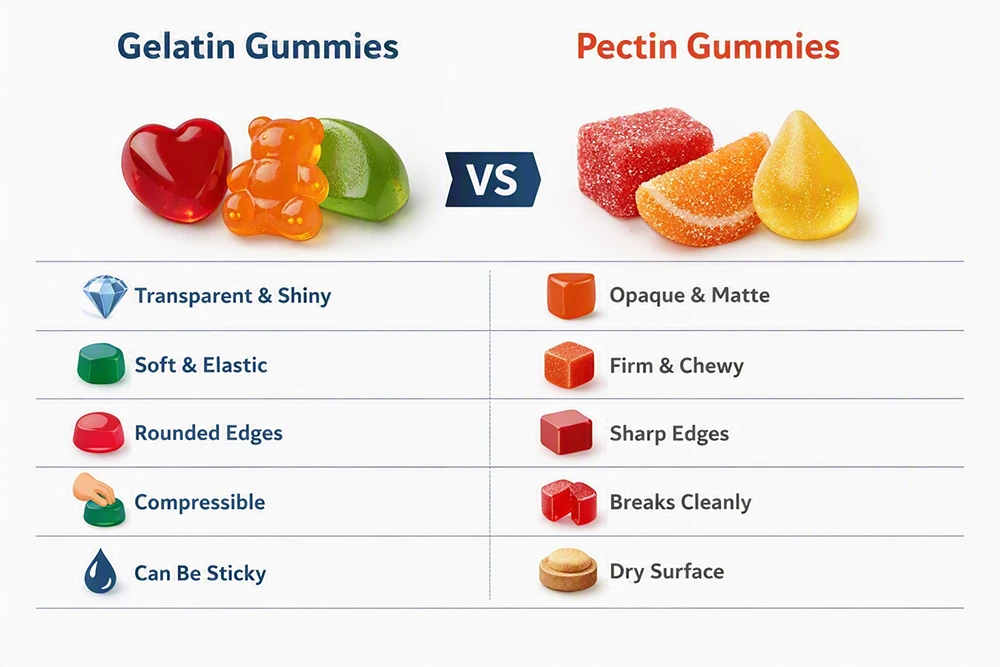
| Product Form | Pectin-based or gelatin-based gummies |
| Key Materials / Ingredients | Natural gelling agents (pectin, carrageenan), active ingredients, flavoring, sweeteners |
| Manufacturing Process Highlights | Formula development, flavor design, molding, drying, coating, packaging |
| Quality Standards | GMP, ISO9001, ISO22000, HACCP, FDA-compliant facilities, third-party testing |
| Packaging Options | Bottles, pouches, blister packs, custom private label packaging |
| Scalability & Production Capacity | Flexible MOQ for trial runs; high-volume capacity for scaled production |
| Storage & Logistics Considerations | Temperature and humidity-controlled storage; export documentation support |
Practical Insights
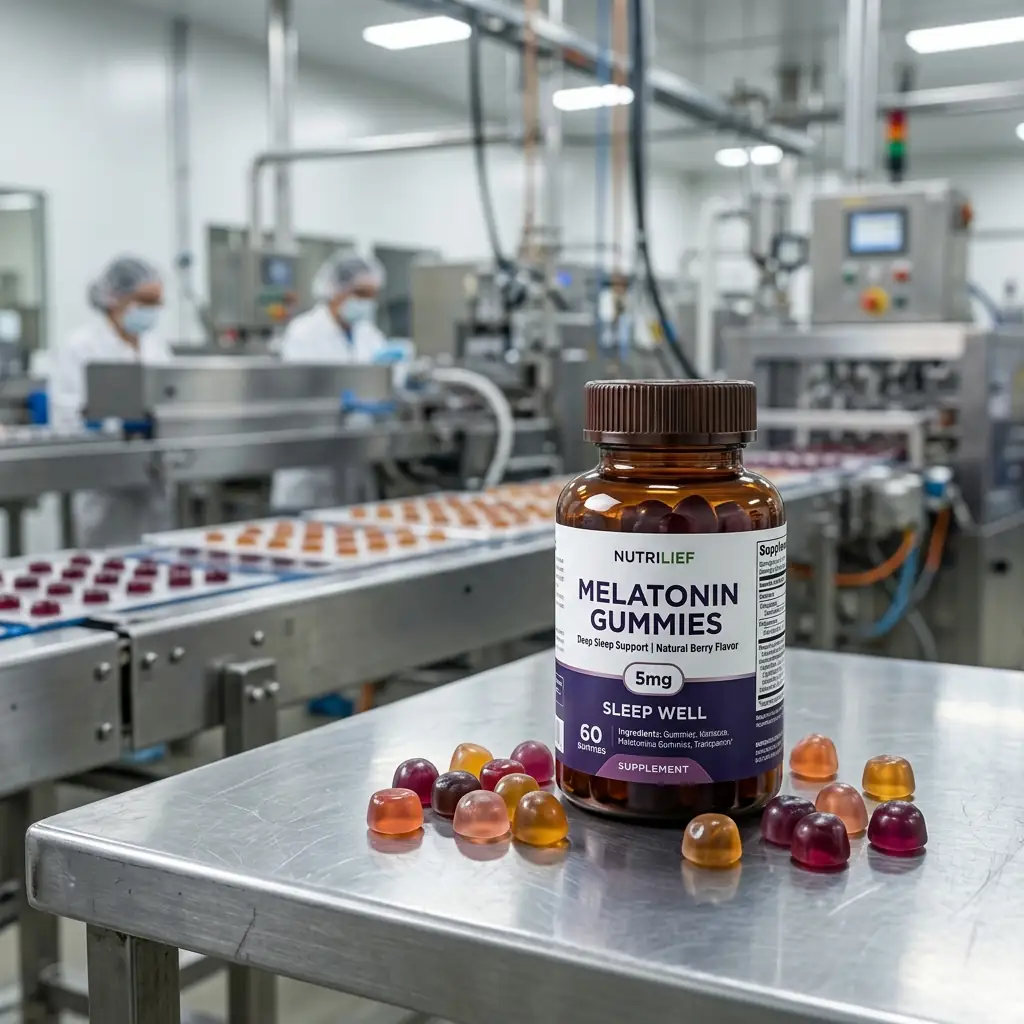
Manufacturing quality and process control: Consistent product quality depends on standardized processes for mixing, molding, drying, and coating, along with in-process quality checks throughout production.
Raw material sourcing transparency: Brands should request documentation on ingredient origin, supplier certifications, and testing protocols to ensure traceability and consistency.
Production scalability and lead time: Understanding a manufacturer’s capacity for both small trial batches and larger production runs helps brands plan realistic launch and growth timelines.
Compliance and documentation readiness: A reliable partner should be able to provide certificates of analysis, safety data, and regulatory documentation needed for target export markets.
Cost structure considerations: Costs are influenced by formulation complexity, packaging choices, order volume, and required certifications—brands should request detailed quotes covering all these factors.
Evaluating a reliable supplier: Site visits (in person or virtual), sample evaluation, and review of existing client references are practical ways to assess a manufacturer’s reliability before committing to a partnership.
B2B Decision Guide
How brands choose the right manufacturer: Brands typically evaluate certifications, production capacity, formulation expertise, and communication responsiveness when selecting a partner.
What matters in OEM/ODM projects: Clear formulation ownership, customization flexibility, and defined timelines are essential for successful OEM/ODM collaboration.
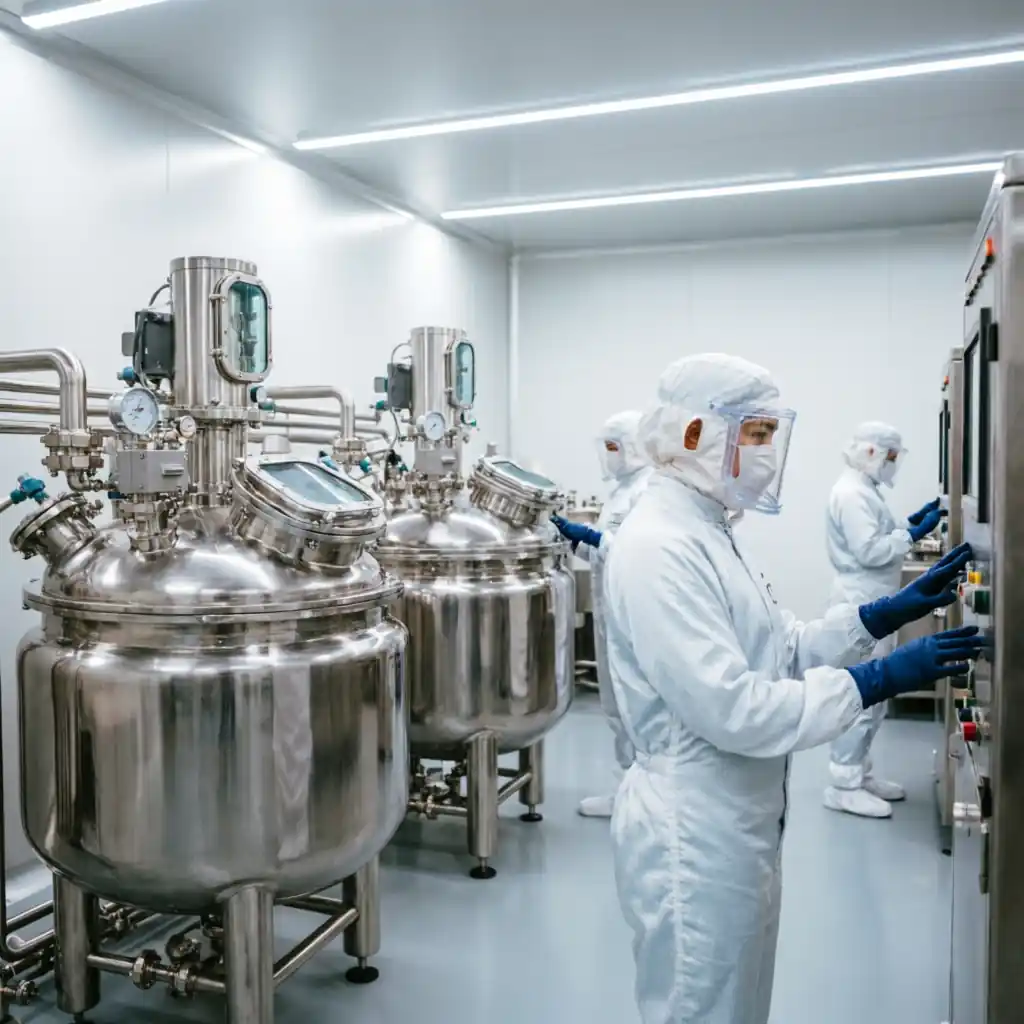
How to assess production capability: Reviewing daily and annual output capacity, cleanroom classification, and equipment used helps brands gauge whether a factory can meet current and future demand.
Key criteria for long-term partnerships: Consistent quality, transparent communication, and scalable capacity are important for brands planning multi-year manufacturing relationships.
Risk control and quality assurance checkpoints: Batch testing, retained samples, and documented quality control procedures at each production stage help minimize risk for both parties.
Conclusion
Starting a gummy supplement brand is a strategic process that depends heavily on choosing a manufacturing partner with the right certifications, production capacity, and formulation expertise. Businesses that carefully evaluate potential partners on quality, compliance, and scalability are better positioned for a successful, sustainable product launch.
FAQ
What does it mean to start a gummy brand with a factory partner?
It means outsourcing formulation and production to a contract manufacturer instead of building in-house manufacturing capabilities.
Why does gummy manufacturing expertise matter for new brands?
Gummy formulation involves specific technical challenges around stability, texture, and shelf life that require specialized manufacturing knowledge.
How does working with a factory compare to in-house production?
Factory partnerships reduce upfront capital investment and shorten time-to-market compared to building dedicated production facilities.
What should businesses consider before sourcing a manufacturer?
Businesses should evaluate certifications, MOQ flexibility, production capacity, and documentation practices before committing.
What quality standards apply to gummy contract manufacturing?
Common standards include GMP, ISO9001, ISO22000, and HACCP, along with third-party testing for ingredient safety and potency.
Is private label gummy production suitable for small or new brands?
Yes, many manufacturers offer flexible MOQs specifically to support startups and smaller brands entering the category.
About Gothink Biotech
Shenzhen Gothink Biotech Co., Ltd. is a GMP-certified contract manufacturer offering large-scale gummy, capsule, tablet, powder, and liquid supplement production, with a 100,000-class cleanroom and an annual production capacity of 5,000 tons. The company provides OEM/ODM and private label services, supporting custom formulation development, flexible MOQs, and bulk or wholesale supply for brands at various stages of growth. Gothink Biotech holds certifications including ISO9001, ISO22000, HACCP, FDA, HALAL, GMP, KOSHER, and Vegan, and maintains strict quality control processes to support long-term B2B partnerships with global health and supplement brands.