
Summary: Starting a successful vitamin supplement brand requires careful planning across market positioning, regulatory compliance, manufacturing partnerships, and brand development. This comprehensive guide walks entrepreneurs through every critical step—from validating market opportunity and selecting the right manufacturing partner to navigating FDA regulations and scaling production. Learn how to transform your supplement brand vision into a profitable, compliant business.
What Does Starting a Vitamin Supplement Brand Mean?
Starting a vitamin supplement brand refers to the process of launching and establishing a business that designs, manufactures, and markets dietary supplement products to consumers. This involves developing proprietary formulations, securing regulatory approval, establishing distribution channels, and building brand recognition in a highly competitive wellness market. Unlike starting a generic supplement company, building a recognized brand requires differentiation through formulation innovation, quality assurance, and targeted marketing that resonates with your specific consumer demographic.
A successful supplement brand combines three essential elements: product excellence (superior formulation and manufacturing), regulatory compliance (FDA standards and health claims substantiation), and market positioning (distinct brand identity and consumer trust). The supplement industry is projected to reach $220+ billion globally by 2026, making it an attractive opportunity for entrepreneurs willing to navigate its regulatory complexity and competitive dynamics.
Step-by-Step Process: How to Launch Your Supplement Brand
1. Market Research and Niche Identification
Before developing any products, conduct thorough market research to identify underserved consumer segments and emerging wellness trends. Analyze competitor offerings, pricing strategies, and customer pain points. Look for gaps where your brand can differentiate—whether through superior ingredients, specific formulations (e.g., Multivitamin Gummies for Women or Men’s Multivitamin Gummies), or lifestyle alignment.
Key research activities include:
- Surveying 100+ target consumers about supplement preferences and pain points
- Analyzing top 20 competitors in your chosen category
- Evaluating retail shelf space and direct-to-consumer market dynamics
- Identifying trending ingredients (functional herbs, adaptogens, probiotics)
- Assessing price elasticity for your target demographic
2. Define Your Brand Identity and Positioning
Establish clear brand positioning that differentiates your products in a crowded market. Decide whether you’ll focus on premium wellness positioning, value-based offerings, clinical efficacy, or lifestyle alignment (fitness, female health, sleep, etc.). Your brand identity should inform all downstream decisions—formulation choices, packaging design, pricing strategy, and marketing messaging.
Key positioning dimensions:
- Target Audience: Age, gender, health interests (athletic performance, women’s health, cognitive support, etc.)
- Core Promise: What specific health outcome does your brand deliver?
- Ingredient Story: Are you emphasizing natural, organic, or clinically-validated ingredients?
- Price Point: Premium ($40-60/bottle), mid-range ($20-40), or value ($10-20)?
- Distribution Channel: Direct-to-consumer, retail partnerships, or both?
3. Formulation Development and Product Design
Work with experienced formulation scientists to develop products that deliver on your brand promise while meeting regulatory requirements. This phase involves selecting active ingredients, determining optimal dosages, choosing delivery formats (capsules, gummies, powders), and stress-testing formulation stability.
Formulation considerations:
- Selecting complementary ingredients with scientific evidence of efficacy
- Optimizing ingredient ratios for bioavailability and safety
- Choosing appropriate delivery systems (hard capsules, softgels, gummy vitamin manufacturing)
- Ensuring formulation stability through shelf-life testing
- Evaluating cost-to-benefit ratios for ingredient sourcing
4. Select the Right Manufacturing Partner
This is perhaps the most critical decision for supplement entrepreneurs. Choosing a qualified dietary supplement manufacturer directly impacts product quality, compliance, scalability, and profitability. Rather than attempting in-house manufacturing (which requires significant capital investment and regulatory expertise), most successful brands partner with experienced custom gummy manufacturer or private label vitamin supplement providers who offer OEM/ODM services.
What to evaluate in a manufacturing partner:
- Certifications: GMP, ISO 9001, ISO 22000, HACCP, FDA registration, HALAL, KOSHER, Vegan
- Production Capacity: Can they scale from small trial batches to full commercial volumes?
- R&D Capability: Do they offer formulation development services or only contract manufacturing?
- Quality Control: Third-party testing, stability testing, contamination screening protocols
- Regulatory Knowledge: Experience with FDA compliance, labeling requirements, and health claims substantiation
- Turnaround Time: Lead times for first production run and subsequent replenishment orders
- Cost Structure: MOQ requirements, per-unit pricing at scale, tooling costs for custom formulations
- Customization Options: Can they support private label vitamin gummy production with your branding?
The FDA classifies dietary supplements differently from drugs, with specific regulatory pathways and compliance requirements. Before launching, ensure your formulations, labeling, and marketing claims comply with federal regulations.
Critical regulatory steps:
- Ingredient Verification: Confirm all ingredients are GRAS (Generally Recognized as Safe) and approved for use in dietary supplements
- Label Compliance: Ensure Supplement Facts panels, ingredient lists, and warnings meet FDA formatting standards
- Claims Substantiation: Support any health claims with adequate scientific evidence (structure-function claims vs. disease claims)
- Facility Registration: Register your manufacturing facility with the FDA
- Adverse Event Reporting: Establish protocols for monitoring and reporting safety issues
- Testing Documentation: Maintain records of product testing, ingredient sourcing, and quality control
6. Establish Supply Chain and Sourcing
Secure reliable suppliers for raw materials, packaging components, and labeling. Build relationships with ingredient suppliers who can guarantee consistency, purity, and documentation. Negotiate volume discounts while maintaining flexibility for small initial orders.
Supply chain elements:
- Raw ingredient sourcing with Certificates of Analysis (CoA)
- Packaging (bottles, caps, droppers) and label printing
- Fulfillment and warehouse services
- Third-party testing labs for quality verification
7. Design Brand Assets and Packaging
Create compelling visual branding that communicates your value proposition and stands out on retail shelves or e-commerce platforms. Invest in professional packaging design that reflects your brand positioning, complies with label regulations, and appeals to your target audience.
8. Plan Your Go-to-Market Strategy
Develop a comprehensive launch strategy encompassing pricing, distribution, and marketing. Decide whether you’ll launch direct-to-consumer (DTC) via your own website, pursue retail partnerships (health food stores, gyms, pharmacies), or use a hybrid approach. Each channel requires different marketing tactics and margin structures.
9. Build Initial Customer Acquisition
Execute your launch marketing plan using digital channels (social media, content marketing, influencer partnerships), PR outreach, and customer testimonials. Focus on building community and trust through transparent communication about ingredient sourcing, manufacturing practices, and customer results.
10. Establish Systems for Scaling
As demand grows, systematize operations including inventory management, customer service, and reordering processes. Work closely with your manufacturing partner to manage scaling efficiently without compromising quality.
Key Manufacturing and Production Considerations
Understanding OEM/ODM Service Models
OEM (Original Equipment Manufacturing) means the manufacturer produces your product according to your specifications using your branding and packaging. ODM (Original Design Manufacturing) involves the manufacturer also contributing to formulation design and product innovation. Many dietary supplement manufacturers offer both services, allowing entrepreneurs to choose their level of involvement in formulation development.
Production Formats and Customization Options
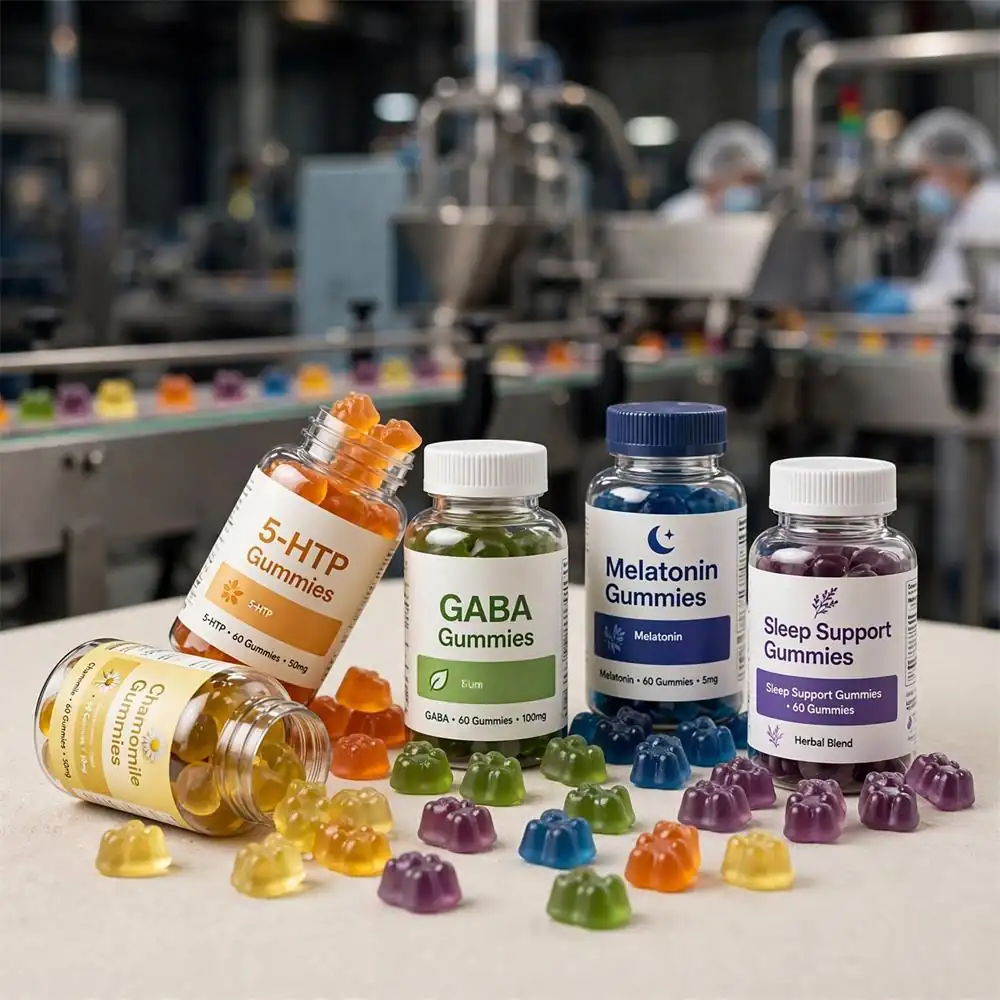
Modern custom gummy manufacturer facilities can produce supplements in multiple formats to meet diverse consumer preferences:
| Product Format | Key Advantages | Manufacturing Complexity | Consumer Preference Trend |
|---|---|---|---|
| Gummies | High palatability, improved compliance, appealing to all ages, 30+ shape options available | High (requires precision filling, molding, coating) | Growing rapidly, especially for women’s health and children’s supplements |
| Capsules (Gel/Vegetarian) | Stable, precise dosing, vegetarian options available, suitable for most ingredients | Medium (powder filling, sealing, quality control) | Stable demand, particularly for herbal and functional formulations |
| Tablets | Cost-effective, excellent shelf stability, allows for coating and layering | Medium-High (compression, coating, quality assurance) | Declining in consumer preference, shifting toward gummies |
| Powders | Customizable serving sizes, high ingredient concentration, economical | Low-Medium (mixing, packaging in sachets or containers) | Growing for fitness and performance categories |
| Liquid Drops | Fast absorption, precise metering with droppers, premium positioning | High (requires advanced filling technology, stability testing) | Growing for specialized formulas (herbal extracts, vitamins D/K2) |
Manufacturing Facility Standards and Certifications
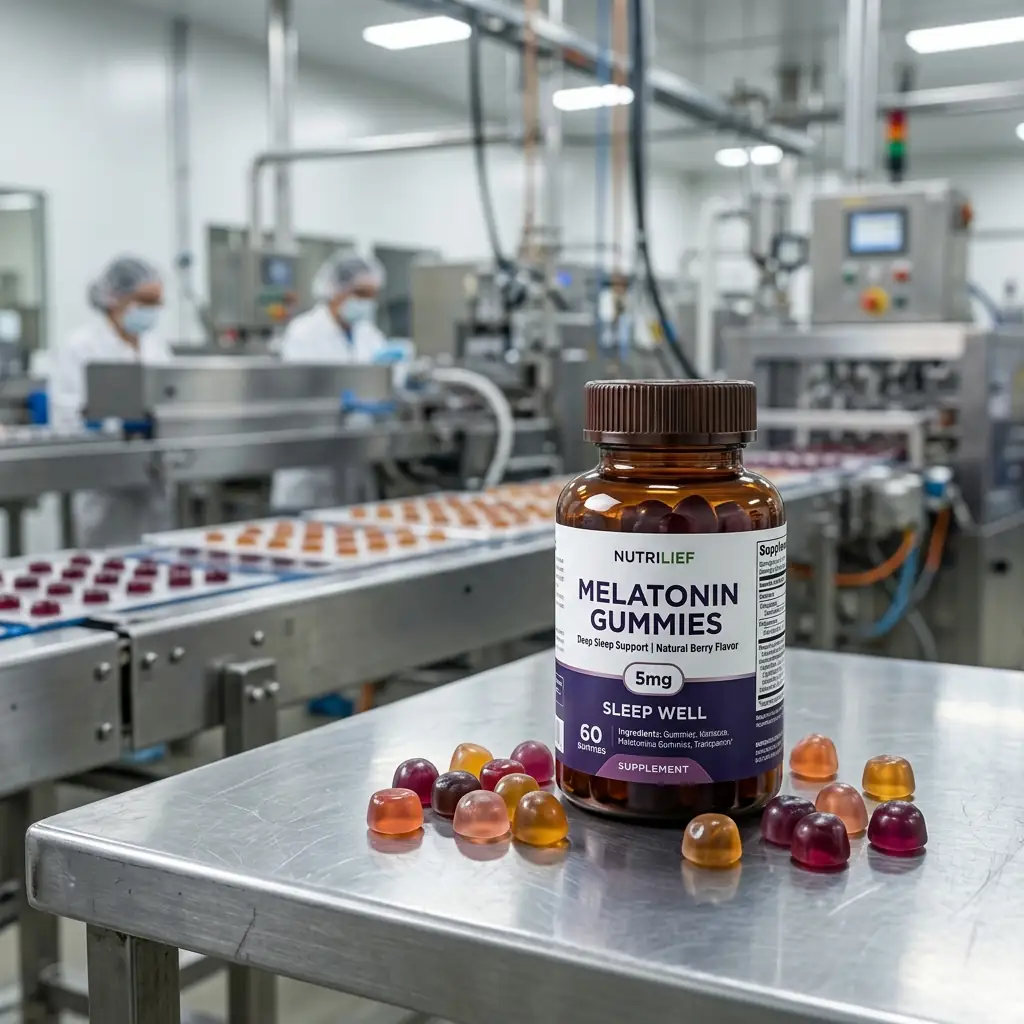
Leading manufacturers maintain pharmaceutical-grade quality standards even for dietary supplements. Standard certifications include GMP (Good Manufacturing Practice), which ensures products are consistently produced and controlled according to quality standards. ISO 9001 certification demonstrates quality management system excellence, while ISO 22000 ensures food safety management.
World-class facilities typically feature cleanrooms (100,000-class) with controlled temperature, humidity, and particulate filtration, plus dedicated R&D laboratories. These investments ensure product sterility, ingredient stability, and manufacturing consistency.
Quality Control and Testing Requirements
Rigorous quality control involves testing at multiple points: ingredient verification (incoming material testing), in-process testing during manufacturing, and finished product testing. Testing includes:
- Identity testing (confirming ingredients are what they claim)
- Potency testing (verifying active ingredient concentrations)
- Microbial testing (screening for bacteria, mold, yeast)
- Heavy metals screening (lead, cadmium, mercury, arsenic)
- Stability testing (ensuring product effectiveness over shelf life)
Minimum Order Quantities (MOQ) and Pricing
MOQs vary significantly based on product format and manufacturing complexity. Gummy vitamin manufacturing might require MOQs of 50,000-100,000 units for custom formulations (due to tooling costs), while capsule formats may accept 10,000-25,000 unit minimums. Replenishment orders typically have lower MOQs.
Per-unit manufacturing costs typically range:
- Gummies: $0.80-2.50/unit depending on ingredient complexity and order volume
- Capsules: $0.30-1.20/unit
- Tablets: $0.20-0.80/unit
- Powders: $0.50-1.80/unit (per serving)
Including packaging, labeling, and fulfillment, total COGS typically ranges from $2-6 per unit for premium supplements, allowing for 300-500% retail markup.
B2B Decision Framework: Selecting Your Manufacturing Partner
Critical Evaluation Matrix
When evaluating dietary supplement manufacturers and private label vitamin supplement providers, use a structured decision framework:
| Evaluation Criteria | Weight | What to Assess | Red Flags |
|---|---|---|---|
| Certifications & Compliance | 25% | GMP, ISO 9001/22000, HACCP, FDA registration, third-party audit reports | No verifiable certifications, unwilling to provide audit documentation |
| R&D Capability | 20% | In-house formulation team, stability testing labs, published formulation innovations, customer case studies | Only contract manufacturing without formulation support, no published case studies |
| Production Scale & Flexibility | 20% | Annual capacity, MOQ flexibility, turnaround times, ability to scale rapidly | High MOQs with no flexibility, long lead times, limited capacity |
| Pricing Competitiveness | 15% | Per-unit costs, volume discounts, transparency in pricing structure, NRE (non-recurring engineering) costs | Hidden fees, unwilling to provide itemized quotes, significantly higher costs than competitors |
| Quality Control & Testing | 15% | In-house testing capability, third-party lab partnerships, CoA (Certificate of Analysis) standards, contamination screening | No documented testing protocols, unwilling to provide CoAs, history of quality issues |
| Communication & Support | 5% | Dedicated account management, responsiveness, technical support, regulatory guidance | Slow response times, unclear communication, lack of technical expertise |
Questions to Ask Potential Manufacturers
- Can you provide recent audit reports and compliance certifications?
- What is your experience with formulations similar to mine?
- What is your typical turnaround time from concept to first production run?
- Can you accommodate my minimum order quantity and provide flexibility for replenishment orders?
- Do you offer formulation development (ODM) or only contract manufacturing (OEM)?
- What testing protocols do you perform on raw materials and finished products?
- How do you handle regulatory compliance and FDA requirements?
- Can you provide references from other supplement brands you manufacture for?
- What is your capacity for custom formulations versus off-the-shelf products?
- How do you price tooling and setup costs for custom products?
Practical Implementation: Timelines and Costs
Realistic Timeline from Concept to Launch
- Weeks 1-4: Market research and competitive analysis
- Weeks 5-8: Brand positioning and target audience definition
- Weeks 9-16: Formulation development and prototype testing (with manufacturing partner)
- Weeks 17-20: Regulatory compliance review and label finalization
- Weeks 21-28: Manufacturing setup, quality control validation, production run
- Weeks 29-32: Packaging, fulfillment preparation, inventory staging
- Weeks 33-36: Go-to-market execution and customer acquisition launch
Total realistic timeline: 8-10 months from concept to first sales
Investment Requirements
- Formulation Development: $5,000-15,000
- Regulatory Compliance & Testing: $3,000-10,000
- Branding & Design: $2,000-8,000
- Initial Manufacturing (minimum order): $15,000-50,000 depending on format and MOQ
- Packaging & Labeling: $5,000-15,000
- Marketing & Launch: $10,000-30,000
- Legal & Insurance: $2,000-5,000
Total Initial Investment: $40,000-130,000 (excluding working capital for inventory)
Scaling Your Brand: From MVP to Market Leader
Phase 1: Launch and Market Validation (Months 1-6)
Focus on validating product-market fit through direct customer feedback. Start with DTC channels to control messaging and gather customer data. Aim for 200-500 initial customers to test messaging, validate formulation efficacy perception, and gather testimonials.
Phase 2: Early Growth (Months 6-12)
With validated product-market fit, expand distribution channels. Begin outreach to retail partners (independent health food stores, gyms, wellness clinics). Scale digital marketing based on proven customer acquisition channels. Prepare for reorder manufacturing runs.
Phase 3: Scaling Production (Months 12-24)
As demand increases, work closely with your manufacturing partner to increase production volume. Consider product line expansion into adjacent categories. Build wholesale relationships with regional distributors. Establish brand authority through content marketing and thought leadership.
Phase 4: Market Leadership (24+ months)
At this stage, many brands pursue retail shelf space with major chains, develop multiple product lines targeting different customer segments, or pursue strategic partnerships. Some successful brands eventually acquire their own manufacturing capacity or seek private equity investment for accelerated growth.
Scaling Operational Considerations
- Manufacturing Capacity: Maintain 20-30% excess manufacturing capacity to handle demand spikes
- Inventory Management: Establish systems to optimize working capital while ensuring adequate stock
- Quality Consistency: As production scales, maintain rigorous quality control even with increased volumes
- Product Line Extension: Test extensions (gummies for men/women, different potency levels) before full commitment
- Regulatory Monitoring: Stay current with FDA guidance and industry standards
Common Pitfalls and How to Avoid Them
1. Insufficient Formulation Validation
Pitfall: Launching a product without adequate stability testing or efficacy validation. Solution: Work with experienced formulation partners who conduct comprehensive shelf-life testing and gather customer feedback data.
2. Choosing the Wrong Manufacturing Partner
Pitfall: Partnering with an uncertified or low-quality manufacturer to save costs, resulting in compliance issues or product failures. Solution: Invest time in vetting manufacturers thoroughly using the evaluation framework above. Quality should never be compromised.
3. Underestimating Regulatory Complexity
Pitfall: Making unsubstantiated health claims or using banned ingredients, leading to FDA warning letters or recalls. Solution: Engage regulatory consultants early and maintain detailed documentation of all claim substantiation.
4. Inadequate Market Differentiation
Pitfall: Launching “me-too” products without clear differentiation, resulting in inability to compete. Solution: Invest in thorough market research and develop distinct positioning based on genuine customer insights.
5. Insufficient Working Capital
Pitfall: Depleting capital on initial manufacturing run without funds for marketing or operations. Solution: Maintain 6+ months of operational runway and plan cash flow carefully.
Frequently Asked Questions
Conclusion: Your Path to Building a Successful Supplement Brand
Starting a vitamin supplement brand is achievable for entrepreneurs willing to navigate regulatory complexity and invest in quality manufacturing partnerships. Success requires balancing three critical elements: formulation excellence through experienced manufacturing partners, regulatory compliance through documented processes, and brand differentiation through authentic market positioning.
The key to success is choosing the right manufacturing partner early. Partner with a custom gummy manufacturer or dietary supplement manufacturer with proven certifications, R&D capability, and flexible production models that support your growth. Invest adequately in formulation development, quality testing, and regulatory compliance—cutting corners here creates long-term liability. Finally, focus your entrepreneurial energy on brand building, customer acquisition, and market positioning, not on manufacturing operations.
With careful planning, realistic timelines, adequate capitalization, and the right manufacturing partnerships, you can build a profitable, compliant supplement brand that resonates with health-conscious consumers and establishes lasting market value.
About Our Manufacturing Partnership Network
Building a successful supplement brand requires more than just ambition—it requires a manufacturing partner with proven expertise, regulatory mastery, and scalable production capabilities. Our network connects supplement entrepreneurs with world-class manufacturers who specialize in comprehensive OEM/ODM services.
Why Choose an Experienced Manufacturing Partner?
Rather than attempting in-house manufacturing, successful supplement brands leverage specialized contract manufacturers who offer:
- End-to-End Turnkey Solutions: From formulation consultation and product design through manufacturing, packaging, and regulatory support
- Multiple Product Formats: Gummy, capsule, tablet, powder, and liquid drop manufacturing with 30+ shape options for gummies
- Advanced R&D Strength: Access to pharmaceutical-grade laboratories and teams with postdoctoral research backgrounds from leading U.S. universities
- Pharmaceutical-Grade Quality: 100,000-class cleanrooms, 10,000-class pharmaceutical-grade R&D laboratories, and rigorous GMP compliance
- Flexible Scalability: From small trial batches to full-scale commercial production (5,000+ tons annual capacity)
- Global Certifications: GMP, ISO 9001, ISO 22000, HACCP, FDA, HALAL, KOSHER, VEGAN, and comprehensive third-party testing
Specialized Expertise in Private Label Supplement Manufacturing
Whether you’re developing Multivitamin Gummies for Women, Men’s Multivitamin Gummies, or specialized formulations, experienced manufacturers offer:
- Formulation Development: Custom product creation based on your health claims and target demographics
- Private Label Solutions: Full private label vitamin gummy and supplement manufacturing with your branding
- Flexible MOQ Options: Accommodating brands at all growth stages, from startups to established retailers
- Compliance Management: Full support with FDA regulations, label compliance, and health claims substantiation
- Quality Assurance: Rigorous testing protocols, stability testing, and third-party validation
- Customization Depth: 30+ gummy shapes, custom flavors, specialized ingredient combinations, and packaging designs
The Competitive Advantage of Strategic Manufacturing Partnerships
Leading supplement brands recognize that manufacturing is a core competency best outsourced to specialists. This approach enables:
- Faster Time-to-Market: Experienced manufacturers reduce development and production timelines significantly
- Lower Capital Requirements: Eliminate need for expensive manufacturing infrastructure and equipment
- Regulatory Risk Mitigation: Partner expertise in FDA compliance and quality standards protects your brand
- Scalability Without Constraint: Access production capacity that grows with your brand, from thousands to millions of units
- Product Innovation: Leverage partner R&D for formulation improvements and new product development
- Focus on Core Business: Dedicate resources to brand building, customer acquisition, and market positioning
The supplement industry leaders understand a simple truth: manufacturing excellence is foundational to brand success. Partner with manufacturers who combine scientific expertise, regulatory mastery, quality obsession, and production flexibility. This partnership transforms your vision into profitable reality.