
Summary
The global dietary supplement market is projected to surpass $300 billion by 2028, making it one of the most attractive sectors for entrepreneurs today. But launching a successful supplement company requires more than a great product idea — it demands market research, regulatory knowledge, smart manufacturing partnerships, and a long-term brand strategy. This guide walks you through every critical step, from initial concept to your first shipment, with a particular focus on why gummy supplements have become the format of choice for new and growing brands.
1. Understand the Market Before You Enter It
Before registering a business or contacting any Supplements Manufacturer, spend meaningful time researching the landscape.
The supplement industry is competitive but far from saturated in every niche. Certain categories continue to outperform year over year:
- Gummy supplements — the fastest-growing delivery format, driven by consumer preference for taste and convenience
- Women’s health — multivitamins, collagen, iron, and probiotics
- Sleep support — melatonin and adaptogen-based products
- Sports nutrition — creatine, pre-workout blends, and protein
- Gut health — probiotic and prebiotic formulations
Emerging consumer data consistently shows that shoppers are more likely to stick with a supplement routine when the product is enjoyable to take. This is a core reason why gummy formats now command premium shelf space both online and in retail.
Use tools like Google Trends, Amazon Best Sellers, and industry reports from SPINS or Grand View Research to validate demand in your target niche before committing capital.

2. Choose Your Business Model
Your business model determines everything downstream — your supplier relationships, minimum order quantities, cash flow, and legal obligations.
The three most common models for entering the supplement space are:
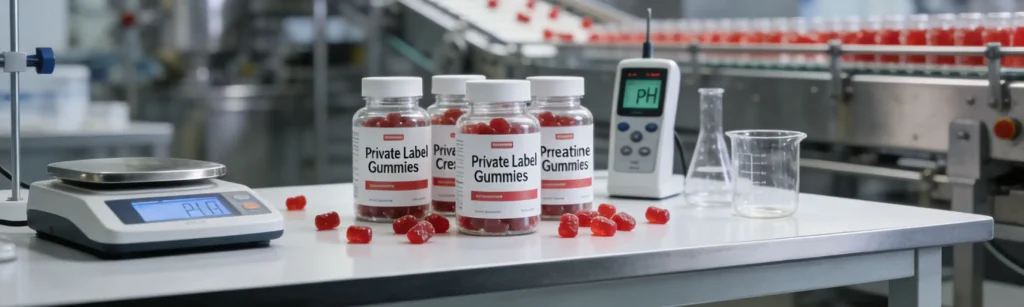
Private Label You select an existing, pre-formulated product from a manufacturer, apply your own brand identity, and go to market. This is the fastest route. Many Private Label gummies programs offer low minimum orders, pre-approved formulas, and ready-to-customize packaging — ideal for new brands testing demand.
OEM (Original Equipment Manufacturing) You provide the formula and specification; the manufacturer produces it under your brand. This gives you full control over the formulation but requires more upfront investment in R&D and regulatory review.
ODM (Original Design Manufacturing) The manufacturer handles formulation design based on your functional goals and target audience. This is an excellent middle-ground option — particularly useful if you have a market vision but lack an in-house R&D team.
For first-time founders, Private Label or ODM gummy programs tend to offer the best balance of speed, cost efficiency, and brand control.

3. Register Your Business and Protect Your Brand
Once you’ve validated a market opportunity, formalize your business structure.
Steps include:
- Incorporate your entity — LLC or Corporation depending on your liability and tax preferences
- Register a trademark — This is non-negotiable if you’re building a real brand. File with the USPTO (United States Patent and Trademark Office) or the appropriate IP office in your target market
- Obtain an EIN (Employer Identification Number) for tax purposes
- Open a dedicated business bank account
Trademark registration is often overlooked by new supplement entrepreneurs. However, building brand equity on an unprotected name is a serious risk — especially in e-commerce, where brand impersonation and copycat products are common. File early, even before your product launches.
The supplement industry in the United States is regulated by the FDA under the Dietary Supplement Health and Education Act (DSHEA) of 1994. While supplements don’t require pre-market FDA approval, your business must meet specific requirements:
- Products must be manufactured in FDA-registered, GMP-compliant facilities
- Labels must comply with FDA guidelines, including a Supplement Facts panel, ingredient list, and required disclaimers
- Health claims must be carefully worded — structure/function claims are permitted, but disease claims are not
- New dietary ingredients (NDIs) may require a premarket notification to the FDA
If you’re selling internationally, additional certifications may apply — ISO, HALAL, KOSHER, or country-specific import requirements.
Working with a reputable Supplements Manufacturer that already holds GMP, ISO, and FDA certifications removes a significant compliance burden from your plate. Always request documentation.
5. Why Gummy Supplements Are the Right Product to Launch With
If you’re undecided on product format, the data strongly favors gummies.
Gummy supplements have grown from a niche children’s vitamin format into the dominant delivery system across nearly every supplement category. Here’s why:
- Consumer compliance — People actually take gummies consistently because they enjoy the experience
- Brand differentiation — Gummies offer more visual and sensory customization than capsules or tablets (shape, color, flavor, texture)
- Broad demographic appeal — Children, seniors, fitness enthusiasts, and health-conscious millennials all embrace the format
- Premium pricing potential — Gummies typically command higher retail prices than equivalent capsule products
- Social media visibility — Attractive packaging and product photography perform well in D2C digital marketing
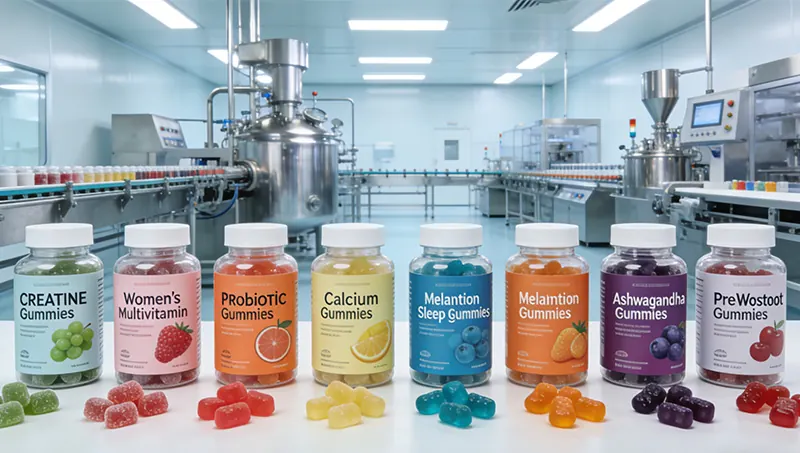
Top-selling categories in gummy manufacturing today include:
| Category | Key Ingredients |
|---|---|
| Women’s Multivitamin | Folate, Iron, Biotin, D3 |
| Men’s Multivitamin | Zinc, B12, Selenium, D3 |
| Sleep Support | Melatonin, L-Theanine, Ashwagandha |
| Creatine | Creatine Monohydrate |
| Liver Support | Milk Thistle, NAC, Dandelion |
| Women’s Probiotics | Lactobacillus strains, Inulin |
| Daily Wellness | Vitamin C, Elderberry, Zinc |
| Calcium | Calcium Carbonate, D3, K2 |
If you’re building a supplement brand, launching with one or two gummy SKUs is an efficient way to enter the market, gather customer feedback, and iterate quickly.
6. Find a Reliable Gummies Manufacturer
Choosing the right gummies Manufacturer is arguably the most important decision you’ll make as a supplement founder. A manufacturer is not just a production facility — they are a long-term partner in your brand’s quality and reputation.
What to evaluate:
Certifications and compliance Look for GMP certification at a minimum. ISO 9001, ISO 22000, HACCP, and FDA registration are strong indicators of manufacturing discipline. For specific markets, HALAL and KOSHER certification may be essential.
R&D capability Can the manufacturer develop or refine formulations in-house? A manufacturer with a dedicated R&D laboratory and qualified scientists on staff can help you create differentiated products rather than generic copies.
Production capacity and scalability Your launch quantity and your year-two quantity will be very different. Confirm the manufacturer can accommodate both, and ask about lead times at different volume tiers.
Facility standards Cleanroom classification matters in supplement manufacturing. A 100,000-class cleanroom is standard; a pharmaceutical-grade 10,000-class R&D environment indicates a higher tier of quality control.
Minimum order quantities For new brands, flexibility in MOQ is critical. Many manufacturers offering gummies bulk and gummies wholesale programs have minimums ranging from a few hundred to several thousand units depending on the formula and format.
One-stop service The most efficient partnerships are with manufacturers who offer end-to-end services — formulation, raw material sourcing, production, quality testing, packaging design, and export documentation. This eliminates the complexity of managing multiple vendors and reduces the risk of miscommunication in the supply chain.
Communication and transparency This is underrated. A manufacturer that responds promptly, provides clear documentation, and proactively flags issues is worth more than one offering the lowest unit price.
Request samples before committing to any production run. Evaluate texture, taste, active ingredient consistency, and packaging quality against your brand standards.
7. Develop Your Product Line and Brand Identity
With a manufacturer identified and a format chosen, it’s time to build the brand itself.
Product line considerations:
- Start with one to three SKUs. A focused launch is easier to market, easier to manage from an inventory standpoint, and easier to iterate on.
- Differentiate through formulation (unique ingredient combinations), format (shape, flavor, texture), or positioning (clinical-grade, vegan, kid-safe).
- Plan your line extension roadmap — what products will you add in year two?
Brand identity:
- Name and trademark
- Logo and visual identity
- Label design compliant with FDA and target market regulations
- Brand story — why this product, why this brand, why now
Your brand story doesn’t need to be complicated, but it needs to be authentic. Consumers are increasingly sophisticated and can distinguish between brands built on genuine insight and those assembled purely for arbitrage.
8. Set Up Your Sales Channels
The supplement market supports multiple viable sales channels, each with different margin structures and audience characteristics.
Direct-to-Consumer (DTC) / E-commerce Your own website (Shopify, WooCommerce) gives you full control over customer relationships and the highest margins. Requires investment in digital marketing — paid social, SEO, email, and content.
Amazon The largest single marketplace for supplements in the US. High visibility but intensely competitive, with margin compression from fees and advertising spend. Amazon’s Transparency Program can help protect against counterfeiting.
Retail / Wholesale Placing products in health food stores, gyms, or specialty retailers. Requires sales infrastructure and typically involves slotting fees or distributor margins. Effective for building brand credibility.
B2B / Wholesale Supply Selling gummies wholesale or gummies bulk to other brands, gyms, wellness practitioners, or corporate wellness programs. Lower margin per unit but predictable, high-volume revenue.
Most new brands start with DTC and Amazon simultaneously, then layer in retail as they gain traction and have the capital to support it.
9. Price Your Products Correctly
Supplement pricing is both an economic and a positioning decision.
A common framework:
- COGS (Cost of Goods Sold): Manufacturing + packaging + inbound freight
- Landed cost: COGS + customs + domestic freight
- Retail price: Typically 4–6x landed cost for DTC; 2–3x for wholesale to retail
Gummy supplements, due to their higher perceived value and manufacturing complexity relative to basic capsules, can support premium price points — often $25 to $45 for a 30-day supply in the consumer market.
Don’t race to the bottom on price. In the supplement market, price is a quality signal. A $12 bottle of melatonin gummies will lose to a $32 bottle with superior branding and packaging almost every time, assuming the product quality is comparable.
10. Build Long-Term Brand Credibility
The supplement brands that succeed over time do so by consistently investing in trust.
Practical ways to build credibility:
- Third-party testing: Certifications from NSF International, Informed Sport, or USP signal independent quality verification
- Transparent labeling: Fully disclosed formulas, clear dosing, honest health claims
- Customer reviews: Genuine reviews across Amazon, Google, and your own site compound over time
- Educational content: Blog posts, videos, and guides that demonstrate your expertise in the category
- Responsive customer service: How you handle complaints and returns defines your brand reputation as much as your product quality
Invest in these systematically, not reactively.
Article Summary
Starting a supplement company is a multi-step process that rewards preparation, patience, and the right partnerships. The most important decisions — your niche, your business model, and your manufacturing partner — should be made carefully and with a long-term view. Gummy supplements represent one of the strongest product opportunities in the market today, offering high consumer appeal, strong pricing power, and broad category applicability across women’s health, sleep, sports nutrition, and daily wellness. Whether you’re pursuing a Private Label program to launch quickly or building a fully custom ODM formulation, working with a certified, full-service gummies Manufacturer is the single highest-leverage decision you can make in your early-stage operations.
Frequently Asked Questions (FAQ)
Q: How much does it cost to start a supplement company? A: Startup costs vary significantly by model. A Private Label gummies launch can begin for as little as $5,000–$15,000 covering product, packaging, and initial marketing. A fully custom OEM formulation with branded packaging and a modest inventory run typically falls in the $20,000–$50,000 range. Regulatory, trademark, and website costs add to both scenarios.
Q: Do I need FDA approval to sell supplements? A: No pre-market FDA approval is required for dietary supplements in the US. However, you must manufacture in GMP-compliant, FDA-registered facilities and comply with all labeling regulations under DSHEA. Some ingredients classified as New Dietary Ingredients (NDIs) require a premarket notification.
Q: What is the minimum order quantity for private label gummies? A: MOQs vary by manufacturer and formula type. Many manufacturers offering Private Label gummies or gummies bulk programs accommodate trial runs starting at a few hundred units, while full production runs are typically 5,000–10,000 units or more. Always clarify MOQs before entering a partnership.
Q: How long does it take to launch a supplement product? A: Timeline depends on whether you’re using a pre-existing Private Label formula or developing a custom formulation. Private Label gummies can go from order to delivery in 4–8 weeks. Custom ODM/OEM formulations typically require 3–6 months, accounting for R&D, stability testing, label design, and production.
Q: What certifications should I look for in a gummies manufacturer? A: At minimum, GMP and FDA registration. Stronger manufacturers will also hold ISO 9001, ISO 22000, HACCP, and potentially HALAL, KOSHER, and Vegan certifications depending on your target market. Request documentation for all claimed certifications.
Q: What’s the difference between OEM and ODM in supplement manufacturing? A: OEM (Original Equipment Manufacturing) means you provide the formula and the manufacturer produces it. ODM (Original Design Manufacturing) means the manufacturer develops the formula based on your product brief. ODM is typically better for founders without an in-house R&D background, while OEM suits brands with proprietary formulations.
Q: Are gummy supplements harder to manufacture than capsules or tablets? A: Yes, gummy manufacturing is more complex than capsule or tablet production due to the precision required in gelation, flavor balancing, active ingredient stability, and texture consistency. This is why selecting a manufacturer with dedicated gummy production lines and quality control protocols matters significantly.
About Gothink Biotech — Your Full-Service Gummies Manufacturer and Supplements Manufacturer
Shenzhen Gothink Biotech Co., Ltd. is a leading dietary supplement and gummies Manufacturer based in China, offering comprehensive OEM, ODM, Private Label, and turnkey manufacturing solutions for supplement brands worldwide.
Our gummy manufacturing capabilities cover the full product spectrum: vitamin gummies (women’s, men’s, children’s, multivitamin), functional gummies (creatine, melatonin, ashwagandha, liver support, probiotics, selenium, pre-workout, calcium, and daily wellness), and custom formulations developed to your brief.
We support brands at every stage — from first-time founders ordering gummies bulk trial runs to established companies requiring gummies wholesale supply at scale. Our services include Private Label programs with fast turnaround, ODM formulation development, white-label solutions with full packaging customization, and end-to-end export support.
Our facility operates a 100,000-class GMP cleanroom with a daily output of 16 tons and annual capacity of 5,000 tons. Our R&D laboratory meets 10,000-class pharmaceutical-grade standards and is led by researchers with postdoctoral experience at institutions including Cold Spring Harbor Laboratory, Emory University, and The Ohio State University.
Certifications held: ISO 9001, ISO 22000, HACCP, FDA registration, GMP, HALAL, KOSHER, and Vegan.
Whether you’re building a new brand, expanding an existing line, or sourcing gummies wholesale for retail distribution, Gothink Biotech provides the scientific expertise, production capacity, and service infrastructure to bring your product to market with confidence.