
At a Glance
If you’re looking to launch or scale a gummy supplement line, understanding what happens inside a private label gummy facility is the fastest way to avoid delays, costly reformulations, and compliance headaches. This behind‑the‑scenes guide walks through how experienced custom gummy manufacturer teams make gummies from initial formula to finished, packaged product — and what each step means for your brand’s timeline, quality, and budget.
What “Private Label Gummy” Actually Means
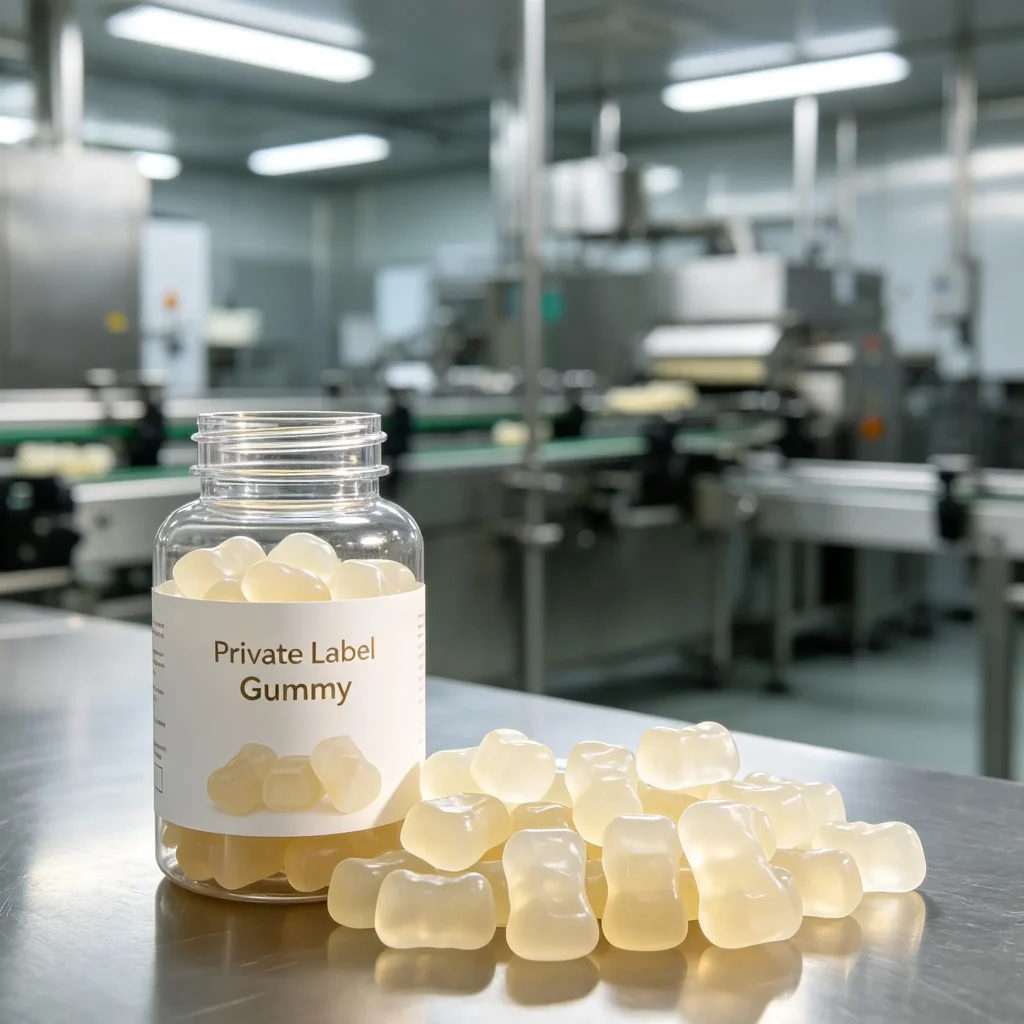
Private label gummy production is simply this: a specialized custom gummy manufacturer produces the gummies, and you sell them under your own brand. You own the label, the marketing, and the customer relationship. The manufacturer owns the facility, the equipment, the ingredient sourcing, and the production know‑how. For most brands, it’s the most capital‑efficient way to make gummies without building a factory.
Why the Gummy Format Took Over
Gummies started as a delivery format for kids’ vitamins. Today, they dominate adult nutrition aisles too — from multivitamins and sleep aids to beauty and functional mushrooms. That shift pushed contract manufacturers to invest heavily in high‑capacity cooking, depositing, and drying lines capable of handling heat‑sensitive actives. The result: even smaller brands can now partner with a custom gummy manufacturer and make gummies that rival legacy capsule or tablet products in potency, taste, and shelf stability.
How Custom Gummy Manufacturers Make Gummies: Step by Step
Every private label gummy project moves through the same core stages. Knowing them helps you ask the right questions — and spot the difference between a polished operation and one that cuts corners.
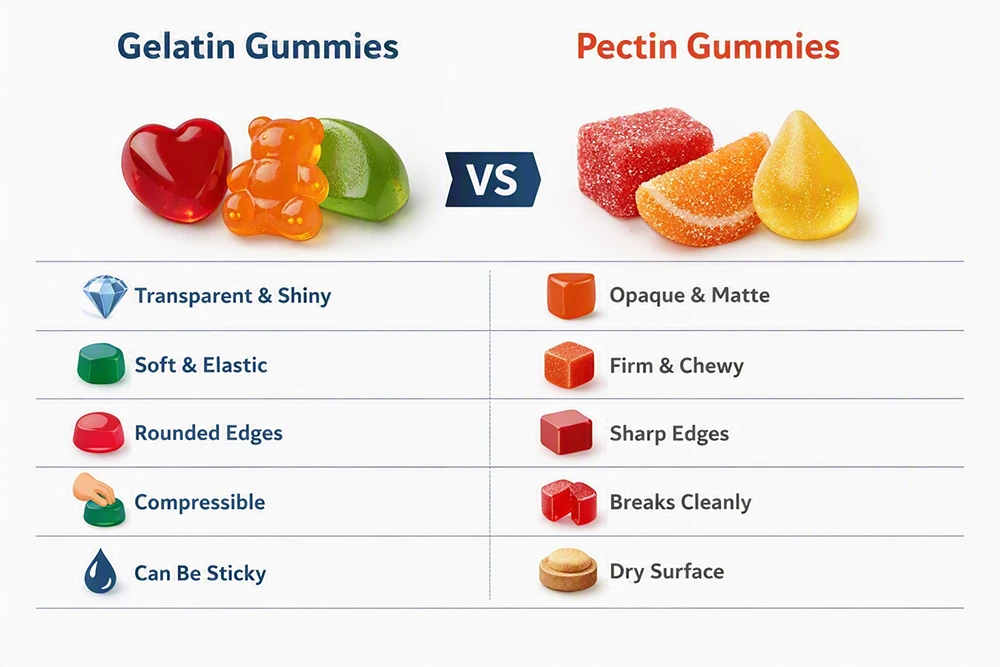
- 1. Formulation & R&D. This is where you and the manufacturer decide exactly how to make gummies that meet your label claims and taste goals. Active ingredients, gelling agents (typically pectin or gelatin), sweeteners, flavors, and colors are balanced for stability and mouthfeel. Expect multiple benchtop trials — texture and potency both shift during scale‑up.
- 2. Raw Material Intake & Testing. Ingredients are received, identity‑tested, and held in quarantine. A serious custom gummy manufacturer won’t skip heavy metal, microbial, or potency assays here; these numbers flow directly into your certificate of analysis.
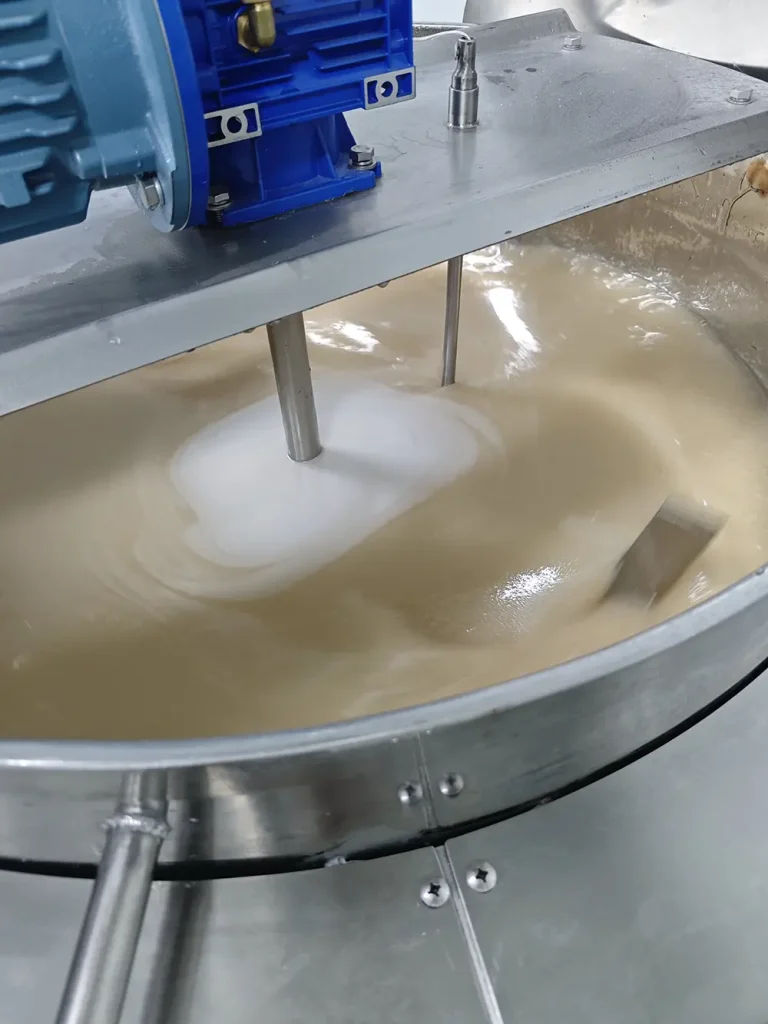
- 3. Cooking the Slurry. The gelling system — pectin, gelatin, or carrageenan — is dissolved and cooked with the carbohydrate base to form a uniform liquid slurry. Temperature control at this stage is critical: too hot and you degrade heat‑sensitive actives; too cool and the gel won’t set properly later.
- 4. Blending in Actives. Vitamins, minerals, botanicals, or other functional ingredients are metered into the slurry. Precision mixing and real‑time potency checks determine whether the finished gummy will deliver what’s on the label.
- 5. Depositing into Molds. The liquid mass is deposited into starch trays or silicone molds to create the gummy shape you’ve chosen. Deposit weight consistency here directly affects your piece‑to‑piece dosage accuracy.
- 6. Cooling & Drying. Gummies move through controlled cooling and drying zones. Moisture content is pulled down to a target range that balances chewiness, microbial safety, and shelf life. Drying too fast leads to tough, rubbery texture; too slow invites mold risk.
- 7. Coating (If Needed). A light oil or anti‑sticking coat is often applied. Some brands opt for a sugar or sour powder finish. This step also acts as a moisture barrier, giving your private label gummy extra months of shelf life.
- 8. Quality Inspection. Trained operators — supported by automated vision systems — check weight, shape, color, and surface defects. Batches also undergo active‑content testing before they’re cleared for packaging.
- 9. Packaging Under Your Brand. Finished gummies are packed into bottles, stand‑up pouches, or blister cards, fully labeled with your artwork. A full‑service custom gummy manufacturer will handle the packaging design checks to ensure regulatory compliance.
What Brand Owners Often Overlook
Most delays aren’t caused by the cooking itself — they happen in stages that brands underestimate. Formulation iterations, raw material lead times, and stability testing can easily add 8–12 weeks before a single bottle is packed. Equally, moisture control isn’t just a texture issue; it’s one of the biggest levers for preventing active degradation. A custom gummy manufacturer that treats drying as a fixed step rather than a flexible, batch‑by‑batch adjustment will almost always deliver inconsistent shelf‑life performance. Ask about real‑time moisture monitoring — not just end‑point lab checks.
Gummies vs. Tablets and Capsules: Where the Risks Hide
If your background is in dry formats, the shift to gummies can be humbling. Tablets are forgiving. Gummies demand tight thermal and humidity envelopes because you’re making gummies with 12–18% residual moisture instead of near‑zero. That means:
- Heat‑sensitive actives (probiotics, certain B vitamins, live cultures) need careful slurry‑side addition timing or post‑cook incorporation.
- Stability testing runs longer and costs more, simply because water accelerates chemical reactions.
- You trade payload size for palatability — gummies typically deliver lower per‑unit doses than capsules, which affects both formulation cost and label positioning.
When Private Label Gummy Production Makes Sense
This model fits brands that want to make gummies without building a dedicated line. It’s especially smart for:
- Supplement startups testing a first SKU.
- Established brands adding a chewable format to an existing capsule line.
- Distributors and importers needing regionalized formulas under their own labels.
- Companies that want to enter the private label gummy space while keeping capital expenditure low.
Compliance Must‑Haves Before You Sign
Any custom gummy manufacturer you consider should operate under recognized food‑safety and quality systems. Verify current certifications: GMP, ISO 22000, HACCP, and often BRC or FSSC 22000. Ask for a specimen batch record and a redacted certificate of analysis — not just a brochure. If you’re exporting, the manufacturer must know the target market’s additive and labeling rules (FDA 21 CFR 111 in the US, EFSA directives in the EU, etc.) and be ready to provide stability data in the format your regulator expects.
Evaluating a Custom Gummy Manufacturer: A Practical Checklist
Use these points when shortlisting who will make gummies for your brand:
- Category experience. Has the manufacturer actually produced gummies in your functional segment — sleep, beauty, children’s, sports — or is yours the first?
- Batch size flexibility. What are the minimum order quantities (MOQs) for a trial run vs. a commercial run? Can they scale with you?
- R&D bandwidth. Do they have an in‑house applications lab that can turn around flavor‑masking and texture tweaks, or does every iteration go to an outside lab?
- Documentation muscle. From raw material CoAs to finished‑product stability reports, the paper trail must be complete and audit‑ready.
- Communication cadence. A custom gummy manufacturer worth partnering with will give you a production schedule, notify you of deviations, and ship samples for approval before full dispatch.
Technical Snapshot: Private Label Gummy Production
| Parameter | What to Expect |
|---|---|
| Base systems | Pectin‑based or gelatin‑based; carrageenan options available for vegan or texture‑specific needs |
| Key input materials | Gelling agents, sugars or sugar alternatives, natural/artificial flavors, colors, active nutrients |
| Core manufacturing steps | Slurry cooking, active blending, depositing/molding, controlled drying, optional coating, packaging |
| Typical quality standards | GMP, ISO 22000, HACCP, BRC, FSSC 22000; third‑party potency and contaminant testing |
| Packaging possibilities | Bottles, stand‑up pouches, blister packs; full private label design and regulatory review |
| Scalability | Lab‑scale trials to multi‑ton commercial batches, depending on line configuration |
| Storage & shipping | Cool, dry warehouse conditions; moisture‑barrier packaging recommended for sea freight and humid climates |
Lessons from the Production Floor
The difference between an average private label gummy and a line that builds real repeat purchase often comes down to process control during two moments: slurry cooking and active blending. When temperature ramps or hold times drift, potency variability follows. The same applies to raw material sourcing — a custom gummy manufacturer with in‑house or tightly managed supply chains can offer batch‑to‑batch color and flavor consistency that spot‑buying on the open market simply cannot match.
Lead times deserve a hard conversation early. Gummy drying and stabilization can’t be compressed the way tablet compression can, so realistic timelines prevent over‑promising to your own customers. Also, don’t treat packaging as an afterthought. Moisture‑wicking caps, desiccant inserts, and film barrier properties all directly impact shelf‑life performance, especially in export markets.
How to Choose the Right Private Label Gummy Partner
Start by aligning on project ownership. In an OEM arrangement, you bring the formula and the custom gummy manufacturer executes. In ODM, the manufacturer proposes a formula based on your concept. Clear boundaries here — who owns the formulation data, who supplies the active premix — prevent legal knots down the road. Also confirm upfront whether flavor, shape, and color customization are included at the quoted MOQ or carry additional charges.
For long‑term partnerships, look past the pilot batch. Evaluate how the manufacturer handles scale‑up: do they maintain the same sensory profile and potency when moving from a 50 kg trial to a 2,000 kg production run? Ask for batch data from a comparable commercial run, not just the trial. Finally, build your quality agreement around three checkpoints: incoming material testing, in‑process weight and moisture checks, and finished‑product release testing. A trustworthy private label gummy partner will never push back on giving you that visibility.
Bottom Line
Working with a custom gummy manufacturer lets you make gummies that match the category’s top performers — without the overhead of building and validating your own facility. The key is treating the manufacturing process as a partnership, not a black box. When you understand how the slurry is cooked, how actives are protected, and how drying is controlled, you can manage quality from thousands of miles away and scale your private label gummy line with confidence.
Frequently Asked Questions
How do I find a reliable custom gummy manufacturer to make gummies for my brand?
Look for demonstrated experience in your specific gummy category, current GMP and food‑safety certifications, and a willingness to share batch documentation and stability data. A capable custom gummy manufacturer should be able to show you a redacted batch record and discuss how they control moisture and potency in a routine production run.
What is private label gummy manufacturing?
It’s the process where a third‑party custom gummy manufacturer produces gummy supplements that you sell under your own brand. You own the label and go‑to‑market; they handle formulation, cooking, molding, and packaging.
How does gummy manufacturing differ from making tablets or capsules?
When you make gummies, you’re working with a high‑moisture, heat‑sensitive matrix that requires precise drying and longer stability protocols. Tablet and capsule lines don’t face the same water‑activity risks, which makes gummy production less forgiving but far more appealing to consumers.
What should I check before contracting a private label gummy manufacturer?
Minimum order quantities, batch scalability, in‑house R&D support, raw material traceability, and the availability of finished‑product stability data for your target market are all non‑negotiable evaluation points.
Which certifications matter most for a gummy manufacturer?
Core standards include GMP, ISO 22000, HACCP, and often BRC or FSSC 22000. If you’re targeting specific demographics, also ask about organic, non‑GMO, halal, kosher, or vegan certifications.
Can I customize the shape, flavor, and formula of my private label gummy?
Yes. Most custom gummy manufacturer partners offer flavor, color, shape, and sugar‑level adjustments to fit regional tastes and regulatory profiles. Active blends can usually be tailored as well, provided they’re compatible with the gummy matrix.
About Gothink Biology
This guide is brought to you by Gothink Biology — a custom gummy manufacturer that helps brands make gummies from concept to full‑scale production. As a private label gummy specialist, we cover everything: R&D and raw material sourcing, cooking and depositing, coating, packaging, and global logistics.
Shenzhen Gothink Biology Technology Co., Ltd. is a globally recognized nutrition supplement supplier and dietary supplement manufacturer. We provide OEM, ODM, CMO, and CDMO services, supported by international certifications including ISO9001, ISO22000, HACCP, FDA, HALAL, GMP, KOSHER, BRC, FSSC 22000, PJPH, and Vegan. Whether you need a single SKU trial or multi‑container commercial orders, we deliver high‑quality private label gummy solutions that match your brand vision and regulatory requirements.
To discuss your next project or see how we make gummies for brands worldwide, visit our official website: https://gttbio.com/ or get in touch with our team.