
Abstract
Gummy supplements have become one of the fastest-growing formats in the global dietary supplement market. Whether you are an emerging brand exploring private label gummies, a retailer sourcing gummy wholesale, or an entrepreneur looking to launch a new product line, understanding how gummies are made is essential to making informed decisions about formulation, quality, and manufacturing partnerships. This guide walks through the complete gummy manufacturing process — from raw ingredient selection to final packaging — and explains what buyers, brand owners, and distributors should know before entering the market.
1. Why Gummies Have Become a Dominant Supplement Format
Over the past decade, consumer preference has shifted significantly toward gummy-format dietary supplements. The reasons are practical: gummies are easy to consume, pleasant in taste and texture, and highly suitable for daily supplementation routines. Unlike tablets or capsules, gummies require no water and are especially popular among children, older adults, and anyone who has difficulty swallowing traditional pills.
From a business perspective, gummies also offer significant branding and differentiation opportunities. Custom shapes, colors, and flavors allow brands to create distinctive products that stand out at retail and online. This has driven enormous growth in demand for gummy bulk production and gummy wholesale sourcing globally.
2. Core Ingredients in Gummy Manufacturing
Understanding what goes into a gummy is the first step in evaluating any manufacturing process. A standard gummy formulation includes the following key components:
Gelling Agents
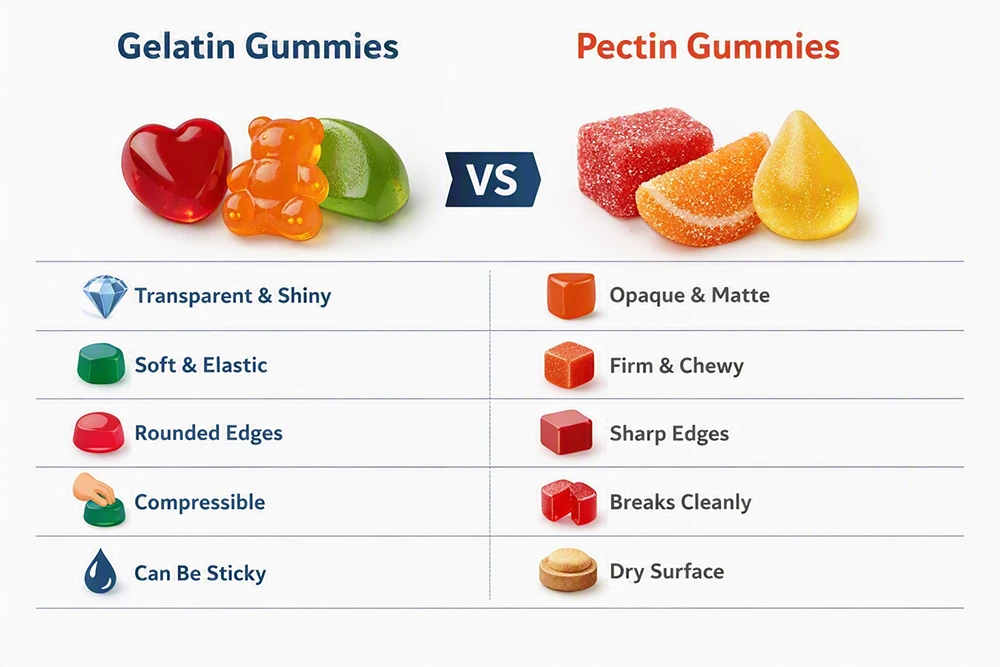
The gelling agent is what gives gummies their characteristic chewy texture. The two most commonly used are:
- Gelatin: Derived from animal collagen, gelatin is the traditional choice for standard gummies. It delivers excellent texture and a clean bite but is not suitable for vegan or halal-certified products.
- Pectin: A plant-derived alternative, pectin is widely used in vegan gummies. It produces a slightly softer texture and is fully compatible with vegan, kosher, and halal certifications.
Sweeteners and Sugars
Sucrose and glucose syrup are the conventional sweeteners. For low-sugar or sugar-free variants, manufacturers use alternatives such as erythritol, xylitol, stevia, or allulose. The choice of sweetener impacts not only taste but also texture stability and shelf life.
Active Ingredients
Active ingredients are the functional components that give a gummy its health benefit. Common examples include vitamins (A, C, D, E, B-complex), minerals (zinc, calcium, magnesium), herbal extracts (ashwagandha, elderberry), melatonin, collagen, creatine, probiotics, and omega-3 fatty acids. The challenge in gummy manufacturing is ensuring that these ingredients remain stable and bioavailable through the cooking and molding process.
Flavoring, Coloring, and Coating
Natural or artificial flavors are added to create appealing taste profiles. Natural fruit-derived colorants (such as anthocyanin, beta-carotene, and spirulina) are increasingly preferred by health-conscious consumers. A light coating of citric acid, sugar, or carnauba wax is often applied after molding to prevent gummies from sticking together and to enhance shelf stability.
3. The Step-by-Step Gummy Manufacturing Process
Commercial gummy manufacturing follows a defined sequence of steps. While specific processes vary between manufacturers, the core workflow is consistent across GMP-certified facilities.
- Raw Material Inspection and Weighing: All incoming ingredients are tested for identity, purity, and microbial safety before production begins. This is a critical quality checkpoint in any compliant gummy manufacturing facility.
- Gelling Agent Hydration: The gelling agent (gelatin or pectin) is dissolved in purified water and allowed to hydrate fully. The hydration time and temperature are carefully controlled to ensure consistent gel strength.
- Cooking and Mixing: The hydrated gelling agent is combined with sweeteners, humectants (such as sorbitol), and colorants in a cooking vessel. The mixture is heated to a specific temperature to dissolve all components and reduce moisture content. This step is critical to achieving the desired Brix level (sugar concentration), which affects both texture and shelf life.
- Active Ingredient Addition: Once the base mixture has cooled to a safe temperature (typically below 70°C), active ingredients and flavors are added. Heat-sensitive ingredients such as probiotics, certain vitamins, and plant extracts require careful temperature management to prevent degradation.
- Depositing and Molding: The liquid gummy mass is deposited into molds — either starch-based (starch mogul process) or silicone molds. The starch mogul process is the industry standard for high-volume gummy manufacturing, while silicone molds are often used for custom shapes and smaller batches.
- Drying and Conditioning: Molded gummies are placed in temperature- and humidity-controlled drying rooms for 12 to 48 hours, depending on the formulation. This step removes excess moisture, sets the final texture, and ensures dimensional stability.
- De-molding and Oiling/Coating: Gummies are released from molds and tumbled with a light coating of vegetable oil, beeswax, or carnauba wax to prevent clumping and improve appearance. For sour gummies, citric acid is applied at this stage.
- Quality Control Testing: Finished gummies undergo a battery of quality tests including weight uniformity, moisture content, hardness, active ingredient potency, microbial testing, and heavy metal screening before release for packaging.
4. Equipment and Facility Requirements for Gummy Manufacturing
Professional gummy manufacturing requires specialized equipment and strictly controlled facility conditions. Key equipment includes cooking kettles, continuous cooking lines, starch mogul depositing machines (for high-volume production), silicone mold systems, drying tunnels or chambers, and coating drums. Packaging lines must accommodate a range of formats, including bottles, pouches, blister packs, and bulk containers.
From a facility standpoint, GMP (Good Manufacturing Practice) compliance is the baseline requirement for supplement production in most regulated markets. This typically includes 100,000-class cleanrooms for production areas, dedicated raw material storage, in-house quality laboratories, and environmental monitoring programs. Manufacturers serving U.S. and European markets are generally expected to maintain FDA-registered facilities and comply with 21 CFR Part 111 for dietary supplements.
5. Quality Assurance and Certifications to Look For
For brands sourcing from a gummy manufacturer, certifications are a reliable indicator of process discipline and regulatory readiness. When evaluating manufacturing partners, look for the following credentials:
- GMP (Good Manufacturing Practice): The fundamental standard for dietary supplement manufacturing.
- ISO 9001 / ISO 22000: Quality management and food safety management certifications.
- HACCP: Hazard Analysis and Critical Control Points — a systematic approach to identifying and managing food safety risks.
- Halal and Kosher: Required for brands targeting Muslim or Jewish consumer markets.
- Vegan Certification: Important for brands positioning products as plant-based.
Third-party testing and Certificate of Analysis (CoA) documentation are equally important. A credible manufacturer should be able to provide batch-specific CoAs confirming active ingredient potency, heavy metals (lead, cadmium, arsenic, mercury), and microbiological counts.
6. OEM, ODM, and Private Label Gummies: Understanding Your Options
Brands entering the supplement market have several manufacturing engagement models to choose from. Understanding the distinctions helps align expectations with the right manufacturing partner.
Private Label Gummies
Private label gummies refer to pre-formulated products manufactured by a third party and sold under a brand’s own label. This is the fastest route to market and requires the lowest minimum commitment. It is well-suited for startups and retailers testing the market without the cost of custom formulation.
OEM (Original Equipment Manufacturing)
In an OEM arrangement, the brand provides its own proprietary formulation and the manufacturer produces to specification. This gives the brand full control over the formula while leveraging the manufacturer’s production infrastructure and regulatory compliance.
ODM (Original Design Manufacturing)
ODM services involve the manufacturer developing the formulation on behalf of the brand. The manufacturer handles ingredient selection, stability testing, and regulatory documentation, while the brand focuses on marketing and distribution. This is a cost-effective option for brands that lack in-house R&D resources.
Gummy Bulk and Wholesale
For distributors, contract packagers, or brands with their own packaging operations, gummy bulk purchasing offers flexibility and cost efficiency. Gummy wholesale arrangements typically involve unpackaged or minimally packaged product sold by weight or unit count for downstream processing. This model requires confidence in the manufacturer’s quality controls, as there is less inspection opportunity after bulk delivery.
7. Formulation Considerations for Functional Gummies
Not all gummy formulations are equal in complexity. Standard vitamin gummies — such as vitamin C or multivitamins — involve relatively stable, well-characterized ingredients. More advanced functional categories present specific formulation challenges that a qualified gummy manufacturer must be equipped to handle.
- Creatine Gummies: Creatine monohydrate has specific solubility characteristics that affect gummy texture. High-load creatine gummies require careful formulation to maintain an appealing chew without excessive crystallization.
- Melatonin Sleep Gummies: Melatonin is a highly active compound at low doses. Accurate dosing and homogeneous distribution throughout the gummy mass are essential for both safety and regulatory compliance.
- Probiotic Gummies: Live bacterial cultures are extremely heat-sensitive. Manufacturing probiotic gummies requires low-temperature processing and optimized water activity to maintain viable counts through the product’s shelf life.
- Ashwagandha and Herbal Extract Gummies: Botanical extracts introduce taste masking challenges. Achieving palatable flavor profiles while maintaining clinically meaningful extract concentrations requires experienced formulation expertise.
8. Packaging Options and Shelf Life Considerations
Packaging plays an important functional role in gummy preservation. Gummies are hygroscopic — they absorb moisture from the environment — which can lead to stickiness, clumping, and texture degradation. Appropriate packaging must provide adequate moisture and oxygen barriers.
Common packaging formats for gummies include:
- HDPE bottles with desiccant inserts:The most common retail format, offering good moisture protection.
- Stand-up pouches:Cost-effective for DTC and e-commerce channels, with options for resealable closures.
- Blister packs:Used for premium or children’s products where individual dose integrity is important.
Typical gummy shelf life ranges from 18 to 24 months when packaged appropriately and stored under recommended conditions (cool, dry, away from direct light). Accelerated stability testing should be conducted during product development to confirm label claims.
9. Regulatory Considerations for Global Markets
Gummy supplements are regulated differently across markets. Brands sourcing from a gummy manufacturer for export must understand the regulatory landscape in each target market.
- United States:Gummy dietary supplements are regulated under the FDA’s 21 CFR Part 111. Manufacturers must be registered with the FDA. Labeling must comply with supplement facts panel requirements and permissible structure/function claims.
- European Union:Food supplement regulations vary by member state, but the EU Food Supplements Directive provides a common framework. Novel ingredients require authorization under EU Novel Food Regulation.
- Other markets:Markets such as Canada (NHP regulations), Australia (TGA), and the UK each have distinct registration and labeling requirements. A capable manufacturing partner should be able to provide export documentation and compliance support.
10. How to Evaluate a Gummy Manufacturer
Selecting the right gummy manufacturing partner is one of the most consequential decisions a supplement brand will make. The following criteria provide a practical evaluation framework:
- Facility audits and certifications: Verify GMP compliance and relevant certifications. Request audit reports or conduct your own on-site visit.
- R&D capabilities: Assess the manufacturer’s ability to develop and adapt formulations. In-house laboratory capabilities are a strong indicator.
- Minimum order quantities (MOQ): Understand the MOQ structure for both sample production and commercial runs. Flexible MOQ is important for early-stage brands.
- Lead times and capacity: Confirm production lead times and annual capacity to ensure the manufacturer can scale with your business.
- Documentation and transparency: A reliable manufacturer provides batch records, CoAs, allergen statements, and regulatory dossiers upon request.
- Reference products and samples: Request samples from existing product lines before committing to a production run.
Summary
Making gummies at a commercial scale is a precise, multi-step process that requires specialized equipment, controlled manufacturing environments, and rigorous quality systems. For brands and buyers, understanding the fundamentals of gummy manufacturing enables more informed supplier selection, better formulation decisions, and fewer surprises during product development.
Whether you are exploring private label gummies for a quick market entry, pursuing OEM or ODM gummy development for a differentiated product, or sourcing gummy bulk and gummy wholesale for distribution, the principles covered in this guide apply equally. Prioritize certified facilities, transparent documentation, and manufacturing partners with verifiable R&D expertise.
The gummy supplement market continues to grow, driven by consumer preference for convenient, enjoyable nutrition formats. Brands that invest in understanding the manufacturing process — and choose their partners carefully — are better positioned to deliver consistent, high-quality products that build lasting consumer trust.
Frequently Asked Questions (FAQ)
Q1: What is the typical minimum order quantity (MOQ) for private label gummies?
MOQ varies between manufacturers and product formats. For private label gummies with existing formulations, some manufacturers offer runs as low as 1,000 to 5,000 units. Custom formulation projects typically require higher MOQs due to the development and validation costs involved. It is always advisable to confirm MOQ requirements early in supplier discussions and to request trial or sample batch capabilities before committing to full-scale production.
Q2: What is the difference between OEM and ODM in gummy manufacturing?
In OEM (Original Equipment Manufacturing), the brand owns and provides the formulation, and the manufacturer produces it to specification. In ODM (Original Design Manufacturing), the manufacturer develops the formulation on behalf of the brand, typically drawing on proprietary formulas or ingredient libraries. ODM is a more turnkey solution suitable for brands without internal R&D capability, while OEM provides greater formula control for brands with specific requirements.
Q3: Can gelatin-based gummies be certified halal or kosher?
Yes, provided the gelatin used is sourced from halal-certified or kosher-certified animal sources (typically beef). However, many manufacturers have moved toward pectin-based formulations for products requiring both halal and vegan certification simultaneously, as plant-derived gelling agents satisfy both requirements without source-specific certification constraints.
Q4: How long does it take to develop and produce a custom gummy supplement?
Development timelines depend on formulation complexity. A standard vitamin gummy with an existing base formula may take 4 to 8 weeks from approval to production. Custom formulations involving novel ingredients, specific flavor profiles, or stability testing may require 8 to 16 weeks before a commercial production run is initiated. Packaging procurement and regulatory documentation can add additional lead time, particularly for export markets.
Q5: What certifications should I require from a gummy manufacturer?
At a minimum, look for GMP certification and FDA facility registration for products intended for the U.S. market. ISO 9001 and ISO 22000 provide additional assurance of quality management systems. HACCP certification demonstrates systematic food safety management. Halal, kosher, and vegan certifications are market-specific but increasingly important for differentiated positioning.
Q6: What quality tests should be performed on finished gummy products?
A comprehensive quality release program for gummies should include: active ingredient potency testing (confirming label claims), heavy metal screening (lead, cadmium, arsenic, mercury), microbiological testing (total aerobic count, yeast and mold, absence of pathogens), moisture content, weight per unit, and organoleptic evaluation (appearance, color, texture, taste). Certificate of Analysis documentation should be provided for each production batch.
Q7: What is gummy bulk purchasing and who uses it?
Gummy bulk purchasing refers to buying gummies in large, unpackaged or minimally packaged quantities — typically for downstream processing, custom packaging, or retail repacking operations. It is commonly used by contract packagers, distributors, subscription box operators, and large retailers who source product in volume and apply their own packaging. Gummy wholesale arrangements require strong quality agreements with the manufacturer, as the buyer takes on more responsibility for final product handling.
About Gothink Biotech — Gummy Manufacturer & Dietary Supplement Manufacturer
Shenzhen Gothink Biotech Co., Ltd. is a GMP-certified gummy manufacturer and dietary supplement manufacturer based in China, providing comprehensive OEM, ODM, CMO, and CDMO services to supplement brands, retailers, and distributors worldwide.
Our production capabilities cover the full range of gummy formats, including vitamin gummies, functional gummies, vegan pectin gummies, herbal extract gummies, creatine gummies, melatonin sleep gummies, probiotic gummies, multivitamin gummies, and more. We support gummy bulk production and gummy wholesale supply for buyers requiring large-volume, consistent-quality output, as well as private label gummies for brands looking for efficient routes to market.
Our facility features a 100,000-class cleanroom manufacturing environment with a daily output of 16 tons and an annual production capacity of 5,000 tons. R&D is conducted in a 10,000-class pharmaceutical-grade laboratory, led by postdoctoral researchers with backgrounds at leading U.S. research institutions.
Certifications held: ISO 9001, ISO 22000, HACCP, FDA facility registration, GMP, Halal, Kosher, and Vegan. We provide end-to-end project support — from initial formulation consultation and raw material sourcing through to manufacturing, quality control, packaging, and export documentation.
Whether you are launching a new supplement brand, scaling an existing product line, or seeking reliable gummy wholesale supply, Gothink Biotech offers flexible MOQ, transparent quality documentation, and a proven manufacturing infrastructure to support your goals. Learn more at gttbio.com.