
Executive Summary
Dietary supplement manufacturing is a specialized process combining formulation science, regulatory compliance, and precision production to create vitamins, minerals, herbal extracts, and functional compounds in consumable formats. The process requires understanding raw material sourcing, regulatory frameworks, manufacturing processes (gummy, capsule, tablet, powder, liquid), quality assurance standards, and supply chain logistics.
For brands and private label buyers, selecting the right dietary supplement manufacturer directly impacts product quality, time-to-market, and regulatory success. This guide covers the complete manufacturing process, key decision criteria, and what businesses should evaluate when sourcing or producing dietary supplements at scale.
Definition
Dietary supplement manufacturing refers to the end-to-end process of developing and producing vitamin, mineral, herbal, and functional supplement products in multiple formats—including gummies, capsules, tablets, powders, drops, and liquids—adhering to regulatory standards, quality certifications, and custom brand specifications. The process encompasses formulation design, raw material procurement, production, quality control, packaging, and distribution logistics.
What Is Dietary Supplement Manufacturing?
Core Definition & Industry Scope
Dietary supplement manufacturing combines chemistry, regulatory expertise, and industrial production to transform raw botanical extracts, vitamins, minerals, and functional ingredients into finished consumer products. Unlike pharmaceutical manufacturing, dietary supplements operate under different regulatory frameworks in most markets (FDA in the U.S., EFSA in Europe), which requires distinct compliance strategies and documentation.
Historical Background
The dietary supplement industry emerged as a distinct sector in the 1980s–1990s, accelerated by the U.S. Dietary Supplement Health and Education Act (DSHEA) of 1994, which established a legal framework separate from drug regulation. This created opportunities for brands, distributors, and contract manufacturers to develop customized formulations. Over the past two decades, the industry has professionalized significantly, with GMP certification, third-party testing, and advanced formulation science becoming industry standards.
Business Relevance & Market Demand
The global dietary supplement market exceeded $180 billion in 2023 and continues expanding at 6–8% annually. Key drivers include:
- Rising consumer health consciousness and preventive wellness focus
- Growing demand for plant-based and natural ingredient alternatives
- Expansion of e-commerce, enabling direct-to-consumer brands to reach global audiences
- Regulatory acceptance and credibility improvements through third-party certifications
- Increasing customization demand for personalized and niche formulations
For businesses, outsourcing to experienced manufacturers (via OEM/ODM partnerships) reduces capital investment, accelerates time-to-market, and provides access to regulatory expertise and production capacity.
Core Manufacturing Processes & Product Formats
Gummy Supplement Manufacturing
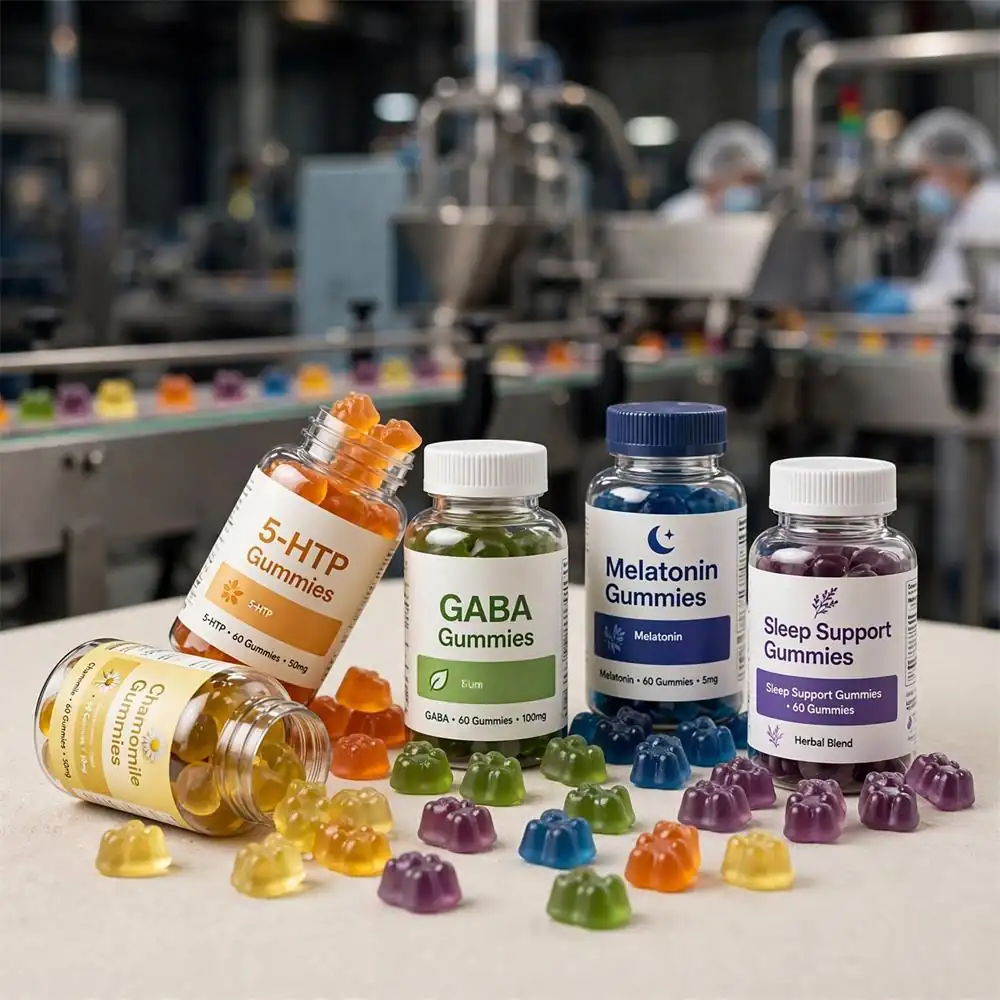
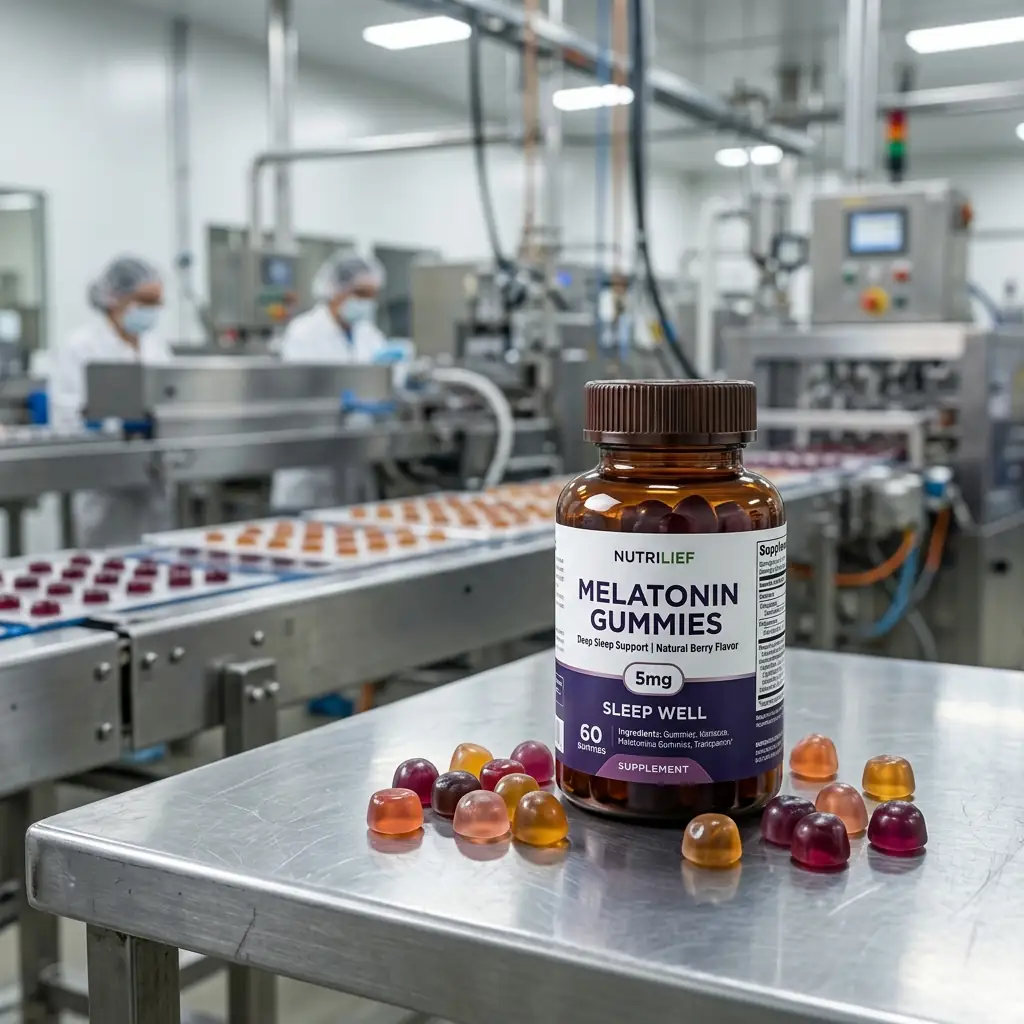
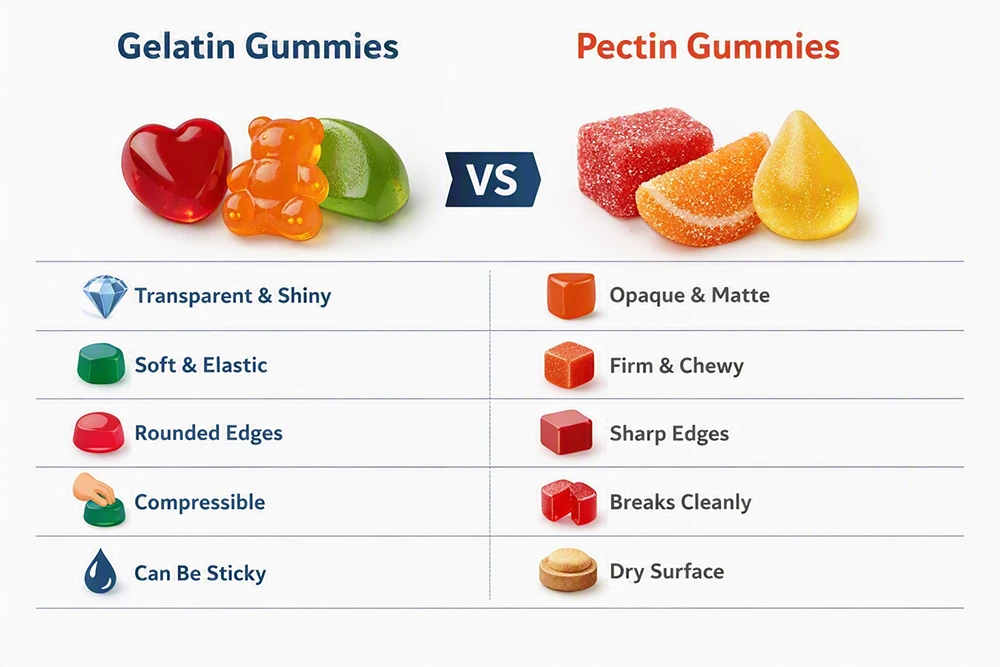
Gummy contract manufacturing is one of the fastest-growing supplement formats, combining palatability with precise dosing. The process involves blending active ingredients with natural gelling agents (pectin, carrageenan, gelatin), pouring into molds, cooling, and packaging. Gummies appeal to consumers who dislike swallowing pills and allow brands to create visually distinctive products with flavor customization and shape variety (30+ design options typical in modern production).
Key considerations: Ingredient stability in moisture-rich gummy matrices, accurate dosing consistency, shelf-life management, and regulatory compliance for claims on gummy formats. Production scalability ranges from 2–10 tons daily depending on facility sophistication.
Capsule Manufacturing
Capsule production involves filling vegetarian or gelatin shells with precise powder or liquid formulations. The process combines powder blending, weighing, filling, sealing, and quality inspection. Capsules offer excellent bioavailability, shelf stability, and customization in size, color, and imprint.
Key considerations: Vegetarian vs. gelatin options for dietary and religious compliance, moisture control in powder fills, machine precision calibration, and packaging hermetically to prevent oxidation of sensitive ingredients.
Tablet & Compressed Supplement Manufacturing
Tablet production requires powder blending, granulation, compression, and optional coating. The process demands precise equipment calibration to ensure dose uniformity and hardness standards. Tablets are cost-effective for high-volume production and provide excellent shelf stability.
Key considerations: Binder-to-active ingredient ratios affecting efficacy, compression force tuning to avoid crumbling, and coating application for taste masking or enteric delivery targeting specific absorption sites.
Powder Supplement Manufacturing
Powder supplements involve blending multiple ingredients, milling to standardized particle sizes, and packaging in bulk, sachets, or containers. Powders offer flexibility for ingredient ratios and appeal to consumers seeking customizable doses.
Key considerations: Ingredient segregation and mixing uniformity, static control during processing, moisture absorption management, and packaging integrity for long shelf-life in humid climates.
Liquid & Drop Supplement Manufacturing
Liquid supplements include tinctures, extracts, and oral drops, produced through extraction, concentration, and precise filling. Drops provide rapid absorption and are popular for children’s and senior supplements where swallowing is challenging.
Key considerations: Solvent compatibility with active ingredients, preservative system selection for microbial stability, dropper accuracy for consistent dosing, and light-protection packaging to prevent degradation.
Technical Parameters & Manufacturing Standards
| Product Format | Key Materials | Manufacturing Highlights | Quality Standards |
|---|---|---|---|
| Gummy | Pectin, carrageenan, gelatin, active ingredients, colorants, flavoring agents | Melting, mixing, molding, cooling, coating, packaging. 2–10 tons/day capacity typical | GMP, USP/BP dissolution tests, microbial limits, moisture content <8% |
| Capsule | HPMC or gelatin shells, powder fill, moisture-absorbing agents | Powder blending, capsule filling, sealing, banding, packaging. 1–6 tons/day typical | GMP, dissolution <45 min, hardness 6–18 kP, moisture <5% |
| Tablet | Active ingredients, binders (MCC, maltodextrin), disintegrants, lubricants | Blending, granulation, compression, coating. 3–16 tons/day typical | GMP, hardness 50–150 N, friability <1%, disintegration <30 min |
| Powder | Active ingredients, bulking agents, flow agents (silica), anti-caking agents | Milling, blending, homogenization, packaging. Flexible capacity | GMP, particle size distribution, moisture <5%, bulk density specification |
| Liquid/Drops | Herbal extracts, preservatives, emulsifiers, solvents (glycerin, ethanol) | Extraction, concentration, filtration, fill-to-volume, dropper assembly | GMP, microbial limits (CFU/mL), viscosity specification, preservative efficacy |
| Compliance & Quality Metrics | Scope & Requirements | Business Impact |
|---|---|---|
| GMP (cGMP) | Facility design, equipment validation, standard operating procedures, staff training, documentation | Mandatory for U.S. market; reduces regulatory risk and recall exposure |
| ISO 9001 / ISO 22000 | Quality management systems, food safety documentation, traceability protocols | Demonstrates international quality commitment; required for many European and global buyers |
| Third-Party Testing | USP/BP testing, heavy metals, microbial limits, potency verification, allergen screening | Builds brand credibility; enables marketing claims; required by major retailers |
| HALAL / KOSHER / Vegan | Ingredient sourcing, processing methods, certification documentation | Expands addressable market; critical for halal-focused and religious consumer segments |
| Packaging & Labeling | Regulatory label compliance, tamper-evident features, multilingual support, storage guidance | Prevents regulatory violations; improves shelf appeal and consumer safety perception |
💡 Production Capacity Insights
Daily Output Examples: A modern GMP facility typically produces 2–16 tons daily depending on product format (gummies at lower end, tablets at higher). Annual capacity ranges from 500–5,000 tons, allowing manufacturers to serve brands from startup trial runs (MOQ: 100–500 kg) to major retailers (MOQ: 10,000+ kg). Understanding your target manufacturer’s capacity ensures reliable supply scaling as your brand grows.
Formulation Development & Raw Material Strategy
Custom Formulation Process
Leading manufacturers conduct formulation research on 2,000+ new products annually. The development process typically includes:
- Ingredient Selection: Active ingredients (vitamins, minerals, botanicals) sourced from verified suppliers with certificates of analysis and traceability documentation
- Compatibility Testing: Ensuring selected ingredients don’t degrade, separate, or react during storage and shelf-life
- Dosage Optimization: Balancing efficacy, cost, and manufacturing constraints
- Stability Studies: Temperature and humidity stress testing to establish shelf-life claims
- Bioavailability Assessment: Ensuring the formulation supports adequate absorption of active ingredients
Raw Material Sourcing & Transparency
Reliable manufacturers maintain relationships with verified suppliers and provide full supply chain documentation. Key requirements include:
- Certificates of Analysis (CoA) for all raw materials
- Supplier audits and qualification documentation
- Origin transparency (especially critical for botanical ingredients)
- Testing for contaminants (pesticide residues, heavy metals, microbial load)
- Traceability systems enabling product recalls if necessary
Practical B2B Manufacturing Insights
Manufacturing Quality & Process Control
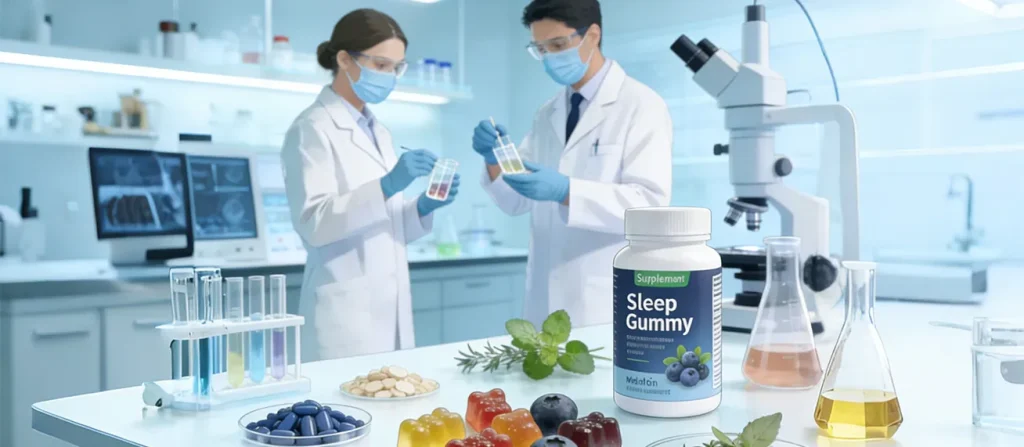
Elite manufacturers operate 100,000-class cleanrooms (pharmaceutical-grade air quality standards) combined with 10,000-class pharmaceutical R&D laboratories. In practice, this means:
- Particle contamination limits of 3,520 particles/m³ (FDA cleanroom standards)
- Automated batch tracking and real-time monitoring systems
- In-process quality checks at multiple stages (blend uniformity, weight variation, hardness)
- Environmental monitoring (sterility, microbial limits) within production areas
- Documented equipment maintenance and calibration schedules
Production Scalability & Lead Times
When evaluating custom gummy manufacturer or other formats, key scalability considerations include:
- MOQ Flexibility: True partners support both small trial runs (100–500 kg) and large orders (10,000+ kg) without premium pricing structures
- Lead Time: Standard timeline 4–8 weeks from order confirmation to shipment; shorter lead times for repeat orders
- Production Scheduling: Reliable manufacturers provide transparency on production calendars and capacity allocation
- Rush Order Capability: Emergency orders possible but typically at cost premiums; plan ahead for predictable demand
Compliance Documentation & Regulatory Readiness
A critical advantage of experienced manufacturers is pre-built regulatory documentation:
- FDA Facility Registration: Manufacturer holds active FDA establishment registration
- Ingredients Database: All ingredients pre-vetted for FDA acceptability and absence from warning letters
- Label Compliance Support: Manufacturers assist with structure/function claims and ensure label compliance across target markets
- Export Documentation: Health certificates, COO (certificates of origin), and regulatory alignment for international markets
- Audit Trail Records: Complete batch documentation supporting product claims and quality assurance
Cost Structure Considerations
Total cost of goods sold (COGS) typically comprises:
- Raw Materials: 30–50% of final cost (depends on ingredient quality, botanical sourcing)
- Manufacturing & Labor: 15–25%
- Packaging & Labeling: 10–20%
- Quality Control & Testing: 5–10%
- Overhead & Logistics: 5–10%
Transparent manufacturers provide itemized quotes breaking down each cost category. Lower-cost manufacturers may cut corners on testing, documentation, or ingredient quality—a false economy when regulatory violations or recalls are considered.
How to Evaluate a Reliable Dietary Supplement Manufacturer
Red flags to avoid:
- Unwillingness to share GMP certifications, facility audits, or third-party testing data
- No transparent pricing breakdown or refusal to discuss cost structure
- Limited traceability for raw material sources
- Pressure to accept shortened lead times without capacity justification
- No documented quality assurance procedures or ISO certifications
Green flags indicating reliability:
- Published GMP certification and regular third-party audits
- Detailed technical documentation available (facility specs, equipment validation records)
- Demonstrated experience with your product category and target market
- References from established brands in your niche
- Transparent communication about capacity, timelines, and cost structures
- Investment in R&D capabilities and formulation support services
- Multi-format production capability (gummies, capsules, tablets, powders) showing operational sophistication
B2B Decision Framework for Brands & Distributors
Choosing the Right Manufacturer for OEM/ODM Projects
OEM (Original Equipment Manufacturer) means the manufacturer produces to your exact specifications and formulation—you maintain intellectual property control but must develop the formula independently. ODM (Original Design Manufacturer) means the manufacturer offers pre-developed formulations you can customize and white-label—faster to market but less differentiation.
Critical Assessment Criteria
- Production Capability: Verify facility capacity matches your growth projections for 12–24 months ahead
- Quality Infrastructure: Confirm GMP certification, third-party testing protocols, and documented quality assurance procedures
- Regulatory Expertise: Assess manufacturer’s familiarity with your target markets (FDA, EU, Canada, etc.) and claim substantiation requirements
- Communication & Transparency: Evaluate responsiveness, willingness to provide documentation, and problem-solving approach
- Innovation & Technical Support: Determine if manufacturer actively invests in R&D and can support custom formulation requests
- Long-Term Stability: Check financial stability, ownership structure, and commitment to maintaining certifications
- Pricing Competitiveness: Compare quotes across 3–5 manufacturers while maintaining quality baselines
Establishing Long-Term Supply Partnerships
Successful B2B relationships require clear agreements on:
- Pricing & Volume Tiers: Locked-in pricing for 12–24 months to enable confident retail pricing
- Quality Standards: Documented specifications for raw materials, in-process controls, and finished product testing
- Exclusivity & IP Protection: Clear terms on formula confidentiality and whether formulation remains proprietary to your brand
- Supply Continuity: Backup suppliers and contingency planning for disruption scenarios
- Change Management: Formal processes for ingredient substitutions, recipe changes, or equipment modifications
- Recall & Liability: Clear responsibility allocation, insurance coverage, and traceability protocols
Risk Control & Quality Assurance Checkpoints
Before Full Production:
- Request stability test data demonstrating shelf-life claims
- Conduct third-party testing on pilot batches to verify label claims
- Review and approve all label copy for regulatory compliance
- Confirm packaging integrity and material specifications
During Production:
- Request real-time batch documentation and traceability records
- Conduct in-plant audits or inspections at key production stages
- Verify raw material testing and CoA documentation before use
Before Shipment:
- Confirm finished product testing results match specifications
- Verify labeling compliance and packaging integrity
- Review complete batch documentation and export records
Conclusion
Manufacturing dietary supplements at commercial scale requires integrated expertise spanning formulation science, regulatory compliance, precision production, and supply chain management. Whether launching your first product or scaling to major retailers, selecting a reliable dietary supplement manufacturer is a strategic decision directly impacting brand success, consumer safety, and regulatory compliance.
The most effective brands prioritize transparency, quality documentation, and long-term partnership value over lowest-cost options. By understanding core manufacturing processes, quality standards, and key evaluation criteria, you can identify partners capable of supporting sustainable growth while maintaining the quality and compliance standards your brand requires.
Elite manufacturers distinguish themselves through pharmaceutical-grade cleanrooms, comprehensive R&D capabilities, transparent sourcing practices, and demonstrated expertise across multiple product formats and regulatory markets. These partnerships accelerate time-to-market, reduce regulatory risk, and provide the operational reliability necessary for scaling from startup to established brand.
Frequently Asked Questions
Dietary supplement manufacturing combines chemistry, quality assurance, and precision production to create vitamins, minerals, and herbal products for consumer use. The key difference from pharmaceuticals: supplements operate under FDA dietary supplement regulations rather than drug regulations. This means different safety standards, claim substantiation requirements, and pre-market approval processes. Both require GMP facilities and rigorous quality control, but pharmaceuticals face stricter efficacy testing and pre-market review by FDA.
The five primary formats are: (1) Gummies—using pectin or gelatin gelling agents, popular for taste and compliance; (2) Capsules—vegetarian HPMC or gelatin shells filled with powder, offering good bioavailability; (3) Tablets—compressed powders, most cost-effective for high-volume production; (4) Powders—loose blends offering maximum flexibility; (5) Liquids/Drops—herbal extracts with rapid absorption. Format selection depends on target consumer, ingredient stability, shelf-life requirements, and cost targets.
The critical baseline certifications are: GMP (Good Manufacturing Practice)—mandatory for FDA compliance; ISO 9001 & ISO 22000—international quality and food safety standards; Third-Party Testing (USP/BP)—independent verification of potency and purity; HALAL/KOSHER/Vegan—optional but valuable for market differentiation. Many global brands also require additional certifications like NSF, Informed Choice, or Sport Certification depending on market positioning. Always request evidence of active, current certifications rather than relying on marketing claims.
Typical lead time is 4–8 weeks from order confirmation to shipment, including formulation finalization (if custom), production, testing, and packaging. MOQ varies significantly: small trial runs start at 100–500 kg, while large orders range from 5,000–50,000 kg. Premium manufacturers often support both extremes without surcharges, while budget manufacturers may impose minimums. Lead times shrink for repeat orders (2–4 weeks) since formulation and setup work are eliminated. Plan ahead rather than requesting rush orders, which incur cost premiums.
Prioritize: (1) Published GMP certification and documented audit results; (2) Transparent raw material sourcing with supplier audits and CoA documentation; (3) Multi-format production capability indicating operational sophistication; (4) Third-party testing protocols and documented quality assurance procedures; (5) References from established brands in your category; (6) Investment in R&D and formulation support; (7) Clear, itemized pricing without hidden costs; (8) Responsive communication and willingness to provide regulatory documentation. Avoid manufacturers who resist transparency or pressure you to accept shortened timelines without capacity justification.
OEM (Original Equipment Manufacturer): You provide the complete formula, and the manufacturer produces it to your specifications. You maintain formula ownership and differentiation but must invest in formulation development. ODM (Original Design Manufacturer): The manufacturer provides pre-developed formulations you can customize and private label. Faster to market and lower upfront R&D costs, but formulation may not be exclusively yours. Choose OEM for highly differentiated, proprietary formulations; choose ODM for faster launches with proven formulas. Many brands use hybrid approaches—licensing a base ODM formula then customizing via OEM modifications.
About Gothink Biotech: Your Global Dietary Supplement Partner
Shenzhen Gothink Biotech Co., Ltd. is a leading dietary supplement manufacturer specializing in comprehensive OEM, ODM, CMO, and CDMO services for global health brands. With a large-scale GMP-certified facility featuring a 100,000-class cleanroom and 10,000-class pharmaceutical-grade R&D laboratory, Gothink delivers manufacturing excellence across gummy, capsule, tablet, powder, liquid, and drop supplement formats.
The company’s scientific foundation is built on postdoctoral research at premier U.S. institutions—Cold Spring Harbor Laboratory, Emory University School of Medicine, and Ohio State University—providing expertise in plant extraction, structural biology, and biomanufacturing. With annual capacity of 5,000 tons and daily output of 16 tons, Gothink serves brands from startup trial runs to major retail partnerships.
Gothink maintains comprehensive certifications including ISO 9001, ISO 22000, HACCP, FDA, HALAL, GMP, KOSHER, and Vegan, ensuring full regulatory compliance across global markets. The company conducts formulation research on 2,000+ new products annually, providing custom formulation development, raw material sourcing, production, quality assurance, packaging, and regulatory support. Gothink’s transparent supply chain practices, third-party testing protocols, and proven track record serving established and emerging brands make it a reliable partner for long-term B2B supplement manufacturing relationships.