

Definition
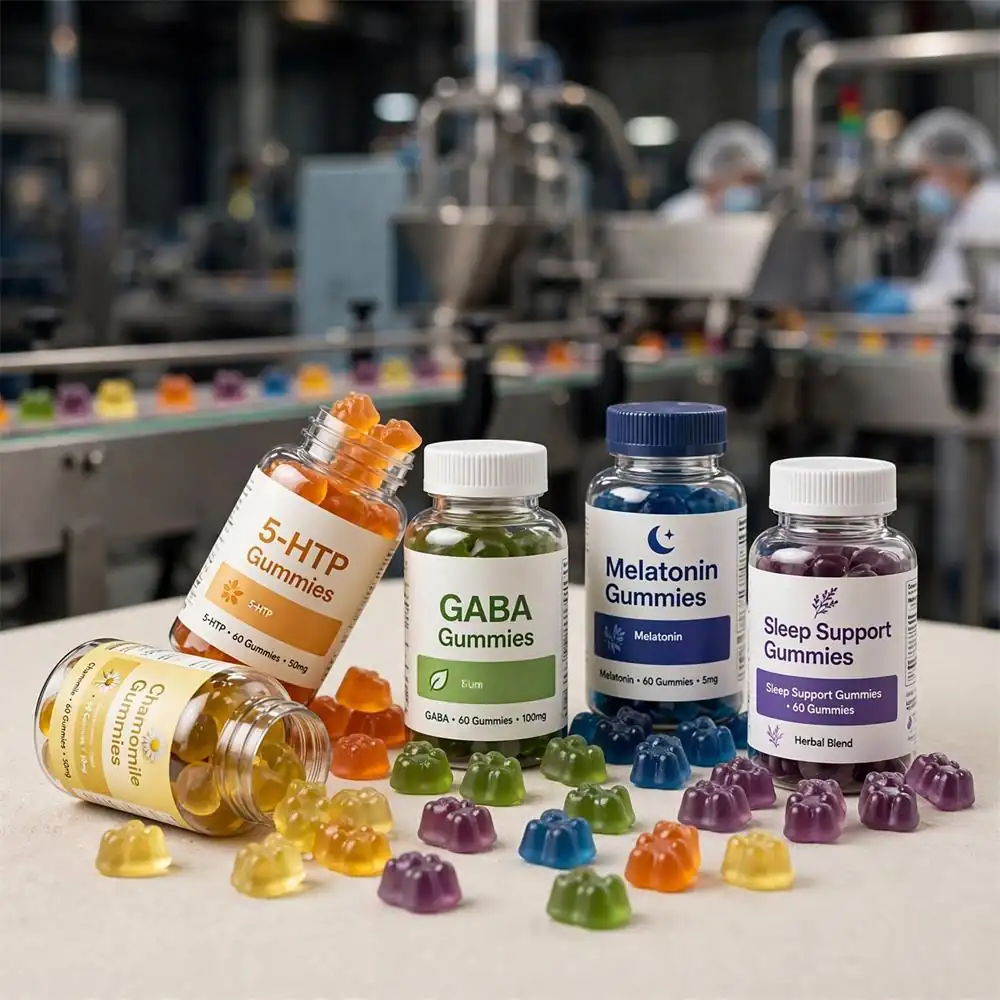
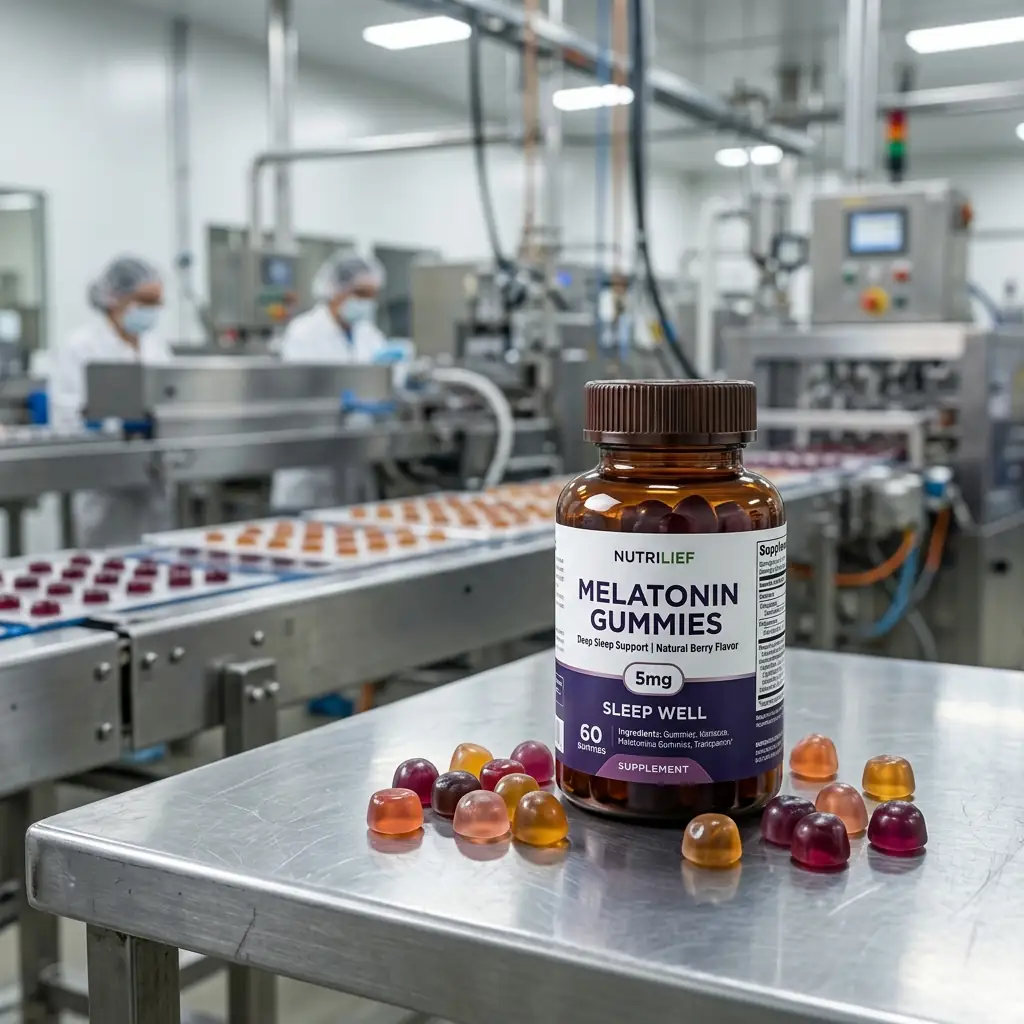
Custom gummy bear manufacturing refers to the outsourced production of gummy supplements tailored specifically to a brand’s formulation, flavor profile, shape, size, color, and packaging requirements. Manufacturers provide end-to-end services including gummy contract manufacturing, private label production, custom formulation development, and bulk supply to meet market-specific demands. This B2B service model allows brands to avoid capital-intensive in-house production while leveraging manufacturers’ expertise, equipment, and regulatory compliance capabilities.
Why Finding the Right Custom Gummy Bear Manufacturer Matters
The supplement industry has seen explosive growth in gummy formats, driven by consumer preference for convenient, palatable products. However, launching a successful gummy product requires more than just a good formula—it demands a manufacturing partner with proven capabilities in formulation, quality control, scalability, and regulatory compliance. Selecting the wrong manufacturer can result in costly delays, quality inconsistencies, regulatory issues, and damaged brand reputation.
For emerging brands and established companies alike, the manufacturing partner directly influences product quality, cost structure, time-to-market, and ability to scale. A reliable custom gummy manufacturer becomes an extension of your brand’s operations, affecting everything from consumer satisfaction to supply chain resilience.
Key Considerations When Searching for a Gummy Manufacturer
1. Manufacturing Capacity & Production Scale
Before evaluating a manufacturer, clarify your production needs. Capacity requirements vary significantly:
- Emerging brands and startups: Typically require small to medium trial batches (5,000–50,000 units) to test market viability and consumer response.
- Growing supplement companies: Need medium-scale production (50,000–500,000 units annually) with flexible MOQ (minimum order quantities) and scalability options.
- Established retailers and distributors: Require large-scale, consistent supply (500,000+ units annually) with predictable lead times and inventory management.
- Online sellers and marketplaces: Often balance between smaller batches and rapid restocking capabilities to manage cash flow and inventory turnover.
Look for manufacturers that explicitly state their daily output capacity, annual production volume, and flexibility with MOQ. A manufacturer offering 16-ton daily output with 5,000-ton annual capacity, for example, signals both substantial infrastructure and ability to handle varying order sizes.
2. Quality Assurance & Regulatory Compliance
Quality standards directly impact product safety, consumer trust, and regulatory standing. Essential certifications include:
- GMP (Good Manufacturing Practice): Ensures consistent product quality and safety. FDA-recognized GMP is non-negotiable for U.S. market entry.
- ISO 9001 & ISO 22000: Demonstrate systematic quality management and food safety protocols.
- HACCP: Identifies and controls food safety hazards throughout production.
- FDA Registration & Facility Inspection: Confirms compliance with U.S. dietary supplement regulations.
- Third-Party Testing: Independent verification of ingredient potency, purity, and absence of contaminants.
- Allergen & Dietary Certifications: HALAL, KOSHER, Vegan, and gluten-free certifications expand market reach.
Request documentation of these certifications and verify their currency. A manufacturer’s willingness to provide third-party testing reports and documentation of facility inspections signals transparency and confidence in their quality systems.
3. Formulation Expertise & R&D Capabilities
Gummy formulation is technically complex. It requires expertise in:
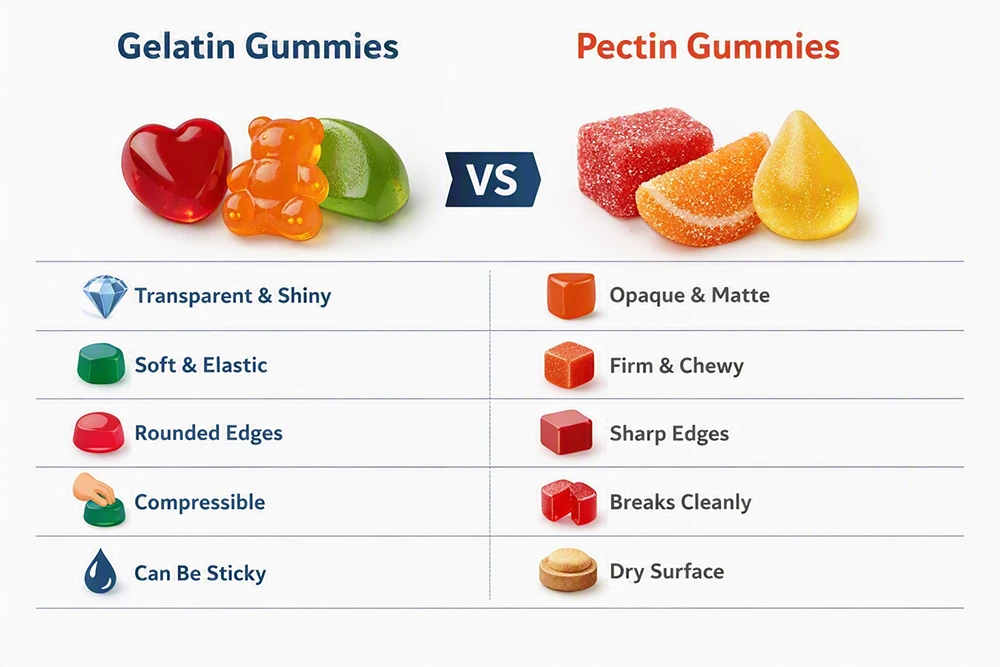
- Selection of appropriate gelling agents (pectin, carrageenan, gelatin alternatives)
- Flavor profile development and sensory optimization
- Active ingredient stability and bioavailability within the gummy matrix
- Process optimization for consistency, texture, and shelf life
- Regulatory compliance with dietary supplement regulations (ingredient restrictions, labeling requirements)
Evaluate manufacturers by asking about their R&D team qualifications, research capabilities, and portfolio of successful formulations. A manufacturer with dedicated pharmaceutical-grade laboratory facilities and experienced formulation scientists can significantly reduce time-to-market and improve product performance. Some manufacturers conduct formulation research on hundreds or thousands of new products annually, demonstrating substantial expertise and problem-solving capacity.
4. Raw Material Sourcing & Supply Chain Transparency
Raw material quality directly affects final product quality and cost. Investigate:
- Supplier relationships: Does the manufacturer work with certified suppliers? Are raw materials third-party tested?
- Traceability: Can they track ingredient origins and provide certificates of analysis?
- Sustainability practices: Many brands now prioritize suppliers with ethical sourcing and environmental responsibility.
- Cost transparency: Ask for breakdown of material costs, labor, and overhead. Unrealistically low quotes may indicate corner-cutting.
Request samples of finished products and raw material documentation. A transparent manufacturer will provide detailed specifications and testing reports without hesitation.
5. Customization & Design Flexibility
Product differentiation often depends on unique formulations and designs. Assess the manufacturer’s customization capabilities:
- Shape & size options: Can they produce unique gummy shapes (beyond standard bears) or offer 30+ design variations?
- Flavor customization: Do they have in-house flavor development or partnerships with specialized flavor suppliers?
- Color formulation: Can they match brand colors using natural or synthetic colorants? Are they compliant with regional color regulations?
- Functional variants: Can they incorporate varying active ingredients, dosages, or functional benefits in a single product line?
- Packaging options: Do they offer flexibility in bottle types, label design, and bulk packaging for different distribution channels?
Request visual samples or case studies demonstrating their design and customization range. A manufacturer with advanced molding capabilities and creative design experience will better support your brand differentiation strategy.
6. Lead Time & Production Schedule
Time-to-market is critical for competitiveness. Clarify:
- Sample development timeline: How long to produce initial prototypes for testing?
- Production lead time: Once approved, how many weeks/months until delivery?
- Capacity constraints: Are there seasonal bottlenecks or extended lead times during peak demand periods?
- Rush order capability: Can they accelerate timelines for urgent orders, and at what cost premium?
- Inventory management: Will they hold finished goods inventory, or require just-in-time production?
Realistic lead times (typically 8–12 weeks for initial production, 4–8 weeks for reorders) indicate mature operations. Be cautious of manufacturers promising suspiciously fast turnarounds, as this may compromise quality.
7. Pricing Structure & Cost Transparency
Cost analysis extends beyond unit price to total cost of ownership:
- Volume-based pricing: How do prices scale with order size? Are discounts applied at realistic thresholds?
- Formula complexity surcharge: Custom formulations with rare actives typically cost more. Are these charges clearly explained?
- Packaging costs: Are custom label design and packaging included or separate?
- Minimum order quantities: Are MOQ restrictions reasonable for your business size?
- Payment terms: Do they require full prepayment, or offer NET 30/60 terms for established partners?
- Quality control surcharge: Do third-party testing and documentation incur additional fees?
Request detailed quotations including all costs. Transparency in pricing builds trust and prevents unexpected expenses that erode margins.
8. Communication & Customer Support
Long-term manufacturing partnerships depend on responsive, professional communication:
- Project management: Is there a dedicated account manager or point of contact for your account?
- Technical support: Can their team answer complex questions about formulation, regulation, or process optimization?
- Problem resolution: How do they handle quality issues, delays, or unexpected challenges?
- Regular reporting: Do they provide production updates, quality documentation, and shipment tracking?
- Language & timezone: For international suppliers, ensure communication capability matches your operational needs.
Schedule a call with potential manufacturers before committing. Professional responsiveness and clear technical knowledge during initial interactions indicate reliability and partnership maturity.
Technical Parameter Table for Custom Gummy Bear Manufacturing
| Parameter | Specification Details | Business Relevance |
|---|---|---|
| Product Form | Gummy bears, rings, cubes, hearts, custom shapes; varying densities and textures | Affects market differentiation and consumer appeal; shapes influence molding costs |
| Key Materials | Gelling agents (pectin, carrageenan, gelatin, agar); sweeteners; colorants; flavoring; active ingredients | Material selection impacts cost, taste, texture, shelf life, and dietary certifications (vegan, allergen-free) |
| Manufacturing Process | Mixing, cooking, molding, drying, coating (optional), quality inspection, packaging | Process efficiency affects cost and lead time; coating adds complexity and cost |
| Quality Standards | GMP, FDA registration, ISO 9001/22000, HACCP, third-party testing (potency, purity, contaminants) | Non-negotiable for market credibility; enables retail/e-commerce distribution; reduces regulatory risk |
| Cleanroom Standards | 100,000-class or 10,000-class pharmaceutical-grade facilities | Higher cleanliness (lower class numbers) ensures superior product safety and compliance |
| Dietary Certifications | HALAL, KOSHER, Vegan, Gluten-free, Non-GMO, Organic options | Expands addressable market; supports premium positioning; critical for specific consumer segments |
| Production Capacity | Daily output: 5–16+ tons; Annual capacity: 1,000–5,000+ tons | Determines scalability; higher capacity supports growth and bulk orders; ensures supply reliability |
| R&D Laboratory | Pharmaceutical-grade facility (10,000-class); formulation research on 1,000–2,000+ new products annually | Enables custom formulation, innovation, and rapid prototype development; reduces time-to-market |
| Packaging Options | Bottles, pouches, sachets, bulk containers; custom labeling; sustainability options (recyclable, biodegradable) | Affects brand presentation, shelf life, logistics costs, and environmental impact perception |
| Lead Time (Sample) | 4–8 weeks for initial formulation and sample development | Influences time-to-market; allows consumer testing and feedback before full production |
| Lead Time (Production) | 6–12 weeks for initial batch; 4–8 weeks for standard reorders | Critical for inventory planning; longer timelines require forecasting accuracy |
| MOQ (Minimum Order Quantity) | Flexible options: 10,000–100,000 units depending on formulation and packaging complexity | Lower MOQ benefits startups; higher MOQ indicates mature manufacturing; affects cash flow and inventory risk |
| Storage & Logistics | Room temperature storage; stable 18–24 months typical shelf life; temperature-controlled shipping recommended | Affects warehousing costs, distribution strategy, and inventory rotation; impacts product stability and compliance |
| Documentation & Compliance | Certificates of analysis, CoA for raw materials, batch records, FDA labeling compliance, export documentation | Essential for retail distribution, e-commerce, customs clearance, and regulatory audits |
Practical B2B Insights: What to Evaluate in Real Scenarios
Manufacturing Quality & Process Control
Quality consistency is non-negotiable in supplement manufacturing. When evaluating a potential manufacturer:
- Request batch consistency data: Ask for test results from multiple batches showing potency variation (typically ±10% is acceptable). High variance indicates inconsistent processes.
- Understand stability testing: A reliable manufacturer conducts accelerated stability studies demonstrating product integrity over shelf life under various storage conditions.
- Audit production logs: Request documentation of batch records, equipment calibration, and quality checkpoints during production.
- Visit the facility (when possible): In-person facility tours reveal cleanliness, equipment maintenance, staff training, and operational maturity. Many manufacturers now offer virtual facility tours.
- Evaluate complaint resolution: Ask about their process for handling customer complaints and how they implement corrective actions.
Raw Material Sourcing Transparency
Ingredient quality directly impacts your final product. Establish clear expectations:
- Request supplier lists: Know where key ingredients (gelling agents, active ingredients, colorants) originate.
- Verify certifications: Ensure raw material suppliers hold relevant certifications (ISO, FDA registration, organic certification).
- Certificate of Analysis (CoA): Require CoA for all incoming raw materials documenting potency, purity, and microbial testing.
- Traceability documentation: For regulatory compliance, the manufacturer should maintain complete traceability from raw material through finished product.
- Contingency plans: Ask how they handle raw material shortages or supplier disruptions. Diversified supplier networks indicate supply chain maturity.
Production Scalability & Lead Time Management
Your business needs will evolve. Plan for growth with scalability in mind:
- Capacity roadmap: Discuss how the manufacturer will handle 2x, 5x, or 10x volume increases. Can existing equipment scale, or will new equipment be needed?
- Lead time predictability: Establish baseline lead times and understand factors that extend timelines (seasonal demand, raw material delays, regulatory hold-ups).
- Backup capacity: Does the manufacturer have sister facilities or partnerships to fulfill orders if primary capacity is constrained?
- Forecasting agreements: For large orders, negotiate rolling forecasts (e.g., 90-day visibility) that allow both parties to plan effectively.
Compliance & Documentation Readiness
Regulatory compliance is non-optional. Verify the manufacturer’s capabilities:
- Dietary Supplement Regulations: Confirm they understand DSHEA (Dietary Supplement Health and Education Act) and comply with FDA labeling requirements.
- Export Documentation: If selling internationally, confirm they can provide required export certificates, harmonized tariff codes, and country-specific compliance documentation.
- Labeling Accuracy: Request sample label reviews to ensure supplement facts panel, ingredient disclosure, and warning statements are compliant.
- Batch Release Testing: Understand their testing protocols and timelines. Typically, finished batches undergo microbial testing (7–14 days turnaround) before release.
- Audit Trail: Confirm they maintain complete documentation for regulatory inspections (FDA, state health departments, customer audits).
Cost Structure Considerations
Understanding cost drivers helps you evaluate pricing fairly and identify cost optimization opportunities:
- Cost per unit breakdown: Request itemized quotes showing raw materials, labor, packaging, quality control, and overhead allocation.
- Margin expectations: Industry margins for supplement manufacturers typically range 25–45% depending on scale and complexity. Significantly lower quotes warrant scrutiny.
- Volume discounts: Negotiate tiered pricing (e.g., 5% discount at 100K units, 10% at 250K). This creates alignment for future growth.
- Payment terms: Emerging brands often negotiate NET 30–60 terms after establishing trust and payment history.
- Hidden costs: Clarify whether tooling costs, rush fees, design changes, or additional testing carry surcharges.
How to Evaluate a Reliable Supplier
Use this checklist when comparing potential manufacturers:
- ✓ Certifications verified: Independently confirm GMP, ISO, FDA registration status through official channels.
- ✓ References checked: Contact at least 3–5 current customers (competitors if they’ll share) to discuss reliability, quality, and responsiveness.
- ✓ Financial stability: For long-term partnerships, evaluate manufacturer’s financial health. Poor financial standing may signal bankruptcy risk or operational instability.
- ✓ Industry experience: Prefer manufacturers with 5+ years in supplement gummy manufacturing. Newer facilities may lack process maturity.
- ✓ Technical depth: R&D team with advanced degrees (chemistry, biochemistry, food science) indicates capability for complex formulations.
- ✓ Quality metrics shared: Manufacturers that proactively share quality data (test results, batch consistency, customer satisfaction) demonstrate confidence.
- ✓ Responsive communication: Professional, timely responses to inquiries indicate organizational maturity and customer focus.
B2B Decision Guide: Selecting Your Manufacturing Partner
Step 1: Define Your Requirements Clearly
Before contacting manufacturers, document:
- Target product specifications (formulation, shape, size, dosage, flavor preferences)
- Initial order volume and growth projections (12–36 months)
- Timeline requirements (sample development, first production run, ongoing supply)
- Geographic target markets (domestic only, or international distribution)
- Budget constraints and acceptable price range
- Required certifications and compliance standards
This clarity streamlines conversations and helps manufacturers provide accurate, relevant quotes.
Step 2: Identify & Shortlist Potential Manufacturers
Research potential partners through:
- Industry directories: Supplement manufacturing databases, B2B marketplaces, and trade associations.
- Trade shows: Natural Products Expo, SupplySide trade events feature active manufacturers and allow facility evaluation discussions.
- Professional networks: LinkedIn, industry forums, and peer recommendations from fellow supplement brand owners.
- Online verification: Website review, third-party certifications (displayed on websites), and business registration verification.
Create a shortlist of 5–10 candidates for detailed evaluation.
Step 3: Request Detailed Information & Samples
Contact shortlisted manufacturers requesting:
- Company overview and manufacturing experience
- Facility certifications and documentation
- Detailed pricing quotation (including all cost components)
- Lead time estimates for samples and production
- Samples of previous gummy products demonstrating quality and design variety
- Customer references (at least 3 recent clients)
- Capacity statements and production roadmap
Step 4: Conduct Reference Checks
Contact provided references with specific questions:
- How long have you worked with this manufacturer?
- Has product quality been consistent?
- Have they met lead time commitments?
- How responsive is their customer service?
- Have there been quality issues or disputes? How were they resolved?
- Would you recommend them to others? Why or why not?
Reference feedback often reveals operational and relational realities that aren’t apparent in marketing materials.
Step 5: Evaluate Capabilities Against Your Needs
Create a comparison matrix assessing each manufacturer on:
- Technical capability (formulation expertise, equipment sophistication)
- Quality certifications and testing capabilities
- Production capacity and scalability fit
- Lead time alignment with your timeline
- Pricing competitiveness
- Geographic location and logistics efficiency
- Communication professionalism and responsiveness
- Risk factors (financial stability, facility condition, reference feedback)
Weight these factors based on your priorities. An emerging brand prioritizes flexibility and quick samples; an established retailer prioritizes cost and reliability.
Step 6: Negotiate Terms & Establish Agreements
For your selected manufacturer(s), negotiate:
- Pilot batch agreement: Small-scale trial production with defined acceptance criteria for quality, taste, and consistency.
- Production timeline: Binding commitments for sample development and production lead times.
- Price & volume commitments: Agreed pricing structure with volume milestones and discount tiers.
- Quality assurance protocol: Defined testing, documentation, and acceptance procedures for each batch.
- Intellectual property: Clear terms protecting your formulation, designs, and branding (non-disclosure, non-compete, IP ownership).
- Liability & warranty: Define manufacturer’s warranty on product quality and their liability for defects or regulatory non-compliance.
- Supply continuity: Provisions for handling disruptions, contingency suppliers, and minimum commitment periods.
These agreements protect both parties and clarify expectations upfront, reducing future disputes.
Step 7: Quality Control & Ongoing Monitoring
After launch, establish ongoing quality management:
- Regular batch testing: Maintain ongoing third-party testing for quality verification and consumer safety.
- Performance reviews: Quarterly or semi-annual meetings reviewing quality metrics, lead time performance, and customer feedback.
- Audit rights: Retain the ability to audit production records, testing data, and supplier documentation periodically.
- Complaint tracking: Establish procedures for reporting and resolving customer complaints (taste, consistency, efficacy) with the manufacturer.
- Trend analysis: Monitor product returns, consumer feedback, and quality trending. Escalate concerns immediately.
Proactive quality management prevents issues from reaching consumers and strengthens your long-term partnership.
Key Criteria for Long-Term Supply Partnerships
Operational Excellence
Sustainable partnerships require manufacturers who demonstrate consistent operational performance:
- On-time delivery performance >95%
- Zero critical quality failures; rapid resolution of minor issues
- Documented process improvements and efficiency gains
- Proactive communication about potential delays or issues
Strategic Alignment
Choose partners who understand and support your business goals:
- Willingness to invest in your product’s success (e.g., custom equipment for unique formulations)
- Transparency about capacity limitations and realistic growth roadmaps
- Interest in innovation and product development collaboration
- Fair pricing that allows both parties healthy margins for reinvestment
Financial & Relationship Stability
Evaluate manufacturer stability factors:
- Financial solvency demonstrated through transparent business relationships
- Low staff turnover (indicates employee satisfaction and operational consistency)
- Consistent leadership and strategic direction
- Investment in facility upgrades and equipment maintenance
Regulatory & Compliance Leadership
Partners should stay ahead of regulatory changes:
- Proactive compliance with evolving dietary supplement regulations
- Participation in industry associations and standards development
- Ability to guide you through regulatory challenges (e.g., new ingredient restrictions)
- Documentation practices that exceed minimum requirements
Risk Control & Quality Assurance Checkpoints
Pre-Production Phase
Key checkpoints:
- Formulation approval: Confirm formula meets your specifications and regulatory requirements
- Ingredient sourcing: Verify all raw materials are traceable and compliant
- Process validation: Confirm manufacturing process has been tested and validated
- Packaging materials: Verify labels, inserts, and packaging materials comply with regulations and brand standards
Production Phase
Key checkpoints:
- In-process testing: Confirm quality tests are conducted at multiple production stages
- Equipment calibration: Verify scales, dosers, and quality equipment are calibrated to specification
- Documentation: Ensure batch records are maintained with complete traceability
- Staff training: Confirm production staff are trained and competent
Post-Production Phase
Key checkpoints:
- Finished product testing: Third-party testing confirming potency, purity, and safety
- Batch release: Formal quality review and batch release authorization before shipment
- Stability confirmation: Ongoing testing demonstrating product stability throughout shelf life
- Consumer complaint monitoring: Systems to identify and investigate any customer issues
Supply Chain Resilience
Build in protections against disruptions:
- Dual sourcing: Consider relationships with secondary manufacturers for critical products as backup capacity.
- Inventory buffer: Maintain safety stock (4–8 weeks) of best-selling products to cushion delays.
- Contingency plans: Establish written agreements for force majeure events (natural disasters, pandemics, geopolitical disruptions).
- Regular reviews: Quarterly supply chain assessments identifying vulnerabilities and mitigation strategies.
Conclusion
Finding the right custom gummy bear manufacturer is a strategic decision that impacts your brand’s success, profitability, and market reputation. The manufacturing partner you select becomes an extension of your operations, influencing product quality, time-to-market, cost structure, and ability to scale.
This guide outlined essential evaluation criteria: manufacturing capacity and scalability, quality certifications and compliance capabilities, formulation expertise and R&D strength, raw material sourcing transparency, customization flexibility, lead time reliability, transparent pricing, and responsive customer support. By systematically assessing potential manufacturers against these criteria and conducting thorough reference checks, you can identify partners capable of delivering consistent quality and supporting long-term business growth.
The investment in finding the right manufacturer—rather than selecting based purely on low cost—pays dividends through improved product quality, faster time-to-market, reduced compliance risk, and stronger operational partnerships. Whether you’re an emerging brand testing market viability, an established supplement company scaling distribution, a retailer diversifying into branded products, or an online seller managing inventory efficiency, the right manufacturing partner transforms your gummy supplement strategy from a tactical expense into a strategic competitive advantage.
Frequently Asked Questions (FAQ)
What is custom gummy bear manufacturing?Custom gummy bear manufacturing is a contract manufacturing service where supplement brands outsource production of gummy supplements tailored to their specific formulation, flavor, shape, color, and packaging requirements. Manufacturers handle everything from formulation development to final packaging, allowing brands to avoid capital-intensive in-house production while leveraging the manufacturer’s expertise, equipment, and regulatory compliance.
Why should I use a contract manufacturer instead of producing gummies in-house?Contract manufacturing eliminates capital expenditure on equipment, facilities, and staff training. Manufacturers offer economies of scale, proven expertise in gummy formulation and quality control, established regulatory compliance, and flexibility to scale production without operational overhead. This is particularly advantageous for emerging brands, online sellers, and retailers who prioritize speed-to-market and cost efficiency over vertical integration.
What quality standards should a gummy manufacturer hold?Essential certifications include GMP (FDA-recognized), ISO 9001 (quality management), ISO 22000 (food safety), HACCP, and FDA facility registration. The manufacturer should conduct third-party testing for potency, purity, and contaminants. Additional dietary certifications (HALAL, KOSHER, Vegan) expand market reach. Always request documentation of current certifications and recent FDA inspection results.
What is a typical lead time for custom gummy bear manufacturing?Initial sample development typically takes 4–8 weeks. First production runs range 6–12 weeks depending on formulation complexity and order volume. Subsequent reorders are typically 4–8 weeks. Lead times vary based on ingredient availability, facility capacity, and complexity of customization. Always confirm timelines with your manufacturer in writing.
How do I evaluate pricing and ensure I’m getting a fair cost?Request detailed cost breakdowns including raw materials, labor, packaging, quality control, and overhead allocation. Compare quotes from at least 3 manufacturers. Understand that pricing varies based on formulation complexity, order volume, customization level, and certifications. Unusually low quotes may indicate quality corners being cut. Negotiate volume-based discounts and establish tiered pricing for future orders.
What should I include in a manufacturing agreement?Key terms include: product specifications and quality acceptance criteria; pricing and payment terms; lead time commitments; intellectual property protection (non-disclosure, non-compete); quality assurance protocols and testing procedures; liability and warranty provisions; supply continuity commitments; and procedures for handling disputes or recalls. Consult legal counsel to ensure the agreement protects your brand’s interests.
About Gothink Biology
Shenzhen Gothink Biotech Co., Ltd. is one of China’s leading supplement manufacturers, specializing in comprehensive OEM, ODM, CMO, and CDMO services for dietary supplements and nutritional products. With expertise in gummy, capsule, tablet, powder, liquid, and drop supplement manufacturing, Gothink Biology provides end-to-end solutions from initial formulation and custom design through production, packaging, and marketing support.
Manufacturing Scale & Capacity: Gothink Biology operates a GMP-certified facility featuring a 100,000-class cleanroom with daily output of 16 tons and annual production capacity of 5,000 tons, demonstrating substantial infrastructure for both emerging brands and large-scale supply partnerships.
Scientific Expertise: The company’s co-founder and chief scientific advisor bring postdoctoral research backgrounds from leading U.S. institutions, including California Institute of Technology, Emory University, and Ohio State University. This scientific leadership elevates R&D capabilities and formulation expertise, with a dedicated 10,000-class pharmaceutical-grade R&D laboratory conducting formulation research on approximately 2,000 new products annually.
Quality & Compliance: Gothink Biology holds multiple global certifications including ISO 9001, ISO 22000, HACCP, FDA registration, and dietary certifications (HALAL, KOSHER, Vegan). These credentials ensure manufacturing meets international quality standards and diverse market requirements.
Customization & Service Range: The manufacturer offers flexible gummy contract manufacturing with customization in formulation, flavor, color, shape (30+ design options), and packaging. Additionally, they provide one-stop OEM/ODM services supporting brands from initial consultation through compliance, export, and market launch.
B2B Partnership Focus: With flexible MOQ accommodating small trial batches for emerging brands through full-scale production for established companies, Gothink Biology positions itself as a scalable partner for new health brands, retailers, online sellers, and mature supplement companies seeking reliable, innovative manufacturing solutions.