
Executive Summary
The global dietary supplements market is projected to exceed $300 billion by 2028, and gummy-format supplements are one of its fastest-growing segments. For entrepreneurs, retailers, and e-commerce sellers looking to enter this space, the path from concept to shelf-ready product involves more decisions than most expect — from formulation and compliance to choosing the right manufacturing partner.
This guide walks through every major stage of creating a supplement brand, with a particular focus on gummy products. Whether you are exploring private label gummies, sourcing gummies wholesale, or developing a fully custom formula through a custom gummy manufacturer, understanding the end-to-end process will help you make better business decisions and avoid costly mistakes.
1. Understanding the Supplement Market Before You Start
Before committing capital, it pays to understand where consumer demand is headed and where competition is concentrated.
Consumer Trends Driving Gummy Growth
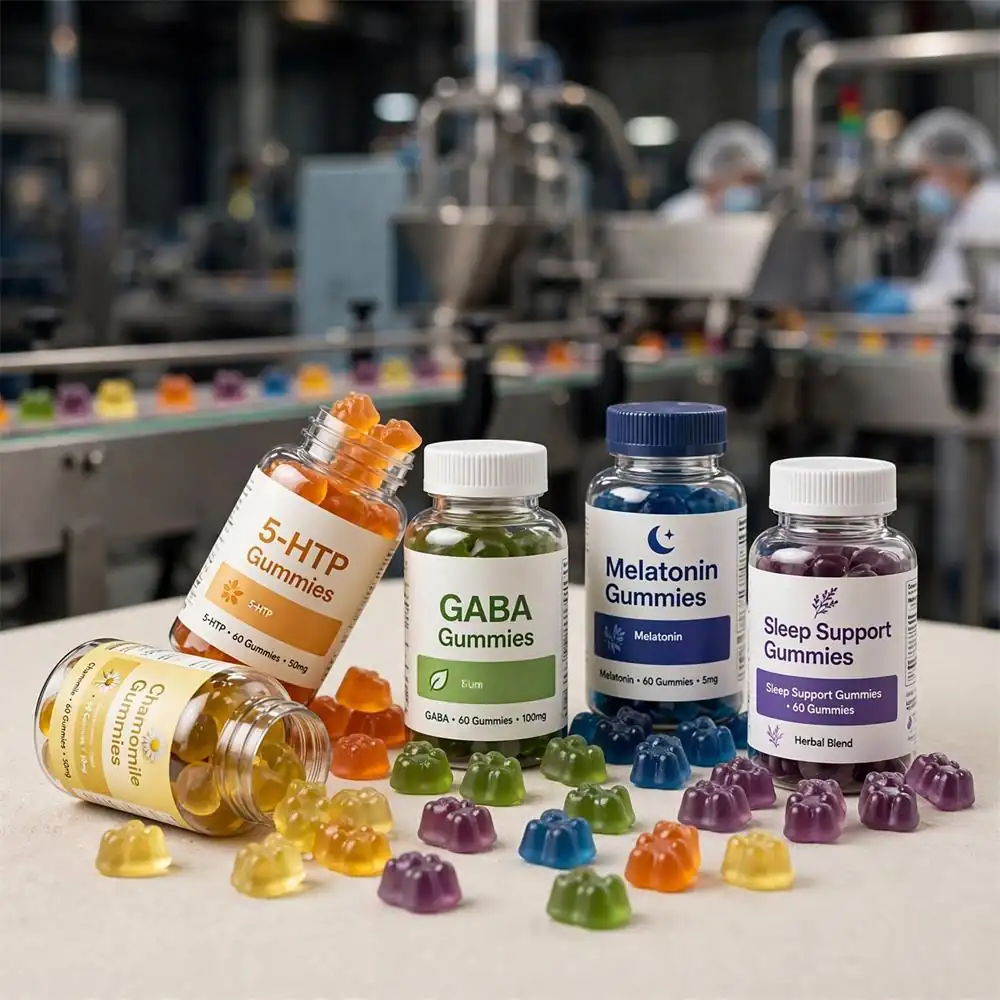
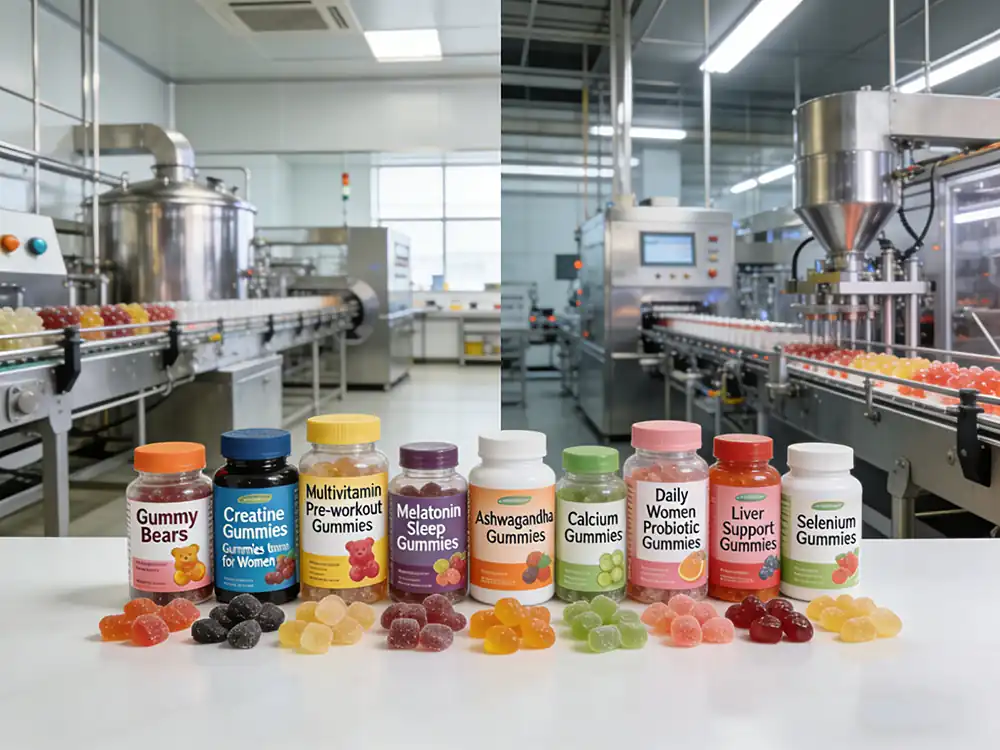
Gummies have moved well beyond children’s vitamins. Adult consumers now actively seek gummy formats for sleep support (melatonin), immune health (vitamin C and zinc), gut health (probiotics), sports performance (creatine, pre-workout), and beauty (collagen, biotin). The reasons are practical: gummies are easy to take, mask unpleasant flavors, and feel less clinical than capsules or tablets.
For brand founders, this translates into a large addressable market with genuine repeat-purchase potential — provided the product delivers on its claims and maintains consistent quality.
Where Are the Gaps?
Saturated categories (basic multivitamins, fish oil) are harder to enter on differentiation alone. More defensible positions exist in:
- Targeted demographics — men’s formulas, women’s hormone support, senior-specific blends
- Functional ingredient combinations — adaptogens like ashwagandha paired with magnesium for stress; liver support blends; selenium with antioxidants
- Dietary-specific formats — vegan pectin-based gummies, sugar-free options, KOSHER or HALAL-certified products
Reviewing best-seller lists on Amazon, iHerb, and specialty health retailers is a reliable starting point for gap analysis.
2. Choosing Your Business Model: OEM, ODM, Private Label, or White Label
One of the earliest and most consequential decisions is choosing how your product gets made. The terminology can be confusing; here is a clear breakdown.
OEM (Original Equipment Manufacturing)
You provide the formulation, the manufacturer produces it to your specification. Best suited for brands with in-house R&D capability or access to a formulation consultant. Gives you the most control over ingredients and differentiation, but requires the most upfront work.
ODM (Original Design Manufacturing)
The manufacturer owns the formula and you license or buy into it. You can typically adjust flavors, dosage, or minor ingredients. Faster to market than a fully custom route. Common in Gummy Contract Manufacturing where the facility already has proven, stable formulas for popular products.
Private Label
You select a finished product from the manufacturer’s existing catalog, apply your own branding, and sell it as your own. This is the fastest route to market and carries the lowest MOQ in most cases. Private label gummy manufacturer services are widely used by Amazon sellers, subscription box brands, and health-focused retailers.
White Label
Closely related to private label, but typically refers to a completely generic, unbranded product that multiple buyers can purchase and label independently. Less differentiated but extremely cost-efficient for testing market response before committing to a custom formula.
Which Model Fits Your Goals?
| Goal | Recommended Model |
|---|---|
| Fastest launch, lowest risk | Private Label / White Label |
| Moderate customization, moderate speed | ODM |
| Maximum differentiation, IP ownership | OEM / Custom |
| Large volume, lowest unit cost | Bulk / Wholesale |
3. Formulation: What Goes Into a Gummy Supplement
Understanding basic formulation decisions positions you to have more productive conversations with any Dietary Supplements Manufacturer you approach.
Base Gelling Agent
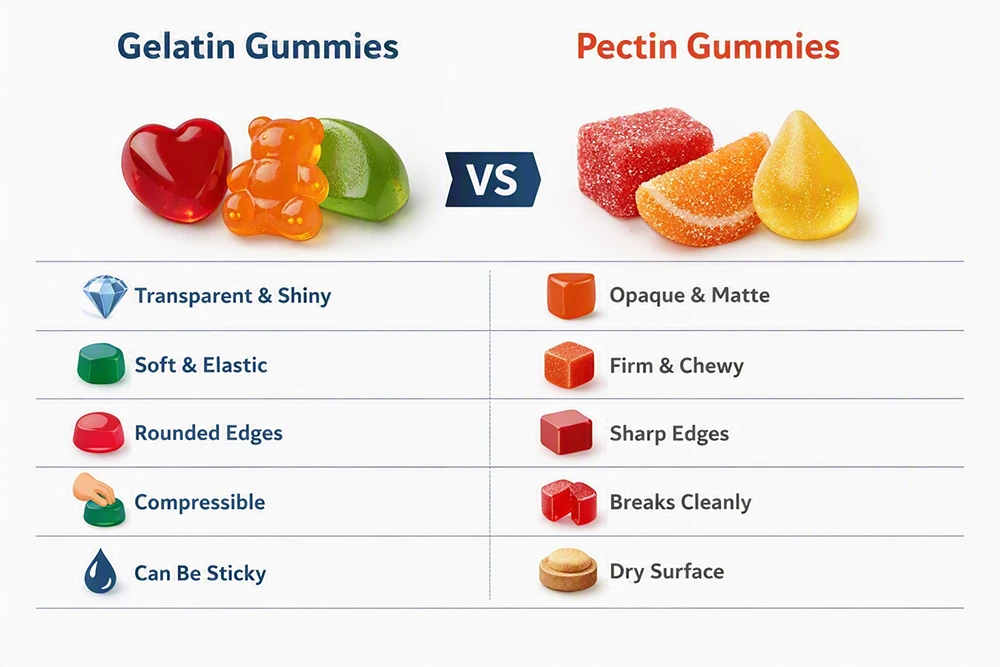
- Gelatin — derived from animal collagen; produces a soft, chewy texture; not suitable for vegan or vegetarian consumers
- Pectin — plant-derived (typically from citrus or apple); firmer texture; preferred for vegan-certified products
- Carrageenan — derived from seaweed; used for vegan formulas and specific texture profiles
Active Ingredients and Bioavailability
Not all forms of a given nutrient behave the same way in a gummy matrix. Heat processing, moisture, and pH can degrade sensitive actives. Experienced manufacturers mitigate this through encapsulation, staged blending, and validated coating processes. When evaluating a manufacturing partner, ask specifically how they handle heat-sensitive ingredients (e.g., probiotics, omega-3s, certain B vitamins).
Flavor, Color, and Sweetener Systems
Natural flavors and plant-based colorants (beet, turmeric, spirulina) have become strong selling points. Sugar-free formulas using erythritol, xylitol, or stevia are increasingly standard. Confirm that your chosen sweetener system is compatible with your target certification (e.g., KOSHER, diabetic-friendly positioning).
Regulatory Considerations
In the United States, dietary supplements are regulated under DSHEA (Dietary Supplement Health and Education Act). Key compliance requirements include:
- Supplement Facts panel accuracy
- Substantiated structure/function claims
- GMP-compliant manufacturing (21 CFR Part 111)
- Proper labeling of allergens
If you are targeting European, Canadian, Australian, or other markets, additional registration or notification requirements apply. Work with your manufacturer or a regulatory consultant who has experience in your target markets.
4. Evaluating and Selecting a Gummy Contract Manufacturing Partner
Choosing the right manufacturing partner is arguably the single most important operational decision you will make. A weak partner creates quality inconsistency, delivery delays, and regulatory exposure. Here is what to evaluate systematically.
Certifications to Verify
Minimum expectations for a reputable Gummy Manufacturing facility should include:
- GMP certification (cGMP under FDA 21 CFR Part 111 for US-market products)
- ISO 9001 / ISO 22000 for quality and food safety management
- HACCP certification for hazard analysis and critical control point compliance
- HALAL and/or KOSHER if your target market requires it
- Vegan certification if you are positioning with plant-based gelling agents
Facility Standards
Ask about cleanroom classification. A 100,000-class (ISO 8) cleanroom is the standard for dietary supplement manufacturing; a 10,000-class (ISO 7) facility is pharmaceutical-grade and indicates a higher level of contamination control. Annual third-party facility audits are a positive signal.
R&D Capability
Can the manufacturer develop a novel formula from scratch, or are they limited to adjusting existing catalog products? Facilities with in-house food scientists or PhD-level researchers can support more ambitious product development. Look for evidence of active formulation research — for example, whether they develop new products annually and can provide stability testing data.
MOQ and Scalability
Minimum order quantity (MOQ) is a frequent barrier for new brands. Reputable manufacturers offer tiered MOQs — small trial production runs for product validation, followed by scalable full-production runs as demand grows. Confirm that the same facility handles both small and large runs, rather than outsourcing your production as volumes increase.
Lead Times and Supply Chain Transparency
Ask for typical lead times from order confirmation to shipment. Understand where raw materials are sourced, whether the manufacturer holds safety stock for common ingredients, and what their contingency process is for ingredient shortages.
Quality Control Documentation
Request examples of COAs (Certificates of Analysis), third-party test reports, and batch records. A manufacturer that cannot readily provide this documentation is a risk.
5. Packaging, Branding, and Labeling
Quality packaging serves two functions: compliance and conversion. Both matter.
Packaging Formats for Gummies
Common options include:
- Jars (HDPE or PET) — standard for retail; supports child-resistant closures
- Pouches (stand-up or flat) — cost-effective, DTC-friendly, strong shelf presence
- Blister packs — premium positioning; better moisture barrier; higher per-unit cost
- Sachets — ideal for single-serve or sample formats
Many manufacturers offer packaging as part of their turnkey or OEM/ODM service, which simplifies project management and reduces vendor coordination.
Label Requirements (US Market)
- Supplement Facts panel (FDA-compliant format)
- Net quantity of contents
- Serving size and servings per container
- Full ingredient list
- Manufacturer/distributor name and address
- Lot number and expiration date
- Any required allergen statements
Structure/function claims (e.g., “supports immune health”) must be truthful, substantiated, and accompanied by the FDA disclaimer: “This statement has not been evaluated by the Food and Drug Administration. This product is not intended to diagnose, treat, cure, or prevent any disease.”
6. Pricing Strategy and Unit Economics
Understanding your cost structure before you commit to a formula and packaging specification protects you from unpleasant surprises at launch.
Key Cost Components
- Raw materials — active ingredients, base, flavors, sweeteners
- Manufacturing — blending, molding, coating, quality testing
- Packaging — container, closure, label, outer carton
- Regulatory and compliance — third-party testing, label review, documentation
- Logistics — freight, customs (for international production), domestic distribution
Pricing Benchmarks
Retail supplement gummies typically sell between $20–$45 per bottle (30–60 servings) in competitive online channels. Gross margin targets for branded supplement companies generally range from 60–75% at retail price. Work backward from your target retail price to determine the maximum allowable COGS, then validate with manufacturer quotes.
For gummies bulk and gummies wholesale buyers purchasing finished or semi-finished product for redistribution, margin expectations differ — volume discounts typically kick in at defined thresholds that your manufacturer or distributor can specify.
7. Go-to-Market: Channels and Launch Strategy
Manufacturing is only one dimension of brand success. Distribution strategy determines whether a quality product actually reaches buyers.
Direct-to-Consumer (DTC)
A branded Shopify or WooCommerce store gives you full margin capture, customer data ownership, and the ability to tell your brand story. The trade-off is that customer acquisition costs (CAC) have risen significantly across paid social channels. Content marketing, SEO, and influencer partnerships are increasingly critical for sustainable DTC economics.
Amazon and Marketplace Selling
Amazon’s supplement category is competitive but high-intent. Success depends on strong product listings (optimized titles, A+ content, verified reviews), competitive pricing, and inventory management. FBA (Fulfilled by Amazon) simplifies logistics but requires you to factor storage fees into your unit economics.
Retail and Wholesale
Physical retail — natural food stores, health chains, pharmacy chains — provides visibility and legitimacy but requires longer lead times, slotting fees in some cases, and consistent fill rates. Wholesale relationships with distributors (UNFI, KeHE, etc.) can accelerate retail placement but compress margins.
Subscription and Continuity
Supplement consumption is habitual by nature. Subscription models (Subscribe & Save on Amazon, Recharge on Shopify) reduce churn and improve LTV (lifetime value), which is critical for justifying higher CAC at launch.
8. Scaling and Protecting Your Brand
As your brand grows, protecting what you’ve built becomes as important as building it.
Intellectual Property
If you have developed a proprietary formula, consider whether trade secret protection (keeping the formula confidential) or a utility patent (disclosing and formally protecting the innovation) better suits your situation. Trademark registration for your brand name and logo is a standard protective step regardless of scale.
Quality Consistency at Scale
As production volumes increase, batch-to-batch consistency can drift if not actively managed. Establish clear quality specifications in your manufacturing agreement, require COAs for every batch, and conduct periodic third-party audits or retain a quality consultant to oversee your contract manufacturer.
Diversification
Single-product brands are vulnerable to formula changes, ingredient shortages, or competitive pressure. A portfolio of complementary products (e.g., a sleep gummy, an immunity gummy, and a daily multivitamin gummy under the same brand) increases average order value, improves customer retention, and distributes operational risk.
Summary
Creating a successful supplement brand is a multi-stage process that rewards methodical preparation. The key decisions — choosing your business model (OEM, ODM, private label, or white label), selecting a certified manufacturing partner, developing a compliant and differentiated formula, and building a sustainable go-to-market strategy — are interconnected. Rushing any one of them tends to create compounding problems downstream.
Gummy supplements represent one of the most accessible and commercially viable entry points into the supplement industry today. The format appeals to a broad consumer base, supports a wide range of functional ingredients, and allows meaningful differentiation through flavor, form, and dietary positioning. For brands willing to invest in quality — both in formulation and in manufacturing partnership — the category offers real, durable opportunity.
Frequently Asked Questions (FAQ)
Q1: What is the minimum order quantity (MOQ) for private label gummies? MOQs vary significantly by manufacturer and product type. Many contract gummy manufacturers offer trial runs of a few thousand units to allow product validation before committing to full production volumes. It’s worth asking prospective partners specifically about their small-batch capabilities.
Q2: How long does it take to bring a custom gummy supplement to market? Timeline depends on the complexity of your formulation and whether you are using an existing formula or developing a new one. Private label or white label products using existing formulas can be ready in 4–8 weeks. Custom ODM or OEM projects requiring new formula development, stability testing, and regulatory documentation typically take 3–6 months.
Q3: What certifications should I require from a gummy contract manufacturer? At minimum: GMP certification (cGMP for US-market products), ISO 9001 or ISO 22000, and HACCP. If your target market or brand positioning requires it, also confirm HALAL, KOSHER, or vegan certification. Always ask to see current, valid certificates rather than relying on website claims.
Q4: Can I sell gummy supplements on Amazon without FDA approval? Dietary supplements do not require pre-market FDA approval in the United States, but they must be manufactured in GMP-compliant facilities, carry compliant labels, and make only substantiated, lawful claims. Amazon also has its own supplement seller requirements, including documentation of GMP compliance. Consult a regulatory professional before launching.
Q5: What is the difference between private label and white label gummies? Private label typically refers to a product that is customized to some degree — adjusted formula, exclusive flavor, or unique packaging — and sold exclusively under your brand. White label refers to a standard, off-the-shelf product that multiple brands can purchase and label independently with minimal customization. Private label generally offers more brand differentiation; white label offers faster and more economical market entry.
Q6: How do gummies wholesale and bulk purchasing work? Wholesale buyers typically purchase finished, retail-ready gummies in case quantities at a negotiated price per unit, then resell through their own channels. Bulk buyers purchase unpackaged or minimally packaged product by weight or volume for further processing or repackaging. Both models are offered by established supplement manufacturers with sufficient production capacity.
Q7: How do I ensure my gummy formula remains stable over its shelf life? Stability is primarily a formulation and packaging question. Your manufacturer should conduct accelerated stability testing under defined temperature and humidity conditions. Active ingredient potency at end-of-shelf-life (typically 24 months) should meet label claim. Packaging choice (moisture barrier, oxygen barrier, child-resistant closure) also materially affects stability outcomes.
About Gothink Biotech
Shenzhen Gothink Biotech Co., Ltd. is a professional gummy supplements and dietary supplement manufacturer based in China, providing comprehensive OEM, ODM, white label, and private label gummy manufacturer services to health brands, online sellers, retailers, and startups worldwide.
Our GMP-certified facility features a 100,000-class cleanroom with a daily production output of 16 tons and annual manufacturing capacity of 5,000 tons — built to support both trial-scale production and large-volume gummies bulk and gummies wholesale orders. Our 10,000-class pharmaceutical-grade R&D laboratory is led by postdoctoral researchers with experience at leading international institutions, enabling precise formulation development across all major supplement categories.
We hold certifications including ISO9001, ISO22000, HACCP, FDA registration, HALAL, GMP, KOSHER, and Vegan, ensuring full regulatory compliance across global markets.
Our product range covers all major gummy formats — including creatine gummies, multivitamin gummies, melatonin sleep gummies, probiotic gummies, ashwagandha gummies, calcium gummies, pre-workout gummies, and more — as well as capsules, tablets, powders, liquids, and drops.
From formulation and custom design through manufacturing, packaging, and export documentation, we offer end-to-end turnkey solutions that allow you to focus on building your brand.
Learn more at gttbio.com