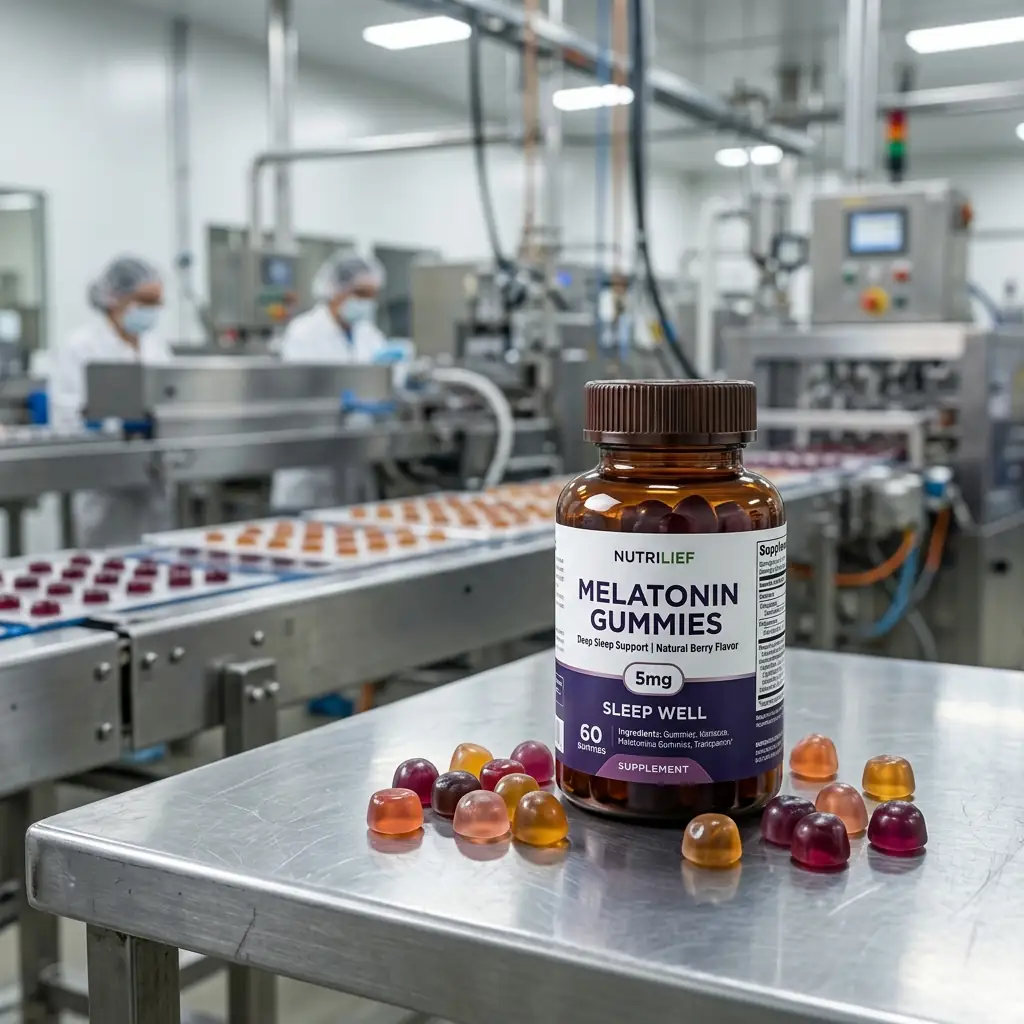

Understanding the Science, Process, and Production Behind Modern Gummy Supplements
What Are Gummy Bears & Modern Manufacturing Definition
Gummy bears refer to soft, gelatinous confections shaped in bear form, originally developed as a German candy and now widely used as a delivery mechanism for nutritional supplements and functional ingredients. In the context of modern dietary supplement manufacturing, gummy bears represent a popular form factor for gummy supplements that combine active pharmaceutical ingredients, natural extracts, or micronutrients with gelling agents, sweeteners, and flavor compounds.
The definition of contemporary gummy bear production extends beyond simple candy-making: it encompasses a regulated manufacturing discipline where precision dosing, ingredient integrity, shelf stability, and regulatory compliance are paramount. Gummy contract manufacturing has evolved into a specialized sector serving brands, retailers, and direct-to-consumer businesses seeking customized supplement solutions.
The Gummy Bear Manufacturing Process: Step-by-Step Production
Stage 1: Ingredient Preparation & Formulation
The manufacturing process begins with rigorous ingredient sourcing. Manufacturers select active ingredients (vitamins, minerals, herbal extracts), gelling agents (gelatin, pectin, or carrageenan), sweetening agents (sugar, stevia, or sugar alcohols), binding agents, and flavor concentrates. Each material undergoes testing for purity, potency, and contamination before entering production.
Formulation development is critical at this stage. Scientists calculate precise dosages to ensure each gummy bear contains the exact amount of active ingredient specified on the product label. This requires computer-assisted formulation software and validated measurement systems.
Stage 2: Mixing & Hydration
All dry ingredients are mixed in industrial blenders according to the proprietary formula. The gelling agent is hydrated—for example, gelatin is dissolved in warm water (typically 60-70°C) to create a liquid base. Other ingredients are gradually incorporated while maintaining precise temperature control to preserve ingredient integrity.
Mixing duration and speed are carefully controlled to ensure uniform distribution without creating air bubbles that could compromise final product quality.
Stage 3: Cooking & Concentration
The mixture is heated to specific temperatures (typically 90-110°C, depending on formulation) to achieve proper gel consistency. This stage concentrates the mixture and ensures the gelling agent reaches its optimal gel-forming state. Temperature control is critical—excessive heat can degrade heat-sensitive ingredients like vitamins or botanical extracts.
Stage 4: Casting or Molding
The hot gel is deposited into molds through precision dosing equipment. Modern custom gummy manufacturer operations use:
- Starch Molding: Traditional method using potato or corn starch impressions
- Enrobing Equipment: Deposits gel on moving conveyor lines
- Rotary Dies: Precision molding systems that create exact shapes and weights
- Injection Molding: Advanced systems for consistent high-speed production
Stage 5: Setting & Cooling
Newly formed gummies are transferred to climate-controlled cooling chambers where humidity and temperature are precisely maintained (typically 18-22°C, 40-50% relative humidity). Setting duration varies by formulation but typically ranges from 12-48 hours, allowing the gel structure to fully solidify and develop proper texture.
Stage 6: Demold & Release
Once set, gummies are carefully removed from molds. In starch molding, excess starch is removed through vibration and air classification. In rotary die systems, gummies are automatically ejected and transferred to the next stage.
Stage 7: Coating (Optional)
Many manufacturers apply coating layers to enhance product appeal, provide shelf stability, or mask flavors:
Coating Technologies
- Wax Coating: Beeswax or carnauba wax for moisture protection
- Sugar Dusting: Fine granulated sugar for texture and mouthfeel
- Sour Coating: Citric acid and sugar blend for taste
- Gloss Coating: Glazing agents for visual appearance
Stage 8: Quality Inspection & Testing
This stage is critical for regulatory compliance and brand protection:
Quality Assurance Protocols
- Visual Inspection: Automated and manual checks for shape, color, and defects
- Weight Verification: Electronic scale screening to ensure dosage consistency
- Potency Testing: Laboratory analysis confirming active ingredient concentration
- Microbiological Testing: Checks for bacterial, fungal, or pathogenic contamination
- Dissolution Testing: Verification that gummies dissolve appropriately for bioavailability
- Stability Testing: Long-term storage evaluation under temperature and humidity stress
Stage 9: Packaging & Labeling
Quality-approved gummies are weighed into appropriate container types (bottles, pouches, blister packs), sealed with tamper-evident closures, and labeled with regulatory-compliant information including ingredients, dosage, warnings, and manufacturing details.
Technical Specifications: Gummy Bear Manufacturing Parameters
Understanding the technical parameters involved in gummy bear production helps B2B partners evaluate manufacturer capabilities:
| Manufacturing Parameter | Typical Range | Critical Impact |
|---|---|---|
| Production Temperature | 90-110°C | Ingredient stability, gel formation quality |
| Cooling Chamber Humidity | 40-50% RH | Prevents sticking, ensures proper texture |
| Setting Time | 12-48 hours | Gel structural integrity, production throughput |
| Individual Gummy Weight | 2-10 grams | Dosage accuracy, consumer experience |
| Gel Bloom Strength (Gelatin) | 200-300 Bloom | Mouthfeel, dissolution rate, product stability |
| Production Capacity (High-Speed Line) | up to 1,000 units/minute | Scalability, batch efficiency, lead times |
| Shelf Life Stability | 18-36 months | Ingredient selection, packaging, storage conditions |
| Moisture Content | 10-16% | Microbial stability, texture preservation |
| Cleanroom Classification | 100,000-class (ISO Class 5 equivalent) | Contamination control, GMP compliance |
Quality Control & Manufacturing Excellence
Production Quality Assurance
Modern gummy supplements manufacturing demands rigorous quality control at every stage. Leading manufacturers implement:
Regulatory Compliance & Certification
Leading manufacturers maintain certifications demonstrating compliance with international standards:
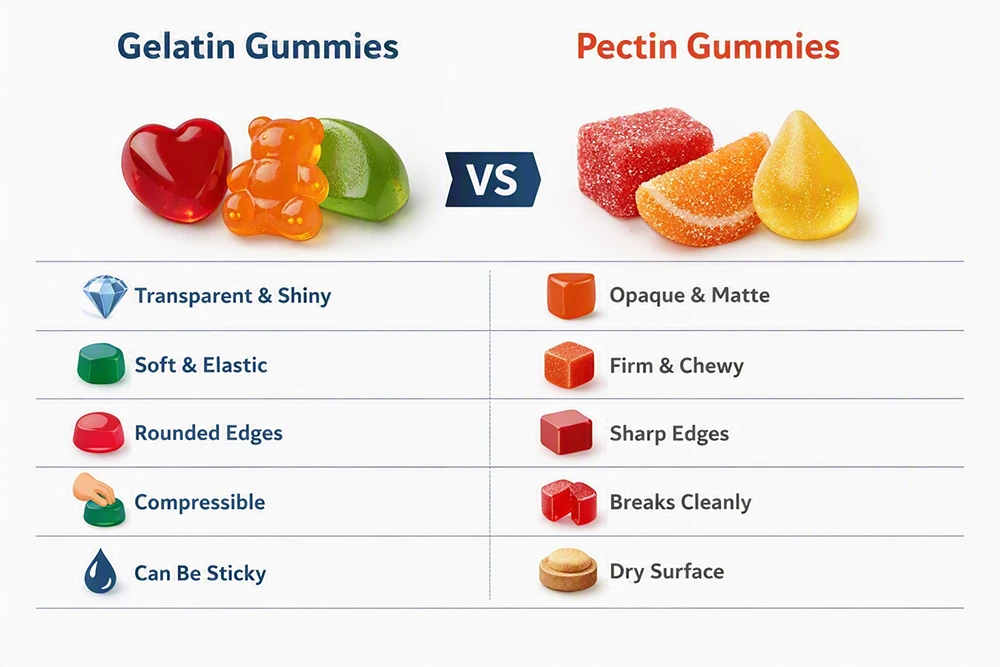
Gelling Agent Selection in Gummy Manufacturing
The choice of gelling agent significantly impacts final product characteristics. Different formulations require different gelling approaches:
| Gelling Agent | Source | Key Characteristics | Best Applications |
|---|---|---|---|
| Gelatin | Animal collagen (beef/pork) | Excellent mouthfeel, clear texture, cost-effective, temperature-sensitive | Traditional gummies, premium supplements |
| Pectin | Fruit fiber, plant-derived | Vegan, clean label, firmer texture, requires sugar/acid | Vegan products, health-conscious consumers |
| Carrageenan | Red seaweed extract | Plant-based, excellent stability, smooth texture, good bioavailability | Vegan/vegetarian formulations, premium products |
| Agar | Marine algae | Vegan, thermoreversible, firmer set, heat stable | High-stability vegan products, functional supplements |
| Modified Starch | Potato/corn starch | Vegan, clean label, lower cost, less clear appearance | Budget supplements, opaque formulations |
Scalability & Production Capacity in Gummy Manufacturing
From Small Batches to Industrial Scale
Modern gummy contract manufacturing facilities accommodate businesses at various stages of growth:
Flexible MOQ (Minimum Order Quantities)
Leading manufacturers recognize that custom gummy manufacturer partners require flexibility. Modern operations offer:
- Low MOQs (as low as 100-500 kg) for startups and test batches
- Tiered pricing that rewards higher volume commitments
- Rapid production turnarounds (8-12 weeks typical lead time)
- Scalable equipment that maintains quality regardless of batch size
B2B Decision Framework: Selecting a Gummy Manufacturing Partner
For brands, retailers, and businesses evaluating private label gummy and private label gummy manufacturer options, critical selection criteria include:
Manufacturing Capacity & TechnologyVerify facility certifications (GMP, ISO 9001, ISO 22000), cleanroom classification, and equipment specifications. Confirm daily output capacity and ability to handle your volume requirements both today and as you scale.
Formulation & Innovation CapabilitiesEvaluate the manufacturer’s R&D team, laboratory facilities, and success with similar products. Request case studies of previous formulations and timeline expectations for your custom formula development.
Quality Assurance & TestingReview their testing protocols, third-party lab relationships, and documentation systems. Ensure they provide Certificates of Analysis for raw materials and finished products, and maintain stability data per FDA guidelines.
Regulatory & Compliance ExpertiseVerify their understanding of dietary supplement regulations in your target markets (FDA, EU, Australia, etc.). Confirm they provide proper labeling support and maintain current ingredient safety documentation.
Flexibility & Customization OptionsAssess their ability to accommodate custom shapes, sizes, flavors, and packaging formats. Confirm they support both OEM (your formula, their manufacturing) and ODM (their formula, your branding) models.
Cost Structure & Pricing TransparencyRequest detailed quotes including raw material costs, manufacturing fees, quality testing, and packaging. Understand minimum order quantities and price breaks for volume commitments. Compare total cost of ownership, not just per-unit pricing.
Practical Manufacturing Insights
Heat-Sensitive Ingredients & Preservation
Many supplement ingredients—particularly B vitamins, vitamin C, and botanical extracts—degrade under high temperatures. Advanced manufacturers employ:
- Post-production ingredient addition (spraying or dusting heat-sensitive compounds after cooling)
- Lower processing temperatures (65-85°C) for sensitive formulations
- Oxygen scavenger packaging to prevent oxidative degradation
- Stability testing to confirm potency retention throughout shelf life
Flavor Integration & Consumer Appeal
Flavor masking and optimization significantly impact consumer compliance and satisfaction:
- Natural vs. artificial flavor selection based on market positioning
- Taste-masking technology for bitter or unpalatable ingredients
- Sensory testing with target consumer groups
- Flavor stability verification throughout shelf life
Moisture & Shelf Stability Management
Proper moisture control is critical for preventing microbial growth and ingredient degradation:
Scaling Production Without Compromising Quality
As production volume increases, manufacturers must ensure consistent quality through:
- Automated process controls that maintain critical parameters
- Multiple production lines with identical specifications for parallel processing
- Batch serialization and traceability systems for rapid recalls if needed
- Real-time data analytics to identify quality drift before defects occur
Gummy Supplements: Manufacturing Advantages & Considerations
Why Gummies Dominate the Supplement Market
The global shift toward gummy supplements reflects manufacturing innovations and consumer preferences:
| Factor | Gummy Supplements | Capsules/Tablets |
|---|---|---|
| Consumer Compliance | Higher (perceived as candy, pleasant taste) | Lower (pill fatigue, unpleasant taste) |
| Bioavailability | Good (rapid dissolution, better absorption) | Variable (capsule breakdown critical) |
| Manufacturing Complexity | Higher (multiple stages, climate control) | Lower (simpler equipment, faster process) |
| Customization Capability | Excellent (shapes, colors, sizes, flavors) | Limited (standardized sizes) |
| Unit Cost | Higher per unit (at small volumes) | Lower per unit |
| Market Positioning | Premium, consumer-friendly | Traditional, clinical |
Conclusion: Gummy Bear Manufacturing as a Strategic Business Platform
Modern gummy bear manufacturing has evolved from simple candy production into a sophisticated discipline combining food science, pharmaceutical precision, and industrial engineering. Understanding the gummy bear manufacturing process—from ingredient selection through quality assurance—reveals why gummies have become the preferred delivery mechanism for dietary supplements.
For brands seeking private label gummy solutions, the choice of manufacturing partner directly impacts product quality, time-to-market, and brand reputation. Leading manufacturers offer comprehensive gummy contract manufacturing services that accommodate businesses at any scale, from startups testing market viability to established brands expanding product portfolios.
The key to successful gummy supplement product development lies in partnering with manufacturers who combine advanced equipment, rigorous quality assurance, regulatory expertise, and formulation innovation. Whether producing custom gummy manufacturer solutions for retail distribution or private label partnerships, the manufacturing process demands precision, compliance, and commitment to consumer safety.
Frequently Asked Questions About Gummy Bear Manufacturing
Q: How long does it take to develop and produce a custom gummy formula?A: Formulation development typically requires 6-10 weeks, including stability testing and regulatory review. Initial production batches can be scheduled within 8-12 weeks after formula approval. Experienced manufacturers can accelerate timelines for proven ingredient combinations.
Q: What is the minimum order quantity for custom gummy production?A: Many modern manufacturers accept MOQs as low as 100-500 kg (10,000-50,000 units) for trial batches. Larger production runs (5,000+ kg) typically receive significant volume discounts. Small MOQs allow startups and brands to validate market demand before committing to industrial-scale production.
Q: How do manufacturers ensure accurate dosage in each gummy?A: Modern manufacturers use precision dosing equipment, electronic weight verification, and automated quality control systems. Each batch undergoes potency testing via HPLC or other analytical methods to confirm that active ingredients meet label claims within ±10% variance (typical pharmaceutical standard).
Q: What regulatory certifications should I verify when selecting a gummy manufacturer?A: Essential certifications include GMP (Good Manufacturing Practice), ISO 9001, ISO 22000, and FDA registration for U.S. market products. Additional certifications like HALAL, KOSHER, and Vegan may be important depending on your target market and consumer demographics.
Q: Can heat-sensitive ingredients like vitamin C be incorporated into gummies?A: Yes, through post-production coating, spray-drying, or encapsulation technologies. Manufacturers can maintain ingredient integrity by adding sensitive compounds after cooling or using protective microencapsulation. Stability testing confirms potency retention throughout the shelf life period.
Q: What packaging options are available for private label gummy products?A: Packaging options include plastic bottles with dosage dispensers, flexible pouches, blister packs, resealable sachets, and custom branded containers. Manufacturers typically offer design support and can source packaging materials that align with your brand positioning and regulatory requirements.
Your Partner in Gummy Supplement Manufacturing Excellence
Shenzhen Gothink Biotech Co., Ltd. stands as a leading dietary supplement and nutrition supplement manufacturer, specializing in comprehensive gummy contract manufacturing and custom formulation services. With a commitment to innovation, quality, and partnership, we transform your supplement vision into market-ready products.
Our Core Manufacturing Capabilities
OEM & ODM Services
Full flexibility for brands seeking manufacturing partnerships. Provide your formulation (OEM) or leverage our R&D expertise for custom development (ODM).
Customized Formulation
Our postdoctoral-level research team develops proprietary gummy formulations optimized for your specific functional goals, ingredient combinations, and target market.
Scalable Production
From pilot batches (100+ kg) to industrial-scale production (5,000+ tons annually), our GMP-certified facility accommodates businesses at every growth stage.
Gummy Specialization
Dedicated expertise in gummy production across multiple formats: multivitamin gummies, herbal supplements, functional gummies, and specialized formulations for women, men, and children.
Quality Assurance
Comprehensive testing protocols, GMP compliance, multiple international certifications (ISO, FDA, HALAL, KOSHER, Vegan), and 100,000-class cleanroom manufacturing standards.
Private Label Solutions
Complete private label gummy manufacturer services including formulation, production, quality control, packaging design, and compliance documentation for retail launch.
Why Choose Gothink Biotech?
World-Class Science: Our co-founders bring postdoctoral research experience from California Institute of Technology, Emory University, and Ohio State University, ensuring cutting-edge formulation innovation and manufacturing excellence.
Advanced R&D Laboratory: Our 10,000-class pharmaceutical-grade laboratory enables precise formulation optimization, stability testing, and rapid iteration on your product development timeline.
Industrial-Scale Manufacturing: A 100,000-class cleanroom facility with 16+ tons daily capacity ensures reliable, high-volume production while maintaining pharmaceutical-grade quality standards.
Flexible Partnership Model: Whether you’re a startup requiring trial production, an established brand scaling distribution, or a retailer seeking private label solutions, we offer customized manufacturing partnerships aligned with your business stage and growth trajectory.
End-to-End Support: From formulation consultation and regulatory compliance through packaging design and market launch support, we provide integrated services that streamline your product development journey.
Let Gothink Biotech be your strategic partner in bringing innovative gummy supplement products to market with confidence, quality, and competitive advantage.