
Summary
Gummy bears are gelatin- or pectin-based confectionery supplements produced through a precisely controlled cooking, molding, and setting process. Understanding how gummy bears are manufactured helps brands, distributors, and OEM buyers make informed sourcing decisions. This guide covers the full production process, technical parameters, and key criteria for evaluating a qualified custom gummy manufacturer.
Definition
How it’s made gummy bears refers to the end-to-end manufacturing process by which gummy bear products — whether functional supplements or standard confections — are formulated, cooked, deposited into molds, cured, and packaged for commercial sale. In a B2B context, this process encompasses raw material selection, gelling agent choice, active ingredient incorporation, quality control protocols, and packaging customization.
What Gummy Bear Manufacturing Involves
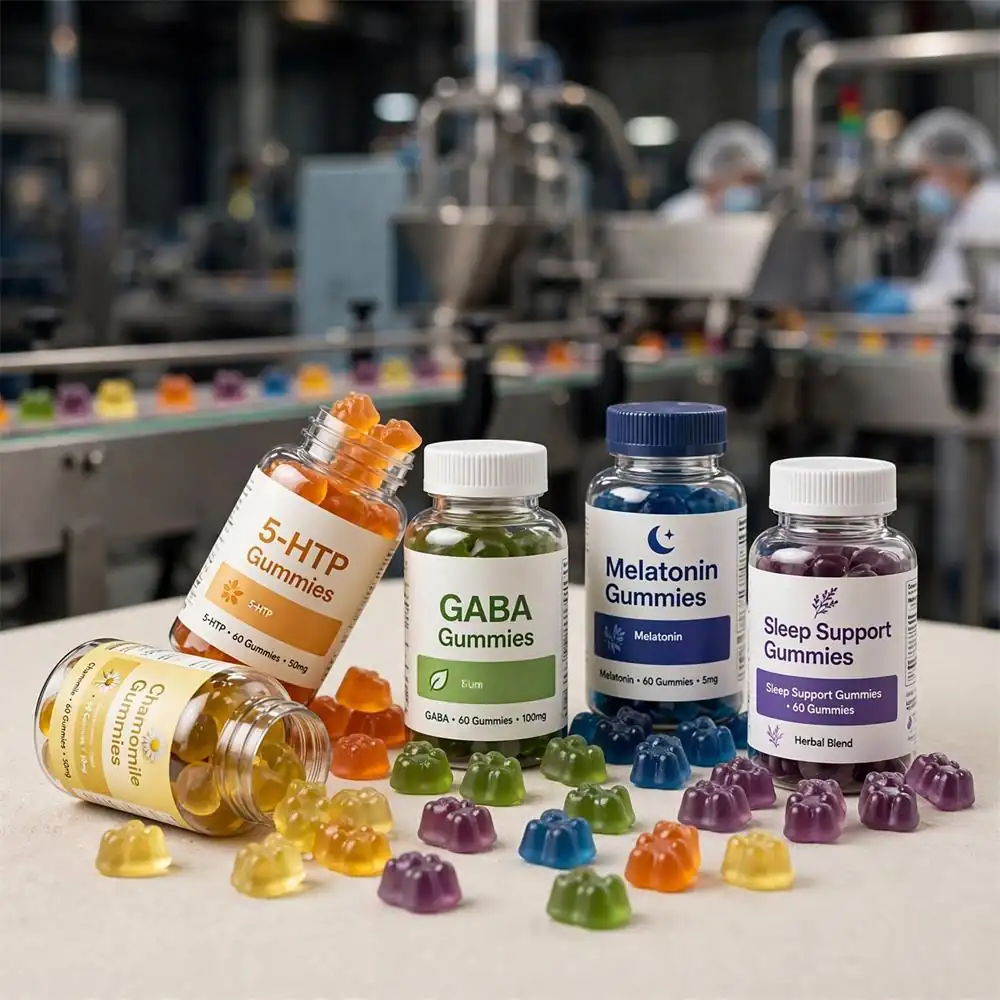
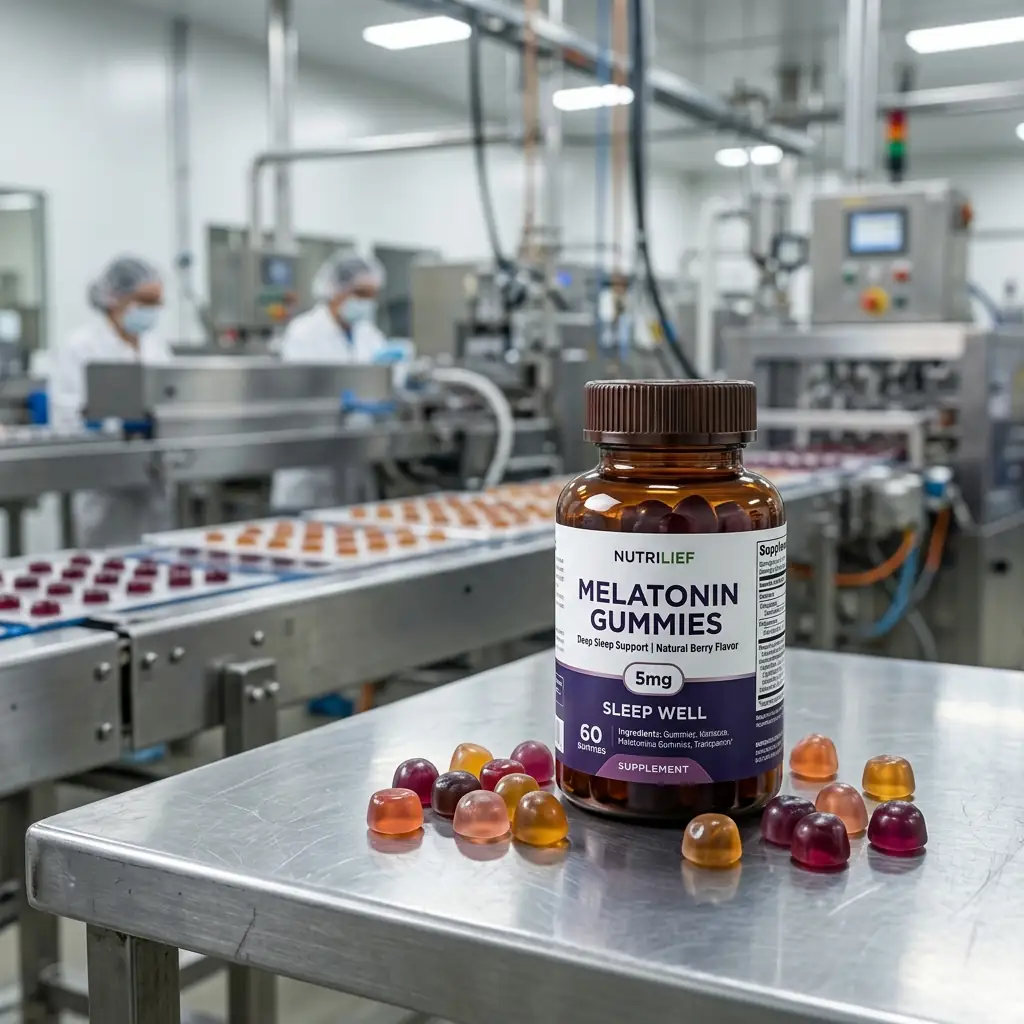
Gummy bear production begins with combining a gelling agent (typically gelatin, pectin, or carrageenan) with water, sweeteners, flavoring agents, colorants, and any functional active ingredients. The mixture is heated, homogenized, and deposited into starch or silicone molds, where it sets through controlled cooling. Finished gummies are then de-molded, coated (if required), inspected, and packaged.
The process sounds straightforward, but achieving consistent texture, accurate dosing, and shelf stability at scale requires significant process engineering and quality management infrastructure.
Industry Background and Origin
The modern gummy bear traces its origins to Germany in the 1920s, when gelatin-based confections became commercially viable. Over the following century, the format evolved from pure candy into a dominant vehicle for dietary supplements — vitamins, minerals, probiotics, herbal extracts, and functional ingredients now commonly appear in gummy form.
Today, the global gummy supplement market represents a multi-billion-dollar segment within the broader nutraceutical industry, driven by consumer preference for palatable, chewable delivery formats over tablets and capsules.
Business Relevance: Market Demand and Supply Chain
Gummy bears rank among the fastest-growing supplement formats globally, particularly in North American and European markets. Their appeal cuts across demographics: children’s vitamins, adult multivitamins, sleep aids, and sports nutrition products all leverage the format.
For B2B buyers, this demand creates both opportunity and complexity. The supply chain involves sourcing food-grade gelling agents, pharmaceutical-grade active ingredients, compliant colorants and flavors, and appropriate packaging materials — each with its own vendor landscape and quality requirements.
Differences vs. Alternative Supplement Formats
Compared to capsules and tablets, gummies offer higher consumer acceptance and easier dosing compliance, particularly for children and older adults. However, they present distinct manufacturing challenges: active ingredients must be heat-stable (since the slurry is cooked at elevated temperatures), moisture control during curing is critical, and sugar content requires careful formulation for low-sugar or sugar-free variants.
Compared to liquid drops, gummies offer superior portability and longer shelf life without refrigeration, though they carry higher per-unit production costs.
Key Advantages and Limitations
Advantages:
- High consumer palatability and compliance
- Versatile delivery format for a wide range of actives
- Strong retail shelf appeal and branding potential
- Available in vegan formulations using pectin or carrageenan
Limitations:
- Heat sensitivity limits certain active ingredients
- Higher manufacturing complexity and cost compared to powder or capsule formats
- Sugar and caloric content requires careful labeling
- Moisture and temperature sensitivity during storage and transit
Who Should Consider Gummy Bear Manufacturing
Brands launching consumer-facing supplement lines, private label operators seeking differentiated products, and distributors serving health retailers are the primary buyers of Gummy Contract Manufacturing services. Startups entering the supplement market often benefit from ODM formats, where a manufacturer provides a pre-developed formulation that can be customized for flavor, shape, and branding.
Compliance, Regulatory, and Quality Considerations
Gummy supplements sold in major markets must comply with applicable food safety and supplement regulations. In the United States, this means adherence to FDA 21 CFR Part 111 (GMP for dietary supplements). In the European Union, food supplement regulations vary by member state but generally require compliance with EU food law and applicable EFSA guidelines.
Manufacturers should hold relevant certifications (GMP, ISO 22000, HACCP) and be prepared to provide Certificates of Analysis (COA), third-party testing results, and full ingredient traceability documentation.
What Businesses Should Evaluate Before Sourcing
Before engaging a gummy manufacturer, buyers should assess: minimum order quantities, production lead times, the manufacturer’s track record with similar formulations, testing and documentation capabilities, and their ability to scale as demand grows.
Technical Parameter Table
| Parameter | Details |
|---|---|
| Product Form | Chewable gummy (bear, ring, cube, custom shape); functional supplement or confection |
| Primary Gelling Agents | Gelatin (bovine or porcine), pectin (vegan), carrageenan, agar |
| Sweeteners | Sucrose, glucose syrup, isomalt, erythritol, stevia (for reduced-sugar variants) |
| Active Ingredient Compatibility | Heat-stable vitamins, minerals, herbal extracts, probiotics (cold-add only), melatonin, collagen, CBD (market-dependent) |
| Manufacturing Process Steps | Formulation → ingredient weighing → cooking/blending (65–90°C) → depositing into molds → curing (24–48 hrs) → de-molding → coating/oiling → inspection → packaging |
| Cleanroom Standard | 100,000-class cleanroom (ISO Class 8) for standard production; 10,000-class for R&D and sensitive formulations |
| Quality Certifications | GMP, ISO 9001, ISO 22000, HACCP, FDA registration, HALAL, KOSHER, Vegan-certified options |
| Third-Party Testing | COA per batch; microbial testing, heavy metals screening, potency verification, stability studies |
| Packaging Options | HDPE bottles, stand-up pouches, blister packs, bulk bags; private label and custom design available |
| MOQ (Typical) | Varies by manufacturer; trial runs available for brand validation before scale-up |
| Production Capacity | Scale-capable facilities produce multiple tons per day; annual capacity measured in thousands of tons |
| Shelf Life | Typically 18–24 months with appropriate moisture barrier packaging |
| Storage & Logistics | Store below 25°C, away from direct sunlight and humidity; avoid temperature extremes during ocean or air freight |
Practical Insights (B2B-Focused)
Manufacturing Quality and Process Control
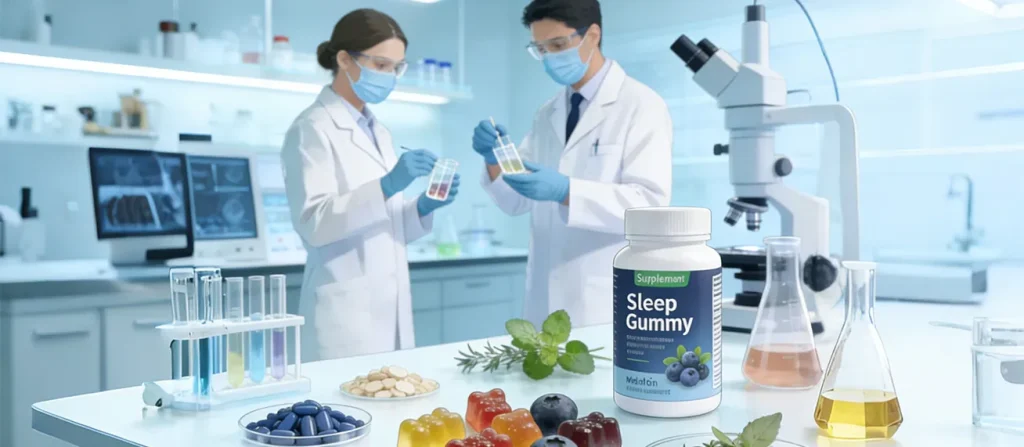
The gummy manufacturing process involves multiple critical control points: cooking temperature directly affects gelling agent hydration and active ingredient integrity; depositing speed and temperature affect mold fill consistency; and curing humidity and duration determine final texture and moisture content.
Reputable manufacturers maintain Standard Operating Procedures (SOPs) for each stage, conduct in-process quality checks, and perform finished product testing before release. Buyers should request documentation on these control points when evaluating potential suppliers.
Raw Material Sourcing Transparency
The quality of finished gummies is directly tied to raw material quality. Buyers should ask manufacturers for documentation on gelling agent origin and grade, active ingredient COAs, and color and flavor additive compliance. Manufacturers with vertically integrated or audited supply chains reduce risk for their customers.
Production Scalability and Lead Time
Lead times for custom gummy products typically range from several weeks (for ODM products with minor customization) to several months (for fully custom OEM formulations requiring stability testing). Understanding a manufacturer’s production scheduling, capacity allocation practices, and how they handle order surges is essential for supply chain planning.
Compliance and Documentation Readiness
For brands exporting to regulated markets, manufacturers must be able to provide: GMP certificates, facility audit reports, ingredient safety documentation, nutritional analysis, and country-specific labeling compliance support. Manufacturers with experience serving U.S., EU, and other regulated markets are better positioned to support compliant launches.
Cost Structure Considerations
Gummy production costs are influenced by formulation complexity, gelling agent type (pectin is generally more expensive than gelatin), active ingredient costs, packaging selection, and order volume. Buyers should obtain itemized quotations and understand how costs scale with volume to model unit economics accurately.
B2B Decision Guide
How Brands Choose the Right Manufacturer
The selection of a custom gummy manufacturer should be based on capability alignment, not price alone. Brands should confirm that a manufacturer has specific experience with their target formulation type (e.g., vitamin gummies, functional gummies, vegan gummies), relevant certifications for their target market, and a clear quality management system.
What Matters in OEM/ODM Projects
In OEM projects (where the brand supplies the formulation), the manufacturer’s process capability and quality system are paramount. In ODM projects (where the manufacturer provides the base formulation), the breadth and quality of the manufacturer’s existing formulation library matters significantly. Both models require clear IP agreements and confidentiality protections.
How to Assess Production Capability
Facility audits — either in person or via third-party audit firms — remain the most reliable method of assessing production capability. Where audits are not feasible, buyers should request facility documentation, recent audit reports, and client references. Production capacity figures should be verified against actual equipment and staffing, not just marketing claims.
Key Criteria for Long-Term Supply Partnerships
Long-term partnerships require alignment on: consistent product quality across batches, reliable lead times, responsive communication, proactive regulatory support, and willingness to accommodate product iterations as formulations evolve. Cost competitiveness matters, but stability and reliability typically deliver greater long-term value.
Risk Control and Quality Assurance Checkpoints
Key risk control checkpoints include: pre-production raw material approval, in-process quality checks at critical stages, finished product testing before shipment, and retention sample storage. Buyers should also clarify claims, warranty, and remediation procedures in supply agreements.
Conclusion
Understanding how gummy bears are made gives B2B buyers the foundation to evaluate manufacturers rigorously, specify products precisely, and manage supply chains effectively. The gummy format offers compelling commercial advantages — broad consumer appeal, dosing flexibility, and strong branding potential — but realizing those advantages requires partnering with a manufacturer that combines process expertise, certified quality systems, and reliable production capacity. For brands at any stage — from initial concept to high-volume commercial supply — selecting the right manufacturing partner is among the most consequential decisions in the product development process.
FAQ
What is gummy bear manufacturing in a supplement context? Gummy bear manufacturing in the supplement industry refers to the production of chewable, gelatin- or pectin-based delivery formats containing active nutritional or functional ingredients, produced under food-grade or pharmaceutical GMP conditions.
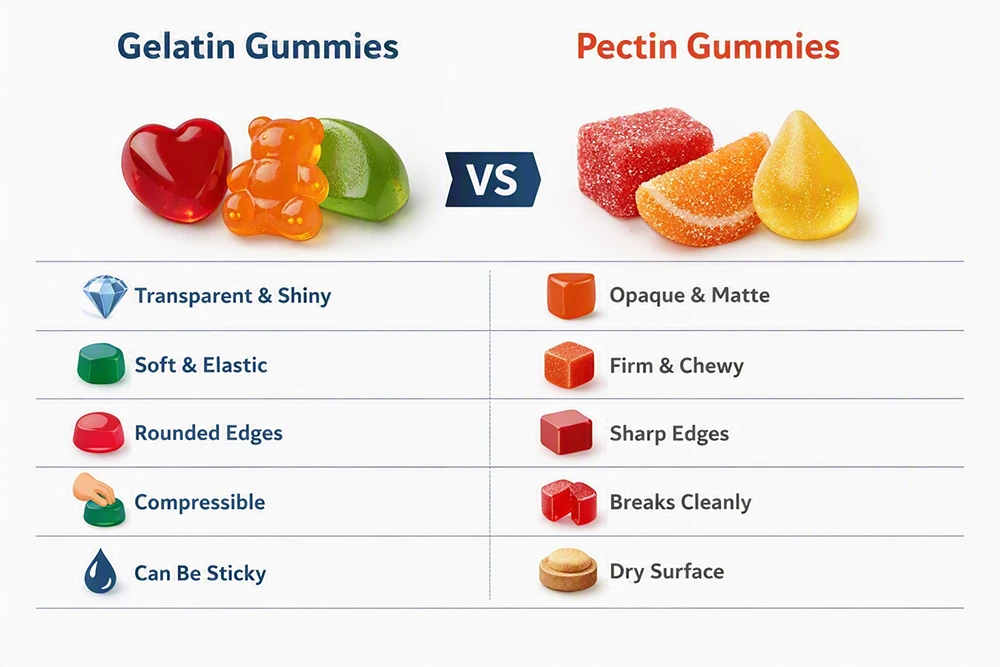
Why does the gelling agent choice matter when producing gummy bears? The gelling agent determines the product’s texture, mouthfeel, suitability for vegan consumers, and compatibility with certain active ingredients. Gelatin produces a firmer, more elastic gummy; pectin and carrageenan are plant-derived alternatives suitable for vegan formulations.
How does gummy bear manufacturing compare to capsule or tablet production? Gummy production is generally more complex and capital-intensive than capsule or tablet manufacturing due to cooking, molding, and controlled curing requirements. However, the format commands higher retail prices and stronger consumer preference, making it commercially attractive despite higher production costs.
What should a brand consider before sourcing private label gummy products? Brands should evaluate the manufacturer’s formulation library, certifications, MOQ flexibility, documentation capabilities, and experience with their target market’s regulatory requirements. Requesting samples and batch records before committing to large orders is advisable.
What quality standards apply to gummy supplement manufacturing? Key applicable standards include GMP (21 CFR Part 111 for U.S. dietary supplements), ISO 22000 (food safety management), and HACCP (hazard analysis and critical control points). HALAL, KOSHER, and Vegan certifications may also be relevant depending on the target market.
How long does it take to develop and produce a custom gummy product? Development timelines vary significantly. ODM products with standard formulations can be customized and produced within a few weeks. Fully custom OEM formulations requiring stability testing and regulatory documentation may take three to six months from concept to finished goods.
About the Manufacturer
Shenzhen Gothink Biotech Co., Ltd. is a large-scale dietary supplement manufacturer based in China, offering comprehensive OEM, ODM, CMO, and CDMO services across gummy, capsule, tablet, powder, liquid, and drop formats. The company operates a GMP-certified facility with a 100,000-class cleanroom and a 10,000-class pharmaceutical-grade R&D laboratory, with a daily output of 16 tons and an annual production capacity of 5,000 tons. Gothink holds certifications including ISO 9001, ISO 22000, HACCP, FDA registration, GMP, HALAL, KOSHER, and Vegan, supporting compliant supply to global markets. The company’s R&D team, led by researchers with postdoctoral experience at leading U.S. institutions, supports custom formulation development across a wide range of functional supplement categories. Gothink provides end-to-end turnkey solutions — from formulation development and raw material sourcing through manufacturing, quality control, and packaging — and is equipped to support both small-batch trial production and high-volume long-term supply partnerships for brands, distributors, and private label buyers worldwide.