
Abstract
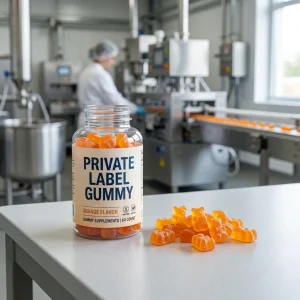
Vitamin gummies have become one of the fastest-growing segments in the global dietary supplement market, appealing to consumers who prefer a more enjoyable alternative to traditional capsules or tablets. But what exactly goes into making them? This article provides a comprehensive, step-by-step breakdown of how vitamin gummies are made—from ingredient selection and formulation development through gummy vitamin manufacturing, quality control, and final packaging. Whether you are a supplement brand exploring private label gummy vitamin options, a buyer interested in gummy vitamin bulk or gummy vitamin wholesale sourcing, or simply a business evaluating a gummy vitamin manufacturer, this guide covers what you need to know. The process is more scientifically rigorous than most consumers realize, and understanding it helps buyers make smarter, safer sourcing decisions.
1. What Are Vitamin Gummies?
Vitamin gummies are chewable, gelatin- or pectin-based supplements that deliver vitamins, minerals, herbal extracts, or other bioactive compounds in a confectionery-style format. Unlike standard pharmaceuticals, gummies are designed to combine nutritional efficacy with sensory appeal—soft texture, pleasant flavor, and appealing appearance.
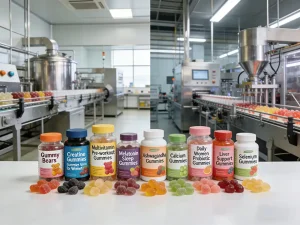
The gummy format has expanded well beyond the children’s multivitamin space. Today, the market includes products targeting sleep support, immune function, gut health, sports performance, beauty, and more. This growth has spurred significant investment in gummy manufacturing technology and quality assurance systems to ensure these products are both safe and effective.
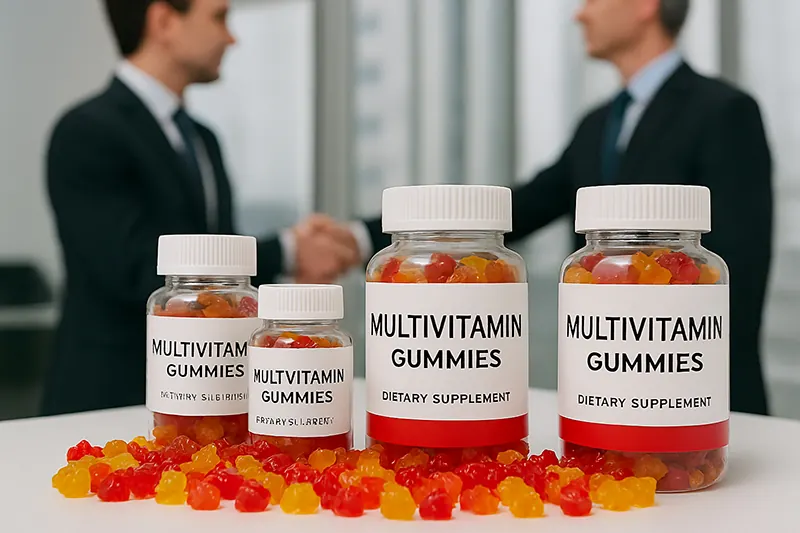
2. Key Ingredients in Gummy Vitamin Manufacturing
The quality of a gummy supplement begins with ingredient selection. Each component plays a distinct role in the product’s structure, stability, and performance.
Gelling Agents
Gelling agents give gummies their characteristic chewy texture. The two most commonly used are:
- Gelatin: Derived from animal collagen, gelatin produces a smooth, elastic texture that most consumers associate with traditional gummies. It is cost-effective and widely used in conventional gummy manufacturing.
- Pectin: A plant-derived alternative used in vegan and vegetarian formulations. Pectin typically yields a slightly firmer texture. It is increasingly popular as consumer demand for plant-based supplements rises.
- Carrageenan and agar are also used in specific formulations, particularly where additional gel strength or heat stability is required.
Sweeteners and Humectants
Sucrose and glucose syrup are the traditional base sweeteners, providing both sweetness and the syrup body needed for processing. Many modern formulations incorporate sugar alternatives such as maltitol, erythritol, or stevia to reduce sugar content for low-sugar or diabetic-friendly product lines. Humectants like sorbitol or glycerin are added to prevent gummies from drying out and maintain moisture balance over the product’s shelf life.
Active Ingredients (Vitamins, Minerals, and Botanicals)
The active ingredient selection is the scientific core of any gummy supplement. Formulators must account for:
- Bioavailability: Not all nutrient forms are equally absorbed. For example, methylcobalamin is generally considered more bioavailable than cyanocobalamin for vitamin B12.
- Heat sensitivity: Many vitamins—particularly vitamin C and certain B vitamins—degrade at high temperatures. The gummy manufacturing process involves heat, so overage (adding more than the labeled dose to account for processing loss) is typically calculated and built into formulations.
- Interactions: Some minerals can interact with gelling agents or affect texture. Iron, for example, is notoriously difficult to incorporate into gummies without affecting color, taste, and stability.
Colors, Flavors, and Acidulants
Natural or synthetic colors are added to make gummies visually appealing and consistent. Natural sources include carmine (red), beta-carotene (orange/yellow), and spirulina (blue/green). Flavors—fruit-derived, botanical, or synthetic—are added to mask the taste of active ingredients, which can be bitter or metallic. Acidulants such as citric acid or malic acid provide the slight tartness that characterizes many gummy products and also help with preservation.
3. The Step-by-Step Gummy Manufacturing Process
Understanding the production sequence helps brands evaluate a potential gummy vitamin manufacturer, assess lead times, and set realistic expectations for custom product development.
Step 1: Formulation Development
Before production begins, R&D chemists and nutritionists develop the formula. This includes selecting active ingredients and their forms, determining the target dose per gummy, calculating overage for heat-sensitive nutrients, choosing gelling agents (gelatin vs. pectin), and selecting flavors, colors, and sweeteners. Formulators must also consider regulatory requirements for the target market—labeling laws, permitted additives, and nutrient claim thresholds differ by country. For brands pursuing private label gummy vitamin development, working with a manufacturer that has robust in-house formulation capability dramatically shortens time-to-market.
Step 2: Raw Material Procurement and Testing
Once the formula is finalized, raw materials are sourced from approved suppliers. In a properly managed gummy vitamin manufacturing facility, every incoming raw material batch is tested for identity, purity, microbial contamination, heavy metals, and potency before it is released for production. This incoming quality control step is critical for ensuring finished product safety.
Step 3: Syrup Preparation
The manufacturing process begins with cooking the syrup base. Sugar (or sugar substitute), glucose syrup, and water are combined and heated to a precise temperature—typically between 107°C and 115°C (225°F–240°F)—to achieve the correct Brix (dissolved sugar concentration) and moisture content. Controlling this step carefully is essential; incorrect moisture levels will result in gummies that are too hard, too soft, or that fail to maintain shape during demolding.
Step 4: Gelatin or Pectin Hydration and Blending
The gelling agent is hydrated separately—gelatin or pectin is soaked in water at controlled temperatures to bloom (swell) and dissolve uniformly. It is then blended into the hot syrup base. The temperature and mixing speed must be carefully managed to prevent air bubble incorporation and ensure a homogeneous gel matrix. Active ingredients, flavors, colors, and acidulants are typically added after the gelatin or pectin is fully incorporated, especially when heat-sensitive vitamins are involved.
Step 5: Depositing into Molds
The liquid gummy mass is deposited into molds using automated depositing machines that ensure precise fill weights and consistent shape. Two main molding systems are used:
- Starch molding (mogul process): Liquid gummy mass is deposited into starch molds, which absorb excess moisture during the drying process. This is the most common industrial method for high-volume gummy manufacturing.
- Silicone or hard molds: Used for smaller batches or specialty shapes. These do not absorb moisture, so gummies must be dried separately.
Mold design is also important for brands—most gummy vitamin manufacturers offer a range of standard shapes and can develop custom shapes for brand differentiation.
Step 6: Drying and Conditioning
After depositing, gummies are dried in controlled-environment drying rooms or tunnels. Temperature, relative humidity, and airflow are regulated to achieve the target moisture content (typically 15–20% for standard gelatin gummies, slightly higher for pectin-based). Drying can take 12 to 48 hours depending on gummy size, formulation, and facility setup. Insufficient drying leads to sticky gummies that clump together; excessive drying makes gummies too hard.
Step 7: Demolding and Finishing
Once dried, gummies are separated from their molds (demolded) and conveyed through finishing steps. A common finishing treatment is the application of a thin coating of carnauba wax or beeswax, which prevents gummies from sticking to each other and gives them a slight sheen. For sour products, a sugar-acid blend may be applied at this stage.
Step 8: In-Process and Finished Product Quality Control
Quality control is embedded throughout the gummy vitamin manufacturing process, not just at the end. In-process checks include weight per gummy, pH, Brix, color, and texture. Finished product testing includes potency verification (to confirm the labeled dose), microbial limits testing, heavy metals screening, moisture content, and physical inspection for defects. Reputable manufacturers conduct both internal testing and third-party certificate of analysis (CoA) testing.
Step 9: Packaging
Finished gummies are packaged in bottles, pouches, or blister packs depending on the market. Packaging lines include automated counting, filling, nitrogen flushing (to extend shelf life), capping, sealing, and labeling. For brands ordering gummy vitamin bulk or gummy vitamin wholesale quantities, packaging lines must be capable of high throughput with minimal product loss.
4. GMP Standards and Regulatory Compliance in Gummy Manufacturing
Any credible gummy vitamin manufacturer operates under Good Manufacturing Practices (GMP). In practice, this means:
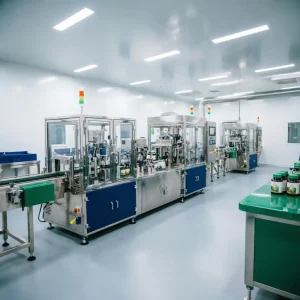
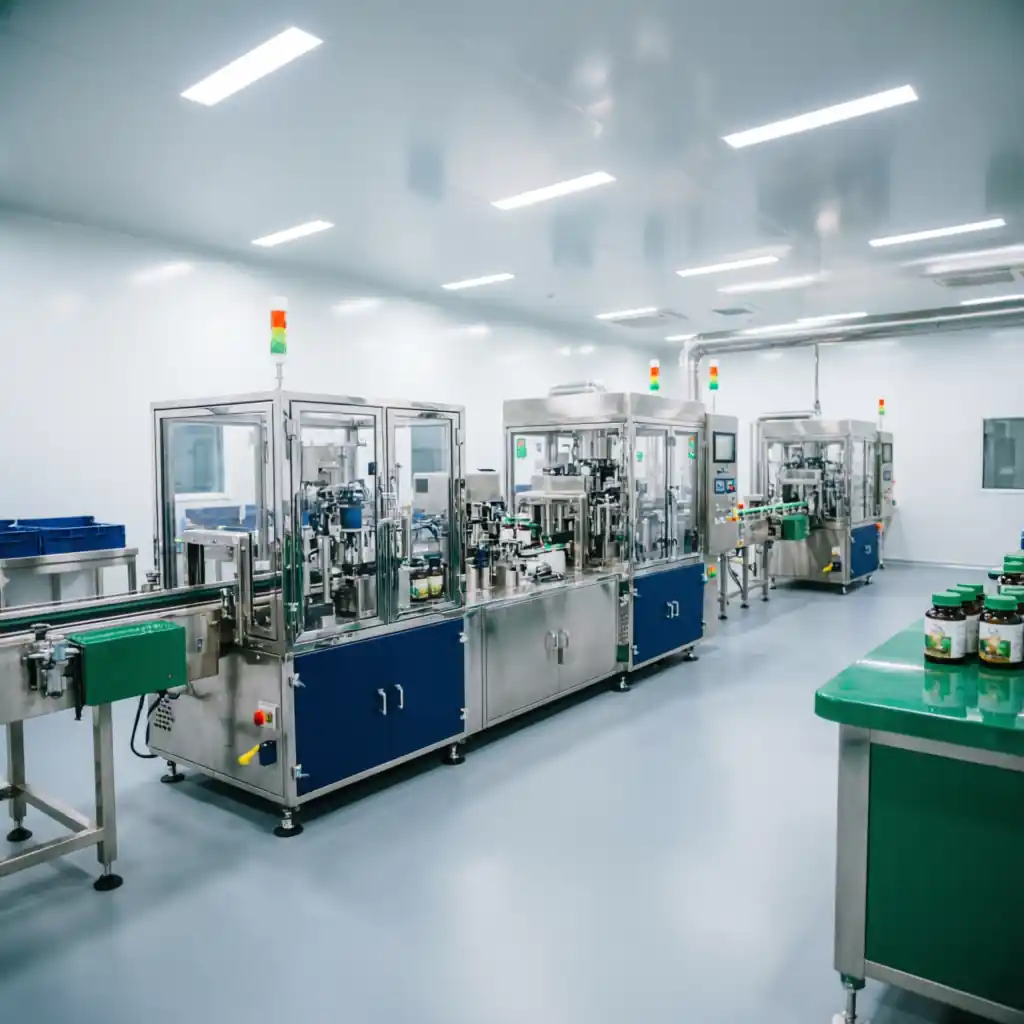
- Cleanroom production environments: Gummy manufacturing requires controlled air quality to prevent contamination. Pharmaceutical-grade facilities use 100,000-class (ISO 8) or better cleanrooms to minimize particulate and microbial contamination.
- Documented batch records: Every production batch must have traceable records covering raw material lot numbers, process parameters, in-process checks, and final test results.
- Equipment qualification and calibration: All production and testing equipment must be regularly calibrated and qualified.
- Personnel training: GMP requires documented training programs for all staff involved in production and quality assurance.
Common certifications to look for when evaluating a gummy vitamin manufacturer include ISO 9001 (quality management), ISO 22000 (food safety management), HACCP (hazard analysis), FDA registration, HALAL, KOSHER, and Vegan certification. These credentials provide independent verification that a facility has met externally audited standards.
For brands selling in the United States, the FDA’s 21 CFR Part 111 Current Good Manufacturing Practice regulations for dietary supplements are the primary compliance framework. EU brands must comply with applicable food supplement regulations in their target markets. Choosing a manufacturer with established export experience in your target region simplifies regulatory compliance significantly.
5. Private Label Gummy Vitamins: What Brands Need to Know
The private label gummy vitamin market has expanded substantially as DTC (direct-to-consumer) brands, subscription supplement companies, and specialty retailers seek to develop proprietary supplement lines without investing in their own manufacturing infrastructure.
When working with a manufacturer on a private label project, the key considerations include:
- Formula ownership: Clarify upfront whether the formula will be owned by your brand or remains proprietary to the manufacturer. True OEM/ODM services typically allow brands to own their formulations.
- Minimum order quantity (MOQ): MOQ requirements vary considerably. Some manufacturers require large minimum orders that may be impractical for new brands. Look for manufacturers offering flexible MOQs for trial runs, with the capacity to scale into gummy vitamin bulk and gummy vitamin wholesale volumes as your brand grows.
- Turnkey versus component supply: Some brands source finished gummies in bulk and handle packaging in-house; others prefer a fully turnkey solution including custom packaging, labeling, and fulfillment-ready cartons.
- Lead times: Standard formulation and production lead times for a new private label gummy vitamin product typically range from 8 to 16 weeks, depending on formula complexity, raw material availability, and packaging customization.
- Documentation support: A reliable manufacturer should provide complete documentation packages including certificates of analysis, ingredient sourcing documentation, allergen declarations, and stability study data as needed.
6. Gummy Vitamin Bulk and Wholesale Sourcing Considerations
For businesses purchasing gummy vitamin bulk or gummy vitamin wholesale, the key is to balance cost with quality assurance. Lower per-unit pricing from bulk orders only delivers value if the underlying product consistently meets quality specifications.
When evaluating bulk gummy sourcing:
- Always request third-party certificates of analysis for every batch, not just the first shipment.
- Specify your quality requirements in writing, including acceptable limits for potency variance, moisture content, microbial counts, and physical defects.
- Clarify packaging specifications for bulk shipments to prevent damage in transit—gummies are sensitive to heat and humidity.
- For wholesale orders destined for retail, confirm that all label claims and ingredient disclosures are accurate and compliant with your market’s regulations.
7. Common Technical Challenges in Gummy Vitamin Manufacturing
Gummy manufacturing is technically demanding. Several recurring challenges affect product quality and shelf life:
- Nutrient degradation: Heat-sensitive vitamins (C, B1, B5, folate) lose potency during cooking. Formulators address this by using stabilized forms, adding overage, and optimizing process temperatures.
- Sugar bloom and syneresis: Moisture migration can cause crystallization on the gummy surface (sugar bloom) or weeping of liquid from the gel matrix (syneresis). Proper humectant levels and moisture-barrier packaging mitigate these issues.
- Gummy clumping: Insufficient wax coating or high ambient humidity can cause gummies to stick together in packaging, which is a common complaint in warm and humid climates.
- Off-flavors: Certain active ingredients—fish oil omega-3s, certain minerals, or herbal extracts—introduce strong odors or flavors that are difficult to mask. High-quality flavor systems and encapsulation technologies are often required.
- Dose consistency: Achieving consistent active ingredient content per gummy requires precise mixing and depositing control. Inadequate homogenization leads to uneven distribution of active ingredients across a batch.
Summary
Gummy vitamin manufacturing is a sophisticated, multi-step process that demands scientific expertise, precision engineering, and rigorous quality management. The journey from a formulation concept to a finished, compliant product involves ingredient selection, syrup cooking, gelling agent hydration, depositing and molding, controlled drying, finishing, quality testing, and packaging.
For supplement brands, retailers, and distributors seeking to enter or grow in this market, partnering with a qualified, certified gummy vitamin manufacturer is the most effective path to producing consistent, market-ready products. Whether your interest is in private label gummy vitamins, gummy vitamin bulk production, or gummy vitamin wholesale supply, the quality and transparency of your manufacturing partner is the single most important factor in product success.
Investing time in vetting manufacturers—reviewing certifications, requesting audit reports, sampling products, and understanding their formulation capabilities—is always worthwhile. The gummy supplement market is competitive, and product quality is increasingly the differentiator that drives brand loyalty.
Frequently Asked Questions (FAQ)
Q: What is the difference between gelatin and pectin gummies?
Gelatin is an animal-derived protein that produces a soft, smooth, elastic texture. Pectin is a plant-derived polysaccharide that yields a slightly firmer, cleaner-breaking texture. Pectin gummies are suitable for vegetarian, vegan, halal, and kosher markets. From a manufacturing perspective, pectin requires a higher setting temperature and more precise pH management than gelatin. Both are widely used in gummy vitamin manufacturing, and your choice should be driven by your target consumer profile and market certification requirements.
Q: How many vitamins can be combined in one gummy?
This depends on the target dose of each nutrient and the physical limitations of the gummy format. A standard adult multivitamin gummy typically contains 10–20 micronutrients. However, certain minerals (iron, calcium in high doses, magnesium) are difficult to incorporate at therapeutically meaningful doses in a single gummy without affecting texture, taste, or stability. Experienced formulators can advise on what is technically feasible for a given product concept.
Q: What is the typical minimum order quantity (MOQ) for private label gummy vitamins?
MOQ varies by manufacturer. Many contract manufacturers set MOQs based on production batch sizes, which may range from 50,000 to 500,000 gummies per run. Some manufacturers offer lower MOQs for pilot or trial production to help new brands test the market before committing to large-scale orders. When evaluating manufacturers, it is worth asking explicitly about their flexibility for small initial runs with the ability to scale into gummy vitamin bulk and wholesale volumes as demand grows.
Q: How are gummy vitamins tested for potency and safety?
Reputable gummy vitamin manufacturers conduct multi-stage testing. Incoming raw materials are tested for identity, purity, and potency. In-process quality checks monitor weight, texture, pH, and Brix during production. Finished product testing covers nutrient potency (using HPLC, ICP-MS, or other validated analytical methods), microbiological limits (total aerobic count, yeast, mold, E. coli, Salmonella), heavy metals (lead, arsenic, cadmium, mercury), and moisture content. Third-party certificates of analysis should be requested and reviewed for every production batch.
Q: How long does it take to develop and manufacture a new private label gummy vitamin product?
For a new formulation developed from scratch, the typical timeline is 8 to 16 weeks from formula approval to finished goods. This includes formulation development (2–4 weeks), pilot batch production and testing (2–4 weeks), packaging design and procurement (3–6 weeks, which can run in parallel), and full-scale production and quality testing (2–4 weeks). Brands that select from a manufacturer’s existing formula library can significantly shorten this timeline.
Q: Can gummy vitamins be made without sugar?
Yes. Sugar-free gummy formulations are technically feasible using polyol sweeteners such as maltitol, xylitol, erythritol, or isomalt, combined with high-intensity sweeteners like stevia or monk fruit extract. However, sugar-free gummies present specific formulation and manufacturing challenges: polyols can have laxative effects at high doses, affect gel texture differently than sucrose, and can be more sensitive to humidity. Experienced manufacturers can guide brands through the trade-offs to achieve an acceptable sugar-free product.
About Gothink Biotech — Gummy Manufacturer & Dietary Supplement Manufacturer
Shenzhen Gothink Biotech Co., Ltd. is a professional gummy manufacturer and dietary supplement manufacturer offering full-service OEM, ODM, CMO, and CDMO solutions to supplement brands, private label businesses, retailers, and distributors worldwide.
Our production capabilities span the full range of gummy supplement formats—including vitamin gummies, functional gummies, herbal gummies, vegan pectin gummies, and sugar-free gummies—along with capsules, tablets, powders, and liquid drops. We support clients from initial formulation development through to finished, packaged goods ready for market.
Our facility operates under pharmaceutical GMP standards with a 100,000-class cleanroom manufacturing environment and a 10,000-class pharmaceutical-grade R&D laboratory. Our chief scientific advisor has conducted postdoctoral research at leading institutions including Cold Spring Harbor Laboratory, Emory University, and The Ohio State University, and has published over 30 peer-reviewed articles in international scientific journals.
We hold certifications including ISO 9001, ISO 22000, HACCP, FDA registration, HALAL, GMP, KOSHER, and Vegan, providing our clients with the compliance documentation they need for global market access.
Whether you are looking for gummy vitamin bulk production, gummy vitamin wholesale supply, private label gummy vitamin development, or a fully integrated turnkey manufacturing partner, Gothink Biotech has the expertise, capacity, and quality systems to support your brand’s growth.
Annual production capacity: 5,000 tons | Daily output: 16 tons | Annual new formulation research: 2,000+ products