
Summary
Gummy bears are gelatin- or pectin-based confectionery supplements produced through a multi-stage manufacturing process that includes ingredient blending, heating, molding, curing, and packaging. For health brands and private label buyers, understanding how gummy bears are made is essential to evaluating manufacturers, controlling costs, and ensuring product quality. Working with a capable custom gummy manufacturer simplifies the entire production cycle through integrated OEM and ODM services.
Definition
Gummy bears refer to small, bear-shaped chewable supplements or functional confections made from a base of gelatin or plant-derived gelling agents (such as pectin or carrageenan), combined with sweeteners, flavorings, colorants, and active nutritional ingredients. In the dietary supplement industry, gummy bears serve as a delivery format for vitamins, minerals, herbal extracts, and other bioactive compounds.
What Are Gummy Bears and Why Do They Matter for Supplement Brands?
Gummy bears originated as candy in Germany in the 1920s, but over the past two decades the format has been adopted widely by the nutraceutical and dietary supplement industry. Their palatability, ease of dosing, and broad consumer appeal — especially among children, older adults, and those who dislike swallowing capsules — have made them one of the fastest-growing supplement delivery formats globally.
For B2B buyers including brand owners, distributors, and private label operators, the gummy format offers meaningful commercial advantages: higher perceived value, strong shelf presence, and a loyal repeat-purchase cycle driven by taste preference. Market demand for functional gummies continues to grow in North America, Europe, and East Asian markets, each with distinct formulation and regulatory requirements.
How Gummy Bears Are Made: The Manufacturing Process
Understanding the production process helps buyers assess manufacturer capability, quality control protocols, and production timelines.
1. Formulation and Ingredient Preparation
The process begins with formulation development — defining the active ingredients, gelling agents, sweeteners, flavors, and colorants. For supplement gummies, active compounds (such as vitamins, melatonin, ashwagandha extract, or probiotics) must be dosed accurately and must remain stable through the manufacturing process. Heat-sensitive ingredients require special handling protocols.
2. Mixing and Cooking
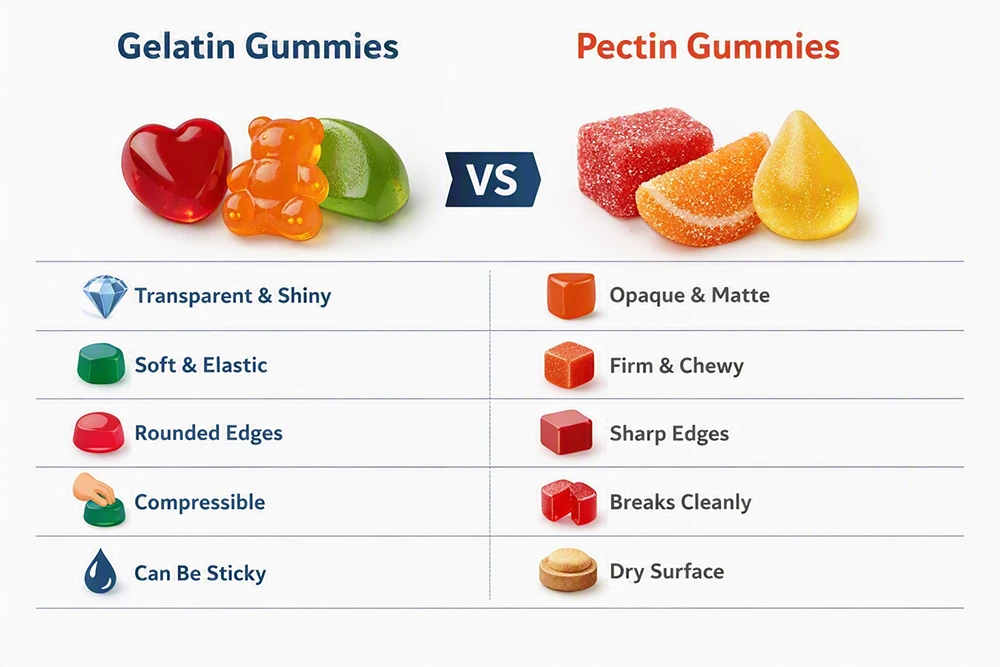
Gelling agents (gelatin, pectin, or carrageenan) are dissolved in water at controlled temperatures, then blended with sweeteners such as glucose syrup or sugar alternatives. Active ingredients and flavor/color additives are incorporated at specific temperature points to preserve potency and uniformity. The mixture is cooked and held at precise temperatures to achieve the correct viscosity.
3. Depositing and Molding
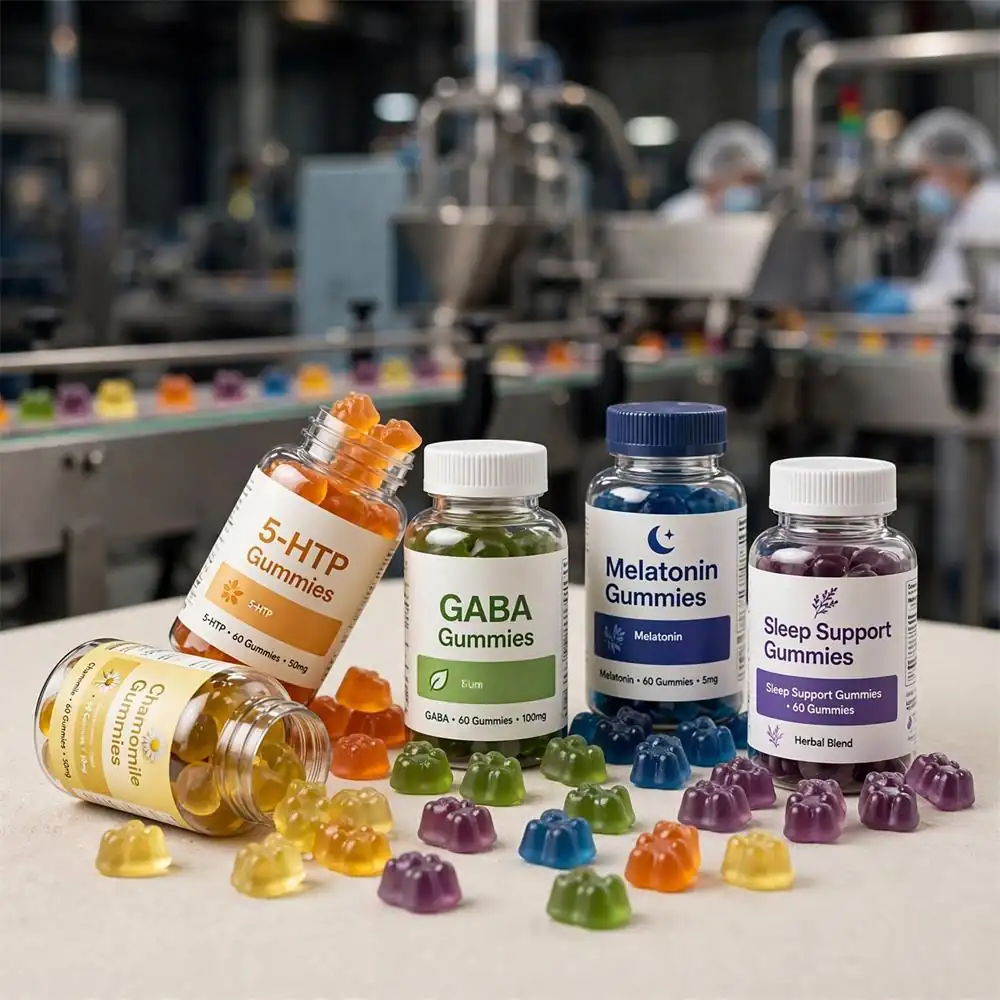
The liquid mixture is deposited into molds — typically starch trays or silicone molds — using automated depositing machines. Mold shape, size, and cavity design determine the final gummy form. Manufacturers offering 30 or more shape options provide brands with greater customization flexibility for product differentiation.
4. Curing and Drying
Filled molds pass through temperature- and humidity-controlled curing rooms for several hours to days, depending on the formula. This step is critical for achieving the correct texture, moisture content, and chew profile. Under- or over-curing directly affects product quality and shelf life.
5. De-molding and Finishing
Cured gummies are removed from molds and may undergo additional finishing steps such as oil coating (to prevent sticking), sugar sanding, or citric acid dusting. These finishing treatments affect texture, appearance, and flavor delivery.
6. Quality Control and Testing
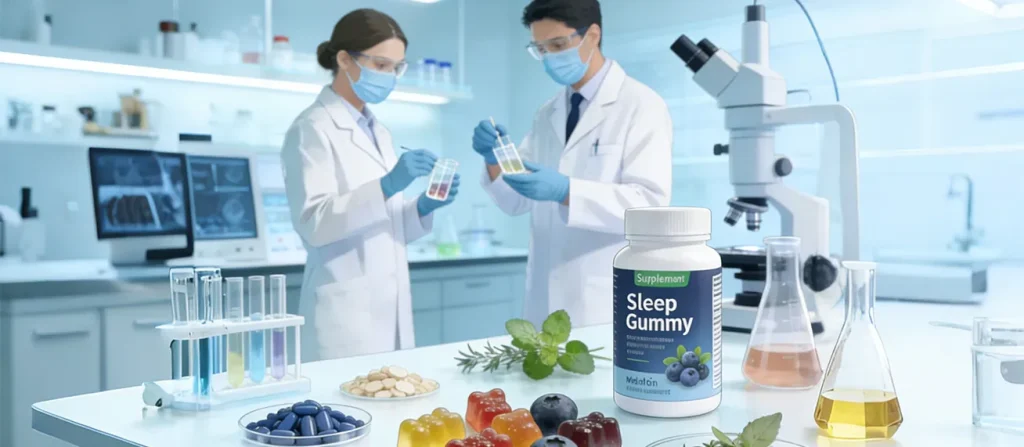
Finished gummies are tested for active ingredient potency, microbial safety, moisture content, weight uniformity, and appearance consistency. GMP-compliant facilities conduct in-process and finished-product testing, with third-party laboratory verification available for export markets.
7. Packaging
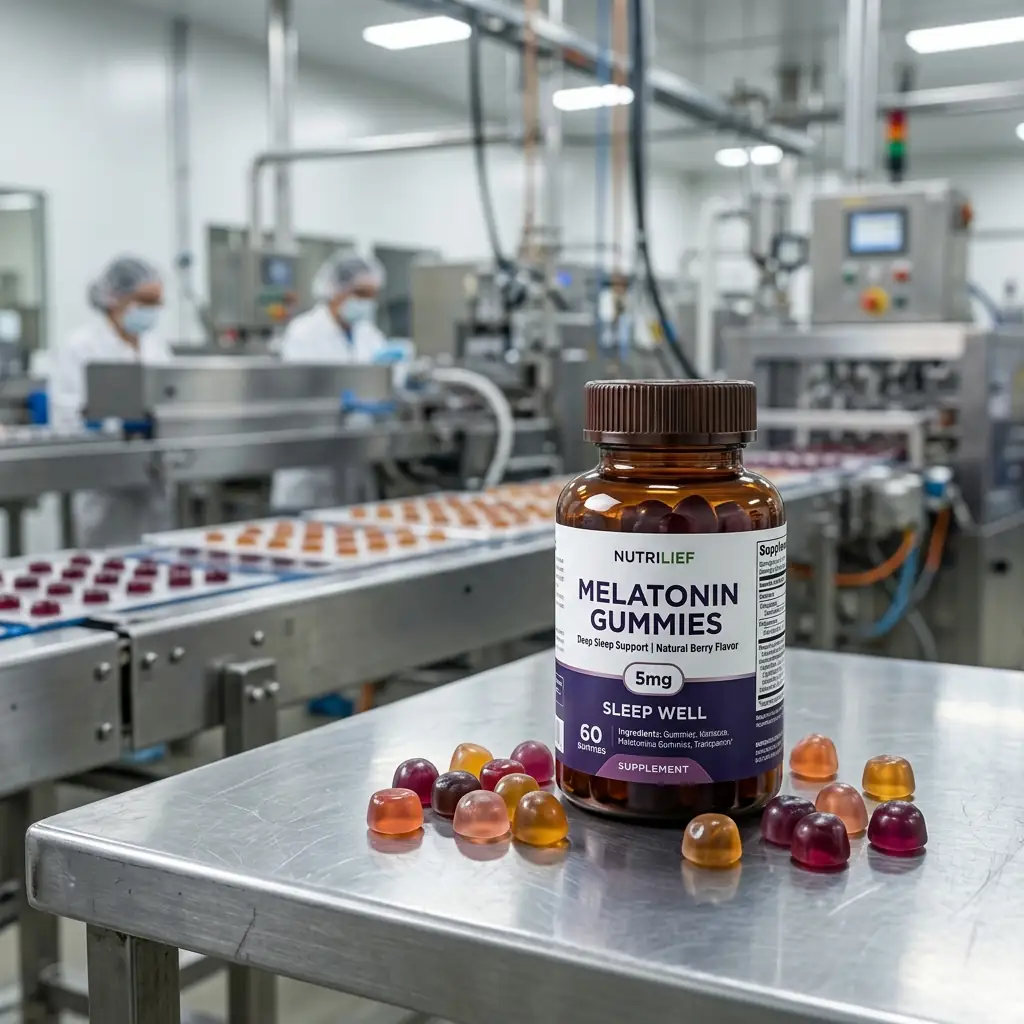
Gummies are packaged in bottles, pouches, blister packs, or sachets depending on brand requirements and target market regulations. Packaging lines in qualified facilities integrate nitrogen flushing, tamper-evident sealing, and label application as part of an automated workflow.
Regional Compliance Considerations
Before confirming a formulation, B2B buyers should clarify the target market’s regulatory framework with their manufacturer:
- North America (FDA/NPN): Supplement facts panel, permitted ingredient list, labeling compliance under 21 CFR Part 111 (GMP).
- European Union: Novel Food Regulation, maximum permitted levels for vitamins and minerals, food additive restrictions on colorants and sweeteners.
- Japan and South Korea: Distinct approved ingredient lists; stricter limits on certain herbal ingredients; local language labeling requirements.
A manufacturer with documented experience supporting multi-market compliance reduces regulatory risk for brands entering new geographies.
Gummy Bears vs. Alternative Supplement Formats
|
|---|
Gummy bears typically command a higher retail price point than capsules or tablets of equivalent dosage, partially offsetting the higher manufacturing cost.
Technical Parameter Table
| Parameter | Details |
|---|---|
| Product Form | Chewable gummy (bear shape and custom shapes); available in single-layer, multi-layer, and filled variants |
| Gelling Agents | Gelatin (bovine, porcine, fish); Pectin (vegan/vegetarian); Carrageenan; Agar |
| Sweetener Options | Glucose syrup, sucrose, erythritol, xylitol, stevia, monk fruit extract (low-sugar and sugar-free formulations available) |
| Color Options | Natural fruit/vegetable-derived colorants; FD&C certified colors (market-dependent) |
| Active Ingredient Categories | Vitamins, minerals, botanical/herbal extracts, amino acids, probiotics, melatonin, collagen, omega-3 alternatives |
| Manufacturing Process | Dissolution → Cooking → Blending → Depositing → Curing → Finishing → QC Testing → Packaging |
| Quality Standards | GMP, ISO 9001, ISO 22000, HACCP, FDA registration; HALAL, KOSHER, Vegan certifications available |
| Facility Grade | 100,000-class cleanroom for production; 10,000-class pharmaceutical-grade R&D laboratory |
| Packaging Options | HDPE bottles, stand-up pouches, blister packs, sachets; custom label printing and private label available |
| Production Capacity | Daily output: up to 16 tons; Annual capacity: up to 5,000 tons |
| MOQ | Flexible; trial run quantities available for new product development; full-scale production for established brands |
| Shelf Life | Typically 18–24 months under recommended storage conditions (cool, dry, away from direct sunlight) |
| Storage & Logistics | Temperature-sensitive shipping recommended for warm climates; standard sea freight and air freight compatible |
Practical Insights for B2B Buyers
Manufacturing Quality and Process Control
Consistent quality in gummy production depends on tight control of cooking temperature, depositing speed, curing environment, and finishing parameters. Ask prospective manufacturers for documented SOPs (Standard Operating Procedures) and in-process quality records. Batch-to-batch consistency data is a meaningful indicator of production maturity.
Raw Material Sourcing Transparency
The quality of finished gummies is directly tied to raw material quality. Reputable manufacturers disclose their ingredient suppliers, provide Certificates of Analysis (CoA) for incoming materials, and can trace raw materials to the batch level. For branded health products, undisclosed ingredient substitution is a significant compliance and reputational risk.
Production Scalability and Lead Time
Lead times for Gummy Contract Manufacturing vary based on formula complexity, order volume, packaging customization, and production scheduling. Standard lead times typically range from 45 to 90 days from formula confirmation to finished goods. Buyers planning seasonal launches or large initial stocking orders should build in adequate buffer time.
Compliance and Documentation Readiness
For export to regulated markets, manufacturers should be able to provide: GMP certificates, facility audit reports, third-party testing certificates, ingredient safety dossiers, and market-specific compliance documentation. Delays in documentation preparation are a common source of launch timeline risk.
Cost Structure Considerations
Gummy manufacturing costs are influenced by active ingredient selection (especially branded or patented ingredients), gelling agent type (gelatin is generally lower cost than pectin), batch size, packaging complexity, and testing requirements. Unit economics improve substantially at higher volumes, making scalable partnerships more cost-efficient over time.
B2B Decision Guide: Choosing a Gummy Bear Manufacturer
What to Evaluate in an OEM/ODM Partner
Formulation capability: Can the manufacturer develop a novel formula, or are they limited to standard catalog formulations? Look for in-house R&D teams with documented expertise in supplement chemistry.
Regulatory knowledge: Does the manufacturer understand the target market’s regulatory requirements, including permitted ingredients, labeling standards, and maximum dosage levels?
Certification scope: Verify certifications are current and applicable to supplement production — not just food manufacturing. GMP certification specifically for dietary supplements is the relevant benchmark.
Transparent MOQ and pricing: Reliable manufacturers provide clear MOQ structures and itemized cost breakdowns. Ambiguity in pricing is a risk indicator.
Communication and project management: For OEM/ODM projects, the quality of project management directly affects launch timelines. Assess responsiveness, documentation practices, and milestone tracking during the initial inquiry process.
Key Criteria for Long-Term Supply Partnerships
- Demonstrated capacity to scale production without quality degradation
- Proactive communication on supply chain issues or ingredient availability changes
- Willingness to co-develop new products and reformulate based on market feedback
- Documented quality management system with corrective action protocols
- Financial stability and operational track record
Risk Control and Quality Assurance Checkpoints
- Pre-production: Review and approve formulation, raw material CoAs, and packaging artwork
- In-production: Request in-process testing data and production photos for first batches
- Pre-shipment: Third-party finished product testing against agreed specifications
- Post-receipt: Incoming quality inspection and retention sample program
Conclusion
Understanding how gummy bears are made — from formulation and cooking through molding, curing, and packaging — equips B2B buyers to ask the right questions, set realistic timelines, and evaluate manufacturers with confidence. The gummy format continues to outperform many alternative supplement delivery systems in consumer preference and market growth, making it a strategically relevant format for brands across North America, Europe, and Asia-Pacific. Selecting a private label gummy manufacturer with verified GMP credentials, transparent raw material sourcing, and genuine regulatory expertise is the most reliable path to a compliant, high-quality product launch.
Frequently Asked Questions
What are gummy bears made of in supplement manufacturing? Supplement gummy bears are made from a base of gelling agents (typically gelatin or pectin), sweeteners, flavorings, and colorants, combined with active nutritional ingredients such as vitamins, minerals, or herbal extracts. The specific formula varies by product and target market requirements.
Why is the gummy format popular for dietary supplements? Gummies offer high palatability and ease of consumption, which supports better adherence among consumers who dislike swallowing capsules or tablets. They also support premium positioning and strong repeat-purchase behavior, making them commercially attractive for supplement brands.
How does gummy bear manufacturing compare to capsule manufacturing? Gummy manufacturing is more complex and capital-intensive than capsule production, requiring specialized equipment, controlled curing environments, and more extensive quality checkpoints. However, the format supports higher retail price points and broader consumer appeal, often justifying the higher production cost.
What quality standards should a gummy supplement manufacturer hold? At minimum, look for GMP certification applicable to dietary supplements, ISO 22000 or HACCP for food safety management, and FDA facility registration for products destined for the U.S. market. HALAL, KOSHER, and Vegan certifications may be required depending on target demographics.
What should businesses consider before sourcing custom gummy bears? Key considerations include target market regulatory requirements, active ingredient stability through the manufacturing process, gelling agent choice (gelatin vs. pectin for vegan positioning), packaging format, MOQ alignment with sales projections, and the manufacturer’s documentation readiness for the intended export market.
How long does it take to produce a custom gummy bear product? From confirmed formulation to finished goods, a typical timeline ranges from 45 to 90 days, depending on formula complexity, ingredient lead times, packaging customization, and production scheduling. New product development involving original formulation work may require additional time prior to production commencement.
About Gothink Biology
Shenzhen Gothink Biotech Co., Ltd. is a China-based dietary supplement contract manufacturer providing OEM, ODM, CMO, and CDMO services to health brands, distributors, and private label operators worldwide. The company operates a GMP-certified facility with a 100,000-class cleanroom, a daily output capacity of up to 16 tons, and an annual production capacity of 5,000 tons. An in-house R&D team, supported by a 10,000-class pharmaceutical-grade laboratory and scientific advisors with postdoctoral research backgrounds from institutions including Emory University and The Ohio State University, provides formulation development services across gummy, capsule, tablet, powder, liquid, and drop formats. Gothink holds certifications including ISO 9001, ISO 22000, HACCP, GMP, HALAL, KOSHER, and Vegan, and supports compliance documentation for North American, European, and Asian markets. The company offers flexible MOQ structures to accommodate both early-stage brands and high-volume wholesale buyers, with full project support from formulation through final export packaging.