
Summary
Europe’s dietary supplement market is one of the most regulated and quality-conscious in the world. For brands, retailers, and distributors looking to source gummy supplements — whether through private label, OEM, or bulk wholesale — understanding what European consumers expect and what compliance requirements apply is the essential first step. This article covers the key regulatory frameworks that govern gummies sold in Europe, the specific formulation preferences of European buyers (including low-sugar, sugar-free, organic, and clean-label options), and the practical criteria that matter most when evaluating a gummy manufacturer capable of serving the European market.
Why the European Gummy Supplement Market Demands a Different Approach
The European supplement market operates under a distinctly stricter regulatory environment compared to markets in North America or Southeast Asia. Brands importing or white-labeling gummy supplements into EU countries must navigate EU food law, country-specific novel food regulations, and the European Food Safety Authority (EFSA) guidelines on health claims. This means that a gummy product that is compliant in the United States may require reformulation, label changes, or additional documentation to be legally sold in Germany, France, the Netherlands, or the UK.
For supplement brands and wholesale buyers sourcing from a gummy manufacturer, this has a direct implication: the manufacturer must either have prior experience with EU-compliant formulations or be capable of adapting products to meet those standards. Working with a manufacturer that only understands FDA-regulated markets is a common and costly mistake.
European Regulatory Standards Every Gummy Brand Needs to Understand
EU Food Supplements Directive (2002/46/EC)
The foundational legal framework for dietary supplements sold in Europe is Directive 2002/46/EC. It harmonizes rules for vitamins and minerals used in food supplements across EU member states, establishing permitted forms, maximum permitted levels, and labeling requirements. Any gummy supplement containing vitamins or minerals must use approved ingredient forms and stay within established dosage limits.
EFSA Health Claims and Article 13 / Article 14
Under EU Regulation 1924/2006, all health and nutrition claims on supplement packaging must be pre-approved by the European Food Safety Authority (EFSA). Unlike the U.S. system where structure/function claims can be made with a disclaimer, European brands must use only claims from the EFSA-approved list or substantiate new claims through a formal scientific review. This directly affects how gummy supplement products are positioned and labeled for European retail.
Novel Foods Regulation (EU) 2015/2283
Ingredients that were not commonly consumed in the EU before May 15, 1997 are classified as “novel foods” and require authorization before they can be sold. For gummy manufacturers supplying European brands, this means ingredients like certain adaptogens, exotic botanical extracts, or newer functional compounds may require novel food authorization before inclusion in European-market formulations.
UK Regulations Post-Brexit
Since leaving the EU, the United Kingdom has its own regulatory framework administered by the Food Standards Agency (FSA). While broadly similar to EU rules, there are growing divergences in approved novel foods and in the transition timelines for various regulations. Brands sourcing private label gummies for the UK market should verify compliance with both EU and FSA requirements if they intend to sell in both markets.
Country-Level Notifications
Several EU member states — including Germany, Italy, and Spain — require supplement brands to notify or register products with national health authorities before sale. A gummy manufacturer with EU export experience will typically be familiar with the documentation required: certificates of analysis, ingredient specifications, and often a declaration of compliance with EU food law.
What European Consumers Actually Want in a Gummy Supplement
Understanding the regulatory framework is necessary, but understanding buyer preferences is equally important for brands developing products for European retail. European supplement consumers have several well-documented preferences that differ meaningfully from other markets.
Low-Sugar and Sugar-Free Formulations
Sugar reduction is not a trend in Europe — it is a baseline expectation for many product categories. With increasing awareness of sugar intake and the growing prevalence of diabetes and metabolic health concerns, European consumers actively look for gummies that minimize added sugars. Regulatory pressure in several EU countries has also pushed manufacturers to reformulate toward lower-sugar profiles. A capable gummy manufacturer should offer formulations using alternative sweeteners such as erythritol, xylitol, stevia, or monk fruit extract that achieve palatable flavor profiles without relying on sucrose or glucose syrup.
Sugar-free gummies are particularly important in the children’s supplement, dental health, and diabetic-friendly product categories, all of which have growing European market segments.
Organic and Clean-Label Preferences
European consumers have among the highest rates of organic food purchasing in the world, and this preference extends to dietary supplements. For gummy products, this translates into demand for organic-certified fruit pectin or carrageenan as gelling agents, organic flavoring agents, and natural colorants derived from fruits, vegetables, or botanical sources rather than synthetic dyes. The EU has strict limits on certain artificial colorants — some that are widely used in other markets are either prohibited or require warning labels in Europe.
Clean-label additionally means minimizing or eliminating artificial preservatives, and being transparent about every ingredient in the formulation. Brands targeting premium European retailers or direct-to-consumer health markets should prioritize manufacturers that can document ingredient provenance and support organic certification requirements.
Vegan and Plant-Based Gummies
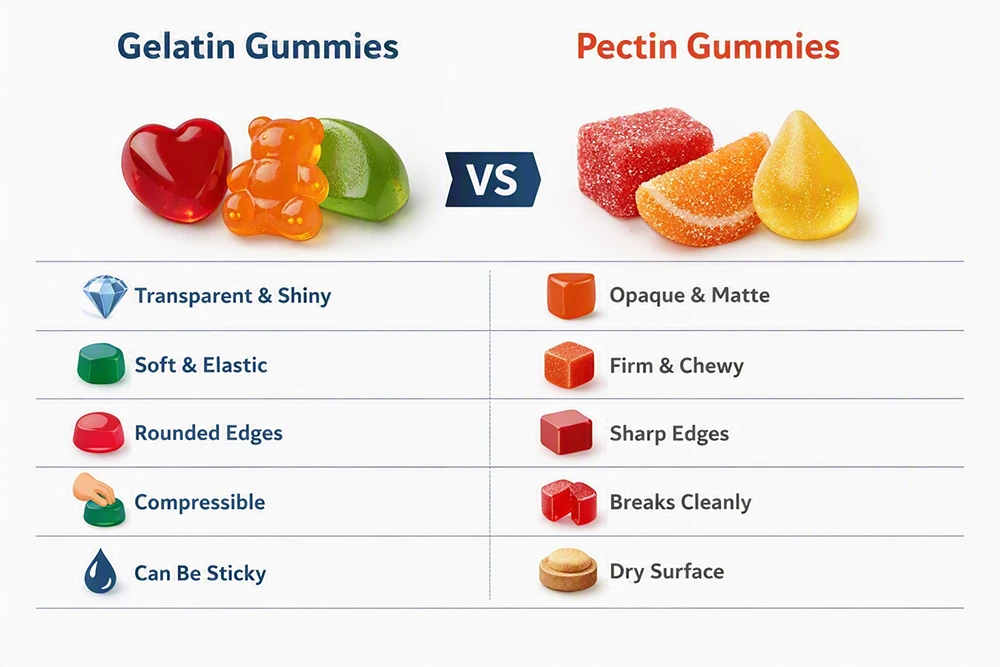
Gelatin — derived from porcine or bovine sources — is the traditional gelling agent in gummies. However, vegan consumers represent a substantial and fast-growing segment in Europe. Vegan gummy formulations use plant-based alternatives such as pectin (derived from fruit peel) or carrageenan (derived from seaweed). These alternatives perform differently from gelatin in terms of texture, melting point, and stability, and require distinct manufacturing expertise. A gummy manufacturer targeting the European market should have demonstrated capability in pectin-based and carrageenan-based gummy production, not just gelatin-based formats.
Additionally, vegetarian and halal consumers in Europe — particularly in France, Germany, Belgium, and the Netherlands — similarly require non-gelatin formulations or halal-certified gelatin alternatives.
Natural Flavors and Botanical Ingredients
European supplement buyers show a strong preference for botanical and plant-derived active ingredients over synthetic compounds. This is reflected both in purchasing data and in the regulatory emphasis on natural health claims. Gummy formulations featuring elderberry, ashwagandha, turmeric, chamomile, and similar botanicals align well with European consumer expectations, provided the ingredients comply with EU approved lists and any applicable novel food regulations.
Eco-Conscious Packaging
While packaging is beyond the scope of formulation, it is worth noting that European brands increasingly require manufacturers to support sustainable packaging solutions — recyclable materials, reduced plastic, or compostable options. This is partly market-driven and partly regulatory, as the EU Packaging and Packaging Waste Regulation moves toward stricter targets through 2030.
Key Criteria for Evaluating a Gummy Manufacturer for European Supply
When sourcing gummy supplements for the European market — whether through bulk wholesale, private label arrangements, or full OEM/ODM development — the following criteria should guide manufacturer selection.
GMP Certification and Cleanroom Standards
Good Manufacturing Practice (GMP) certification is the non-negotiable baseline. For gummy manufacturing at scale, look for facilities operating within controlled cleanroom environments. A 100,000-class cleanroom is standard for dietary supplement production; higher-grade environments (10,000-class pharmaceutical-grade) indicate a more rigorous quality infrastructure. EU importers often request manufacturing site audits or third-party inspection reports, and a manufacturer with documented GMP compliance is better positioned to support these requirements.
ISO 22000 and HACCP Food Safety Systems
ISO 22000 certification covers food safety management systems and is particularly relevant for gummy supplements, which are classified as food products in Europe. HACCP (Hazard Analysis and Critical Control Points) systems demonstrate systematic identification and control of food safety risks throughout manufacturing. Both are important for EU compliance documentation.
Halal and Kosher Certifications
For brands selling into markets with significant Muslim or Jewish populations — including France, Germany, Belgium, the Netherlands, and the UK — halal and kosher certification of both ingredients and manufacturing processes is commercially important. These certifications require regular third-party audits and influence ingredient sourcing decisions, particularly around gelling agents.
Formulation Flexibility and R&D Support
European market formulations often require customization: specific ingredient forms recognized by EFSA, adjusted dosages to comply with EU maximum levels, and alternative sweetener or gelling agent systems. A manufacturer with in-house R&D capability can adapt existing formulations or develop new ones to meet these specifications. Look for manufacturers with food scientists or qualified researchers on staff who understand both formulation science and regulatory requirements.
Documentation and Regulatory Support
Supplying the European market requires comprehensive documentation: certificates of analysis for each batch, ingredient specifications and supplier documentation, and often declarations of compliance with relevant EU regulations. A manufacturer experienced in EU export should have established systems for generating and maintaining this documentation.
Minimum Order Quantities and Scalability
For new brands or those testing European market entry, flexible minimum order quantities (MOQs) for gummy manufacturing are a significant practical consideration. The ability to run small trial batches before committing to full-scale production reduces financial risk during market validation. Equally important is the manufacturer’s capacity to scale efficiently as demand grows, without quality degradation or lead time issues.
Common Gummy Supplement Types with European Market Relevance
The following gummy formats and functional categories align well with documented European consumer preferences and regulatory frameworks:
Multivitamin gummies remain a core category, with demand across all demographics. European formulations typically stay within EFSA-reviewed nutrient reference values and use approved vitamin forms.
Immune support gummies featuring vitamin C, vitamin D, zinc, and elderberry extract are consistently strong sellers in Northern and Western Europe, particularly following the elevated health awareness seen across the continent in recent years.
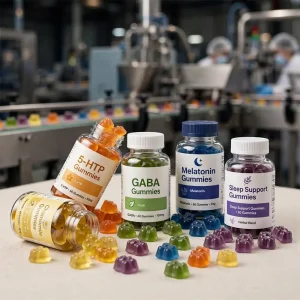
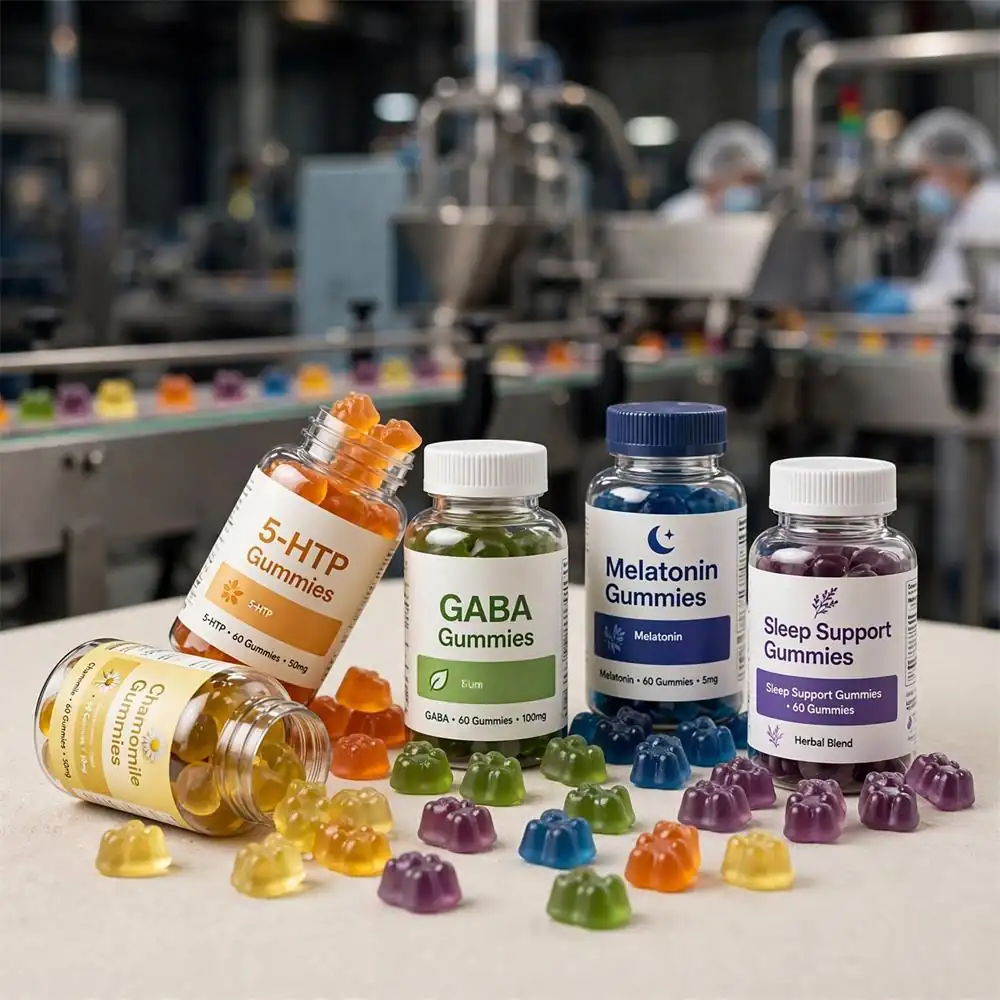
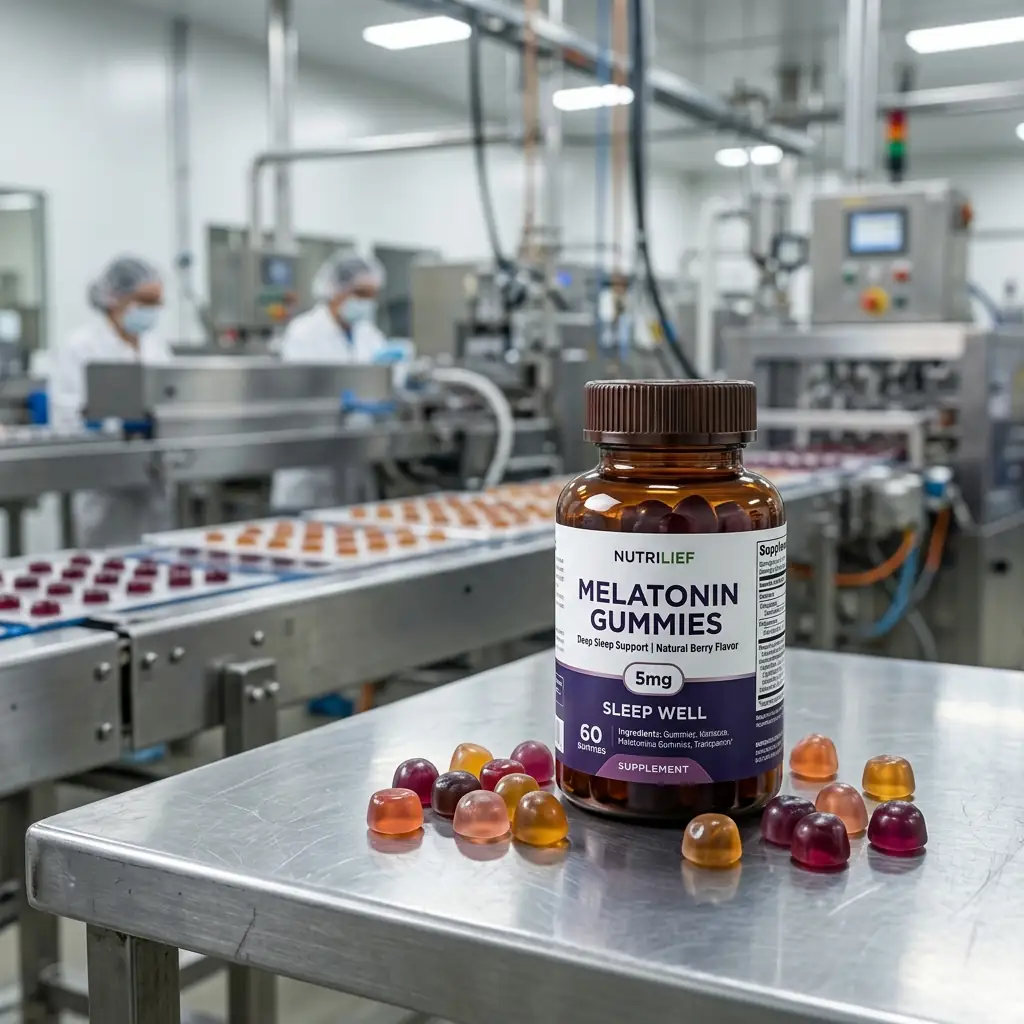
Sleep and relaxation gummies with melatonin present a regulatory nuance: melatonin is classified as a medicine in several EU countries (including Germany and the Netherlands) but as a supplement in others (including the UK). Brands need country-specific legal advice before marketing melatonin gummies in Europe.
Probiotic gummies present formulation challenges related to live culture stability, but there is clear market demand, particularly in women’s health segments.
Ashwagandha gummies and other adaptogen formats have growing appeal but require verification of novel food status in specific EU markets.
Children’s gummies represent a high-scrutiny but high-demand category, where sugar-free and natural color formulations are particularly important.
Beauty and collagen gummies are growing rapidly among European female consumers, driven by the intersection of supplement and beauty markets.
Private Label, OEM, and Bulk Wholesale: Understanding Your Sourcing Model
Brands and distributors entering the European gummy market typically work with manufacturers through one of several commercial models, each with different implications for product control, upfront investment, and time-to-market.
Private label gummies involve selecting from a manufacturer’s existing formulations and applying your own brand identity. This offers faster time-to-market and lower development cost, but less differentiation. It is an appropriate model for early-stage brands or retailers adding supplements to a broader product range.
OEM (Original Equipment Manufacturing) involves the manufacturer producing a product to your exact specifications. You own the formulation and full product design. This requires more development time and typically higher minimum orders, but produces a differentiated product that is harder for competitors to replicate.
ODM (Original Design Manufacturing) sits between the two: the manufacturer develops the formulation and product design, which the brand then markets. This can be an efficient route to market when the brand lacks internal formulation expertise.
Gummy bulk and wholesale purchasing suits distributors who package or repackage under their own brand or sell unbranded product into institutional channels. Bulk gummy purchasing typically requires clear documentation of formulation, allergen status, and certificate of analysis for every production lot.
Each model has a different cost structure, timeline, and regulatory implication. A manufacturer with experience across all these commercial models can advise on the appropriate approach based on your market entry strategy and budget.
Summary
The European gummy supplement market is both a significant commercial opportunity and a complex regulatory environment. Success requires sourcing from a manufacturer that understands not only gummy production fundamentals — textures, gelling agents, active ingredient incorporation, and flavor systems — but also the specific requirements of EU food law, EFSA health claim regulations, and the consumer preferences that define European market expectations: low-sugar and sugar-free options, vegan and plant-based formulations, organic ingredients, and clean-label transparency.
For brands, distributors, and retailers evaluating gummy manufacturing partners for European supply, the key factors are GMP and ISO 22000 certification, demonstrated R&D capability in compliant formulations, regulatory documentation support, and commercial flexibility across private label, OEM, ODM, and bulk wholesale arrangements.
Frequently Asked Questions
Q1: Can a Chinese gummy manufacturer supply products that meet EU regulatory requirements?
Yes, provided the manufacturer holds relevant certifications (GMP, ISO 22000, HACCP), can provide full batch documentation and certificates of analysis, and has prior experience formulating products to EU ingredient and dosage standards. The regulatory burden for EU market entry lies primarily with the importing brand, but the manufacturer’s documentation and formulation capabilities directly affect how easily those requirements can be met. Many European supplement brands source manufacturing from certified facilities in China while handling EU registration and compliance on the import side.
Q2: What gelling agent should I use for gummies targeting European vegan consumers?
Pectin is the most widely used plant-based alternative to gelatin for vegan gummies and is well established in the EU market. Carrageenan is another option. Both produce somewhat different textures compared to gelatin — pectin-based gummies tend to have a firmer, less elastic texture — and require adjusted formulation parameters. A manufacturer with experience in pectin-based gummy manufacturing can guide you through the texture and stability trade-offs for your specific product concept.
Q3: What certifications should I request from a gummy manufacturer supplying the European market?
At minimum, request GMP certification, ISO 22000 or equivalent food safety certification, and HACCP documentation. If your target market includes Muslim or Jewish consumers, halal and kosher certifications are important. For organic formulations, ensure the manufacturer can work with organic-certified ingredients and support third-party organic certification. Certificate of Analysis (CoA) for each production batch is a standard documentation requirement for EU imports.
Q4: What is the typical minimum order quantity for private label gummy supplements?
MOQs vary significantly between manufacturers and product types. For established formulations under a private label arrangement, some manufacturers can accommodate smaller runs — sometimes starting from a few thousand units — to support market testing. Custom OEM formulations typically require larger minimum orders due to the development investment involved. When evaluating a gummy manufacturing partner, clarify MOQ requirements for both trial production and standard production runs, and whether MOQs are measured in units, kilograms, or production batches.
Q5: Do sugar-free gummies require different manufacturing processes?
Yes, to some degree. Sugar-free gummy formulations using polyols (like erythritol or maltitol) or high-intensity sweeteners (like stevia or sucralose) behave differently during the cooking, depositing, and setting stages of gummy manufacturing compared to sucrose-based formulations. Manufacturers with active R&D programs and experience in reduced-sugar and sugar-free gummy manufacturing will have the process knowledge to achieve consistent texture, stability, and flavor profile in these formulations.
Q6: How long does it take to develop and produce a custom gummy supplement for the European market?
Timelines vary based on formulation complexity and whether you’re doing private label or full OEM development. Private label from an existing formulation can move relatively quickly — often 4 to 8 weeks from order confirmation to shipment for standard products. Full OEM development involving custom formulation, regulatory documentation, packaging design, and production can take 3 to 6 months or more, depending on complexity and required testing. Planning for EU market entry should account for import documentation, customs clearance, and any country-level registration requirements, which add time beyond the manufacturing timeline.
About Gothink Bio
Shenzhen Gothink Biotech Co., Ltd. is a professional dietary supplement manufacturer and gummy manufacturer serving global brands, retailers, and distributors across North America, Europe, and Asia. Our facilities operate within a 100,000-class cleanroom environment with an annual production capacity of 5,000 tons, supported by a 10,000-class pharmaceutical-grade R&D laboratory led by postdoctoral researchers with experience at leading U.S. research institutions.
We hold certifications including GMP, ISO 9001, ISO 22000, HACCP, FDA, Halal, Kosher, and Vegan, enabling us to supply compliant products to a broad range of global markets, including the EU.
Our gummy manufacturing capabilities cover the full product spectrum: pectin-based and carrageenan-based vegan gummies, gelatin gummies, sugar-free and low-sugar formulations using natural sweeteners, organic-ingredient gummies, and functional formulations across immune health, sleep support, beauty, sports nutrition, children’s health, and more. We support the full range of commercial models — private label gummies, white label supplements, OEM and ODM development, bulk gummy manufacturing, and gummy wholesale supply — with flexible minimum order quantities suited to startups, established brands, and large-scale distributors alike.
From formulation consultation and regulatory documentation to custom packaging design and export logistics, our end-to-end turnkey service is designed to help your brand bring compliant, market-ready products to European and global consumers efficiently and reliably.
For inquiries about gummy manufacturing for the European market, contact our team at gttbio.com.