
Abstract
The women’s supplement market has shifted decisively toward personalization. Custom vitamin packs — and increasingly, multivitamin gummies for women — have emerged as one of the fastest-growing product categories for supplement brands, private label operators, and wholesale buyers. This article breaks down what goes into a well-formulated women’s multivitamin product, what buyers and brand owners should evaluate when selecting a manufacturing partner, and how to approach the market strategically — whether you’re launching a new SKU or scaling an existing line.
Why Women’s Nutritional Needs Require a Dedicated Formulation
Women’s physiology changes significantly across life stages — from reproductive years through perimenopause and beyond. A formulation designed for a 28-year-old woman navigating hormonal fluctuations is nutritionally distinct from one targeting a 52-year-old managing bone density and cardiovascular health.
Key nutrients that consistently appear in evidence-based women’s multivitamin gummies formulations include:
- Folate (as methylfolate): Critical for women of reproductive age; supports cell division and fetal neural development
- Iron: Often under-supplied in women’s diets, particularly during menstruation
- Vitamin D3 + K2: Work synergistically for calcium absorption and bone metabolism
- Magnesium glycinate: Supports sleep quality, mood regulation, and muscle function
- B-complex vitamins (B6, B12): Energy metabolism and neurological health
- Iodine: Thyroid function, often overlooked in standard multivitamin formulas
- Biotin: Frequently requested for hair and nail health marketing claims
A credible formulation isn’t just about packing in ingredients — it’s about bioavailability, ingredient form, and interaction between nutrients. For instance, calcium and iron compete for absorption, meaning smart formulation often separates them into different delivery windows or formats.
The Case for Gummy Delivery Format in Women’s Supplements
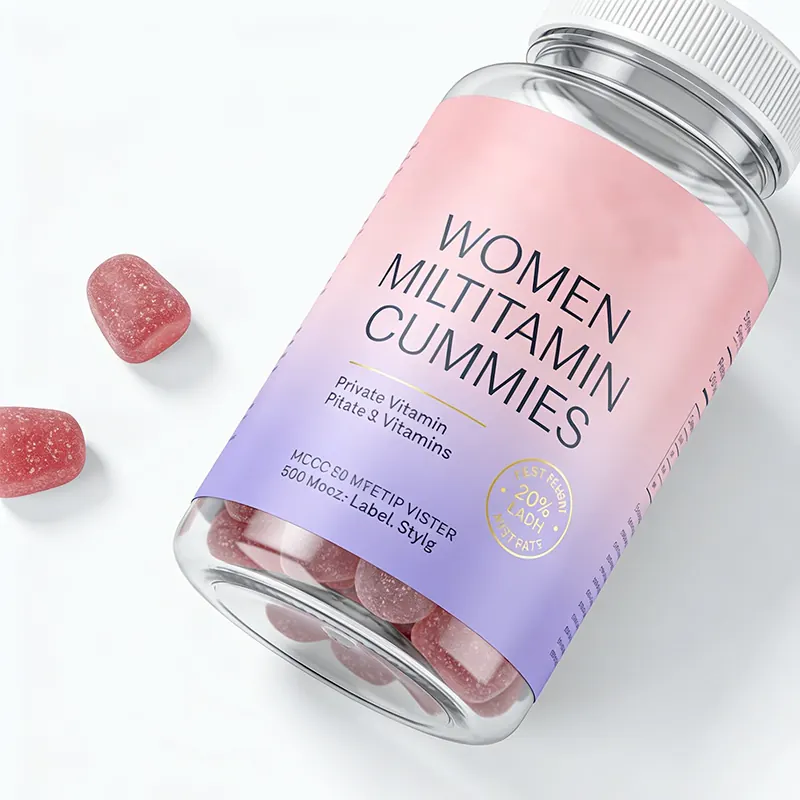
Among all supplement formats, women’s multivitamin gummies have seen the strongest retail growth over the past five years. This isn’t purely a marketing trend — there are functional reasons why gummies outperform capsules and tablets in certain demographics.
Compliance is higher. Studies on supplement adherence consistently show that consumers are more likely to take a supplement daily when it tastes good and is easy to consume. For women managing busy schedules, a chewable gummy requires no water and no swallowing difficulty.
Perception of quality has evolved. Early gummy supplements were associated with children’s vitamins and relatively low nutrient density. Modern gummy manufacturing technology has closed that gap significantly — high-shear mixing, precise temperature-controlled depositing, and active ingredient encapsulation now allow gummies to carry meaningful doses of heat-sensitive compounds like probiotics, omega-3s, and certain B vitamins.
Branding flexibility is exceptional. Gummies can be produced in dozens of shapes, colors, and flavor profiles. For private label gummies and branded supplement lines, this translates directly into shelf differentiation and consumer recall.
What to Look for in a Gummy Manufacturing Partner
If you’re a supplement brand, distributor, or buyer exploring gummies wholesale or gummies bulk purchasing, the manufacturing partner you select will largely determine your product’s quality, compliance posture, and speed to market. Here’s what to evaluate:
Certifications and Regulatory Compliance
At minimum, your manufacturer should hold:
- GMP certification (Good Manufacturing Practice) — non-negotiable for any supplement sold in the U.S., EU, or Australian markets
- FDA registration — required for facilities manufacturing products sold in the U.S.
- ISO 22000 — international food safety management standard
- HALAL / KOSHER — critical if you’re targeting international or specialty markets
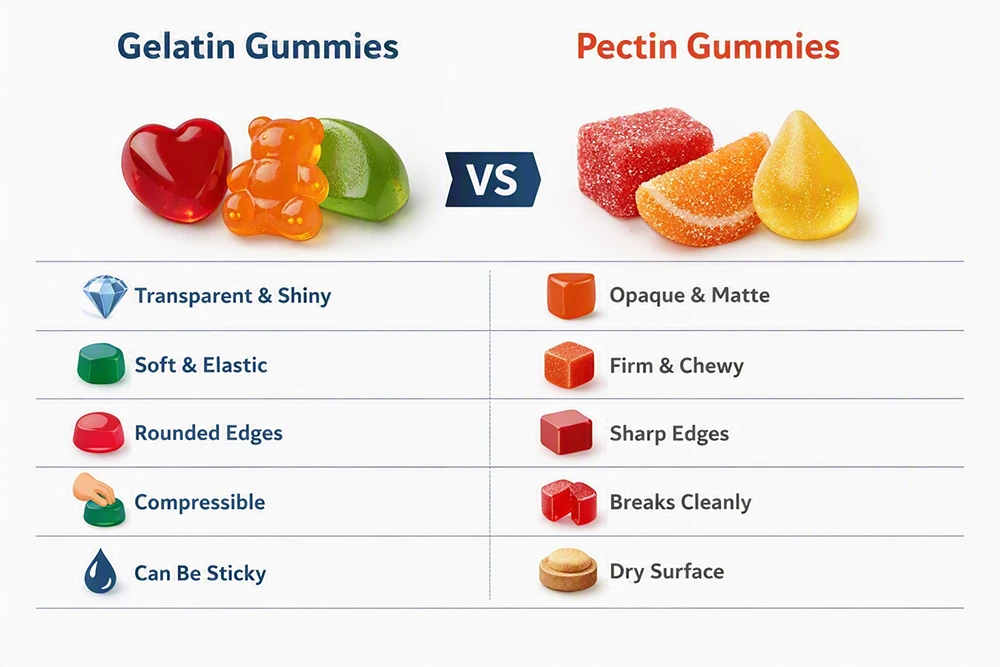
- Vegan certification — increasingly important for gummies, which traditionally use gelatin (animal-derived); pectin-based alternatives are now standard among quality manufacturers
Formulation Capabilities
Can the manufacturer develop a formula from scratch, or are they limited to white-label modifications of existing SKUs? For women’s custom vitamin packs, you want a partner with genuine R&D depth — one that can adjust bioavailability profiles, accommodate proprietary ingredient blends, and validate finished product specifications.
MOQ Flexibility
Early-stage brands and test launches require low minimum order quantities. A manufacturer that only accommodates large-volume runs is not suitable for brands still validating market demand. Look for partners that offer scalable MOQ tiers — from small trial batches to full commercial runs.
Testing and Quality Control
Third-party testing, heavy metal screening, microbiological testing, and certificate of analysis (COA) documentation should be standard. Ask specifically about in-process quality control checkpoints, not just finished product testing.
Formulation Considerations for Custom Women’s Vitamin Packs
Beyond ingredient selection, brands and buyers should pay attention to several formulation-level decisions that affect both product efficacy and manufacturability:
Gelling Agent Selection
- Gelatin-based gummies: Lower cost, excellent texture, but unsuitable for vegan or halal markets
- Pectin-based gummies: Plant-derived, vegan-compatible, increasingly the industry standard for premium positioning
- Carrageenan: Used in some formulations; note that some markets have regulatory sensitivities around carrageenan use
Sugar and Sweetener Profile
Sugar content is a significant concern for adult gummy supplements. Consumers and retailers are increasingly scrutinizing sugar per serving. Options include reduced-sugar formulations using erythritol, allulose, or stevia — though each affects texture and shelf life differently.
Active Ingredient Stability
Heat-sensitive vitamins (like vitamin C and certain B vitamins) require careful process management during gummy manufacturing. Some actives require microencapsulation to survive the depositing process. A technically capable manufacturer will assess stability as part of formulation development, not as an afterthought.
Shelf Life and Packaging
Gummies are hygroscopic — they absorb moisture from the environment, which accelerates degradation. Packaging selection (humidity control, oxygen barrier, desiccant pouches) is a critical quality lever that affects both shelf life and international shipping compliance.
Market Positioning: Private Label vs. Custom Formulation
For businesses exploring private label gummies, it’s worth understanding the spectrum of customization available:
| Approach | Description | Best For |
|---|---|---|
| White Label | Pre-existing formula, add your branding | Speed to market, lower cost |
| Private Label | Minor formula modifications + custom branding | Brand differentiation with manageable development cost |
| ODM (Original Design Manufacturing) | Manufacturer develops formula to your brief | Proprietary product without in-house R&D |
| OEM (Original Equipment Manufacturing) | You provide the formula; manufacturer produces | Full formula ownership, brand control |
For the women’s supplement category specifically, ODM or custom OEM tends to command better retail margins because the formulation can be positioned as proprietary — particularly if it incorporates branded ingredients (like KSM-66 Ashwagandha, Sensoril, or FloraGLO Lutein) that carry consumer recognition.
Regulatory and Labeling Considerations
Brands must navigate different regulatory frameworks depending on target markets:
- United States: Supplements regulated under DSHEA by the FDA. Structure/function claims are permitted; disease claims are not. Label must include supplement facts panel, serving size, and disclaimer
- European Union: Regulated under the Food Supplements Directive. Permitted health claims are restricted to those on the EU Register
- United Kingdom (post-Brexit): Separate regulatory pathway under FSA guidelines
- Canada: Natural Health Products (NHP) require a product license (NPN) before sale
A manufacturer with genuine export experience should be able to assist with documentation, certificate of free sale (CFS), and compliance guidance for your target market — not simply hand you a product and leave compliance to you.
Summary
Custom vitamin packs for women represent a durable, high-growth segment within the broader supplement market. The shift toward women’s multivitamin gummies reflects real consumer preference: better compliance, superior sensory experience, and strong branding potential. For supplement brands, private label gummies operators, and gummies wholesale buyers, success in this category depends on selecting a manufacturing partner with genuine formulation depth, verifiable certifications, and the flexibility to scale with your business.
The most successful women’s supplement brands aren’t simply sourcing a generic product — they’re building formulations that reflect a genuine understanding of women’s nutritional needs across life stages, and they’re working with manufacturers capable of translating that understanding into a market-ready, compliant, and shelf-stable product.
Frequently Asked Questions (FAQ)
Q1: What is the typical MOQ for custom women’s multivitamin gummies? MOQs vary significantly by manufacturer and formulation complexity. For standard private label gummies, MOQs often start at 3,000–5,000 units. For fully custom ODM or OEM formulations, some manufacturers require higher initial runs due to setup and stability testing costs. Always confirm MOQ tiers for both trial batches and commercial runs before committing.
Q2: How long does it take to develop a custom women’s vitamin gummy from formulation to finished product? A fully custom product — including formulation development, stability assessment, label design, and production — typically takes 8–14 weeks depending on formula complexity and whether branded ingredients are involved. White-label products can be turned around considerably faster, sometimes within 3–4 weeks.
Q3: Are pectin-based gummies nutritionally equivalent to gelatin gummies? From a nutritional delivery standpoint, yes — the gelling agent itself does not affect the vitamin or mineral content of the finished product. Pectin-based gummies are the preferred option for vegan, halal, and kosher-certified products, and have become standard in premium supplement lines.
Q4: Can a manufacturer help with compliance documentation for U.S. or EU markets? Reputable manufacturers with international export experience should be able to provide certificates of analysis (COAs), certificates of free sale, GMP certificates, and product specification documents. However, regulatory strategy — particularly for EU health claims or FDA structure/function claims — ultimately rests with the brand owner. Some manufacturers offer compliance support as part of their turnkey service.
Q5: What certifications should I require from a gummies manufacturer? At minimum: GMP, FDA registration (for U.S.-market products), and ISO 22000. Depending on your target market and positioning, HALAL, KOSHER, and Vegan certifications may also be required. Third-party testing documentation should be available for every production batch.
Q6: What’s the difference between ODM and white-label gummies? White-label means you’re buying a pre-existing, off-the-shelf formula and applying your branding. ODM (Original Design Manufacturing) means the manufacturer develops a formula specifically for you, which you then brand and sell. ODM offers more differentiation but requires more development time and cost.
About Gothink Biotech
Shenzhen Gothink Biotech Co., Ltd. is a professional gummies manufacturer and dietary supplement contract manufacturer based in China, offering comprehensive OEM, ODM, white-label, and private label gummies services to supplement brands, retailers, and distributors worldwide.
Our production capabilities span the full spectrum of supplement formats — including multivitamin gummies for women, functional gummies, capsules, tablets, powders, and liquid drops — with a GMP-certified facility featuring a 100,000-class cleanroom, a daily output of 16 tons, and an annual capacity of 5,000 tons.
For brands requiring R&D depth, our 10,000-class pharmaceutical-grade laboratory is led by postdoctoral researchers with experience at institutions including Cold Spring Harbor Laboratory, Emory University, and The Ohio State University — ensuring formulation precision across gummy manufacturing, raw material sourcing, and quality assurance.
Whether you’re sourcing gummies bulk, exploring gummies wholesale pricing, or building a custom formulation from the ground up, Gothink Biotech provides end-to-end support from concept to compliant, shelf-ready product.