
Abstract
Creatine gummies combine the proven performance benefits of creatine with the convenience and appeal of a chewable format. For dietary supplement brands, private label developers, and wholesalers seeking to expand their portfolios, creatine gummies supplements represent a growing opportunity in the sports nutrition and wellness markets. This guide explores the science behind effective formulations, addresses key manufacturing considerations, and shares practical example recipes. As an experienced creatine gummies manufacturer offering comprehensive OEM/ODM and private label services, we focus on delivering real-world insights to help brands create stable, high-quality products that meet consumer expectations and regulatory standards.

Understanding Creatine and Its Benefits in Supplement Form
Creatine monohydrate remains one of the most researched and effective ingredients for supporting muscle strength, power output, and recovery during high-intensity training. It works by increasing phosphocreatine stores in muscle cells, which helps regenerate ATP for short bursts of energy. Traditional powder forms require mixing and can have taste or texture drawbacks, leading many consumers to prefer ready-to-eat options.
Creatine gummies supplements address these pain points by delivering precise dosages in a portable, enjoyable format. They appeal particularly to fitness enthusiasts, athletes, and everyday users who value convenience without sacrificing efficacy. When properly formulated, these gummies maintain bioavailability comparable to powders while improving compliance through better taste and texture.
Why Creatine Gummies Supplements Are Gaining Popularity
The shift toward gummy formats reflects broader consumer trends: demand for functional, tasty supplements that fit busy lifestyles. Creatine gummies eliminate the need for shakers or measuring scoops and mask any potential chalky notes from creatine powder. They also support creative branding opportunities, such as various flavors, shapes, and targeted benefits (e.g., pre-workout or recovery-focused lines).
For supplement businesses, this format opens doors to new customer segments, including younger athletes and those who avoid traditional capsules or powders. However, success depends on overcoming formulation hurdles to ensure dosage accuracy, shelf stability, and consumer satisfaction.

Key Formulation Challenges and Best Practices
Creatine is sensitive to heat, moisture, and acidic environments, which are inherent to gummy production. In low pH conditions typical of fruit-flavored gummies, creatine can gradually convert to creatinine, a less active byproduct. Experienced formulators mitigate this by controlling pH (ideally above 3.5 where possible), minimizing prolonged high-heat exposure when adding the active ingredient, and selecting appropriate stabilizers or buffered creatine forms when suitable.
Additional considerations include:
- Uniform dispersion: Micronized creatine monohydrate helps prevent grittiness and ensures consistent dosing across each gummy.
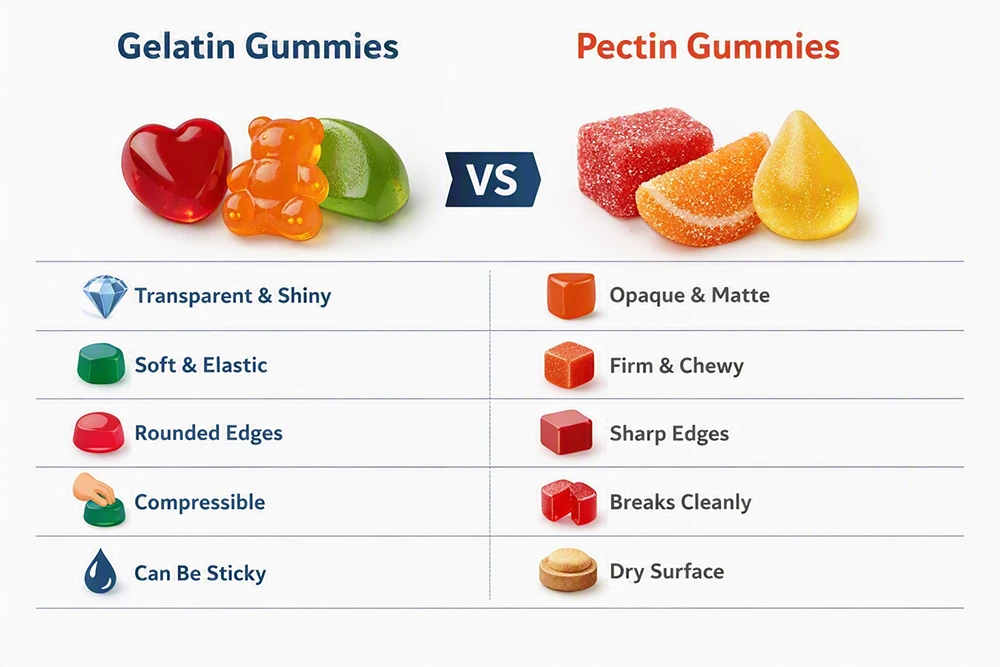
- Gelling agents: Pectin or carrageenan for vegan options; gelatin for traditional textures.
- Sweeteners and flavors: Balancing sweetness to mask any bitterness while meeting clean-label or sugar-free preferences.
- Stability and testing: Real-world production requires rigorous quality control, including third-party lab verification of creatine content over shelf life.
Professional manufacturing partners with advanced R&D capabilities and GMP-certified facilities are essential for scaling these formulations reliably.
Example Creatine Gummies Recipe 1: Classic Vegan Pectin-Based Creatine Gummies
This vegan-friendly formulation uses pectin as the gelling agent and targets approximately 1 g of creatine monohydrate per 5 g gummy, allowing a 3–5 gummy serving to deliver a standard 3–5 g daily dose. It is suitable for test batches or discussion with your creatine gummies manufacturer for scaling.
Ingredients (yields approximately 100 gummies, ~5 g each):
- 300 g water
- 25 g high-methoxyl pectin
- 350 g sucrose (or blend with allulose for reduced sugar)
- 100 g micronized creatine monohydrate
- 10 g citric acid (adjust for target pH ~3.8–4.2)
- 8–10 g natural fruit flavor (e.g., tropical or berry)
- Natural color as needed
Preparation Steps:
- Disperse pectin in a portion of the cold water and sweetener to prevent clumping.
- Heat the mixture to 85–90°C while stirring until fully dissolved and clear.
- Reduce heat slightly (to around 70–75°C) before slowly incorporating the micronized creatine to minimize degradation.
- Add citric acid, flavor, and color, mixing thoroughly. Monitor and adjust pH as needed.
- Deposit the warm mixture into silicone or starch molds using a depositor for uniform size and weight.
- Allow to set at controlled temperature (cooling tunnel recommended in production), then demold, dry if necessary, and package in moisture-resistant containers.
Notes: This base can be customized for different flavors or shapes. In commercial settings, vacuum processing and precise temperature controls enhance stability.
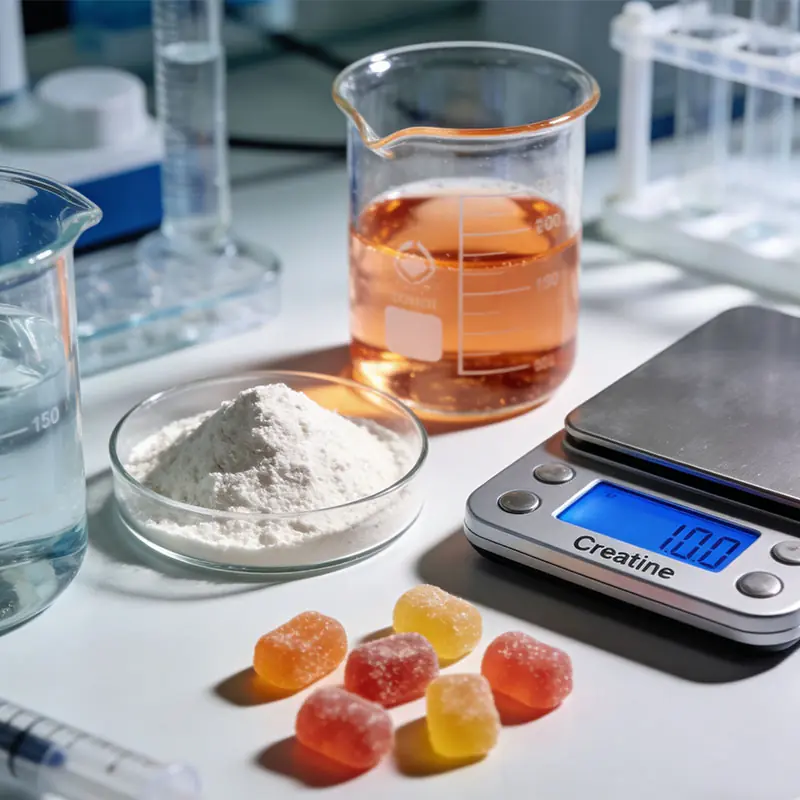
Example Creatine Gummies Recipe 2: Enhanced Stability Fruit-Flavored Creatine Gummies
This version incorporates strategies for better long-term stability and uses a balanced sweetener system, making it ideal for private label creatine gummies targeting health-conscious consumers.
Ingredients (yields approximately 80–100 gummies):
- 280 g water
- 20 g pectin (or pectin-carrageenan blend for firmer texture)
- 300 g low-glycemic sweeteners (allulose + erythritol blend)
- 120 g creatine monohydrate (for slightly higher loading)
- 6–8 g malic acid + citric acid blend (milder acidity profile)
- 12 g natural lemon-orange flavor
- Optional: trace amounts of natural preservatives or antioxidants for extended shelf life
Preparation Steps:
- Bloom the gelling agents in cold liquid.
- Cook the base to 82–88°C to achieve proper viscosity.
- Cool the mass to 65–70°C and add creatine gradually with high-shear mixing for even distribution.
- Incorporate acids and flavors last to limit exposure time.
- Deposit, cool rapidly, and conduct in-process weight and content checks.
- Finish with optional sugar sanding or oil coating to prevent sticking.
These recipes serve as starting points. Actual production requires validation for potency, microbial safety, and shelf-life stability under real storage conditions.
Scaling Production: Partnering with a Professional Creatine Gummies Manufacturer
Transitioning from bench-scale recipes to commercial production demands expertise in process optimization, regulatory compliance, and supply chain management. A reliable creatine gummies manufacturer provides end-to-end support, including custom formulation development, ingredient sourcing, precise dosing equipment, and packaging solutions tailored to your brand.
Key factors to evaluate when selecting a partner:
- GMP certification and cleanroom facilities
- Experience with high-active-load functional gummies
- Flexible minimum order quantities (MOQ) for startups and established brands
- Advanced R&D capabilities for stability testing and flavor masking
- Full turnkey services from concept to export-ready products
Brands working with experienced manufacturers can launch private label creatine gummies faster while maintaining consistent quality and competitive pricing.
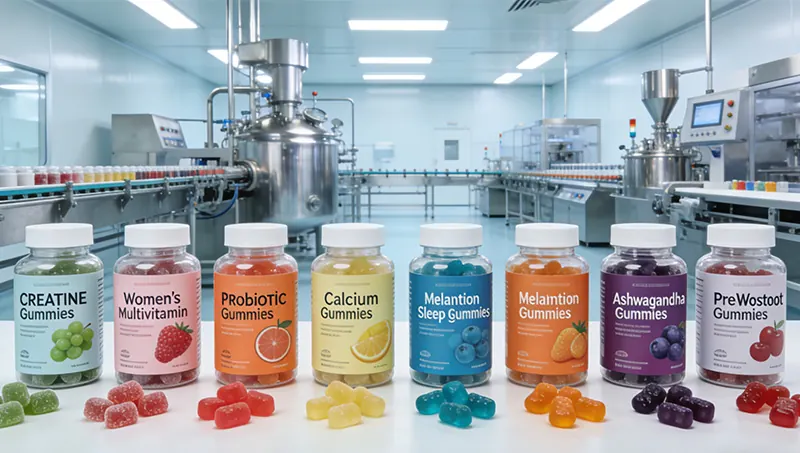
Private Label Creatine Gummies: Strategic Opportunities for Your Brand
Private label creatine gummies allow supplement companies to offer differentiated products without heavy upfront investment in manufacturing infrastructure. Custom options include unique flavor profiles, targeted dosages, vegan formulations, and eye-catching shapes that strengthen brand identity.
By collaborating with a specialized dietary supplement manufacturer, businesses gain access to market-ready solutions, regulatory guidance, and scalable production capacity. This approach supports rapid market entry and ongoing innovation as consumer preferences evolve.
Article Summary
Creatine gummies supplements deliver a convenient and effective way to meet the demands of today’s performance-focused consumers. By understanding formulation challenges—particularly creatine’s sensitivity to heat, moisture, and pH—and applying proven recipes and best practices, brands can develop high-quality products that stand out. Partnering with an established creatine gummies manufacturer ensures professional execution, from initial concept through final packaging, allowing you to focus on marketing and growth. Whether developing new lines or expanding existing ones, informed formulation and reliable manufacturing are the foundation of successful creatine gummy products.
FAQ
What is the typical creatine dosage in creatine gummies supplements? Most products deliver 3–5 g of creatine monohydrate per serving, often spread across 3–6 gummies depending on size and concentration. Exact dosing should be validated through lab testing.
Are creatine gummies as effective as traditional powder? When properly formulated and manufactured, creatine gummies can provide comparable benefits. The key is ensuring stability during production and storage so the active ingredient remains intact until consumption.
Can creatine gummies be made vegan? Yes. Pectin or carrageenan-based formulations are excellent vegan alternatives to gelatin and are widely used by professional manufacturers for clean-label products.
What are the main challenges in manufacturing creatine gummies? Primary concerns include preventing degradation from heat and acidity, achieving uniform active distribution, and maintaining appealing texture without grittiness. Experienced manufacturers address these through optimized processes and quality controls.
How can supplement brands start with private label creatine gummies? Begin by partnering with a creatine gummies manufacturer that offers formulation support, low MOQ options, and full compliance services. Share your target specifications (flavor, dosage, dietary preferences) to receive custom samples and production timelines.
Do I need special certifications for selling creatine gummies? Products should be manufactured in GMP-certified facilities and comply with FDA dietary supplement regulations, including accurate labeling and safety testing. A reputable manufacturer handles much of this compliance work.
This guide provides foundational knowledge to support informed decision-making for your creatine gummies projects. For tailored formulation development or private label production, reach out to discuss how our expertise as a dietary supplement and gummy manufacturer can bring your vision to market.