
Summary
The global confectionery and functional gummy market is experiencing rapid growth, driven by consumer demand for convenient, great-tasting health supplements. For supplement brands, retailers, and online sellers, partnering with the right confectionery manufacturer is one of the most important strategic decisions you will make. This guide walks through what to look for in a gummy manufacturing partner, how functional gummies differ from traditional confectionery, and what the private label gummies process looks like from formulation to finished product — so you can make an informed, confident decision.
What Is a Confectionery Manufacturer — and Why Does It Matter for Supplements?
In its broadest sense, a confectionery manufacturer is a company that produces sugar-based or gelatin-based edible goods — candies, jellies, chews, and gummies. But in today’s health and wellness industry, the definition has expanded significantly. Modern confectionery manufacturers now operate at the intersection of food science and nutraceutical production, creating products that look and taste like candy but function as dietary supplements.
Gummy supplements have become one of the fastest-growing product categories in the global dietary supplement market. According to industry analysts, the gummy vitamins and supplements segment is projected to grow substantially through the late 2020s, fueled by consumer preference for enjoyable, easy-to-consume alternatives to traditional capsules and tablets. This shift has made gummy manufacturing a core competency for supplement brands worldwide.
For brands considering product launches or expanding existing lines, understanding the capabilities and standards of a confectionery manufacturer with supplement expertise is essential. Not all candy manufacturers can produce compliant, bioavailable dietary supplements — and not all supplement manufacturers have mastered the art of producing a gummy with appealing taste, texture, and shelf life.

Traditional Confectionery vs. Functional Gummies: Key Differences
Understanding the distinction between standard confectionery products and functional gummies supplements helps clarify why manufacturing partner selection is so critical.
Ingredient Complexity
Traditional gummy candy is formulated primarily around sweeteners, gelling agents (gelatin or pectin), flavors, and colorants. Functional gummies supplements must incorporate active pharmaceutical or nutraceutical ingredients — vitamins, minerals, herbal extracts, amino acids, probiotics, or adaptogens — while maintaining stability and bioavailability throughout shelf life.
Regulatory Requirements
Confectionery products for general consumption follow standard food safety regulations. Gummies Supplement products, however, must comply with dietary supplement regulations — including Good Manufacturing Practice (GMP) requirements set by agencies such as the FDA in the United States. This means a qualified confectionery manufacturer producing supplements must operate a GMP-certified facility, maintain accurate records, conduct ingredient testing, and ensure label claims are substantiated.
Quality Control Standards
For supplement gummies, quality control goes far beyond sensory evaluation. Manufacturers must verify active ingredient potency, homogeneity (even distribution of actives throughout each gummy), microbiological safety, moisture content, and stability under various storage conditions. These requirements demand both pharmaceutical-grade laboratory capabilities and deep expertise in confectionery formulation.
What to Look For in a Gummy Manufacturing Partner
Whether you are a startup launching your first product or an established brand scaling operations, evaluating a gummy manufacturer requires scrutiny across several dimensions.
1. Certifications and Compliance
A credible gummy manufacturing facility should hold recognized certifications, including:
- GMP (Good Manufacturing Practice) — essential for supplement production
- ISO 9001 — quality management system standard
- ISO 22000 or HACCP — food safety management
- HALAL and KOSHER — if your target market requires it
- Vegan certification — increasingly important for plant-based consumers
These certifications are not merely paperwork — they represent systematic controls that protect product quality and your brand’s legal standing in key markets.
2. Formulation and R&D Capabilities
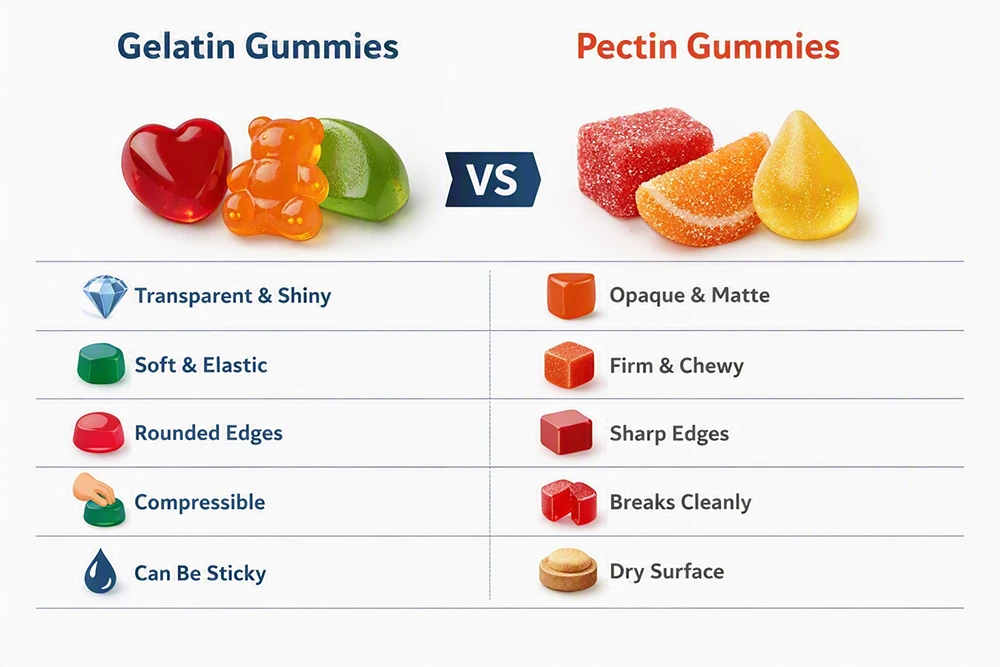
A strong confectionery manufacturer with supplement expertise should have an in-house R&D team capable of custom formulation. This includes ingredient compatibility testing (some active compounds degrade in acidic gummy matrices), flavor masking for bitter or earthy ingredients, gelling agent selection (gelatin vs. pectin vs. carrageenan), and optimization of texture and mouthfeel alongside active ingredient loading.
For brands exploring innovative products — such as collagen gummies, adaptogen gummies, or probiotic gummies — advanced R&D capability is not optional. The ability to stabilize live probiotic cultures in a gummy matrix, for example, requires specialized knowledge that standard confectionery manufacturers simply do not possess.
3. Production Capacity and Scalability
Evaluate both minimum order quantities (MOQ) and maximum production capacity. Early-stage brands need flexibility at small trial volumes; scaling brands need confidence that their manufacturer can grow with them. A well-equipped confectionery manufacturer should be able to support pilot batches for new product testing as well as high-volume runs for established SKUs.
Ask about lead times, production scheduling flexibility, and how the manufacturer handles surges in demand — particularly relevant for seasonal products or brands running promotional campaigns.
4. OEM, ODM, and Private Label Capabilities
The terminology used in contract manufacturing can be confusing. Here is a practical breakdown:
- OEM (Original Equipment Manufacturing): You provide the formulation and specifications; the manufacturer produces to your blueprint.
- ODM (Original Design Manufacturing): The manufacturer develops both the formulation and the product design, which you then brand and sell.
- Private Label Gummies: You select from existing, pre-developed formulations and apply your own branding. This is the fastest route to market for new brands.
- CMO/CDMO (Contract Manufacturing/Development Organization): Full-service partners that handle everything from early development through production and packaging.
For most new entrants to the market, private label gummies offer the most efficient path: lower development costs, faster timelines, and access to proven formulations. Brands with strong proprietary formulas or differentiated ingredient combinations typically prefer OEM or ODM arrangements.
5. Packaging and Labeling Support
End-to-end manufacturing support should include packaging design guidance, label compliance review for target markets (FDA, EFSA, etc.), and access to various packaging formats — bottles, pouches, blister packs, and bulk packaging for wholesale. A manufacturer who can coordinate this end-to-end process reduces complexity for the brand significantly.
Popular Functional Gummy Categories and Market Trends
Understanding which gummy supplement categories are gaining market traction helps brands make informed decisions about product development investments. The following categories represent areas of strong consumer demand.
Vitamin and Multivitamin Gummies
Multivitamin gummies for adults, women, and men remain one of the largest and most established categories in the gummies supplement market. Consumer preference for gummies over traditional softgels and tablets has driven substantial category growth. Formulations typically include a broad-spectrum vitamin and mineral blend tailored to specific demographic needs.
Sleep and Relaxation Gummies
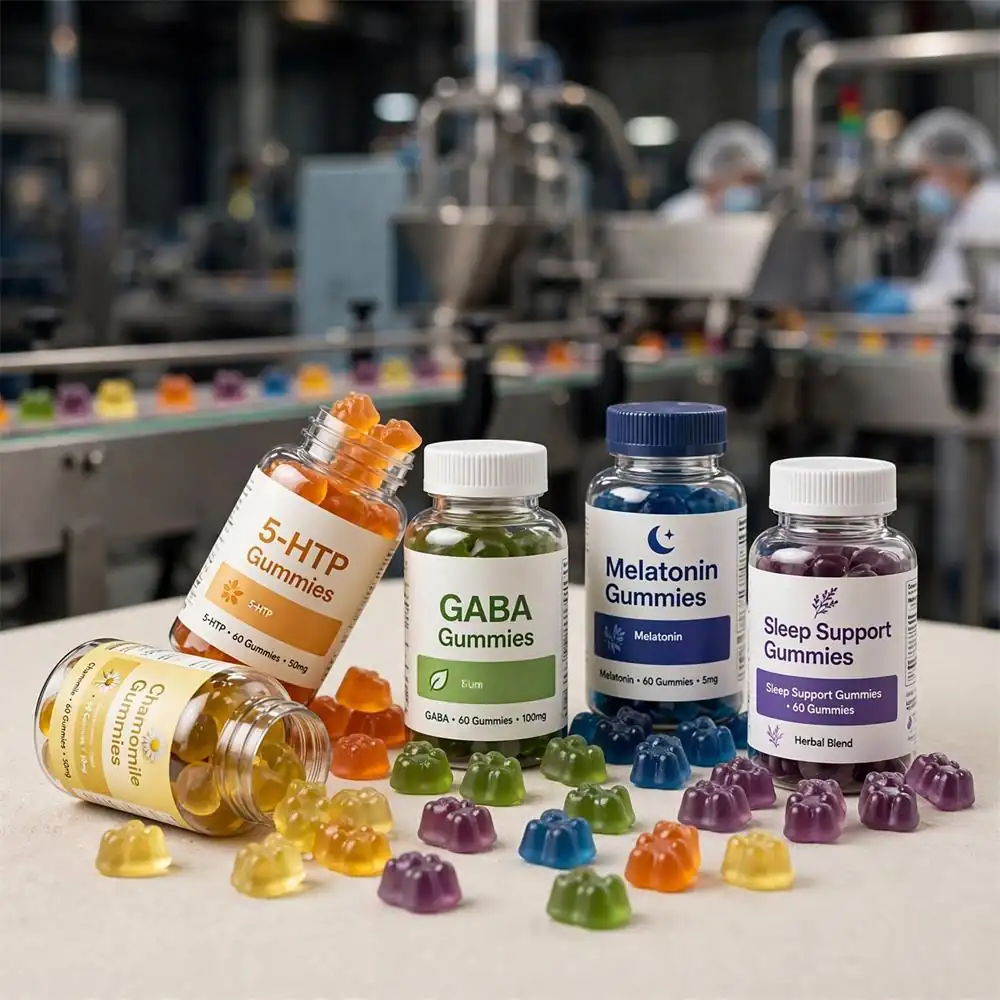
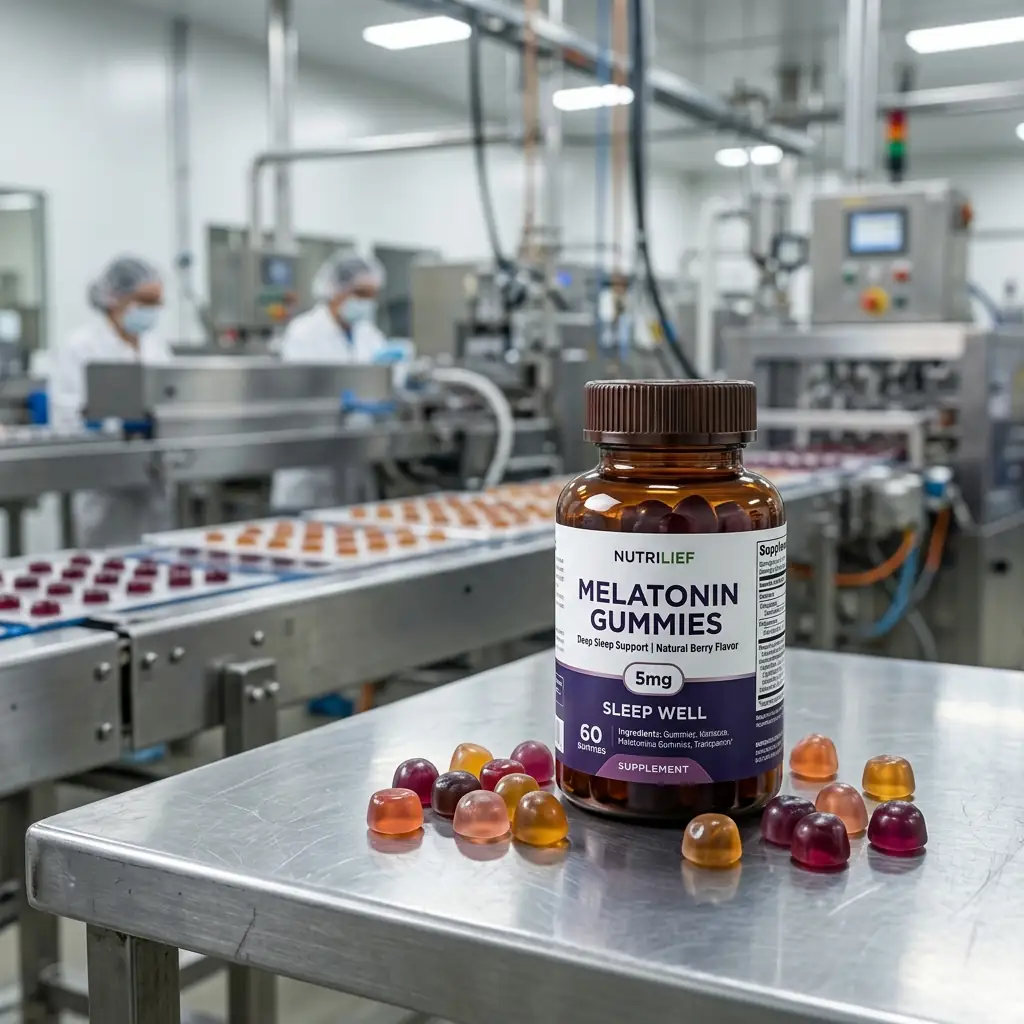
Melatonin sleep gummies are among the best-selling supplement gummies in North America and Europe. Related categories — including magnesium gummies, L-theanine gummies, and ashwagandha gummies — are growing rapidly as consumers seek natural approaches to stress management and sleep quality improvement.
Sports Nutrition Gummies
The sports nutrition category has traditionally been dominated by powders and capsules, but gummy formats are gaining ground. Creatine gummies and pre-workout gummies represent emerging segments that appeal to fitness consumers who prefer convenient, on-the-go supplementation. Confectionery manufacturers with sports nutrition expertise can help brands navigate ingredient stability challenges inherent to this category.
Probiotic and Gut Health Gummies
Probiotic gummies present significant formulation challenges — live cultures must survive the manufacturing process and remain viable throughout shelf life. Women’s probiotic gummies have become a standout segment, reflecting growing awareness of the gut-vaginal microbiome connection. Qualified gummy manufacturers with probiotic expertise can stabilize strains using specialized encapsulation technologies.
Specialized Wellness Gummies
Liver support gummies, selenium gummies, and calcium gummies reflect the expansion of functional gummies into targeted wellness segments previously served only by capsules and tablets. The confectionery format makes these products more accessible and appealing to consumers who are not traditional supplement users — representing a meaningful opportunity for market expansion.
The Private Label Gummies Process: From Concept to Market
For brands pursuing private label gummies, understanding the typical manufacturing workflow helps set realistic expectations for timelines, costs, and requirements.
Step 1: Product Consultation and Formulation Selection
The process begins with identifying your target market, desired health claims, preferred gummy format (shape, size, color), and any specific ingredient or certification requirements. A strong manufacturing partner will guide you through existing formulation options or propose custom development based on your positioning.
Step 2: Sample Development and Testing
Before committing to production volumes, request samples for sensory evaluation, stability testing, and regulatory review. This stage allows you to assess taste, texture, color consistency, and whether label claims are achievable. Reputable gummy manufacturing partners will provide third-party testing data for active ingredient potency.
Step 3: Packaging Design and Compliance Review
Label and packaging design must align with regulatory requirements in your target markets. This includes supplement facts panels, allergen declarations, net quantity statements, and any required warnings or disclaimers. An experienced contract manufacturer can flag compliance issues before production — avoiding costly recalls or market entry delays.
Step 4: Production and Quality Assurance
Bulk gummy production in a GMP-certified facility involves rigorous in-process controls — blend uniformity checks, weight verification, moisture analysis, and finished product testing. Wholesale gummies destined for retail or e-commerce channels should be accompanied by a Certificate of Analysis (COA) from the manufacturer confirming compliance with label specifications.
Step 5: Shipping, Export, and Logistics Support
For brands sourcing from international manufacturers, export documentation, customs compliance, and shipping logistics are important considerations. Reputable confectionery manufacturers with global export experience will assist with paperwork, recommend appropriate shipping conditions (gummies are temperature-sensitive), and help ensure products arrive in compliant condition.
Red Flags to Watch for When Evaluating Gummy Manufacturers
Not every contract manufacturer offering gummy production services has the capability or integrity to deliver consistently compliant products. Watch for the following warning signs:
- Inability to provide current GMP certificates or facility inspection records
- No in-house R&D or quality control laboratory
- Vague or unsupported claims about ingredient sourcing
- Unwillingness to provide third-party COAs or allow facility audits
- Extremely low MOQs with no explanation of how quality is maintained at small scale
- No experience with export compliance or international regulatory requirements
- Poor or absent documentation practices
Due diligence is not optional in supplement manufacturing. Regulatory actions against supplement brands — including FDA warning letters, import alerts, and product seizures — can often be traced to inadequate manufacturing oversight. Your manufacturer’s compliance record is your compliance record.
Article Summary
The confectionery manufacturer landscape has evolved dramatically. Today’s top gummy manufacturing partners are sophisticated operations that combine deep food science expertise with pharmaceutical-grade quality systems. For supplement brands — whether you are sourcing wholesale gummies, launching private label gummies, or pursuing a fully custom OEM or ODM product — the key evaluation criteria remain consistent: verified certifications, in-house R&D capability, transparent quality control, production flexibility, and a proven track record in supplement-specific gummy manufacturing.
Functional gummies supplements are not a passing trend. Consumer adoption continues to accelerate across vitamin, sleep, sports nutrition, probiotic, and specialized wellness categories. Brands that invest in finding the right confectionery manufacturer partner — one who can grow with them, maintain rigorous standards, and support market-specific compliance — are best positioned to capture share in this high-growth market.
Whether your priority is speed to market through private label, differentiation through custom formulation, or cost efficiency through bulk and wholesale purchasing, the right gummy manufacturing relationship makes all of these outcomes achievable.
Frequently Asked Questions (FAQ)
Q1: What is the difference between a confectionery manufacturer and a supplement manufacturer?
A traditional confectionery manufacturer focuses on producing candy and sweet products for food consumption, primarily regulated as food products. A supplement manufacturer — or a confectionery manufacturer with supplement capabilities — must additionally comply with dietary supplement regulations (such as GMP standards), conduct active ingredient testing, and support regulatory label claims. Many leading gummy manufacturers now operate at the intersection of both, making them uniquely qualified to produce functional gummies that meet both consumer taste expectations and regulatory compliance requirements.
Q2: How do I start a private label gummies brand?
Starting a private label gummies brand typically involves: (1) identifying your target market and product category, (2) selecting a GMP-certified gummy manufacturing partner with private label experience, (3) choosing a pre-developed formulation from their catalog or requesting custom development, (4) creating your packaging and label design in compliance with applicable regulations, and (5) placing your initial production order. Many private label gummies manufacturers offer low MOQ options to reduce startup risk, making it accessible for e-commerce sellers and new supplement brands.
Q3: What certifications should a gummy supplement manufacturer have?
At minimum, a gummy supplement manufacturer should hold GMP certification relevant to dietary supplements. Additional certifications to look for include ISO 9001 (quality management), ISO 22000 or HACCP (food safety), and Vegan certification if plant-based formulations are important to your brand. HALAL and KOSHER certifications are important if you are targeting those consumer segments. Always request copies of current certificates and verify their validity with the issuing body when possible.
Q4: What is the typical MOQ for custom or private label gummies?
Minimum order quantities vary significantly by manufacturer and product complexity. For private label gummies using existing formulations, some manufacturers offer MOQs as low as a few thousand units, making it feasible for startup brands and online sellers. Custom OEM or ODM gummy development typically requires higher minimum commitments to justify the R&D and tooling investment. When evaluating manufacturers, ask specifically about both trial batch options and standard production MOQs, as well as how pricing scales at different volume tiers.
Q5: Can gummy supplements be shipped internationally?
Yes, gummy supplements can be exported internationally, but several factors must be managed carefully. Each destination market has its own regulatory requirements for dietary supplement labeling, ingredient approvals, and import documentation. Gummies are also temperature-sensitive products — high heat can cause melting, sticking, or degradation of active ingredients. A qualified confectionery manufacturer with international export experience will provide guidance on documentation requirements, recommend appropriate packaging for transit conditions, and help ensure your products clear customs smoothly.
Q6: How long does it take to develop and launch a new gummy supplement product?
Timelines depend heavily on product complexity and the manufacturing pathway chosen. Private label gummies using an existing formulation can move from order placement to finished goods in as little as 4 to 8 weeks. Custom OEM or ODM development, which involves formulation work, stability testing, and packaging design, typically requires 3 to 6 months or longer before production begins. Planning your launch timeline with these lead times in mind — and building in buffer for regulatory review — is important for avoiding inventory gaps.
Q7: Are vegan gummy supplements more difficult to manufacture?
Vegan gummy formulations replace gelatin (an animal-derived gelling agent) with plant-based alternatives such as pectin or carrageenan. These alternatives produce slightly different textural profiles and can behave differently with certain active ingredients, requiring formulation expertise to achieve a comparable consumer experience. Experienced gummy manufacturers are well-equipped to work with vegan gelling systems and can advise on the best base for your specific formulation. Demand for vegan gummies supplements has grown substantially and most reputable manufacturers now offer vegan options as standard.
About Gothink Biotech — Gummy Manufacturer & Dietary Supplement Manufacturer
Shenzhen Gothink Biotech Co., Ltd. is a professional gummy manufacturer and dietary supplement manufacturer serving supplement brands, retailers, wholesalers, and startups worldwide. We offer comprehensive OEM, ODM, CMO, and CDMO services, providing end-to-end turnkey solutions that take your product from concept to market-ready finished goods.
Our manufacturing capabilities span the full range of gummy supplement formats — including functional gummies, vitamin gummies, herbal-infused gummies, vegan gummies, and low-sugar options — as well as capsules, tablets, powders, liquids, and drops. We support bulk gummy production for wholesale customers, private label gummies for brands launching under their own identity, and fully custom OEM/ODM formulation development for brands with proprietary products.
Our GMP-certified facility features a 100,000-class cleanroom with a daily output of 16 tons and annual capacity of 5,000 tons. Our R&D team is led by postdoctoral researchers with experience at internationally recognized institutions, supported by a pharmaceutical-grade 10,000-class laboratory. We hold certifications including ISO9001, ISO22000, HACCP, FDA, GMP, HALAL, KOSHER, and Vegan.
Whether you are an online seller exploring private label gummies for the first time, an established supplement brand looking to expand into gummy formats, or a wholesale buyer sourcing bulk confectionery and supplement products, Gothink Biotech offers the flexibility, quality infrastructure, and international export experience to support your goals. Contact us to discuss your product requirements and explore how we can help bring your vision to market.