
Summary
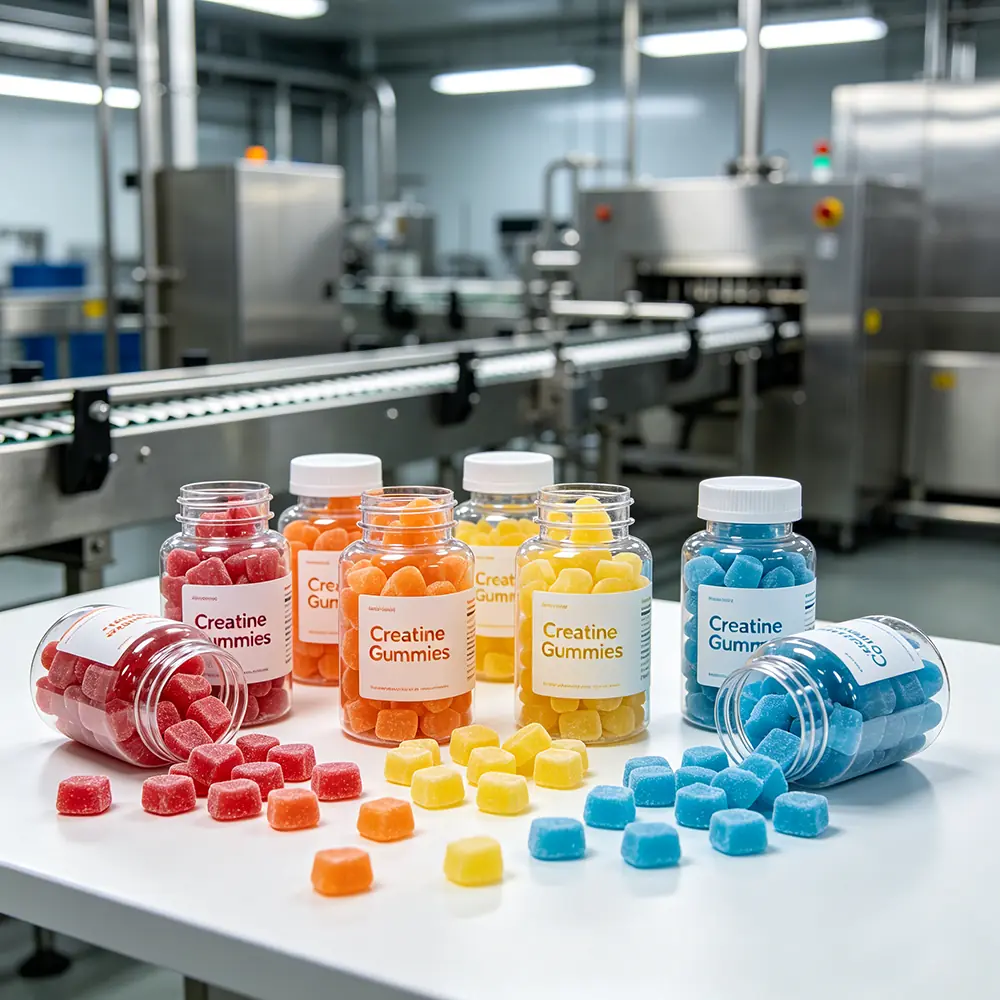
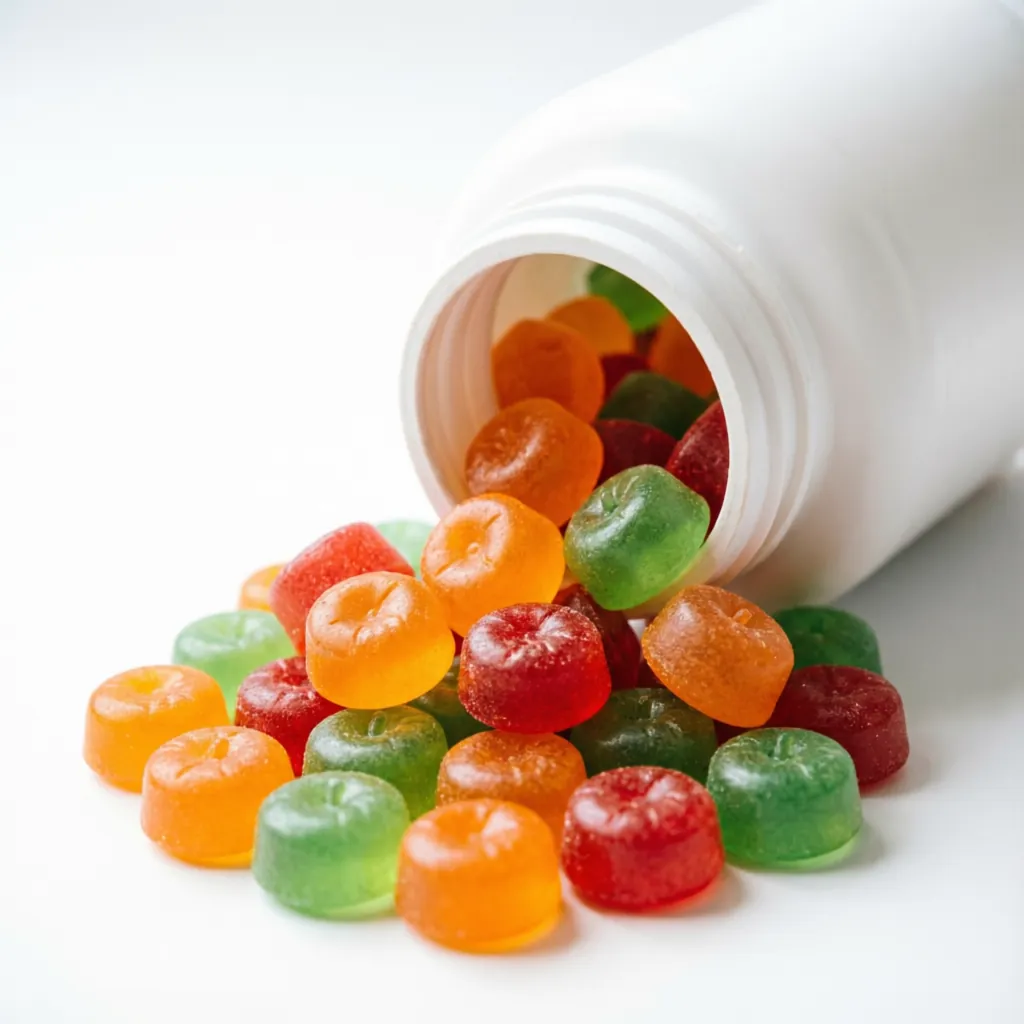
Creatine gummy manufacturing for private label refers to the contract production of chewable, gummy-format creatine supplements that brands can sell under their own labeling and branding. This manufacturing route allows supplement companies, distributors, and startups to bring a creatine product to market without owning production infrastructure. It is increasingly relevant for brands seeking a more palatable, easy-to-dose alternative to creatine powders and capsules.
Definition
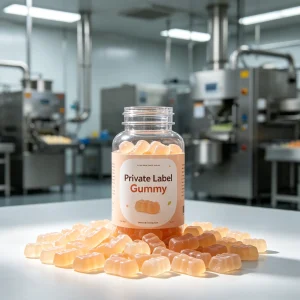
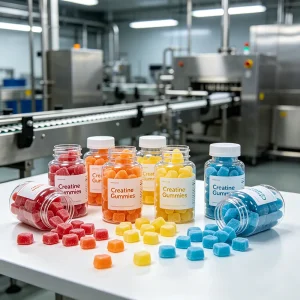
Creatine gummy manufacturing for private label refers to the process by which a contract manufacturer formulates, produces, and packages creatine-infused gummy supplements on behalf of a brand, which then markets and sells the finished product under its own name and packaging design. The manufacturer typically handles formulation, ingredient sourcing, production, quality testing, and packaging, while the brand controls positioning, labeling, and distribution.
Main Content
What Creatine Gummy Manufacturing Involves
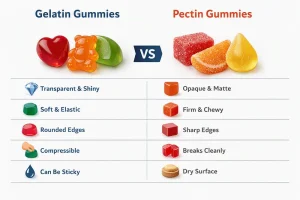
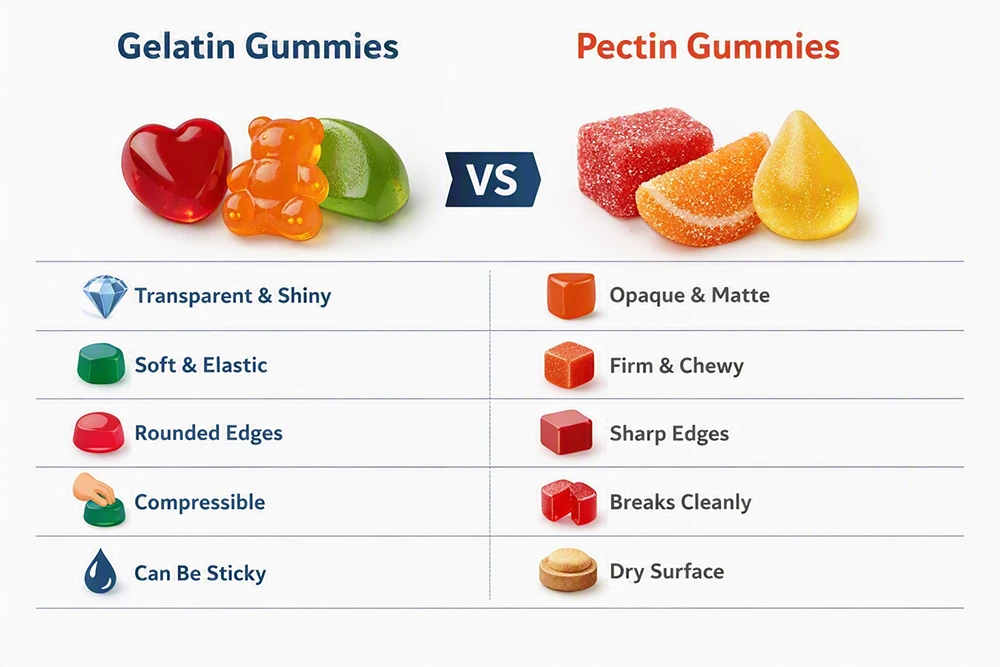
Creatine gummy production combines a gelling base—typically pectin or gelatin—with creatine monohydrate or other creatine forms, sweeteners, flavoring agents, and functional additives. Because creatine is required in relatively high doses (commonly 3-5 grams per serving for monohydrate), formulating a stable, palatable gummy at effective dosages presents specific technical challenges compared to gummies with lower-dose actives like vitamins.
Industry Background
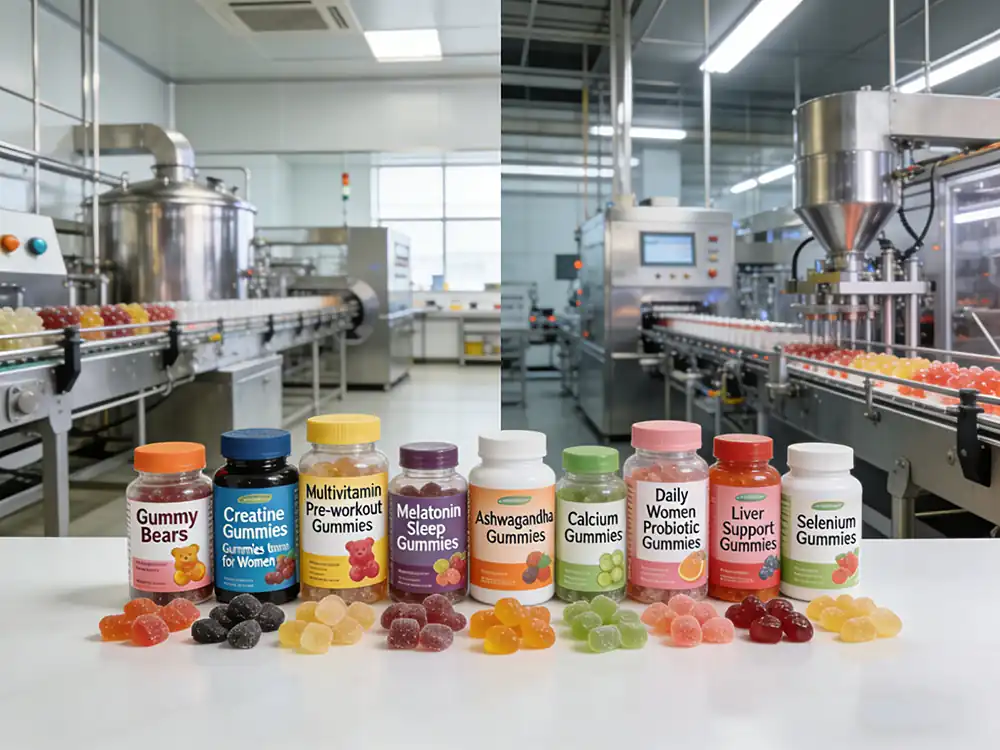
Creatine has long been established in powder and capsule formats within the sports nutrition category. As consumer demand shifted toward more convenient, better-tasting supplement formats, gummy manufacturers began adapting creatine formulations to gummy delivery systems. This shift parallels broader trends across the supplement industry, where gummies have expanded beyond vitamins into functional categories such as pre-workout, sleep, and recovery support.
Business Relevance
For supplement brands, offering creatine in gummy format can differentiate a product line, appeal to consumers who dislike mixing powders, and support impulse or convenience-driven purchasing channels such as e-commerce and retail. From a supply chain perspective, private label creatine gummies require manufacturers with specific expertise in high-dose active ingredient stability, since creatine’s required serving size is substantially larger than typical vitamin actives.
Differences vs. Alternative Formats
Compared to creatine powder, gummies offer pre-measured dosing and improved taste but generally require more gummies per serving to reach standard creatine doses, given gummy weight and formulation limits. Compared to capsules, gummies avoid swallowing difficulty but may involve added sugars or sugar alcohols depending on formulation. Brands should weigh these trade-offs against target consumer preferences.
Key Advantages and Limitations
Advantages include improved palatability, easier adherence for consumers who dislike powders, and merchandising flexibility. Limitations include the difficulty of delivering a full clinical creatine dose in a reasonable serving size, potential added sugar content, and generally shorter shelf-stability windows compared to powder formats, which require careful formulation and packaging control.
Who Should Consider This
This manufacturing route is relevant for sports nutrition brands, e-commerce supplement sellers, fitness-focused startups, distributors expanding into functional gummies, and private label operators seeking to diversify beyond standard vitamin gummy lines.
Compliance and Quality Considerations
Buyers should confirm that a manufacturer operates under GMP conditions, uses verified creatine raw material sources, and conducts third-party testing for potency and contaminants. Regulatory labeling requirements for creatine content and serving size claims vary by target export market and should be verified before production.
What Businesses Should Evaluate Before Sourcing
Before selecting a manufacturing partner, brands should evaluate formulation capability at required creatine dosages, minimum order quantity flexibility, documentation practices, and the manufacturer’s experience with functional (non-vitamin) gummy actives specifically, since formulation complexity differs meaningfully from standard multivitamin gummies.
HTML Technical Parameter Table
| Parameter | Details |
|---|---|
| Product Form | Chewable gummy, various shapes and sizes |
| Key Materials / Ingredients | Creatine monohydrate (or alternative creatine forms), pectin or gelatin base, natural or artificial sweeteners, flavoring agents, citric acid, coloring |
| Manufacturing Process Highlights | Formulation development, ingredient blending, depositing/molding, drying/curing, coating (optional), inspection, packaging |
| Quality Standards | GMP, ISO9001, ISO22000, HACCP, third-party lab testing for potency and contaminants |
| Packaging Options | Bottles, stand-up pouches, sachets, custom private label packaging |
| Scalability & Production Capacity | Supports trial batches through large-scale commercial production runs |
| Storage & Logistics Considerations | Cool, dry storage recommended; humidity control needed to preserve texture and creatine stability during transport |
Practical Insights
Manufacturing Quality & Process Control
Consistent gummy texture, accurate creatine dosing per unit, and stable shelf life depend on tightly controlled formulation and depositing processes. Brands should request batch consistency data and process documentation from prospective manufacturers.
Raw Material Sourcing Transparency
Because creatine monohydrate quality can vary by supplier, brands should confirm the origin and certification of the creatine raw material used, along with certificates of analysis for each production batch.
Production Scalability & Lead Time
Lead times for private label creatine gummies depend on formulation complexity, order volume, and packaging customization. Brands should clarify minimum order quantities and typical production timelines before committing to a supplier.
Compliance & Documentation Readiness
Buyers exporting to regulated markets should request documentation such as certificates of analysis, GMP certification, and, where applicable, allergen and nutritional labeling support from the manufacturer.
Cost Structure Considerations
Costs are influenced by creatine raw material pricing, order volume, packaging complexity, and any customization such as flavor development or shape molds. Brands should request itemized quotes to understand cost drivers.
How to Evaluate a Reliable Supplier
Reliable suppliers typically demonstrate relevant certifications, transparent sourcing practices, a track record with functional (non-vitamin) gummy formulations, and clear communication around lead times and quality assurance processes.
B2B Decision Guide
How Brands Choose the Right Manufacturer
Brands typically evaluate manufacturers based on certification status, formulation expertise specific to high-dose actives like creatine, minimum order quantity flexibility, and willingness to support private label branding requirements.
What Matters in OEM/ODM Projects
For OEM projects, brands provide their own formulation specifications for the manufacturer to produce. For ODM projects, the manufacturer offers existing formulations that brands can customize with their own branding. Clarifying which model applies affects timeline, cost, and formulation ownership.
How to Assess Production Capability
Brands should request facility certifications, sample products, and evidence of prior experience manufacturing functional or sports nutrition gummies specifically, rather than relying solely on general gummy manufacturing experience.
Key Criteria for Long-Term Partnerships
Consistent quality control, transparent communication, scalable capacity, and documented compliance practices are central to sustaining a long-term manufacturing relationship.
Risk Control & Quality Assurance Checkpoints
Recommended checkpoints include raw material verification, in-process quality checks during depositing and drying, finished product testing for potency and microbial safety, and pre-shipment inspection.
Conclusion
Creatine gummy manufacturing for private label offers supplement brands a way to differentiate their sports nutrition offerings through a more convenient, palatable delivery format. Because creatine’s effective dosing requirements introduce specific formulation challenges not present in standard vitamin gummies, brands should prioritize manufacturers with demonstrated expertise in high-dose functional gummy production, verified quality certifications, and transparent sourcing and documentation practices when selecting a private label partner.
FAQ
What is creatine gummy manufacturing for private label?
It is the contract production of creatine-based gummy supplements that a manufacturer produces on behalf of a brand, which then sells the product under its own label.
Why does creatine gummy manufacturing matter for supplement brands?
It allows brands to offer a more convenient and palatable creatine format, potentially reaching consumers who avoid powders or capsules.
How does creatine gummy manufacturing compare to powder or capsule alternatives?
Gummies offer pre-measured, easy-to-consume dosing but generally require more units per serving to match standard creatine doses compared to powder or capsule formats.
What should businesses consider before sourcing creatine gummies?
Businesses should evaluate a manufacturer’s formulation experience with high-dose actives, certifications, minimum order quantities, and documentation practices.
What quality standards apply to creatine gummy manufacturing?
Relevant standards include GMP, ISO9001, ISO22000, HACCP, and third-party testing for potency and contaminants.
Can creatine gummies be customized for private label branding?
Yes. Manufacturers offering OEM/ODM services typically support custom flavors, shapes, packaging, and branding to align with a private label brand’s specifications.
About Gothink Biotech
Shenzhen Gothink Biotech Co., Ltd. is a GMP-certified dietary supplement and gummy contract manufacturer offering OEM, ODM, CMO, and CDMO services. The company holds ISO9001, ISO22000, HACCP, FDA, HALAL, KOSHER, and Vegan certifications, and operates a 100,000-class cleanroom production facility with a daily output of 16 tons and an annual production capacity of 5,000 tons. Gothink Biotech supports custom formulation development, bulk and wholesale supply, and flexible minimum order quantities starting from 500 units, enabling brands, distributors, and private label operators to source functional gummy products, including creatine gummies, with consistent quality control and documentation to support long-term B2B partnerships.