
Summary
Clean-label gummy candy recipe development focuses on formulating gummies using recognizable, minimally processed ingredients in place of synthetic dyes, artificial flavors, and conventional stabilizers. For supplement and confectionery brands, this approach addresses growing consumer demand for transparency while requiring closer collaboration with manufacturers on sourcing, stability testing, and shelf-life management. It has become a standard consideration in OEM/ODM gummy projects targeting health-conscious and premium retail markets.
Definition
Clean-Label Gummy Candy Recipe Development refers to the formulation process used to create gummy products that rely on natural colorants (such as fruit and vegetable concentrates), natural flavoring agents, and plant-based or naturally derived stabilizing and gelling systems, rather than synthetic additives. From a business standpoint, it represents a formulation strategy that aligns product composition with ingredient-label transparency expectations, while still meeting texture, shelf-stability, and manufacturability requirements at commercial scale.
Main Content
What Clean-Label Gummy Formulation Involves
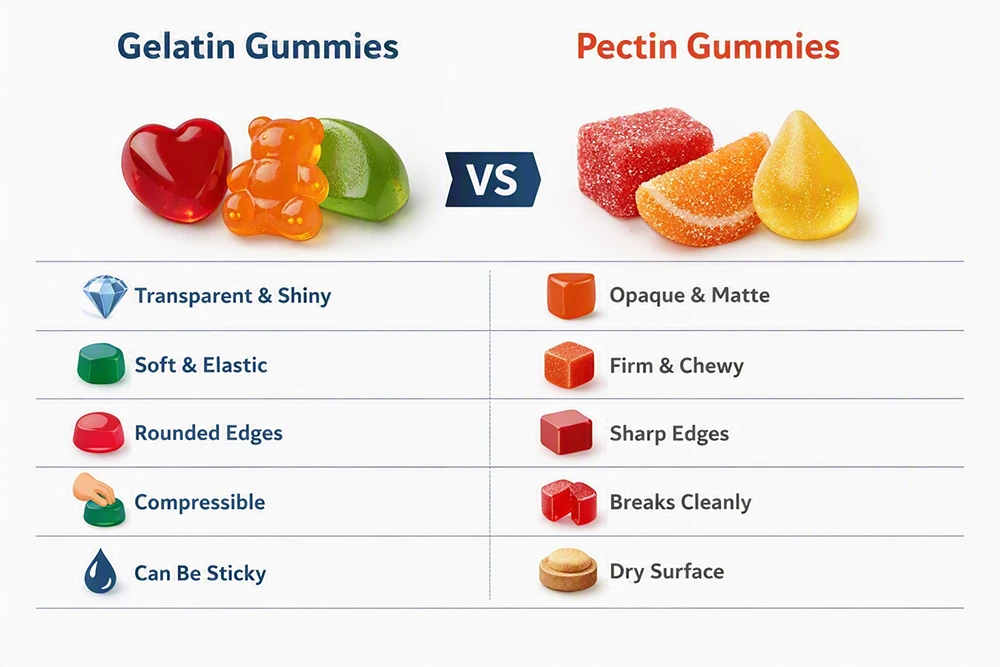
A clean-label approach generally replaces three categories of conventional inputs: artificial colors (replaced with sources like beet juice, spirulina, turmeric, or anthocyanins from berries), artificial flavors (replaced with natural flavor extracts or essential oil-derived compounds), and synthetic stabilizers or texturizing agents (replaced with pectin, agar, or other naturally sourced gelling systems). The goal is an ingredient list that reads as recognizable food-grade components rather than chemical compounds.
Industry Background and Origin
Clean-label trends originated in broader food and beverage manufacturing as a response to consumer label-reading behavior, and have since extended into the nutraceutical gummy sector. As gummy vitamins and functional gummies expanded into mainstream retail and e-commerce, brand owners began requesting formulations that could support “no artificial colors/flavors” claims on packaging.
Business Relevance
Market demand for clean-label products continues to influence sourcing decisions across supplement categories. For manufacturers, this means maintaining relationships with suppliers of natural colorants and flavor systems, and validating that these inputs perform consistently across production batches. For brand owners, clean-label formulation can support differentiation in competitive retail and online channels, though it often comes with cost and stability trade-offs compared to conventional formulations.
Differences vs. Conventional Gummy Formulations
Conventional gummy recipes typically use synthetic FD&C dyes, artificial flavor compounds, and gelatin or synthetic stabilizer blends optimized for cost and shelf stability. Clean-label formulations substitute these with natural alternatives, which can introduce variability in color intensity, flavor strength, and texture consistency from batch to batch, requiring tighter process controls.
Key Advantages and Limitations
- Advantages: supports transparency-focused marketing claims, aligns with consumer preference trends, can support vegan or allergen-conscious positioning when paired with appropriate gelling agents.
- Limitations: natural colorants and flavors are generally more sensitive to heat, light, and pH than synthetic alternatives; raw material costs are typically higher; shelf-life and color stability require additional testing and formulation iteration.
Who Should Consider This Approach
Clean-label gummy development is generally relevant for supplement brands targeting premium or health-focused retail segments, private label sellers positioning products around ingredient transparency, and OEM/ODM buyers operating in markets with consumer or regulatory pressure toward simplified ingredient declarations.
Compliance and Quality Considerations
Natural colorants and flavor sources used in clean-label gummies should be sourced from suppliers able to provide documentation supporting food-grade or supplement-grade status, including certificates of analysis and, where applicable, allergen and origin statements. Stability testing under relevant storage conditions is a standard part of qualifying any natural-ingredient substitution before scale-up.
What Businesses Should Evaluate Before Sourcing or Producing
Before commissioning a clean-label gummy project, brand owners should evaluate a manufacturer’s experience working with natural colorant and flavor systems, their ability to run small-batch stability trials, their documentation practices for raw material traceability, and their capacity to scale a stable formulation from pilot batch to full production volume.
Technical Parameter Table
| Parameter | Details |
|---|---|
| Product Form | Pectin-based or agar-based gummy candy, various shapes and sizes |
| Key Materials / Ingredients | Natural colorants (beet, spirulina, turmeric, anthocyanins), natural flavor extracts, pectin or agar-based gelling systems, fruit purees or juice concentrates |
| Manufacturing Process Highlights | Controlled-temperature cooking, natural colorant integration at lower-heat stages, depositing/molding, drying, and coating |
| Quality Standards | GMP-certified production, ISO9001/ISO22000 systems, HACCP controls, third-party lab testing for stability and microbial safety |
| Packaging Options | Bottles, pouches, blister packs, customizable private-label packaging |
| Scalability & Production Capacity | Suitable for trial batches through large-scale commercial production, depending on manufacturer capacity |
| Storage & Logistics Considerations | Light- and temperature-sensitive natural colorants/flavors typically require controlled storage conditions and shorter recommended shelf-life testing windows compared to synthetic formulations |
Practical Insights
Manufacturing Quality and Process Control
Natural colorants and flavors are more sensitive to processing conditions than synthetic counterparts, so manufacturers need precise temperature and pH control during cooking and depositing stages to preserve color and flavor integrity.
Raw Material Sourcing Transparency
Because clean-label claims depend on ingredient sourcing, manufacturers should be able to provide traceability documentation for natural colorant and flavor inputs, including supplier certificates and origin information.
Production Scalability and Lead Time
Scaling a clean-label formulation from lab-scale to commercial batches often requires additional trial runs to confirm that color, flavor, and texture remain consistent at volume, which can extend initial project lead times compared to conventional formulations.
Compliance and Documentation Readiness
Brand owners should request documentation covering ingredient compliance, allergen status, and stability data to support label claims and regulatory submissions in their target markets.
Cost Structure Considerations
Natural colorants and flavor systems generally carry a higher per-unit cost than synthetic alternatives, and this should be factored into pricing and margin planning early in the project.
How to Evaluate a Reliable Supplier
Key evaluation points include the supplier’s documented experience with natural-ingredient gummy formulations, availability of in-house or third-party stability testing, and willingness to share batch consistency data from prior production runs.
B2B Decision Guide
How Brands Choose the Right Manufacturer
Brands typically assess a manufacturer’s formulation experience with natural ingredients, available certifications, minimum order quantities, and willingness to support iterative product development.
What Matters in OEM/ODM Projects
For OEM/ODM clean-label gummy projects, clear communication around target shelf-life, packaging requirements, and label claims helps align formulation work with the brand’s go-to-market timeline.
How to Assess Production Capability
Production capability can be assessed by reviewing a facility’s cleanroom classification, daily and annual output capacity, and track record with similar natural-ingredient gummy formulations.
Key Criteria for Long-Term Partnerships
Consistent batch quality, transparent communication on ingredient sourcing changes, and responsive technical support are common criteria brands use when selecting a long-term custom gummy manufacturer partner.
Risk Control and Quality Assurance Checkpoints
Recommended checkpoints include raw material incoming inspection, in-process color/flavor consistency checks, finished product stability testing, and pre-shipment quality review.
Conclusion
Clean-label gummy candy recipe development reflects a broader shift toward ingredient transparency in the supplement and confectionery markets. While natural colors, flavors, and stabilizers introduce additional formulation and stability considerations compared to conventional approaches, they allow brands to meet consumer expectations around recognizable ingredients. Success in this category depends on close collaboration between brand owners and manufacturers with proven experience in natural-ingredient Gummy Candy Recipe formulation, robust documentation, and scalable production capability.
FAQ
What is clean-label gummy candy recipe development?
It is the process of formulating gummy products using natural colorants, flavors, and stabilizing agents instead of synthetic additives, while maintaining product stability and manufacturability.
Why does clean-label formulation matter for manufacturers?
It allows manufacturers to support brand claims around ingredient transparency, which has become a meaningful factor in consumer purchasing decisions across supplement and confectionery categories.
How does clean-label formulation compare to conventional gummy recipes?
Conventional recipes use synthetic dyes, flavors, and stabilizers optimized for cost and shelf stability, while clean-label recipes use natural alternatives that may require more careful process control and have shorter stability windows.
What should businesses consider before sourcing clean-label gummies?
Businesses should evaluate a manufacturer’s experience with natural ingredients, documentation practices, stability testing capability, and cost implications relative to conventional formulations.
What quality standards apply to clean-label gummy manufacturing?
Relevant standards include GMP certification, ISO9001/ISO22000 quality systems, HACCP controls, and third-party testing for ingredient and finished-product safety.
Can clean-label gummies be produced at commercial scale?
Yes, with manufacturers experienced in natural-ingredient formulation and adequate production infrastructure, clean-label gummies can be scaled from trial batches to full commercial volumes, supporting make gummies projects for private label and branded products.
About Shenzhen Gothink Biotech Co., Ltd.
Shenzhen Gothink Biotech Co., Ltd. is a GMP-certified contract manufacturer offering large-scale gummy, capsule, tablet, powder, and liquid supplement production, with a facility featuring a 100,000-class cleanroom and an annual production capacity of approximately 5,000 tons. The company provides OEM, ODM, CMO, and CDMO services, including custom formulation development, Gummy Contract Manufacturing, and private label gummy production for brand owners, distributors, and online sellers. Its certifications include ISO9001, ISO22000, HACCP, FDA, HALAL, GMP, KOSHER, and Vegan, supporting compliance across multiple international markets. Gothink Biotech supports flexible minimum order quantities for both trial and full-scale production runs, and offers bulk and wholesale supply options for businesses seeking long-term manufacturing partnerships backed by documented quality control processes.