
Summary
Gummy supplement manufacturing has become one of the fastest-growing segments in the dietary supplement industry, driven by rising consumer demand for convenient, palatable dosage forms across vitamins, minerals, herbals, and functional ingredients. For brands, distributors, and OEM/ODM buyers, selecting the right manufacturing partner requires evaluating not only production capacity and cost, but also formulation expertise, quality certifications, regulatory readiness, and supply chain transparency. This guide provides a structured overview of the key technical, operational, and commercial considerations involved in sourcing or launching a gummy supplement product.
Definition
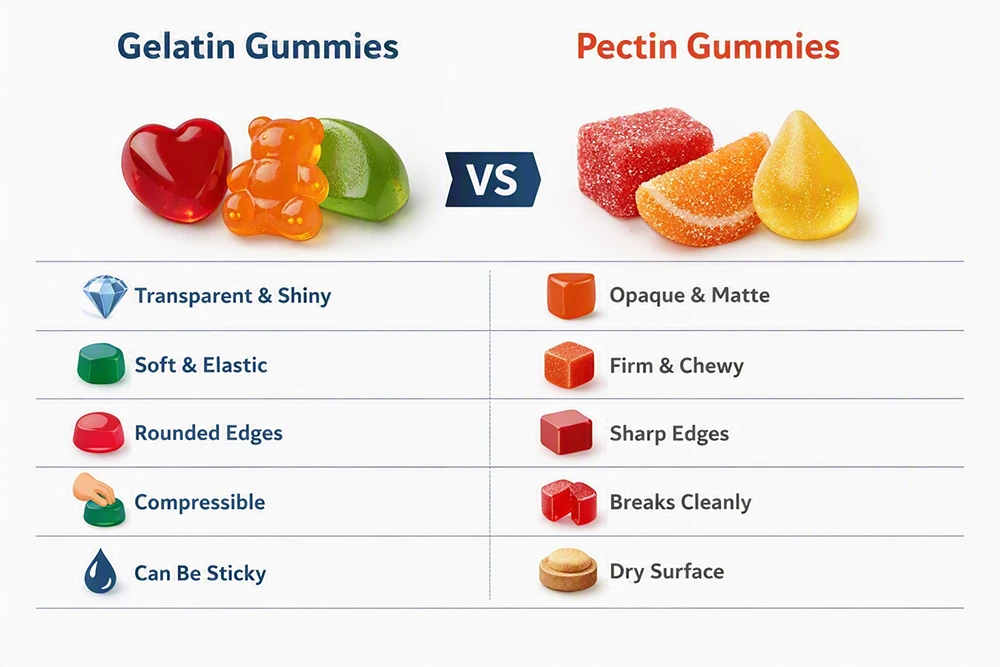
Gummy Supplement Manufacturing refers to the industrial process of producing chewable, gelatin- or pectin-based dietary supplement products that encapsulate active nutritional or functional ingredients—such as vitamins, minerals, botanical extracts, amino acids, or probiotics—within a confectionery-style carrier matrix. From a business standpoint, it describes the full production workflow: raw material sourcing and blending, gelling agent selection, flavor and color formulation, molding, drying, coating, quality testing, and finished-goods packaging, typically executed under contract by a third-party dietary supplement manufacturer on behalf of a brand or label owner.
What Gummy Supplement Manufacturing Is
At its core, gummy supplement manufacturing combines food confectionery technology with nutraceutical formulation science. Unlike tablets or capsules, gummies require precise control over texture, moisture content, active ingredient stability, and flavor delivery—all while meeting the dietary supplement regulatory requirements of the target market.
A commercial gummy is typically built around a gelling matrix (gelatin, pectin, agar, or carrageenan), a humectant system (sorbitol, glycerin), natural or artificial flavors, colorants, and a defined active ingredient load. The manufacturing process involves dissolving the gelling agent, blending in actives and excipients at controlled temperatures, depositing the mixture into molds, allowing it to set, and then applying optional coatings or sugar dustings before packaging.
Industry Background
Gummy vitamins were first commercialized in the children’s supplement market during the 1990s, modeled on confectionery gummy bears. By the 2010s, adult gummy supplements had expanded into mainstream retail, and the format now spans a wide spectrum: multivitamins, melatonin sleep aids, collagen and beauty supplements, probiotic gummies, creatine gummies, pre-workout gummies, and more.
Global market data consistently places gummy supplements among the highest-growth formats in the broader dietary supplement sector. Consumer preference for taste, ease of swallowing, and format novelty has sustained this demand across all age groups. Contract manufacturing capacity has scaled accordingly, with dedicated gummy contract manufacturing facilities emerging in North America, Europe, and Asia—particularly in China, where vertically integrated supply chains reduce raw material lead times and production costs.
Business Relevance: Market Demand, Supply Chain, and Production Considerations
For brand owners and private label operators, the gummy format offers strong retail shelf differentiation and repeat purchase potential. However, the format also carries higher formulation complexity than tablets or capsules. Key supply chain considerations include:
- Ingredient compatibility: Not all active ingredients are heat-stable or chemically compatible with the gummy matrix. Vitamins B12, C, and D are common; probiotics, omega-3s, and certain botanical extracts require specialized processing to maintain potency.
- Moisture sensitivity: Gummies are hygroscopic. Packaging, cold-chain logistics, and storage conditions directly affect shelf life and product integrity.
- Minimum order quantities (MOQs): Gummy production typically involves higher setup costs than powder or capsule formats, so MOQs vary significantly by manufacturer and product complexity.
- Lead time: Formulation development, stability testing, and regulatory documentation can extend timelines to 60–120 days for new product launches.
Differences vs. Alternative Supplement Formats
Compared to capsules and tablets, gummies offer superior consumer palatability and dosing compliance, particularly for populations that dislike swallowing pills. However, gummies generally carry lower active ingredient density per unit, as the matrix limits how much powder can be incorporated before texture and taste are compromised. Liquid drops and powders may be more suitable for high-dose formulations.
Compared to other confectionery-adjacent formats (chewable tablets, soft chews), gummies carry stronger brand recognition and consumer familiarity, but are more sensitive to manufacturing process deviations that affect texture uniformity and active content.
Key Advantages and Limitations
Advantages: high consumer acceptance, strong repeat-purchase behavior, wide demographic appeal, format versatility (vegan pectin-based, sugar-free, functional), and strong retail/e-commerce presentation.
Limitations: lower active load per gummy compared to capsules or tablets, higher production complexity and cost per unit, greater sensitivity to temperature and humidity in storage and transit, and stricter formulation compatibility requirements for certain actives.
Who Should Consider Gummy Supplement Manufacturing
The gummy format is commercially relevant for supplement brand owners launching consumer-facing product lines, retailers and e-commerce sellers seeking private label gummy products, health and wellness startups developing a branded supplement portfolio, and established nutraceutical companies expanding their product format range. It is also relevant to distributors sourcing finished goods for regional markets and to OEM/ODM buyers who need fully formulated, market-ready products under their own brand identity.
Compliance, Regulatory, and Quality Considerations
In the United States, gummy dietary supplements are regulated under the Dietary Supplement Health and Education Act (DSHEA) and must be manufactured in compliance with 21 CFR Part 111 (dietary supplement cGMP regulations). In the European Union, food supplement regulations under Directive 2002/46/EC apply. Other markets (Australia’s TGA, Canada’s NHP regulations, etc.) have their own registration and labeling requirements.
Key quality certifications a manufacturer should hold include GMP (Good Manufacturing Practice), ISO 22000 (food safety management), HACCP, and, depending on the target market, HALAL, KOSHER, or Vegan certification. Third-party testing for heavy metals, microbiological contaminants, and active ingredient potency is standard practice for credible suppliers.
What Businesses Should Evaluate Before Sourcing or Producing
Before engaging a custom gummy manufacturer, brands should evaluate: the manufacturer’s formulation capability and experience with similar active ingredients; their certification portfolio and audit history; production capacity and minimum order flexibility; stability testing infrastructure; packaging customization options; and their track record supplying similar markets and channels. Documentation readiness—including Certificates of Analysis (CoA), ingredient supplier documentation, and regulatory dossier support—is also a critical differentiator.
Technical Parameter Reference Table
| Parameter | Details |
|---|---|
| Product Form | Chewable gummy; available in standard bear, ring, cube, or custom shapes; sugar-coated, sour-coated, or uncoated; single- or multi-layer formats |
| Key Materials / Ingredients | Gelatin (bovine, porcine) or pectin (vegan); glucose syrup, sucrose, or sugar-free humectants (sorbitol, maltitol); citric acid; natural/artificial flavors; fruit or vegetable colorants; active ingredients (vitamins, minerals, botanical extracts, amino acids, probiotics) |
| Manufacturing Process Highlights | Batch dissolution and blending → temperature-controlled active ingredient incorporation → continuous starch or silicone mold depositing → setting/drying (ambient or temperature-controlled) → demoulding → optional coating/dusting → metal detection → weight check → blister, bottle, or pouch filling |
| Quality Standards | cGMP (21 CFR Part 111 or equivalent), ISO 9001, ISO 22000, HACCP; optional: NSF, USP, Informed Sport; third-party testing for potency, heavy metals, microbiology, and allergens |
| Packaging Options | HDPE bottles, PET bottles, stand-up pouches, blister packs, sachet packs; label printing: custom OEM/private label; carton and pallet formats for B2B bulk shipment |
| Scalability & Production Capacity | Small-batch trial runs typically from 500–1,000 kg; commercial runs from 5,000 kg+; high-capacity facilities can reach 10–16 tonnes/day output; annual capacity at larger facilities: 3,000–5,000+ tonnes |
| Storage & Logistics Considerations | Recommended storage: 15–25°C, RH ≤60%; avoid direct sunlight and humidity fluctuations; standard shelf life: 18–24 months (formulation-dependent); moisture-barrier packaging critical for hygroscopic formulas; cold-chain required for probiotic gummies |
Practical Insights for B2B Buyers
Manufacturing Quality and Process Control
Process consistency in gummy production depends on tight control of cooking temperature, blending sequence, depositing speed, and drying time. Reputable manufacturers employ inline QC checkpoints, automatic weight rejection systems, and finished-goods testing against a pre-approved product specification sheet. Buyers should request batch records and CoA samples from existing production runs before committing to a supplier.
Raw Material Sourcing Transparency
The quality of a finished gummy is directly tied to the quality of its input materials. Manufacturers with documented supplier qualification programs, incoming raw material testing protocols, and traceable ingredient origins offer lower formulation risk. For active ingredients with known adulteration risks (certain botanical extracts, amino acids), third-party verified material testing is a non-negotiable due-diligence step.
Production Scalability and Lead Time
Lead times for new gummy SKUs typically range from 8 to 16 weeks for formulation-to-production, depending on the complexity of the active ingredient blend, stability data requirements, and regulatory documentation. Brands should confirm whether a manufacturer can scale from trial batch to commercial volume without reformulation, and what the ramp-up timeline looks like for reorders.
Compliance and Documentation Readiness
For products entering the US, EU, or other regulated markets, manufacturers should be able to supply: master manufacturing records, Certificate of Analysis per batch, ingredient supplier CoAs, allergen declarations, and, where applicable, nutrition fact panel data. Manufacturers with in-house regulatory affairs support are significantly more efficient partners for brands navigating market entry.
Cost Structure Considerations
Gummy manufacturing costs are driven by active ingredient cost, gelling agent type (gelatin is generally less expensive than pectin), flavor and color complexity, mold tooling, packaging format, and order volume. Brands seeking to optimize cost should distinguish between formulation R&D fees (typically one-time), tooling fees (mold creation), and per-unit COGS at target volume. Comparing quotes on a like-for-like specification basis is essential.
How to Evaluate a Reliable Supplier
Key evaluation criteria include: verified GMP certification (ideally audited by a recognized third party), a demonstrable portfolio of similar products, responsive technical communication, sample provision capability, and financial and operational stability. Factory audits—either in-person or via third-party audit firms—remain the most reliable verification method for high-volume partnerships.
B2B Decision Guide: Choosing the Right Gummy Manufacturer
How Brands Choose the Right Manufacturer
The selection process should start with a clear product brief: target market, active ingredient profile, desired format (vegan, sugar-free, standard), packaging type, target COGS, and regulatory destination. Shortlist manufacturers who demonstrably have experience with your specific active ingredient category and target market compliance requirements, not just generic gummy production capability.
What Matters in OEM/ODM Projects
In OEM (Original Equipment Manufacturer) projects, the brand provides the formulation and the manufacturer produces to spec. In ODM (Original Design Manufacturer) projects, the manufacturer develops the formulation on the brand’s behalf. For most new entrants, ODM is more efficient, as it leverages the manufacturer’s existing formulation library and stability data. Regardless of model, intellectual property ownership of the final formulation should be clearly defined in the contract.
How to Assess Production Capability
Request documentation on: total installed production capacity, current utilization rate, number of active SKUs in production, equipment type and age, and cleanroom classification for relevant production areas. A 100,000-class cleanroom is a reasonable standard for dietary supplement gummy production; pharmaceutical-grade R&D laboratory access indicates higher formulation precision.
Key Criteria for Long-Term Supply Partnerships
Long-term reliability depends on: consistent batch-to-batch product quality, stable raw material supply chains, proactive communication on lead times and inventory status, and the manufacturer’s own financial stability. Dual-sourcing for high-volume SKUs is a standard risk mitigation practice even when a primary supplier relationship is strong.
Risk Control and Quality Assurance Checkpoints
Standard B2B quality assurance checkpoints include: incoming raw material testing, in-process quality holds, finished goods release testing, pre-shipment third-party inspection, and retention sample archiving. Brands should establish a Quality Agreement with their manufacturer that defines roles, responsibilities, and escalation protocols for out-of-specification results.
Conclusion
Gummy supplement manufacturing represents a technically complex but commercially high-value segment of the broader contract supplement industry. For brands and OEM/ODM buyers, success depends not only on selecting a manufacturer with adequate production capacity, but on verifying formulation expertise, quality system integrity, regulatory documentation capability, and supply chain transparency. A systematic, criteria-driven evaluation process—covering technical, compliance, and commercial dimensions—reduces risk and improves the probability of a reliable, scalable manufacturing partnership. As consumer demand for gummy formats continues to grow across global markets, the strategic importance of choosing a capable and compliant manufacturing partner only increases.
Frequently Asked Questions
What is gummy supplement manufacturing?
Gummy supplement manufacturing is the process of producing chewable dietary supplement products by incorporating active nutritional ingredients—such as vitamins, minerals, botanical extracts, or amino acids—into a gelling matrix (typically gelatin or pectin), then molding, drying, and packaging the finished product. It covers the full production workflow from raw material blending to finished-goods packaging.
Why does gummy supplement manufacturing matter for brands and manufacturers?
The gummy format commands strong consumer demand due to its palatability and ease of use, making it one of the fastest-growing supplement formats globally. For brands, it offers differentiation and repeat purchase potential. For manufacturers, it represents a high-value production category requiring specialized equipment, formulation expertise, and strict quality controls. Selecting the wrong manufacturing partner creates quality, compliance, and supply continuity risks.
How does gummy manufacturing compare to capsule or tablet manufacturing?
Gummies have lower active ingredient density per unit than capsules or tablets, higher production complexity, and greater sensitivity to temperature, moisture, and formulation compatibility. They typically carry higher per-unit manufacturing costs but offer significantly better consumer acceptance, particularly for populations who prefer not to swallow pills. Capsules and tablets remain preferred for high-dose or highly potent formulations.
What should a business consider before sourcing gummy supplement manufacturing?
Key considerations include: the manufacturer’s certification portfolio (GMP, ISO, HACCP), formulation capability and experience with your specific active ingredients, production capacity and MOQ flexibility, lead time for new product development, regulatory documentation support for target markets, raw material sourcing transparency, and per-unit cost at your target production volume.
What quality standards apply to gummy supplement manufacturing?
In the US, manufacturers must comply with FDA cGMP regulations (21 CFR Part 111). ISO 22000 and HACCP are widely recognized international food safety standards. Additional market-specific certifications may be required (e.g., EU food supplement regulations, Australia’s TGA requirements). Third-party testing for potency, heavy metals, microbiological contamination, and allergens is standard practice for compliant facilities.
What is the difference between OEM and ODM in gummy supplement manufacturing?
In OEM (Original Equipment Manufacturing), the brand owner provides the formulation and the manufacturer produces to that specification. In ODM (Original Design Manufacturing), the manufacturer develops the formulation on the brand’s behalf, typically drawing on an existing formulation library. ODM is faster and lower-cost for brands without in-house R&D, while OEM provides more control over proprietary formulations.
About the Manufacturer
Shenzhen Gothink Biotech Co., Ltd. is a China-based contract dietary supplement manufacturer offering OEM, ODM, CMO, and CDMO services across gummy, capsule, tablet, powder, liquid, and drop supplement formats. The company operates a GMP-certified manufacturing facility with a 100,000-class cleanroom and a 10,000-class pharmaceutical-grade R&D laboratory, with a daily production output of 16 tonnes and an annual capacity of approximately 5,000 tonnes. Its quality management system holds certifications including ISO 9001, ISO 22000, HACCP, FDA registration, HALAL, GMP, KOSHER, and Vegan. The R&D team includes postdoctoral researchers with backgrounds at leading international institutions, supporting formulation development across a reported 2,000 new product projects annually. The company provides full-service private label and custom formulation support, covering product consultation, formulation development, custom packaging design, regulatory documentation, and export logistics, serving supplement brands, retailers, distributors, and e-commerce operators across global markets.