
Making dietary supplements at a commercial scale involves a structured sequence of formulation, raw material sourcing, manufacturing process selection, quality assurance, and regulatory compliance. For brands, distributors, and emerging health businesses, understanding how supplements are made is foundational to evaluating suppliers, controlling product quality, and managing production costs. This guide provides a factual, process-oriented overview of supplement manufacturing relevant to B2B buyers, OEM/ODM project managers, and private label brand owners.
Definition
Supplement manufacturing refers to the end-to-end industrial process of formulating, producing, and packaging dietary or nutritional supplements — including vitamins, minerals, botanicals, amino acids, and functional compounds — into finished dosage forms such as capsules, tablets, powders, gummies, liquids, or drops, intended for human consumption and compliant with applicable regulatory standards.
In a B2B context, this process typically involves contract manufacturing arrangements (CMO), original equipment manufacturing (OEM), or original design manufacturing (ODM), where a brand or distributor partners with a specialized facility to produce finished goods under a private label or custom formulation.
What Does It Mean to Make Supplements?
At its core, making supplements means converting raw bioactive ingredients into a stable, safe, and bioavailable product that delivers a defined dose reliably. The process spans laboratory-scale formulation all the way through high-volume GMP-compliant production. Unlike pharmaceuticals, dietary supplements in most jurisdictions do not require pre-market approval, but they are still subject to Good Manufacturing Practice (GMP) regulations, labeling requirements, and ingredient safety standards.
For businesses, “making supplements” is rarely conducted in-house. Most brands — from startups to established retailers — work with a dietary supplement manufacturer that has invested in the required infrastructure: controlled environments, analytical labs, validated processes, and regulatory documentation systems.
Industry Background
The global dietary supplement market has grown significantly over the past two decades, driven by rising consumer interest in preventive health, sports nutrition, and functional wellness. Manufacturing has correspondingly professionalized, with contract facilities now capable of handling complex multi-ingredient formulas, novel delivery formats like gummies and liquid drops, and full end-to-end product development from concept to shelf-ready SKU.
China has emerged as a major hub for contract supplement manufacturing, with facilities in industrial centers such as Shenzhen operating at scale under internationally recognized quality frameworks. These manufacturers supply both domestic brands and global health companies seeking cost-effective, high-capacity production partnerships.
Core Manufacturing Steps
Regardless of dosage form, supplement manufacturing follows a comparable logical sequence:
- Formulation Development: Defining the active ingredient stack, excipients, and target dose per serving.
- Raw Material Sourcing & Testing: Procuring certified ingredients and verifying identity, purity, and potency via certificate of analysis (CoA).
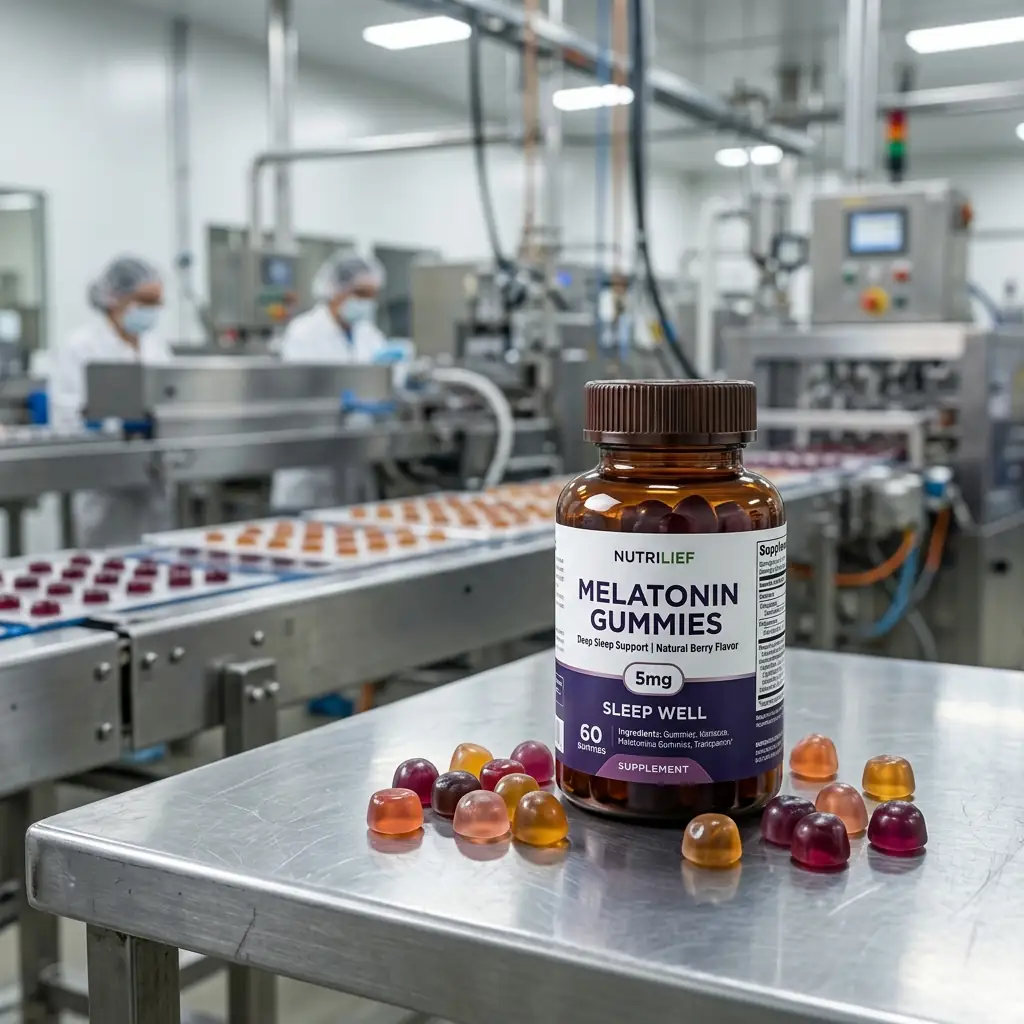
- Blending & Processing: Mixing powders, granulating, encapsulating, compressing, or cooking (for gummies), depending on the dosage form.
- In-Process Quality Control: Testing weight, dissolution, microbial limits, and label compliance at key production stages.
- Packaging & Labeling: Filling into final consumer or bulk packaging, applying compliant labels, and sealing.
- Finished Product Testing & Release: Final QC batch review, certificate of conformance, and release for shipment.
Dosage Forms: Comparison of Common Types
Supplement brands must choose a dosage form early, as it drives formulation constraints, production equipment requirements, consumer experience, and cost per unit. Below is a practical comparison:
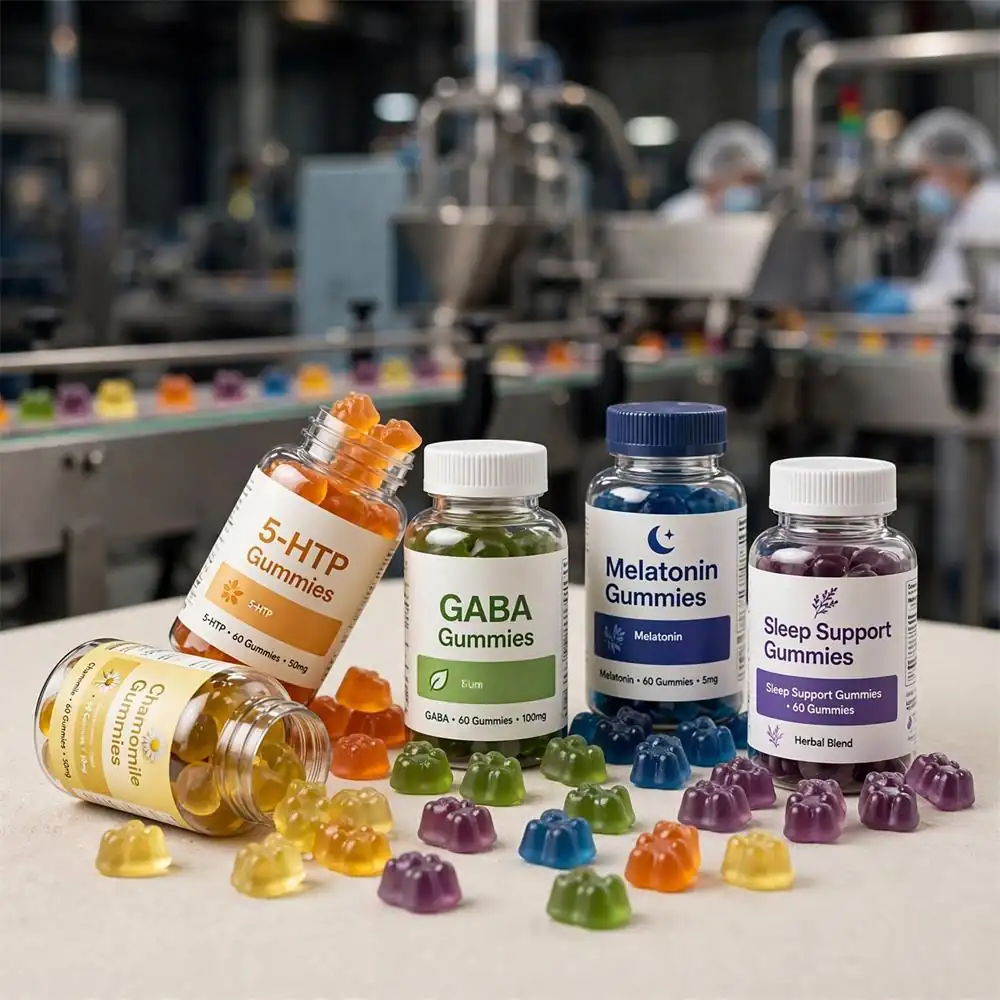
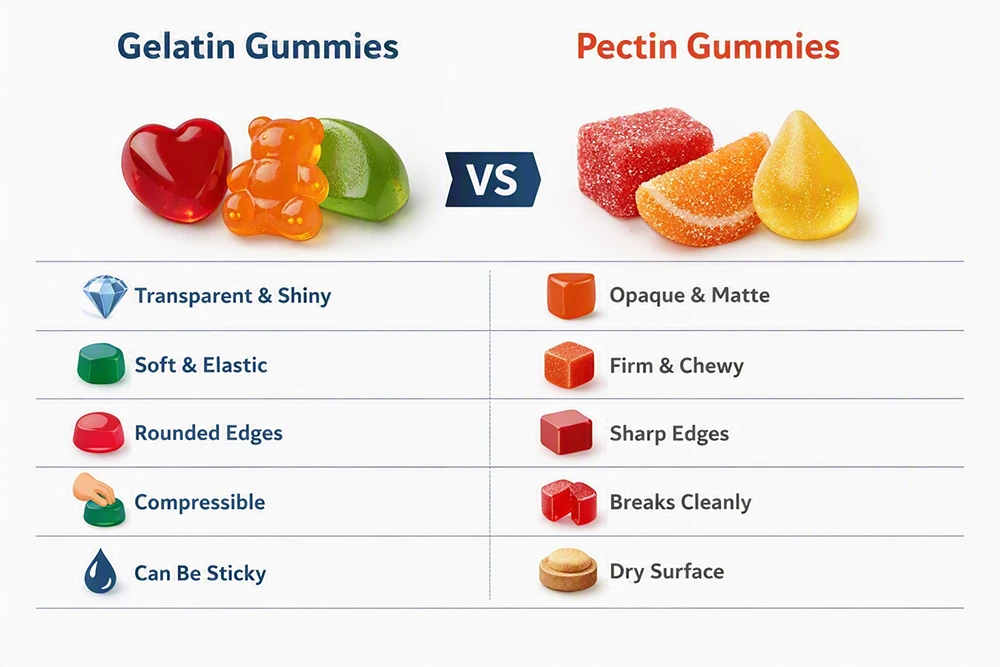
- Gummies: High consumer appeal, especially for vitamins and sleep aids; requires gelling agent expertise (pectin, gelatin, carrageenan); flavor and texture customization is significant. Among the fastest-growing formats.
- Capsules (gelatin or vegetarian): Versatile, precise dosing, suitable for powders and oils; straightforward to produce at scale; cost-effective for many formulas.
- Tablets: Highest density per unit; coating options extend stability and mask taste; require granulation and compression equipment investment.
- Powders: Ideal for high-dose actives and sports nutrition; flexible packaging (sachets, tubs); may require solubility or flowability optimization.
- Liquid Drops: Suitable for rapid absorption formats and pediatric/geriatric segments; precision dosing via dropper or spray mechanisms.
Business Relevance & Market Demand
For brands entering or scaling in the supplement space, working with a capable contract manufacturer is a strategic decision, not merely a sourcing task. The right manufacturing partner determines product quality consistency, regulatory readiness for target markets (FDA, EU, UKCA), speed-to-market, and cost structure. Brands sourcing through OEM or ODM arrangements can reduce capital expenditure on equipment and infrastructure while accessing formulation expertise and production scale they could not replicate independently.
Technical Parameter Reference Table
The following table summarizes key production parameters that B2B buyers and brand managers should review when evaluating or briefing a contract supplement manufacturer.
| Parameter | Gummies | Capsules | Tablets | Powders | Liquid Drops |
|---|---|---|---|---|---|
| Product Form | Chewable solid (pectin, gelatin, carrageenan) | Hard shell (gelatin or HPMC) | Compressed solid, coated or uncoated | Bulk or sachet powder blend | Aqueous or oil-based solution |
| Key Ingredients / Materials | Gelling agent, sweeteners, flavors, actives, colorants | Bulk fill (powder/pellet), capsule shell, lubricants | Actives, binders, disintegrants, coating polymers | Actives, flow agents, flavors, carriers | Actives, solvents, stabilizers, preservatives |
| Manufacturing Process Highlights | Cooking, mixing, depositing/molding, cooling, demoulding, coating | Blending, filling, sealing, polishing | Granulation, blending, compression, coating | Blending, milling, sifting, filling | Mixing, filtration, filling, sealing |
| Quality Standards | GMP, ISO22000, HACCP, third-party testing | GMP, ISO9001, pharmacopeial dissolution tests | GMP, ISO9001, content uniformity testing | GMP, ISO9001, microbial limits, heavy metals | GMP, ISO22000, pH and stability testing |
| Packaging Options | Bottles, pouches, blister packs, custom jars | HDPE bottles, blister cards, foil pouches | Bottles, blister packs, strip packs | Tubs, sachets, stand-up pouches, jars | Dropper bottles, spray bottles, vials |
| Typical MOQ Range | Low to medium (scalable by manufacturer) | Low (high throughput, fast fill) | Medium (equipment setup costs) | Low to medium | Medium (cleaning validation per run) |
| Production Scalability | High; semi-continuous depositing lines | Very high; automated fill-and-seal | High; high-speed compression equipment | Very high; bulk blending capacity | Moderate; batch filling |
| Storage & Logistics | Cool, dry; avoid humidity and heat | Cool, dry; moisture-sensitive | Ambient; coating protects from moisture | Cool, dry; sealed packaging critical | Refrigerated or ambient depending on formula |
| Shelf Life (Typical) | 18–24 months | 24–36 months | 24–36 months | 24–36 months | 12–24 months |
| Regulatory Considerations | Color and additive compliance; sugar labeling | Shell material disclosure (vegan/halal) | Coating agent disclosure; allergen review | Serving size, allergen, and labeling accuracy | Preservative and solvent compliance |
Practical Insights for B2B Buyers
Manufacturing Quality & Process Control
A GMP-certified facility with a documented quality management system is the baseline expectation. Buyers should request batch records, in-process testing data, and evidence of equipment validation. Cleanroom classifications (e.g., 100,000-class or 10,000-class) indicate the environmental control level applied during production.
Raw Material Sourcing Transparency
Reputable manufacturers provide certificates of analysis (CoA) and country-of-origin documentation for all active ingredients. Ask whether the manufacturer sources from audited suppliers and whether raw materials undergo identity testing on arrival.
Production Scalability & Lead Time
Capacity constraints can delay launches. Clarify the manufacturer’s annual production capacity, current utilization rate, and standard lead times for both trial batches and full production runs before committing to a product development timeline.
Compliance & Documentation Readiness
For brands targeting export markets (US, EU, UK, Australia), the manufacturer must be able to produce facility registration documents, GMP certificates, finished product CoAs, and stability data. Some markets also require Certificates of Free Sale or Import Notifications.
Cost Structure Considerations
Unit cost in supplement manufacturing is driven by ingredient selection, production format, MOQ, packaging complexity, and testing requirements. Brands should obtain fully itemized quotes that separate formulation costs, manufacturing fees, packaging materials, testing charges, and shipping to avoid cost surprises.
Evaluating a Reliable Supplier
Beyond certifications, evaluate the manufacturer’s track record with brands in your category, their R&D capability for formulation support, and their ability to communicate clearly on technical matters. Factory audits — either in-person or via a third-party auditor — remain a practical standard for high-volume partnerships.
B2B Decision Guide
The following checklist reflects the most common decision criteria that supplement brands and distributors apply when selecting a manufacturing partner for OEM, ODM, or private label gummy and other supplement projects.
- Certifications on file: Verify GMP, ISO9001, ISO22000, HACCP, and any category-specific certifications (HALAL, KOSHER, Vegan) that your target market requires.
- Formulation capability: Confirm the manufacturer has in-house R&D staff who can develop or optimize your formula, not just toll-manufacture an existing recipe.
- Facility inspection or audit: Request recent third-party audit reports or conduct your own facility visit before signing a supply agreement.
- Sample and pilot batch process: Ensure a defined protocol exists for producing pre-production samples and stability samples prior to full manufacturing.
- IP and formula ownership: Clarify contractually who owns the formulation, especially in ODM arrangements where the manufacturer may have contributed to the formula development.
- Minimum order quantities and pricing tiers: Align MOQ expectations with your commercial forecast; avoid locking into high-volume commitments before validating market demand.
- Lead time and capacity commitments: Request a written production schedule with milestone dates and understand what happens in the event of raw material delays or capacity conflicts.
- Quality escalation and complaint handling: Understand the manufacturer’s process for managing out-of-spec results, consumer complaints, and product recalls.
- Long-term partnership terms: Review pricing review schedules, exclusivity clauses, and contract termination provisions before committing to a long-term supply relationship.
Conclusion
Understanding how to make supplements — from formulation science to GMP production processes to regulatory documentation — equips business buyers to make more informed sourcing decisions, ask the right questions of potential manufacturers, and build products that meet both consumer expectations and market compliance requirements.
Whether you are launching a new gummy line, scaling an existing capsule product, or evaluating a custom gummy manufacturer for a functional wellness brand, the fundamentals covered in this guide provide a practical framework. The supplement industry rewards brands that prioritize manufacturing quality and supplier due diligence from day one, reducing the risk of costly reformulations, regulatory delays, or supply chain disruptions as they grow.
For brands pursuing Gummy Contract Manufacturing or broader supplement production partnerships, the strategic investment is in finding a manufacturer whose capabilities, certifications, and business culture align with your quality standards and growth trajectory.
Frequently Asked Questions
Commercial supplement manufacturing involves converting raw bioactive ingredients into stable, labeled, and compliant finished products — in forms such as capsules, tablets, gummies, powders, or liquids — using GMP-certified facilities and validated production processes. Most brands outsource this to a contract or OEM manufacturer rather than producing in-house.
OEM (Original Equipment Manufacturing) means the brand provides a formula and the manufacturer produces it. ODM (Original Design Manufacturing) means the manufacturer develops the formula and the brand sells it under a private label. CMO (Contract Manufacturing Organization) is a broader term for any contract production arrangement and may cover both OEM and ODM services as well as packaging and logistics.
At minimum, GMP certification (relevant to the target market — US FDA 21 CFR Part 111, EU GMP, or equivalent) is expected. Leading facilities also hold ISO9001 (quality management), ISO22000 (food safety), and HACCP certifications. Category-specific certifications such as HALAL, KOSHER, and Vegan accreditations are relevant depending on the product and consumer base.
Gummies typically offer higher consumer appeal and support certain active ingredients well, but have more complex manufacturing processes involving cooking, molding, and flavor development. Capsules are more straightforward to produce, accommodate a wider range of actives (including moisture-sensitive compounds), and generally have lower per-unit manufacturing costs. Format choice should align with target consumer segment, ingredient compatibility, and price point.
Key evaluation criteria include: facility certifications (GMP, ISO), R&D and formulation capability, raw material sourcing transparency, production capacity and lead times, documentation and compliance readiness for target export markets, minimum order quantities, and track record with comparable product categories. A factory audit — direct or third-party — is advisable for significant supply commitments.
Timelines vary by complexity, but a typical OEM/ODM project from initial formulation brief to finished goods can range from 8 to 20 weeks. This includes formulation development and sample review (4–8 weeks), regulatory and label review (2–4 weeks), and production and packaging (3–6 weeks). Novel formulas, custom packaging, or third-party testing requirements can extend timelines further.
Shenzhen Gothink Biotech Co., Ltd. is a supplements manufacturer and contract production facility based in China, operating a GMP-certified manufacturing complex with a 100,000-class cleanroom environment and a 10,000-class pharmaceutical-grade R&D laboratory. The facility maintains an annual production capacity of 5,000 tons and supports formulation development across gummy, capsule, tablet, powder, liquid, and drop supplement formats. The company provides OEM, ODM, CMO, and CDMO services to health brands, distributors, and retailers worldwide, covering formulation design, raw material sourcing, manufacturing, packaging, and export documentation. Quality management is aligned with GMP, ISO9001, ISO22000, HACCP, FDA, HALAL, KOSHER, and Vegan certification frameworks. The R&D team, with international academic backgrounds in structural biology, biochemistry, and biomanufacturing, supports approximately 2,000 new product formulation projects annually. Gothink Biotech is structured to accommodate both small trial runs and large-scale commercial production, offering flexible minimum order quantities and the production infrastructure required for sustained long-term B2B supply partnerships.