
When people search for how to make gummy bears, they often expect a simple kitchen tutorial. But for businesses planning to launch a gummy product line, the real question is very different:
How are gummy bears made at a commercial, compliant, and scalable manufacturing level?
Understanding this distinction is essential. The consumer version is about melting gelatin and pouring it into molds. The commercial version is about formulation science, food engineering, regulatory compliance, and large‑scale production systems. This article reframes the topic from a brand‑building perspective—what you actually need to know before entering the gummy market.
1. What “Making Gummy Bears” Really Means for a Business
For a brand, “making gummy bears” is not about DIY recipes. It’s about:
- Ensuring consistent texture, flavor, and shape across thousands of batches
- Maintaining active ingredient stability
- Meeting FDA/EFSA labeling and compliance requirements
- Achieving scalable production without compromising quality
- Securing a reliable manufacturing partner
This is why most brands choose to make gummies through a professional facility rather than producing them in‑house.
2. The Commercial Gummy Bear Manufacturing Process
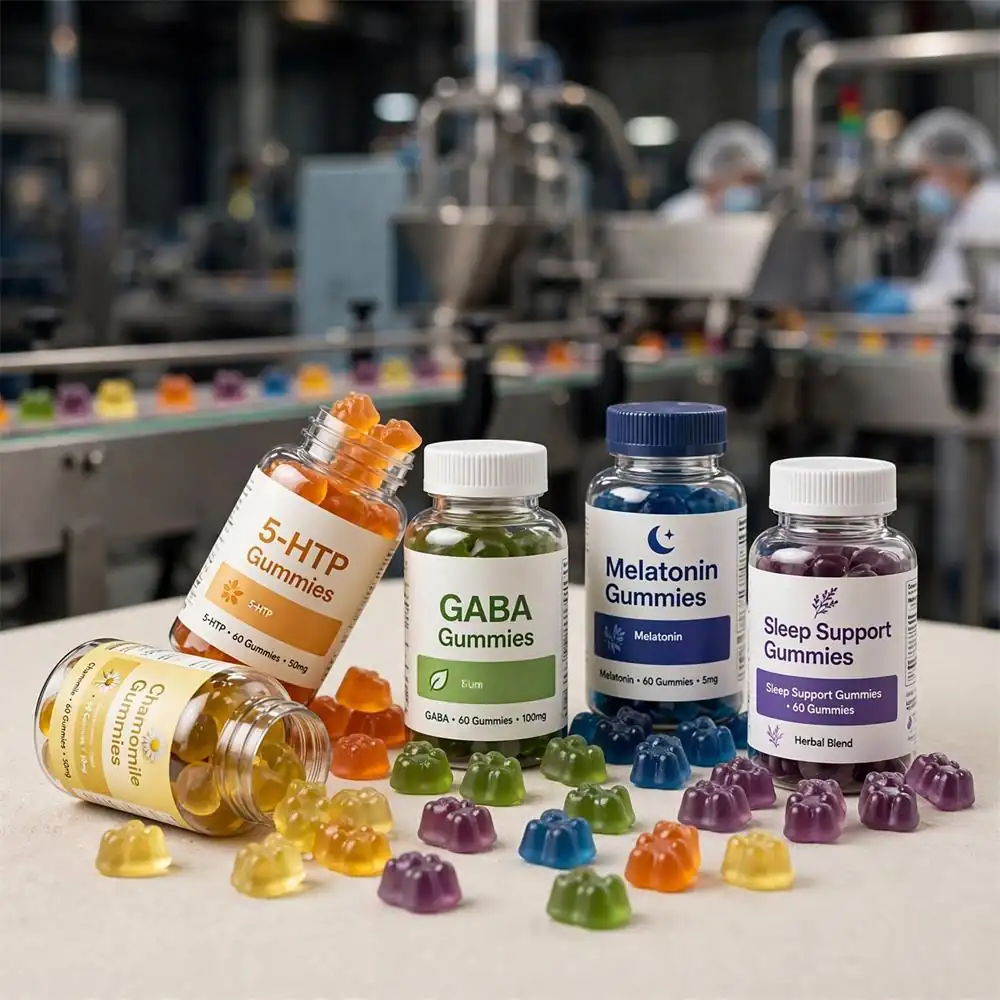
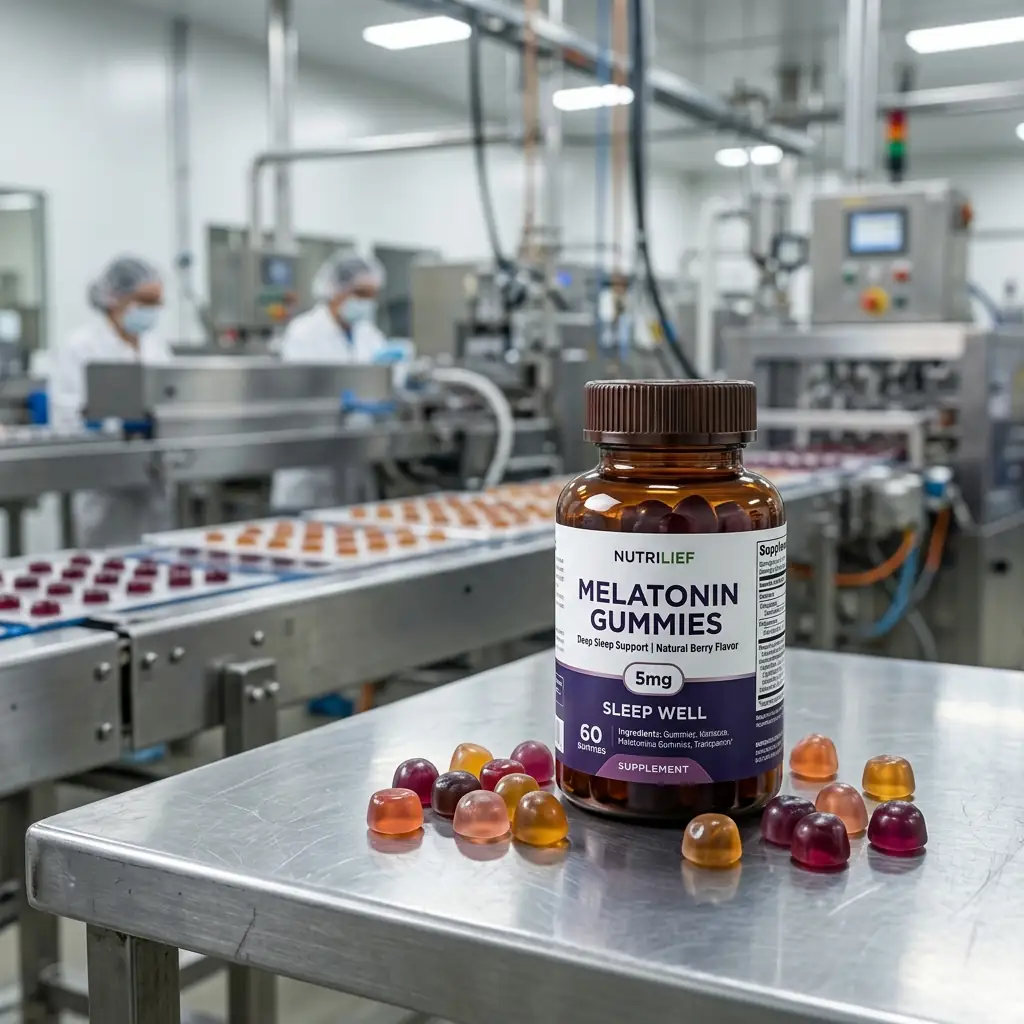
Below is the real workflow used in modern nutraceutical and confectionery factories. This is the process behind every successful gummy brand—not the home‑kitchen version.
Step 1: Formula Development
A commercial gummy formula must consider:
- pH balance
- Gel strength
- Sweetener system (sugar, low‑sugar, sugar‑free)
- Active ingredients (vitamins, botanicals, minerals)
- Flavor and color stability
- Allergen and regulatory requirements
This is where a custom gummy manufacturer becomes essential. They help ensure your formula is not only tasty but also stable, compliant, and manufacturable.
Step 2: Ingredient Preparation & Dissolution
Factories use steam‑jacketed kettles to dissolve:
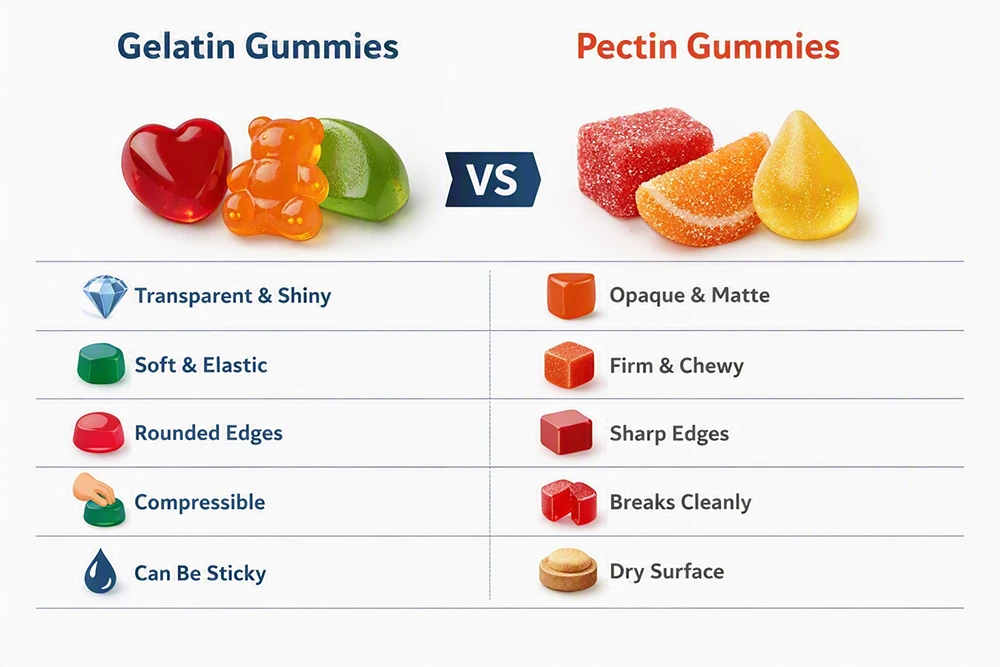
- Gelatin or pectin
- Syrups
- Sweeteners
- Functional actives
The mixture must be heated, homogenized, and vacuum‑defoamed to ensure clarity and consistency.
Step 3: Cooking & Concentration
Industrial cookers precisely control:
- Temperature
- Solids content
- Viscosity
This ensures the gummy mixture sets correctly and maintains its shape during packaging and transport.
Step 4: Depositing into Molds
Automated depositing lines fill thousands of bear‑shaped molds per minute. This step determines:
- Weight accuracy
- Active ingredient uniformity
- Shape consistency
This is one of the biggest differences between home production and commercial gummy manufacturing.
Step 5: Cooling, Demolding & Coating
After cooling, gummies are:
- Demolded
- Tumbled with oil or sugar
- Dried to the correct moisture level
Proper drying prevents stickiness, sweating, and microbial growth.
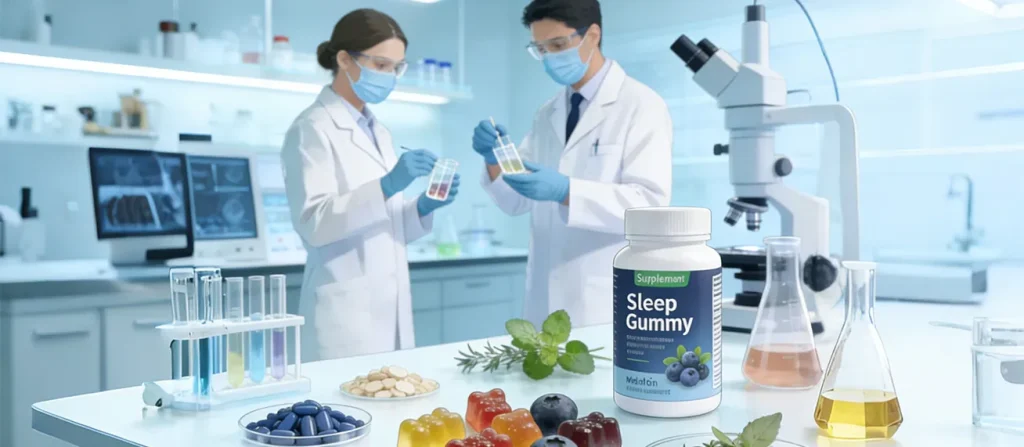
Step 6: Quality Control & Compliance
Every batch undergoes:
- Microbial testing
- Heavy metal testing
- Active ingredient potency verification
- Stability checks
This ensures the product meets regulatory standards in the US, EU, and other markets.
Step 7: Packaging & Labeling
Finally, gummies are packed in:
- Bottles
- Pouches
- Sachets
Labels must comply with supplement regulations, including:
- Supplement Facts
- Allergen statements
- Claims limitations
- Country‑specific rules
3. Why Brands Should Not Use “Home Recipes” for Commercial Products
A kitchen‑style gummy recipe cannot be commercialized because:
- It lacks stability (gummies melt, sweat, or deform)
- Active ingredients are not evenly distributed
- It cannot pass microbial testing
- It fails shelf‑life requirements
- It does not meet regulatory standards
This is why brands rely on Gummy Contract Manufacturing instead of trying to produce gummies themselves.
4. Private Label vs. Custom Formulation: Which Path Is Right for You?
Private Label Gummy (Fastest to Market)
If you want speed, a private label gummy is ideal. You select from proven formulas such as:
- Multivitamin gummies
- Collagen gummies
- Melatonin gummies
- Probiotic gummies
A private label gummy manufacturer handles everything from production to packaging.
Custom Gummy Development (For Unique Products)
If you want a differentiated product—unique flavor, shape, or functional blend—custom development is the right path.
This is where a custom gummy manufacturer helps you create a formula tailored to your brand’s positioning.
5. What Businesses Should Look for in a Manufacturing Partner
When evaluating a partner, consider:
- GMP‑certified facility
- Transparent testing and documentation
- Ability to scale production
- Experience with functional actives
- Packaging and labeling support
- Export experience (if selling globally)
A strong partner ensures your product is safe, compliant, and commercially viable.
6. Final Thoughts: Turning an Idea Into a Market‑Ready Gummy Bear Product
“How to make gummy bears” is a simple question with a complex answer—at least for businesses. Commercial gummy production requires:
- Scientific formulation
- Industrial equipment
- Regulatory expertise
- Quality control
- Scalable manufacturing
If you’re preparing to launch a gummy product line, the most efficient path is partnering with a professional manufacturer who can support you from concept to shelf.