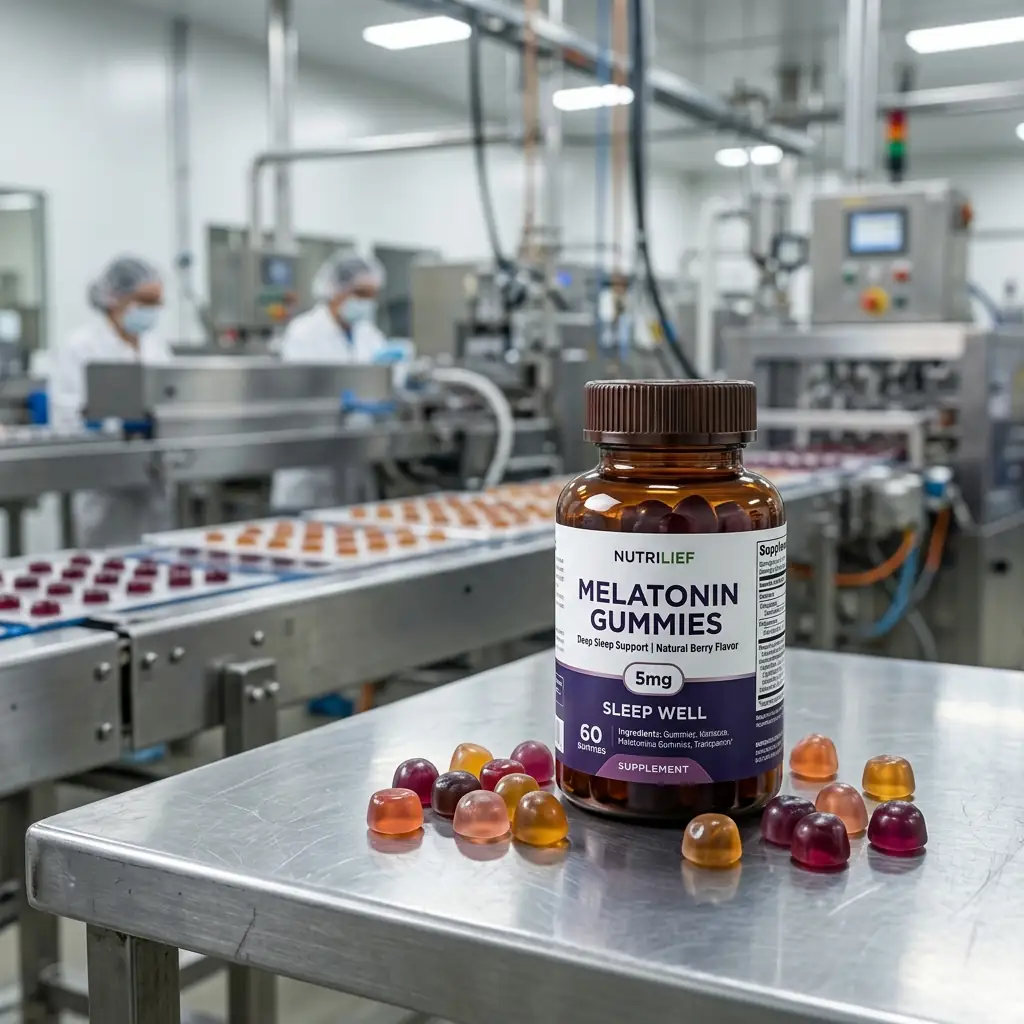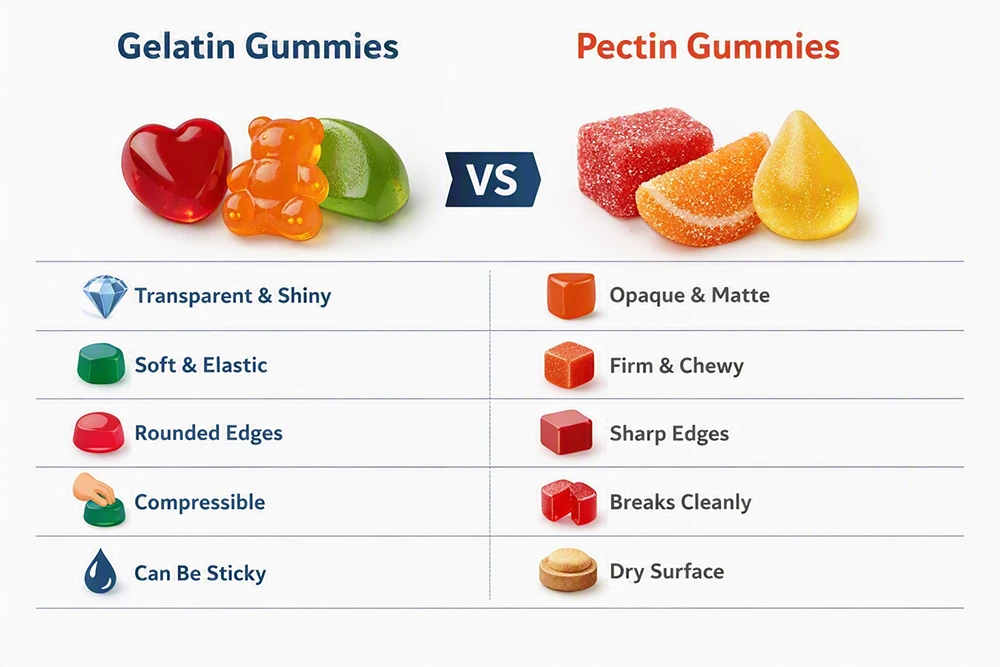

Summary: Gummy bear manufacturing is a sophisticated process combining ingredient formulation, mixing, molding, drying, coating, and packaging. For brands and distributors sourcing gummy products, understanding the manufacturing process is essential for evaluating suppliers, ensuring quality control, and managing production timelines. This guide covers the complete production workflow, quality standards, and key considerations for businesses entering the gummy supplement market.
Definition
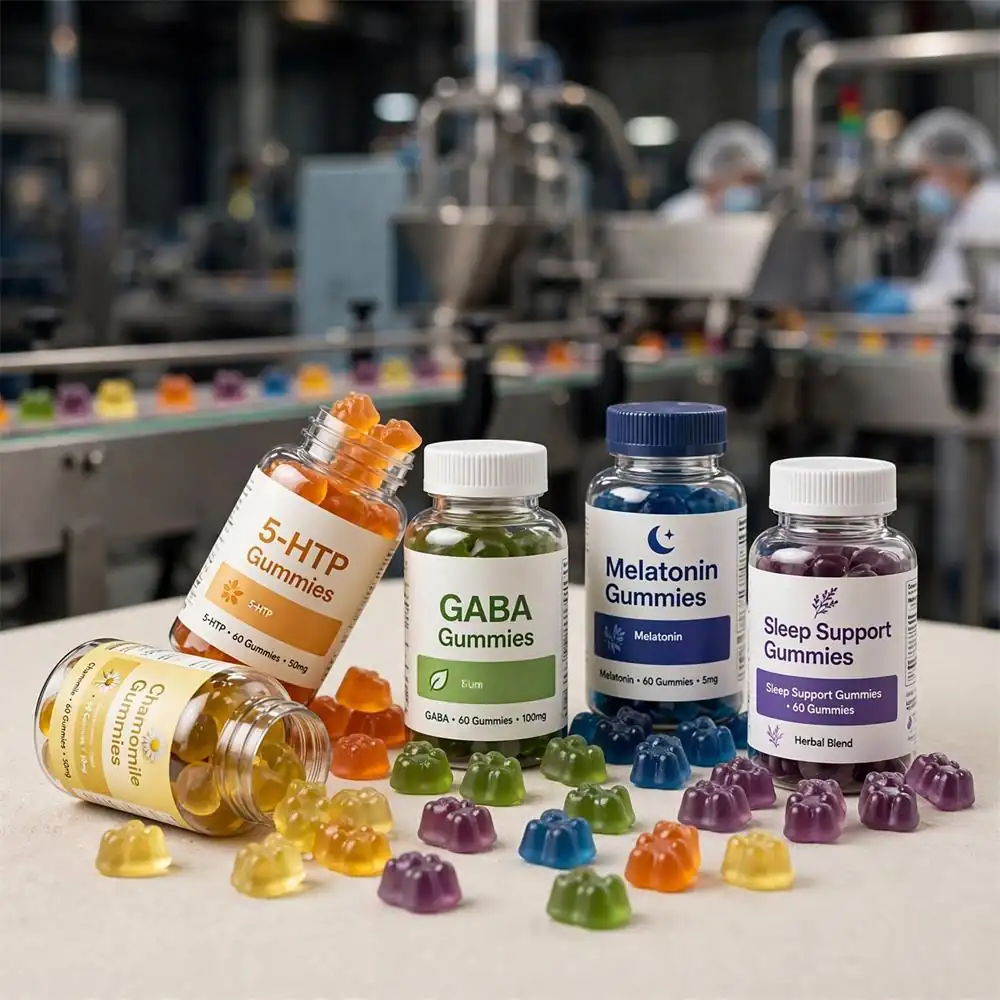
Gummy bear manufacturing refers to the end-to-end industrial process of producing gelatin or pectin-based confectionery products with standardized shapes, consistent dosages, and precise flavor and color profiles. In the context of dietary supplements and functional foods, gummy bear production involves combining active ingredients with gelling agents, sweeteners, and flavorings, then molding, drying, and packaging the final product according to specified quality and regulatory standards.
Industry Background & Market Relevance
The global gummy supplements market has experienced rapid growth over the past decade, driven by consumer preference for easy-to-consume, pleasant-tasting supplement formats. Unlike capsules or tablets, gummies offer superior taste masking, improved compliance, and appeal to a broader demographic including children and seniors. The market is now valued in the billions and continues to expand as brands recognize gummies as a category with strong retail performance and wholesale demand.
For manufacturers and custom gummy manufacturers, this market expansion creates significant opportunity. Brands seek reliable private label gummy suppliers capable of handling complex formulations, managing supply chains at scale, and maintaining strict quality compliance. OEM/ODM partnerships have become the dominant business model, allowing brands to focus on marketing while manufacturers handle product development and production.
How Gummy Bears Are Made: Step-by-Step Manufacturing Process
1. Formulation & Raw Material Preparation
The first step in gummy production involves developing the exact formulation. This includes determining the type and concentration of active ingredients (vitamins, minerals, herbal extracts), selecting the gelling agent (gelatin for traditional products or pectin/carrageenan for vegan options), choosing sweeteners (sugar, sorbitol, stevia), and selecting flavoring and coloring agents. Quality manufacturers conduct stability testing at this stage to ensure the formulation remains effective throughout the product’s shelf life.
2. Mixing & Dissolution
Raw materials are weighed and combined in large industrial mixers. The gelling agent is hydrated and dissolved in heated liquid to create a consistent, homogeneous base. Active ingredients and other additives are gradually incorporated while maintaining precise temperature control to prevent ingredient degradation. This stage is critical for ensuring uniform distribution of active ingredients throughout the batch.
3. Heating & Cooling
The mixture is heated to a specific temperature range (typically 60-80°C depending on formulation) to dissolve all components fully and eliminate any lumps or inconsistencies. Once fully dissolved, the mixture must cool to the optimal viscosity for molding—too thick and the mixture won’t flow into molds; too thin and the gummies will be deformed. Temperature precision during this phase directly impacts final product quality.
4. Molding & Casting
The cooled mixture is fed into industrial gummy molding machines equipped with specialized molds. These molds can produce dozens of different shapes—the traditional bear shape, round pellets, hearts, or custom designs. As the mixture flows into the molds, vibration tables help eliminate air bubbles and ensure complete mold filling. High-speed production lines can produce thousands of gummies per hour.
5. Drying & Curing
Freshly molded gummies are transferred to drying chambers where humidity and temperature are carefully controlled. This process typically takes 24-48 hours and is essential for achieving the desired texture and consistency. Under-dried gummies will be sticky and may clump; over-dried gummies become brittle. Professional manufacturers use multi-stage drying environments to optimize this phase.
6. Coating & Finishing
Many gummies receive a light coating of ingredient to prevent sticking or enhance appearance. Common coatings include wax, sugar, sour powders, or vegetable oil. This step improves handling, extends shelf life, and provides sensory appeal. The coating must be applied uniformly and in controlled quantities to maintain product specifications.
7. Quality Inspection & Testing
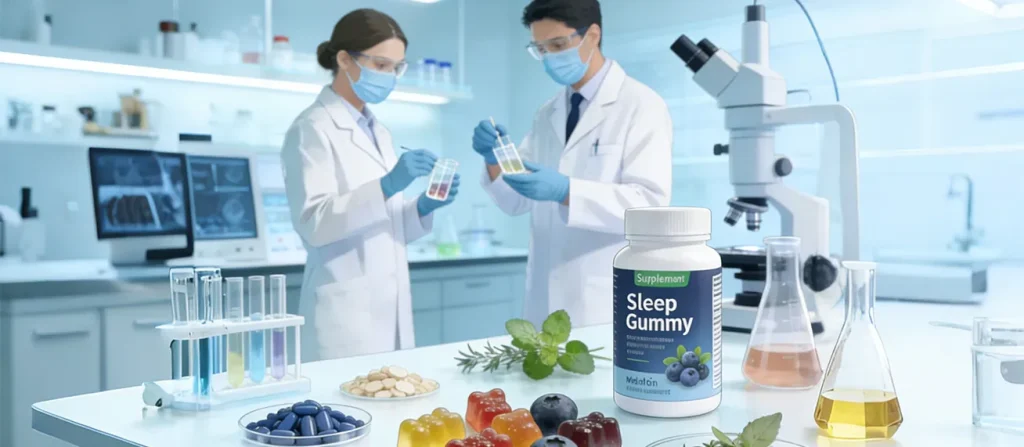
Finished gummies undergo rigorous quality checks including visual inspection for shape consistency, color uniformity, and defects. Laboratory testing confirms that active ingredient concentrations match specifications, moisture content is within acceptable ranges, and no microbial contamination is present. Third-party testing may also verify absence of heavy metals, allergens, and other contaminants.
8. Packaging & Logistics
Approved gummies are counted, weighed, and packaged according to customer specifications. Packaging formats range from bulk containers for wholesale customers to retail-ready bottles with tamper-evident seals. Proper packaging protects against moisture, light, and temperature fluctuations during distribution.
Technical Specifications & Manufacturing Parameters
| Parameter | Details |
|---|---|
| Product Form | Gelled confectionery in various shapes (bear, round, custom); typically 2-5g per unit |
| Primary Gelling Agents | Gelatin (bovine/porcine), pectin, carrageenan, starch; selection based on dietary requirements and texture preferences |
| Active Ingredient Range | Vitamins (A-D, B-complex, C, E), minerals (calcium, iron, magnesium, zinc), herbal extracts, amino acids; concentrations verified via HPLC or other validated methods |
| Sweetening Agents | Sugar, glucose syrup, sorbitol, xylitol, stevia, monk fruit; selection based on taste profile and nutritional claims |
| Manufacturing Temperature | Mixing: 60-80°C; molding: 35-45°C; drying chambers: 40-55°C with controlled humidity (40-60% RH) |
| Drying Time | 24-48 hours depending on formulation, ambient conditions, and batch size |
| Moisture Content Specification | Typically 12-18% w/w (varies by formula); verified via Karl Fischer titration |
| Quality Standards | GMP (FDA 21 CFR Part 111), ISO 9001, ISO 22000, HACCP, third-party microbial and heavy metal testing |
| Packaging Options | Bulk bags (25kg, 50kg), HDPE bottles (60-500ct), PET jars, aluminum bags, custom retail containers |
| Daily Production Capacity | Varies by facility: 1-16+ tons per day; typical facility operates 200+ production days annually |
| Shelf Life | 12-36 months depending on formulation, active ingredients, and storage conditions; verified through accelerated stability studies |
| Storage Conditions | Room temperature (15-25°C), relative humidity 40-60%; avoid direct sunlight and moisture exposure |
| Regulatory Compliance Regions | FDA (US), EFSA (EU), Health Canada, FSANZ; formulations adjusted to meet regional ingredient and labeling requirements |
| Common Shapes Available | Bear (traditional), round, heart, star, oval, diamond, capsule-shaped; custom molds available for large orders |
Comparison: Gummy Bears vs. Alternative Supplement Formats
Gummy Bears vs. Capsules
Gummy bears offer superior taste and consumer appeal but have lower dosage density and may not suit heat-sensitive or volatile active ingredients. Capsules allow higher ingredient concentration and work better for certain botanicals. Gummies require more complex manufacturing but command higher retail prices and better consumer compliance.
Gummy Bears vs. Tablets
Tablets are cost-efficient to produce and offer excellent dosage precision, but gummies have significantly better palatability and faster market appeal. Tablets work better for mass-market pharmaceutical applications; gummies dominate the consumer wellness category where taste and convenience are priorities.
Gummy Bears vs. Powders
Powders offer maximum flexibility and lowest cost per dose but require consumer preparation and provide inconsistent dosing. Gummies deliver pre-dosed convenience and superior user experience, making them ideal for brands targeting busy consumers and younger demographics.
Key Advantages of Gummy Bear Format for Brands
- Superior Consumer Appeal: Taste masking allows inclusion of bitter or unpleasant-tasting active ingredients; gummies feel like candy, improving compliance rates.
- Broad Market Appeal: Gummies attract demographics traditionally underserved by supplements (children, seniors, health-conscious consumers who dislike pills).
- Retail Performance: Higher average retail prices and lower return rates compared to tablets or capsules.
- Formulation Flexibility: Wide range of shapes, colors, and flavors enables differentiation and brand building.
- Convenient Dosing: Pre-measured units eliminate need for measuring spoons or counting tablets.
- Emotional Connection: Gummies create positive brand associations and improve customer loyalty.
Limitations & Challenges of Gummy Manufacturing
- Ingredient Stability: Heat-sensitive actives (certain probiotics, vitamins) may degrade during manufacturing; formulation requires careful optimization.
- Lower Dosage Density: Active ingredient concentration is limited by gelling agent requirements; some therapeutic doses cannot be achieved in a single gummy.
- Moisture Sensitivity: Improper storage or packaging leads to deterioration; requires robust moisture-barrier packaging.
- Manufacturing Complexity: More process steps and quality control points than tablets; requires skilled operators and precise environmental controls.
- Higher Production Costs: Equipment, labor, and raw materials cost more than simpler formats; MOQs are typically higher than tablets or capsules.
- Regulatory Scrutiny: Gummies are sometimes subject to stricter labeling and marketing regulations due to appeal to children.
Who Should Consider Gummy Bear Manufacturing?
For Supplement Brands
Brands targeting mass-market wellness, fitness, women’s health, and preventative care segments benefit most from gummy formats. Brands with strong social media presence and digital marketing capabilities can effectively market gummies to younger demographics. Companies seeking premium pricing and product differentiation should consider gummies as their primary format.
For Retailers & Distributors
Retailers with strong vitamin and supplement departments see gummies as high-margin, fast-moving inventory. Wholesale buyers should evaluate private label gummy manufacturers capable of handling bulk orders while maintaining consistent quality. Distributors should prioritize suppliers with transparent supply chains and third-party certifications.
For Private Label & OEM/ODM Buyers
Entrepreneurs and emerging brands should partner with experienced custom gummy manufacturers that offer formulation support, flexible MOQs, and turnkey solutions. Established brands expanding their product lines should seek manufacturers with R&D capabilities and rapid prototyping services.
Quality Control & Manufacturing Standards
GMP Compliance
All reputable gummy manufacturers operate under Good Manufacturing Practice (GMP) standards as outlined in FDA 21 CFR Part 111 (for dietary supplements) or 21 CFR Part 117 (for conventional foods). GMP requirements cover facility design, equipment maintenance, personnel training, process controls, and documentation. Facilities should maintain a 100,000-class cleanroom or equivalent to ensure product safety and consistency.
Microbial Testing & Safety
Finished gummy products must be tested for total aerobic microbial count, coliforms, E. coli, Salmonella, and Listeria monocytogenes. Raw materials should undergo incoming inspection testing. Manufacturers should maintain environmental monitoring programs to prevent cross-contamination and ensure facility sanitation.
Active Ingredient Verification
High-performance liquid chromatography (HPLC), gas chromatography (GC), or validated spectrophotometric methods confirm that active ingredients are present at declared levels. Third-party testing provides independent verification and builds buyer confidence. Certificates of Analysis (CoA) should be available for all raw materials and finished products.
Stability Testing
Manufacturers conduct accelerated stability studies (typically 40°C, 75% RH for 6 months) to verify that active ingredients remain potent throughout the product’s shelf life. Real-time stability data from actual storage conditions should be collected over at least 12 months. This data supports shelf-life claims and prevents degradation surprises.
Heavy Metal & Contaminant Screening
All finished products should be screened for heavy metals (lead, cadmium, arsenic, mercury), pesticides, and microbial toxins. Suppliers sourcing botanical extracts should demand certificates demonstrating absence of prohibited pesticides and heavy metals. Third-party testing adds credibility and protects brand reputation.
Practical Insights for B2B Buyers
Manufacturing Quality & Process Control
Evaluate potential suppliers by requesting process validation studies, batch record documentation, and environmental monitoring data. Ask about their approach to variance management when ingredient batches differ in properties. Quality manufacturers maintain tight process controls and can explain how they handle deviations. Request testimonials from current long-term customers and ask about their on-time delivery and quality consistency record over the past 2-3 years.
Raw Material Sourcing Transparency
Suppliers should be able to trace the origin of all raw materials, particularly botanical extracts and novel ingredients. Request supplier lists and ask about their qualification process for new materials. Reliable manufacturers maintain relationships with multiple suppliers for critical materials to ensure supply continuity. Verify that suppliers conduct incoming inspection testing and maintain material certificates of analysis.
Production Scalability & Lead Time
Understand the manufacturer’s production capacity, number of production lines, and typical lead times for different batch sizes. Ask about their ability to scale production if your brand grows rapidly. Reliable manufacturers should be able to accommodate 20-50% volume increases within 4-8 weeks. Confirm minimum order quantities (MOQs) and understand whether they can work with smaller trial batches (typically 1,000-5,000 units).
Compliance & Documentation Readiness
Ensure that your manufacturer maintains comprehensive batch records, process validations, and stability data for your specific formulations. Ask about their experience with regulatory inspections and their track record of FDA/Health Canada compliance. Request copies of their most recent audits (internal and third-party). Verify that they can generate COAs, regulatory documentation, and export certificates for your target markets.
Cost Structure & Pricing Transparency
Understand the cost components: raw materials, manufacturing labor, overhead allocation, packaging, testing, and logistics. Transparent manufacturers can explain how costs scale with volume. Ask for quotes at multiple volume tiers (e.g., 10,000 units, 50,000 units, 100,000 units) to understand economy of scale. Beware of suspiciously low pricing—it often correlates with cut corners on quality or testing.
How to Evaluate a Reliable Supplier
Key indicators of a reliable gummy manufacturer include: (1) possession of GMP, ISO, and HACCP certifications with current audit reports; (2) dedicated R&D staff with formal education in chemistry, food science, or pharmacy; (3) transparent financial statements and multi-year operational history; (4) multiple production lines and backup systems for critical equipment; (5) documented supplier relationships for all key materials; (6) third-party testing agreements with accredited laboratories; (7) ability to provide references from established brands they currently serve; (8) clear communication and responsiveness during the RFQ (request for quotation) process.
B2B Decision Guide: How to Choose a Gummy Manufacturer
Step 1: Define Your Product Specification
Before approaching manufacturers, clearly define your product: desired shape, size, active ingredients and concentrations, gelling agent preference (gelatin, pectin, vegan), sweetening approach, target dosage, packaging format, and shelf-life requirements. If launching a completely new formulation, budget for 3-6 months of R&D with your chosen manufacturer.
Step 2: Assess Manufacturing Capability
Request facility tours (in-person or virtual) to evaluate cleanroom standards, equipment age and maintenance, environmental controls, and overall organization. Ask about their experience with your specific active ingredients—some ingredients require specialized handling. Confirm they have produced products in your dosage range and target market.
Step 3: Verify Quality Credentials
Request copies of certifications (GMP, ISO 9001, ISO 22000, HACCP) along with dates of recent audits. Ask about their internal quality system, testing protocols, and corrective action procedures. Request COAs from finished products they have recently manufactured. Inquire about any recalls, compliance warnings, or FDA Form 483 observations in their history.
Step 4: Evaluate Technical Support & R&D
Understand the level of technical support they provide during gummy contract manufacturing projects. Do they offer formulation optimization, stability testing, regulatory guidance, and packaging recommendations? Are their R&D staff available to discuss your specific needs? Quality manufacturers invest in their technical teams.
Step 5: Compare Cost & Timeline
Request formal quotations including formulation development cost (if applicable), manufacturing cost per unit at your projected volume, testing cost, packaging cost, and lead time. Compare quotes from at least 2-3 manufacturers. The lowest cost is rarely the best choice—evaluate the total value proposition including quality, support, and reliability.
Step 6: Check References & Track Record
Request at least three references from current or recent customers. Contact them directly and ask about quality consistency, on-time delivery, responsiveness to requests, and overall satisfaction. Ask whether they have experienced any quality issues and how the manufacturer addressed them. Long-term customer relationships (5+ years) are a positive indicator.
Step 7: Establish Clear Contract Terms
Negotiate terms that protect both parties: (1) detailed specification document with acceptance criteria; (2) documented testing protocols and acceptance thresholds; (3) dispute resolution procedures; (4) intellectual property protections for your formulation; (5) confidentiality agreements; (6) payment terms (typically 50% deposit, 50% upon completion); (7) delivery and logistics responsibilities; (8) warranty for defects within a specified period.
Step 8: Plan for Ongoing Quality Assurance
Even with a reliable partner, implement ongoing quality checks: (1) inspect incoming batches for visual quality, correct dosage, and packaging; (2) conduct periodic third-party testing of finished products; (3) maintain communication with your manufacturer about any quality concerns; (4) implement a customer feedback loop to identify quality issues early; (5) review your manufacturer’s internal audit reports and corrective actions annually.
Risk Control & Quality Assurance Checkpoints
Pre-Production Phase
- Confirm all raw materials have been approved and tested before production begins.
- Conduct a pre-production meeting to review specifications, packaging, and timelines.
- Request samples of packaging materials to verify branding and labeling accuracy.
- Obtain written confirmation of batch size, production schedule, and estimated completion date.
During Production
- Request regular progress updates (daily or weekly depending on batch size).
- Ask for in-process photos/videos showing molding, drying, and quality checks.
- Inquire about any process deviations and how they were resolved.
- Request results of in-process testing (moisture, temperature, appearance).
Pre-Shipment Verification
- Review all batch records and test results before approving final shipment.
- Request split samples for your own independent testing if desired.
- Verify packaging integrity and accuracy before shipment.
- Confirm all documentation (COAs, regulatory certificates, shipping docs) is complete.
Post-Receipt Quality Checks
- Inspect packaging for damage and verify all units are present and properly labeled.
- Conduct visual inspection of a sample of gummies (color, shape, size consistency).
- Test samples for taste, texture, and appearance.
- Maintain batch records and test results for your regulatory files.
Conclusion
Gummy bear manufacturing is a sophisticated, multi-step process that demands precision, quality control, and regulatory expertise. For brands, distributors, and entrepreneurs entering the gummy supplement market, selecting the right manufacturing partner is critical to success. A reliable custom gummy manufacturer should demonstrate GMP compliance, transparent supply chains, strong R&D capabilities, and a proven track record with established brands. By understanding the manufacturing process, quality standards, and key evaluation criteria outlined in this guide, B2B buyers can make informed decisions and establish long-term partnerships that deliver consistent, high-quality products to market. The gummy category continues to offer strong growth potential for brands willing to invest in quality manufacturing and strategic product development.
Frequently Asked Questions
Q: What is gummy bear manufacturing in the context of dietary supplements?
A: Gummy bear manufacturing is the industrial production of gel-based supplement products combining gelling agents (gelatin, pectin, or carrageenan), active ingredients (vitamins, minerals, botanicals), and flavorings into standardized shapes and dosages. The process involves mixing, molding, drying, and packaging under strict quality control to meet GMP and regulatory standards.
Q: Why do gummy bears matter for supplement manufacturers and brands?
A: Gummies dominate the consumer supplement market due to superior taste, ease of use, and broad appeal across age groups. For manufacturers, gummies command higher retail prices, show better consumer compliance, and offer significant product differentiation opportunities. For brands, gummies have become essential for market competitiveness, particularly in wellness and preventative health segments.
Q: How do gummy bears compare to capsules and tablets in manufacturing?
A: Gummies require more complex manufacturing processes and higher production costs but deliver superior consumer appeal and higher retail prices. Capsules and tablets are more cost-efficient and offer higher dosage density but lack the taste and convenience advantages of gummies. The choice depends on your target market, active ingredients, and brand positioning.
Q: What should businesses evaluate before sourcing gummy manufacturing?
A: Key evaluation criteria include GMP certification, R&D capabilities, production capacity and scalability, raw material sourcing transparency, third-party testing practices, regulatory compliance history, technical support, pricing structure, and customer references. Conduct facility tours, request batch records, and verify quality credentials before committing to production.
Q: What quality standards apply to dietary supplement gummies?
A: Gummy manufacturers must comply with FDA 21 CFR Part 111 (dietary supplements) or Part 117 (conventional foods), depending on classification. Additional standards include ISO 9001 (quality management), ISO 22000 (food safety), HACCP (hazard analysis), and GMP requirements. Products require testing for active ingredient potency, microbial safety, moisture content, stability, and heavy metals.
Q: How long does the gummy manufacturing process take, from formulation to delivery?
A: Formulation development typically requires 4-12 weeks depending on complexity. Production of a standard batch takes 7-10 business days. Total timeline from RFQ to delivery is typically 8-16 weeks for new products and 2-4 weeks for existing formulations. Lead times vary based on manufacturer capacity, batch size, and packaging complexity.
About Shenzhen Gothink Biotech
Shenzhen Gothink Biotech Co., Ltd. is a leading nutrition supplement supplier and dietary supplement manufacturer based in China, specializing in comprehensive OEM, ODM, CMO, and CDMO services for the global health and wellness industry. The company operates a high-capacity GMP-certified manufacturing facility featuring a 100,000-class cleanroom with daily production capacity of 16 tons and annual capacity of 5,000 tons. Gothink Biotech’s technical team, led by researchers with postdoctoral backgrounds from leading U.S. universities including the California Institute of Technology, Emory University, and Ohio State University, brings world-class expertise in formulation development, plant extraction technology, and advanced manufacturing processes.
The company provides full-service gummy contract manufacturing solutions for private label gummy manufacturers and brands worldwide. Services include custom formulation development, raw material sourcing consultation, process optimization, quality assurance testing, and turnkey packaging solutions. Gothink Biotech maintains strict adherence to international quality standards including ISO 9001, ISO 22000, HACCP, FDA, GMP, HALAL, KOSHER, and Vegan certifications. The company’s 10,000-class pharmaceutical-grade R&D laboratory supports ongoing innovation and enables rapid commercialization of new supplement formulations across all product formats, including gummies, capsules, tablets, powders, liquids, and drops. With a proven track record serving established supplement brands and emerging entrepreneurs, Gothink Biotech is positioned as a reliable partner for businesses seeking scalable, compliant, and cost-effective gummy supplement manufacturing solutions.