
Summary: Low MOQ (Minimum Order Quantity) gummy manufacturing enables brands and distributors to launch custom gummy products with smaller initial orders, reducing upfront investment while maintaining quality standards. This approach is particularly valuable for emerging brands, market testing, and specialized formulations, connecting businesses with manufacturers who offer flexible production runs without compromising compliance or product consistency.
Definition
Low MOQ gummy manufacturing refers to the production of gummy products—including vitamins, supplements, functional foods, and confectionery items—with minimum order quantities significantly below industry standards (typically 10,000–50,000 units per run, compared to 500,000+ for large-scale operations). This model allows brands to make gummies under flexible production terms, enabling custom formulation, private label options, and rapid scaling without the capital constraints of traditional high-volume manufacturing.
Industry Background & Market Evolution
The gummy manufacturing sector has undergone significant transformation over the past decade, driven by increased consumer demand for functional foods, dietary supplements, and wellness products. Historically, gummy production required substantial capital investment and high minimum orders, creating barriers to entry for emerging brands and entrepreneurs. The rise of private label gummy manufacturing and smaller-batch contract production has democratized access to gummy formulation and production, enabling a wider range of businesses to enter the market.
Global gummy market growth—projected at 8–10% annually through 2028—reflects rising consumer interest in convenient vitamin delivery, targeted health benefits, and product innovation. This expansion has incentivized manufacturers to offer low MOQ gummy solutions, recognizing that emerging brands and regional distributors represent significant untapped opportunity.
What Is Low MOQ Gummy Manufacturing?
Low MOQ manufacturing is a contract production model where manufacturers produce custom gummy formulations in smaller quantities than traditional high-volume runs. Key characteristics include:
- Flexible order quantities: Typically 10,000–100,000 units per production run, depending on the manufacturer’s equipment and formulation complexity.
- Customization capability: Custom flavor, color, potency, shape, and ingredient profiles tailored to brand specifications.
- Private label options: Brands can add proprietary packaging, labeling, and branding without manufacturing infrastructure.
- Reduced lead times: Faster production scheduling compared to ultra-high-volume operations.
- Quality consistency: Professional GMP-certified facilities maintain batch-to-batch consistency and regulatory compliance.
Business Relevance: Market Demand & Supply Chain Advantages
Low MOQ manufacturing addresses several critical business challenges:
Capital Efficiency for Emerging Brands
Starting a gummy brand typically requires substantial inventory investment. Low MOQ production reduces upfront costs, allowing brands to test market demand, gather customer feedback, and optimize formulations before committing to larger production runs. This risk mitigation is essential for startups and regional brands with limited funding.
Market Responsiveness
Smaller production runs enable brands to respond quickly to market trends, seasonal demand, and competitive offerings. Manufacturers offering low MOQ services provide agility that large-scale production facilities cannot match.
Product Innovation
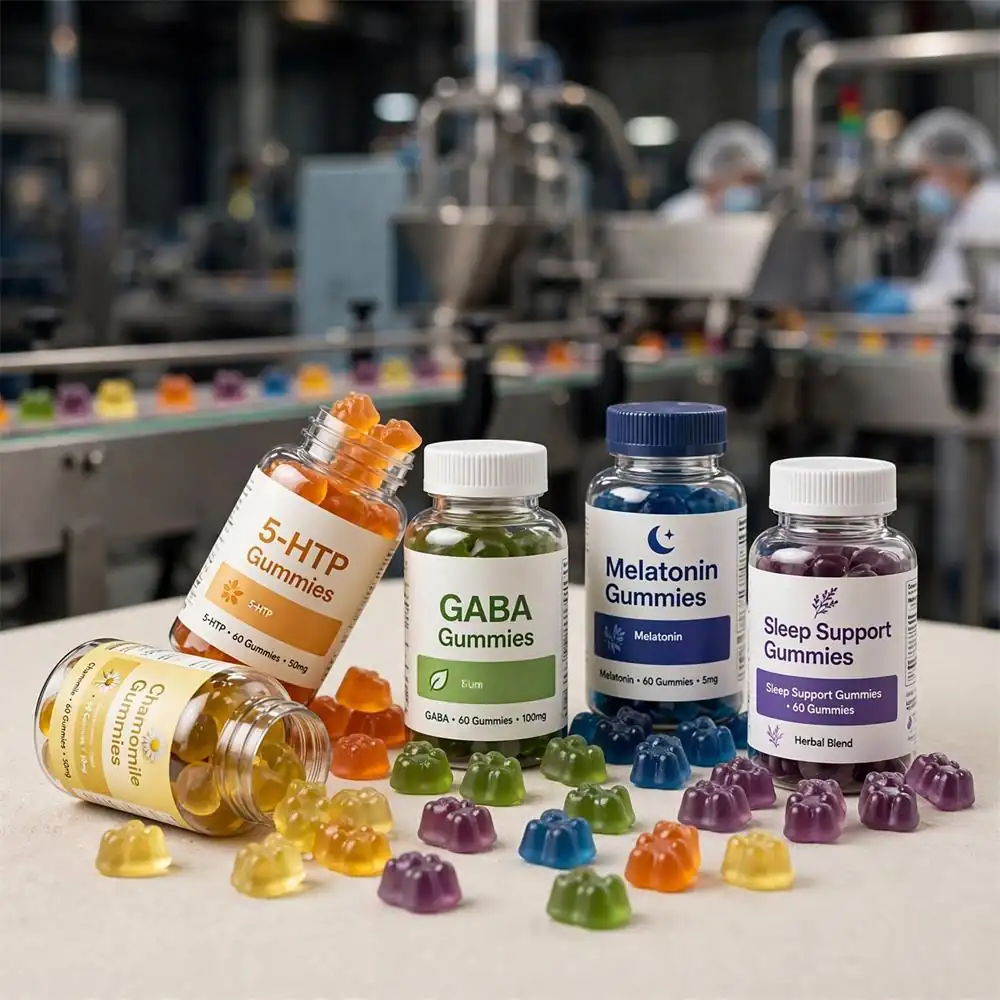
Low MOQ gummy production facilitates rapid iteration on formulations, allowing brands to test novel ingredient combinations, target specific health segments (e.g., immune support, sleep, energy), and differentiate through customization.
Supply Chain Stability
For distributors and retailers, working with low MOQ manufacturers reduces inventory carrying costs and minimizes waste from slow-moving SKUs, improving cash flow and profitability.
Low MOQ vs. High-Volume Gummy Manufacturing
| Aspect | Low MOQ Manufacturing | High-Volume Manufacturing |
|---|---|---|
| Minimum Order | 10,000–100,000 units | 500,000+ units |
| Cost Per Unit | Higher (lower economy of scale) | Lower (maximum cost reduction) |
| Lead Time | 4–8 weeks (including formulation) | 8–16 weeks (scheduling delays) |
| Customization | High flexibility; minor changes possible | Limited; long changeover times |
| Initial Capital | Lower investment required | Significant upfront inventory cost |
| Quality Standards | GMP certified; third-party testing available | GMP certified; streamlined QA |
| Ideal For | Startups, regional brands, niche products, testing | National/international brands, established demand |
Key Advantages of Low MOQ Gummy Manufacturing
Reduced Financial Risk
Lower upfront inventory investment allows brands to validate product-market fit before scaling production. This is especially valuable in the competitive supplement and functional food markets, where failure rates for new products remain high.
Faster Time-to-Market
Smaller batches require less production scheduling complexity, enabling manufacturers to turn around orders in 4–8 weeks versus 12–16 weeks for high-volume operations. This agility is critical for seasonal products and trending health categories.
Customization & Control
Brands maintain direct input on formulation, flavor profiles, colors, shapes, and packaging. Custom gummy manufacturer partnerships allow for proprietary blends and intellectual property protection through NDAs and proprietary formulations.
Quality & Compliance Assurance
Reputable low MOQ manufacturers maintain GMP certification, FDA compliance (for supplements and food products), and third-party testing. This ensures that smaller orders receive the same quality oversight as large-scale production.
Scalability Pathway
As demand grows, brands can increase order quantities with the same manufacturer, avoiding costly transitions to different suppliers and maintaining product consistency.
Limitations & Considerations
Higher Per-Unit Cost
Smaller production runs lack the economy of scale of high-volume manufacturing. Expect 15–40% higher costs per unit compared to 500,000+ unit orders, depending on formulation complexity and ingredient sourcing.
Lead Time Variability
While low MOQ manufacturers are generally faster, custom formulations and specialized ingredients may extend lead times. Clear communication regarding raw material sourcing and production scheduling is essential.
Supplier Reliability Risk
Smaller manufacturers may have limited redundancy in production equipment or ingredient sourcing. Conducting thorough due diligence on supplier capabilities and backup plans is critical for supply chain stability.
Minimum Infrastructure Investment
Even with low MOQ manufacturing, brands must invest in packaging design, regulatory compliance (labeling, testing documentation), and marketing. The manufacturer does not eliminate these costs; it reduces production-side capital requirements.
Who Should Consider Low MOQ Gummy Manufacturing?
Emerging Supplement Brands
New entrants to the vitamin and supplement market can launch with modest initial inventory, validate consumer demand, and iterate on formulations without the financial burden of 500,000+ unit orders.
Regional & Niche Distributors
Retailers and regional distributors seeking private label gummy products can work with manufacturers to create branded offerings that differentiate their product lines without establishing their own manufacturing operations.
OEM/ODM Partners
Businesses seeking gummy contract manufacturing or OEM/ODM arrangements can leverage low MOQ options to pilot co-branded or white-label products before committing to volume production.
Health & Wellness Entrepreneurs
CBD brands, functional food companies, and specialized supplement developers can use low MOQ manufacturing to create innovative products targeting specific health categories (sleep, focus, immune support, etc.).
Testing & Market Research
Brands seeking to test new flavors, formulations, or target markets can produce limited runs for focus groups, promotional campaigns, or regional market entry without excessive inventory risk.
Compliance, Regulatory & Quality Considerations
FDA & Dietary Supplement Regulations
If manufacturing gummies containing dietary supplements or functional ingredients, compliance with FDA regulations (DSHEA—Dietary Supplement Health and Education Act) is mandatory. Reputable low MOQ gummy manufacturers maintain facilities that adhere to these requirements and provide supporting documentation (ingredient sourcing certificates, stability testing, third-party lab reports).
GMP Certification
Good Manufacturing Practice (GMP) certification ensures consistent quality, proper documentation, and adherence to safety standards. For supplement and food gummies, GMP compliance is non-negotiable regardless of production volume.
Ingredient Transparency & Sourcing
Manufacturers should provide full traceability of raw materials, including country of origin, supplier certifications, and allergen declarations. This is essential for brand liability and regulatory compliance.
Third-Party Testing
Reputable manufacturers offer or facilitate third-party testing for potency verification, microbial analysis, and heavy metal screening. This independent verification protects brand credibility and regulatory compliance.
Labeling & Documentation
Manufacturers should support label design and compliance review to ensure that all regulatory requirements (ingredient lists, allergen warnings, supplement facts panels) are correctly formatted and accurate.
Technical Parameter Table: Low MOQ Gummy Manufacturing Specifications
| Parameter Category | Typical Specifications & Options |
|---|---|
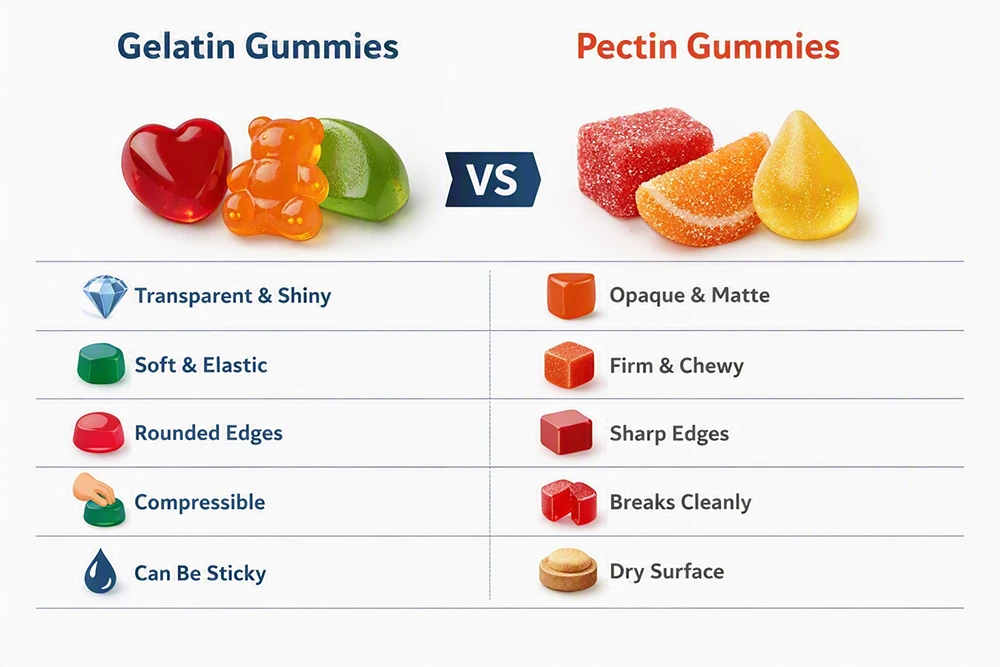
| Product Form | Gummy bears, gummy worms, gummy rings, gummy cubes, custom shapes; sour coated, sugar-free, pectin-based, or gelatin-based formulations |
| Key Materials & Ingredients | Gelatin (bovine/porcine), pectin, starch; sweeteners (sugar, stevia, monk fruit, sorbitol); flavorings (natural/artificial); active ingredients (vitamins, minerals, botanical extracts, CBD); colorants (FD&C, natural); coating agents (beeswax, carnauba wax) |
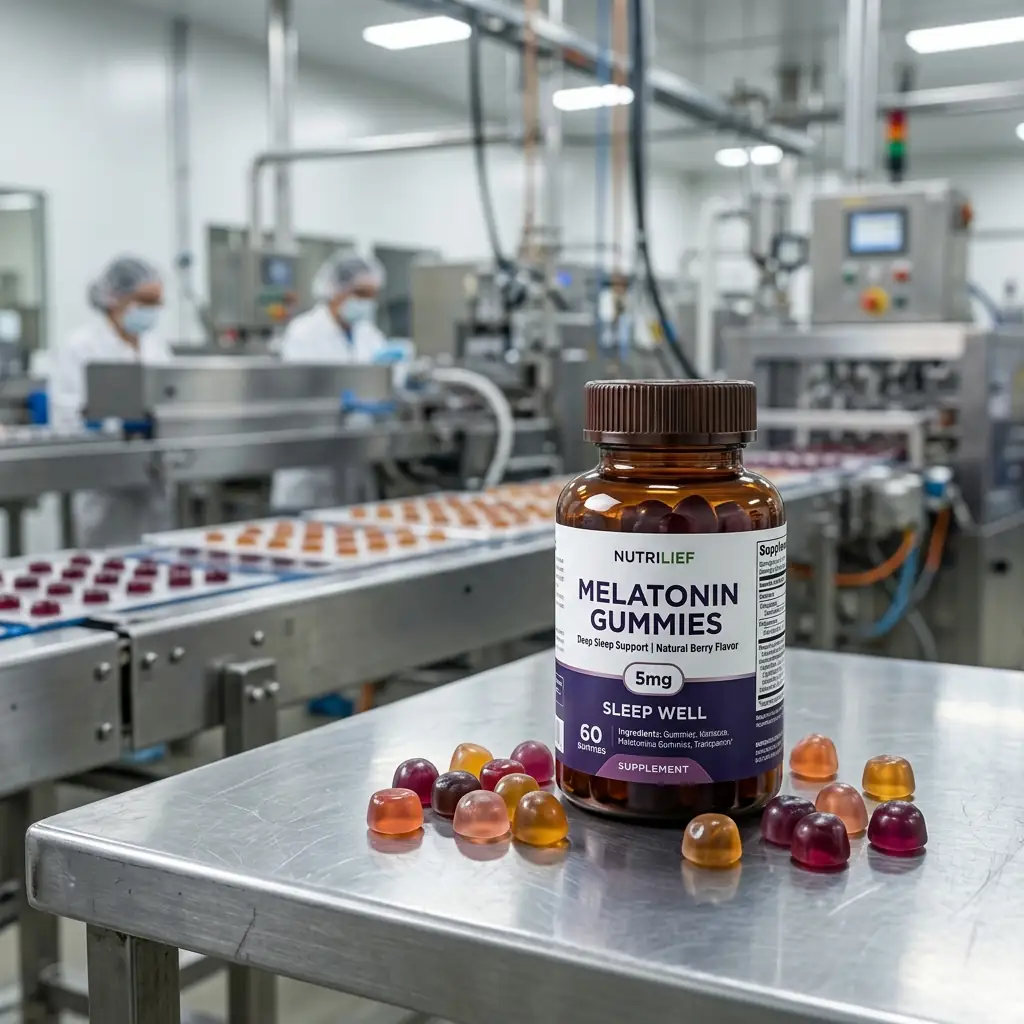
| Manufacturing Process | Batch mixing, cooking, mold casting, cooling, demolding, coating/conditioning, quality checks, packaging; typical cycle time 4–8 weeks depending on complexity |
| Quality Standards | GMP certification; FDA compliance (if supplement); third-party testing (potency, microbial, heavy metals); moisture content <5%; bacterial count <1,000 CFU/g; allergen-free facilities available |
| Packaging Options | HDPE bottles (30–180 count), doypack pouches (50–500g), blister packs, jars, custom branded boxes; labeling and case packing available |
| Scalability & Capacity | Low MOQ range: 10,000–100,000 units per run; production capacity varies by formulation; typical throughput 5,000–20,000 units/day depending on mold design and ingredient complexity |
| Storage & Logistics | Storage: 15–25°C, <60% relative humidity; shelf life: 2–3 years (depends on formulation); shipping: standard ground or air freight available; temperature-controlled options for sensitive ingredients |
| Cost Range (Approximate) | $0.15–$0.50 per unit (depending on active ingredients, potency, packaging; custom ingredients and third-party testing may add 10–25% to base cost) |
| Lead Time | Formulation development: 2–4 weeks; production: 4–8 weeks; packaging & shipping: 1–2 weeks; total: 7–14 weeks for new projects |
| Customization Options | Flavor blends, color combinations, potency levels, ingredient substitutions (vegan, allergen-free, organic), shape custom molds, branded packaging |
Practical Insights for B2B Buyers: Manufacturing Quality & Process Control
Quality Assurance & Batch Testing
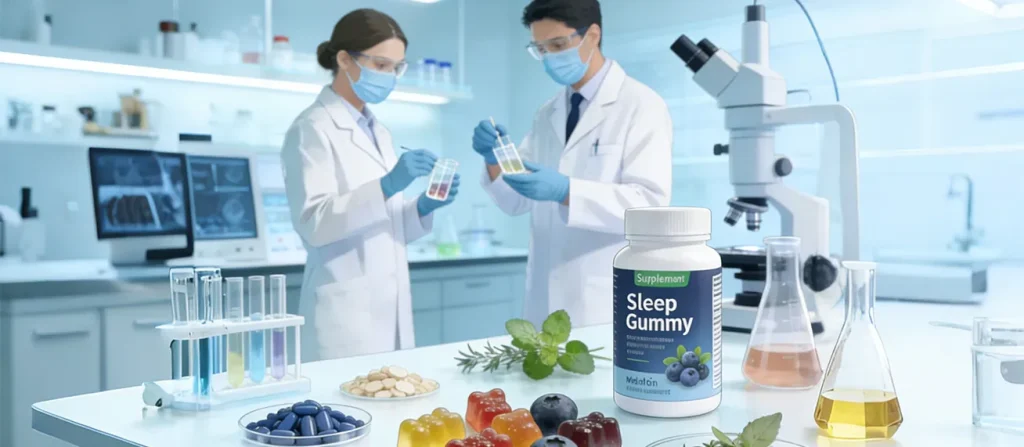
Reliable low MOQ manufacturers implement rigorous in-process quality control: ingredient verification upon receipt, batch homogeneity testing during production, visual inspection post-demolding, and final product stability/potency confirmation. Request documentation of testing protocols, including sampling frequency and acceptance criteria. Third-party testing reports (preferably from ISO 17025-accredited labs) should be available for review.
Raw Material Sourcing & Transparency
Ingredient sourcing is critical to product consistency and regulatory compliance. Top-tier manufacturers maintain long-term supplier relationships with documented quality agreements, certificates of analysis (CoA) for each raw material lot, and traceability systems. Ask manufacturers about their sourcing practices, whether they conduct supplier audits, and how they manage ingredient discontinuities or supply disruptions.
Production Scalability & Lead Time Management
While low MOQ manufacturers offer flexibility, understanding production capacity and scheduling limitations is essential. Some manufacturers operate on shared equipment with other clients, which can impact lead times during peak seasons. Confirm that the manufacturer has capacity for your volume, understands your timeline, and maintains transparent communication about production status. Long-term partnerships often come with priority scheduling for repeat orders.
Compliance & Documentation Readiness
Manufacturers should provide comprehensive documentation packages including ingredient certifications, CoAs, manufacturing records, stability test reports, and third-party testing results. For supplement gummies, request confirmation that facilities operate under FDA compliance and maintain complete batch records per GMP requirements. This documentation is essential if your brand faces regulatory inquiry or product liability concerns.
Cost Structure & Pricing Transparency
Low MOQ manufacturing costs depend on several factors: active ingredient potency (e.g., vitamin content), ingredient complexity (exotic botanicals cost more than basic vitamins), packaging design and branding, and order volume. Request detailed cost breakdowns to understand the pricing structure. As you scale, negotiate tiered pricing for future orders; many manufacturers offer volume discounts at 50,000 and 100,000+ unit thresholds.
Evaluating Supplier Reliability
Key evaluation criteria include: facility certifications (GMP, ISO 9001), customer references (ask for 3–5 brand partners), production experience with your product category, financial stability, and communication responsiveness. Visit the facility if possible; this demonstrates commitment and allows you to assess operational maturity firsthand.
B2B Decision Guide: Selecting the Right Low MOQ Gummy Manufacturer
Step 1: Define Your Product Specifications
Before approaching manufacturers, clearly define your gummy profile: formulation (active ingredients and potency), base type (gelatin, pectin, or specialized), target flavor/color, shape, packaging format, and volume requirements. Having detailed specifications accelerates the qualification process and enables manufacturers to provide accurate timelines and costs.
Step 2: Assess Manufacturing Capability
Not all gummy manufacturers handle low MOQ or custom formulations equally. Verify that potential suppliers have experience with your product category (e.g., CBD gummies, vitamin gummies, functional foods) and can accommodate your order volume. Ask about their equipment, production automation level, and whether they’ve successfully scaled orders from low MOQ to higher volumes.
Step 3: Evaluate Regulatory Compliance & Quality Systems
Confirm GMP certification, FDA compliance status (if applicable), and quality assurance protocols. Request certificates and documentation. For supplement gummies, verify that the manufacturer understands DSHEA requirements and can support proper labeling. Inquire about third-party testing availability and typical costs.
Step 4: Conduct Reference Checks
Ask manufacturers for customer references—ideally 3–5 brands they’ve worked with in your product segment. Contact these references to ask about lead time consistency, quality reliability, communication responsiveness, and whether the manufacturer handled scaling smoothly as orders grew.
Step 5: Request Detailed Cost & Timeline Quotes
Obtain written quotes that include formulation development costs (if applicable), production costs per unit, packaging and labeling, third-party testing, and total lead time. Request itemized breakdowns so you understand cost drivers and can compare between manufacturers fairly.
Step 6: Negotiate Terms & Long-Term Partnership Framework
For successful partnerships, establish clear terms: payment schedules, delivery timelines, quality guarantees, pricing tiered by volume, IP protection (NDAs for proprietary formulations), and procedures for handling quality issues. Consider negotiating volume price reductions as you scale; many manufacturers reward loyal, growing partners with better pricing.
Step 7: Plan Quality & Compliance Checkpoints
Establish checkpoints throughout production: pre-production meetings (confirming specifications), mid-production inspections (if feasible), and pre-shipment testing confirmation. Define how issues are identified and resolved. Strong manufacturers welcome this oversight as it ensures mutual success.
Step 8: Assess Long-Term Viability
Consider whether the manufacturer has the financial stability and production capacity to grow with your brand. A manufacturer perfect for 25,000-unit initial runs may lack equipment to handle 250,000 units within 18 months. Discuss expansion plans and whether they can commit to your growth trajectory.
Conclusion: Strategic Value of Low MOQ Gummy Manufacturing
Low MOQ gummy manufacturing has fundamentally changed the economics of supplement and functional food brand development. By reducing upfront capital requirements and enabling rapid market entry, this model empowers emerging brands, entrepreneurs, and regional distributors to compete in the high-growth wellness market. The ability to make gummies with customized formulations, private label branding, and professional quality assurance has democratized access to production that was previously available only to large, established manufacturers.
For brands and businesses evaluating gummy manufacturing partnerships, the decision extends beyond simple cost comparison. Success depends on selecting manufacturers who combine production flexibility with rigorous quality control, regulatory expertise, and genuine commitment to partnership growth. As the supplement and functional food markets continue to expand—driven by consumer demand for convenience, targeted health benefits, and product innovation—low MOQ manufacturers will remain critical infrastructure for market leaders and emerging players alike.
By following the evaluation framework outlined in this guide—assessing capability, confirming compliance, conducting reference checks, and establishing clear partnership terms—businesses can identify reliable manufacturing partners that support both initial market entry and long-term scaling objectives.
Frequently Asked Questions
About Professional Gummy Manufacturing Partnership
Leading gummy contract manufacturing partners combine large-scale production infrastructure with flexible, low MOQ capabilities designed for emerging brands, regional distributors, and OEM/ODM projects. With dedicated facilities exceeding GMP and FDA compliance standards, these manufacturers specialize in custom formulation development, supporting brands from initial concept through scaled production. Services include private label gummy production, proprietary ingredient blending, third-party testing coordination, and comprehensive regulatory documentation. Whether launching a single 25,000-unit pilot run or scaling to quarterly orders exceeding 500,000 units, professional manufacturers offer tiered pricing, priority scheduling for growth-focused partners, and proven expertise across supplement, functional food, and specialty gummy categories. Stringent quality control protocols—encompassing raw material verification, in-process monitoring, and final product testing—ensure batch consistency and regulatory compliance. Long-term B2B partnerships are supported through transparent cost structures, collaborative problem-solving, and commitment to your brand’s growth trajectory. By combining manufacturing excellence with business acumen, experienced gummy manufacturers become strategic partners in building and scaling successful wellness brands.