
Summary: Gummy supplements and traditional dietary supplements serve different consumer preferences and market segments, each with distinct manufacturing requirements, compliance standards, and business advantages. While gummy supplements offer superior taste, palatability, and consumer engagement, traditional dietary supplements in capsule, tablet, or powder forms provide greater dosage flexibility and regulatory simplicity. Understanding these differences is essential for brands, retailers, and manufacturers planning product portfolios or manufacturing partnerships.
Core Definitions: Understanding the Distinction
What Are Gummy Supplements?
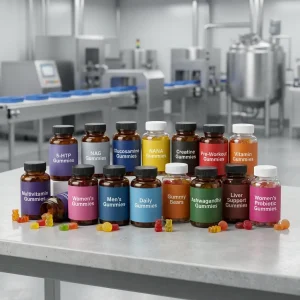
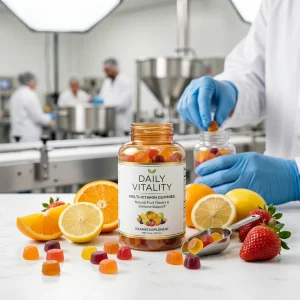
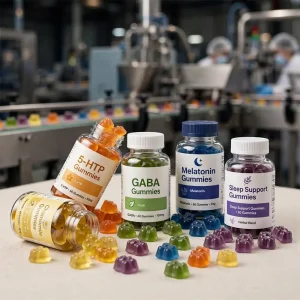
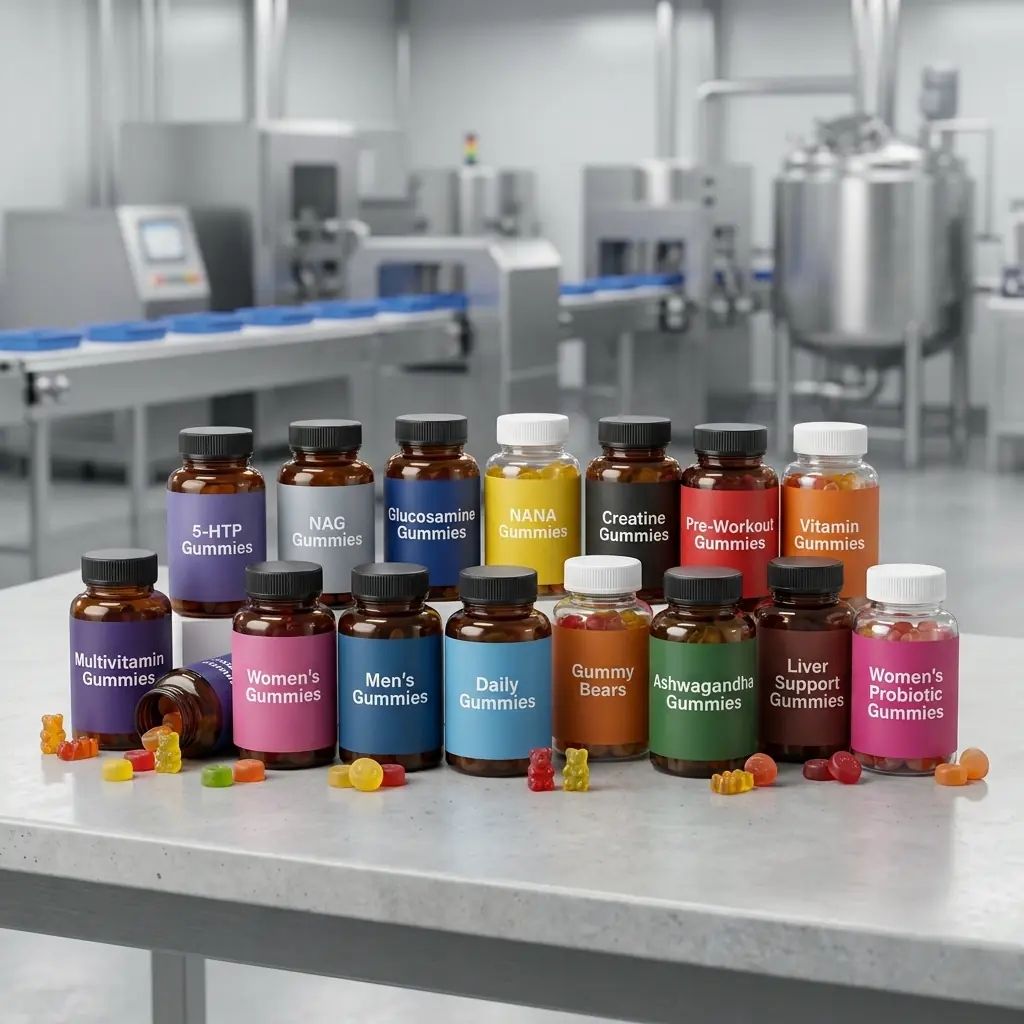
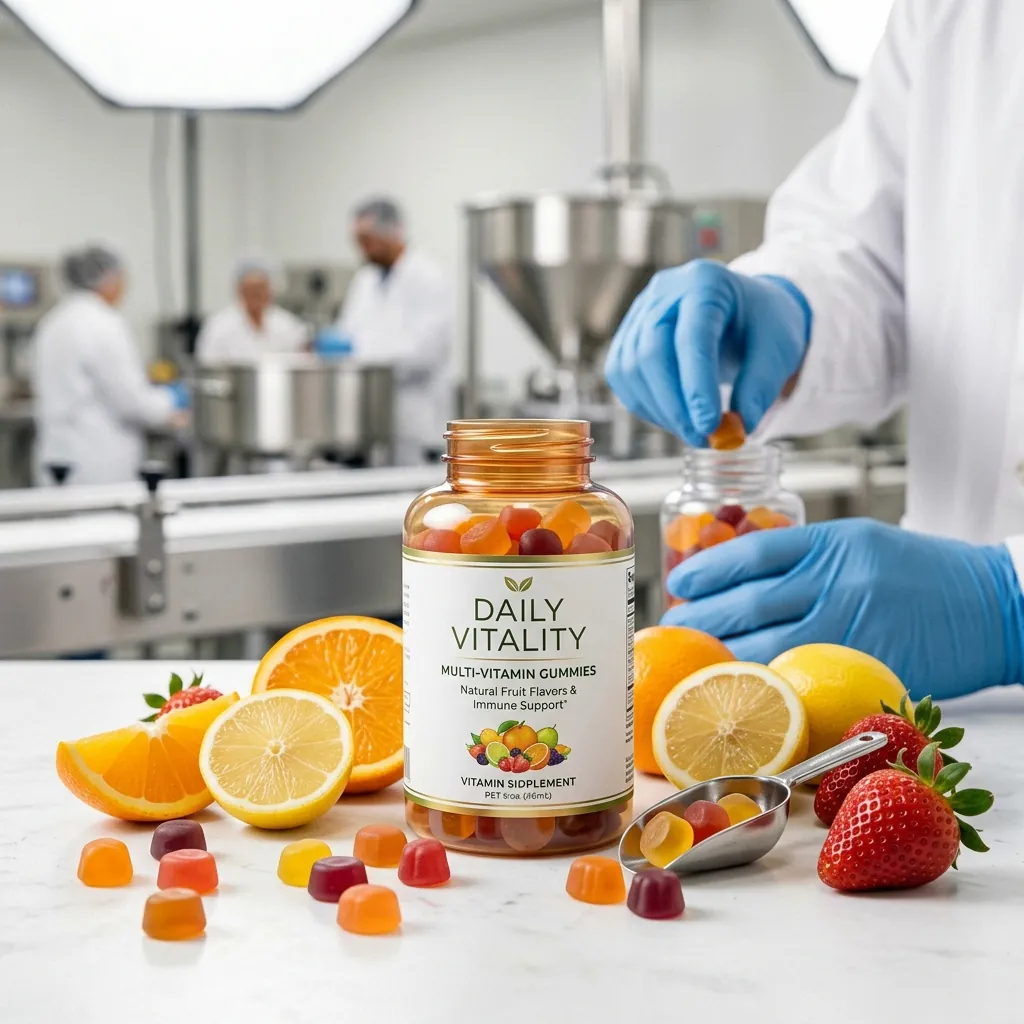
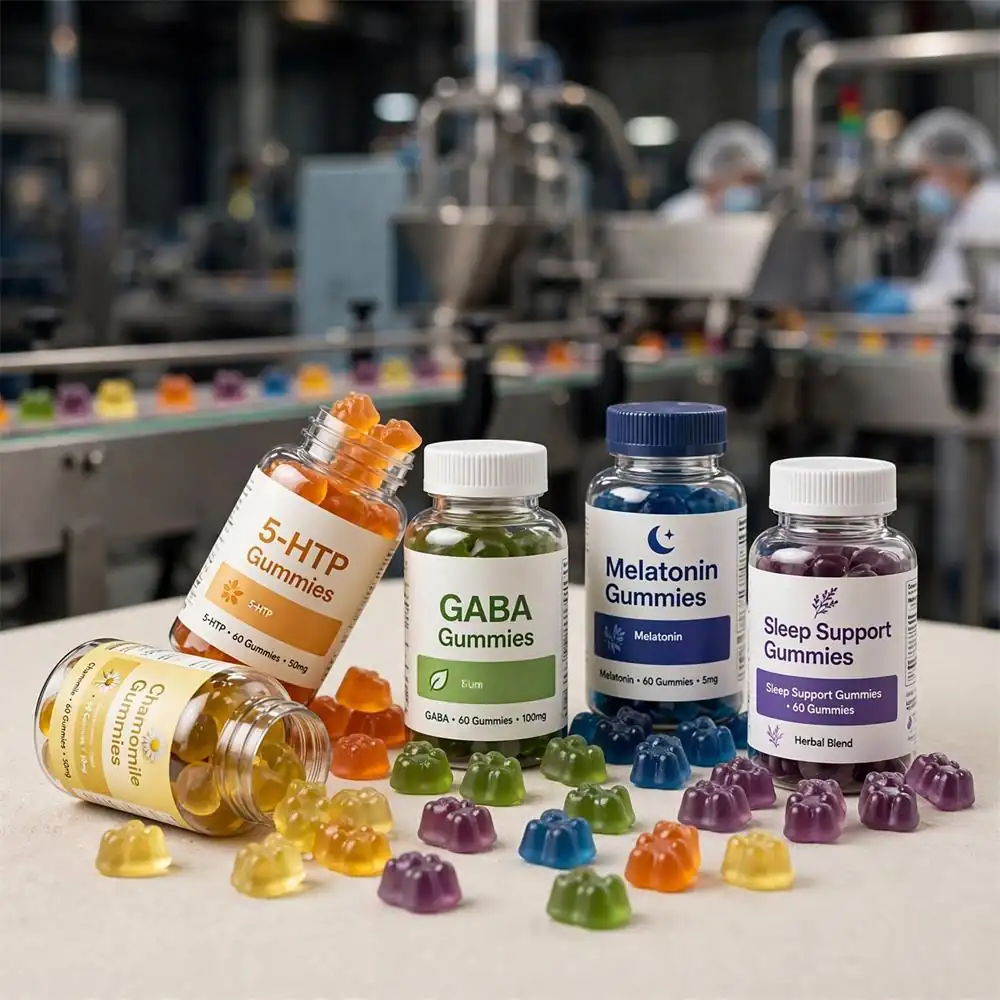
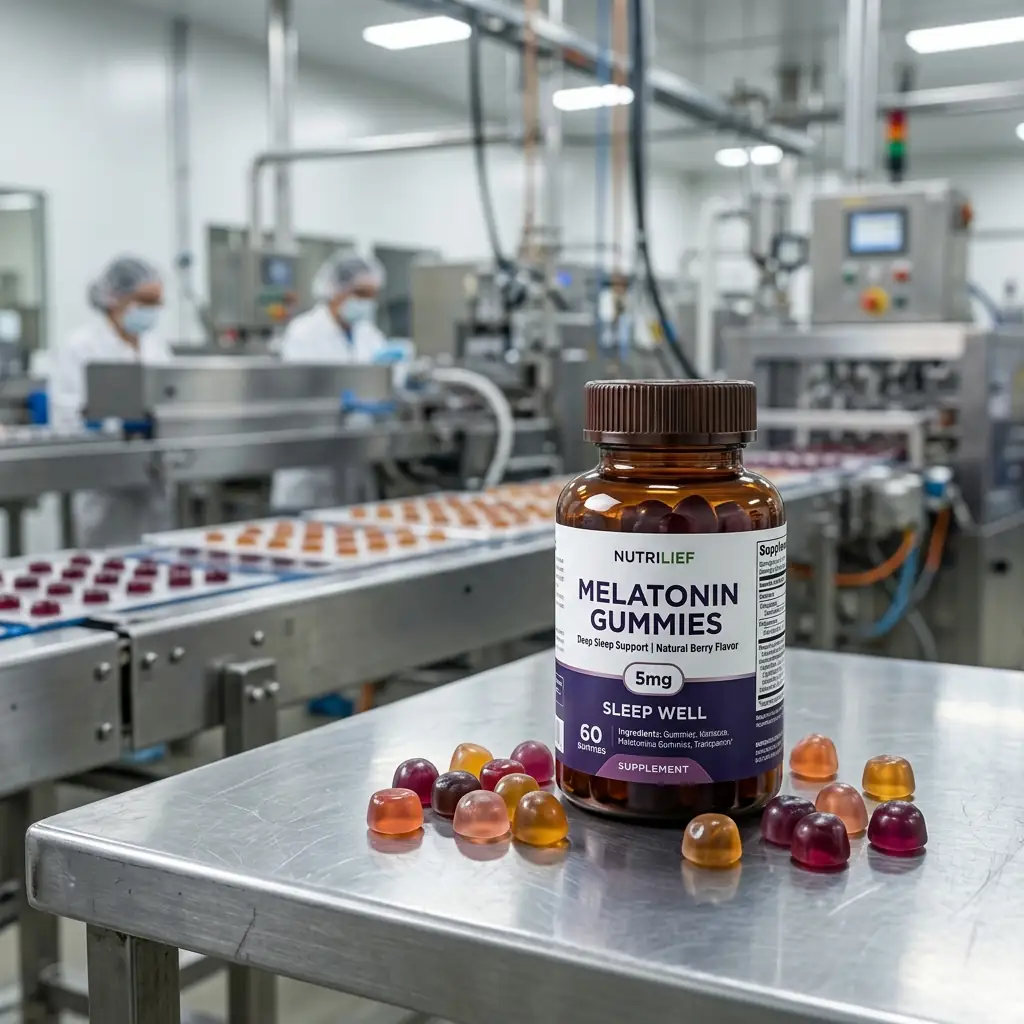
Gummy supplements refer to nutritional products delivered in chewy, gel-based formulations, typically containing vitamins, minerals, herbal extracts, or functional ingredients suspended in a pectin or gelatin matrix. They are designed to dissolve slowly in the mouth and are ingested through chewing, offering a candy-like consumption experience that appeals to both children and adults. Gummy manufacturing involves precision formulation to ensure active ingredient stability, uniform dosage distribution, and sensory attributes such as flavor, texture, and appearance.
What Are Dietary Supplements?
Dietary supplements are products intended to supplement the diet by providing essential vitamins, minerals, amino acids, enzymes, or herbal ingredients in concentrated forms. Unlike gummies, traditional dietary supplements encompass multiple delivery formats—capsules, tablets, powders, liquids, and drops—each with distinct absorption profiles, shelf stability, and manufacturing workflows. A dietary supplement manufacturer must navigate regulatory frameworks (FDA guidelines, USP standards, GMP compliance) while ensuring ingredient bioavailability and product efficacy.
Gummy Supplements vs Dietary Supplements: Detailed Comparison
Product Format and Consumer Experience
| Attribute | Gummy Supplements | Dietary Supplements |
|---|---|---|
| Taste & Palatability | Pleasant, candy-like flavor; consumer-friendly experience | Varies; capsules/tablets may have aftertaste; powders require mixing |
| Ingestion Method | Chewing; no water required; slow dissolution | Swallowing (capsules/tablets); require water; instantaneous ingestion |
| Absorption Timeline | Gradual (8-15 minutes); prolonged buccal exposure | Rapid (15-30 minutes); standard GI absorption |
| Portability | High; compact packaging; shelf-stable | Moderate to High; capsules are compact; powders require containers |
| Visual Appeal | High; colorful, branded shapes; Instagram-friendly | Moderate; standard capsule/tablet appearance |
Manufacturing Complexity and Process Differences
The production pathways for gummies and traditional supplements diverge significantly at multiple stages:
Gummy Manufacturing Process:
- Ingredient Preparation: Precise blending of gelling agents (pectin, carrageenan, gelatin), sweeteners, and active ingredients in controlled ratios to ensure uniform distribution
- Formulation Heating: Temperature-controlled cooking of the mixture (typically 60-75°C) to activate gelling agents without degrading heat-sensitive ingredients like vitamin C or probiotics
- Molding & Setting: Specialized starch or silicone molds create branded shapes; setting time ranges from 18-48 hours depending on gum base viscosity
- Coating & Packaging: Application of glazing agents (carnauba wax, gum arabic) to prevent sticking; vacuum sealing or desiccant packaging to maintain shelf stability
Traditional Dietary Supplement Manufacturing:
- Raw Material Certification: Batch-by-batch testing of ingredients for identity, purity, and potency using HPLC or mass spectrometry
- Dry Blending: Precise weighing and mixing of active ingredients with excipients (binders, fillers, anti-caking agents) in high-shear mixers
- Encapsulation/Compression: Capsule filling (vegetarian or gelatin) at 100-200 capsules/minute or tablet compression at 500+ tablets/minute
- Quality Control & Packaging: Dissolution testing, weight variation verification, and final packaging with moisture-barrier properties
Dosage Capacity and Formulation Flexibility
| Dosage Parameter | Gummy Supplements | Traditional Supplements |
|---|---|---|
| Single Serving Capacity | 2-5 grams active ingredient per unit (bulk limits gel matrix structure) | 500-2000mg per capsule/tablet; 10-50g per powder serving |
| Multi-Ingredient Complexity | 4-8 active ingredients feasible; risk of flavor conflicts with >6 | 15+ ingredients common; excellent ingredient synergy potential |
| Ingredient Stability | Heat-sensitive ingredients challenging; probiotics require encapsulation-within-gummy | Compatible with heat-stable and temperature-sensitive actives; dry formulations inherently protective |
| Shelf Life | 12-24 months (moisture, heat, light exposure accelerate degradation) | 24-48 months; capsules/tablets inherently more stable than gummies |
Regulatory Compliance and Quality Assurance
Gummy Supplement Regulations: Gummy supplements operate within a regulatory gray zone. In most jurisdictions, they are classified as either dietary supplements (FDA oversight in the U.S.) or food products (depending on formulation). This dual classification impacts labeling requirements, ingredient sourcing, and manufacturing standards. Gummy Contract Manufacturing facilities must maintain both food-grade hygiene (HACCP certification) and supplement manufacturing standards (GMP certification) simultaneously.
Traditional Dietary Supplement Regulations: Clearly defined under FDA regulations (DSHEA framework in the U.S.), traditional supplements have established pathways for ingredient approval, labeling compliance, and post-market surveillance. Most dietary supplement manufacturers operate under Current Good Manufacturing Practice (cGMP) standards, which specify cleanroom requirements, equipment validation, and batch testing protocols.
Compliance Checklist for Both Categories:
- ISO 9001 (Quality Management System certification)
- ISO 22000 or HACCP (Food Safety Management)
- GMP (Good Manufacturing Practice for supplements)
- FDA Registration (U.S. dietary supplement facilities)
- Organic, Vegan, Kosher, or Halal certifications (as applicable)
- Third-party testing for microbial contamination, heavy metals, and potency verification
Production, Quality Control, and Scalability Insights
Manufacturing Capacity and Volume Economics
Production volume directly impacts unit cost and manufacturing strategy. A modern gummy manufacturing facility with a 100,000-class cleanroom and pharmaceutical-grade R&D laboratory can achieve daily output of 16 tons with annual capacity of 5,000 tons. This production scale enables:
- Economies of Scale: Unit cost reduction from $0.15-0.30 per gummy (small batch, MOQ 50,000 units) to $0.05-0.12 per gummy (large batch, MOQ 500,000+ units)
- Formula Optimization: With 2,000 new product formulations researched annually, manufacturers can offer proprietary blends, flavor profiles, and ingredient combinations unavailable to competitors
- Flexible MOQ Management: Leading manufacturers support trial runs as low as 10,000 units for startups, scaling to full-capacity production for established brands
Quality Control Standards and Testing Protocols
Manufacturing excellence requires rigorous quality assurance at multiple checkpoints:
In-Process Quality Control (IPC):
- Raw Material Inspection: Certificate of Analysis (CoA) verification for all ingredients; testing for identity, purity, potency, and microbial contamination
- Batch Preparation Testing: In-process monitoring of mixture viscosity, temperature stability, and homogeneity to ensure consistent active ingredient distribution
- Unit Verification: Random sampling of finished products for weight variation (<5%), hardness (compression resistance), and dissolution rate (HPLC testing)
Finished Product Testing:
- Potency assay (HPLC/LC-MS) confirming active ingredient concentration within ±10% of label claim
- Microbial testing (total plate count, coliforms, pathogenic organisms per USP standards)
- Heavy metal analysis (lead, cadmium, arsenic, mercury) to ensure consumer safety
- Stability testing (accelerated and real-time) under various temperature and humidity conditions
Supply Chain Efficiency and Scalability
A fully integrated manufacturing partner offers end-to-end services that streamline supply chain complexity:
| Supply Chain Function | In-House Management | Outsourced to CMO |
|---|---|---|
| Raw Material Sourcing | Time-intensive; requires supplier qualification; capital tied up in inventory | CMO leverages bulk purchasing power; negotiates better pricing; maintains supplier relationships |
| Formulation R&D | Requires internal laboratory; staffing costs; extended time-to-market | Leverages 10,000-class R&D lab with postdoctoral chemists; 2,000+ formulas researched annually |
| Manufacturing Execution | Capital-intensive facility investment; regulatory compliance burden; production risks | Turnkey production with GMP/ISO compliance built-in; 5,000 ton annual capacity ensures reliability |
| Quality Assurance | Requires third-party testing contracts; delayed result turnaround | In-house testing protocols; rapid feedback loops; batch traceability |
| Packaging & Logistics | Separate vendor coordination; inventory management complexity; potential delays | Integrated packaging solutions; direct shipping to distribution centers; streamlined fulfillment |
B2B Decision Framework: Choosing Gummy vs. Traditional Supplements
When to Choose Gummy Supplements
Optimal Use Cases:
- Direct-to-Consumer (DTC) Brands: Gummies generate exceptional social media engagement and repeat purchase rates. Consumer feedback consistently shows 30-40% higher retention with gummy formats versus capsules
- Children’s Formulations: Regulatory frameworks favor gummies for pediatric supplements; palatability is non-negotiable for compliance
- Premium Positioning: Gummies command 50-100% price premiums over equivalent capsule formulations, supporting luxury brand narratives
- Multi-Market Expansion: Gummy appeal transcends geographic/demographic boundaries; easier to succeed in diverse international markets
- Limited Active Ingredient Load: Products with 1-3 key actives (melatonin, vitamin D, ashwagandha) excel as gummies
Financial Considerations:
- Unit cost: $0.08-0.15 (high volume)
- Retail markup potential: 300-500% (vs. 200-300% for capsules)
- Minimum order quantity for profitability: 100,000-250,000 units
- Time-to-market: 8-12 weeks (includes formulation iteration and mold customization)
When to Choose Traditional Dietary Supplements
Optimal Use Cases:
- Clinical/Professional Channels: Doctors, nutritionists, and healthcare practitioners recommend traditional formats for clinical efficacy and standardized dosing
- High-Potency Formulas: Multi-vitamin complexes (15+ ingredients), sports nutrition, or medical food applications require capsule/tablet formats
- Heat/Humidity-Sensitive Actives: Probiotics, enzymes, and temperature-unstable botanical extracts necessitate dry-capsule protection
- Budget-Conscious Segments: Capsules/tablets cost 60-70% less to manufacture than gummies; ideal for price-sensitive retail channels
- Long Shelf Life Requirements: Products requiring 3+ year stability favor traditional formats
Financial Considerations:
- Unit cost: $0.04-0.10 (high volume)
- Retail markup potential: 200-400%
- Minimum order quantity: 50,000-100,000 units for capsules
- Time-to-market: 6-8 weeks
Hybrid Strategy: Portfolio Diversification
Leading brands increasingly deploy a hybrid approach: offer signature products as gummies (building brand recognition and consumer engagement) while maintaining a complementary line of capsules or powders for professional and clinical channels. This strategy maximizes market penetration, serves diverse consumer preferences, and optimizes operational efficiency.
Example Portfolio Architecture:
- Core Product (Gummy): Multivitamin gummies as flagship; high visibility; drives brand awareness
- Specialized Products (Capsules/Tablets): Advanced formulations (high-potency minerals, amino acid blends, enzyme complexes) as professional-grade options
- Convenience Line (Powder): Bulk formulations for fitness professionals, athletes, or subscription models
Expert Insights: Scientific and Manufacturing Excellence
Formulation Innovation and Research Depth
Leading dietary supplement manufacturers employ postdoctoral researchers and visiting scholars from elite institutions (Caltech, Emory, Ohio State). This academic foundation translates to:
- Cutting-Edge Ingredient Compatibility: Research into synergistic ingredient combinations, bioavailability enhancement, and delivery mechanism optimization
- Rapid Prototype Development: Capability to formulate and test 2,000+ new product variations annually, identifying market opportunities before competitors
- Regulatory Intelligence: Deep expertise in FDA compliance pathways, health claim substantiation, and international regulatory harmonization
Plant Extraction and Bioactive Concentration
Advanced manufacturers maintain proprietary expertise in:
- Solvent extraction optimization for botanical actives (ensuring maximum bioavailability while minimizing residual solvents)
- Standardization of herbal ingredient concentrations (e.g., ashwagandha withanolide content, turmeric curcuminoid levels)
- Stability preservation of sensitive compounds through innovative delivery matrix design
Frequently Asked Questions (FAQ)
Q1: Are gummy supplements as effective as capsule supplements?Yes, when properly formulated. The efficacy depends on active ingredient potency, bioavailability, and absorption rate—not format. However, gummies have inherent dosage limitations (cannot exceed 5g per unit without compromising texture), so some formulations may require multiple gummies daily. Capsules can deliver 1,500mg+ in a single serving, making them preferable for high-potency applications.
Q2: What is the typical shelf life difference between gummies and traditional supplements?Gummy supplements typically maintain 12-24 months shelf life, while properly packaged capsules/tablets often exceed 36 months. The difference stems from gummies’ hygroscopic nature (moisture absorption), sensitivity to temperature fluctuations, and oxidation risk. Premium packaging (desiccant packets, vacuum sealing) extends gummy stability toward 24 months; traditional supplements benefit from inherently protective dry formulations.
Q3: What minimum order quantity should a new brand expect for private label gummy manufacturing?Most private label gummy manufacturers offer minimum order quantities (MOQ) of 50,000-100,000 units to achieve manufacturing efficiency. However, innovative manufacturers now offer tiered MOQs: 10,000-unit trial runs for startups, 100,000-unit standard production for growth-phase brands, and 500,000+ unit volumes for established players with corresponding per-unit cost reductions.
Q4: How long does it take to bring a custom gummy or dietary supplement product to market?Gummy products: 8-12 weeks (includes formulation refinement, mold creation, stability testing, and regulatory documentation). Traditional supplements: 6-8 weeks (faster due to simpler manufacturing workflow). Timeline extends if custom flavor development, novel ingredient sourcing, or extensive stability studies are required. Leading manufacturers with established ingredient networks and R&D capacity can accelerate timelines to 5-7 weeks.
Q5: What certifications are mandatory for gummy and dietary supplement manufacturing?Essential certifications include GMP (Good Manufacturing Practice), ISO 9001 (Quality Management), and HACCP or ISO 22000 (Food Safety). Additional certifications (Organic, Vegan, Kosher, Halal) depend on target market positioning. FDA registration is required for U.S. market entry. Third-party testing by accredited laboratories (heavy metals, microbial contamination, potency verification) is industry best practice and increasingly mandatory for retail placement.
Q6: Can a manufacturer support both OEM (private label) and ODM (custom formulation) services simultaneously?Yes. Gummy Contract Manufacturing providers offer tiered service models: white-label OEM (client provides formulation, manufacturer executes production), full ODM (manufacturer handles formulation development, client handles branding), and hybrid CDMO (collaborative development). This flexibility allows brands to choose involvement levels based on capabilities, budget, and market timeline—from turnkey solutions to fully customized R&D partnerships.
Transform Your Supplement Vision Into Market Reality
Shenzhen Gothink Biotech Co., Ltd. is China’s leading contract supplement manufacturer, specializing in comprehensive OEM, ODM, CMO, and CDMO services for gummy supplements, dietary supplements, and functional nutrition products.
Manufacturing Excellence at Scale
Comprehensive Service Offerings
Custom Gummy Manufacturing: From concept to shelf, we deliver end-to-end gummy solutions—proprietary formulations, 30+ shape options, flavor customization, and flexible packaging. Our gummy contract manufacturing capabilities span vitamin gummies, herbal-infused formulations, vegan options, and specialized pediatric products.
Traditional Dietary Supplement Production: Capsule, tablet, powder, liquid, and drop manufacturing with uncompromising quality. Our dietary supplement manufacturer expertise covers nutrient blends, botanical extracts, sports nutrition, and medical food applications.
Full-Service Turnkey Solutions: Product consultation, formulation development, custom design, manufacturing, packaging, labeling, regulatory documentation, and go-to-market strategy support. Whether you’re launching a startup brand, expanding an established portfolio, or seeking a private label gummy manufacturer, we provide the infrastructure and expertise to scale efficiently.
Quality Assurance & Regulatory Compliance
We maintain world-class certifications including ISO 9001, ISO 22000, HACCP, FDA, GMP, HALAL, KOSHER, and Vegan certification. Our 10,000-class pharmaceutical-grade R&D laboratory enables rigorous in-process quality monitoring, accelerated stability testing, and third-party verification protocols.
Flexible Partnership Models
Whether you require a private label gummy manufacturer for white-label production, a full ODM partner for custom formulation development, or a CDMO for collaborative innovation, we adapt our engagement model to your business needs. Support ranges from MOQ as low as 10,000 units for startup trials to 5,000+ ton annual volumes for established brands.
Partner with Gothink Biotech—where scientific excellence, manufacturing scalability, and regulatory expertise converge to accelerate your supplement brand’s growth in global markets.
Ready to Launch Your Supplement Brand?
Contact our team to discuss your formulation requirements, timeline, and volume expectations. Our product consultation specialists will guide you through the optimal manufacturing pathway—whether gummy, capsule, tablet, powder, or hybrid portfolio—ensuring your brand succeeds in competitive supplement markets.