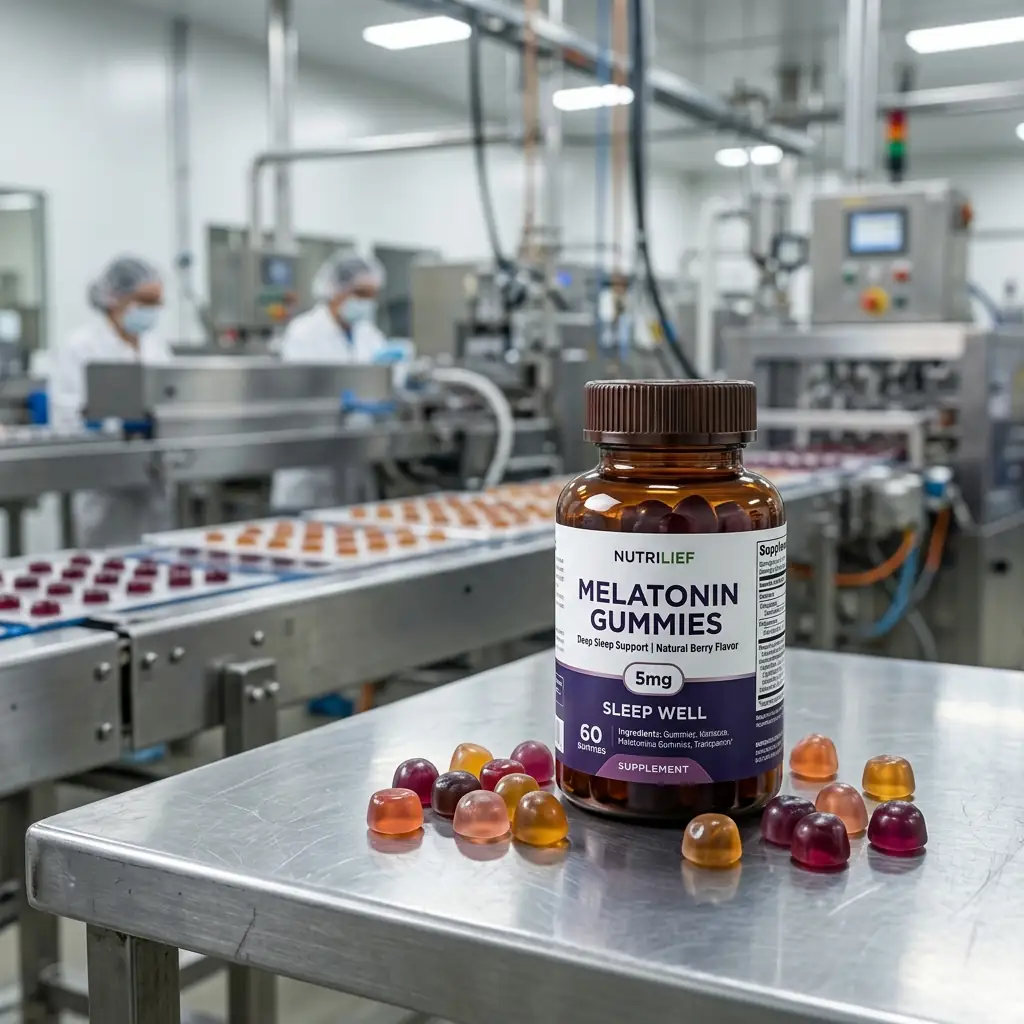

Summary: Gummy bears and gummy supplements are manufactured globally, with major production hubs in China, Germany, and North America. The production process involves precision formulation, specialized equipment, and stringent quality control standards. For brands seeking gummy bear manufacturing partners, understanding production locations, facility certifications, and customization capabilities is essential for sourcing decisions.
Definition: What Does Gummy Bear Manufacturing Refer To?
Where Are Gummy Bears Produced Globally?
Gummy bears and gummy supplements are manufactured across multiple continents, with distinct geographic advantages in each region. Understanding production locations helps brands identify the right manufacturing partners based on capacity, specialization, and cost structure.
China: The World’s Largest Gummy Manufacturing Hub
China dominates global gummy bear manufacturing output, accounting for approximately 60-70% of worldwide production. Modern Chinese facilities combine large-scale production capacity with competitive pricing. Leading manufacturers are concentrated in provinces such as Guangdong, Shandong, and Jiangsu, where established supply chains for gelatin, pectin, and gelling agents support rapid production scaling.
Chinese manufacturers specializing in gummy contract manufacturing serve global supplement brands, cosmetic companies, and pharmaceutical firms. Facilities typically feature GMP certification, ISO 22000 standards, and FDA compliance for export markets. Production capacity ranges from small batch operations (500 kg/month) to mega-factories producing 5,000+ tons annually.
Germany: Premium Gummy Manufacturing & Innovation
Germany remains the birthplace of gummy bears, with Haribo headquartered in Bonn since 1922. German manufacturers emphasize precision, innovation, and premium ingredient sourcing. German custom gummy manufacturers are known for rigorous quality control, advanced R&D capabilities, and adherence to strict EU regulations.
German facilities typically produce lower volumes at premium price points, focusing on specialty formulations, organic options, and advanced delivery mechanisms. German manufacturers lead in developing novel gummy technologies, including vegan capsules, reduced-sugar options, and functional supplement integration.
North America: Growing Specialized Manufacturing
The United States and Canada host growing gummy manufacturing capacity, particularly for private label gummy production and supplement brands seeking domestic sourcing. North American manufacturers benefit from proximity to major markets, reduced logistics costs, and established regulatory frameworks.
U.S.-based private label gummy manufacturers focus on supplement brands, nutraceutical companies, and retail chains. Facilities are concentrated in states like California, Illinois, and New Jersey, offering rapid turnaround times and flexible gummy contract manufacturing arrangements.
The Gummy Bear Manufacturing Process: Step-by-Step Production
Modern gummy bear manufacturing involves interconnected stages requiring specialized equipment, ingredient precision, and continuous quality monitoring. Each stage directly impacts final product quality, efficacy, and shelf stability.
1. Formulation & Design Phase
The initial phase involves developing the gummy base formula, which typically includes:
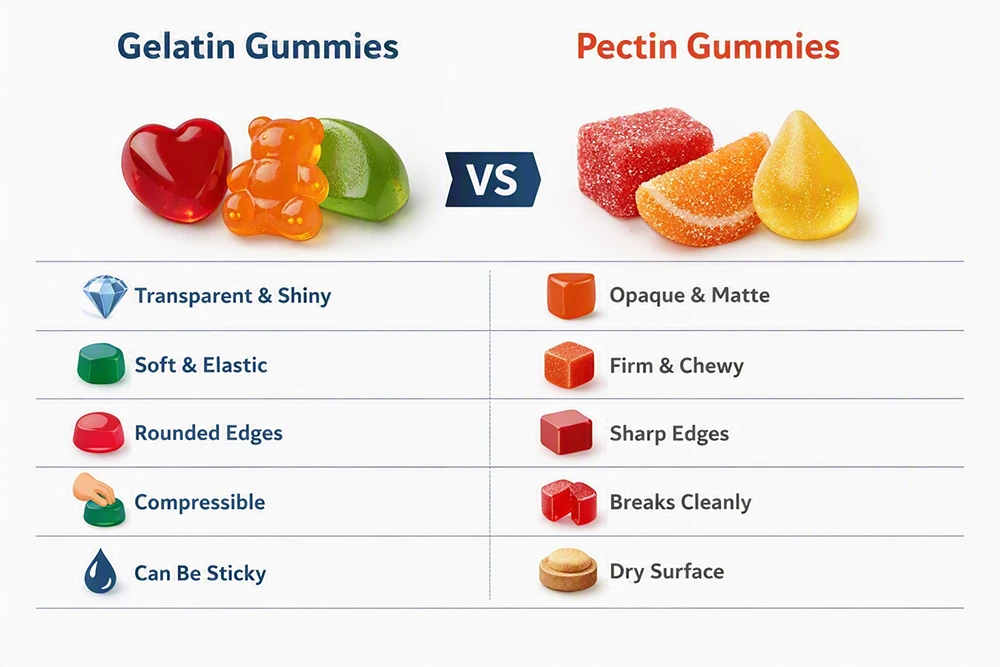
- Gelling agents: Gelatin (traditional), pectin, carrageenan, or agar (plant-based alternatives)
- Sweeteners: Sugar, glucose syrup, or sugar substitutes (stevia, xylitol, sorbitol)
- Active ingredients: Vitamins, minerals, herbal extracts, amino acids for gummy supplements
- Binding agents: Starch, maltodextrin, or gum arabic
- Colorants & flavorings: Natural or synthetic options depending on market regulations
Experienced manufacturers conduct stability testing, bioavailability assessments, and shelf-life validation during this phase. For private label gummy development, this typically requires 4-12 weeks of R&D and regulatory documentation.
2. Raw Material Processing & Ingredient Preparation
Raw materials are processed to specified particle sizes and purity levels. Active pharmaceutical ingredients and botanical extracts undergo:
- Microbial testing (CFU counts, pathogenic bacteria screening)
- Heavy metal analysis (lead, cadmium, mercury, arsenic)
- Allergen verification and cross-contamination screening
- Particle size reduction via milling or homogenization
Quality control at this stage ensures compliance with USP/EP monographs and FDA specifications.
3. Mixing & Batch Preparation
Precisely weighed ingredients are combined in industrial mixers under controlled temperature and humidity. The mixture is heated to dissolve gelling agents while maintaining ingredient integrity. Temperature monitoring prevents degradation of heat-sensitive vitamins and botanical components.
4. Mold Injection & Shaping
The hot gel mixture is injected into silicone molds or deposited using starch molding techniques. Modern gummy bear manufacturing equipment can produce 200-500 units per minute, with precision dosing ±2-3%. The molds determine gummy shape, size, and visual appeal.
5. Setting & Gel Maturation
Gummies are transferred to climate-controlled drying chambers (typically 60-75°F, 40-60% relative humidity) for 12-24 hours. This process allows the gel structure to stabilize and achieve target firmness. Improper drying conditions result in sticky surfaces or excessive hardness.
6. Coating & Surface Treatment
Finished gummies may receive functional coatings:
- Wax coating: Extends shelf life, prevents clumping
- Sugar coating: Enhances mouthfeel and appearance
- Sour coating: Adds taste complexity (citric acid, malic acid)
- Functional coatings: Additional nutrients or bioavailability enhancers
7. Packaging & Quality Verification
Finished products undergo weight verification, metal detection, and visual inspection before packaging in bottles, pouches, or jars. Private label gummy manufacturers offer customized packaging with branded labels, custom blister packs, or private label bottles.
Gummy Manufacturing Specifications & Quality Parameters
| Parameter | Standard Range | Testing Method | Industry Benchmark |
|---|---|---|---|
| Weight Variation | ±5-10% of target weight | Multi-head scale checkweigher | USP <905> |
| Moisture Content | 8-15% (gummies), 3-8% (hard candies) | Karl Fischer titration | FCC specifications |
| Hardness/Texture | 5-15 Shore A (texture analyzer) | Texture analysis (g-force) | Sensory panel + instrument |
| Dissolution Time | 5-15 minutes in saliva simulant | USP <2″] apparatus 2 | Bioavailability assurance |
| Microbial Content | <1,000 CFU/g total aerobic bacteria | Plate counting & qPCR | USP <2021>, AOAC 990.12 |
| Heavy Metal Content | Pb <0.5 ppm, Cd <0.1 ppm | ICP-MS analysis | FDA/USP limits |
| Active Ingredient Assay | ±10% of label claim (typically 90-110%) | HPLC, LC-MS/MS | USP, EP monographs |
| Appearance & Coloration | No visible defects, consistent color | Visual inspection + spectroscopy | Industry standard tolerance |
| Shelf Life Stability | 24-36 months @ 25°C/60% RH | Accelerated & real-time testing | ICH Q1A guidelines |
Quality Assurance & Regulatory Compliance in Gummy Manufacturing
Critical Facility Certifications
Leading custom gummy manufacturers maintain multiple certifications ensuring product safety and regulatory acceptance:
- GMP (Good Manufacturing Practices): FDA 21 CFR Part 111 compliance for dietary supplements; ISO 13485 for medical devices
- ISO 22000 / FSSC 22000: Food safety management systems with hazard analysis and critical control points (HACCP)
- FDA Registration: Facility registration and product listing for U.S. market access
- HALAL / KOSHER: Religious dietary compliance certifications
- Vegan / Allergen-Free: Third-party verification for specific dietary certifications
- ISO 9001: Quality management system across all operational processes
Production Environment Standards
World-class manufacturing facilities maintain controlled environments:
- Cleanroom Classification: 100,000-class ISO Class 8 manufacturing areas (≤352,000 particles ≥0.5µm per cubic foot)
- R&D Laboratories: 10,000-class pharmaceutical-grade facilities for formulation development and stability testing
- Environmental Controls: Temperature: 68-75°F; Humidity: 40-55% RH; Particulate filtration via HEPA systems
- Batch Tracking: Full traceability from raw material receipt through finished product release
Choosing the Right Gummy Manufacturer: Selection Criteria for B2B Buyers
Production Capacity & Scalability
Evaluate manufacturers based on:
- Minimum Order Quantity (MOQ): Smaller brands require flexible MOQ (5,000-50,000 units); established brands negotiate larger minimums (500,000+ units)
- Daily Output Capacity: Facilities producing 16+ tons daily can meet seasonal demand fluctuations
- Annual Production Capacity: Leading manufacturers maintain 5,000+ ton annual capacity with redundant production lines
- Lead Time: Typical production timelines: 4-8 weeks from formulation approval to finished goods shipment
Customization & OEM/ODM Services
Gummy contract manufacturing providers differentiate through customization depth:
- OEM (Original Equipment Manufacturer): Manufacturer produces gummies according to your exact specifications and formula, using your packaging and branding
- ODM (Original Design Manufacturer): Manufacturer develops the complete product (formula, shape, packaging design) and you purchase under private label
- CDMO (Contract Development & Manufacturing Organization): Full-service partnerships including R&D, stability testing, regulatory filing support, and scale-up manufacturing
Top-tier private label gummy manufacturers offer:
- 30+ standard gummy shapes with custom mold development options
- Flavor customization (natural & synthetic; botanical extracts for functional gummies)
- Active ingredient integration (vitamins, minerals, herbs, amino acids, probiotics)
- Packaging options: glass bottles, plastic jars, blister packs, pouches, custom labels
- Regulatory documentation: Finished Product Specifications, CoA, Stability Reports, Safety Data
B2B Decision Framework: Evaluating Manufacturing Partners
Due Diligence Checklist
Technical Capabilities Assessment:
- Request facility tour or third-party audit reports (NSF, PEERLESS, SQF audits)
- Verify analytical laboratory accreditation (ISO/IEC 17025) for finished product testing
- Review formulation development timeline and R&D team credentials
- Confirm stability testing protocols (ICH Q1A conditions: 25°C/60% RH for 36 months)
- Assess supply chain resilience and raw material supplier redundancy
Regulatory & Compliance Verification:
- Confirm FDA registration and facility inspection history (FSIS database)
- Verify GMP certification scope and renewal dates
- Request documentation of quality control processes (batch records, test reports)
- Assess ability to support regulatory submissions (IND applications, 505(b)(2) pathways)
- Evaluate liability insurance and product recall protocols
Commercial & Relationship Factors:
- Negotiate pricing (typically $0.05-$0.25 per unit depending on complexity, active ingredients, MOQ)
- Establish clear payment terms (50-70% upfront, balance upon shipment)
- Define intellectual property ownership (formula confidentiality, non-disclosure agreements)
- Confirm supply continuity commitments and force majeure provisions
- Assess responsiveness to technical questions and problem-solving capability
Red Flags & Warning Signs
- Unwillingness to provide facility documentation or third-party certifications
- Vague responses regarding quality control procedures or regulatory compliance
- Inability to reference comparable products or customer testimonials
- Unrealistic pricing (suspiciously low) indicating potential quality corners
- Unclear communication regarding intellectual property ownership or formula confidentiality
Market Trends & Manufacturing Innovations in Gummy Production
Growing Demand for Functional Gummy Supplements
The global gummy supplement market is expanding at 7-9% CAGR (2023-2030). Key drivers include:
- Convenience & Compliance: Gummies overcome tablet/capsule fatigue; improve compliance rates vs. traditional supplements
- Flavor Masking: Gummies effectively mask bitter active ingredients (ashwagandha, curcumin, CBD)
- Novel Formulations: Sleep support (melatonin), cognitive health (omega-3, nootropics), women’s health (collagen, probiotics), athletic performance (creatine)
- Clean Label Trends: Natural gelling agents (pectin, carrageenan); plant-based alternatives to gelatin
Advanced Manufacturing Technologies
Leading gummy bear manufacturing facilities adopt:
- Precision Dosing Systems: Multi-head depositors with ±2% accuracy ensuring consistent active ingredient distribution
- Automated Quality Control: Real-time spectroscopy, weight verification, and defect detection reducing manual inspection variance
- Continuous Manufacturing: Single-pass production systems reducing cycle time and improving efficiency
- Advanced Analytical Capabilities: In-house HPLC, LC-MS/MS, ICP-MS supporting rapid batch release and root cause analysis
Sustainability & Eco-Conscious Production
Forward-thinking manufacturers implement:
- Sustainable Sourcing: RSPO-certified palm oil, organic botanical extracts, regenerative agricultural partnerships
- Waste Reduction: Process optimization reducing scrap rates; recycling programs for production waste
- Renewable Energy: Solar installations and energy-efficient HVAC systems reducing carbon footprint
- Sustainable Packaging: Recyclable/compostable materials; reduced packaging weight and volume
Practical Considerations for Launching Gummy Products
Timeline & Development Roadmap
Typical product development lifecycle:
- Phase 1 (Weeks 1-4): Initial consultation, concept discussion, preliminary ingredient sourcing
- Phase 2 (Weeks 5-12): Formula development, bench-scale batches, sensory evaluation, stability protocol initiation
- Phase 3 (Weeks 13-20): Process scale-up, pilot batch production, regulatory documentation preparation
- Phase 4 (Weeks 21-32): Commercial production readiness, supply chain finalization, packaging artwork approval, initial inventory production
Expedited timelines (8-12 weeks) are possible with pre-existing formulations or simplified products.
Cost Structure & Pricing Considerations
Typical gummy manufacturing costs include:
- Raw materials: $0.02-0.08 per unit (ingredients, gelling agents, active compounds)
- Manufacturing labor & overhead: $0.01-0.04 per unit (facility costs, quality control)
- Packaging & labeling: $0.02-0.10 per unit (bottles, caps, labels, inserts)
- Regulatory & documentation: $2,000-$15,000 (formulation validation, stability reports, CoA)
- Mold development (one-time): $500-$3,000 per custom shape
Total landed cost typically ranges $0.08-0.30 per unit for MOQs of 100,000-500,000 units, with premium pricing for specialized formulations or smaller volumes.
United States (FDA):
- Dietary supplements (gummy vitamins) fall under DSHEA; require New Dietary Ingredient (NDI) notification only if novel ingredients present
- Conventional food (candy gummies) require FDA compliance; some colorants restricted
- Full ingredient disclosure and allergen labeling required
- GMP compliance mandatory; facility registration and product listing via FDA portal
European Union:
- Stricter colorant restrictions; natural colors preferred (EU approved list)
- Novel Foods authorization required for new ingredient categories
- Labeling in local language; nutritional information standardized
- GMP compliance via ISO 22000; third-party audits required
Asia-Pacific Markets (Australia, Japan, South Korea):
- Therapeutic Goods Administration (TGA) registration required in Australia
- Stricter limits on synthetic additives; natural ingredients preferred
- Localized labeling and registration timelines (12-24 weeks)
Frequently Asked Questions About Gummy Manufacturing
Q: How much does it cost to develop and manufacture custom gummies?
Development costs range $3,000-$20,000 (formulation R&D, stability testing, regulatory documentation). Manufacturing costs depend on active ingredients and complexity: basic gummies ($0.08-0.15 per unit), advanced formulations with multiple actives ($0.15-0.40 per unit). MOQ typically 50,000-500,000 units. Total project investment for a new product line: $50,000-$200,000 including development, first production batch, and packaging.
Q: What is the difference between OEM and ODM in gummy manufacturing?
OEM (Original Equipment Manufacturing): You provide the complete formula and specifications; the manufacturer produces gummies according to your exact requirements using your branding. ODM (Original Design Manufacturing): The manufacturer develops the formula, design, and packaging; you purchase as a finished product under private label. OEM provides more control; ODM offers faster time-to-market with lower development costs.
Q: How long does gummy manufacturing and quality testing take?
Standard lead times: 4-8 weeks from approved formula to finished goods shipment. Includes batch preparation (1-2 weeks), production run (1-2 weeks), quality testing (1-2 weeks), and packaging/labeling (1 week). Stability testing for shelf-life validation occurs simultaneously (3-36 months depending on protocol). Expedited services available but incur premium pricing.
Q: What certifications must a gummy manufacturer hold?
Essential certifications: FDA registration (mandatory for U.S. market), GMP certification (21 CFR Part 111 for supplements), ISO 22000 (food safety), ISO 9001 (quality management). Additional certifications: HALAL, KOSHER, Vegan, Allergen-Free (third-party verified). Third-party audit reports (NSF, SQF, PEERLESS) provide independent validation of compliance.
Q: Can manufacturers produce gummies with multiple active ingredients?
Yes. Advanced gummy supplements routinely incorporate 3-8 active ingredients (vitamins, minerals, herbs, amino acids, probiotics). Challenges increase with multiple actives due to stability interactions, dosing precision, and analytical complexity. Experienced manufacturers conduct compatibility studies and stability testing to ensure active ingredient retention and bioavailability throughout shelf life.
Q: What production volumes constitute “large scale” in gummy manufacturing?
Small batch (pilot): 1,000-50,000 units. Mid-scale: 50,000-500,000 units annually. Large-scale commercial: 500,000-5,000,000+ units annually. Facilities processing 16+ tons daily with 5,000+ ton annual capacity are classified as mega-factories. Volume dictates pricing, lead times, and supplier negotiating power. Most supplement brands start mid-scale (100,000-300,000 units) then scale upward.
Conclusion: Strategic Sourcing of Quality Gummy Manufacturing Partners
Understanding where gummy bears and gummy supplements are manufactured—and the capabilities required to produce them—is essential for supplement brands, retailers, and online sellers. Global production hubs in China, Germany, and North America offer distinct advantages: cost efficiency in China, premium quality in Germany, and domestic proximity in North America.
The gummy bear manufacturing process demands precision at every stage, from formulation through final packaging. Leading custom gummy manufacturers maintain GMP-certified facilities, advanced R&D laboratories (10,000-class pharmaceutical-grade), and 100,000-class cleanrooms ensuring world-class quality. Successful product launches depend on selecting partners with demonstrated expertise, regulatory compliance, and capacity to scale with your brand.
Key evaluation criteria include facility certifications (FDA, GMP, ISO 22000), production capacity (daily output, MOQ flexibility), customization capabilities (OEM/ODM/CDMO services), and quality assurance systems (analytical testing, stability validation). Budget 3-6 months for complete development, manufacturing, and regulatory preparation.
The gummy supplement market continues expanding at 7-9% annually, driven by consumer preference for convenient, effective delivery formats. Partnering with a capable gummy contract manufacturing provider enables rapid market entry, regulatory compliance, and scalable growth.
About Gothink Biology: Expert Gummy Manufacturing Partner
Shenzhen Gothink Biotech Co., Ltd. represents a world-class gummy contract manufacturing and custom gummy manufacturer specializing in comprehensive OEM, ODM, and CDMO services. Our capabilities directly align with the manufacturing standards and processes outlined in this guide.
Manufacturing Excellence & Capacity
- Production Capacity: Daily output of 16 tons with annual capacity of 5,000+ tons, enabling flexible scaling from pilot batches to mega-scale commercial production
- Facility Standards: GMP-certified facility featuring 100,000-class ISO Class 8 cleanroom and pharmaceutical-grade R&D laboratory (10,000-class), exceeding international quality benchmarks
- Certifications: FDA registration, ISO 9001, ISO 22000, HACCP, HALAL, KOSHER, Vegan certified—ensuring regulatory compliance across global markets
- Expert R&D Team: Led by postdoctoral researchers from leading U.S. universities (California Institute of Technology, Emory University, Ohio State University) with deep expertise in plant extraction, formulation chemistry, and biomanufacturing
Comprehensive OEM/ODM/CDMO Services
- Product Formulation & Development: 2,000+ new product formulations researched annually; expertise spanning vitamin gummies, herbal supplements, functional formulations, and advanced delivery systems
- Gummy Manufacturing Specialization: Custom gummy bear manufacturing utilizing natural gelling agents (pectin, carrageenan); 30+ standard shapes; custom mold development available
- Multi-Format Production: Beyond gummies—capsule, tablet, powder, liquid, and drop supplement manufacturing for diversified product portfolios
- Full-Service Support: End-to-end services including raw material sourcing, process optimization, quality control, analytical testing, regulatory documentation, packaging design, and export logistics
Private Label & Batch Production Excellence
- Private Label Gummy Solutions: White-label manufacturing for supplement brands, retailers, and online sellers with complete branding customization
- Flexible MOQ & Scaling: From small trial runs (5,000 units) to full commercial volumes (1,000,000+ units), accommodating startups through established enterprises
- Wholesale & Batch Production: Bulk manufacturing at competitive pricing; volume discounts for recurring orders; supply chain stability through redundant raw material sourcing
- Custom Packaging & Branding: Private label bottles, jars, blister packs, pouches; artwork design support; proprietary labeling solutions
Quality Assurance & Regulatory Excellence
- Comprehensive Testing: In-house analytical capabilities including HPLC, LC-MS/MS, ICP-MS; finished product testing (weight, moisture, hardness, microbial, heavy metals, active ingredient assay)
- Stability & Shelf-Life Validation: ICH Q1A protocol testing (25°C/60% RH for 36 months); accelerated stability studies ensuring product integrity
- Regulatory Support: FDA compliance documentation, nutritional labeling, ingredient sourcing verification, allergen testing, and international market registration assistance
- Quality Documentation: Comprehensive Certificates of Analysis (CoA), Finished Product Specifications, Safety Data Sheets, and batch traceability records
Gothink Biology serves global health brands, supplement companies, retailers, and online sellers seeking reliable, scalable gummy contract manufacturing partnerships. Our combination of world-class facilities, expert scientific team, rigorous quality systems, and flexible customization capabilities positions us as a trusted partner for custom supplement manufacturing across all formulation types and market segments.