
Summary
Vegan gummies are nutritional supplements manufactured using plant-based gelling agents instead of gelatin, combined with vitamins, minerals, and functional ingredients through a precise molding and setting process. The production involves formulation design, ingredient sourcing, mixing, pouring, setting, coating, and quality assurance to create shelf-stable, plant-based supplements that meet dietary and regulatory standards.
Definition: What Are Vegan Gummies?
The Core Manufacturing Process: Step-by-Step Overview
Understanding how vegan gummies are made requires knowledge of the integrated stages from raw material preparation through final quality validation. The process combines food-grade chemistry with precision engineering to achieve consistency, stability, and efficacy.
1. Formulation Development & Recipe Design
The foundation of gummy manufacturing begins with scientific formulation. A formulation team—typically including nutritionists and food scientists—determines the optimal combination of active ingredients (vitamins, minerals, amino acids, herbal extracts) and structural components.
Key formulation variables include:
- Active ingredient potency: Precise dosing ensures each gummy delivers specified nutrition levels (e.g., 500mg calcium per piece)
- Gelling agent ratio: Plant-based agents like pectin (1-3% w/w) or carrageenan (0.5-2% w/w) determine texture and setting speed
- Sugar/sweetener content: Traditional recipes use glucose syrup and sucrose; low-sugar variants use sorbitol or stevia
- Flavor profile: Natural or synthetic flavoring compounds (0.1-0.5%) enhance palatability
- Moisture content target: Typically 10-15% for optimal shelf stability and texture
2. Raw Material Sourcing & Pre-Processing
Custom gummy manufacturers source specialized ingredients meeting pharmaceutical or food-grade standards. Raw materials include:
| Material Category | Examples (Vegan-Compliant) | Function | Quality Standard |
|---|---|---|---|
| Gelling Agents | Pectin, Carrageenan, Agar, Gum Arabic | Provides gel structure & firmness | USP/EP certified |
| Sweeteners | Glucose Syrup, Sucrose, Allulose, Stevia | Taste & texture profile | Food-grade purity |
| Functional Ingredients | Vitamin Premixes, Mineral Salts, Herbal Extracts | Active nutritional content | GMP, HPLC verified potency |
| Stabilizers | Citric Acid, Malic Acid, Soy Lecithin (organic only) | pH control & shelf stability | Food additive compliant |
| Colorants | Spirulina, Beet Juice, Turmeric (natural only) | Visual appeal & brand differentiation | Natural color certification |
| Flavor Compounds | Essential Oils, Natural Flavoring Blends | Sensory experience & masking | FEMA GRAS status |
Pre-processing involves ingredient validation: moisture analysis, microbial screening, potency testing via HPLC, and compatibility verification to prevent degradation or phase separation.
3. Wet Mixing & Hydration Phase
The manufacturing process transitions to large-scale mixing in stainless-steel kettles (jacketed for temperature control, typically 50-100L capacity for mid-scale operations).
The mixing sequence typically follows this protocol:
- Base syrup preparation: Glucose syrup and sweeteners are heated to 60-75°C under vacuum to remove air bubbles (reduces defects)
- Gelling agent hydration: Plant-based gelling agents (pectin/carrageenan) are slowly dispersed while mixing to prevent clumping
- pH adjustment: Citric acid or malic acid is added to achieve target pH (typically 3.0-3.5 for stability)
- Functional ingredient incorporation: Vitamin premixes and mineral salts are added under continuous agitation to ensure uniform distribution
- Flavor & color addition: Essential oils and natural colorants are incorporated in the final phase to prevent thermal degradation
- Final temperature equilibration: Mixture is cooled to 50-60°C for optimal viscosity before pouring
4. Molding & Shape Formation
The prepared mixture is transferred to custom gummy manufacturers‘ molding equipment, which determines final product aesthetics and consistency.
Molding methodologies include:
- Starch-based molds: Traditional potato or cornstarch molds offer cost-effectiveness and flexibility; can be customized into 30+ unique shapes
- Silicone molds: Premium option with superior detail reproduction; ideal for high-definition logos or complex geometries
- Continuous belt systems: High-capacity industrial equipment that produces 5,000-10,000 units/hour; used by private label gummy manufacturers for bulk production
The gummy mixture is precisely dispensed into molds using temperature-controlled depositors (nozzle temperature: 48-65°C). Accurate volume dosing ensures consistent ingredient distribution and weight per gummy.
5. Setting & Gelation
After molding, gummies enter the gelation phase where plant-based gelling agents form stable three-dimensional networks.
Setting parameters vary by gelling agent:
- Pectin-based gummies: Require 4-8 hours at controlled humidity (65-75% RH) and temperature (18-22°C) for firm gel formation
- Carrageenan gummies: Form gels more rapidly through ionic cross-linking; typically set within 2-4 hours
- Agar-based formulations: Gel at cooler temperatures (4-10°C) with setting times of 1-3 hours; higher gel strength than pectin alternatives
Environmental control is critical: humidity rooms with calibrated dehumidifiers and temperature regulators prevent over-drying (cracking) or under-setting (stickiness). Large-scale manufacturers operate 100,000-class cleanroom facilities with precise environmental monitoring.
6. De-Molding & Demold Drying
Once set, gummies are mechanically separated from molds. Starch-based molds require tumbling in rotating drums to remove gummies without damage; the released starch is recovered and re-used (cost efficiency).
Post-removal gummies undergo a brief drying phase (30 minutes to 2 hours) in climate-controlled tunnels to:
- Reduce surface moisture and stickiness
- Achieve final moisture content (10-15%)
- Stabilize texture for packaging
7. Coating & Surface Treatment
Optional but common for private label gummy products, surface coating adds functional and aesthetic benefits.
Common coating applications:
- Sugar coating: Crystalline sugar layer (2-3mm) for glossy finish and reduced stickiness
- Organic acid coating: Sour gummies receive citric/malic acid dust for flavor intensity
- Wax coating: Plant-based wax (carnauba, beeswax alternatives) for extended shelf life and moisture barrier
Coating is applied via tumbling drums or spray systems with temperature and humidity control to ensure uniform distribution.
8. Quality Assurance & Testing
Before packaging, finished gummies undergo comprehensive laboratory testing:
- Potency testing (HPLC): Verifies active ingredients meet label claims (±10% variance)
- Moisture analysis: Karl Fischer titration confirms 10-15% moisture for shelf stability
- Microbial screening: Aerobic plate counts, E. coli, Salmonella testing per FDA/EUMR standards
- Heavy metal screening: ICP-MS detection of lead, cadmium, arsenic below regulatory thresholds
- Sensory evaluation: Color, flavor, texture consistency assessment
- Weight verification: Statistical sampling ensures dosage consistency (typically ±5% tolerance)
- Stability testing: Accelerated shelf-life study (40°C/75% RH for 3-6 months) confirms product integrity
9. Packaging & Labeling
Gummies are packaged in moisture-proof containers to prevent degradation:
- Bottles: HDPE or PET with desiccant packs for consumer/retail products
- Pouches: Aluminum foil laminates for extended shelf life and portability
- Bulk containers: Food-grade drums (25kg) for B2B wholesale distribution
Labels include nutrition facts, ingredient disclosures, allergen warnings, suggested use, storage instructions, lot numbers, and expiration dates in compliance with regulatory frameworks (FDA, EU regulations, regional standards).
Key Technical Parameters for Vegan Gummy Production
The table below summarizes critical technical specifications used in modern vegan gummy manufacturing:
| Process Parameter | Typical Range | Impact on Quality |
|---|---|---|
| Mixing Temperature | 50-75°C | Controls viscosity; higher temps increase fluidity but risk ingredient degradation |
| Setting Temperature | 18-22°C | Critical for gel formation kinetics; deviation causes texture defects |
| Setting Humidity | 65-75% RH | Low RH causes premature surface drying; high RH delays gelation |
| Final Moisture Content | 10-15% w/w | Ensures optimal texture and microbial stability; <10% = brittleness, >15% = stickiness |
| pH Target | 3.0-3.5 | Preserves active ingredients and prevents microbial growth |
| Gelling Agent Concentration | 0.5-3.0% w/w | Determines firmness and gel strength; higher concentrations increase texture firmness |
| Mixture Viscosity | 500-2000 cP | Optimal for consistent mold filling and prevention of air bubbles |
| Depositor Nozzle Temp | 48-65°C | Maintains pumpability; too low = clogging, too high = flavor loss |
| Production Yield | 95-98% | Accounts for trim loss, defects, and quality rejects; directly impacts cost efficiency |
| Daily Output Capacity | 5,000-16,000 kg/day | Modern GMP facilities achieve 16 tons/day; annual capacity ~5,000 tons |
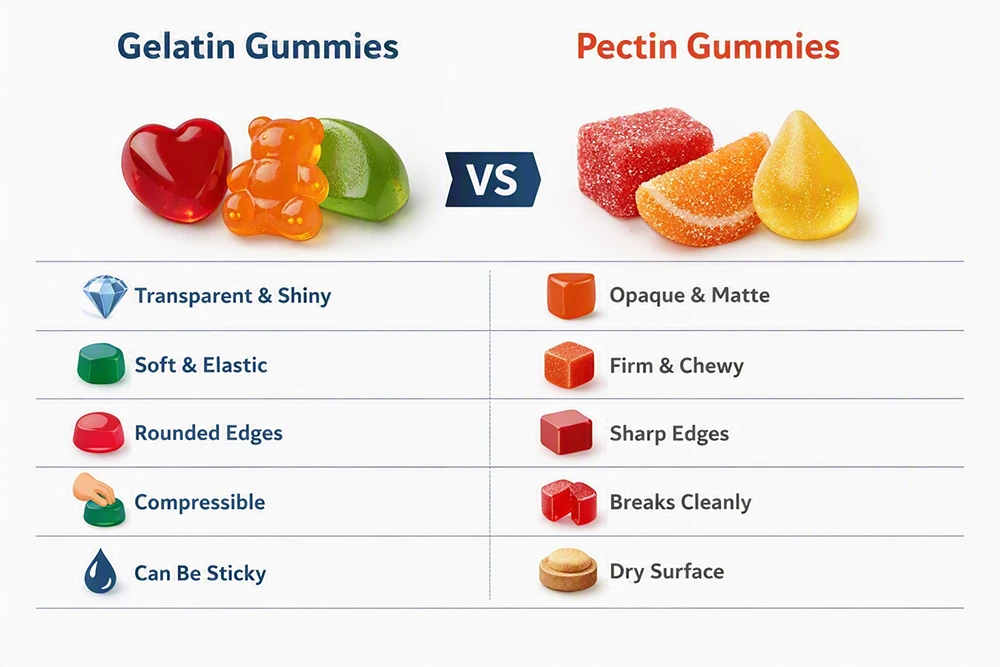
Why Vegan Gelling Agents Over Gelatin?
Traditional gummies used animal-derived gelatin (from collagen in bones/skin), but vegan formulations utilize plant-based alternatives:
Comparative Advantages
- Ethical alignment: No animal-derived ingredients; appeals to 39% of global consumers actively seeking plant-based options
- Allergen reduction: Plant-based agents avoid gelatin-related cross-contamination concerns
- Regulatory acceptance: Pectin and carrageenan are FDA-approved and accepted in all major markets (FDA, EU, China)
- Texture customization: Different plant gelling agents enable broader texture ranges (firm to chewy)
- Stability profile: Plant-based gels demonstrate superior stability at varying humidity and temperature ranges, extending shelf life
- Cost efficiency: Pectin and carrageenan typically cost 15-25% less than pharmaceutical-grade gelatin, improving margins
Scalability & Production Capacity Considerations
Modern private label gummy manufacturers accommodate diverse scale requirements:
Production Tiers
- Pilot/R&D: 100-500 kg batches for formulation validation and small-scale testing
- Small-scale OEM: 1,000-10,000 kg monthly runs; ideal for online sellers and emerging brands
- Mid-scale commercial: 50,000-200,000 kg annually; supports regional retail distribution
- Full-scale industrial: 1,000-5,000 tons annually; facilities with 100,000-class cleanrooms and 16+ ton/day capacity
This flexibility allows entrepreneurs, established brands, and contract manufacturers to access vegan gummy contract manufacturing services without prohibitive minimum order quantities.
Practical Insights for Production Optimization
Cost Management
- Ingredient efficiency: Bulk purchasing of gelling agents and vitamins reduces per-unit costs by 10-20%; stable supplier relationships lock favorable pricing
- Energy optimization: Modern facilities utilize waste heat recovery systems and high-efficiency climate control, reducing production costs by 8-12%
- Mold management: Starch-based molds are cleaned and reused; each mold operates for ~100 production cycles before replacement (cost recovery)
Quality Consistency
- SOP standardization: Documented Standard Operating Procedures ensure batch-to-batch consistency; critical for scaled operations and regulatory compliance
- Environmental monitoring: Real-time humidity/temperature sensors in setting rooms trigger automated adjustments, preventing defect variance
- Ingredient pre-testing: Each supplier batch is screened for potency and purity before production to eliminate downstream quality risks
Supply Chain Resilience
- Dual sourcing: Backup suppliers for critical ingredients (gelling agents, vitamins) prevent production interruptions
- Inventory management: 2-4 week ingredient buffers balance storage costs against supply disruption risks
- Waste reduction: Trim recovery and rework protocols capture 5-10% additional yield, improving margins
B2B Decision Framework: Selecting a Vegan Gummy Manufacturer
For procurement teams evaluating custom gummy manufacturers, consider these critical factors:
Capability Assessment
- Certifications: Verify ISO9001, ISO22000, HACCP, GMP, and FDA compliance; request audit reports
- Capacity alignment: Ensure manufacturing volume matches your demand (pilot, mid-scale, or industrial)
- R&D infrastructure: Assess laboratory capabilities for formulation customization and stability testing
- Regulatory expertise: Confirm experience with your target market regulations (FDA labeling, EU Novel Foods, China NMPA)
Cost & Timeline Optimization
- MOQ flexibility: Verify minimum order quantities align with your go-to-market strategy (some private label gummy manufacturers offer runs as small as 10,000-20,000 units)
- Lead times: Confirm formulation to delivery timelines; typical windows are 6-8 weeks for custom development + 4-6 weeks for production
- Pricing transparency: Request detailed cost breakdowns (raw materials, labor, packaging, QA) to verify market competitiveness
Quality & Compliance Verification
- Reference customers: Contact existing brand clients to assess reliability, responsiveness, and product quality consistency
- Sample testing: Request prototype gummies and conduct independent potency/microbial verification
- Contract terms: Ensure agreements specify quality standards, batch rejection protocols, and liability frameworks
Conclusion
Vegan gummies are made through an integrated manufacturing process combining precision chemistry, controlled environment management, and rigorous quality assurance. From initial formulation design through final packaging, each phase—mixing, molding, setting, and testing—directly impacts product efficacy, safety, and consumer satisfaction.
The shift toward plant-based gelling agents reflects both consumer demand for ethical nutrition and scientific advantages in stability and customization. Modern gummy manufacturing facilities achieve industrial scale (16 tons/day capacity) while maintaining flexibility for small-batch custom gummy and private label gummy services, making vegan supplement production accessible to brands of all sizes.
Success in this category requires partnering with manufacturers demonstrating pharmaceutical-grade infrastructure, transparent quality protocols, and regulatory compliance expertise—ensuring your vegan gummy products reach market safely, consistently, and profitably.
Frequently Asked Questions
Q: What is the typical shelf life of vegan gummies?
A: Properly manufactured vegan gummies with plant-based gelling agents typically maintain potency and quality for 24-36 months when stored in moisture-proof containers at room temperature (below 25°C). Stability is verified through accelerated shelf-life studies (40°C/75% RH for 3-6 months) conducted during product development.
Q: How do plant-based gelling agents compare to gelatin in terms of texture?
A: Plant-based agents (pectin, carrageenan, agar) offer comparable or superior texture characteristics. Pectin provides chewy gummies, carrageenan creates firm textures, and agar produces brittle consistency. Texture can be fine-tuned through concentration adjustments, offering greater customization flexibility than gelatin alone.
Q: What is the minimum order quantity (MOQ) for custom vegan gummy manufacturing?
A: Leading gummy contract manufacturers offer flexible MOQs ranging from 500-20,000 units for small-scale trials to multi-ton orders for established brands. Startups and online sellers benefit from low-MOQ private label gummy manufacturer options that balance production efficiency with accessibility.
Q: Are vegan gummies subject to different regulatory requirements than gelatin gummies?
A: Regulatory frameworks (FDA, EU, NMPA) apply identical nutritional labeling and safety standards regardless of gelling agent source. However, plant-based gummies must clearly declare all botanical ingredients and potential allergens (tree nuts, soy if used in processing). Vegan certification may require additional third-party verification.
Q: What is the typical cost difference between vegan and gelatin-based gummies?
A: Plant-based gummies typically cost 8-15% less to produce due to lower gelling agent costs (pectin/carrageenan vs. gelatin) and reduced processing steps. Bulk ingredient purchasing and optimized manufacturing reduce per-unit costs further, making vegan formulations increasingly price-competitive.
Q: How do manufacturers ensure consistent potency across all gummies?
A: Precision mixing equipment with calibrated dispensers ensures uniform ingredient distribution. Quality assurance includes HPLC potency testing on representative samples from each batch, statistical process control (SPC) monitoring during production, and weight verification sampling to confirm dosage consistency (±5% tolerance).
About Gothink Biology: Your Vegan Gummy Manufacturing Partner
Shenzhen Gothink Biotech Co., Ltd. is one of China’s leading dietary supplement manufacturers and gummy contract manufacturers, offering comprehensive OEM, ODM, CMO, and CDMO services for vegan and plant-based supplements.
Core Capabilities
- End-to-End Manufacturing: From product formulation consultation and custom design through manufacturing, packaging, and market-ready solutions
- OEM/ODM Services: Full custom gummy manufacturer capabilities supporting brands, retailers, online sellers, and startups
- Private Label Solutions: Private label gummy manufacturer services with flexible MOQs and rapid development timelines
- Bulk Production: Industrial-scale gummy manufacturing capacity of 16 tons/day (annual capacity: 5,000 tons)
- Supplement Diversification: Beyond gummies, we produce capsules, tablets, powders, liquids, and drops
Manufacturing Excellence
- Quality Assurance Certifications: ISO9001, ISO22000, HACCP, FDA, HALAL, GMP, KOSHER, and Vegan certification
- World-Class Infrastructure: 100,000-class cleanroom facilities and 10,000-class pharmaceutical-grade R&D laboratory
- Scientific Leadership: Co-founded and guided by postdoctoral researchers from the California Institute of Technology, Emory University, and Ohio State University
- Innovation Pipeline: Formulation research on 2,000+ new product variations annually
Why Partner With Gothink Biology?
- Expertise-Driven: Deep scientific background ensures superior formulation and manufacturing processes
- Scalable Solutions: Support for small pilot batches through enterprise-level production runs
- Regulatory Compliance: Full support for FDA, EU, China NMPA, and international market entry
- Cost Efficiency: Optimized production processes deliver competitive pricing without compromising quality
- Fast Turnaround: Experienced teams reduce formulation-to-market timelines for faster ROI
- Comprehensive Support: Marketing consultation, packaging design, and go-to-market strategy included
Contact us today to explore how Gothink Biology can transform your vegan gummy concept into a market-leading product. From formulation innovation to bulk manufacturing and private label solutions, we’re your trusted partner for dietary supplement success.