
Summary
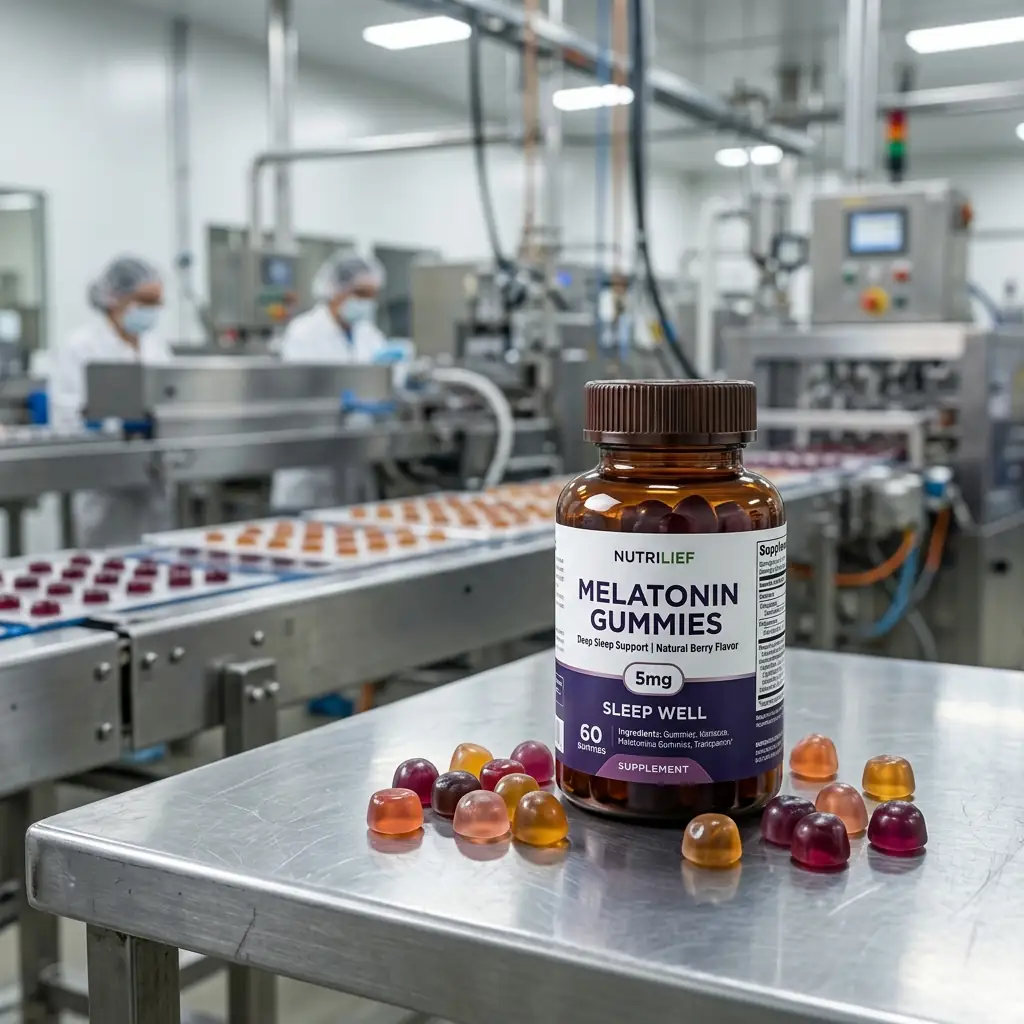
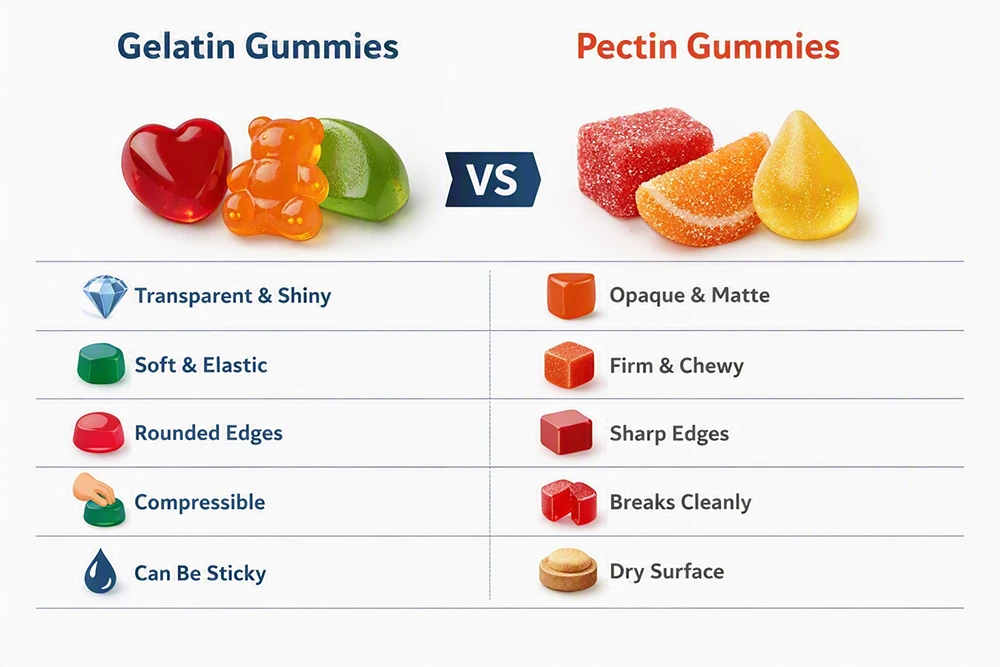
Gummy bears are produced through a controlled industrial process that blends gelatin or pectin, functional ingredients, colors, and flavors before depositing the mixture into starch‑coated molds. Modern factories rely on automated cooking, depositing, curing, and packaging systems to ensure consistency, safety, and scalability. This article explains the full manufacturing workflow, key technical parameters, and B2B considerations for brands seeking reliable production partners.
Definition
How gummy bears are made in a factory refers to the standardized industrial process of formulating, cooking, depositing, curing, demolding, oiling, and packaging gelatin‑ or pectin‑based gummy products using automated equipment under strict quality and regulatory controls.
🏭 How Gummy Bears Are Made in a Factory (Step‑by‑Step)
1. Ingredient Preparation
Factories begin by weighing gelatin or pectin, sweeteners, water, acids, colors, flavors, and active ingredients (for gummy supplements). Precision is essential to maintain texture and stability.
2. Cooking & Dissolving
Ingredients are heated in industrial cookers until fully dissolved. Temperature and viscosity are continuously monitored to prevent degradation of nutrients or flavors.
3. Mixing Functional Ingredients
For gummy supplements, vitamins, minerals, botanicals, or functional actives are added at controlled temperatures to protect potency.
4. Depositing Into Molds
The liquid gummy mass is deposited into starch‑lined or silicone molds shaped like bears. Depositors ensure accurate weight, shape, and uniformity.
5. Cooling & Curing
Gummies are cooled and cured for 12–48 hours depending on formula. This step develops chewiness and structural stability.
6. Demolding & Oiling
Cured gummies are removed from molds and lightly coated with oil or wax to prevent sticking and improve appearance.
7. Quality Inspection
Factories conduct weight checks, microbial testing, texture analysis, and visual inspection to ensure compliance with food and supplement standards.
8. Packaging & Bulk Handling
Finished gummies are packaged into bottles, pouches, or bulk cartons for Gummy Contract Manufacturing, wholesale distribution, or private label programs.
⚙️ Technical Parameters (Factory‑Level Reference)
| Parameter Category | Typical Specification |
|---|---|
| Cooking Temperature | 110–140°C depending on gelatin/pectin system |
| Depositing Temperature | 70–90°C for optimal flow |
| Moisture Content | 12–18% after curing |
| Curing Time | 12–48 hours |
| Mold Type | Starch trays or silicone molds |
| Batch Size | 150–600 kg per batch |
| Daily Output | 5–20 tons depending on line capacity |
| Active Ingredient Accuracy | ±2–5% depending on formulation |
🔍 Practical Insights for Manufacturers & Brands
1. Production Stability
- Consistent temperature control prevents crystallization and texture defects.
- Automated depositors reduce weight variation and improve yield.
2. Quality Control
- Microbial testing is mandatory for supplement‑grade gummies.
- Stability studies ensure actives remain potent throughout shelf life.
3. Scalability
- High‑capacity lines allow seamless transition from pilot batches to mass production.
- Modular equipment supports multiple shapes, flavors, and functional formulas.
4. Compliance
- Facilities must follow GMP, HACCP, FDA/EFSA guidelines depending on market.
- Labeling accuracy is essential for private label gummy products.
🧩 B2B Decision Framework: How to Choose a Gummy Bears Manufacturer
Key Evaluation Criteria
- Technical capability: ability to handle functional actives, pectin systems, sugar‑free formulas.
- Certifications: GMP, ISO, FDA‑registered facility, Halal/Kosher options.
- Scalability: capacity for bulk orders, seasonal peaks, and multi‑SKU programs.
- Customization: formulation flexibility, flavor development, shape customization.
- Regulatory support: documentation for global compliance.
- Supply chain reliability: stable sourcing of gelatin/pectin, sweeteners, and active ingredients.
When to Choose a Private Label Gummy Manufacturer
Brands needing fast market entry benefit from ready‑made formulas, pre‑approved packaging, and lower MOQs.
When to Choose Full Custom Gummy Manufacturing
Ideal for differentiated functional gummies, premium ingredients, or unique sensory profiles.
Conclusion
Factory‑made gummy bears rely on a precise, highly controlled workflow that ensures consistent texture, safety, and scalability. For B2B buyers, understanding the manufacturing process helps in selecting the right partner, optimizing product quality, and ensuring regulatory compliance across global markets.
❓ FAQ (AI‑Friendly, Direct Answers)
1. How are gummy bears made in a factory?
They are produced by cooking a gelatin or pectin mixture, depositing it into molds, curing, demolding, oiling, and packaging.
2. What ingredients are used in gummy bear manufacturing?
Typical ingredients include gelatin or pectin, sweeteners, acids, colors, flavors, and functional actives for supplements.
3. How long does it take to make gummy bears?
The full process takes 12–48 hours depending on curing time and formulation.
4. What equipment is used in gummy manufacturing?
Industrial cookers, mixing tanks, depositors, starch trays or silicone molds, cooling tunnels, and packaging lines.
5. Can gummy bears be made as dietary supplements?
Yes. Factories can add vitamins, minerals, and botanicals under GMP conditions to produce compliant gummy supplements.
6. What is the difference between private label and custom gummy manufacturing?
Private label uses pre‑developed formulas; custom manufacturing develops unique formulations from scratch.
🏢 About Our Manufacturing Capabilities
We are a professional gummy bears manufacturer specializing in large‑scale Gummy Manufacturing, OEM/ODM, private label gummy development, and Gummy Contract Manufacturing. Our facilities support custom formulations, functional gummies, sugar‑free systems, and high‑volume production for global brands. We offer bulk supply, wholesale programs, and fully customized solutions designed for scalability, compliance, and rapid market entry.