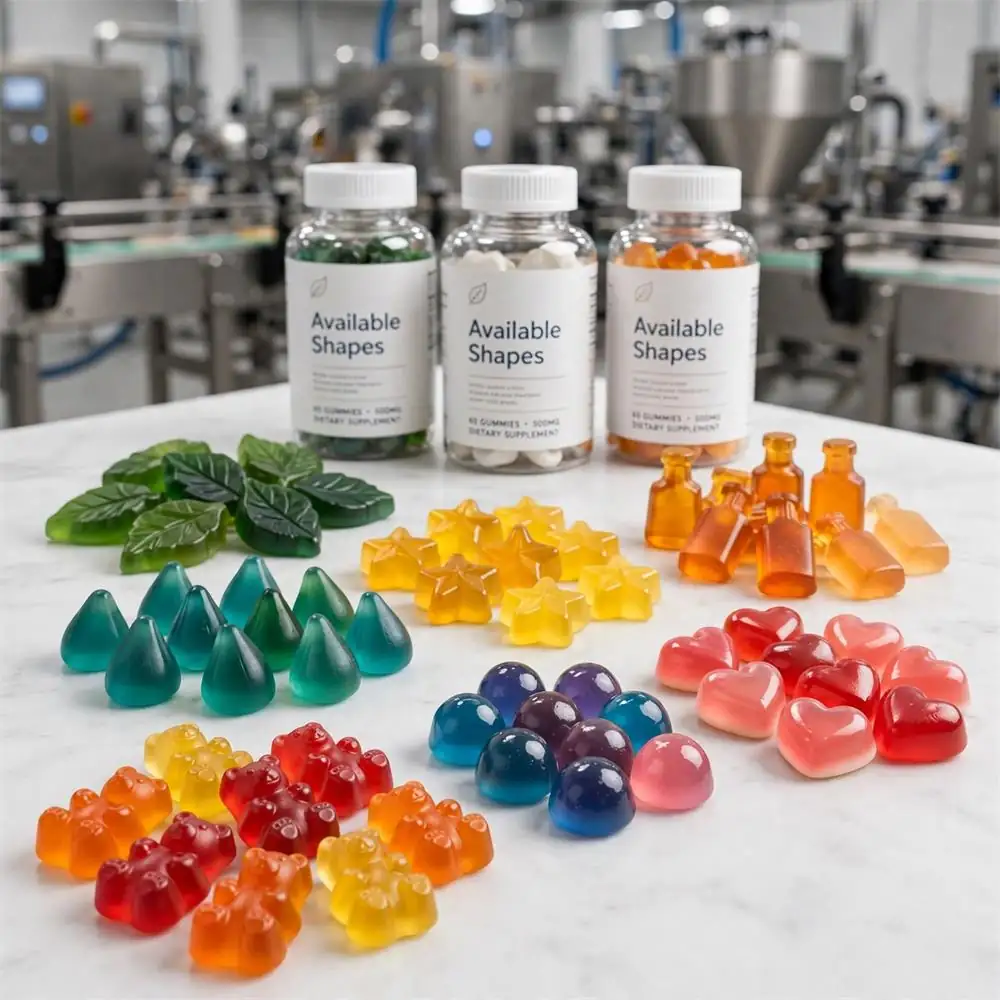

Executive Summary: Why Demand Is Shifting
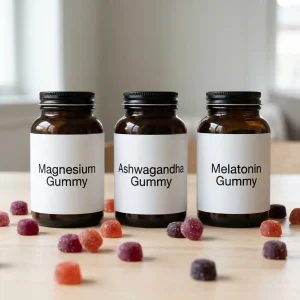
直接的な答え: Magnesium gummy demand vs melatonin is shifting because buyers now want a nightly restorative product they can use every night without hormonal intervention, next-day grogginess, or tightening regulatory risk. Magnesium plus ashwagandha delivers a two-part story that melatonin cannot: magnesium supports muscle relaxation and nervous system balance, while ashwagandha supports stress response and sleep quality. Together they fit a broader “unwind and recover” use case, not just “fall asleep fast.”
That shift matters for brands. Melatonin still sells, but repeat purchase is increasingly constrained by consumer concerns about dependency, dosage confusion, and retailer scrutiny. Magnesium and ashwagandha formulations are positioned as daily wellness rituals, which supports higher repeat rates, wider daytime and nighttime positioning, and cleaner label claims. Our latest global restorative wellness market intelligence shows this is not a flavor trend. It is a formulation and positioning realignment driven by regulation, consumer education, and retail buyer preference.
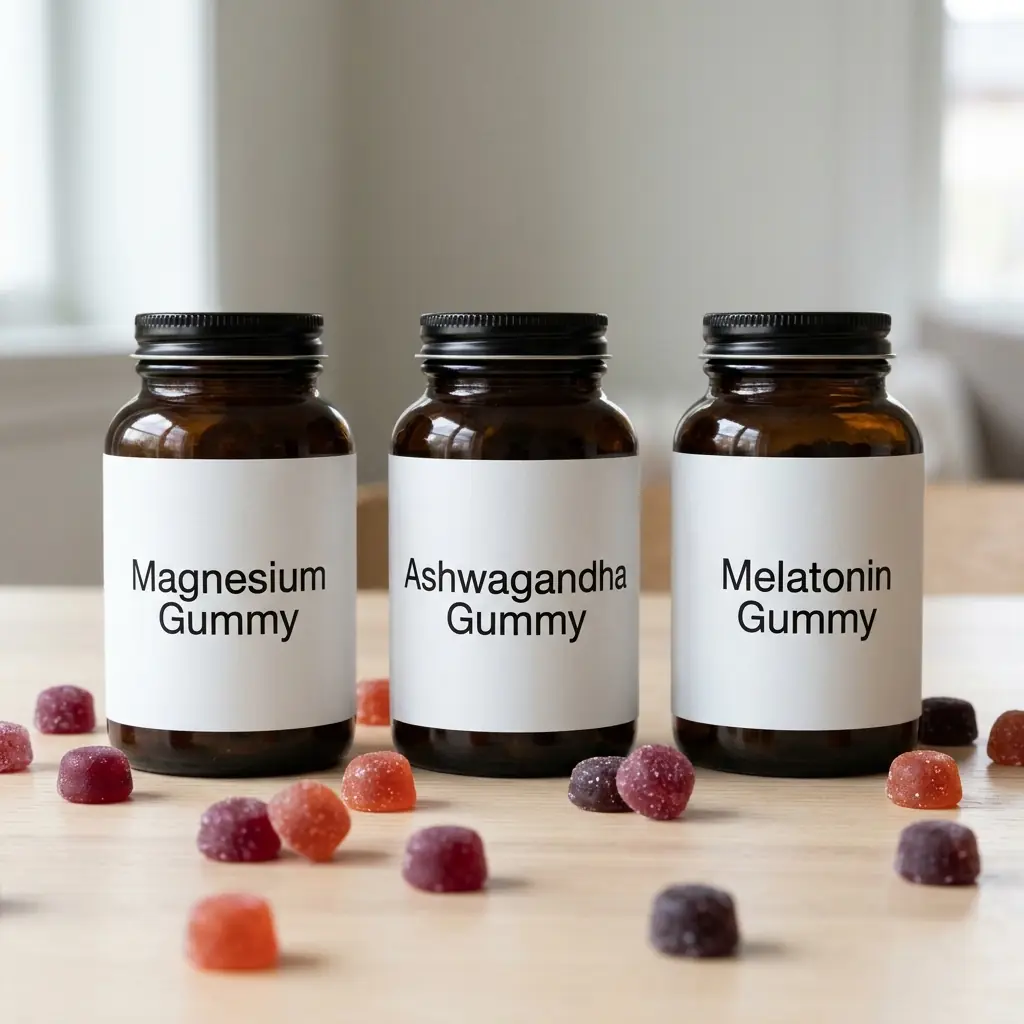
直接的な答え: Melatonin is losing share because it solves a narrow problem with growing baggage: it is a hormone, dosage is highly variable in practice, and regulators and retailers are treating it more cautiously.
アメリカ合衆国で、 メラトニングミ are easy to manufacture. The active dose is tiny, typically 0.5 mg to 5 mg per serving, so it places almost no load on the gummy matrix. That low barrier created oversaturation. Dozens of near-identical SKUs compete on flavor and price, which compresses margin and makes differentiation difficult.
Regulatory pressure adds friction. In the EU, melatonin is tightly restricted in food supplements, with many markets limiting it to 1 mg or requiring medicinal authorization. In North America, major retailers and e-commerce platforms have increased scrutiny of label accuracy, child-resistant packaging, and high-dose claims after reports of accidental ingestion and inconsistent potency. For a brand building for global distribution, a melatonin-led SKU creates export complexity from day one.
Consumer behavior is the third factor. A growing segment of buyers, especially women aged 25 to 45 and performance-oriented consumers, now search for “non-melatonin sleep” or “calm without grogginess.” They want support for stress, muscle tension, and sleep onset together. Melatonin addresses only sleep onset. Magnesium and ashwagandha address the full wind-down sequence, which makes the product easier to explain in a listing, ad, or retail pitch.
Formulation Reality: Why Magnesium + Ashwagandha Is Harder to Make Well
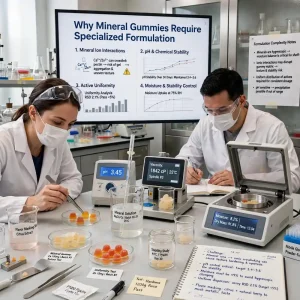
直接的な答え: Magnesium plus ashwagandha is commercially attractive but technically demanding. Magnesium salts are bulky and hygroscopic, and ashwagandha is bitter, earthy, and heat-sensitive. A formula that tastes good in a lab beaker often fails in depositing, drying, or 12-month stability.
Magnesium Loading: The Elemental Math Problem
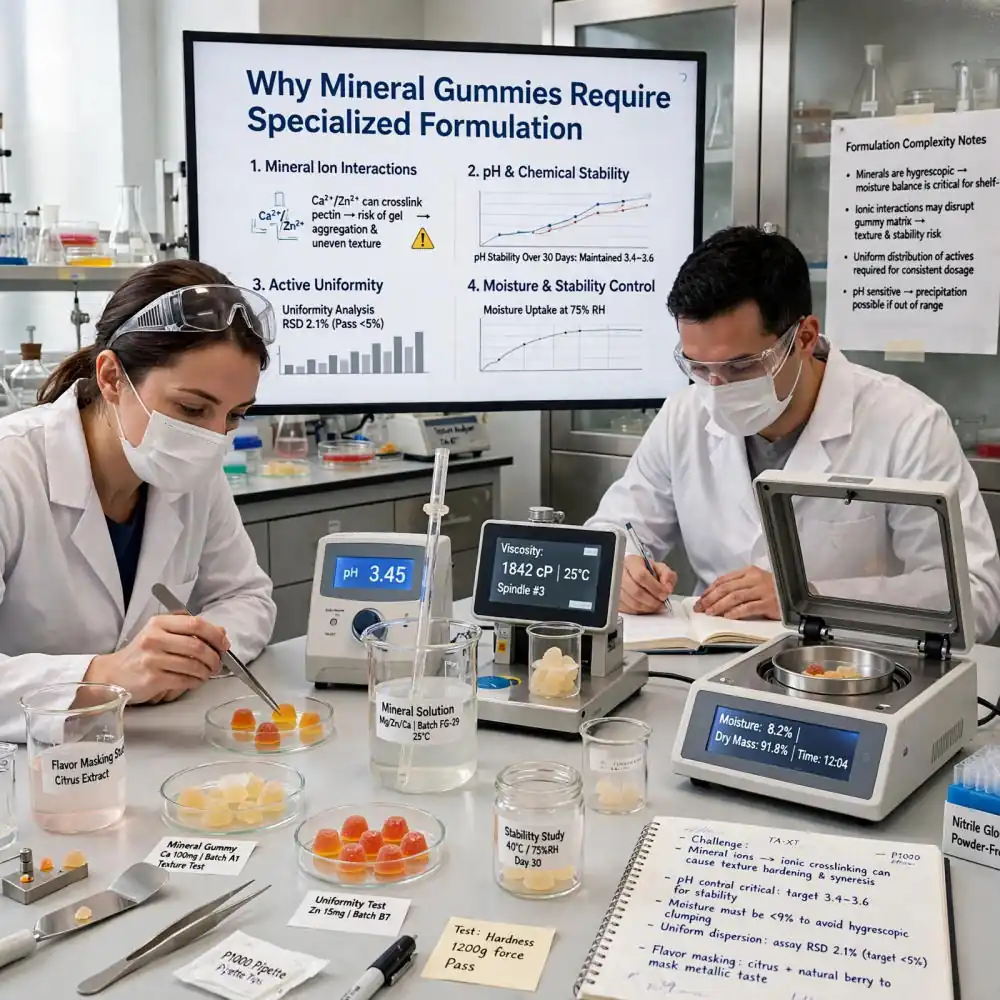
The core constraint is elemental load. A gummy can only hold so much solid active before texture, chew, and stability collapse. Magnesium oxide is about 60% elemental magnesium, but its bioavailability is poor and it creates a chalky, astringent mouthfeel. Magnesium citrate is better absorbed but only about 16% elemental. Magnesium glycinate, chelated to glycine, is well tolerated and well absorbed, but it is only about 14% elemental and is bulky and expensive.
To deliver 200 mg elemental magnesium per two-gummy serving from citrate alone would require more than 1,250 mg of salt. That exceeds what a standard 3.5 g to 4.5 g pectin gummy can carry without becoming gritty, sticky, or brittle. Practical commercial solutions use three tactics: target 100 mg to 150 mg elemental magnesium per serving and position the SKU as a daily ritual rather than a high-dose therapeutic; use a blend of citrate and glycinate to balance cost, taste, and tolerance; and reserve 8% to 12% overage to cover processing loss and assay variation, verified by ICP-MS in the R&D lab rather than by theoretical calculation alone.
Ashwagandha: Heat, Bitterness, and Standardization
Ashwagandha works only if withanolides survive production. Most branded extracts, such as KSM-66 at 300 mg per serving or Sensoril at 125 mg to 250 mg per serving, are standardized to a defined withanolide range, typically 5% or 10% depending on the extract. Withanolides degrade with prolonged exposure above 90°C. In a pectin process where the base is cooked to 105°C to 112°C to reach 76 to 80 Brix, adding ashwagandha too early destroys potency.
The correct sequence is to cook the pectin and sugar base first, cool to 78°C to 82°C, then add the ashwagandha extract, magnesium salt, acids, flavors, and colors in a controlled, time-limited window. Holding time at this stage must be tightly controlled, usually under 15 to 20 minutes in a jacketed holding tank, to limit thermal loss while keeping viscosity low enough for clean depositing. A degradation buffer of 10% to 15% is common, but it must be justified by pilot stability data, not added blindly, because excess extract increases bitterness and cost.
Pectin vs. Gelatin: Gelation Mechanics Matter More With Minerals
Pectin is the preferred matrix for most magnesium and ashwagandha gummies, and the reason is chemical. High-methoxyl pectin gels through hydrogen bonding and hydrophobic interaction at pH 3.0 to 3.6 and high soluble solids, not through protein crosslinking. It is vegan, holds shape at 35°C to 40°C, and gives a clean, short bite that masks botanical notes better than gelatin.
Gelatin gels on cooling through triple-helix formation and melts near body temperature. That creates a softer, more elastic chew, but it is sensitive to heat in transit and to acidic actives. More important, divalent cations such as Mg2+ can interfere with gel structure if added at the wrong stage. In pectin, free magnesium can trigger premature gelation or a grainy, brittle set if it is introduced before pH is stabilized. In gelatin, it can affect clarity and firmness. The engineering solution is sequencing: hydrate and cook pectin separately, stabilize pH, then introduce magnesium as a pre-dissolved solution at the depositing stage with high-shear mixing to ensure uniform distribution before the mass sets in the mold.
Comparison: Magnesium + Ashwagandha vs. Melatonin Gummies
直接的な答え: Melatonin is easier and cheaper to manufacture, but magnesium plus ashwagandha offers broader positioning, stronger repeat use, and lower regulatory friction for global sales. The table below summarizes the trade-off a buyer must evaluate.
| 評価要素 | Magnesium + Ashwagandha Gummy | Melatonin Gummy |
|---|---|---|
| Primary Consumer Promise | Daily unwind, stress support, muscle relaxation, and sleep quality | 早く眠りに落ちる |
| Typical Active Dose Per Serving | 100 to 200 mg elemental magnesium + 125 to 300 mg ashwagandha extract | 0.5 mg to 5 mg melatonin |
| Formulation Difficulty | High: bulky mineral, bitter botanical, heat sensitivity, moisture uptake | Low: very low active load, stable at depositing temperature |
| Preferred Matrix | Pectin, pH 3.0 to 3.6, water activity 0.55 to 0.65 | Pectin or gelatin, flexible |
| 安定性リスク | Hygroscopic magnesium causes stickiness, withanolide loss, flavor fade | Light sensitivity, potency variation, sugar crystallization |
| 規制の複雑さ | Lower for global markets, but magnesium upper limits and ashwagandha status must be checked per market | Higher: hormone classification, EU limits, retailer restrictions |
| Repeat Purchase Logic | Daily ritual, stress plus sleep, less concern about nightly use | Occasional use, travel, jet lag, short-term sleep support |
Flavor Masking, pH, and Water Activity: Where Batches Fail
直接的な答え: Most magnesium and ashwagandha gummy failures are not potency failures. They are taste, texture, and moisture failures that appear after 30 to 90 days on shelf.
Magnesium tastes metallic and bitter, and ashwagandha adds earthy, slightly astringent notes. Masking requires more than adding sweetener. The base must balance acid and flavor. Citric acid and malic acid at a controlled ratio sharpen fruit flavor and suppress metallic perception, but excess acid lowers pH below 3.0 and weakens pectin gel strength, causing syneresis and weeping. In practice, we target pH 3.2 to 3.5 for pectin magnesium gummies, verified after cooling, not only in the hot mass.
Flavor selection also matters. Berry, cherry, passionfruit, and blood orange perform better than lemon or lime alone because their aromatic compounds cover earthy notes without requiring high acid. Natural masking agents, such as vanilla or monk fruit, can round bitterness, but they must be dosed carefully to avoid off-notes after storage.
水分活性(aw) is the second control point. Target aw of 0.55 to 0.65 for pectin gummies. Above 0.65, microbial risk rises and magnesium salts pull in moisture, causing gummies to stick together in the bottle. Below 0.52, the gummy becomes hard and loses chew. Because magnesium salts are hygroscopic, drying time, starch mold conditioning, and packaging must be validated together. A foil-sealed bottle with desiccant and a tight torque specification is not optional for this category. It is part of the formulation.
From Pilot to Commercial Depositing: Scale-Up Risks
直接的な答え: A formula that works at 10 kg in a lab kettle often fails at 500 kg in a high-speed depositor because holding time, shear, and cooling rate change the gelation window.
In pilot-scale validation, the team can deposit within minutes of mixing. In commercial production, the mass may sit in a holding tank for 30 to 60 minutes while molds cycle. That extended hold increases withanolide exposure to heat and allows magnesium to interact with pectin. Viscosity rises, depositing nozzles clog, and piece weight drifts. The fix is process design: use a two-stage addition system, keep the holding tank at 78°C to 80°C with gentle agitation, and validate piece weight every 15 minutes with in-process checks.
Moisture equilibrium is equally scale-sensitive. Lab drying in a small chamber reaches equilibrium faster than a commercial drying tunnel. If the drying curve is not re-validated, the center of the gummy may remain wet while the surface appears dry, leading to post-packaging softening and microbial risk. Commercial validation should include water activity and texture analysis at 0, 30, 90, and 180 days, plus accelerated testing at 40°C and 75% relative humidity to confirm shelf-life claims.
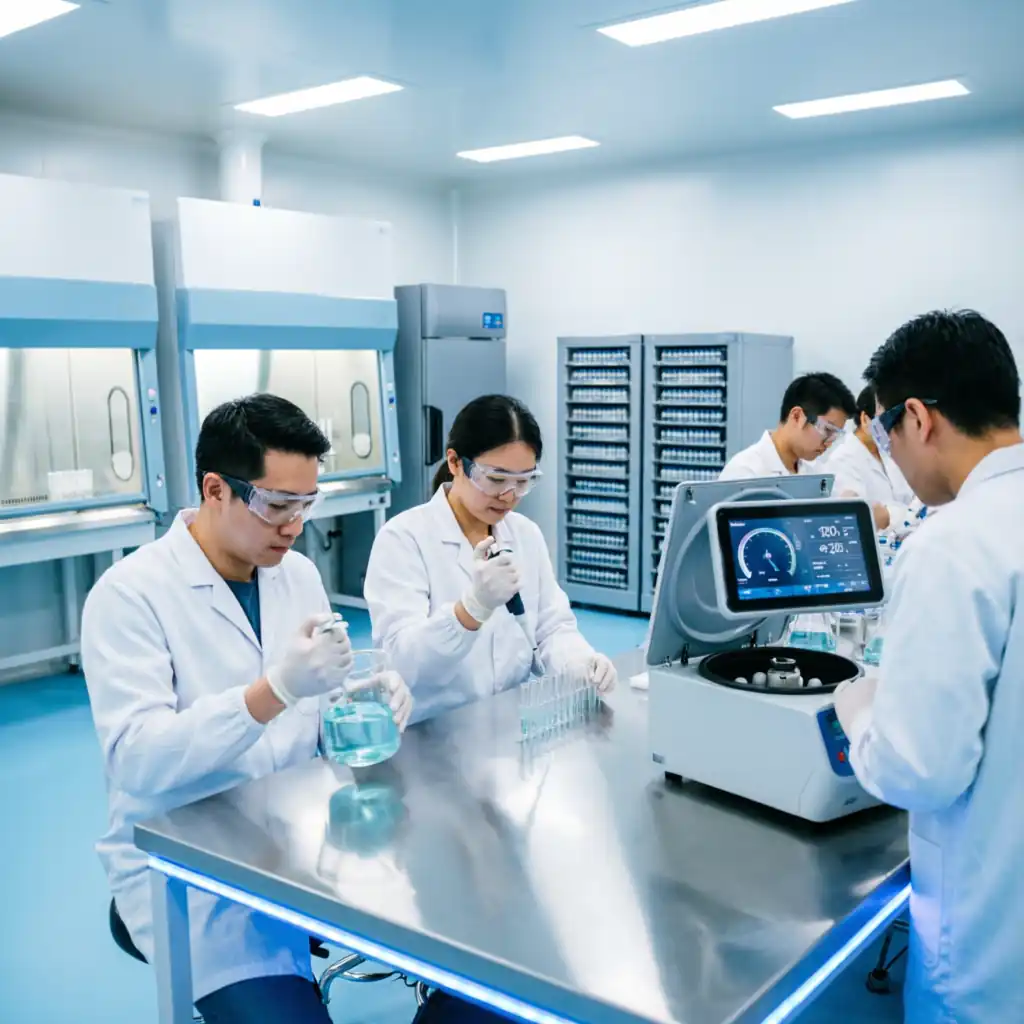
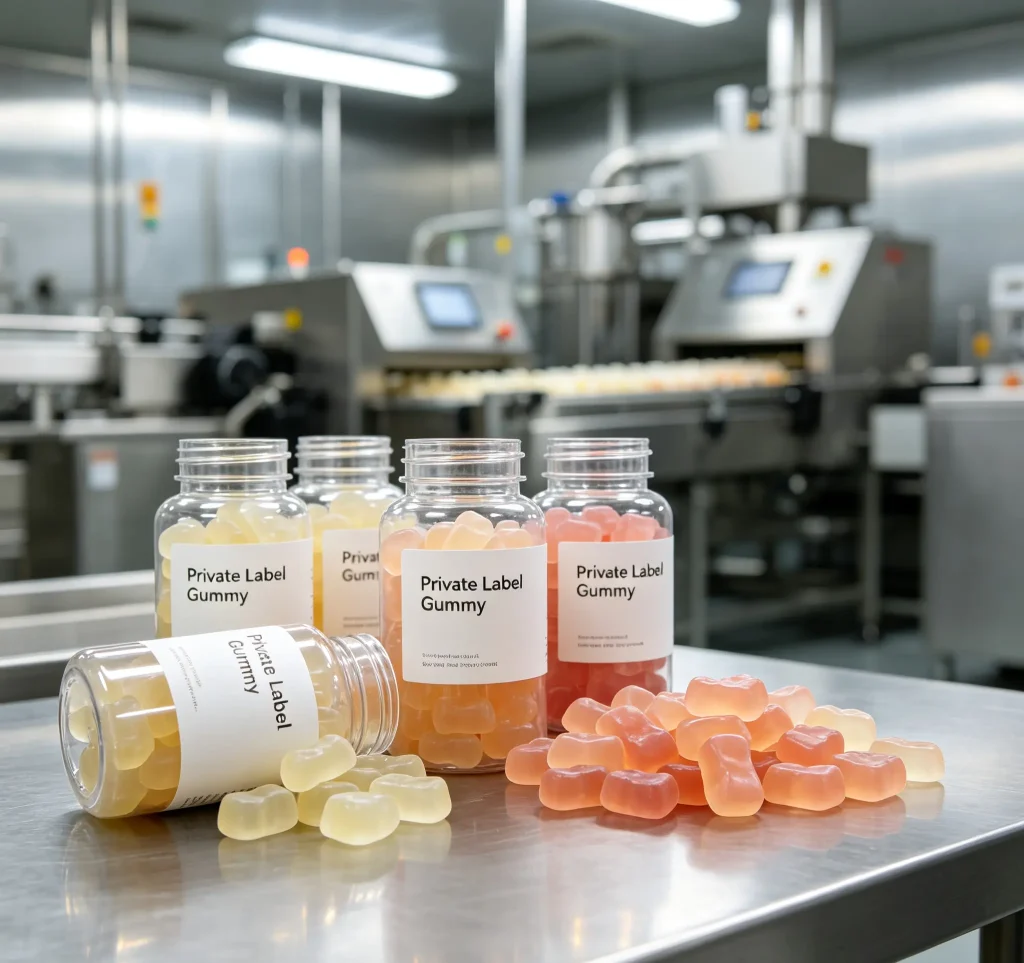
Shenzhen Gothink Biotech Co., Ltd. is a cGMP-certified dietary supplement contract manufacturer featuring a 100,000-class cleanroom facility, a 10,000-class analytical R&D lab, and 16-ton daily gummy production capacity under cGMP, NSF, FDA, ISO, HALAL, and KOSHER standards. That scale allows pilot batches to be run on the same depositing line used for commercial production, which reduces the gap between lab success and mass production. When evaluating any カスタムOEMグミメーカー, ask whether pilot and commercial depositing use the same equipment and whether stability data comes from pilot or production-scale batches.
Commercial Evaluation Criteria for Buyers
直接的な答え: Do not select a supplier on unit price alone. For magnesium and ashwagandha gummies, evaluate formulation control, analytical capability, and scale-up proof.
- Elemental magnesium verification: Require assay by ICP-MS or equivalent, not only input calculation. Confirm the supplier can hit 100 mg to 200 mg elemental magnesium within label claim at end of shelf life.
- Ashwagandha traceability: Require a Certificate of Analysis for withanolide content, heavy metals, pesticides, and microbial load. Ask whether the extract is KSM-66, Sensoril, or a generic extract, because standardization and taste differ materially.
- pH and water activity control: Ask for target ranges, in-process records, and stability data at 0, 3, 6, and 12 months. A supplier without aw control plan will produce sticky batches in humid markets.
- Flavor and texture retention: Request retained samples from a prior commercial batch, not just a fresh pilot sample. Taste after 90 days tells you more than taste on day one.
- Regulatory and label support: Confirm the supplier can support FDA Supplement Facts, allergen statements, and market-specific magnesium limits. For turnkey programs, ターンキー方式のプライベートブランドグミ製造 should include label review, packaging sourcing, and MOQ flexibility for test launches.
FAQ: Magnesium, Ashwagandha, and Melatonin Gummies for B2B Buyers
Can magnesium and ashwagandha fully replace melatonin in a sleep SKU?
For most restorative positioning, yes. Magnesium and ashwagandha support relaxation, stress response, and sleep quality without acting as a hormone. For acute jet lag or shift-work SKUs where fast sleep onset is the primary claim, melatonin may still be appropriate as a separate, clearly labeled product. Many brands now launch a magnesium plus ashwagandha daily SKU first, then add a low-dose melatonin SKU as a limited-use companion.
What is a realistic magnesium dose in a gummy?
A realistic commercial dose is 100 mg to 150 mg elemental magnesium per two-gummy serving. Higher doses are possible with larger gummy size or a three-gummy serving, but texture, cost, and consumer compliance suffer. Brands that claim 200 mg or more should be asked for elemental assay data and texture stability data to prove the formula holds.
Which magnesium form works best in pectin gummies?
A blend of magnesium citrate and magnesium glycinate is the most common commercial compromise. Citrate offers good absorption and lower cost, while glycinate improves tolerance and reduces metallic taste. Oxide is not recommended for premium gummies because of poor absorption and chalky mouthfeel, even though it is cheaper on an elemental basis.
How do you prevent magnesium gummies from becoming sticky?
Control three variables together: water activity at 0.55 to 0.65, drying to moisture equilibrium before packaging, and moisture-barrier packaging with desiccant. Magnesium salts will absorb ambient moisture if the bottle seal is weak. Packaging torque, induction sealing, and storage conditions are part of the stability plan, not an afterthought.
Is ashwagandha safe for daily use in a gummy format?
Ashwagandha extracts with clinical history, such as KSM-66 at 300 mg daily or Sensoril at 125 mg to 250 mg daily, are widely used in dietary supplements. Brands should still include standard warnings for pregnancy, lactation, thyroid conditions, and medication interactions, and should confirm the legal status of ashwagandha in each target market. Some EU markets have specific restrictions or novel food considerations.
What MOQ should a new brand expect for a magnesium plus ashwagandha gummy?
MOQs vary by manufacturer and flavor, but a pilot-to-commercial path typically starts at 5,000 to 10,000 bottles for a private label formula and higher for a fully custom formula with new molds or flavors. Starting with a validated base formula and one hero flavor reduces risk and speeds time to market. A supplier should provide pilot samples, stability data, and a clear path to scale before committing to a large first order.
For brands evaluating a restorative SKU, the decision is not melatonin versus magnesium on taste alone. It is a decision about positioning, regulation, repeat purchase, and manufacturing control. Magnesium plus ashwagandha is harder to produce, but when pH, water activity, heat exposure, and depositing are controlled, it creates a product that fits daily use and global distribution far better than a melatonin-only gummy.
詳しくはこちら ナレッジハブ for formulation, market, and channel guidance for supplement brands.
ジャック・ルオ|ゴーシンク・バイオロジー社 栄養研究センター 上級技術顧問